
无人驾驶

Search documents
德赛西威跨界,入局低速无人车
Xin Lang Cai Jing· 2025-09-03 10:22
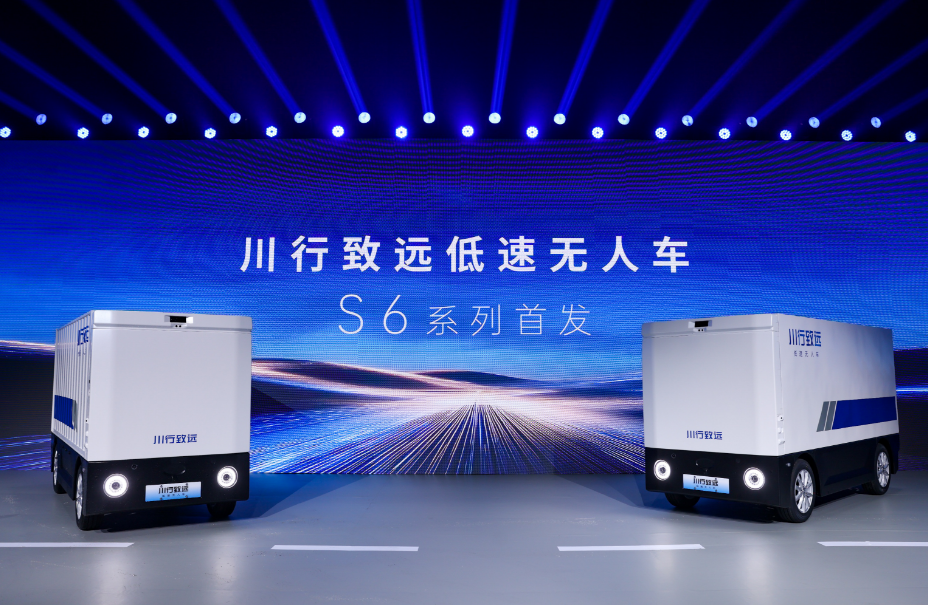
Core Insights - The last-mile logistics sector is likened to the "capillaries" of urban commerce, facing challenges such as rising labor costs, management difficulties, and safety risks, which have attracted numerous companies, including traditional automotive electronics giant Desay SV [1] - On September 2, Desay SV launched its new brand "Chuanxing Zhiyuan" focused on low-speed unmanned vehicles, introducing the S6 series as its first vehicle-grade platform product, aiming to enhance efficiency and drive intelligent transformation in urban last-mile logistics [1][3] - The S6 series features six industry-first technologies, including full vehicle-grade development from parts, an intelligent axial control system, a 25% climbing ability, and a battery life standard of 6 years or 300,000 kilometers, with a modular design catering to various high-frequency application scenarios in last-mile logistics [3] Company Strategy - Desay SV's CEO emphasized that the company is not blindly entering the market but is making strategic decisions based on the maturity of technology, regulatory policies, and market demand, positioning itself as a "foundation provider for intelligent mobility platforms" rather than a direct competitor to operators [3] - The S6 platform includes four major vehicle types: a winged version for industrial logistics and forklift collaboration, a side-door version for express delivery, a cold chain version for precise temperature control from -20°C to 12°C, and a version for irregular cargo transfer, addressing key challenges in the industry [3][5] Industry Context - Despite the popularity of unmanned vehicle concepts, there remains a scarcity of products that possess vehicle-grade reliability and sustainable commercial deployment capabilities, highlighting a critical challenge in the industry [5]

云南锗业:子公司的化合物半导体产品为砷化镓晶片、磷化铟晶片
Zheng Quan Ri Bao· 2025-09-03 10:15
Core Viewpoint - Yunnan Zhiye's subsidiary produces compound semiconductor products, specifically Gallium Arsenide (GaAs) chips and Indium Phosphide (InP) chips, which are utilized in various high-tech applications [2] Group 1: Product Applications - Indium Phosphide chips are primarily used in the production of lasers and detector chips for optical modules, with downstream applications in 5G communication, data centers, and wearable devices [2] - Gallium Arsenide chips are mainly used in RF devices, lasers, and sensors, commonly found in high-brightness light-emitting diode (HBLED) products, with downstream applications in smartphones, computers, communication base stations, autonomous driving, next-generation displays (Mini LED, Micro LED), industrial lasers, and facial recognition [2] Group 2: Supply Chain and Confidentiality - The company has supplied its compound semiconductor materials to multiple domestic and international clients, but due to the complexity of the supply chain and confidentiality requirements from downstream enterprises, it cannot disclose specific operational details regarding the use of its products [2]

比亚迪李云飞:今年海外销量预计翻倍;中汽协:7月汽车整车出口69.4万辆,环比增长12.1%丨汽车交通日报
创业邦· 2025-09-03 10:10
Group 1 - Waymo announced its expansion into Denver and Seattle, furthering its presence in the U.S. market [2] - BYD's overseas sales are expected to double this year, with significant historical milestones in its international business since 1998 [2] - Rivian launched a custom version of its R1S model, inspired by 1980s Miami design, featuring a power output of 850 hp and a range of 597 km [2] Group 2 - In July 2025, China's automobile exports reached 694,000 units, a month-on-month increase of 12.1% and a year-on-year increase of 25.6%, with export value at $11.84 billion [4] - From January to July 2025, total automobile exports amounted to 4.166 million units, reflecting a year-on-year growth of 19.6% [4]


零一汽车发布小满好运来,放出狠话:每月要卖500台!| 头条
第一商用车网· 2025-09-02 02:41
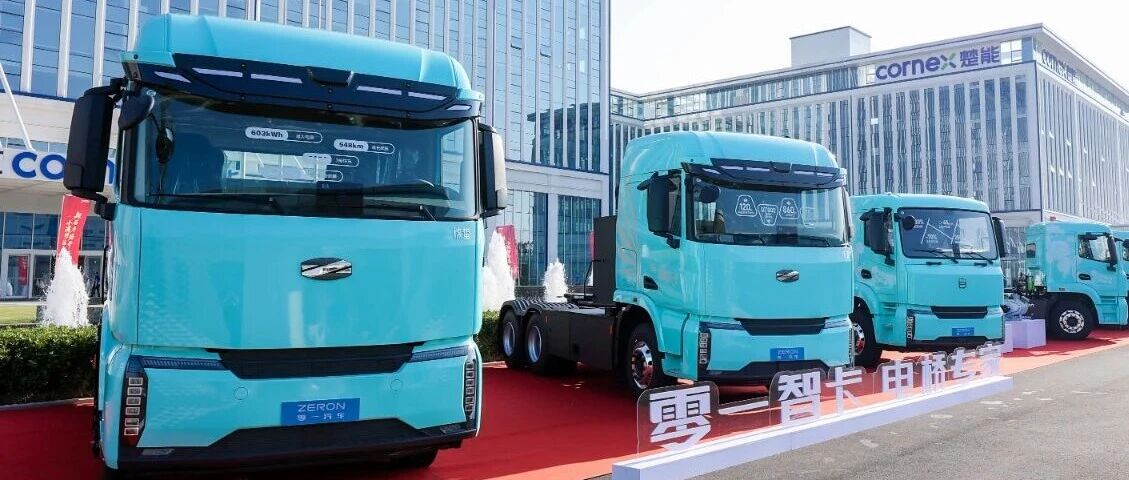
Core Viewpoint - The CEO of Zero One Automotive, Huang Zehua, envisions the company becoming one of the largest autonomous driving companies globally by achieving the production of 10,000 unmanned heavy-duty trucks, highlighting a unique perspective on the future of new energy heavy-duty trucks [1]. Market Analysis - The transition to new energy heavy-duty trucks has moved from being policy-driven to market-driven, indicating a maturation of the market [2]. - In the electric transportation market, electric heavy-duty trucks have significant advantages in short to medium-distance transportation, while traditional fuel trucks are less suited for such applications [3][4]. Cost Advantages - The operational cost of electric trucks is projected to be significantly lower, with costs around 0.6 to 0.3 yuan per kilometer compared to 3 yuan for fuel trucks, suggesting that electric trucks could capture over 50% of the market in short to medium-distance transport [4][6]. Strategic Development - Zero One Automotive's strategy is divided into three phases: becoming a new force in manufacturing new energy heavy-duty trucks, achieving initial smart technology implementation, and large-scale application of autonomous driving in transportation scenarios [9]. - The company emphasizes innovation as a core advantage, aiming to break the product homogeneity seen in the industry by focusing on self-developed technologies [11]. Product Innovation - Zero One Automotive has developed an integrated "Matrix" electric drive bridge system, which enhances energy efficiency by 25% compared to traditional systems, addressing market demands for reliable and efficient products [11]. Market Strategy - The COO of Zero One Automotive, Zhang Wei, emphasizes quality over quantity in dealer networks, aiming for a focused approach with around 100 dealers to achieve annual sales of 30,000 to 50,000 units [13]. - The company prioritizes after-sales service, ensuring that service stations are strategically located to support customer needs, thereby building a strong market reputation [14]. Future Goals - Zero One Automotive aims to deploy 10,000 unmanned heavy-duty trucks by 2028, with a focus on creating a smart transportation ecosystem through various segmented applications [16].
中国科技公司新一代无人驾驶出租车首次落地东南亚
Zhong Guo Xin Wen Wang· 2025-09-01 14:16
Core Insights - WeRide, a Chinese autonomous driving technology company, has announced the arrival of its first batch of next-generation autonomous taxis, Robotaxi GXR, in Singapore for testing, marking the first deployment of such vehicles in Southeast Asia [1] Group 1: Company Developments - The Robotaxi GXR is currently undergoing simulated road tests at the Nanyang Technological University Autonomous Driving Testing and R&D Center to evaluate its performance and safety under Singapore's public road conditions [1] - WeRide's founder and CEO, Han Xu, emphasized that safety is the top priority, and the company is establishing a foundation for the commercialization of autonomous driving services in Southeast Asia through rigorous testing processes and deep collaboration with industry partners [1] Group 2: Future Plans - WeRide plans to introduce more Robotaxi GXR units to Singapore to accelerate the deployment process on public roads and promote large-scale commercial operations of Robotaxi in Southeast Asia [1]
积极布局汽车智能网联产业 亚太股份上半年归母净利润同比增长92.12%
Zheng Quan Ri Bao Wang· 2025-09-01 11:43
Core Viewpoint - Zhejiang Asia-Pacific Mechanical and Electrical Co., Ltd. (referred to as "Asia-Pacific Co., Ltd.") reported significant growth in its 2025 semi-annual report, with a revenue increase of 29.75% year-on-year and a net profit increase of 92.12% year-on-year, indicating strong performance in the automotive brake system sector [1][2]. Group 1: Financial Performance - The company's revenue for the first half of 2025 reached 2.601 billion yuan, reflecting a year-on-year increase of 29.75% [1]. - The net profit attributable to shareholders was 201 million yuan, showing a substantial year-on-year growth of 92.12% [1]. - Revenue from the automotive basic brake system, the main source of income, was 1.808 billion yuan, up 21.26% year-on-year [1]. - Revenue from automotive electronic control systems reached 712 million yuan, marking a significant increase of 62.42% year-on-year [1]. Group 2: Product Development and Innovation - Asia-Pacific Co., Ltd. has made significant advancements in automotive electronic products, including electronic parking brake systems (EPB), electronic stability control systems (ESC), and integrated brake systems (IBS), supported by multiple national invention patents [2]. - The company has initiated 114 new projects in the first half of 2025, with 55 projects related to automotive electronic control systems, successfully mass-producing 70 projects [2]. - As of mid-2025, the company holds a total of 757 valid patents, including 149 invention patents, 595 utility model patents, and 13 design patents [2]. Group 3: Industry Position and Future Outlook - The automotive industry is shifting towards electrification and intelligence, and the company is actively embracing these changes by developing a comprehensive autonomous driving industry chain [2]. - Asia-Pacific Co., Ltd. has successfully industrialized 77GHz millimeter-wave radar and vision systems, contributing to the advancement of smart driving technologies [2]. - The company has developed integrated hub motor products, showcasing its capability in comprehensive development from hub motors to complete systems, supporting the growth of smart driving and new energy vehicles [2].

腾景科技上半年营收2.63亿元同比增24.29%,归母净利润3658.88万元同比增11.47%,净利率下降0.66个百分点
Xin Lang Cai Jing· 2025-08-29 11:25
Core Insights - Tengjing Technology reported a revenue of 263 million yuan for the first half of 2025, representing a year-on-year growth of 24.29% [1] - The net profit attributable to shareholders was 36.59 million yuan, an increase of 11.47% year-on-year [1] - The basic earnings per share stood at 0.28 yuan [2] Financial Performance - The gross profit margin for the first half of 2025 was 37.50%, up by 0.60 percentage points year-on-year [2] - The net profit margin was 14.45%, down by 0.66 percentage points compared to the same period last year [2] - In Q2 2025, the gross profit margin was 39.70%, a decrease of 1.03 percentage points year-on-year but an increase of 5.12 percentage points quarter-on-quarter [2] - The net profit margin for Q2 2025 was 16.11%, down by 2.29 percentage points year-on-year but up by 3.86 percentage points from the previous quarter [2] Expense Analysis - Total operating expenses for the first half of 2025 were 58.96 million yuan, an increase of 14.79 million yuan year-on-year [2] - The expense ratio was 22.43%, up by 1.55 percentage points compared to the same period last year [2] - Sales expenses increased by 18.21%, management expenses rose by 24.23%, R&D expenses grew by 30.71%, and financial expenses surged by 449.66% [2] Shareholder Information - As of the end of the first half of 2025, the total number of shareholders was 10,700, a decrease of 514 from the previous quarter, representing a decline of 4.58% [2] - The average market value per shareholder increased from 453,500 yuan at the end of the first quarter to 543,500 yuan, a growth of 19.85% [2] Company Overview - Tengjing Technology is located in Fuzhou, Fujian Province, and was established on October 12, 2013, with its listing date on March 26, 2021 [3] - The company specializes in the research, production, and sales of various precision optical components and fiber optic devices [3] - The revenue composition includes precision optical components (79.78%), fiber optic devices (17.09%), optical testing instruments (2.94%), and others (0.19%) [3] - The company belongs to the electronic-optical industry, specifically optical components, and is associated with concepts such as optical technology, Huawei, fiber optics, autonomous driving, and specialized innovation [3]

经纬恒润:8月27日召开业绩说明会,投资者参与
Zheng Quan Zhi Xing· 2025-08-29 09:21
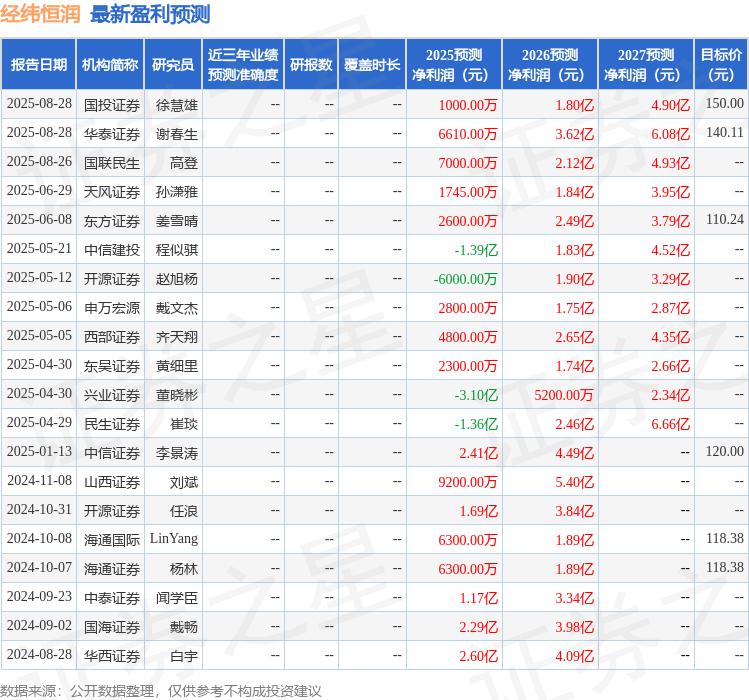
Core Viewpoint - The company reported significant growth in revenue and a notable reduction in net loss for the first half of 2025, driven by effective cost management and successful product development in the automotive electronics sector [2][8]. Financial Performance - The company achieved a revenue of 2.908 billion yuan in the first half of 2025, representing a year-on-year increase of 43.48% [2][8]. - The net profit attributable to shareholders was -87.44 million yuan, an improvement of 246 million yuan compared to the same period last year [2][8]. - The second quarter alone saw a revenue of 1.58 billion yuan, up 38.9% year-on-year, with a net profit of 33 million yuan, marking a 123.29% increase [8]. Cost Management - The company successfully reduced its R&D expenses to 440 million yuan, a decrease of 18.17% year-on-year, with the R&D expense ratio dropping by approximately 11.4 percentage points [2][8]. - All three expense ratios showed a decline, indicating effective cost control measures [2]. Cash Flow - The net cash flow from operating activities was -299 million yuan, which is an improvement of 427 million yuan compared to the previous year [2]. Product Development - The company is advancing in the field of steer-by-wire and brake-by-wire technologies, with plans for mass production of steer-by-wire products expected in the first half of next year [3]. - The Robotruck, based on previous autonomous vehicle technology, is being developed for public road transport, expanding operational scenarios beyond closed environments [4]. Business Segments - The company’s major assembly business is integrated with its special vehicle development, focusing on key components like battery packs and electric drive bridges [5][6]. - The R&D services and solutions segment has shifted towards high-value, light-asset operations, showing improved performance compared to the previous year [7]. Market Position - The company maintains a competitive edge in the steer-by-wire and brake-by-wire markets, having secured orders from both domestic and international Tier 1 suppliers [3]. - The company has received positive feedback on its silicon carbide power modules, which are being integrated into various projects [6].

德赛西威涨2.06%,成交额6.39亿元,主力资金净流入2130.68万元
Xin Lang Zheng Quan· 2025-08-29 03:08
Core Viewpoint - Desay SV's stock has shown significant growth in 2023, with a year-to-date increase of 20.65% and a notable rise in recent trading days, indicating strong market interest and performance in the automotive electronics sector [1][2]. Financial Performance - For the first half of 2025, Desay SV reported a revenue of 14.644 billion yuan, representing a year-on-year growth of 25.25%. The net profit attributable to shareholders was 1.223 billion yuan, reflecting a 45.82% increase compared to the previous year [2]. - Cumulatively, Desay SV has distributed 2.237 billion yuan in dividends since its A-share listing, with 1.438 billion yuan distributed over the last three years [3]. Shareholder and Market Activity - As of June 30, 2025, the number of shareholders increased by 20.92% to 59,000, while the average number of circulating shares per person decreased by 17.30% to 9,374 shares [2]. - On August 29, 2023, Desay SV's stock price reached 131.40 yuan per share, with a trading volume of 639 million yuan and a market capitalization of 72.92 billion yuan [1]. Business Overview - Desay SV, established on July 24, 1986, specializes in the research, design, production, and sales of automotive electronic products. Its main revenue sources are smart cockpits (64.59%), intelligent driving (28.32%), and connected services and others (7.09%) [1]. - The company operates within the software development sector, focusing on vertical application software, and is involved in various concept sectors including smart cockpits, Chery Automobile concepts, sensors, autonomous driving, and millimeter-wave radar [1].
同力股份20250828
2025-08-28 15:15
Summary of the Conference Call for Tongli Co., Ltd. Company Overview - **Company**: Tongli Co., Ltd. - **Date**: August 28, 2025 Key Points Industry and Market Dynamics - **Seasonal Impact**: Tongli's revenue is significantly affected by seasonal factors, with Q1 being peak season and Q2-Q3 being slower. Recent years have seen changes due to economic conditions, mining operations, and policy impacts, leading to notable revenue fluctuations [2][4][8]. - **Coal Industry Outlook**: Short-term coal demand is under pressure due to economic downturns, but mid to long-term growth is expected driven by the promotion of new energy vehicles and autonomous driving technology [3][19]. - **Domestic vs. Overseas Market Performance**: Domestic market growth was 12% in H1 2025, exceeding expectations, while overseas growth was only 10%, falling short of the target due to issues in Russia and Indonesia [9][10]. Financial Performance - **Revenue and Sales**: In H1 2025, revenue increased by 12% year-on-year, despite a 10% decline in sales volume due to insufficient open-pit coal mining operations and economic slowdown. The increase in revenue was attributed to higher unit prices from investments in new energy and autonomous vehicles [2][8]. - **Net Cash Flow**: The company reported a negative operating cash flow of 600 million due to accounting treatment of bank acceptance bills, which were not included in the cash flow statement [5][6]. - **Debt Management**: The debt ratio decreased from 59% to 56% as the company adjusted payment schedules to suppliers [11]. Product and Sales Insights - **Sales Composition**: In H1 2025, approximately 2,700 vehicles were sold, with new energy vehicles accounting for 55% of sales, a significant increase from 25% the previous year. Traditional fuel vehicles still dominate the overseas market [12][29]. - **Autonomous Vehicle Development**: The penetration of autonomous vehicles is increasing, with over 3,000 units in use. The company focuses on hardware development while collaborating with partners for software [13][14][23]. Strategic Initiatives - **Response to Market Challenges**: To address challenges in overseas markets, Tongli is exploring transshipment trade through Central Asia and partnerships with international mining giants [10][21]. - **Future Growth Projections**: The company maintains a positive outlook for both domestic and international markets, expecting average annual growth rates of 11% to 20% in the coming years [24][22]. Additional Considerations - **Impact of New Energy Vehicles**: The gross margin for new energy vehicles is higher than traditional fuel vehicles, with margins around 25-26% compared to 16-17% for fuel vehicles [29][30]. - **After-Sales Service**: Currently, after-sales service contributes little to revenue, but future developments in new energy and autonomous technology may increase reliance on after-sales support [36]. Conclusion Tongli Co., Ltd. is navigating a complex market landscape with strategic adjustments to its operations and product offerings. The company is well-positioned to capitalize on the growing demand for new energy and autonomous vehicles while managing the challenges posed by economic fluctuations and international market dynamics.