大数据

Search documents
潍柴商用车全动力矩阵发布 引领商用车行业变革
第一商用车网· 2025-12-13 04:33
Core Viewpoint - Weichai Power showcases its strong technical capabilities and precise market understanding by launching multiple new commercial vehicle power products at the 2026 Business Conference, aimed at different operational scenarios [1][20]. Group 1: New Engine Products - Weichai launched three new engines: WP2.5T, WP5H, and WP14NG, targeting key scenarios such as trunk logistics and various cargo transport needs, providing efficient, economical, and reliable power solutions [3]. - The WP14NG-4.0 engine, designed for trunk logistics, delivers a maximum power of 610 horsepower and a peak torque of 2800 Nm, excelling in power performance for complex road conditions and heavy loads [3]. - The WP5H engine, with a maximum power of 300 horsepower and a peak torque of 1100 Nm, is optimized for yellow plate cargo vehicles, ensuring high efficiency across various road conditions [5][7]. - The WP2.5T engine, with a maximum power of 190 horsepower and a peak torque of 500 Nm, offers high cost-effectiveness and reliability, making it suitable for blue plate cargo transport [9]. Group 2: Energy Efficiency and Reliability - The WP14NG-4.0 engine achieves a 6% reduction in gas consumption under high-speed conditions compared to previous models, outperforming the industry average [5]. - The WP5H engine reduces fuel consumption by 5% compared to competitors, translating to lower operational costs and increased profits for operators [7]. - The WP2.5T engine boasts a B10 lifespan of 800,000 kilometers, ensuring high reliability crucial for urban logistics [9]. Group 3: New Energy Products - Weichai demonstrates its strength in the new energy sector with a comprehensive product lineup, including power batteries and motor controllers, supporting the transition of commercial vehicles to new energy [10]. - The CTB power battery features an integrated design that enhances safety and stability while reducing weight and volume, addressing traditional battery issues [10][12]. - The WMC-L/H/B multi-in-one integrated controller, suitable for various vehicle types, enhances system reliability and efficiency, achieving a maximum efficiency of 99.2% [14]. Group 4: Market Position and Future Outlook - Weichai holds a leading position in the commercial vehicle market, with a 34% market share in heavy-duty engines and a strong presence in the gas engine sector [17]. - The penetration rate of new energy commercial vehicles is expected to exceed 25% by 2025, marking a shift from policy-driven to market-driven growth [19]. - Weichai's strategic layout in the new energy sector includes a production capacity of 50 GWh for its new energy power industry park, ensuring comprehensive coverage of the supply chain [19].



全省传染病监测预警体系完成数字化转型
Liao Ning Ri Bao· 2025-12-13 01:34
Group 1 - The deployment of the national infectious disease intelligent monitoring and early warning software marks a significant shift from manual reporting to automated data capture in disease monitoring [1] - This transition enhances the province's infectious disease monitoring and early warning system, moving from passive response to proactive prevention, thereby improving regional capabilities [1] - The software utilizes artificial intelligence to accurately identify and capture infectious disease-related information, improving the sensitivity, specificity, and precision of monitoring and early warning [1] Group 2 - The provincial government prioritizes the deployment of this software as a key measure to enhance public health emergency response capabilities [2] - Local health departments are coordinating the deployment, forming specialized technical teams to assist medical institutions in overcoming practical challenges [2] - Future efforts will focus on integrating multi-channel infectious disease monitoring data with clinical information, enhancing data quality, and promoting information sharing [2]
东华灵曜智能科技(杭州)有限责任公司成立,注册资本30000万人民币
Sou Hu Cai Jing· 2025-12-12 16:34
Core Viewpoint - Donghua Lingyao Intelligent Technology (Hangzhou) Co., Ltd. has been established with a registered capital of 300 million RMB, fully owned by Donghua Software Co., Ltd. [1][2] Group 1: Company Overview - The legal representative of Donghua Lingyao Intelligent Technology is Yin Jinan [1][2] - The company is registered with a capital of 300 million RMB [1][2] - The business scope includes software development, information system integration services, artificial intelligence application software development, and various technology services [1] Group 2: Business Activities - The company will engage in cloud computing equipment technology services and sales, network and information security software development, and information system operation maintenance services [1] - It will also focus on artificial intelligence foundational resources and technology platforms, IoT device sales, and big data services [1] - The company is classified under the information transmission, software, and information technology services industry [2]

远东资信研究院副院长张林:信用评级行业要加快转变发展模式
Zheng Quan Ri Bao· 2025-12-12 16:25
远东资信研究院副院长张林在接受《证券日报》记者专访时表示,信用评级机构作为金融市场的重要基础设施之一,长期 以来承担着信用风险"看门人"的重要角色。在新发展机遇面前,信用评级行业的展业理念和技术手段需要与时俱进,不断优 化。 "信用评级机构需要充分考虑我国经济体制特点与发展阶段,审慎做出信用级别调整,避免因顺周期行为放大市场预期波 动与金融波动。这就要求评级机构在评估过程中更加注重长期趋势分析,而非仅仅关注短期财务表现。"张林表示。 本报记者 刘钊 12月10日至11日在北京举行的中央经济工作会议明确提出"坚持创新驱动,加紧培育壮大新动能",为资本市场如何更好服 务科技创新指明了清晰路径。 会议强调,拓展要素市场化改革试点。资本要素是发展新质生产力的核心要素之一,特别是长期资本与耐心资本,是推动 新旧动能转换的基础支撑。 "传统信用评级往往侧重对于历史数据、成熟资产以及既有现金流等因素的信用水平评估。在新的发展要求之下,信用评 级行业需要加快转变发展模式。"张林表示,信用评级行业要勇于拥抱变化,将新型资源纳入信用水平评估框架之内,努力发 现新资源转为新要素过程中的经济价值潜力。 在张林看来,通过更加前瞻性而非 ...
杭州发布首批企业名称 预防性保护企业名单
Mei Ri Shang Bao· 2025-12-12 15:34
Core Viewpoint - Hangzhou has initiated a preventive protection mechanism for enterprise names to safeguard the rights of well-known companies and enhance the business environment, addressing issues like name infringement and counterfeiting [1][2]. Group 1: Implementation of the Protection Mechanism - The Hangzhou Municipal Market Supervision Administration has publicly announced the first batch of 28 enterprises eligible for preventive name protection [1]. - The "Implementation Measures" for the preventive protection of enterprise names will take effect on November 15, 2025, as part of a significant reform task for the year [2]. - The first batch includes 28 companies, with 13 receiving primary protection and 15 receiving secondary protection based on their influence and risk of infringement [2]. Group 2: Framework and Management - The "Implementation Measures" establish a comprehensive institutional framework, defining the scope of protected entities, including state-owned enterprises and industry leaders [3]. - A tiered protection system is created, categorizing enterprises into primary and secondary protection based on their influence and uniqueness of names [3]. - A full-process management approach is outlined, detailing the steps from application to dynamic management, providing clear operational guidelines [3]. Group 3: Digitalization and Future Plans - The initiative incorporates digital reform, utilizing an electronic registration platform for online applications and real-time progress tracking [4]. - The system will automatically compare new name applications against existing names to prevent confusion and imitation, enhancing protective measures [4]. - Future plans include optimizing the system, expanding the coverage of protections, and exploring data sharing with other cities to implement collaborative protection [4].

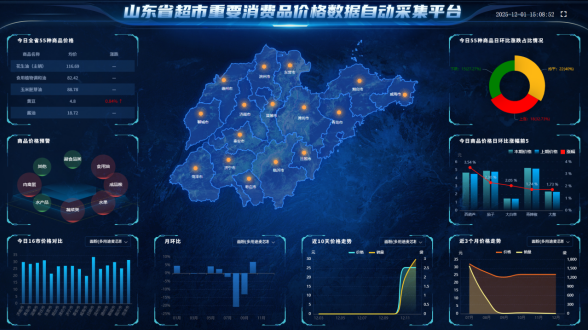
山东:创新构建价格监测数据新模式 摆脱人工依赖迈入智慧新阶段
Zhong Guo Fa Zhan Wang· 2025-12-12 14:58
8月8日,山东省发展改革委举办"政府开放日"活动,地点在山东省价格认证中心,活动主题是"以价格 监测促市场保供稳价"。活动现场,山东省价格认证中心工作人员打开"全省超市重要消费品价格数据自 动采集平台",快速移动鼠标、输入指令,一份重要消费品"价格监测报告"瞬间跳出演示屏幕,报告内 容完整规范。这是山东自去年在全国率先探索建设全省超市重要消费品价格数据自动采集平台、创新构 建价格监测数据自动采集新模式,推动价格监测工作由"人工"走向自动化、智能化的一次历史性变革。 早在2023年底,山东省价格认证中心就提出"借助大数据、信息化手段拓宽价格监测数据来源渠道,探 索研究与大型商超开展数据对接,完善大监测体系"。2024年初,山东超市重要消费品价格数据自动采 集平台启动建设并纳入了省发展改革委年度重点工作计划,2024年9月29日正式上线。目前平台运行稳 定、状况良好,充分发挥了常态化监测、应急监测和节假日监测值守保障作用,有效减轻了基层负担, 提高了工作效率。 初衷已达 平台建设显魅力 功能务实 平台应用受称赞 在完成常态化价格监测核心任务的同时,自动采集平台已在市场异常波动精准预警、技术模式跨域复制 推广、应急 ...
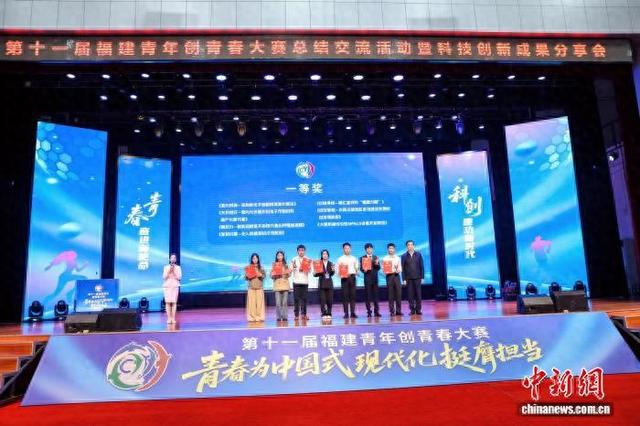
第十一届福建青年创青春大赛成果丰硕 为发展新质生产力注入青春动能
Zhong Guo Xin Wen Wang· 2025-12-12 13:52
Core Insights - The 11th Fujian Youth "Chuang Qing Chun" competition and technology innovation achievement sharing event was successfully held in Yong'an, attracting over 300 participants including youth entrepreneurs and representatives from various organizations [1][3] - The competition focused on themes of technological innovation, digital economy, and entrepreneurship among Taiwanese youth, receiving 1,266 project entries covering advanced fields such as artificial intelligence, biomanufacturing, life health, big data, and blockchain technology [3] - The event has expanded its influence by inviting projects from regions like Gansu, Ningxia, Tibet, and Xinjiang to the finals, fostering regional innovation and entrepreneurship collaboration [3] Competition Highlights - A total of 7 first prizes, 21 second prizes, 34 third prizes, and 49 excellence awards were awarded, along with 8 outstanding organization awards [3] - Since its inception in 2014, the "Chuang Qing Chun" competition has attracted 10,763 youth entrepreneurial projects and 32,100 young participants, awarding 1,381 outstanding projects and distributing 24.4 million yuan in entrepreneurial support funds [3] - The competition has successfully nurtured a number of high-tech enterprises, contributing significantly to the high-quality economic development of the province and injecting youthful energy into the formation of new productive forces [3] Event Activities - During the event, a talent policy promotion for Sanming City was held, along with sharing sessions by entrepreneurial experts on technology innovation achievements [3] - Activities included organized visits and promotional events for young entrepreneurs and startups [3]
十部门发布指导意见 推动网售产品提质创新
Yang Shi Wang· 2025-12-12 11:48
Group 1 - The core viewpoint of the article is the release of the "Guiding Opinions on Improving the Quality of Products and Services on Online Trading Platforms" by ten government departments, focusing on enhancing product quality and service standards in online transactions [1] - The guiding opinions aim to promote product quality innovation in online sales and improve the management rules for online service quality [1] - The initiative includes the application of technologies such as big data, blockchain, and artificial intelligence to build a national industrial product quality safety monitoring and early warning platform [1] Group 2 - The guidelines encourage online platforms to provide direct hotline services for the elderly and improve the compensation prepayment mechanism [1] - The overall goal is to create a safe and trustworthy consumption environment, stimulating consumer potential through high-quality supply [1]
黑龙江:培育拓展消费新场景,推动电子商务与各领域广泛深度融合
Zheng Quan Shi Bao Wang· 2025-12-12 07:02
Core Viewpoint - The Heilongjiang Provincial Government has issued policies to promote high-quality development of e-commerce, aiming to integrate e-commerce with various sectors, innovate with new technologies like artificial intelligence, and enhance digital consumption levels to drive economic growth in Heilongjiang [1] Group 1: Support for E-commerce Entities - The policies encourage the cultivation of quality e-commerce entities, supporting new leading projects with total investments of 5 million yuan or more, providing interest subsidies on bank loans for infrastructure and equipment purchases, with a maximum subsidy of 2 million yuan per entity [1] - E-commerce platforms are supported for self-built or upgraded platforms, with interest subsidies for projects over 3 million yuan, capped at 200,000 yuan per entity [2] Group 2: Expansion of E-commerce Scale - E-commerce enterprises are encouraged to extend into production, improve supply chain collaboration, and broaden online sales channels, with a reward of 2% of the annual increase in physical online retail sales exceeding 10 million yuan, capped at 3 million yuan [2] Group 3: Cross-border E-commerce Support - Cross-border e-commerce enterprises are encouraged to expand import and export channels, receiving a 50% one-time subsidy for website construction and cloud service rental costs, with a maximum of 500,000 yuan per entity [3] - Support is also provided for e-commerce bases to upgrade using innovative technologies, with interest subsidies for projects over 1 million yuan, capped at 1 million yuan per entity [3] Group 4: Demonstration and Specialization - The policies promote the creation of smart e-commerce industrial bases, offering a one-time reward of 1 million yuan for national demonstration bases and 500,000 yuan for provincial innovation benchmark bases [4] - Support is given to establish specialty selection centers to integrate local quality products, with a one-time funding subsidy of 50% of actual investment for centers driving over 50 million yuan in annual online sales, capped at 1 million yuan [4] Group 5: Smart Logistics and Infrastructure - The policies support the intelligent transformation of e-commerce warehousing and logistics, with interest subsidies for projects over 5 million yuan, capped at 3 million yuan for warehousing construction or upgrades [5] - Cross-border warehousing network upgrades are encouraged, with interest subsidies for projects involving smart warehousing facilities, capped at 5 million yuan per entity [5] Group 6: Broader E-commerce Development - Additional measures are outlined to enhance e-commerce's role in empowering the real economy, accelerate public brand creation, strengthen the professional talent pool, and improve service support systems [6]
甘肃采用多项新技术摸清风能太阳能资源"家底"
Zhong Guo Xin Wen Wang· 2025-12-12 06:57
Core Insights - Gansu Province has conducted a comprehensive survey of wind and solar energy resources, revealing significant increases in both theoretical and technical development capacities for these renewable energy sources [1][3][4] Group 1: Wind Energy Resources - The theoretical capacity for wind energy development in Gansu is now estimated at 1.074 billion kilowatts, an increase of 514 million kilowatts from previous assessments, with a technical capacity of 470 million kilowatts [1][3] - The survey has produced a high-resolution wind energy resource map and a database of development capacities, with a spatial resolution of 1 kilometer and a temporal resolution of 1 hour [3] Group 2: Solar Energy Resources - The theoretical capacity for solar energy development in Gansu is now estimated at 11.257 billion kilowatts, an increase of 1.757 billion kilowatts from previous assessments, with a technical capacity of 1.386 billion kilowatts [1][3] - The survey results will support scientific decision-making and efficient resource allocation in the development of new energy projects [4] Group 3: Strategic Importance - Gansu is recognized as a key modern energy production, storage, and export base in China, playing a crucial role in ensuring energy security for the central and eastern regions of the country [3] - The findings from the resource survey are expected to facilitate the large-scale, high-quality development of wind and solar power, contributing to China's carbon neutrality goals [3][4]