
大数据

Search documents
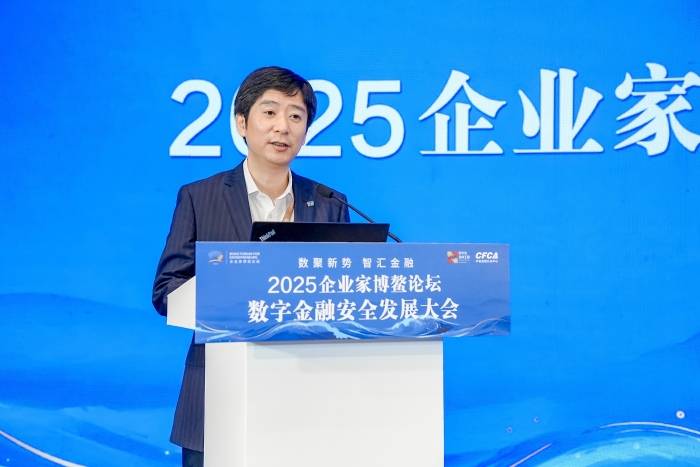
郭大勇:以安全固根基 共建数字金融新生态
Sou Hu Cai Jing· 2025-12-12 06:34
Group 1 - The event "2025 Entrepreneur Boao Forum" took place from December 2 to 5, 2025, in Boao, Hainan, focusing on new opportunities in the "14th Five-Year Plan" [1][4] - Guo Dayong, Vice Chairman and President of China UnionPay, emphasized the profound transformation in financial services due to digitalization, moving from efficiency enhancement to model reconstruction [3] - China UnionPay has signed cross-border payment cooperation memorandums with 11 global institutions, expanding its reach to approximately 50 countries and regions, and establishing over 200 UnionPay standard wallets abroad [3] Group 2 - China UnionPay is investing heavily in technology fields such as artificial intelligence, cloud computing, and big data, leading the construction of a national AI application pilot base [3] - The company aims to open its technological capabilities and experiences to the industry, promoting the intelligent upgrade of payment systems to better serve various sectors [3]

星图金融旗下星云数字获评江苏省专精特新中小企业
Jin Rong Jie· 2025-12-12 05:55
近日,江苏省工业和信息化厅公布2025年江苏省第二批专精特新中小企业名单,星图金融旗下星云数字凭借核心技术积 累、产品创新实力成功入选。 技术研发层面,星云数字坚持核心技术自主创新,聚焦人工智能、大数据、云计算、区块链等新一代信息技术研发和应 用,其多项算法和软件系统的技术水平行业领先,在相关领域构建了坚实的技术"护城河"。目前,星云数字共申请专利300 余项、软件著作权25项,拥有CMMI3、ISO9001、ITSS等几十项国内外权威认证。 产品创新层面,星云数字自主研发的"星术"金融质检大模型应用,基于大模型的深度学习能力,实现对复杂语义、模糊语义 的精准理解和智能分析,为银行、保险等多个金融行业提高质检准确率。通过自然语言维护质检规范,大幅减少了人工介 入量,让质检工作效率可提升3倍以上,运营成本可降低60%以上。 从国家高新技术企业,到毕马威领先金融科技50强企业,再到专精特新中小企业,一系列荣誉见证了星云数字的创新实践 与技术沉淀。未来,星云数字将持续加大研发投入,提升核心竞争力,携手生态伙伴为千行百业的数字化、智慧化转型贡 献力量。 财经频道更多独家策划、专家专栏,免费查阅>> 责任编辑:栎树 专 ...

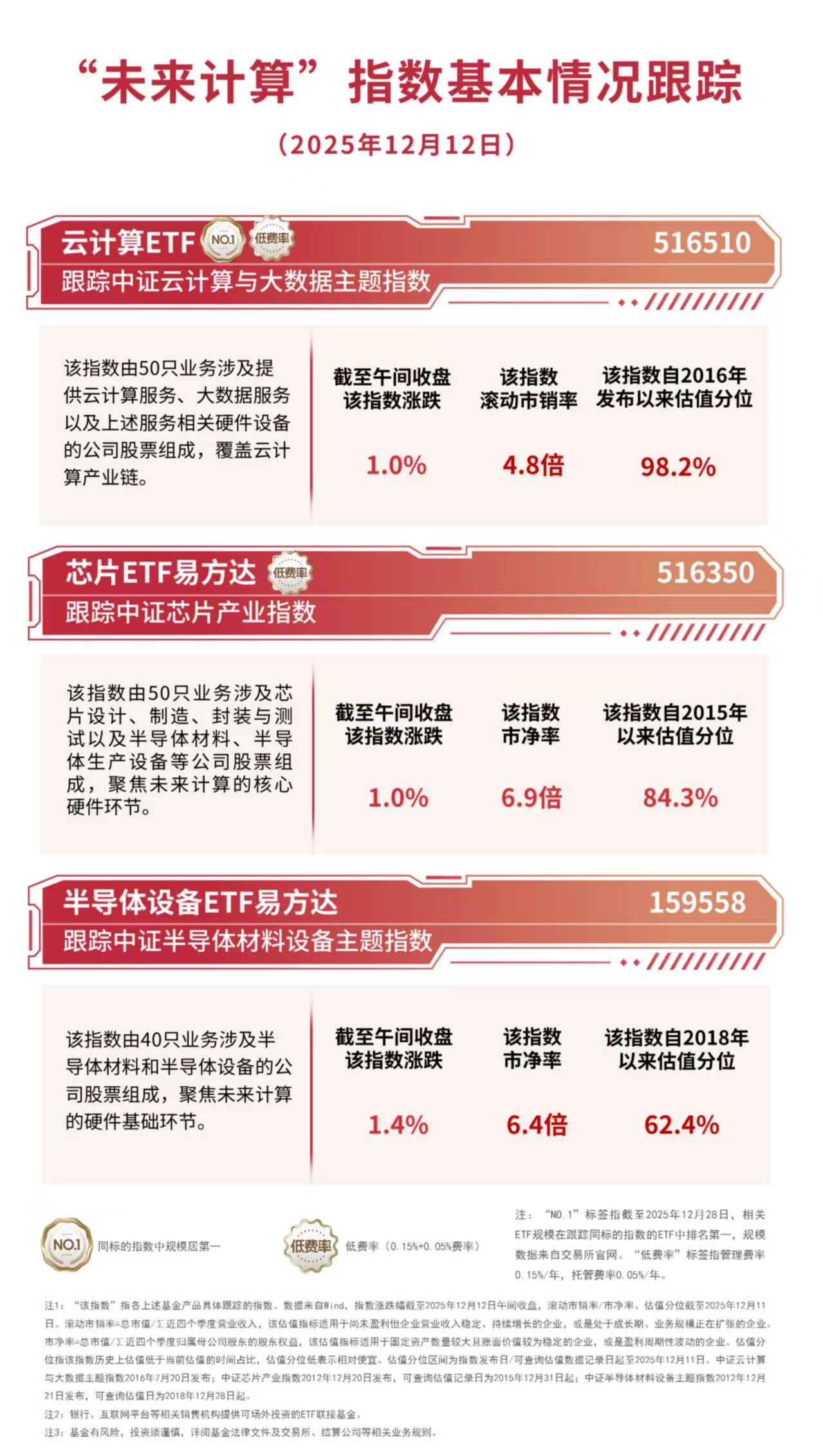
算力板块表现活跃,云计算ETF(516510)、芯片ETF易方达(516350)标的指数走强
Sou Hu Cai Jing· 2025-12-12 05:04
Group 1 - The market showed a rebound after a dip in the morning session, with active performance in AI computing power and semiconductor equipment sectors [1] - By midday closing, the CSI Cloud Computing and Big Data Theme Index and the CSI Chip Industry Index both increased by 1.0%, while the CSI Semiconductor Materials and Equipment Theme Index rose by 1.4% [1] Group 2 - The Cloud Computing ETF tracks the CSI Cloud Computing and Big Data Theme Index, which consists of 50 companies involved in cloud computing services, big data services, and related hardware [3] - The CSI Cloud Computing and Big Data Theme Index recorded a 1.0% increase at midday, with a rolling price-to-sales ratio of 4.8 and a valuation of 98.29 since its inception [3] - The Chip ETF tracks the CSI Chip Industry Index, which includes 50 companies engaged in chip design, manufacturing, packaging, testing, semiconductor materials, and production equipment [3] - The CSI Chip Industry Index also saw a 1.0% increase at midday, with a price-to-book ratio of 6.9 and a valuation of 84.39 since its inception [3]
中国新能源汽车加速智能化 竞逐低空智慧交通新赛道
Zhong Guo Xin Wen Wang· 2025-12-12 04:51
Core Insights - The 21st China (Changsha) International Auto Expo showcases the rapid advancement of intelligent technology in China's new energy vehicle (NEV) sector, with major automakers competing in the low-altitude smart transportation market [1][3] - By October 2025, the penetration rate of NEVs in China is expected to exceed 40%, with L2-level and above intelligent driving functions becoming increasingly common, driven by AI as a core engine for industry transformation [3] - The Chinese NEV industry is undergoing a significant transformation, focusing on electrification, intelligence, connectivity, and sharing, reshaping the global automotive landscape [3][4] Industry Developments - The exhibition highlights the integration of advanced intelligent technologies in NEVs, with features like millimeter-wave radar, laser radar, and intelligent driving assistance systems becoming standard in mid-range models [1] - The demand for smarter and safer NEVs is rising, with 90% of consumers willing to pay extra for advanced intelligent driving services, indicating a shift in consumer preferences [3] - The introduction of solid-state batteries is expected to significantly enhance the range of NEVs, while companies are also exploring low-altitude smart transportation solutions [3] Innovations in Flying Cars - The global debut of the first split-type flying car, "Land Carrier," has garnered attention, with plans for mass production in Guangzhou [4] - Chinese companies are focusing on developing flying cars that can operate in both ground and aerial environments, featuring capabilities such as electric flight, distributed drive, and vertical takeoff and landing [4] - The evolution of NEVs is transforming them from mere transportation tools into "evolving mobile intelligent spaces," leading the industry towards greener, smarter, and more premium offerings [4]


记者去哪儿·迈向“十五五” 从“车轮上的变化”看中国制造强链突围
Ren Min Wang· 2025-12-12 03:32
坚持把发展经济的着力点放在实体经济上,坚持智能化、绿色化、融合化方向。 "几年前,谁能想到中国汽车在产品形态、能源结构和全球地位上会发生如此巨变?'十五五'时期同样 充满想象空间。"在东风日产汽车销售有限公司市场部部长孙豪看来,真正的无人驾驶、氢能源的实用 化进程、固态电池的快速突破……这些前沿领域,正是中国汽车人凭借拼搏精神,有望持续引领全球的 关键赛道。 市场的理性化与法规的完善化,被视为产业健康发展的"好兆头"。上汽大众汽车有限公司党委书记、总 经理陶海龙说,作为产业中的一分子,有责任从自身做起,不仅助力发展,更要引导行业健康前行。这 份自觉,正是产业走向成熟的重要标志。 车展勾勒的蓝图,正在一座座"超级工厂"里变为现实。以人工智能、大数据、工业互联网为代表的数字 技术,已成为驱动产业变革的核心力量。在吉利汽车位于湖州长兴的"新四化"高端制造工厂,已实现每 分钟下线一台车的高效产能,这背后,是现代化产业体系的强力支撑。 吉利汽车集团长兴公司总经理赵德刚介绍,这主要得益于三点:一是数字化赋能全链路,实现精准决策 与管理;二是数字化系统打通上下游,与供应商实现产能共享与无缝协作;三是柔性化制造能力,既能 大 ...

央企融资租赁联盟发布《关于支持海南自贸港高质量发展的倡议书》
Zheng Quan Shi Bao Wang· 2025-12-12 03:27
央企融资租赁联盟倡议,围绕海南"五向图强"的工作目标,彰显央企租赁作为。在旅游业领域,为邮轮 游艇、低空飞行、大型旅游设施提供定制化融资租赁服务,助力打造国际旅游消费中心。在现代服务业 领域,支持现代物流、医疗健康、会展、教育文化等行业的设备投入和资产盘活,推动服务贸易提质增 效。在高新技术产业领域,聚焦深海科技、航天航空、数字经济、生物医药、清洁能源等"9+6"产业赛 道,为企业研发、中试和规模化生产提供灵活高效的设备融资方案,重点支持首台(套)设备、重大技术 装备等"国之重器"产业化应用。在热带特色高效农业领域,助力农业机械化、智能化升级,推动南繁硅 谷重大平台建设,以融资租赁赋能乡村全面振兴。在基础设施建设领域,积极参与机场港口、航运物 流、智慧城市、五网基础设施等领域的设备融资租赁业务,筑牢自贸港发展根基,共同谱写金融"五篇 大文章"。 此外,还倡议稳步推进飞机、船舶等跨境租赁业务,吸引境外租赁资产回归,助力共建"一带一路"建设 和国产设备"出海";探索知识产权、数据资产无形资产的融资租赁模式创新,建设数字化平台,运用人 工智能、大数据、区块链等技术优化业务流程、提升客户体验。 在国务院国资委指导下, ...
爱建证券:走特色数字化发展之路
Zhong Zheng Wang· 2025-12-12 01:32
爱建证券将国家与行业导向内化为数字化转型核心准则,从践行"金融为民"初心、恪守"守正创新"底 线、追求"专业质量"标杆三方面发力,彰显金融机构责任担当。 中证报中证网讯(王珞)近期,爱建证券"爱建先禾APP"凭借卓越的产品稳定性与用户体验,获Gtest 2025全球软件测试技术峰会"优秀软件产品质量"大奖;"大模型赋能财务数字化的应用实践"项目以技术 与业务的深度融合创新,摘得"券商数字化转型优秀案例奖"。这标志着爱建证券依托"技术研发强、业 务理解深、部门协同佳"资源禀赋,走出了一条政策契合度高、特色辨识度强的数字化发展路径。 未来,爱建证券表示将继续锚定数字金融方向,深化AI、大数据与业务融合,在C端优化用户体验,在 B端拓展赋能场景,以技术探索与精准落地,在证券行业数字化转型中领航,为客户创造更高价值,为 行业发展贡献力量。 爱建证券在C端服务优化与B端业务赋能上同步发力,构建"功能+场景+体验"三维服务体系,让"爱建先 禾APP"成为客户信赖的"智能理财管家";以数字化工具破解内部效率瓶颈,推动"经验驱动"向"数据驱 动"转型,为多业务条线赋能,提升整体效能。 ...
中经评论:新型城镇化发展空间仍很大
Jing Ji Ri Bao· 2025-12-12 00:17
城镇化率增速放缓,既是客观规律的体现,更是发展逻辑的深刻转变。与之相伴随的,是我国区域 协调发展正向纵深推进,乡村振兴与新型城镇化相辅相成,人口、经济与资源环境实现更优平衡。未来 一段时期,我国城镇化仍将稳步推进。与发达国家80%左右的水平相比,我国城镇化仍有明显提升空 间。国际经验表明,城镇化率突破65%之后的10多年,往往仍能保持较快发展。有关研究显示,"十五 五"期间,我国城镇化率将继续以年均0.7个百分点左右的速度提高。 我国新型城镇化发展空间依然广阔。这种"空间",不再是简单的人口空间转移和城市面积扩张,而 是体现在多个维度: 一是质量提升的空间。许多城市特别是中小城市的基础设施、公共服务、人居环境,还有不少短板 需要补齐。如何让老城区焕发新生机、让新城区更加宜居,如何建设让人民群众满意的好房子,如何让 城市更加安全有韧性,都是需要认真回答的问题。虽然户籍制度改革已取得重要进展,但怎样让进城务 工人员及其家属更好融入城市,稳步推进基本公共服务均等化,仍然需要持续努力。 二是结构优化的空间。城市群和都市圈内部协调发展、大中小城市合理布局仍有巨大潜力。新型城 镇化不是要削弱乡村,而是要通过城乡要素的双向 ...
【数说经济】新型城镇化发展空间仍很大
Jing Ji Ri Bao· 2025-12-12 00:17
住建部发布的数据显示,今年前10个月,全国新开工改造城镇老旧小区2.51万个,提前完成年度计 划目标。作为新型城镇化的一项重要任务,老旧小区改造在提升居民生活品质、释放内需潜力等方面具 有重要意义。当前,我国城镇化正从快速增长期转向稳定发展期,但增速放缓绝不意味着动力减弱,新 型城镇化依然蕴含着巨大发展空间。 过去几十年,我国经历了世界历史上规模最大、速度最快的城镇化进程,数亿人口进入城市工作和 生活,有力拉动了经济增长和社会进步。2022年我国常住人口城镇化率突破65%,提前实现"十四五"规 划目标;2024年城镇化率进一步提升至67%。如今,城镇化已从高速扩张的"上半场"转入提质增效 的"下半场"。一方面,经济增长从高速转向中高速,产业结构持续优化升级,为城镇化提供了新的产业 基础;另一方面,人民群众对美好生活的需求日益增长,对城市功能、公共服务、人居环境提出了更高 要求。与此同时,人口结构变化、技术进步加速、绿色发展理念深化等因素,都在重塑城镇化的发展路 径。 一是质量提升的空间。许多城市特别是中小城市的基础设施、公共服务、人居环境,还有不少短板 需要补齐。如何让老城区焕发新生机、让新城区更加宜居,如何 ...

以信息技术赋能中华文明国际传播(专题深思)
Ren Min Ri Bao· 2025-12-11 22:03
Core Insights - The article emphasizes the importance of enhancing international communication effectiveness, which is a composite capability system consisting of resource integration, content innovation, and audience engagement [1][2][3] - It highlights the need for a comprehensive communication system supported by information technology, focusing on cultural content and global mutual learning to optimize China's international communication effectiveness [2][3][4] Group 1: Technological Impact - The rapid development of new-generation information technologies is reshaping communication logic and expanding communication spaces, providing historical opportunities for the dissemination of Chinese civilization [2][3] - Technologies such as artificial intelligence, big data, cloud computing, and blockchain are shifting international communication from a linear model centered on content output to a networked, algorithm-driven, and ecological model [2][3] Group 2: Digital Infrastructure - A solid digital foundation is crucial for effective cultural dissemination, influencing the breadth, speed, and sustainability of communication [3][4] - The construction of new infrastructures like 5G networks and cloud computing enhances the coverage, stability, and timeliness of international communication while reducing costs and information redundancy [3][4] Group 3: Cultural Expression and Innovation - The development of information technology is reshaping cultural creation methods, injecting innovative power into the global expression of Chinese civilization [4][5] - Digital cultural products have become important carriers for international communication, with examples like the game "Black Myth: Wukong" and the film "The Wandering Earth" showcasing Chinese narratives to global audiences [4][5] Group 4: Collaborative Communication - The proliferation of information technology is facilitating a shift from one-way output to multi-directional interaction in cultural dissemination, creating new digital spaces for mutual learning [5][6] - New media and content platforms in China are leveraging technological innovations to engage in interactive dialogues with overseas users, enhancing understanding and communication [5][6]