
循环经济

Search documents
让工业固废“变废为宝”(弘扬科学家精神·对话)
Ren Min Ri Bao· 2025-08-04 22:39
Core Viewpoint - The article highlights the importance of industrial solid waste management, emphasizing the potential for transforming waste into valuable resources through effective treatment and utilization techniques [2][3]. Group 1: Industrial Solid Waste Management - Industrial solid waste management follows the principle of balancing resource utilization and harmless disposal, distinguishing between treatment for reuse and disposal for safety [3]. - Techniques such as physical separation and advanced optical sorting are employed to enhance the recovery of valuable components from waste materials like coal gangue [3][4]. - The article discusses the challenges in recognizing the resource attributes of solid waste and the high costs associated with technology implementation, which hinder the promotion of effective waste management solutions [5]. Group 2: Research and Development in Waste Utilization - The article outlines the significant breakthroughs achieved in the high-efficiency utilization of coal gangue and the establishment of multiple demonstration projects for comprehensive waste utilization [2]. - It emphasizes the need for collaborative innovation between academia and industry to address real problems in waste management and enhance the effectiveness of research outcomes [6][7]. - The narrative includes a historical perspective on the development of domestic technologies to reduce reliance on imports, showcasing the importance of local innovation in addressing industry challenges [6][8]. Group 3: Future Directions and Recommendations - The article suggests that understanding the specific composition and properties of waste materials is crucial for successful recycling and resource recovery [5]. - It advocates for a long-term commitment to research and development in the field of industrial solid waste, encouraging researchers to focus on the pressing needs of the industry [9]. - The importance of patience and perseverance in scientific research is highlighted, with a call for researchers to remain dedicated to their work despite initial setbacks [9].

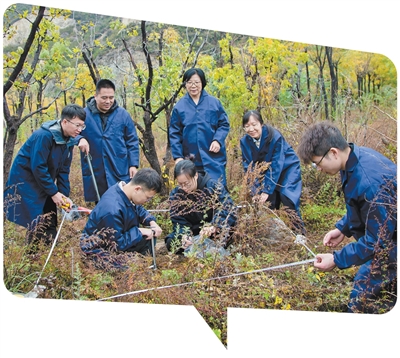
对话国家卓越工程师、山西大学教授程芳琴—— 让工业固废“变废为宝”(弘扬科学家精神·对话)
Ren Min Ri Bao· 2025-08-04 21:56
Core Viewpoint - The article emphasizes the importance of transforming industrial solid waste from an environmental burden into a valuable resource through effective management and innovative technologies [1][2]. Group 1: Industrial Solid Waste Management - Industrial solid waste management follows the principle of balancing resource utilization and harmless disposal, distinguishing between "treatment" for reuse and "disposal" for safety [2]. - Techniques such as physical separation and advanced optical sorting are employed to enhance the recovery of valuable components from waste like coal gangue [2][3]. - The article highlights the need for a technical chain that includes pre-treatment activation, resource utilization, and harmless disposal to promote circular economy development [2]. Group 2: Challenges and Opportunities - The potential for "waste-to-resource" transformation is recognized, with valuable elements in industrial waste available for tiered utilization [3]. - Key challenges include unclear recognition of the resource attributes of waste and high costs associated with technology implementation, which hinder the promotion of effective waste management solutions [4]. - The article stresses the necessity of understanding the composition of waste and the production processes to avoid costly mistakes in recovery efforts [4]. Group 3: Research and Innovation - The article discusses the importance of collaborative innovation and aligning research with industry needs to create a conducive environment for scientific advancement [6][9]. - It highlights the significance of addressing real industry problems to ensure that research efforts are relevant and impactful [7][9]. - The article also mentions successful case studies, such as the development of potassium sulfate production technology, which demonstrates the practical application of research in solving industry challenges [8][10].
万物新生上涨5.45%,报3.29美元/股,总市值7.23亿美元
Jin Rong Jie· 2025-08-04 14:22
Core Viewpoint - The company, 万物新生 (RERE), has shown a significant increase in stock price and financial performance, indicating strong growth potential in the recycling and environmental technology sector [1]. Financial Performance - As of March 31, 2025, the total revenue of 万物新生 reached 4.653 billion RMB, representing a year-on-year growth of 27.45% [1]. - The net profit attributable to the parent company was 42.8 million RMB, marking a substantial increase of 146.09% year-on-year [1]. Stock Market Activity - On August 4, the stock price of 万物新生 increased by 5.45%, closing at $3.29 per share, with a trading volume of $689,000 and a total market capitalization of $723 million [1]. Upcoming Events - 万物新生 is scheduled to disclose its mid-year report for the fiscal year 2025 on August 19, with the actual disclosure date subject to company announcements [1]. Company Overview - 万物新生 is a Cayman Islands-registered holding company primarily operating through its domestic subsidiary, 上海万物新生环保科技集团有限公司 [1]. - Established in 2011, the company positions itself as a "Internet + Environmental Protection" circular economy enterprise, focusing on sustainability and social responsibility [1]. - The company operates four main business lines: 爱回收, 拍机堂, 拍拍, and overseas business AHS Device [1].

安徽界首:“垃圾堆上”打造千亿产业
Zhong Guo Xin Wen Wang· 2025-08-04 11:35
Core Insights - The circular economy in Jieshou City, Anhui Province, is rapidly developing, focusing on recycling over 4 million tons of waste batteries, aluminum, and plastics annually, with a target of becoming a "hundred billion-level industry" [1][2] Group 1: Industry Overview - Jieshou has established a comprehensive circular economy industry chain, processing waste batteries as "processed minerals" and achieving a recycling rate of over 98% for materials like copper, aluminum, and lithium through advanced technology [1][2] - The city is home to the largest green recycling base for regenerated lead and a new energy production base for battery recycling in China, with an annual capacity to recycle 1.6 million tons of waste batteries and produce nearly 1 million tons of regenerated lead [2] Group 2: Technological Innovation - The innovative processes in Jieshou, such as the "oxygen-enriched side-blowing" acid-making technology, have won awards and significantly upgraded the industry, showcasing the importance of technology in driving growth [1][2] - Jieshou leads in technological innovation indices and R&D investment in the northern Anhui region, with a high number of innovation platforms and national-level specialized enterprises [2] Group 3: Economic Impact - The circular economy has positively impacted local livelihoods, increasing income for nearly 50,000 families and raising per capita income for farmers by over 10% [2] - The recycling network has engaged over 100,000 people in waste material recovery, effectively reducing resource waste and environmental pollution [2]
转转官宣朱珠成为集团品牌代言人 推动二手消费新风尚
Yang Guang Wang· 2025-08-04 07:59
Core Viewpoint - The partnership between Zhu Zhu and Zhuanzhu Group aims to promote a new trend in second-hand consumption, enhancing brand awareness and accelerating the implementation of the "Hundred Categories, Thousand Products" strategy [1][3]. Group 1: Brand Collaboration - Zhu Zhu has been appointed as the brand ambassador for Zhuanzhu Group, aligning her public image of elegance, wisdom, and responsibility with the company's mission of sustainable resource circulation [2]. - Zhu Zhu advocates for low-carbon living and frequently shares creative ideas for repurposing second-hand items on her social media, establishing a strong ideological connection with Zhuanzhu's principles [2]. Group 2: Market Growth and Strategy - The second-hand consumption market is experiencing rapid growth due to the promotion of "dual carbon" goals and evolving consumer attitudes [3]. - Zhuanzhu Group has developed a marketplace ecosystem covering over a hundred categories, including second-hand mobile phones, 3C digital products, bags, watches, outdoor sports equipment, books, musical instruments, games, and photography equipment [2][3]. Group 3: Trust System and Quality Assurance - Zhuanzhu Group is focused on building a trust system for second-hand transactions, addressing key trust issues to ensure safe and efficient circulation [4]. - The company has established a proprietary quality inspection system, with nearly ten years of experience and over 200 patented technologies, enhancing its multi-category quality inspection capabilities [4]. - Zhuanzhu Group operates three quality inspection centers in Shenzhen, Chengdu, and Qingdao, employing over 2,000 quality inspectors and luxury goods appraisers to ensure thorough inspections of various product categories [4].

一个包装瓶,如何让欧莱雅和LVMH成“盟友”?
Xin Lang Cai Jing· 2025-08-04 06:23
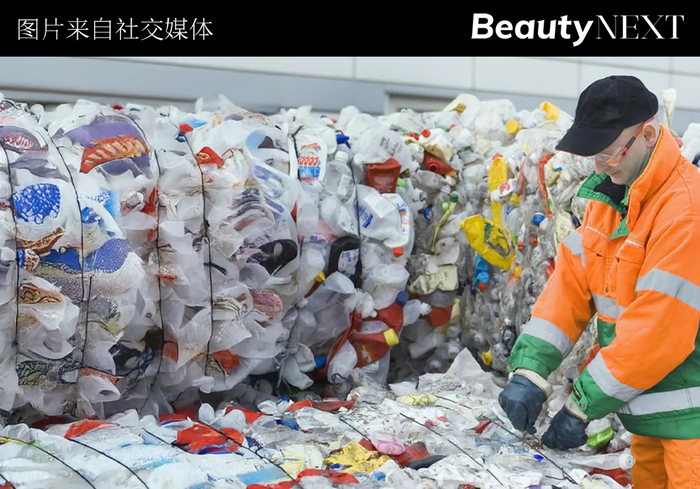
Core Insights - The beauty industry is undergoing a transformation where packaging, traditionally seen as disposable, is being redefined as a durable good within a circular economy framework [1][2][5] - France is leading the way with a pilot project involving six perfume brands aimed at reusing bottles, marking a significant shift towards sustainability in high-end beauty [2][5] - The French law on waste reduction and circular economy mandates increasing reuse rates, pushing the beauty industry to rethink its operational models [2][24] Group 1: Industry Initiatives - Six major brands have formed alliances to promote sustainability, including the establishment of organizations like TRASCE and The Value of Beauty Alliance [2][5] - The "La Boucle Beauté" project, involving brands like Lancôme and Chanel, aims to test a large-scale perfume bottle reuse system [5][8] - The initiative includes a logistics system for collecting and cleaning used bottles, utilizing innovative CO2 cleaning technology to minimize environmental impact [8][12] Group 2: Regulatory Environment - The French "Anti-Waste and Circular Economy Law" (AGEC) sets specific reuse targets for packaging, requiring 7% reuse by the end of 2025 and 10% by 2027 [2][24] - The law includes over a hundred obligations and prohibitions aimed at eliminating single-use plastics by 2040, with phased targets for reduction, reuse, and recycling [24][26] Group 3: Challenges and Opportunities - The beauty industry generates millions of tons of packaging waste annually, with 95% of containers discarded after a single use, highlighting the need for a shift towards reuse [11][12] - The transition from recycling to reuse presents challenges in product design, cleaning standards, and logistics, requiring a collaborative ecosystem [12][14] - In China, the lack of mandatory policies and infrastructure for reuse presents a significant barrier, with current practices largely focused on recycling rather than establishing a verified reuse system [26][30] Group 4: Consumer Perception - Consumer acceptance of reused products is a critical barrier, as perceptions of hygiene and value affect willingness to participate in reuse programs [32][33] - Education and trust-building measures are essential to shift consumer mindsets towards embracing reused beauty products [32][33]


转转集团携手朱珠推进循环经济 加速“百类千品”战略落地
Jing Ji Guan Cha Wang· 2025-08-04 04:03
Core Insights - The collaboration between Zhu Zhu and Zhuan Zhuan Group aims to promote green consumption and accelerate the development of the second-hand trading market [1] Company Summary - Zhuan Zhuan Group has appointed actress Zhu Zhu as its brand ambassador to advocate for sustainable consumption practices [1] - The partnership is part of the company's strategy to cover over a hundred categories, including mobile phones, bags, and outdoor sports equipment, under its "Hundred Categories, Thousand Products" initiative [1] Industry Summary - The second-hand consumption market is experiencing rapid growth due to the promotion of "dual carbon" goals and the evolution of consumer attitudes [1] - Zhu Zhu's advocacy for low-carbon living aligns with Zhuan Zhuan's mission of making the world more sustainable through resource circulation [1] - The CEO of Zhuan Zhuan Group, Huang Wei, believes that Zhu Zhu's influence will help attract more young users to participate in resource recycling [1]
反对过度包装要“破”更要“立”
Ren Min Ri Bao· 2025-08-04 01:48
Group 1 - The excessive packaging of products is a growing concern in China, with consumer associations advocating for reduced packaging to promote green consumption and ensure compliance [1][2] - Packaging waste accounts for approximately 30%-40% of urban household waste in China, with significant resource consumption involved in producing packaging materials [1] - The Chinese government has implemented stricter regulations and standards to combat excessive packaging, resulting in a notable reduction in high-priced gift boxes and improved packaging efficiency in e-commerce [1][2] Group 2 - Luxurious packaging is often associated with issues like gift-giving violations and distorts the meaning of consumption, highlighting the need for a cultural shift towards more responsible consumption practices [2] - The packaging industry is crucial for connecting manufacturing and consumption, and there are opportunities for growth in sustainable packaging solutions, such as biodegradable materials [2][3] - The overall consumer goods industry must foster a green consumption trend by breaking old consumption habits and enhancing the supply of innovative, quality products that balance environmental considerations with consumer experience [3]
2025年上半年内蒙古自治区原保险保费收入共计572.87亿元,同比增长5.26%
Chan Ye Xin Xi Wang· 2025-08-03 09:25
Core Viewpoint - The development of recycled polyester staple fiber is rapidly advancing due to increasing global resource shortages and environmental issues, with a projected production increase in China from 2020 to 2024, reaching 4.21 million tons in 2024, a year-on-year growth of 5.8% [1][14]. Industry Overview - Recycled polyester staple fiber is produced from waste polyester bottle flakes and spinning waste through physical or chemical regeneration processes, with lengths typically ranging from 32 to 102 mm and various specifications [3]. - The fiber is widely used in furniture, toys, bedding, and clothing industries due to its low cost and good performance [3]. Industry Policies - The Chinese government has implemented several policies to promote the development of recycled polyester staple fiber, including encouraging textile companies to prioritize the use of green fiber materials and enhancing the standards and certification systems for green products [5][7]. - Specific policies include the 2022 implementation opinions on accelerating the recycling of waste textiles and the 2024 notice on promoting high-quality recycling of waste textiles and bottle flakes [5][7]. Industry Chain - The upstream of the recycled polyester staple fiber industry includes raw materials such as polyester fabrics, waste polyester bottle flakes, and spinning waste, which directly affect production costs and profitability [8]. - The downstream applications primarily include clothing, home textiles, and industrial textiles, with clothing being the largest demand market [8]. Market Demand - China's waste textile recycling volume is projected to grow from 4 million tons in 2019 to 5.15 million tons in 2024, indicating a significant potential for recycled polyester staple fiber as a key application area [10]. - The textile industry in China is expected to achieve a revenue of 48,353.66 billion yuan in 2024, a year-on-year increase of 3.87%, further driving the demand for recycled fibers [12]. Competitive Landscape - Key players in the recycled polyester staple fiber industry include Yangzhou Tianfu Long Group, Youcai Environmental Resources Technology, and Fujian Minrui New Fiber, which possess large production scales and advanced technologies [16][17][19]. - Smaller enterprises are also emerging, offering high-quality and innovative products that appeal to consumers [16]. Development Trends - The demand for recycled polyester staple fiber is expected to continue growing due to stricter global environmental policies and increasing consumer awareness of sustainability [23]. - Differentiated products, such as recycled colored polyester staple fiber, are anticipated to see significant growth due to their low carbon emissions and cost advantages [24]. - Quality improvements and technological innovations will enhance the competitiveness of recycled polyester staple fiber, with a focus on resource efficiency and reduced environmental impact [26].


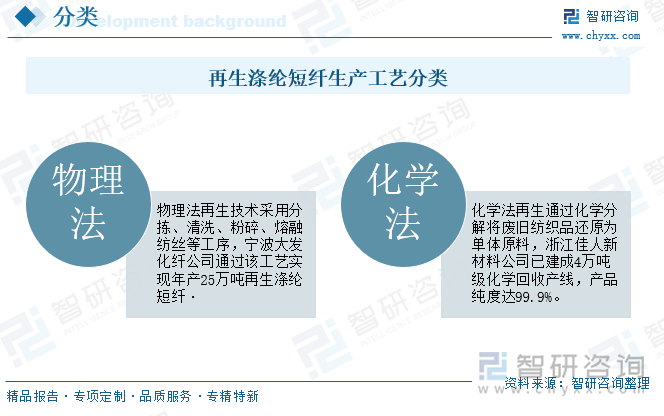
研判2025!中国再生涤纶短纤行业政策汇总、产业链、发展现状、竞争格局及发展趋势分析:政策积极推动再生纤维应用,推动行业产量增长至421万吨[图]
Chan Ye Xin Xi Wang· 2025-08-03 03:24
Core Viewpoint - The development of recycled polyester staple fiber is accelerating in response to global resource shortages and environmental issues, with production expected to reach 4.21 million tons in 2024, a year-on-year increase of 5.8% [1][14]. Industry Overview - Recycled polyester staple fiber is produced from waste polyester bottle flakes and spinning waste through physical or chemical regeneration processes, with lengths typically ranging from 32 to 102 mm and various specifications [3]. - The industry is driven by strong market demand and a stable supply of raw materials, particularly from the recycling of waste textiles and bottle flakes [1][14]. Industry Policies - The Chinese government has implemented several policies to promote the development of recycled polyester staple fiber, including encouraging textile companies to prioritize the use of green fiber materials and enhancing standards for green products [5][7]. - Key policies include the 2022 implementation opinions on accelerating the recycling of waste textiles and the 2024 notice on promoting high-quality recycling of waste textiles and bottle flakes [5][7]. Industry Chain - The upstream of the recycled polyester staple fiber industry includes the collection of raw materials such as waste polyester bottle flakes and spinning waste, which directly impacts production costs and profitability [8]. - The downstream applications primarily include clothing, home textiles, and industrial textiles, with clothing being the largest market segment [8]. Market Demand - The demand for recycled polyester staple fiber is expected to continue growing due to increasing consumer awareness of environmental issues and government support for sustainable practices [23]. - The recycling volume of waste textiles in China is projected to rise from 4 million tons in 2019 to 5.15 million tons in 2024, providing ample raw material for production [10]. Competitive Landscape - The industry features several leading companies such as Yangzhou Tianfu Long Group, Youcai Environmental Resources Technology, and Fujian Minrui New Fiber, which possess significant market influence and advanced production capabilities [16][17][19]. - Smaller enterprises are also emerging, offering high-quality and innovative products that appeal to consumers [16]. Future Trends - The market for differentiated products, such as recycled colored polyester staple fiber, is expected to expand due to their low carbon emissions and cost advantages [24]. - Continuous improvements in quality and technological innovation will enhance the competitiveness of recycled polyester staple fiber, with a focus on resource efficiency and reduced environmental impact [26].