再生铅

Search documents
铅低位震荡难改
Hong Ye Qi Huo· 2026-03-24 09:09
1. Report Industry Investment Rating No relevant content provided. 2. Core View of the Report The lead price is expected to remain in a low - level oscillation. Although the losses of secondary lead enterprises and their delayed resumption of production support the lead price, downstream demand is weak, and the pressure of imported lead inflow persists [5]. 3. Summary by Related Catalogs Fundamental Changes - **Processing Fees**: In February 2026, the import volume of lead concentrate was about 128,400 tons, a month - on - month increase of 3.78% and a year - on - year increase of 26.4%. The import volume in the first two months of this year increased significantly year - on - year. Domestic and foreign lead concentrate processing fees remained stable. The domestic monthly processing fee in March was 200 - 300 yuan/ton, with no month - on - month change; the imported monthly processing fee was - 160--140 US dollars/dry ton, also with no month - on - month change. The domestic weekly processing fee for lead ore was 200 - 300 yuan/ton, with no week - on - week change; the imported weekly processing fee was - 150--120 US dollars/dry ton, a week - on - week decrease of 10 US dollars/dry ton [2]. - **Supply**: In February 2026, the domestic electrolytic lead output was 283,700 tons, a month - on - month decrease of 17.07% and a year - on - year decrease of 1.21%. The output of secondary refined lead was 154,700 tons, a month - on - month decrease of 45.18% and a year - on - year decrease of 11.36%. In March, primary lead entered the centralized resumption period. As of the week of March 20, the average operating rate of primary lead smelters in three provinces was 62.59%, a week - on - week increase of 1.52%. The weekly operating rate of secondary lead in four provinces was 39.57%, a week - on - week increase of 10.42%. The price of waste batteries is firm, and the losses of secondary lead enterprises have expanded, with possible production cuts and delayed resumption of production. The Shanghai - London price ratio has risen, and refined lead imports are in a continuous profitable state, with overseas lead surplus pressure flowing into the domestic market [3]. - **Consumption**: The weekly comprehensive operating rate of lead - acid battery enterprises in five provinces last week was 73.92%, a week - on - week increase of 0.46%. The production of lead - acid battery enterprises is relatively stable. The terminal consumption of electric bicycles and automobile battery markets is mediocre. Currently, the lead price is adjusted at a low level, and battery enterprises replenish inventory at low prices, alleviating the domestic lead inventory pressure. However, the downstream purchasing enthusiasm is still general, and most purchases are for rigid needs. Considering the consumption off - season in April, it is expected that the domestic lead ingot social inventory will stop falling and start to rise in mid - to - late April [4]. - **Spot**: As of the week of March 20, the domestic lead spot basis premium increased, and the weekend lead spot basis was a premium of 165 yuan. The LME lead spot remained in a deep discount, with a weekend discount of - 39.51 US dollars [4]. - **Inventory**: As of the week of March 20, the LME lead weekly inventory decreased by 400 tons to 284,100 tons, with the LME inventory oscillating at a high level, at an absolute high in the past five years; the weekly inventory of lead on the Shanghai Futures Exchange decreased by 9,939 tons to 66,100 tons. As of March 23, the domestic lead ingot social inventory was 63,100 tons, a month - on - month decline, at a moderately high level [4]. Market Outlook and Strategy - Overseas lead supply is loose, with high - level oscillation of LME lead inventory and deep spot discounts. Overseas mine supply is gradually recovering, but the release period is mainly in the second half of the year. Although the import volume of lead ore has increased significantly year - on - year, the recovery of domestic lead ore supply is still limited, and the domestic lead ore supply shortage has not improved, with processing fees remaining at a low level. Primary lead enterprises have high production enthusiasm, and the operating rate of primary lead has steadily recovered. Currently, the price of waste batteries is firm, secondary lead enterprises have large losses, and although the operating rate has increased month - on - month, the resumption of production of some enterprises has been delayed. The Shanghai - London price ratio has risen, and the domestic import profit has expanded, with overseas lead surplus pressure shifting to the domestic market. - Currently, the lead price is adjusted at a low level, and battery enterprises replenish inventory at low prices, alleviating the domestic lead inventory pressure. However, the downstream purchasing enthusiasm is still general, and most purchases are for rigid needs. The second quarter is the off - season for lead consumption, demand will weaken month - on - month, and inventory may rise again. - Overall, the large losses of secondary lead enterprises, their delayed resumption of production, and production cuts support the lead price. However, downstream demand is general, and under the pressure of imported inflows, the low - level oscillation of lead is difficult to change. Later, attention should be paid to the resumption of production of secondary lead and the domestic inventory situation [5].
库存持续累积,铅承压寻底
Hong Ye Qi Huo· 2026-03-16 09:38
1. Report Industry Investment Rating No relevant content provided. 2. Core View of the Report - The lead price is under pressure and continues to be weak due to limited improvement in downstream demand, high domestic inventories, and imports. However, the expanding losses and slow resumption of production in the secondary lead sector provide some support to the lead price. Attention should be paid to the resumption of secondary lead production and the progress after secondary lead is included in the delivery system [5]. 3. Summary According to Relevant Catalogs 3.1 Fundamental Changes - **Processing Fees**: In December 2025, the import volume of lead concentrates was about 149,000 tons, a month - on - month increase of 35.8% and a year - on - year increase of 24.63%. The domestic lead concentrate market is in high demand in winter, and the tight supply situation continues. The domestic and foreign lead concentrate processing fees have further declined at low levels. In March, the domestic monthly processing fee was 200 - 300 yuan/ton, and the import monthly processing fee was - 160 - - 140 US dollars/dry ton, both remaining unchanged month - on - month. The weekly domestic lead ore processing fee was 200 - 300 yuan/ton, and the import weekly processing fee was - 160 - - 130 US dollars/dry ton, both remaining unchanged week - on - week [2]. 3.2 Supply - **Primary Lead**: In February 2026, the domestic electrolytic lead production was 283,700 tons, a month - on - month decrease of 17.07% and a year - on - year decrease of 1.21%. In March, primary lead entered the centralized resumption period. As of the week of March 13, the average operating rate of primary lead smelters in three provinces increased by 4.11 percentage points to 56.97% week - on - week, and the supply continued to increase slightly. The by - product silver price is at a high level, and the smelting profit is considerable, so the production enthusiasm of primary lead enterprises is high [3]. - **Secondary Lead**: In February 2026, the production of secondary refined lead was 154,700 tons, a month - on - month decrease of 45.18% and a year - on - year decrease of 11.36%. Affected by losses and environmental protection, the resumption of production is far below expectations. The weekly operating rate of SMM is only 29.15%, a week - on - week increase of 2.03%. Although large - scale smelters in Shandong and Jiangxi are expected to increase production this week, the high price of waste batteries and the low price of secondary lead have led to serious losses for secondary lead enterprises, and the situation of active production reduction and postponed resumption of production has increased. Starting from March 17, secondary lead will be officially included in the delivery system as an alternative delivery product, with a discount of 150 yuan/ton to the standard product. The pricing logic of Shanghai lead has changed to a dual - track pricing of primary and secondary lead, reducing the risk of cornering the market and putting pressure on the overall valuation of the market [3]. - **Imports**: The Shanghai - London price ratio has rebounded, and the import of refined lead has been in a state of continuous profit. The overseas lead surplus pressure has flowed into the domestic market [3]. 3.3 Consumption - **Battery Enterprises**: Last week, the weekly comprehensive operating rate of lead - acid battery enterprises in five provinces was 73.45%, a week - on - week increase of 1.78%. In March, major lead - acid battery enterprises have basically resumed normal production. The orders of electric bicycle and automobile battery enterprises mainly come from the post - Spring Festival replenishment of dealers, but the actual consumption improvement in the terminal market is limited. Dealers are not enthusiastic about purchasing, resulting in slow sales of new batteries and high inventory digestion pressure. Battery factories generally accumulate finished product inventories to a high level of 25 - 30 days. Battery factories are extremely cautious in purchasing lead ingots, and most enterprises only maintain a raw material inventory of 4 - 5 days, mainly using the "long - term order pick - up" or "on - demand replenishment" procurement model, and the spot transactions are extremely light [4]. 3.4 Spot and Inventory - **Spot**: As of the week of March 13, the domestic lead spot basis had a small premium, with a weekend premium of 95 yuan. The LME lead spot maintained a deep discount, with a weekend discount of - 47.55 US dollars [4]. - **Inventory**: As of the week of March 13, the LME lead weekly inventory decreased by 1,400 tons to 284,500 tons, and the LME inventory fluctuated at a high level, at an absolute high in the past five years. The weekly inventory of lead on the Shanghai Futures Exchange increased by 9,220 tons to 76,000 tons. As of March 12, the domestic social inventory of lead ingots was 77,700 tons, continuing to rise month - on - month and at an absolute high level in the past four years [4].
沪铅低位宽幅震荡
Hong Ye Qi Huo· 2026-03-10 07:46
1. Report Industry Investment Rating - Not provided in the given content 2. Core View of the Report - The lead price is expected to remain in a low - level wide - range oscillation pattern, with limited downstream demand boosting the price and high domestic inventory pressuring it. However, the firm price of waste batteries provides strong support for the lead price. Future attention should be paid to the resumption of production of recycled lead and the progress of recycled lead's inclusion in the delivery system [5] 3. Summary by Relevant Catalogs 3.1 Fundamental Changes - Processing Fees - In December 2025, the import volume of lead concentrate was about 149,000 tons, a month - on - month increase of 35.8% and a year - on - year increase of 24.63%. The import volume of lead ore has increased month - on - month for two consecutive months, but the domestic lead concentrate market demand is high in winter, and the domestic mine supply shortage continues. The domestic and foreign lead concentrate processing fees have further declined at a low level. In March, the domestic monthly processing fee was 200 - 300 yuan/ton, flat month - on - month; the import monthly processing fee was - 160 - - 140 US dollars/dry ton, flat month - on - month. In terms of spot processing fees, the domestic weekly processing fee for lead ore was 200 - 300 yuan/ton, flat week - on - week; the import weekly processing fee was - 160 - - 130 US dollars/dry ton, flat week - on - week [2] 3.2 Fundamental Changes - Supply - In February 2026, the domestic electrolytic lead production was 283,700 tons, a month - on - month decrease of 17.07% and a year - on - year decrease of 1.21%. The production of recycled refined lead in February 2026 was 154,700 tons, a month - on - month decrease of 45.18% and a year - on - year decrease of 11.36%. After the Spring Festival, the maintenance of primary lead enterprises ended, and the current precious metal prices are still high, so the profits of primary lead smelting enterprises are still considerable, and the production has increased month - on - month. After the Lantern Festival, the losses of recycled lead enterprises expanded, causing the originally expected centralized resumption of production in early March to be postponed to after mid - March. It is expected that the effective production of recycled lead will be concentrated in the second half of the month. If the losses continue, the resumption of production in late March may fall short of expectations, and the tight supply of recycled lead may support the lead price periodically. Currently, after the lead price has fallen, the price of waste batteries is relatively resistant to decline, and recycled lead enterprises are deeply in losses. In addition, the inclusion of recycled lead as a deliverable (implemented on March 17) will increase the deliverable supply in the futures market, reducing the risk of cornering the market and putting pressure on the overall valuation. In terms of imports, the Shanghai - London ratio has rebounded, and refined lead is in a state of import profit, so the overseas lead surplus pressure will flow into the domestic market [3] 3.3 Fundamental Changes - Consumption - The weekly operating rate of battery enterprises has rebounded to 71.68%. After the Lantern Festival, the lead - acid battery market has entered a comprehensive recovery state. Most production enterprises have basically resumed production, and as the number of workers on the job increases, the output has gradually increased, driving the weekly operating rate of lead - acid battery enterprises to rise significantly. Currently, the terminal consumption of electric bicycles and automobile battery markets is average. The inventory of dealers is relatively high, and the finished - product inventory of battery factories is digested slowly, with relatively large inventory pressure. Downstream enterprises have weak purchasing intentions, only maintaining long - term order pick - up or replenishing inventory as needed, and there is no concentrated stockpiling market [4] 3.4 Fundamental Changes - Spot - As of the week of March 6, the domestic lead spot basis was slightly at a discount, and the weekend lead spot basis was at a discount of 5 yuan. The LME lead spot remained at a deep discount, with a weekend discount of - 42.91 US dollars [4] 3.5 Fundamental Changes - Inventory - As of the week of March 6, the weekly LME lead inventory decreased by 200 tons to 285,900 tons. The LME inventory fluctuated at a high level and was at an absolute high in the past five years. The weekly inventory of lead on the Shanghai Futures Exchange increased by 2,162 tons to 66,800 tons. As of March 10, the domestic lead ingot social inventory was 73,700 tons, a month - on - month increase of 7.12%, and it has increased for two consecutive periods, reaching an absolute high level in the past four years [4]
点评报告:再生铅正式纳入交割
Guo Tou Qi Huo· 2026-03-09 11:19
Report Summary 1. Report Industry Investment Rating No information provided. 2. Core Viewpoints - The pricing logic of Shanghai lead futures has shifted to "primary + recycled" joint pricing, which is more in line with the current industry situation where recycled lead accounts for more than half. Futures prices can better reflect the real supply - demand relationship in the industry, effectively alleviating the squeeze - out pressure and reducing the deviation between futures and spot prices [4]. - The inclusion of recycled lead in delivery effectively solves the problem of "mismatch between futures and spot targets" in the hedging process of recycled lead enterprises. The number of recycled lead enterprises participating in hedging and delivery is expected to increase significantly, and the transparency of the recycled lead industry will be further improved [4]. - Recycled lead enterprises producing standard delivery products can effectively use the futures market to transfer price risks. The production stability and capacity utilization rate are expected to be further improved. The competitiveness of high - quality recycled lead enterprises will increase, driving the standardized development of the recycled lead industry and accelerating the reshuffle of the industry [4]. 3. Summary by Related Catalogs Event - On March 6, 2026, the Shanghai Futures Exchange announced the inclusion of recycled lead in delivery [1]. Key Points - **Revised Details**: The revised version adds recycled lead ingots as substitutes. The standard product is lead ingots meeting GB/T469 - 2023Pb99.994 or GB/T469 - 2023Pb99.996, and the substitutes are recycled lead ingots meeting GB/T21181 - 2025ZSPb99.986 or GB/T21181 - 2025ZSPb99.990. In terms of quality regulations, the weight requirements for standard and substitute products are also more detailed [2]. - **Implementation Time**: Starting from March 17, 2026, for the PB2703 contract [3]. - **Delivery Positioning**: Recycled lead is a substitute, not an independent contract [3]. - **Premium and Discount**: The substitute has a discount of 150 yuan/ton compared to the standard product [3]. Price Impact - **Short - term**: The change in the pricing logic of the futures market and the expansion of delivery products will lead to the cheapest delivery product determining the lower limit of lead prices, suppressing the central price of futures and spot prices, and causing the short - term price center of Shanghai lead to decline [5]. - **Medium - and Long - term**: Sufficient delivery resources and dual - track pricing of primary and recycled lead help stabilize price fluctuations, reduce delivery risks, and avoid extreme market conditions. The cost of recycled lead provides a stronger bottom support for Shanghai lead prices, and the pattern of wide - range fluctuations above the cost line in the medium - and long - term is difficult to change without unexpected performance in the consumer market [5].
铅:再生纳入交割,价格承压
Guo Tai Jun An Qi Huo· 2026-03-09 02:45
Group 1: Report Industry Investment Rating - No information provided Group 2: Core Viewpoint - The inclusion of recycled lead in the delivery system will put pressure on lead prices [1] Group 3: Summary by Relevant Catalogs Fundamental Tracking - The closing price of the main contract of Shanghai lead was 16,775 yuan/ton, with no change from the previous day; the closing price of the 3M electronic disk of LME lead was 1,946 US dollars/ton, up 0.13% from the previous day [1] - The trading volume of the main contract of Shanghai lead was 39,263 lots, an increase of 319 lots from the previous day; the trading volume of LME lead was 7,266 lots, an increase of 366 lots from the previous day [1] - The open interest of the main contract of Shanghai lead was 57,675 lots, a decrease of 1,690 lots from the previous day; the open interest of LME lead was 171,951 lots, an increase of 230 lots from the previous day [1] - The premium/discount of Shanghai 1 lead was -35 yuan/ton, a decrease of 20 yuan/ton from the previous day; the LME CASH - 3M premium/discount was -42.91 US dollars/ton, an increase of 1.3 US dollars/ton from the previous day [1] - The PB00 - PB01 spread was -60 yuan/ton, an increase of 20 yuan/ton from the previous day; the import premium was 90 US dollars/ton, with no change from the previous day [1] - The spot import profit and loss of lead ingots was -97.18 yuan/ton, a decrease of 44.26 yuan/ton from the previous day; the import profit and loss of the third - consecutive contract of Shanghai lead was 277.05 yuan/ton, a decrease of 27.26 yuan/ton from the previous day [1] - The inventory of Shanghai lead futures was 54,376 tons, a decrease of 512 tons from the previous day; the LME lead inventory was 285,900 tons, with no change from the previous day [1] - The price of waste electric vehicle batteries was 9,925 yuan/ton, with no change from the previous day; the LME lead cancelled warrants were 5,625 tons, an increase of 350 tons from the previous day [1] - The price of recycled refined lead was 16,550 yuan/ton, a decrease of 25 yuan/ton from the previous day; the comprehensive profit and loss of recycled lead was -330 yuan/ton, a decrease of 25 yuan/ton from the previous day [1] News - The sharp slowdown in US non - farm employment, combined with the war in the Middle East, has led to a continuous surge in oil prices, increasing market concerns about stagflation. Anxiety about the private credit industry has also pushed down US stocks [2] - In 2026, China's fiscal policy will adhere to a more proactive tone, with a fiscal arrangement in the tens of billions to boost domestic demand [2] - The Shanghai Futures Exchange has officially included recycled lead in the futures delivery system [2] - The lead trend strength is 0, indicating a neutral view [2]
热点资讯:早盘速递-20260309
Guan Tong Qi Huo· 2026-03-09 02:37
Group 1: Policy Information - The central bank will implement a moderately loose monetary policy this year, using various tools such as reserve requirement ratio cuts and interest rate cuts, and gradually淡化 the quantitative intermediate targets [2] - The Ministry of Finance will continue to implement a more proactive fiscal policy this year, with a 100 - billion - yuan fiscal - financial policy to boost domestic demand and a 250 - billion - yuan consumer goods trade - in policy [2] - The Shanghai Futures Exchange has officially included recycled lead in the futures delivery system, with the PB2703 contract being the first for recycled lead to participate in futures delivery [3] Group 2: Market Data Foreign Exchange and Gold Reserves - As of the end of February 2026, China's foreign exchange reserves were $3.4278 trillion, up $28.7 billion or 0.85% from the end of January, and gold reserves were 74.22 million ounces, up 30,000 ounces month - on - month [3] Commodity Market - Key commodities to focus on are urea, Shanghai copper, fuel oil, crude oil, and plastic [4] - Night - session performance: Non - metallic building materials rose 2.09%, precious metals 30.92%, oilseeds 8.10%, non - ferrous metals 25.64%, soft commodities 2.74%, coal - coking and steel ore 9.48%, energy 5.60%, chemicals 11.50%, grains 1.16%, and agricultural products 2.77% [4] Asset Performance - Equity: Shanghai Composite Index rose 0.38% daily, - 0.93% monthly, and 3.91% yearly; S&P 500 fell 1.33% daily, - 2.02% monthly, and - 1.54% yearly; etc. [6] - Fixed - income: 10 - year Treasury bond futures had 0.00% daily, 0.13% monthly, and 0.63% yearly changes; etc. [6] - Commodity: WTI crude oil rose 13.31% daily, 36.53% monthly, and 59.63% yearly; LME copper fell 0.26% daily, - 3.21% monthly, and rose 2.98% yearly; etc. [6] - Other: US dollar index fell 0.09% daily, rose 1.34% monthly, and 0.70% yearly; CBOE volatility index rose 24.17% daily, 48.49% monthly, and 97.26% yearly [6]
2026年中国铅蓄电池回收行业市场政策、产业链图谱、回收量、回收规模、竞争格局及发展趋势分析:回收量稳步增长[图]
Chan Ye Xin Xi Wang· 2026-02-18 23:28
Core Viewpoint - The lead-acid battery recycling industry in China is rapidly growing, driven by the "dual carbon" goals, with a projected recycling volume of 4.758 million tons by 2025, despite a slight decline in market scale due to falling recycling prices [1][9]. Overview - Waste lead-acid batteries are classified as hazardous waste, and their recycling involves a series of regulated processes to extract valuable materials like lead, plastic, and sulfuric acid, aiming for resource recycling and environmental protection [2][3]. Market Policy - The Chinese government has implemented various policies to support the recycling industry, emphasizing environmental protection and resource sustainability, which creates a favorable policy environment for the lead-acid battery recycling sector [4][5]. Industry Chain - The lead-acid battery recycling industry in China has established a closed-loop industry chain, focusing on upstream supply, midstream processing, and downstream resource application, with a trend towards intensive, resource-efficient, and green development [6][7]. Current Development - The recycling technology for lead-acid batteries has continuously evolved, achieving high maturity and resource utilization rates, with a significant and stable demand for scrap batteries driven by various applications in automotive, communication, and energy sectors [9]. Competitive Landscape - The lead-acid battery recycling industry is undergoing structural changes, with increasing compliance requirements and a concentration of market players. As of 2025, there are 2,210 companies in the industry, with no new entrants, indicating a trend towards consolidation and the exit of non-compliant operators [10][11]. Industry Representative Companies - Major players in the industry include South Power, Camel Group, and Yuguang Gold Lead, with significant processing capacities, such as South Power's 1.2 million tons and Camel Group's 860,000 tons per year [10][11]. Development Trends - The industry is expected to see increased regulatory scrutiny, pushing for compliance and standardization, while technological innovations will enhance recycling efficiency and environmental performance. The market will likely consolidate around leading companies, with smaller firms either exiting or becoming service providers [12][13][14].


定价机制改变对铅市场的影响
Zi Jin Tian Feng Qi Huo· 2026-02-13 03:16
1. Report Industry Investment Rating No information provided. 2. Core Viewpoints of the Report - Recently, the lead price has dropped significantly, mainly due to the high - level surplus in the domestic lead market, the continuous opening of the lead ingot import window, and the imbalance between supply and demand [3]. - On January 30, the Shanghai Futures Exchange announced plans to include recycled lead as an alternative delivery product. In the short - term, it intensifies the downward sentiment, but after the short - term sentiment, the lead price still has cost support. In the long - term, it will smooth price fluctuations, restructure the pricing logic, and shift the lead price to "dual - track pricing of primary and recycled lead", with the cost of recycled lead and the price of waste batteries becoming core variables [4]. - After the Spring Festival, the recent significant decline in lead and silver prices and the closure of the lead concentrate import window have led some primary lead smelters to plan for maintenance, and recycled lead enterprises have also returned to low production due to profit compression. It is expected that the pressure of supply surplus will be greatly relieved, and the lead price will be supported by cost, but the rebound space may be limited due to the lack of demand highlights [4]. 3. Summary by Relevant Catalogs Market Hotspots - On January 30, 2026, the Shanghai Futures Exchange proposed to introduce recycled lead as an alternative delivery product (meeting the specifications of GB/T 21181 - 2025 ZSPb99.986 or ZSPb99.990). The new national standard for recycled lead (GB/T 21181 - 2025) was released on August 29, 2025, and will be officially implemented on March 1, 2026 [10]. - The main changes in the new national standard for recycled lead include changes in recycled lead grades, adjustment of impurity content, and an increase in the single - ingot weight specification [10]. - Incorporating recycled lead into the futures delivery system can make the futures price more comprehensively and truly reflect the actual supply - demand situation of the lead market, and more compliant recycled lead enterprises will have the opportunity to participate in the futures market. In the short - term, it suppresses the rebound, in the medium - term, it helps reduce delivery risks and smooth market fluctuations, and in the long - term, it reconstructs the lead price pricing logic [10]. Weekly Fundamental Situation Main Industry News - Zijin Mining Group plans to keep its 2026 production of zinc (lead) at 400,000 tons, the same as in 2025, and aims for 400,000 - 450,000 tons in 2028 [12]. - In 2025, China's motorcycle production and sales increased by over 10% year - on - year. Yadea led the electric motorcycle market with 921,100 units sold [12]. - Kunming University of Science and Technology's technology center completed the construction of an energy - storage system for a cloud computing center, marking an important breakthrough in the application of its aluminum - based lead - carbon battery technology in the energy - storage field of computing centers [12]. Lead Concentrate Production and Processing Fees - The national average processing fee for lead concentrate is 250 yuan/metal ton, unchanged from last week; the average processing fee for imported ore is - 150 US dollars/dry ton, also unchanged from last week. The overall processing fee shows a slight downward trend [16]. - With the arrival of winter - storage supplies, the raw material inventory of smelters has increased. In December, the raw material inventory days of primary lead smelters were 27 days, up 1 day from November, and remained at 27 days in January, at a relatively high level [16]. - Due to the recent decline in precious metal prices, some smelters no longer accept the extremely low - price quotes of lead concentrate processing fees, but the processing fees of lead concentrates rich in medium - low silver remain stable [16]. Lead Concentrate Import - In December 2025, the import volume of lead ore and its concentrates was 149,000 tons, a month - on - month increase of 35.8% and a year - on - year increase of 24.63%. The cumulative import volume in 2025 was 1.4356 million tons, a cumulative year - on - year increase of 14%, with 50% coming from Russia [23]. - As of February 6, the port inventory of lead concentrate was 32,200 tons, a decrease of 10,000 tons from last week, showing an overall inventory - accumulation trend [23]. - Since January, the lead concentrate import window has been completely closed. Coupled with the decline in smelter demand during the Spring Festival, it is expected that the import volume of lead concentrate in the first quarter will drop to a relatively low level [23]. Primary Lead Production - In the week of February 5, the operating rate of primary lead enterprises was 61.1%, a month - on - month decrease of 5.31 percentage points [28]. - Recently, with the support of by - products such as silver and sulfuric acid, the profit of primary lead enterprises has risen to about 2,000 yuan/ton, reversing the loss in October. Stimulated by high profits, the domestic electrolytic lead production reached a new high in January. By February 5, the weekly finished - product inventory of major primary lead delivery brands was 8,950 tons, a significant decrease from 28,200 tons at the end of January [29]. - In February, due to the Spring Festival and the significant decline in lead and silver prices, some primary lead smelters plan to carry out maintenance, and it is expected that the electrolytic lead production in February will decrease by more than 12 percentage points month - on - month [29]. Recycled Lead Production - In the week of February 5, the operating rate of recycled lead enterprises was 38.8%, a month - on - month decrease of 5.9 percentage points. In January, the raw material inventory of lead smelting enterprises increased, and some recycled lead smelters increased production. Two smelters in East and Central China resumed production, boosting the recycled lead production in January [33]. - Since late January, the profit of recycled lead enterprises has turned negative again. Currently, large - scale enterprises have an average loss of about 200 yuan/ton, while small and medium - scale enterprises have a loss of more than 400 yuan/ton. Due to poor terminal consumption, the finished - product inventory of recycled lead plants reached a historical high in January [33]. - During the Spring Festival, the shutdown of enterprises was one week earlier than usual. Coupled with the decrease in the number of days in February, the recycled lead production in February decreased by about 110,000 tons. The resumption of work in recycled lead plants is mostly concentrated in March [33]. Lead - containing Waste Materials - This week, affected by the continuous decline in lead prices and relatively sufficient short - term raw material inventory, recycled lead smelters reduced purchase prices. Some small and medium - sized recycling enterprises became more active in selling due to fear of price drops, leading to a short - term price decline of waste lead - acid batteries [37]. - During the Spring Festival, the shutdown cycle of the waste battery recycling industry is similar to previous years. Market transactions gradually became light from early February, and most enterprises will resume operation around the Lantern Festival (February 24) [37]. Primary Processing End - In the week of February 5, the operating rate of lead - acid battery enterprises was 65.83%, a month - on - month decrease of 3.19 percentage points [44]. - In January, the finished - product inventory of lead - acid battery enterprises was 23.5 days, an increase of 2 days from the previous month; the finished - product inventory of dealers was 40.74 days, a decrease of 2.85 days from the previous month. The inventory pressure of dealers is still relatively high [44]. - In January, the terminal consumption of the lead - acid battery market was weak, the inventory digestion of dealers was slow, and pre - holiday inventory preparation was cautious. Lead - acid battery enterprises had high finished - product inventory, and their pre - holiday inventory preparation for lead ingots was limited, resulting in light transactions in the lead spot market [44]. Inventory Situation - As of February 11, the total LME lead ingot inventory was 232,950 tons, a month - on - month increase of 100 tons. There was a large - scale delivery of nearly 30,000 tons at the end of January. The overall LME inventory remained relatively stable at a high level [49]. - As of February 12, the total social inventory of lead ingots in five locations was 53,900 tons, a month - on - month increase of 13,500 tons [49]. - As of February 6, the total SHFE lead inventory was 47,800 tons, a month - on - month increase of 1,720 tons. The social inventory of lead ingots before the Spring Festival this year reached a historical high [49]. Structure Shanghai Lead Spread Structure - As of Wednesday this week, the domestic spot average was at a discount of 190 yuan/ton to the Shanghai lead main contract 03, basically unchanged from last week. The Shanghai lead market maintains a Contango structure with little short - term change [55]. London Lead Spread Structure - The outer - market LME maintains a Contango structure. Recently, the LME lead 0 - 3 discount has shown a slight widening trend. On February 11, the LME 0 - 3 spread was - 48.07 US dollars/ton [59]. Shanghai - London Ratio Change - As of February 11, the Shanghai - London ratio rose slightly to 8.46, excluding the exchange ratio of 1.22. The spot import profit and loss of lead ingots was around - 16 yuan/ton, the import loss narrowed, and the import window, which was closed at the beginning of January, is approaching to open again [62]. London Lead Position and Warehouse Receipt Concentration - The LME's FuturesBandingReport shows that the short - position concentration in the near - month is relatively high, and both long and short positions have increased, indicating intensified long - short competition [67]. - The CashReport and WarrantBandingReport show that the concentration of cash and tom during the delivery week is relatively high, and the warehouse receipt concentration has increased [66].
有色金属日报-20260202
Guo Tou Qi Huo· 2026-02-02 11:47
Report Industry Investment Ratings - Copper: Not clearly defined in the given rating table, but based on the analysis, there is still a configuration demand [2] - Aluminum: "ななな" (no clear English equivalent provided), indicating a certain market situation, with short - term pressure on prices [3] - Alumina: "な女女", with a significant surplus in the market [3] - Casting Aluminum Alloy: Follows the fluctuation of Shanghai Aluminum, with low market activity [3] - Zinc: ★☆☆, indicating a bearish trend with limited operability [1][4] - Lead: Not clearly defined in the rating table, but with downward pressure on prices [6] - Nickel and Stainless Steel: Market sentiment is panicked, suggesting caution [7] - Tin: ★☆☆, expected to decline further [1][8] - Carbonate Lithium: Not clearly defined in the rating table, with high short - term uncertainty [9] - Industrial Silicon: Not clearly defined in the rating table, with a short - term oscillating trend [10] - Polysilicon: ☆☆☆, with the futures price expected to be under pressure [1][11] Core Views - The prices of various non - ferrous metals are affected by multiple factors such as supply - demand fundamentals, market sentiment, and policy. Each metal has its own unique market situation and price trend [2][3][4] Summary by Metal Copper - Last week, copper prices basically achieved the annual increase target set by overseas investment banks at an extreme speed, deviating from the supply - demand fundamentals. The resource premium has cooled rapidly. In the first quarter, the global copper concentrate supply and demand are the tightest. Copper still has a configuration demand unless domestic demand is completely falsified. Copper prices are expected to be low first and then high [2] Aluminum, Alumina, and Aluminum Alloy - Shanghai Aluminum hit the daily limit down. Short - term macro and fundamentals suppress aluminum prices. The pre - holiday inventory performance is worse than in previous years. Casting aluminum alloy follows the fluctuation of Shanghai Aluminum with low market activity. The alumina market is in significant surplus, and the cash cost support is low [3] Zinc - The "Wash Panic" spreads, and long positions are continuously reduced. After the sentiment fades, the market corrects rapidly. The market is expected to return to the fundamentals. During the Spring Festival, supply and demand are both weak. The price may enter a sideways consolidation after testing the cost support [4] Lead - The inclusion of recycled lead in delivery reduces the risk of soft cornering. The "Wash Panic" affects the market, with weak terminal battery demand. The price of lead has declined significantly, and the support level is seen at 16,700 yuan/ton [6] Nickel and Stainless Steel - The market trading is active, but the downstream is cautious in purchasing. The inventory of steel mills is low, and traders are reluctant to sell at low prices, supporting the spot price. However, market sentiment is panicked [7] Tin - After the market sentiment reversed last Thursday night, Shanghai Tin fell rapidly and hit the daily limit on Monday. It is expected to decline further. The market focus has shifted to the supply - demand fundamentals [8] Carbonate Lithium - Carbonate Lithium hit the daily limit. The exchange policy affects market participation. The price is in a high - level oscillation, and short - term uncertainty is extremely high [9] Industrial Silicon - Industrial Silicon oscillated and closed down. There are plans for production cuts, but the implementation is uncertain. The downstream demand is weak, and the short - term trend is oscillating [10] Polysilicon - The price of polysilicon has fallen to around 47,000 yuan/ton. The industry is trying to curb内卷. The downstream demand is weak, and the de - stocking is difficult. The futures price is expected to be under pressure [11]
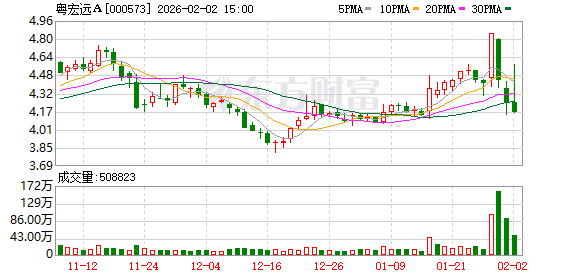
粤宏远A:再生铅业务的利润受废电瓶(核心原料)与铅价格的联动影响
Zheng Quan Ri Bao· 2026-02-02 11:41
Group 1 - The core viewpoint of the article highlights that the profitability of the company's recycled lead business is significantly influenced by the prices of waste batteries and lead, indicating a direct correlation between the two [2] - When lead prices rise, the prices of waste batteries also increase, leading to higher procurement costs, which limits the potential for profit improvement in this business segment [2] - The company emphasizes the need for multiple measures across various operational aspects to enhance profitability, suggesting that improvements are necessary for better financial performance [2]