
太空计算

Search documents
把算力送上天,我国“太空计算”正式进入组网阶段
Xuan Gu Bao· 2025-05-14 23:15
Industry Insights - The "Three-body Computing Constellation" is a large-scale space computing infrastructure consisting of 2800 satellites and over 100 ground computing centers, aiming to create an integrated space-ground computing network by 2025 [2] - The total computing power of the constellation is expected to reach 1000 POPS (one quintillion operations per second), significantly enhancing data processing efficiency in space [1] - The current global AI + satellite industry is experiencing rapid development, with strategic significance in overcoming traditional data processing limitations [2] Company Developments - Kaipu Cloud is collaborating with Guoxing Aerospace on the "Star Computing Plan" to jointly develop key technologies in the space computing field [3] - Putian Technology is accelerating the development of low-orbit satellite communication products and launching proprietary products aimed at satellite terminals [3]
把人工智能送上天,我国发射首个太空计算星座
Huan Qiu Wang Zi Xun· 2025-05-14 23:01
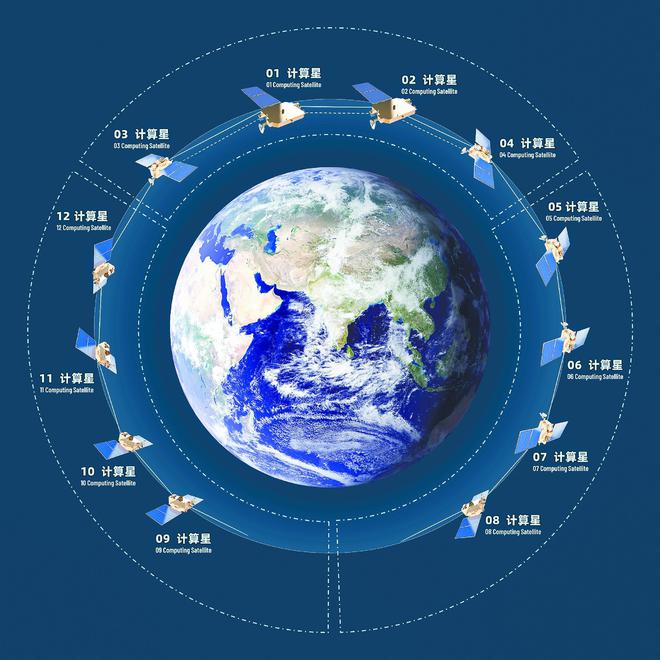
Core Viewpoint - The successful launch of the first twelve satellites of the "Three-body Computing Constellation" marks the beginning of China's first fully interconnected space computing network, aimed at enhancing satellite data processing efficiency and enabling real-time data handling in space [1][2]. Group 1: Project Overview - The "Three-body Computing Constellation" is designed to overcome the limitations of traditional satellite data processing, which relies on ground-based systems and often results in less than 10% of effective satellite data being transmitted back to Earth [2]. - The project is a collaboration led by Zhijiang Laboratory, aiming to create a large-scale space computing infrastructure with a target of deploying thousands of satellites [2][4]. Group 2: Technical Capabilities - The constellation will enable real-time data processing in orbit, significantly improving the efficiency of satellite data handling and facilitating the application of artificial intelligence in space [2]. - The satellites are equipped with onboard intelligent computing systems and inter-satellite communication systems, allowing for integrated satellite networking and in-orbit computing capabilities [4]. Group 3: Future Developments - Plans are underway to launch over 50 additional computing satellites this year, with the goal of achieving a total space computing capacity of 1000P (one quintillion floating-point operations per second) upon completion of the constellation [4]. - The core payload of the computing satellites includes advanced onboard computers that enhance processing power from Tera-scale to Peta-scale, achieving a 10-100 times improvement in computational capability [5].

5月14日周三《新闻联播》要闻25条
news flash· 2025-05-14 12:18
21、以军今天空袭加沙地带多地 56人死亡:(1)联合国安理会举行加沙人道局势紧急会议;(2)也 门胡塞武装称打击以色列目标; 5月14日周三《新闻联播》要闻25条 智通财经5月14日电,今天《新闻联播》主要内容有: 20、携手并肩 共谱构建中拉命运共同体新篇章——拉美各界高度评价习近平主席在中拉论坛第四届部 长级会议开幕式上的主旨讲话; 1、习近平会见哥伦比亚总统; 2、习近平会见智利总统; 3、李强向加拿大总理卡尼致贺电; 4、赵乐际会见拉丁美洲议会议长; 5、赵乐际会见中美洲议会议长; 6、王沪宁会见哥伦比亚总统; 7、王沪宁会见津巴布韦众议长; 8、蔡奇会见蒙古人民党代表团; 9、丁薛祥出席2025世界数字教育大会开幕式并致辞; 10、韩正会见智利总统; 11、4月金融指标增速加快 有力支持实体经济; 12、【在希望的田野上】我国夏油大面积收获 预计单产高于上年; 13、美国调整对华加征关税; 14、2025年中国网络文明大会将在安徽合肥举办; 15、前4个月粤港澳大湾区内地9市进出口保持稳定增长; 16、我国成功发射太空计算卫星星座; 17、"华龙一号"全球首堆连续安全运行1000天; 18、大藤峡 ...
算力上天、在轨组网,一箭十二星!我国开启“太空计算”新时代
Yang Shi Wang· 2025-05-14 10:23
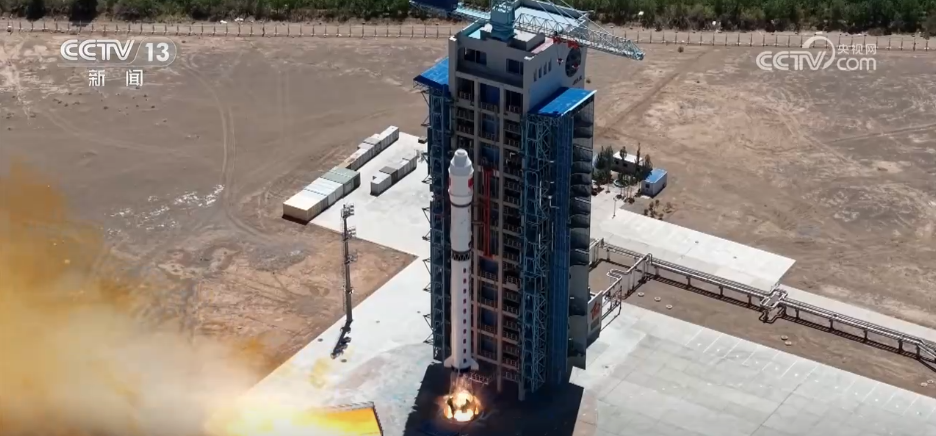
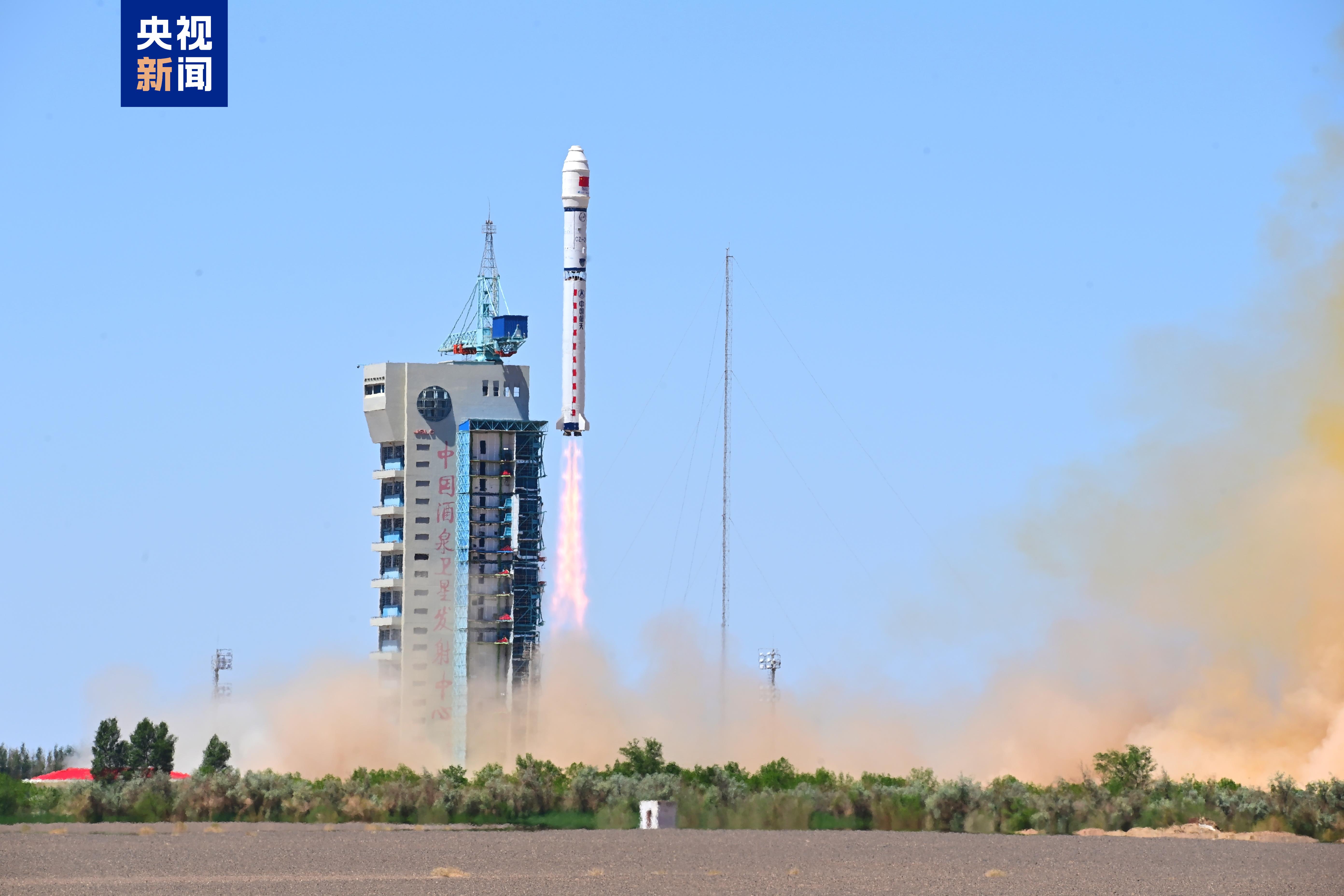
央视网消息:5月14日12时12分,我国在酒泉卫星发射中心使用长征二号丁运载火箭,成功将太空计算卫星星座发射升空,卫星顺利进入 预定轨道,发射任务获得圆满成功。 "星算"计划的建设将构建未来算力网络,实现特定场景由"天数地算"向"天数天算"转变,满足日益增长的太空即时计算需求,助力我国在 全球率先建成太空计算基础设施,突破人工智能领域边界从地面迈向太空。 打造2800颗算力卫星的天基算力网 此次发射任务的成功标志着全球首个太空计算卫星星座成功入轨,将开启全球"太空计算时代"新篇章。 "星算"计划首发星座12颗计算卫星采用国星宇航自研的智能网联卫星平台,搭载了之江实验室星载智能计算机、星载高速路由器等载荷, 实现了"算力上天、在轨组网",每颗卫星均搭载了星载智算系统、星间通信系统,具备太空计算、太空互联能力,星座组网后将形成全球最强 的太空计算能力。 该星座通过星间激光高速互联、星座稳定组网和算力分布式调度,构建出开放共享的太空计算系统,打造天基智能计算基础设施。将完成 太空计算系统建链、组网、成云等天基计算基础功能的在轨验证和应用。 全球首个太空计算卫星星座成功入轨 除计算与互联能力外,首发星座卫星还配置了对 ...
数据中心不必建在地球!中国企业已经把算力设施送到了太空
量子位· 2025-05-14 08:55
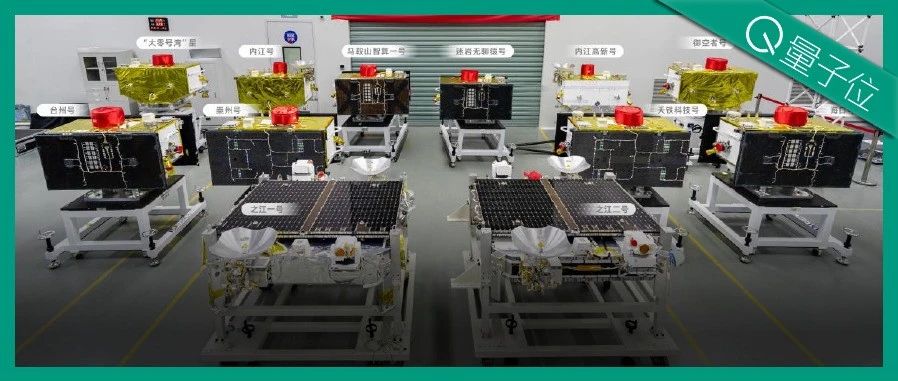
Core Viewpoint - The launch of 12 space computing satellites marks the beginning of a new era in global space computing, initiated by the "Star Computing" program led by Guoxing Aerospace, aiming to establish a vast network of 2800 satellites in space for advanced computing capabilities [2][4][14]. Group 1: Launch and Capabilities - The 12 satellites are equipped with space computing and interconnectivity capabilities, forming the world's first space computing constellation [2][4]. - Each satellite's computing power has been enhanced from Tera-scale to Peta-scale, achieving a total in-orbit computing capacity of 5 Peta Operations Per Second (POPS) [8]. - The satellites utilize laser communication technology, enabling inter-satellite communication speeds of up to 100 Gbps [9]. Group 2: Energy Efficiency and Cost Reduction - Deploying computing power in space is an effective way to save energy costs, as satellites can harness solar energy without atmospheric interference [22]. - The cost of satellite launches is decreasing, with estimates for Chinese satellite launch costs expected to be around 60,000 yuan per kilogram in 2023 [27]. - The cold environment of space serves as a natural cooling source, reducing the energy required for cooling computing equipment [25]. Group 3: Applications and Future Developments - The space computing satellites will support real-time processing of vast amounts of deep space exploration data, enhancing scientific research capabilities [12][13]. - The "Star Computing" program plans further launches, with the next constellation already in the design phase [15][14]. - The satellites are designed to process data on-site, improving the timeliness of data applications, especially in natural disaster monitoring [28][29]. Group 4: Global Trends and Comparisons - The concept of deploying data centers in space is gaining traction globally, with initiatives in the EU and the US exploring similar projects [35][40]. - The EU has already invested 2 million euros to validate the feasibility of space data centers, while companies in the US are planning to establish data centers on the Moon [36][38]. - China's first batch of computing satellites is already operational, positioning the country at the forefront of this emerging trend [42].
将AI送上太空 我国成功发射全球首个太空计算卫星星座
Yang Shi Xin Wen· 2025-05-14 08:25
Core Viewpoint - The successful launch of the first space computing satellite constellation by Guoxing Aerospace marks the beginning of a new era in global space computing, enabling advanced computational capabilities in space [1][8]. Group 1: Launch Details - Guoxing Aerospace successfully launched 12 satellites for the Space Computing Constellation 021 mission using the Long March 2D rocket from the Jiuquan Satellite Launch Center on May 14, 2025 [1]. - This mission is part of the "Xing-Suan" plan initiated by Guoxing Aerospace and represents the first launch of the Zhijiang Laboratory's "Three-Body Computing Constellation" [8]. Group 2: Technical Capabilities - The constellation utilizes inter-satellite laser communication for high-speed interconnectivity, stable networking, and distributed computing, establishing an open and shared space computing system [10]. - Each satellite in the constellation has a maximum computing power of 744 TOPS, contributing to a total space computing capability of 5 PLOPS for the constellation [11]. - The inter-satellite laser communication can achieve a maximum data transfer rate of 100 Gbps, positioning the constellation as the strongest in global space computing capabilities [11]. Group 3: Applications and Innovations - The satellites are equipped with an AI payload developed by Guoxing Aerospace and a space-based intelligent computer from Zhijiang Laboratory, enabling on-orbit computing and networking [11]. - The constellation will perform real-time data processing for astronomical observations and other tasks, enhancing data processing efficiency and reducing transmission costs and delays [11]. - The satellites also carry a cosmic X-ray polarization detector developed by Guangxi University and the National Astronomical Observatories of China, which will facilitate rapid detection and classification of transient sources like gamma-ray bursts with high accuracy [12].
具备太空在轨计算能力 我国太空计算卫星星座发射看点解析
news flash· 2025-05-14 07:24
Core Insights - The launch of the "Trinity Computing Constellation" marks a significant advancement in space-based computing capabilities, enabling real-time processing of Earth observation data in orbit [1][2] - The constellation aims to overcome limitations of traditional ground-based data processing, which often results in less than 10% of effective satellite data being transmitted back to Earth [1] Group 1: Launch and Capabilities - The first launch of the "Trinity Computing Constellation" successfully deployed 12 satellites, each with a maximum computing power of 744 TOPS, contributing to an overall in-orbit computing capability of 5 POPS and 30 TB of storage [1][2] - The constellation is designed to achieve a total computing power of 1000 POPS upon completion, representing a substantial leap in space computing infrastructure [1] Group 2: Technological Innovations - Each satellite is equipped with onboard intelligent computing systems and inter-satellite communication systems, facilitating a fully interconnected space network [2] - The satellites carry a space-based model with 8 billion parameters, enabling in-orbit processing of satellite data across various levels [2] Group 3: Strategic Importance - The establishment of the "Trinity Computing Constellation" is viewed as a complex system engineering project that requires organized research and innovation for effective results [2] - The project is expected to significantly expand the boundaries of space applications and has profound implications for the aerospace industry [2]
算力上天!“三体计算星座”成功发射
Guan Cha Zhe Wang· 2025-05-14 07:18
Core Viewpoint - The successful launch of the Long March 2D rocket marks the entry of China's first fully interconnected space computing constellation into the networking phase, led by the Zhejiang Zhijiang Laboratory [1][5]. Group 1: Launch Details - On May 14, at 12:12 PM, the Long March 2D rocket successfully launched from the Jiuquan Satellite Launch Center, delivering a constellation of space computing satellites into their designated orbits [1]. - This launch represents the first deployment of the "Three-body Computing Constellation," a project spearheaded by the Zhejiang Zhijiang Laboratory [5]. Group 2: Technical Innovations - The "Three-body Computing Constellation" aims to address the limitations of traditional satellite data processing, which relies on ground-based data centers and often results in less than 10% of effective satellite data being transmitted back to Earth [7]. - The constellation is designed to provide real-time data processing in orbit, significantly improving the efficiency of satellite data handling and promoting the application of artificial intelligence in space [7]. - The total computing power of the completed infrastructure is expected to reach 1000 POPS (one hundred billion billion operations per second) [7]. Group 3: Future Applications - The constellation will enable interconnectivity among satellites in orbit and is equipped with an 8 billion parameter space-based model for processing data from L0-L4 level satellites [7]. - Planned tasks include inter-satellite laser communication and astronomical observations, showcasing the constellation's capabilities for in-orbit experimental missions [7].
