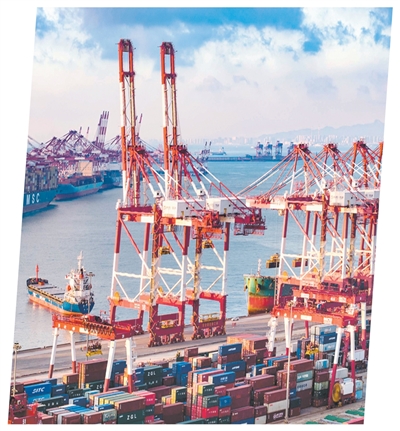
智慧港口

Search documents
河北证监局携多方“现场办公” 激活资本赋能效能
Zhong Guo Zheng Quan Bao· 2025-08-19 20:09
Group 1 - Hebei Securities Regulatory Bureau is enhancing the regular visit mechanism for listed companies to address their core concerns and promote the effective use of capital market tools for growth [1] - The bureau aims to assist in the healthy and stable development of the Hebei capital market by strengthening the effectiveness and targeting of its regulatory and service efforts [1] - Companies are encouraged to leverage capital market tools such as refinancing, mergers and acquisitions, and equity incentives to achieve high-quality development [1] Group 2 - Huatong Cable has expanded its overseas business significantly, with nearly 70% of its revenue coming from international operations [2] - The company faces challenges in securing funds to support its global expansion strategy [2] - Suggestions from the regulatory and financial institutions include exploring H-share issuance and utilizing refinancing tools to attract international capital [2] Group 3 - The importance of compliance and effective management is emphasized for listed companies, especially as they expand their overseas operations [3] - Companies are reminded to maintain a respectful attitude towards the market and investors, ensuring good corporate governance and avoiding conflicts of interest [3] Group 4 - Tangshan Port is focused on enhancing its value-added services and developing a "smart port" to improve operational efficiency [3] - The port has distributed a total of 95.6 billion yuan in cash dividends since its listing, indicating strong shareholder returns [4] - The company is encouraged to enhance its market value management and improve communication with investors to increase transparency [4]


中国港口驱动“新三样”万亿外贸市场
Zhong Guo Xin Wen Wang· 2025-08-19 18:29
Core Insights - Chinese ports continue to dominate the global cargo throughput rankings, showcasing their critical role in international trade [1][3] - In the first half of 2025, major Chinese ports achieved a cargo throughput of 8.9 billion tons, marking a 4.0% year-on-year increase, despite global trade challenges [3][4] - The "new three items" (electric vehicles, lithium batteries, and solar cells) have emerged as key drivers for the optimization and upgrading of China's foreign trade, with exports growing by 12.7% [4][5] Port Performance - Ningbo-Zhoushan Port led the nation with a cargo throughput of 71.375 million tons, followed by Tangshan Port and Shanghai Port with 43.357 million tons and 42.559 million tons, respectively [3] - The top ten ports by container throughput include Shanghai, Ningbo-Zhoushan, Shenzhen, Qingdao, Guangzhou, Tianjin, Xiamen, Suzhou, Beibu Gulf, and Rizhao [3] Infrastructure Development - During the 14th Five-Year Plan period, China added 379 berths of over 10,000 tons, bringing the total to 2,971 [6] - Major ports are enhancing their infrastructure, with Tianjin Port Group investing approximately 19.5 billion yuan in 21 key construction projects [6] Technological Advancements - The application of technologies such as 5G, artificial intelligence, and big data in Chinese ports has significantly improved the efficiency of handling complex cargo [8] - The integration of coastal ports with the China-Europe Railway Express and the Western Land-Sea New Corridor is creating a multi-dimensional logistics system [8] Trade Dynamics - The robust port network and improved efficiency are facilitating the export of "new three items," contributing to a trillion-yuan level foreign trade ecosystem [8]

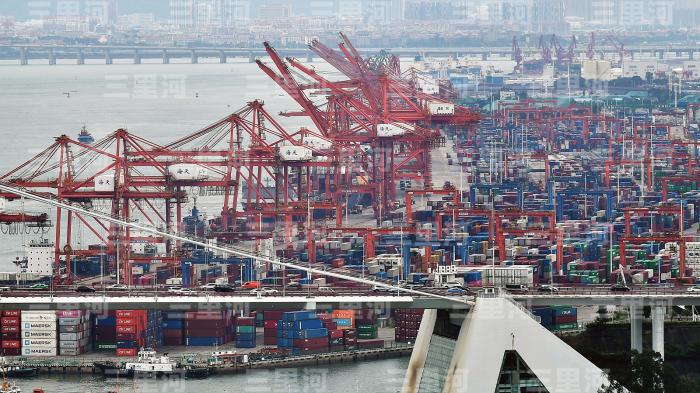
智启津门·数聚上合 | 天津港的数字蝶变
Xin Hua Wang· 2025-08-12 05:44
Core Insights - Tianjin Port is transforming from a traditional port to a smart hub, showcasing significant advancements in smart port construction in China [1] - The successful application of artificial intelligence and big data models at Tianjin Port highlights the achievements in technology-driven port operations [1] - The global first "smart zero-carbon" terminal at Tianjin Port exemplifies the efficient operational scenarios enabled by technology [1]

江苏港口向新而行向智而进向绿而兴“码头蓝领”变身“港口白领”
Xin Hua Ri Bao· 2025-08-11 23:23
Group 1 - The core viewpoint of the articles highlights the advancements in the Suzhou Port Group's operations, showcasing significant growth in profit and cargo throughput in the first half of the year, with profit increasing by 10.64%, cargo throughput by 5.86%, and container throughput by 7.18% [1] - The transformation of labor at the port is emphasized, with traditional dock workers evolving into technology-oriented roles, utilizing remote control for cargo unloading and automated operations [1] - The introduction of high-precision electronic belt scales and intelligent cargo management systems has significantly reduced measurement errors and material losses, contributing to the development of a smart port [2] Group 2 - The Suzhou Port Group is actively developing new production capabilities by leveraging technological innovation to lower logistics costs and enhance transportation efficiency, including the establishment of over 10 container rail-water intermodal routes [3] - The group is recognized as the only port enterprise in the country to hold both "five-star" ratings for container and bulk cargo operations, and it is a pilot enterprise for digital transformation approved by the State-owned Assets Supervision and Administration Commission [3] - The company is committed to green initiatives, including the construction of distributed photovoltaic power generation and wind power projects, aiming to create a near-zero carbon port demonstration along the Yangtze River [3]
水运江苏 向智向新
Yang Guang Wang· 2025-08-11 02:22
Core Viewpoint - Jiangsu province is enhancing its water transport capabilities through the "Water Transport Jiangsu" initiative, focusing on smart and innovative developments in its port services [1]. Group 1: Port Development - Nanjing Port Longtan Container Terminal is the largest single container terminal along the Yangtze River, with a quay length of 2,310 meters, serving as a crucial international trade passage [3]. - The terminal operates with an automated control system, allowing remote operation of multiple cranes by a single worker, significantly increasing efficiency [3]. - In the first half of the year, Nanjing Port Longtan Container Company handled 1.7442 million TEUs, marking a 5.4% year-on-year increase [3]. Group 2: Technological Innovation - Nanjing Port Machinery Manufacturing Company has become a global leader in port machinery, particularly in the segment of gantry cranes, through continuous innovation [5]. - The company has over 200 national patents and plans to apply for more than 30 intellectual property rights by 2025, aiming to lead technological innovation in port equipment [6]. Group 3: Logistics and Transportation - The innovative logistics model at Longtan Railway Yard allows for direct transport of coal to the port, reducing costs by nearly 20 million yuan annually through a zero-loss, no-dust process [8]. - The "Nanjing Longtan Port - Shanghai Yangshan Port" rail-sea intermodal service has reduced transport time from 4 days to 2 days, cutting logistics costs by 1,200 yuan per container and saving 16 million yuan annually [9]. Group 4: Future Goals - Jiangsu Port Group aims to enhance technological innovation and funding, targeting a 75% compliance rate for smart ports by 2028, focusing on integrated port and city development [10].
山东港口六周年:从“一群港”到“港口群”的世界级跨越
Qi Lu Wan Bao Wang· 2025-08-07 06:45
Core Insights - Shandong Port Group has successfully established itself as a world-class marine port group, achieving key indicators of its 14th Five-Year Plan a year ahead of schedule despite challenges such as the pandemic and economic downturn [1][2][3] Group 1: Development and Achievements - The port has become a crucial hub in the global shipping landscape, with a cargo throughput exceeding 1.8 billion tons and container volume surpassing 44 million TEUs [1][3] - Shandong Port has expanded its shipping routes to over 360, maintaining the highest route density in Northern China and enhancing its competitive edge [2][3] - The port has initiated 136 major projects with a total investment exceeding 270 billion yuan, including significant developments at Qingdao Port [3] Group 2: Logistics and Connectivity - Shandong Port has established a network of 54 inland ports, covering 12 provinces in Central and Western China, and has maintained its position as the leading coastal port in China for ten consecutive years in sea-rail intermodal operations [4] - The port has opened new international shipping routes and enhanced its logistics capabilities, significantly reducing logistics costs for businesses [5][4] Group 3: Technological Innovation and Sustainability - The port is transitioning towards a smart and green port model, implementing advanced technologies and achieving significant milestones in automation and digitalization [9][10] - Shandong Port has introduced the first hydrogen-electric tugboat in the country, promoting low-carbon energy structures and sustainable practices [10] Group 4: Cultural and Workforce Development - The company emphasizes a culture of innovation and teamwork, with over 128 innovation studios established and significant economic benefits generated from employee-driven initiatives [11] - The workforce has shown remarkable dedication, with increased efforts in customer acquisition and operational efficiency [11] Group 5: Future Goals and Strategic Vision - Shandong Port aims to continue its trajectory towards becoming a world-class comprehensive service provider, aligning with national strategies and enhancing its global presence [12][13]
中国自动化码头规模世界第一——“大港”有大智慧
Ren Min Ri Bao Hai Wai Ban· 2025-08-06 09:05
Core Insights - Chinese ports dominate the global cargo throughput rankings, with significant advancements in automation and operational efficiency since the "14th Five-Year Plan" [1][2][3] Group 1: Port Performance - Ningbo-Zhoushan Port, the world's largest, achieved a cargo throughput of 1.377 billion tons in 2024, a 4% increase year-on-year, and a container throughput of 39.3 million TEUs, up 11% [2] - Six of the top ten ports globally by container throughput are in China, with Shanghai Port leading at over 50 million TEUs [2][3] - Chinese ports have an average hourly throughput of 38,000 TEUs, with a vessel direct berthing rate of 89% [3] Group 2: Infrastructure Development - During the "14th Five-Year Plan," China added 379 berths for vessels over 10,000 tons, bringing the total to 2,971 [3][13] - The total length of high-grade navigable channels increased by 1,600 kilometers, reaching 17,600 kilometers [3] Group 3: Technological Advancements - Ports are increasingly adopting smart technologies, with 52 automated container and bulk cargo terminals built or under construction, leading the world in scale and efficiency [7][13] - The implementation of a carbon footprint accounting service platform and green energy projects at ports reflects a commitment to sustainability [7][8] Group 4: Policy and Economic Impact - China has established 22 free trade zones by the end of 2024, enhancing the digital transformation of port operations and improving the business environment [10][14] - The container rail-water intermodal transport volume increased by approximately 15% in 2024, indicating a growing trend in multimodal transport [14] Group 5: Future Outlook - The focus for the "15th Five-Year Plan" includes enhancing resource integration, developing multimodal transport networks, and promoting the integration of port and city economies [15][16]



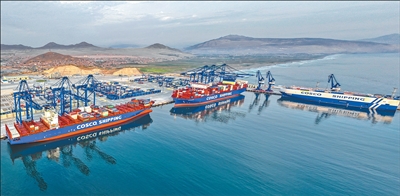
“钱凯港既是‘金色’的,也是‘绿色’的”
Ren Min Ri Bao· 2025-08-06 02:00
Core Insights - The opening of the Chancay Port in Peru marks a significant milestone in the Belt and Road Initiative, being the first smart and green port in South America, enhancing Peru's connectivity between land and sea, and linking Asia with Latin America [2][7]. Group 1: Port Operations and Performance - Since its opening in November 2024, Chancay Port has achieved impressive operational metrics, with a total import and export value exceeding $777 million and a container throughput of 94,400 TEUs in the first five months [2]. - The port's design capacity allows for an annual throughput of 1 million TEUs in the short term and 1.5 million TEUs in the long term, indicating significant growth potential [4]. Group 2: Technological Innovations - The project team developed a high-tech self-moving pile-driving platform that increased efficiency, allowing for the installation of 7 piles in 3 days, which is 4.7 times faster than traditional methods [3]. - Over 10 original Chinese technologies were implemented, including automated control systems and noise reduction techniques, which reduced pollution by 40% and saved over 25% in water usage [4]. Group 3: Local Workforce Development - The project has trained over 3000 local workers, accounting for 75% of the construction team, enhancing local employment and skill levels [5]. - Training programs such as the "Inca Lecture Hall" and "Chancay Port Engineering College" have been established to provide hands-on learning experiences for local employees [5]. Group 4: Economic Impact - The port is expected to contribute 1.8% to Peru's GDP annually and create thousands of jobs, significantly boosting the local economy [7]. - The establishment of new shipping routes has reduced logistics costs by over 20%, enhancing the competitiveness of Peruvian exports [7][9]. Group 5: Environmental Considerations - The construction project prioritized ecological balance, with measures taken to protect local wildlife and minimize environmental impact during the construction phase [4].
中国智慧港口:从“仰望星空”到“领航世界”
Zhong Guo Qing Nian Bao· 2025-08-06 01:12
2024年,该系统累计调度船舶431艘次,完成作业量超95万标准箱,其智能调度效率已超过人工平 均水平。 梅山港区还实现了人工集卡与无人集卡的"同场混跑"。在无任何物理隔离的情况下,无人集卡在自 动驾驶试验区内稳稳穿行,既提高了作业效率,也验证了中国在"车路协同+北斗高精定位+5G感知"融 合应用方面的技术领先。 梅山港区采用"四个一"创新模式,即一脑统领("双芯"调度)、一网覆盖(物联网感知网络)、一 链作业(远控吊机+集卡混行)、一区示范(自动驾驶试验区),系统性打造出传统码头数智化改造 的"中国方案"。 梅山港的智慧不仅在于提高效率,还在于绿色发展。港区风光储一体化项目自2023年全面投运,建 设了5台风力发电机和分布式光伏系统,年发电量超过5600万度,碳减排达2.2万吨。2024年绿电消纳超 1550万度,占总用电比例达13.1%。 港区还实现了岸电全覆盖、装卸设备电气化率100%、内集卡电动化率53%,真正形成了从源头到 终端的绿色运输闭环。综合能源管理系统通过能效可视化与数字化调度,进一步压缩碳排放,单位集装 箱碳排放量较2021年下降了24%。 "以前我们看国外港口如同'仰望星空',主要学习新 ...
“大港”有大智慧(“十四五”,我们见证这些“第一”④)
Ren Min Ri Bao Hai Wai Ban· 2025-08-05 22:50
在江苏省连云港港东方港务分公司码头,滚装轮停在泊位上装载出口轿车。 王春 摄(人民视觉) 在山东港口青岛港前湾集装箱码头,桥吊林立,集装箱装卸作业繁忙。 韩加君 摄(人民视觉) 在上海港洋山深水港区自动化码头,多艘大型集装箱货轮正在进行装卸作业。 浙江省宁波舟山港金塘港区。 胡学军 摄(人民视觉) 郝群英 摄(人民视觉) 数据来源:交通运输部等 在全球货物吞吐量排名前十的港口中,人们总能频繁看到中国港口的身影。一座座大型港口昼夜不 息,保障着货物畅通、海运安全。 "大港"更有大智慧。"十四五"以来,中国加快港口智能化建设。目前,中国自动化码头规模世界第 一、港口作业时效领跑全球,为外贸"大动脉"畅通、国民经济平稳运行保驾护航。 大港,"大块头"也有"高效能" 全球最大的2.4万箱级集装箱船和40万吨矿船可常态化靠泊,全球在航的68艘40万吨矿船均曾在此 停靠……在世界货物吞吐量第一大港宁波舟山港,记者走访穿山港区、梅山港区、镇海港区等地,目睹 岸线上一字排开的万吨巨轮、泊位上如林的吊车、堆放如山的各色集装箱,感受到世界级大港的规模之 大、效能之高。 作为天然深水良港,宁波舟山港在数字化浪潮下焕发新的生机。20 ...