硬科技投资

Search documents
商道创投网·会员动态|蓝点触控·完成近亿元B轮融资
Sou Hu Cai Jing· 2025-07-17 14:07
Core Insights - Blue Dot Touch has recently completed a nearly 100 million RMB Series B financing round, led by GF Xinde, Fosun Chuangfu, Hefei Innovation Investment, and Huacang Capital [1] Company Overview - Founded in 2019, Blue Dot Touch's core team comes from prestigious institutions such as the University of Science and Technology of China, Aerospace Science and Technology Corporation, Chinese Academy of Sciences, and Beihang University. The company focuses on enabling robots to have tactile sensations similar to humans [2] - The company has developed six-dimensional force sensors, joint torque sensors, and tensile pressure sensors, which are used in humanoid robots, industrial robotic arms, and medical surgical robots, making it one of the few domestic high-tech enterprises capable of mass-producing advanced tactile sensing devices [2] Financing Purpose - The CEO of Blue Dot Touch stated that the funds will be allocated to three main areas: 1. Continued investment in the research and development of small-sized, ultra-high precision, and high-bandwidth tactile sensors to meet the extreme demands of humanoid robots for "finger-tip level" force control 2. Establishing localized technical business teams in Europe and America to accelerate global market penetration 3. Launching modular solutions for specific scenarios to provide more flexible force control systems for high-end manufacturing in sectors such as medical, automotive, and consumer electronics [3] Investment Rationale - A partner from GF Xinde noted that Blue Dot Touch has established a closed loop in force perception algorithms, MEMS micro-nano processing, and packaging calibration, creating high technical barriers. The demand for six-dimensional force sensors in humanoid robots is experiencing exponential growth as the industry reaches a critical turning point [4] - The founding team possesses both aerospace engineering experience and commercialization capabilities, making it a rare hard-tech investment opportunity. Fosun Chuangfu added that the company has already entered the supply chains of several leading manufacturers, indicating a clear path for growth and a foundation for global expansion [4] Investment Ecosystem Perspective - The founder of Shandao Venture Capital highlighted that the Ministry of Industry and Information Technology's "Guiding Opinions on the Innovative Development of Humanoid Robots" and the Ministry of Science and Technology's key special project on "Intelligent Robots" are driving industry chain collaboration with substantial policy support. Blue Dot Touch's achievement in core components reflects the spirit of scientists starting businesses [5] - Venture capital institutions are leveraging capital to help companies seize high ground in the global supply chain, which is a responsibility to their limited partners and signifies a shift in Chinese hard-tech investment from "domestic substitution" to "global definition" [5]

长石资本:硬科技三期基金三关7.28亿,Founders’ Fund模式实现超50% IPO命中率
投中网· 2025-07-14 03:09
Core Viewpoint - The article discusses the challenges faced by investment institutions in the current fundraising environment and highlights the successful fundraising strategy of Changshi Capital, which has managed to create a balanced LP structure that meets various demands while achieving significant investment performance in the hard technology sector [1][4]. Fundraising Environment - The current primary market fundraising environment is under pressure, with challenges stemming not from insufficient capital supply but from the need to construct a stable and synergistic LP structure that satisfies compliance and return requirements from state-owned LPs, rigorous DPI assessments from financial institutions, and attracts industrial capital for deep resource binding [1]. - Changshi Capital recently completed a fundraising of 728 million yuan, successfully navigating the "impossible triangle" of LP structure by securing support from local governments, leading financial institutions, and market-oriented mother funds, along with significant contributions from founders and executives of listed industrial companies [1][2]. Investment Performance - Changshi Capital's hard technology Phase I fund has invested in 24 projects, with 11 companies having completed IPOs, including notable firms like Zhongwei Semiconductor and Suzhou Tianmai, and a DPI close to 2 times [4]. - The Phase II fund has 4 projects in the IPO application stage and 6 more expected to enter the application process in the next two years, with an IPO hit rate exceeding 50% across both funds [4]. Founders' Fund Concept - The establishment of the Founders' Fund is rooted in the understanding that VC institutions must become "symbiotic" entities within the industrial ecosystem rather than mere "hunters" [5]. - Changshi Capital has focused on gathering industry leaders from sectors like consumer electronics and new energy vehicles as LPs, leveraging their insights and resources to enhance the success rate of portfolio companies [5]. Investment Methodology - Changshi Capital has developed a "70%/90%/100%" investment methodology, emphasizing a deep understanding of projects before investment, dedicating significant time to service, and aiming for complete exits [7]. - The management team employs a research-driven approach, continuously engaging with industry key players and entrepreneurs to refine their investment capabilities and enhance the commercial success of portfolio companies [7]. Exit Strategy - The firm utilizes a multi-dimensional framework for determining IPO exit timing, ensuring that projects avoid market downturns during their exit phases [8]. - Over 50% of projects from the hard technology Phase I and II funds have completed listings or entered IPO applications, with no capital losses on exited projects, achieving a 100% exit rate [8]. Future Investment Focus - In the context of generative AI reshaping industry landscapes, Changshi Capital aims to capture investment opportunities by focusing on three main lines: AI infrastructure, embodied intelligence, and innovations in AI applications and interactions [9]. - The firm has already invested in several companies within the AI infrastructure space, which is considered foundational for the entire AI industry [9]. Conclusion - Changshi Capital's approach to building a deep collaborative network through the Founders' Fund, adherence to the "70%/90%/100%" investment principles, and proactive investment strategies in the AI era may serve as a valuable case study for observing how investment institutions navigate through economic cycles [10].

从宇树到微分智飞,解码光速光合的“投资密码”
Jin Tou Wang· 2025-07-09 02:20
Core Insights - The article highlights the strategic investments made by Lightspeed Venture Partners in the field of embodied intelligence, showcasing their unique global perspective and empirical methodology in identifying and capitalizing on technological inflection points [1][2][4]. Investment Strategy - Lightspeed Venture Partners leverages a global network of research and customer feedback to inform their investment decisions, focusing on high-potential sectors while balancing risks and returns [2][3]. - The firm emphasizes a combination of timing and market trends to avoid early-stage risks and high-cost entries, aiming to be among the first investors in cutting-edge technologies [3][7]. Key Investments - In late 2024, Lightspeed led a multi-hundred million yuan Pre-A++ round investment in Variable Robotics, which has since completed multiple funding rounds totaling over 1 billion yuan within a year [8]. - The firm also invested in Weifen Zhifei, a leading aerial robotics company, which completed several funding rounds shortly after Lightspeed's investment, resulting in a significant increase in valuation [1][7]. Technological Focus - Lightspeed is particularly interested in the integration of AI and robotics, with investments in companies like Variable Robotics that are developing general-purpose embodied models capable of zero-shot generalization [7][8]. - The firm is also exploring advanced areas such as autonomous flying systems, with Weifen Zhifei focusing on a unique approach to aerial robotics that combines mobility and robotic capabilities [9][10]. Market Trends - The article notes a surge in investment opportunities within the embodied intelligence sector, driven by advancements in generative AI and the increasing number of projects achieving high valuations [7][8]. - Despite the promising landscape, the commercialization of these technologies remains uncertain, prompting varied investment strategies among different firms [7][11]. Infrastructure Investments - Lightspeed is actively investing in AI infrastructure, focusing on hardware trends that support the growing demand for computational power, such as liquid cooling and advanced power distribution systems [11][12]. - The firm has validated its long-term investment approach through successful investments in companies like Zhongji Xuchuang, which has seen substantial growth in revenue and market valuation [14]. Future Outlook - The firm believes in the potential for significant growth in the Chinese tech sector, particularly in AI and hard technology, and aims to identify and support emerging world-class companies [14]. - Lightspeed's dual approach of global insight combined with local expertise positions it well to capitalize on the ongoing technological evolution in China [14].
时报观察丨政策红利收实效 创投市场添暖意
证券时报· 2025-07-05 00:02
Core Viewpoint - The venture capital market is showing signs of recovery, supported by objective data rather than subjective feelings, as key metrics from the first half of the year indicate a positive trend [1][2]. Group 1: Market Recovery Indicators - The scale of institutional LP (limited partner) investments surged by 50% year-on-year, while the decline in financing scale has significantly narrowed, and the number of IPO exit projects increased by over 20% [2]. - Multiple core indicators have rebounded collectively, marking the venture capital market's transition into a recovery cycle [2]. - A series of policy measures, including the new "National Nine Articles" and "Seventeen Articles on Venture Capital," are aimed at enhancing the support for technological innovation and facilitating the entire fundraising, investment, management, and exit chain [2]. Group 2: Investment and Funding Dynamics - Investment activity has notably increased, with AI and humanoid robotics companies like DeepSeek and Yushutech emerging as new hotspots for hard technology investments, leading to intensified competition for quality projects [2]. - Long-term capital is entering the market, exemplified by the National Big Fund's investment of nearly 200 billion yuan to establish three equity funds, alongside accelerated fundraising processes for state-owned and specialized funds [2]. - The exit landscape is structurally improving, with heightened activity in the Hong Kong IPO market and an increase in the quality and quantity of merger and acquisition cases [2]. Group 3: Challenges and Future Outlook - The core logic behind the recovery in fundraising and investment is the restoration of secondary market valuations and improved exit expectations [3]. - There is a growing consensus on the need for diversified exit mechanisms, with venture capital institutions focusing on enhancing DPI (Distributions to Paid-In) as a primary goal [3]. - However, the overall market recovery still faces challenges, such as the need to further activate market-based funding sentiment and expand the scale of long-term capital entering the market [3].

国资创投下一站的故事这样讲
经济观察报· 2025-06-19 08:58
Core Viewpoint - The article discusses the evolving policy environment surrounding state-owned enterprises (SOEs) and their investment strategies, particularly focusing on the "early, small, and hard" investment approach promoted by the State-owned Assets Supervision and Administration Commission (SASAC) [1][2][4]. Group 1: Policy Changes and Investment Strategies - The SASAC has emphasized the need for SOEs to focus on new industries and technologies, guiding them to engage in angel investing, venture capital, and equity investments [4][11]. - Various regions, including Zhejiang, Jiangsu, Shanghai, Guangdong, and Hubei, have begun exploring the "early, small, and hard" investment model since 2025 [7][8]. - The Zhejiang Science and Technology Innovation Fund is highlighted as an early adopter of this investment model, aiming to support technological innovation and emerging industries in the province [6][16]. Group 2: Challenges Faced by State-owned Investment Institutions - Despite the policy shifts, state-owned investment institutions face challenges, such as insufficient risk tolerance for state capital, which affects investment enthusiasm [9][49]. - The SASAC is working on defining the next steps for state-owned investments, focusing on promoting innovation and integrating industry and technology [47][48]. - There is a need for improved cross-departmental collaboration to effectively implement the "early, small, and hard" investment strategy [49]. Group 3: Successful Case Studies - Zhejiang Chuangtou's investment in Huahai Qingshi is cited as a successful example, yielding a return of 4.7 billion yuan with a return on investment of 15.6 times [32][30]. - The Shanghai International Group has established a hard technology fund, targeting investments in semiconductor, artificial intelligence, and biomedicine sectors, leveraging local government support [36][39]. - The fund has developed a comprehensive project evaluation mechanism and offers post-investment management services to enhance the competitiveness of invested companies [42].


“投资家网·2024-2025年度基金合伙人榜单”盛大开启
Sou Hu Cai Jing· 2025-06-09 13:01
Fundraising Trends - In 2024, the fundraising landscape saw a significant shift with state-owned capital dominating, as RMB fund fundraising accounted for 98.5% of the total, with state-owned LPs contributing over 93% of the total fundraising amount [2] - Foreign currency fund fundraising plummeted to 4.5 billion yuan, a staggering 70% year-on-year decline, indicating a market almost entirely controlled by state-owned entities [2] Investment Trends - The investment focus has shifted heavily towards "hard technology," with semiconductor, IT, machinery manufacturing, and biotechnology sectors accounting for 64.9% of total annual investments, and semiconductor investments growing by 12.2% [2] - The Yangtze River Delta region has emerged as a leader in hard technology investments, capturing 35% of national investment cases, while the growth rate in Central China reached 15% [2] Exit Trends - The IPO market showed signs of improvement, with overseas IPOs increasing by 12% year-on-year, leading to an actual exit amount of 2.214 billion yuan [3] - Hong Kong has become a primary exit channel for VC/PE, with a notable rise in M&A activity, where M&A cases increased by 136% [3] Policy and Regulatory Environment - The introduction of the "Guiding Opinions on Promoting the High-Quality Development of Government Investment Funds" aims to focus government-led funds on technological innovation and industrial upgrades [3] - The full implementation of the registration system is expected to accelerate IPO processes, with the Hong Kong Stock Exchange enhancing the approval rate for tech company IPOs [3] Industry Dynamics - The competitive landscape is intensifying, with top-tier fund management institutions controlling over 70% of the market, leading to a rapid exit of smaller GP firms [3] - Over 400 listed companies are now actively participating in equity investments, marking a new phase for the equity investment industry [3]

资本正在抛弃科学家?硬科技投资迎来败局?
Sou Hu Cai Jing· 2025-05-28 09:48
Core Viewpoint - The venture capital industry is experiencing a backlash against scientist-led startups, with investors expressing disappointment and distancing themselves from these entrepreneurs due to perceived mismatches between scientific research and commercial viability [2][5][6]. Group 1: Investment Trends - Investment in scientist-led startups and hard technology peaked in 2021 but has since returned to a more rational state, with a trend towards early-stage funding [5]. - The hard technology sector became a refuge for venture capitalists after the collapse of the TMT and new consumer sectors, leading to a surge in hiring technical investors and funding scientist-led projects [5][6]. Group 2: Issues with Scientist Entrepreneurs - Common issues identified with scientist entrepreneurs include a focus on research over commercial viability, an emphasis on academic publications rather than product development, and a lack of management skills [6][10]. - The scientific community's values, shaped by institutional frameworks, often lead to a disconnect between research outcomes and market needs, resulting in a mismatch in expectations from investors [7][10]. Group 3: Systemic Challenges - The evaluation metrics for scientific research often prioritize publications and patents over the commercialization of technology, leading to a surplus of unutilized patents [10][11]. - Recent changes in policy have begun to encourage the commercialization of scientific research, indicating a shift in the institutional attitude towards supporting scientist entrepreneurs [12][13]. Group 4: Financial System Reforms - The national technology achievement transformation rate has improved but still lags behind developed countries, highlighting the need for better funding mechanisms and support for early-stage technology ventures [14]. - Recommendations for improving the innovation ecosystem include increasing equity financing and reforming evaluation metrics to include commercialization success [14]. Group 5: Investment Strategies - Successful investment in scientist-led startups requires a deeper understanding of both technology and the personal potential of scientists to transition into entrepreneurs [15][16]. - Investment firms must provide comprehensive support, including management training and industry connections, to facilitate the transformation of scientists into effective business leaders [15][16].

江西两兄弟,干出3000亿
36氪· 2025-05-12 13:07
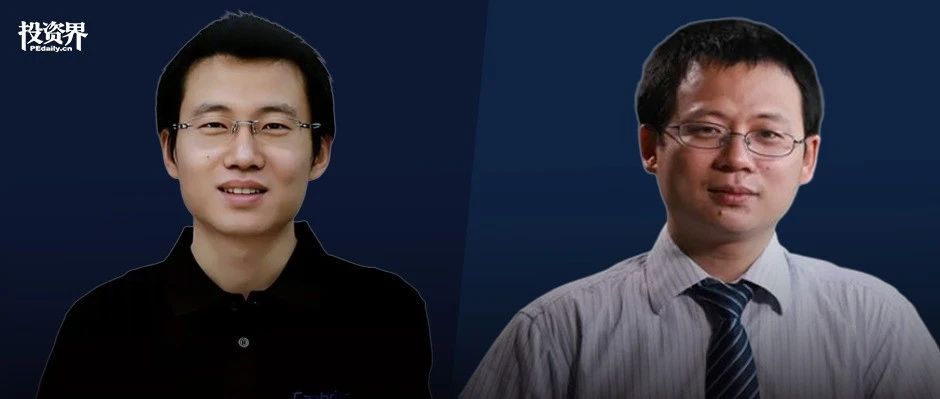
Core Viewpoint - The article discusses the significant returns generated by hard technology projects in China, particularly highlighting the success of Cambrian and CATL as exemplary cases of investment opportunities in the sector [4][24]. Group 1: Cambrian's Journey - Cambrian, founded by Chen Yunji and Chen Tian Shi, began its journey in AI chip development at the Chinese Academy of Sciences, proposing the idea of AI chip research as early as 2010 [7][8]. - The company gained prominence after its AI processor was used in Huawei's Mate 10 smartphone in 2017, leading to substantial revenue from IP licensing, primarily from Huawei [11]. - Following a strategic shift in 2019 due to declining revenues, Cambrian expanded its product offerings to include cloud and edge computing solutions [12][15]. Group 2: Financial Performance - Cambrian's stock price experienced a significant decline post-IPO, with a drop of 84.35% from its peak, but began to recover in 2023, eventually reaching a new high of 777.77 yuan per share [16][17]. - The company reported a remarkable revenue increase of 4230.22% year-on-year in Q1 2025, achieving a net profit of 3.55 billion yuan, marking its first consecutive profitable quarters since going public [18][19]. - As of Q1 2024, Cambrian's inventory and advance payments indicated strong market confidence and readiness for increased demand [19]. Group 3: Investment Landscape - Early investors in Cambrian, such as Yuanhe Origin and Lenovo Ventures, recognized the potential of AI technology and made significant investments during its early funding rounds [21][23]. - Despite facing challenges and market fluctuations, investors who remained committed to Cambrian have seen substantial returns, illustrating the long-term nature of hard technology investments [24][25]. - The article emphasizes that Cambrian's success serves as a motivation for more investors to engage in hard technology, showcasing the potential for significant financial rewards in this sector [25].

江西两兄弟,干出3000亿
投资界· 2025-05-11 07:50
Core Viewpoint - The article discusses the significant returns generated by hard technology projects in China, particularly highlighting the success of Cambrian, which has seen its stock price surge and market capitalization exceed 320 billion yuan, marking it as a standout case in the hard tech investment landscape [1]. Group 1: Company Background - Cambrian was founded by two brothers, Chen Yunji and Chen Tian Shi, who both had strong academic backgrounds in AI chip research at the Chinese Academy of Sciences [3][6]. - The company was established in 2016 after the team developed the world's first deep learning-specific processor prototype in 2015, marking a significant milestone in AI chip development [3][6]. Group 2: Financial Performance - Cambrian experienced a dramatic rise in stock price, reaching a peak of 777.77 yuan per share in 2024, with a market capitalization increase of over 200 billion yuan within a year [12]. - The company reported a net profit of 2.82 million yuan in Q4 2024 and 3.55 million yuan in Q1 2025, marking its first consecutive profitable quarters since its IPO [12][13]. Group 3: Market Dynamics - Cambrian's revenue growth is attributed to its strategic pivot towards a "cloud-edge-end" layout and the introduction of new products, responding to the increasing demand for AI computing power in China [7][15]. - The company is preparing for increased market demand by maintaining a substantial inventory balance of 2.755 billion yuan and prepayments of 973 million yuan, indicating confidence in future orders [14][15]. Group 4: Investment Landscape - Early investors in Cambrian, such as Yuanhe Origin and Lenovo Capital, recognized the potential of AI technology and made significant investments, which have now yielded substantial returns [17][18]. - The article emphasizes the long investment cycles associated with hard technology, suggesting that patience and perseverance are essential for achieving significant returns in this sector [19].

50家投资机构“疯抢”9大科学仪器路演项目
仪器信息网· 2025-05-06 07:07
Core Viewpoint - The ACCSI 2025 Science Instrument Investment and Financing Forum is set to gather over 70 investment institutions, focusing on cutting-edge technological innovation and industrial application, indicating a shift in the capital narrative within the scientific instrument industry [2][4]. Industry Insights - The Chinese scientific instrument industry is experiencing a "warm spring" in the capital market amidst global trade frictions, providing opportunities to explore technological investment trends and industry transformations [4]. - The forum aims to facilitate effective communication among various stakeholders in the scientific instrument sector, including government, industry, academia, research, application, capital, and media [15]. Investment Landscape - A total of 25 confirmed investment institutions have collectively invested over 20 billion in the scientific instrument sector over the past three years, with the National Science Capital (国科系) holding the highest share [9]. - The investment institutions can be categorized into five main groups: 1. "National Team" Technology Capital, focusing on critical areas like semiconductor equipment and precision instruments [9]. 2. Leading firms such as Peak Rui Capital and Cornerstone Capital, emphasizing technology barriers and import substitution [10]. 3. Industrial Capital, represented by major players like Haier Capital and Shanghai Haimai Chuangxin [10]. 4. Regional Industrial Capital, which is closely tied to local industry clusters and government guidance [10]. 5. Comprehensive Investment Groups, such as Beijing Qianhong Group, focusing on high-end equipment manufacturing [10]. Forum Agenda - The forum will feature various presentations and roadshows, including topics on automation micro-nano optical chip testing systems and AI-driven imaging instruments, showcasing innovations in the scientific instrument field [15]. - Notable speakers include researchers and executives from leading organizations, discussing the innovation and development paths of the scientific instrument industry under national strategic guidance [12][14]. Confirmed Participants - Over 50 investment institutions have confirmed their participation, with diverse investment focuses ranging from hard technology to advanced manufacturing and medical devices [11].