
通胀目标

Search documents
【环球财经】南非下调经济增长预期 设定新通胀目标
Xin Hua Cai Jing· 2025-11-12 22:36
Core Points - South Africa's Finance Minister Enoch Godongwana announced a downward revision of the country's 2025 economic growth forecast to 1.2%, influenced by domestic and international factors such as trade tensions and geopolitical uncertainties [1] - The new inflation target has been set at 3% with a 1% fluctuation range, replacing the previous target of 3% to 6%, to better respond to unexpected inflation shocks [1] - The government aims to stabilize public debt at 77.9% of GDP by the 2025/26 fiscal year, marking the first time since the 2008 financial crisis that public debt as a percentage of GDP will not increase [1] Economic Strategy - Structural reforms, particularly in the energy and logistics sectors, are deemed crucial for enhancing economic growth [2] - The strategy for achieving faster growth and healthier finances is based on four pillars: maintaining macroeconomic stability, implementing structural reforms, enhancing national capacity, and supporting infrastructure development [2]
美国纽约联储主席(在职时享有FOMC永久投票权、号称美联储三把手)威廉姆斯:12月货币政策是(就业目标+通胀目标之间关系)一场
Sou Hu Cai Jing· 2025-11-09 19:45
Core Viewpoint - The December monetary policy will be a "real balancing act" between employment and inflation targets, as inflation remains high without signs of decline, while the economy shows some resilience [1] Economic Conditions - Many Americans are struggling with housing and other living costs, indicating economic pressure on the middle and lower-income groups [1] - There is evidence that these groups are facing issues related to economic affordability, which poses risks to consumer confidence and spending [1]
【环球财经】土耳其央行维持明年16%通胀目标不变
Xin Hua Cai Jing· 2025-11-08 01:20
Core Points - The Central Bank of Turkey maintains its medium-term inflation target for the end of 2026 at 16%, despite recent price pressures [1] - The bank has adjusted its inflation forecast for the end of 2025 from a range of 25%-29% to 31%-33%, while keeping the 2023 mid-term inflation target unchanged at 24% [1] - The Central Bank's inflation report indicates that inflation rates have exceeded previous forecasts due to rising food prices [1] Summary by Categories - **Inflation Targets** - The Central Bank of Turkey sets the medium-term inflation target for the end of 2026 at 16% [1] - The inflation forecast for the end of 2025 has been revised to a range of 31%-33% from the previous 25%-29% [1] - The mid-term inflation target for 2023 remains at 24% [1] - The medium-term target for the end of 2027 is set at 9% [1] - **Recent Economic Conditions** - Recent inflation rates in Turkey have been higher than previously predicted, primarily driven by increases in food prices [1] - The Central Bank emphasizes a firm policy stance to stabilize inflation expectations [1] - **Monetary Policy Approach** - The Central Bank will tighten monetary policy further if future inflation trends deviate significantly from the target range [1] - Decisions will be made based on inflation as the core focus, adhering to a cautious principle and evaluating each meeting's specific circumstances [1]
日本央行利率决议解读,2025财年GDP上调,日元汇率走势分析
Sou Hu Cai Jing· 2025-11-07 04:11
Group 1 - The Bank of Japan decided to maintain the benchmark interest rate at 0.5%, marking the sixth consecutive meeting without change, reflecting a cautious approach to economic uncertainty [2][4] - Two members of the policy committee voted in favor of raising the rate to 0.75%, indicating growing internal divisions regarding inflation pressures and the normalization of interest rates [2][4] - The central bank emphasized the need to monitor economic data closely, suggesting that if inflation continues to improve, a gradual rate hike may be considered to prevent overheating [2][4] Group 2 - The latest economic forecast from the Bank of Japan raised the GDP growth rate for the fiscal year 2025 to 0.7%, driven by increased corporate investment and consumer recovery [4] - Core CPI is expected to remain around the 2% target over the next three years, supported by falling energy prices and wage growth, although risks of inflation decline due to weak demand or cost fluctuations were noted [4][5] - The improvement in economic data provides room for potential rate hikes, but the central bank must ensure the sustainability of inflation [4][5] Group 3 - Following the announcement, the yen experienced a brief rebound, with the USD/JPY rate dropping to 153.08, but later retraced some gains due to ongoing pressure from interest rate differentials with other major economies [5][7] - Market reactions indicate that the necessity for a rate hike is increasing, with concerns that inaction could lead to further yen depreciation and heightened import inflation [5][7] - The future trajectory of the yen will depend on the timing of the Bank of Japan's rate hikes and the global economic environment, necessitating close monitoring of subsequent data releases [5][7] Group 4 - Looking ahead, the Bank of Japan faces increasing domestic and international pressures, with rising wages and consumer recovery potentially driving sustained inflation [7][8] - Calls for interest rate normalization from the business sector are growing, while the high interest rate environment maintained by other central banks exacerbates yen weakness and capital outflow risks [7][8] - Analysts suggest that the Bank of Japan may initiate rate hikes in early next year, but the approach will be gradual to avoid disrupting the fragile economic recovery [7][8]


刚宣布,不降息!
中国基金报· 2025-11-06 02:09
Core Viewpoint - The Central Bank of Brazil has decided to maintain the benchmark interest rate at 15%, aligning with market expectations and reflecting ongoing economic uncertainties [2][4]. Group 1: Economic Context - A survey of 40 economists indicated a consensus that the Central Bank would keep the rate unchanged at 15% [4]. - The monetary policy committee highlighted that the global environment remains uncertain due to U.S. economic policies and geopolitical tensions, necessitating caution for emerging markets [4][5]. - Domestic economic growth is expected to slow, although the labor market remains strong [4]. Group 2: Inflation and Monetary Policy - Recent data shows improvements in overall and core inflation indicators, yet they still exceed the inflation target [4]. - The committee noted that inflation expectations are unanchored, and high inflation forecasts persist, requiring a prolonged period of tight monetary policy to ensure inflation converges to target levels [5]. - The decision to maintain the Selic rate at 15% is deemed consistent with strategies aimed at stabilizing inflation while also smoothing economic fluctuations and promoting full employment [5]. Group 3: Future Outlook - The monetary policy committee remains vigilant and may adjust future monetary policy steps, including potentially resuming the rate hike cycle if deemed appropriate [5]. - Economists project Brazil's GDP growth for 2026 to be 1.78%, slightly down from a previous estimate of 1.80% [5].

利空突发!美联储降息大消息!官员集体放鹰 反对降息
Zhong Guo Ji Jin Bao· 2025-11-01 01:17
Core Viewpoint - Federal Reserve officials are collectively opposing interest rate cuts, expressing concerns over inflation and economic growth pressures [2][4]. Group 1: Federal Reserve Officials' Stance - Kansas City Fed President Jeff Schmieding voted against the rate cut, citing concerns that economic growth and investment could exert upward pressure on inflation [2]. - Schmieding noted that the job market is generally balanced, and inflation remains above the Fed's 2% target for over four years [2]. - Dallas Fed President Lorie Logan stated she sees no reason for a rate cut this week and emphasized the need for clear evidence of falling inflation or a cooling labor market before considering a December cut [4]. Group 2: Voting Dynamics and Future Implications - Schmieding's dissenting vote marks his first since joining the Fed in 2023, and he is now a voting member of the FOMC [3]. - Logan's comments indicate a potential debate within the Fed regarding the need for further easing to support the labor market versus the need to remain vigilant about inflation [4]. - The bond market adjusted its expectations for a December rate cut, now reflecting a roughly 50% probability of a cut, down from previous assumptions of a more certain cut [4]. Group 3: Additional Perspectives - Cleveland Fed President Loretta Mester expressed a preference to maintain a degree of tightening to help bring inflation back to target, despite not having voting rights this year [6]. - Mester believes the recent rate cut brings the federal funds rate close to her estimated neutral rate, which neither overly stimulates the economy nor imposes additional constraints [7].
利空突发!美联储降息大消息!反对降息 官员集体放鹰
Zhong Guo Ji Jin Bao· 2025-11-01 00:02
Core Viewpoint - Federal Reserve officials are collectively opposing interest rate cuts, indicating concerns about inflation and economic growth pressures [2][4][5]. Group 1: Federal Reserve Officials' Stance - Kansas City Fed President Jeff Schmieding voted against the rate cut, citing worries that economic growth and investment could exert upward pressure on inflation [2]. - Schmieding noted that the job market is generally balanced, and inflation remains above the Fed's 2% target, with consumer prices rising 3% year-over-year as of September [2]. - Dallas Fed President Lorie Logan stated there was no need for a rate cut this week and expressed skepticism about the necessity of a cut in December unless clear evidence of falling inflation or a cooling labor market emerges [4][5]. Group 2: Market Reactions and Future Expectations - The dissenting votes from Schmieding and Logan suggest an intense debate within the Fed regarding the need for further easing to support the labor market versus the need to remain vigilant about inflation [5]. - Following these statements, the bond market adjusted its expectations for a December rate cut, now estimating a roughly 50% chance of a cut [5]. - Cleveland Fed President Loretta Mester also expressed opposition to rate cuts, emphasizing the need for a degree of tightening to help bring inflation back to target [6].

盘中暴涨1000点,日本股市突发
Zheng Quan Shi Bao· 2025-10-31 02:13
Market Performance - The Nikkei 225 index has reached a historic high, surpassing 52,000 points for the first time, with an intraday increase of over 1,000 points and a rise of more than 2% [1][2] - The Tokyo Stock Exchange index also hit a record high, with semiconductor, consumer, and electric power sectors leading the gains [1] Company Highlights - Semiconductor design company Socionext saw its stock hit the limit up, with a gain of 16.72%. The company is set to hold an earnings meeting on October 31, where it is expected to announce mid-term performance up to September 30, 2025 [2] - Socionext has begun developing 3nm ADAS and customized SoCs for autonomous driving, with production expected to start in 2026, utilizing TSMC's N3A process [2] - Other notable stock performances include Renesas Electronics and Hitachi, both rising over 9%, while Kansai Electric Power increased over 6% [2] Economic Indicators - Tokyo's core consumer price index (CPI) for October rose by 2.8% year-on-year, exceeding the Bank of Japan's 2% inflation target for over three years [2][3] - The CPI increase was higher than the market expectation of 2.6% and up from 2.5% in September [2] Monetary Policy - The Bank of Japan decided to maintain the policy interest rate at approximately 0.5%, marking the sixth consecutive meeting without a rate change [5] - The decision was made despite predictions of a potential rate hike to curb unexpected inflation, with a vote of 7 in favor and 2 against maintaining the current rate [5] - Bank of Japan Governor Kazuo Ueda indicated that the central bank will continue to monitor overseas economic conditions and their impact on Japan [5][6]
刚刚,欧央行宣布“按兵不动”!货币政策没有预设路径
Sou Hu Cai Jing· 2025-10-30 14:46
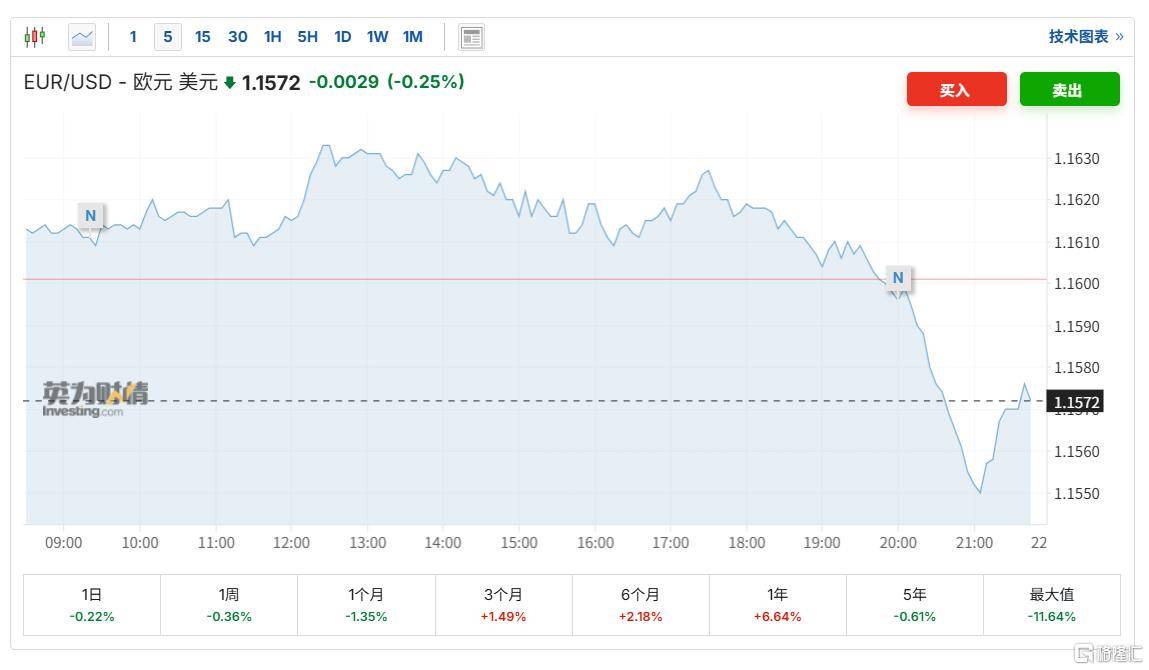
Core Points - The European Central Bank (ECB) has decided to maintain interest rates at 2%, marking the third consecutive meeting with no changes, despite market volatility due to trade relations [1][3] - The ECB has cut rates by 2 percentage points over the past year but has since adopted a wait-and-see approach, as inflation has reached the policy target of 2%, which other major central banks have not yet achieved [1][6] - Following the announcement, the euro fell by 0.23% against the dollar, trading at 1.1572 [1] Summary by Sections Monetary Policy - The ECB's deposit facility rate, main refinancing rate, and marginal lending rate remain unchanged at 2%, 2.15%, and 2.40% respectively [3] - The ECB aims to ensure medium-term inflation stability at the 2% target and has not committed to a specific interest rate path, indicating readiness to adjust all tools based on data and meeting reviews [6] Economic Outlook - The ECB maintains its assessment of inflation near the 2% target, with decisions based on inflation outlook and risks, while the eurozone economy continues to grow despite global trade tensions and geopolitical uncertainties [6][7] - The ECB is gradually reducing its asset purchase programs (APP and PEPP) as the euro system stops reinvesting the principal of maturing securities [6] Market Reactions - Analysts suggest that further rate cuts will require signs of data deterioration, with a high threshold for additional cuts despite some council members favoring a "risk management" approach [7] - The latest data shows the eurozone's inflation rate at 2.2% in September, above the 2% target, providing confidence for the ECB to pause rate cuts [7][8] - Most economists view eurozone inflation as moderate, with recent increases in German inflation still close to long-term averages, supporting the ECB's decision to hold rates steady [8]
美联储如期降息25基点 金价从低点反弹
Jin Tou Wang· 2025-10-30 06:03
Group 1 - Gold prices are currently trading above $3967, with a recent report showing a price of $3971.87 per ounce, reflecting a 1.10% increase, while the highest price reached was $3981.64 and the lowest was $3914.92 [1] - The Federal Reserve's recent decision to lower the benchmark interest rate by 25 basis points to a range of 3.75%-4% has created a mixed sentiment in the market, with some members advocating for a more aggressive cut of 50 basis points [1][2] - The employment market is showing signs of cooling, with job growth slowing and unemployment rates rising, although still at low levels, indicating potential risks to economic activity [2] Group 2 - The Federal Reserve plans to halt balance sheet reduction starting December 1, with maturing agency debt being reinvested into Treasury securities, which may influence market liquidity [1] - Analysts suggest that the gold market is at a crossroads, with a potential decline in prices if the upcoming U.S.-China-Korea summit does not yield positive results and if expectations for a December rate cut continue to diminish [3] - The recent CPI data indicates that inflation remains relatively high, with core PCE potentially hovering around 2.3% to 2.4%, suggesting that inflationary pressures are still a concern for the Federal Reserve [2]