SaaS

Search documents
“隐身”的腾讯云,不想当第一
Xin Lang Cai Jing· 2026-02-02 08:44
Core Viewpoint - The competition among cloud service providers in China, particularly in the AI cloud sector, is intensifying, with companies like Alibaba Cloud, Volcano Engine, and Tencent Cloud adopting different strategies to capture market share and achieve profitability [1][6][26]. Group 1: Advertising and Market Position - Since 2025, the number of AI cloud-related advertisements in major airports has significantly increased, with major players like Alibaba Cloud and Volcano Engine dominating the advertising space [1]. - In Shenzhen's Bao'an Airport, Alibaba Cloud claims to lead the AI cloud market share, while Volcano Engine asserts a 46.4% share of the public cloud large model market [2][5]. - Tencent Cloud's absence from the advertising scene is notable, especially as AI is seen as a critical growth area for cloud computing [5]. Group 2: Profitability vs. Scale - Tencent Cloud achieved overall profitability in its cloud business by 2025, a rare feat in an industry plagued by a "profit black hole" due to prolonged price wars [6][8]. - The industry has seen a trend where higher revenues often correlate with greater losses, with Alibaba Cloud's latest report showing a profit margin of less than 9% [8]. - Tencent Cloud has shifted its focus from absolute revenue to sustainable income structures, leading to a reduction in low-profit business segments [10]. Group 3: Business Strategies - Tencent Cloud's strategy emphasizes high-quality growth and a focus on high-value clients, resulting in a decrease in market share but a healthier revenue model [10][12]. - Volcano Engine's approach involves aggressive pricing for Token sales to attract AI customers, but this model has been criticized for lacking customer retention [14][15]. - Tencent Cloud's business structure is differentiated, with a focus on 40% IaaS, 40% PaaS, and 20% SaaS, highlighting its commitment to AI SaaS products [17]. Group 4: Market Growth and Competition - The AI cloud market in China reached 22.3 billion yuan in the first half of 2025, with Alibaba Cloud holding a 35.8% market share, followed by Volcano Engine at 14.8% [28]. - Tencent Cloud's revenue from partnerships has shown double-digit growth, with AI and SaaS product orders doubling [24]. - The competition is not just about market share but also about long-term sustainability and the ability to adapt to industry changes [26]. Group 5: Ecosystem and Partnerships - Tencent Cloud emphasizes a partnership-first approach, valuing long-term relationships with partners over short-term gains [24]. - The company has collaborated with over 11,000 partners, maintaining a focus on mutual respect and shared benefits [24]. - The competitive landscape has seen some cloud providers exploit partnerships, leading to a breakdown in trust and collaboration [21][22].



重磅 | 百望推出交易本体论白皮书——在AI2.0时代构建可信的智能经济基础设施
Ge Long Hui· 2026-01-30 14:03
Core Insights - The article discusses the transition of AI from "generative intelligence" to "decision intelligence," emphasizing the need for a solid data infrastructure that is deterministic, traceable, and auditable [2][4]. Global Trends - The development path of enterprise-level AI is undergoing structural changes, with companies like Palantir and Bill.com achieving high valuations not due to complex software functions, but because they embed directly into enterprise decision-making and financial flows, focusing on "result-oriented" services [1][3]. China's Unique Advantage - Unlike overseas markets, China has a unique advantage in this transformation due to national-level digital infrastructure initiatives like the Golden Tax Phase IV and digital invoices, which have enabled comprehensive digitalization and standardization of key business behaviors [3][4]. Theoretical Breakthrough - The white paper introduces the concept of "transaction ontology," which redefines invoices as economic fact nodes that connect financial flows, goods flows, and legal responsibilities, emphasizing that only data confirmed by legal frameworks can be considered as auditable and accountable assets [4][5]. Paradigm Shift - The industry is experiencing a structural shift from Software as a Service (SaaS) to Results as a Service (RaaS), where businesses pay for quantifiable operational outcomes rather than just software functionalities [5][6]. Business Model Innovations - In various scenarios such as procurement and supply chain finance, new business models are emerging that leverage transaction ontology to provide accountability and auditability, thus enabling more reliable outcome delivery [6][7]. Company Strategy - As a foundational enterprise in financial and tax digitalization, the company is strategically focused on building a comprehensive transaction semantic standard and industry-wide mapping, which transforms fragmented data into structured economic facts [7][8]. Future Directions - The white paper suggests that the future of competition in the AI 2.0 era will hinge on who can master legally confirmed economic facts and translate them into actionable decision-making capabilities, highlighting the importance of trust as a precursor to intelligent economic upgrades [7][8].
Proem Acquisition(PAACU) - Prospectus(update)
2026-01-29 19:28
As filed with the Securities and Exchange Commission on January 29, 2026. Registration No. 333-292217 UNITED STATES SECURITIES AND EXCHANGE COMMISSION Washington, D.C. 20549 ––––––––––––––––––––––––––––––––––––––– AMENDMENT NO. 2 TO FORM S-1 REGISTRATION STATEMENT UNDER THE SECURITIES ACT OF 1933 ––––––––––––––––––––––––––––––––––––––– Proem Acquisition Corp I (Exact name of registrant as specified in its charter) ––––––––––––––––––––––––––––––––––––––– | Cayman Islands | 6770 | N/A | | --- | --- | --- | | ...

Anthropic Inference Costs Skyrocket |TikTok Deal Closes |The IPO Market:Wealthfront & EquipmentShare
20VC with Harry Stebbings· 2026-01-29 15:03
Jason Lemkin is one of the leading SaaS investors of the last decade with a portfolio including the likes of Algolia, Talkdesk, Owner, RevenueCat, Saleloft and more. Rory O’Driscoll is a General Partner @ Scale where he has led investments in category leaders such as Bill.com (BILL), Box (BOX), DocuSign (DOCU), and WalkMe (WKME), among others. ----------------------------------------------- Timestamps: 00:00 Intro 01:10 Brex Acquisition by Capital One for $5.15BN 09:06 Does Brex's Acquisition Help or Hurt R ...

腾讯云副总裁:云竞赛来到下半场 健康的生意要拼场景了
Nan Fang Du Shi Bao· 2026-01-28 16:32
腾讯云副总裁、腾讯云智能负责人、优图实验室负责人吴运声表示:"平台能力与生态协同,已成为AI 落地的核心竞争力,腾讯云将全面开放产品能力,与伙伴共建Agent产业应用生态,推动'好用的AI'全 面落地。" 而在AI+全球化驱动的云服务下半场竞赛中,杨晨表示,腾讯云将会把发力重点放在AI与SaaS产品的融 合上,从而构成与市场的差异化竞争。腾讯云副总裁吴奇胜也表示,以前云服务上半场的竞赛可能更聚 焦资源的售卖,但下半场更多应该聚焦在AI真正帮企业解决了什么问题、AI如何应用到业务流程里去 提效。 腾讯云的这一理念已经显出成效。近期在2026腾讯云合作伙伴大会上,腾讯云亮出了最新的成绩单:过 去一年,腾讯云携手超11000家合作伙伴,持续深耕产业智能化,合作伙伴公有云收入继续保持两位数 增速,AI及SaaS产品相关订单翻倍增长,AI大模型产品两年内增长超过50倍,收入规模和质量不断提 升。同时,出海业务同比增长30%,成为合作伙伴业务发展的重要增长引擎。 在提效工具智能体应用场景中,腾讯云也在合作伙伴大会上一并升级了其智能体开发平台。 在一众高调"喧哗"中,腾讯云似乎选择了一条不同的路径。 近期在一场媒体采访中, ...
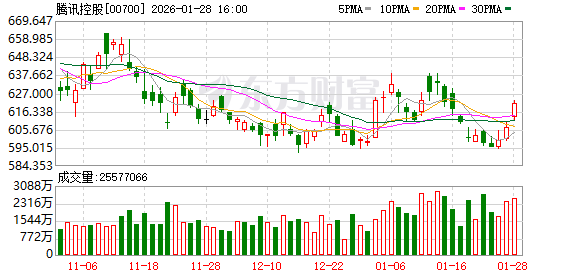
未知机构:软件行业大放异彩的时机到了吗-20260127
未知机构· 2026-01-27 03:00
Summary of Key Points from the Conference Call Industry Overview - The conference call focused on the software industry, particularly the impact of artificial intelligence (AI) on software companies and their business models [1][2]. Core Insights and Arguments 1. **Reliance on Existing Software Vendors** Companies prefer to rely on existing software vendors for AI feature upgrades and are willing to pay for these enhancements. There is no plan to replace current vendors, and spending continues to grow during contract renewals [1][2]. 2. **Focus on Time to Market** Companies aim to concentrate internal development resources on revenue growth and core business rather than redeveloping third-party applications. This indicates a strategic shift towards leveraging existing solutions [1][2]. 3. **Outsourcing Development and Maintenance** Businesses are dismissing the idea of developing software in-house and prefer to outsource responsibilities and risks to third-party vendors. Developer headcount remains unchanged despite the growing reliance on external solutions [2]. 4. **AI Monetization** The call highlighted that many companies are successfully monetizing additional AI features through new contracts and product SKUs. This trend is seen as a legitimate business rationale for increased spending [2][3][4][5]. 5. **SaaS Pricing Dynamics** The SaaS sector is evolving, with AI transforming simple functionalities into high-value productivity engines, justifying significant price increases for software products. For instance, a user expressed willingness to pay 50% more for a service due to the exponential utility of AI-generated content [5][19]. 6. **Challenges in Data Management** The complexity of managing vast amounts of data across various systems poses significant challenges. Companies face issues related to data governance, privacy, and integration, making it impractical to switch from established products [6][7][8][9]. 7. **Emergence of Claude Code** The transition towards tools like Claude Code is noted, where AI is taking on more coding responsibilities, potentially accelerating development processes. However, there are concerns about the reliability and effectiveness of such tools in large enterprise environments [10][11][12][13]. Additional Important Insights - **Market Sentiment** The overall sentiment in the software industry is cautious, with a belief that market emotions may have been overstretched. The hype around AI tools like Claude Code is nearing its peak, indicating a potential shift in market dynamics [14][15]. - **Growth Expectations** A recent Morgan Stanley CIO survey indicates an increase in growth expectations for the software industry from 2.4% in 2025 to 3.8% in 2026, surpassing growth rates in hardware and communication services [18]. - **Skepticism on Price Compression** There is skepticism regarding significant price compression in the software industry, as low-cost software already exists, and SaaS pricing is generally low. R&D spending as a percentage of revenue for CRM companies is around 25%, indicating a balanced investment approach [19]. Investment Strategy - The software industry is viewed as a potential buy in the short to medium term, with a focus on identifying individual stocks that present investment opportunities. The market is expected to experience volatility, leading to increased differentiation in stock performance [20].


金蝶的云转型赌局,终于赢在了最后一秒?
Sou Hu Cai Jing· 2026-01-27 01:25
Core Viewpoint - Kingdee International has announced a significant turnaround in its financial performance, projecting a net profit of between 60 million to 100 million for the fiscal year 2025, marking the end of five consecutive years of losses [2][3]. Financial Performance Summary - Total revenue is expected to reach between 6.95 billion to 7.05 billion, reflecting a year-on-year growth of 11.1% to 12.7% [3]. - The company anticipates a net profit of 60 million to 100 million, indicating a substantial improvement from previous losses [3]. - Adjusted net profit is projected to be between 190 million to 240 million, showcasing strong core business profitability [3]. - Operating cash flow is approximately 1.1 billion, with an 18% year-on-year increase, indicating healthy cash generation [3]. - Compared to 2024's revenue of 6.256 billion and a loss of 142 million, the 2025 forecast shows a 10% revenue growth and over 200 million improvement in profit [3]. Key Drivers of Growth - The "cloud-first" strategy has been pivotal, with cloud service revenue exceeding 80% of total income and a 22.1% year-on-year growth in cloud subscription revenue [4]. - AI commercialization has begun to yield results, with a 19.4% increase in revenue per employee and AI-related contracts exceeding 150 million [4]. - The acquisition of large global clients has diversified Kingdee's customer base, enhancing average revenue per client and contributing to profitability [5]. Market Position and Competitive Landscape - Kingdee's recognition by large global clients indicates its product competitiveness against industry giants like SAP and Oracle [5]. - Despite the positive outlook, Kingdee faces challenges in maintaining growth in the mid-sized enterprise market, which has shown signs of slowing [7]. - The company's overseas revenue remains minimal, limiting its global expansion potential [7]. - Intense competition persists, particularly from rivals like Yonyou Network, which has also shown signs of recovery [7]. Long-term Investment Value - The 2025 performance forecast signals a shift in valuation logic from price-to-sales to price-to-earnings, reflecting positive market sentiment [9]. - Long-term investment value will depend on sustained growth in AI revenue, recovery in the mid-sized enterprise market, and successful overseas market penetration [10]. - Kingdee is at a critical juncture for AI commercialization, with potential for enhanced profitability, but must address underlying challenges to gain market confidence [10].

十亿级用户争夺战:除了编程,Excel才是AI真正的“杀手级”应用场景
Hua Er Jie Jian Wen· 2026-01-26 13:11
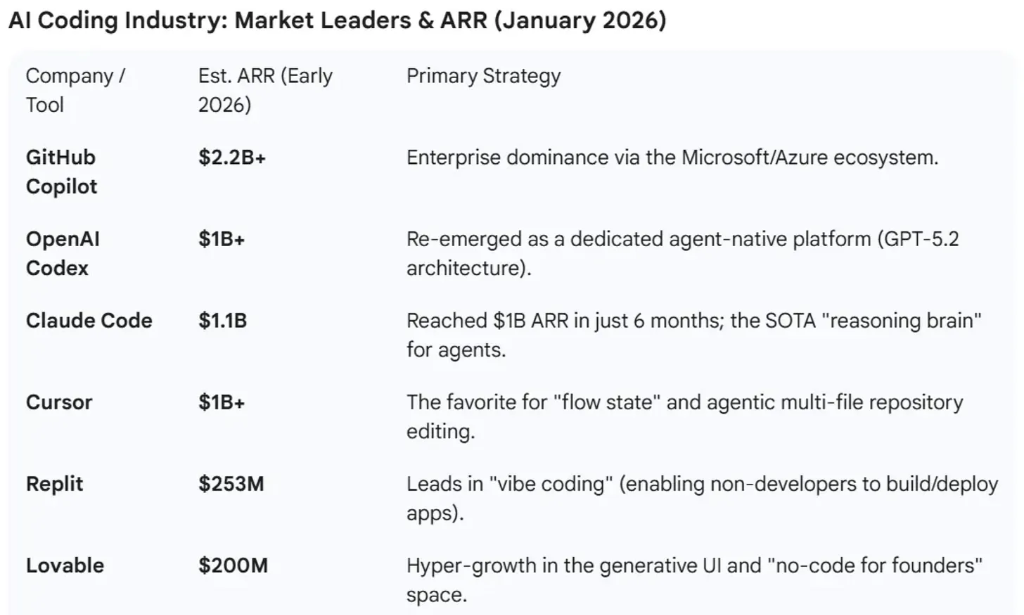
Core Insights - Altimeter Capital's partner Freda Duan highlights that while programming is currently the strongest AI application vertical, Excel has the potential to become the next "super vertical" in AI due to its billion-user scale [1] - Major industry players like OpenAI and Anthropic are actively expanding into the spreadsheet and productivity workflow sectors, indicating a significant shift in focus [1] - The potential market size for spreadsheets is larger than that of programming, and their unique characteristics as an "application software encapsulation layer" could reshape the entire software industry [1] Market Analysis - The programming sector has produced four companies with annual recurring revenue (ARR) exceeding $1 billion, with at least seven others rapidly surpassing $100 million ARR, suggesting a strong growth model that Excel could replicate [1] - The programming market is estimated to have a total addressable market (TAM) of approximately $2 trillion, with a natural advantage in adjacent use cases and a product-driven go-to-market strategy [6] - Excel's user base is substantial, with over 1.1 million paid customers reported by Google Workspace and an estimated 1.5 billion active users globally, indicating a massive potential market [8] Strategic Implications - The financial sector is identified as a key entry point for AI-driven Excel tools, given its high per capita profit and willingness to pay for productivity tools [9] - Approximately 10% of the 1.5 billion Excel users belong to the financial sector, which includes over 6.7 million professionals in the U.S. financial services and insurance industry, providing an excellent initial market for AI applications [9] - The self-service and workflow-native nature of tools in this space could lead to faster expansion compared to other software categories, as evidenced by the programming sector [9]
合合信息(688615):扫描全能王带来稳定现金流,出海打开第二增长曲线
Guolian Minsheng Securities· 2026-01-25 09:13
Investment Rating - The report initiates coverage with a "Buy" rating for the company [2]. Core Insights - The company generates stable cash flow from its flagship product, "Scan All-in-One," which contributes over 70% of its revenue. The revenue from the C-end business is projected to reach 1.075 billion yuan in 2024, with a compound annual growth rate (CAGR) of 27% from 2020 to 2024. The B-end business is also expected to grow steadily, reaching 360 million yuan in 2024, with a CAGR of 24% during the same period [7][27]. - The company is positioned as a leader in the domestic SaaS market and is accelerating its expansion into vertical AI applications, which are anticipated to become a second growth curve characterized by high probability and high returns [7][27]. Summary by Sections 1. Building a Mature C+B Product Matrix with Steady Financial Growth - The company has established a robust product matrix based on its proprietary intelligent text recognition and commercial big data technologies, serving both C-end users and B-end clients [10][12]. - The C-end revenue is primarily driven by the "Scan All-in-One" and "Business Card All-in-One" apps, while the B-end services include intelligent text recognition and commercial big data solutions [10][14]. - The company maintains a high gross margin of around 80% and a net margin of over 20%, with revenue growth outpacing expense growth, leading to sustained profitability since 2020 [18][27]. 2. Vertical AI Expansion: High Probability + High Returns as a Second Growth Curve - The company is developing a vertical AI matrix that includes innovative products across various fields such as AI education, health management, and AI infrastructure [35]. - The AGI technology platform and text intelligence technology platform provide a strong technical foundation for both C-end and B-end products, enhancing product performance and functionality [44]. - AI programming is expected to significantly reduce development costs and improve efficiency, providing a favorable environment for the company's vertical AI development [48]. 3. Profit Forecast and Investment Recommendations - The company is expected to achieve earnings per share (EPS) of 3.19 yuan, 4.48 yuan, and 5.81 yuan for the years 2025, 2026, and 2027, respectively, with corresponding price-to-earnings (P/E) ratios of 96, 68, and 53 [7][52]. - The report suggests that the company's C-end product matrix will continue to grow, with revenue growth rates projected at 25%, 28%, and 30% for 2025, 2026, and 2027, respectively [52].
A Stock Strategy For 9% Yield And A 30% Margin Of Safety
Forbes· 2026-01-23 15:00
Company Overview - Intuit (INTU) is currently priced at approximately $548 per share, which is about 32% below its 52-week high [2] Investment Opportunity - Acquiring INTU stock at a 30% discount, around $380 per share, presents a potential trading opportunity with a 9.0% annualized return by selling Put Options [3] - Selling a long-term Put option expiring on 1/15/2027, with a strike price of $380, can yield approximately $1,850 in premium for each contract, translating to an annualized yield of about 5.0% on the $38,000 reserved for the potential purchase of the stock [3][10] Competitive Advantage - Intuit possesses a wide economic moat characterized by high switching costs, which reinforces its leading market position [7] - The company has consistently increased prices for its QuickBooks offerings, with the Plus plan rising by over 64% and the Advanced plan by 83% over five years (2020-2025), demonstrating strong pricing power [11] - QuickBooks maintains a dominant market share, encompassing almost half of the accounting software sector, reinforcing its status as the industry standard [11] Industry Trends - The industry is experiencing a strong tailwind, with a projected compound annual growth rate (CAGR) of 10.1% [9] - There is a secular trend towards the transition to Software as a Service (SaaS) in the financial sector [11] Financial Health - As of July 31, 2025, Intuit reported a robust cash and investment balance of approximately $4.6 billion against total liabilities of $6.0 billion, illustrating a healthy balance sheet and minimal bankruptcy risk [15]