
创新药研发

Search documents
知名基金经理入场!公募基金“抢滩”创新药定增
Guo Ji Jin Rong Bao· 2025-09-24 15:21
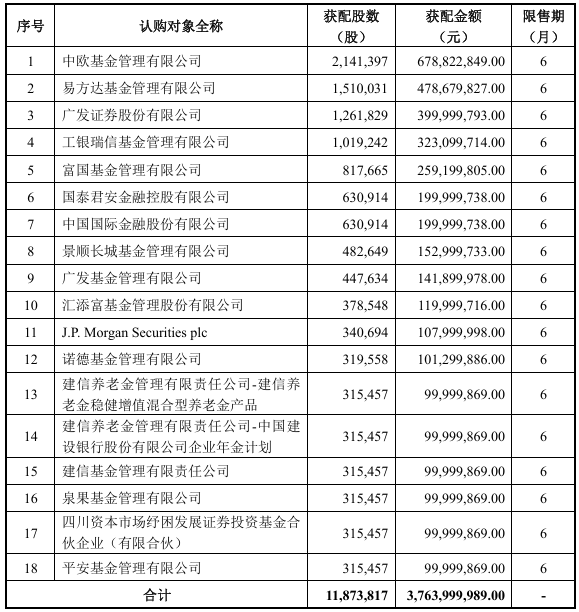
Core Viewpoint - Multiple public funds have participated in the private placement of shares by an innovative pharmaceutical company, indicating strong confidence in the company's growth potential and research capabilities [1][6]. Group 1: Fund Participation - Several well-known fund managers from major public funds, including China Europe Fund and ICBC Credit Suisse, have subscribed to the new shares, with significant amounts such as over 600 million yuan from China Europe Fund [1][2]. - The total number of shares issued in this private placement is up to 14,149,312 shares, priced at 317 yuan per share, with a total subscription amount of 3.764 billion yuan from 18 professional investment institutions [2][3]. Group 2: Company Overview - The company, Baile Tianheng, is based in Sichuan and has a comprehensive research and development capability for a full range of drugs, including small molecule chemical drugs, large molecule biological drugs, and ADC (antibody-drug conjugates) [2][5]. - The funds raised from this issuance will primarily be used for innovative drug research and development, accelerating the progress of ADC drugs and multi-specific antibodies [6]. Group 3: Market Sentiment and Future Outlook - Despite recent adjustments in the innovative drug sector, the participation of multiple public funds in the private placement reflects a strong endorsement of the sector's long-term value and growth prospects [6]. - Factors influencing the recent market adjustments include a lack of major business development collaborations and external environmental fluctuations, leading to cautious sentiment among investors [6]. - The long-term investment logic in the innovative drug sector remains intact, supported by technological breakthroughs, policy support, and the aging global population [6].

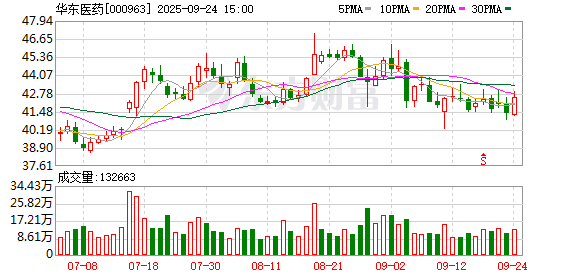
华东医药:自研创新药HDM1005的体重管理和糖尿病适应症2期临床正分别按计划开展,且进展顺利
Mei Ri Jing Ji Xin Wen· 2025-09-24 09:14
Group 1 - The company is progressing well with its self-developed innovative drug HDM1005, targeting weight management and diabetes indications in Phase II clinical trials [2] - Topline data for the weight management indication is expected to be available by the end of this year, with results to be announced through official announcements or at major international academic conferences [2] - Preparations for the Phase III clinical trial of HDM1005 for weight management have already begun [2]

生物医药产业蓄势待发 百奥赛图以“双轮驱动”书写创新范本
Xin Lang Zheng Quan· 2025-09-24 03:52
Core Viewpoint - The Chinese biopharmaceutical industry is undergoing a profound structural transformation, with innovative companies becoming the backbone of high-quality development in the sector [1][8]. Group 1: Industry Recovery - The global biopharmaceutical industry is emerging from a period of tightened capital and stricter regulations, presenting new growth opportunities for innovative drug companies [2]. - In the first half of 2025, the company reported impressive results, achieving revenue of 621 million yuan, a year-on-year increase of 51.5%, and a net profit of 48 million yuan, surpassing the total for the previous year [2]. - The company’s operating cash flow turned positive with a net inflow of 203 million yuan, and R&D investment grew nearly 30% to 209 million yuan, reflecting a trend of industry recovery and the maturation of the company's business model [2]. Group 2: Dual-Engine Growth Model - The company's growth is driven by a dual-engine business model, with the humanized mouse business showing a 56% year-on-year revenue increase and a gross margin of 79%, solidifying its status as a cash cow [3]. - The "thousand mice, ten thousand antibodies" initiative, focusing on the development of fully human antibody molecules, signed approximately 80 new collaborations in the first half of the year, a 60% increase year-on-year, with a gross margin close to 90% [3]. - This innovative business model transforms the traditionally high-risk, long-cycle antibody discovery process into standardized, scalable "shelf-type antibody products," significantly enhancing drug development efficiency [3][4]. Group 3: Globalization and Innovation - The company has established a global network with operational centers in key locations such as Boston, San Francisco, and Heidelberg, enhancing its collaboration capabilities with major pharmaceutical companies [5][6]. - The company has applied for over 400 patents, showcasing its technological strength and providing robust intellectual property protection for international collaborations [5]. - The favorable innovation ecosystem in Daxing District, supported by government policies and infrastructure, has facilitated the company's growth and international expansion [7][8]. Group 4: Future Outlook - The biopharmaceutical industry is a crucial component of the national strategic emerging industries, and the company’s success reflects the solid progress of the biopharmaceutical sector in Daxing [8]. - As Daxing continues to optimize its industrial ecosystem and international cooperation mechanisms, more innovative companies like the subject company are expected to emerge and contribute to the high-quality development of China's biopharmaceutical industry [8].
贝达药业三冲港股IPO:光环之下暗藏隐忧
Xin Hua Wang· 2025-09-24 02:40
Core Viewpoint - Betta Pharmaceuticals is making a third attempt to list on the Hong Kong Stock Exchange (HKEX) after two previous unsuccessful attempts in 2021, raising questions about its ability to pass HKEX scrutiny and achieve its listing goals [1][2]. Group 1: Company Overview - Betta Pharmaceuticals focuses on innovative drug research and development, integrating R&D, production, and marketing [2]. - The company has eight marketed products targeting various cancers, including lung, kidney, and breast cancer [2]. - Betta Pharmaceuticals was listed on the Shenzhen Stock Exchange in 2016 [2]. Group 2: Financial Performance - In the first half of 2025, Betta Pharmaceuticals reported a revenue of 1.731 billion yuan, a year-on-year increase of 15.37%, but net profit fell by 37.53% to 140 million yuan [2][3]. - The second quarter of 2025 saw a significant net profit decline of 68.36%, marking the first instance of a year-on-year decrease in net profit since 2023 [2]. Group 3: Cost Structure - The decline in net profit is attributed to increased depreciation and amortization expenses [3]. - R&D expenses decreased by 10.40% to 226 million yuan, while sales expenses rose by 13.34% to 594 million yuan [3]. Group 4: Financial Pressure - As of June 30, 2025, Betta Pharmaceuticals had current assets of 1.359 billion yuan, which is lower than current liabilities of 1.757 billion yuan, indicating short-term solvency issues [4]. - The net cash flow from operating activities was 445 million yuan, a decrease of 14.70% year-on-year, highlighting liquidity challenges [4]. Group 5: Debt Issues - Betta Pharmaceuticals has an outstanding payment of 180 million yuan to Yifang Bio for a collaboration agreement, with some payments overdue for over two years [4][5]. - The company has marked the reason for the unpaid amount as "not yet settled," indicating ongoing disputes [5]. Group 6: Product Dependency - The company's net profit margin dropped to 7.55%, down from 14.40% in the previous year, largely due to high dependency on core products and a lack of new product support [6]. - The main revenue drivers are two products, Kai Mei Na and Bei Mei Na, which have historically contributed significantly to revenue [6]. Group 7: Market Competition - The third-generation EGFR inhibitor, Sai Mei Na, has not performed as expected in the market, with sales failing to meet the threshold of 10% of total revenue [7]. - New products like Kang Mei Na and Ao Fu Min face stiff competition from established players, limiting their potential revenue contributions [8]. Group 8: Future Outlook - The company aims to use the funds raised from the IPO for R&D, potential acquisitions, and expanding its marketing network [5]. - The ability of Betta Pharmaceuticals to navigate current challenges and achieve its IPO goals remains a focal point for market observers [8].
申万宏源:首予再鼎医药“买入”评级 目标价35.2港元
Zhi Tong Cai Jing· 2025-09-24 01:59
Core Viewpoint - The report from Shenwan Hongyuan indicates that Zai Lab (09688) is expected to achieve non-GAAP operating profit by Q4 2025, driven by the commercialization of products and localized production [1] Financial Projections - Revenue projections for Zai Lab from 2025 to 2027 are estimated at $553 million, $802 million, and $1.203 billion respectively, with net profit attributable to the parent company expected to be -$134 million, $15 million, and $173 million for the same years [1] - The target price set at HKD 35.2 implies a 39% upside potential, reflecting confidence in the company's innovative pipeline [1] Product Portfolio and Commercialization - Zai Lab is a global biopharmaceutical company in the commercialization stage, with seven products approved in China, including four oncology products and one immunology product [2] - Since the approval of its first commercial product, Niraparib, in 2019, Zai Lab has seen significant sales growth, with total revenue projected to reach $399 million in 2024, a 50% increase year-on-year [3] New Product Development - The company has submitted applications for new products, including KarXT and TF ADC, to the NMPA, with plans to submit for Bemarituzumab for 1L gastric cancer in the second half of the year [3] - Zai Lab anticipates revenue could reach $2 billion by 2028, supported by the sales of existing products and the approval of new products [3] Expansion of Indications - Efgartigimod, the first FcRn antagonist globally, has received approvals for multiple indications, with sales expected to reach $94 million in 2024, reflecting an 835% year-on-year growth [4] - The company is exploring additional indications for Efgartigimod, which could broaden its market reach across various medical fields [4] Global Pipeline Development - Zai Lab is actively expanding its global pipeline, focusing on ADCs and bispecific antibodies, with several products showing potential for first-in-class (FIC) or best-in-class (BIC) status [5] - The company plans to initiate global pivotal studies for ZL-1310, which has shown promising clinical activity and safety [5]
申万宏源:首予再鼎医药(09688)“买入”评级 目标价35.2港元
智通财经网· 2025-09-24 01:57
Core Viewpoint - Zai Ding Pharma is expected to achieve non-GAAP operating profit by Q4 2025, driven by the commercialization of products and localized production [1] Financial Projections - Revenue projections for Zai Ding Pharma are $553 million, $802 million, and $1.203 billion for 2025, 2026, and 2027 respectively [1] - Net profit projections for the company are -$134 million, $15 million, and $173 million for 2025, 2026, and 2027 respectively [1] - The target price is set at HKD 35.2, indicating a potential upside of 39% [1] Product Portfolio and Pipeline - Zai Ding Pharma has seven products approved for sale in China, including four oncology products, one immunology product, and two infectious disease products [2] - The company has seen a 50% year-on-year revenue growth in 2024, reaching $399 million, primarily due to the sales increase of existing products [3] - New product applications have been submitted to NMPA, with expectations for further approvals in the near future [3] Key Product Developments - Efgartigimod (艾加莫德) is being explored for additional indications beyond its current approvals, with significant sales growth anticipated [4] - The product is expected to generate $94 million in domestic sales in 2024, reflecting an 835% increase [4] Global Pipeline Expansion - The company is actively expanding its global pipeline, focusing on ADCs and bispecific antibodies [5] - ZL-1310 has received Fast Track designation from the FDA, with positive clinical data expected to be presented at the 2025 ASCO annual meeting [5] - The company plans to initiate global pivotal studies for ZL-1310 in the near future [5]
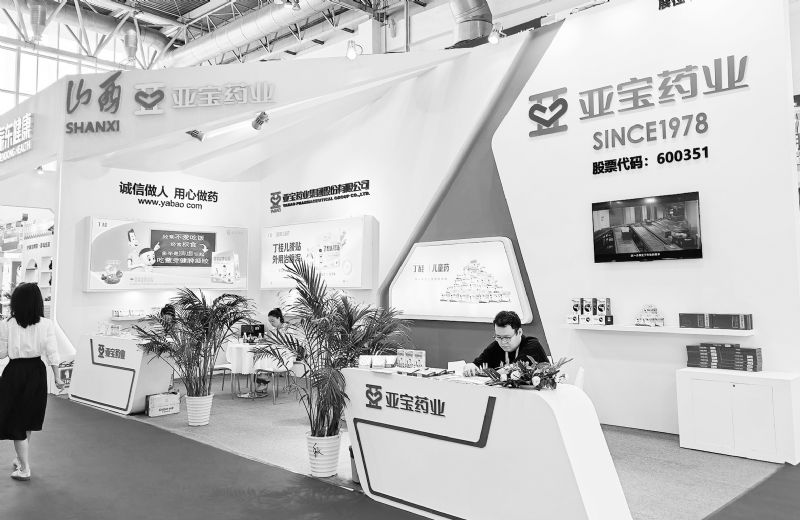
亚宝药业布局创新药遇阻终止研发项目 8786万投入“打水漂”或减利5579万
Chang Jiang Shang Bao· 2025-09-23 23:23
Core Viewpoint - The company, Yabao Pharmaceutical, has decided to terminate the SY-009 innovative drug project after seven years of development, leading to a significant financial impact due to asset impairment provisions [2][5][6]. Group 1: Project Termination - The SY-009 project, aimed at developing an oral formulation for treating type 2 diabetes, has been officially terminated due to unmet efficacy endpoints in clinical trials [3][4]. - The total investment in the SY-009 project amounted to 87.87 million yuan, with 55.79 million yuan capitalized and subject to impairment [6][9]. - The decision to terminate the project was made after careful consideration of the risks and future market value, focusing on reallocating resources to more promising projects [4][6]. Group 2: Financial Impact - The termination of the SY-009 project will result in a reduction of 55.79 million yuan in the company's profit for the fiscal year 2025 [5][6]. - In the first half of 2025, Yabao Pharmaceutical reported a revenue of 1.139 billion yuan, a year-on-year decline of 21.08%, and a net profit of 174 million yuan, down 2.99% [9]. - The decline in revenue is attributed to decreased sales of several products, including pain relief patches and pediatric medications [9]. Group 3: R&D Investment - From 2017 to mid-2025, Yabao Pharmaceutical's total R&D expenses reached 1.129 billion yuan, reflecting the high costs associated with innovative drug development [7][9]. - The company has also invested approximately 127 million yuan in another innovative drug project, SY-005, which has completed its first phase of clinical trials [8][9]. - The pharmaceutical industry is characterized by high investment and risk, with long development cycles and various uncertainties affecting project outcomes [7].

被嫌弃的PROTAC第一人
3 6 Ke· 2025-09-23 12:37
Core Viewpoint - Pfizer has not abandoned vepdegestrant but has deprioritized it, seeking new partners for the project with Arvinas, reflecting the challenges in the innovative drug industry [1][2][4] Group 1: Clinical Trial Results - The VERITAC-2 trial results showed that vepdegestrant achieved one of its dual primary endpoints in ESR1 mutant patients but failed to demonstrate significant improvement in progression-free survival (PFS) in the intent-to-treat population [2][3] - The trial's outcome indicates that vepdegestrant could not meet its core objective of covering the entire patient population, missing out on a significant market opportunity [2][3] Group 2: Market Position and Competition - Vepdegestrant is likely to struggle in a highly competitive market, as it has not differentiated itself from other second-generation SERDs, with Menarini's elacestrant showing superior clinical benefits [3][4] - The decision to seek new partners suggests that both Pfizer and Arvinas are acknowledging the limited competitive edge of vepdegestrant in the current landscape [4][5] Group 3: Company Performance and Market Sentiment - Arvinas has seen its market value plummet from a peak of $8 billion to approximately $552 million, illustrating the volatility and risks associated with innovative drug development [6] - The initial excitement surrounding vepdegestrant's early clinical data has not translated into sustained market success, highlighting the unpredictability of clinical trials [6][7] Group 4: Industry Insights - The situation with vepdegestrant serves as a cautionary tale for the innovative drug sector, emphasizing the gap between early expectations and later clinical realities [1][6] - The broader innovative drug industry is characterized by a pattern of high expectations followed by significant challenges, necessitating a cautious yet optimistic approach [7]


葛兰重金出手!大量资金借道创新药主题ETF积极入市
Shang Hai Zheng Quan Bao· 2025-09-23 11:19
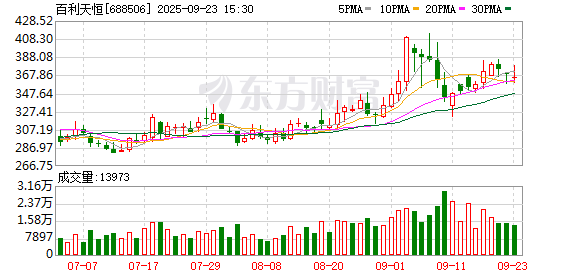
Core Viewpoint - The recent investment by Guo Lan and other prominent fund managers in the innovative drug company Bai Li Tian Heng during a market adjustment highlights the ongoing interest and confidence in the innovative drug sector despite recent fluctuations [2][9]. Investment Activity - Guo Lan's funds invested a total of 6.79 billion yuan in Bai Li Tian Heng's private placement, with the China Europe Medical Health Mixed Fund acquiring 185,590 shares for 5.88 billion yuan, representing 1.8% of the fund's net asset value [3][6]. - The China Europe Medical Innovation Stock Fund also participated, purchasing 28,550 shares for approximately 905 million yuan, accounting for 1% of its net asset value [3][6]. - The lock-up period for the shares acquired by both funds is set at six months [3]. Fund Performance and Holdings - As of the end of Q2 2024, the China Europe Medical Health Mixed Fund held 1,879,400 shares of Bai Li Tian Heng, having increased its holdings significantly over the past year [7]. - Bai Li Tian Heng has entered the top ten holdings of the China Europe Medical Health Mixed Fund, reflecting its growing importance in the fund's portfolio [7]. Market Trends - The innovative drug sector has seen substantial inflows, with various ETFs focused on this theme experiencing significant net subscriptions in September, indicating continued investor interest [13]. - The overall market for innovative drugs is projected to grow, with expectations of explosive growth for Chinese innovative drugs in the global market [13][14]. Future Prospects - Bai Li Tian Heng plans to use the funds raised from the private placement to advance its innovative drug research projects, including the development of ADC and multi-specific antibody platforms [12]. - The Chinese innovative drug industry is in a rapid growth phase, with a strong pipeline of drugs under development and increasing international recognition of its research capabilities [14].
中国创新药崛起:从临床试验场到全球研发策源地
2 1 Shi Ji Jing Ji Bao Dao· 2025-09-23 09:23
Core Insights - China's pharmaceutical innovation has transitioned from being a "follower" to a central player in global business development (BD) transactions, reshaping multinational pharmaceutical companies' R&D strategies due to the rise of Chinese scientific capabilities [1][10] Group 1: License-out Transactions - In the past five years, the share of upfront payments and total amounts in License-out transactions in China has significantly increased, with 2023 H1 seeing upfront payments and total amounts reach $2.6 billion and $60 billion, respectively, accounting for 91% and 99% of related transactions in China [1] - The total amount of related transactions in China for H1 2023 exceeded the total for the entire year of 2024 by $3.7 billion, achieving a year-on-year growth of 129% [1] - The number of License-out transactions in China reached 72 in H1 2023, representing 50% of related transaction numbers, marking the highest level in five years [1] Group 2: Global Positioning and Investment - The trend has led to the first instance of License-out upfront payments surpassing total financing amounts in the primary market, with multinational companies and overseas venture capital becoming core support for the development of Chinese innovative drugs [2] - AstraZeneca's $2.5 billion investment reflects China's emergence as a global hub for innovative drugs, with a doubling of drug approvals from China contributing to about one-third of global licensing transactions [2][3] Group 3: Innovation Ecosystem Transformation - The past decade has seen a fundamental change in China's pharmaceutical innovation ecosystem, transitioning from a focus on imitation to innovation since the 2015 reform of drug and medical device review and approval processes [3] - The number of innovative drugs approved in China has steadily increased from 9 in 2018 to 42 in 2024, with 93% of the 43 approved innovative drugs in H1 2025 being domestically developed [3] - The time gap for Chinese innovative drugs from concept to approval has decreased from 10 years in 2010 to 3.7 years in 2024 compared to the U.S. [3] Group 4: Clinical Trial Advantages - China has a significant unmet patient demand, with millions suffering from chronic diseases, making it an attractive location for drug development [4] - The cost and speed advantages of clinical trials in China are notable, with the direct cost per participant in Phase III trials being about one-third of that in the U.S., and faster patient recruitment [4] - A complete innovation drug R&D industrial chain has formed in China, involving numerous enterprises and research institutions across all stages from basic research to clinical trials [4] Group 5: Future Market Projections - The Chinese innovative drug market is projected to reach approximately $200 billion by 2030, a significant increase from over $60 billion in 2024 [9] - The proportion of innovative drug sales in overall drug spending is expected to rise from 29% in 2024 to 53% by 2030, aligning with industry reports predicting substantial growth in the innovative drug market [10]