
循环经济

Search documents
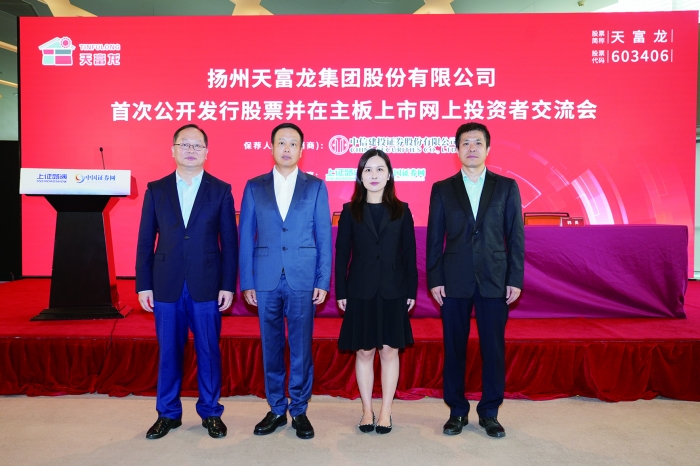
天富龙:聚焦数字化、全球化、绿色化 专注差别化涤纶短纤维领域创新发展——扬州天富龙集团股份有限公司首次公开发行股票并在主板上市网上投资者交流会精彩回放
Shang Hai Zheng Quan Bao· 2025-07-27 18:48
Company Overview - The company focuses on the research, production, and sales of differentiated polyester staple fibers, expanding its product range to include recycled colored polyester staple fibers and differentiated composite fibers, covering various applications in business, travel, home, healthcare, and clothing [2][4] - The main products include high-quality, full-spectrum recycled colored polyester staple fibers and functionally rich differentiated composite fibers, with applications in automotive interiors, home textiles, construction, footwear materials, healthcare, and filtration materials [5][4] Financial Performance - Sales revenue for differentiated composite fibers in 2022, 2023, and 2024 is projected to be approximately 1.48 billion, 1.79 billion, and 2.48 billion CNY, respectively, showing consistent growth due to increased production from the "Zhuhai Project" and adjustments in product structure [6] - Revenue from recycled colored polyester staple fibers for the same years is expected to be around 996.65 million, 1.07 billion, and 1.17 billion CNY, with a focus on customized products in the automotive interior sector [7] - The company's gross profit from main business operations for the same period is estimated at 469.27 million, 583.42 million, and 599.87 million CNY [8] - The net profit attributable to the parent company, after excluding non-recurring gains and losses, is projected to be 338.50 million, 420.06 million, and 450.94 million CNY, with a compound annual growth rate of 15.42% [9] - The comprehensive gross profit margin for the company is expected to be 18.86%, 18.31%, and 16.50% over the same period [10] Research and Development - The company has increased its R&D expenses to approximately 93.26 million, 117.34 million, and 136.20 million CNY, maintaining a stable proportion of around 3.5% of operating income [11] - Future R&D plans include establishing a research center and developing seven technology platforms to enhance technical competitiveness and support the transition from physical to chemical recycling methods for polyester [14] Market Development - The company aims to strengthen its market presence by leveraging existing manufacturing bases and expanding into new markets, including Guangdong and Southeast Asia, through specialized marketing personnel [15] - The company has established long-term cooperative relationships with major clients in various sectors, ensuring stable revenue growth [25] Industry Context - The company operates within the "C28 Chemical Fiber Manufacturing" industry, specifically in "C2822 Polyester Fiber Manufacturing" [17] - China is a major global supplier of polyester staple fibers, accounting for 61.62% of the world's production in 2022, with production increasing from 9.15 million tons in 2016 to 11.93 million tons in 2023 [21] - The competitive landscape of the polyester staple fiber industry is characterized by high concentration, with the top four companies holding approximately 43% of the market share as of the end of 2023 [24]

沧州河间:在细分赛道上定义中国精度
Xin Jing Bao· 2025-07-25 10:19
Core Insights - The article highlights the unique industrial evolution of Hejian, which combines traditional craftsmanship with modern manufacturing, focusing on the concept of "turning waste into treasure" through remanufacturing and innovation [1][5]. Remanufacturing Industry - Hejian has developed a robust remanufacturing industry since the 1980s, with 176 companies operating continuously, supported by a significant automotive market in the Beijing-Tianjin-Hebei region, which has nearly 24 million vehicles [2][5]. - The remanufacturing sector produces over 14 million automotive starters and generators annually, capturing more than 80% of the national market share, with over 30% of products exported to more than 40 countries [2][6]. - The remanufacturing process involves a standardized industrial workflow that includes disassembly, cleaning, testing, and repair, ensuring that remanufactured parts meet original specifications [3][5]. Equipment Manufacturing - Hejian's equipment manufacturing sector includes advanced CNC machining capabilities, producing high-precision tools such as PDC drill bits, with a significant portion of production exported [4][6]. - The remanufacturing techniques applied in this sector have increased the utilization rate of old drill bits to 70%, enhancing their performance beyond that of new products [4]. Automotive Parts Industry - The automotive parts industry in Hejian has grown to include 424 production enterprises, employing approximately 49,000 people, and has become a significant player in the domestic and international markets [7][8]. - Companies like Cangzhou Juqing Automotive Parts Co., Ltd. have transitioned from small workshops to industry leaders, developing patented products that break foreign monopolies in the commercial vehicle sector [7][8]. Electrical Cable Industry - The electrical cable industry in Hejian has also flourished, with 196 companies generating an annual revenue of 32.31 billion yuan, accounting for about 30% of the market share in Hebei province [9][12]. - Leading companies in this sector, such as Changfeng Cable, have achieved significant milestones, including producing high-voltage cables and benefiting from efficient local government services [9][12]. Glass Manufacturing - Hejian has a long-standing tradition in glass manufacturing, with a history dating back over 50 years, producing a wide range of glass products that are exported to 85 countries [10][11]. - The craftsmanship in glass production emphasizes the importance of skilled artisans, with many products still requiring manual techniques that machines cannot replicate [10][11]. Overall Economic Impact - The diverse industrial landscape of Hejian, including remanufacturing, equipment manufacturing, automotive parts, electrical cables, and glass, collectively supports the local economy and provides employment for tens of thousands [12]. - The city is positioned to leverage its industrial strengths and geographic advantages to further integrate into national and global supply chains, enhancing its economic resilience and growth potential [12].
凌雄科技向陆河未来学校捐赠教学电脑 助力粤东山区教育振兴
Zheng Quan Ri Bao Wang· 2025-07-25 03:42
Core Viewpoint - Lingxiong Technology Group Limited is actively contributing to rural education in Guangdong by donating teaching computers to schools, demonstrating its commitment to social responsibility and sustainable development in the DaaS industry [1][2] Group 1: Company Initiatives - Lingxiong Technology has donated a batch of teaching computers to Luhua Future School in Guangdong, continuing its support for rural education after a previous donation in March [1] - The company is recognized as a leading DaaS provider in China, focusing on high-quality development and social contributions through various initiatives [2] - The donation aims to enhance the school's information technology teaching capabilities and promote educational development in the mountainous areas of eastern Guangdong [1] Group 2: Industry Position - As the largest enterprise-level DaaS supplier in China, Lingxiong Technology has developed a comprehensive digital DaaS service model, offering services such as device subscription, IT technology subscription, and equipment recycling [2] - The company has helped thousands of enterprises achieve cost reduction and efficiency improvement through its innovative services [2] - Lingxiong Technology emphasizes the importance of a circular economy and has significantly increased the utilization rate of IT equipment through advanced remanufacturing technology [2]
当信用分成为“通行证”,巨头如何撬动万亿新租赁市场
Bei Jing Shang Bao· 2025-07-24 12:03
Core Insights - The new rental model, emphasizing "paying for experience rather than ownership," is reshaping the trillion-dollar consumer market, driven by platforms like Zhima Rental [1] - The Z generation is emerging as the main consumer group, with 72% believing that usage rights are more important than ownership rights [3] - The rental economy is increasingly recognized for its role in efficient resource allocation, promoting green development, and meeting diverse consumer needs [5] Group 1: Market Trends - Zhima Rental reported a 71.6% year-on-year growth in transaction GMV as of June 30, with over 60% of users under 30 years old and a 200% increase in orders from "post-00s" consumers [1] - Unique rental scenarios are emerging, such as students renting cameras for travel and parents renting baby equipment to avoid waste [3] - The new rental market is projected to approach 1 trillion yuan by 2030, becoming a significant driver of consumer growth alongside online and instant retail [4] Group 2: Business Strategies - Zhima Rental is leveraging credit scores as a "pass" for users, allowing high-credit users to rent high-value items without deposits, thus lowering entry barriers and reducing merchant loss rates [3] - The company plans to invest 10 billion yuan in resources to assist merchants with traffic, marketing, and cash incentives, enhancing their operational capabilities [4] - A collaborative marketing strategy is being implemented to enhance brand awareness and user education about Zhima Rental [4] Group 3: Regulatory and Development Insights - The rental economy is transitioning from "scale expansion" to "quality improvement," with a focus on establishing standards and benchmarks for merchant services [5] - The release of the first white paper on the healthy development of the consumption rental industry highlights the importance of digital technology in this transformation [4][5]
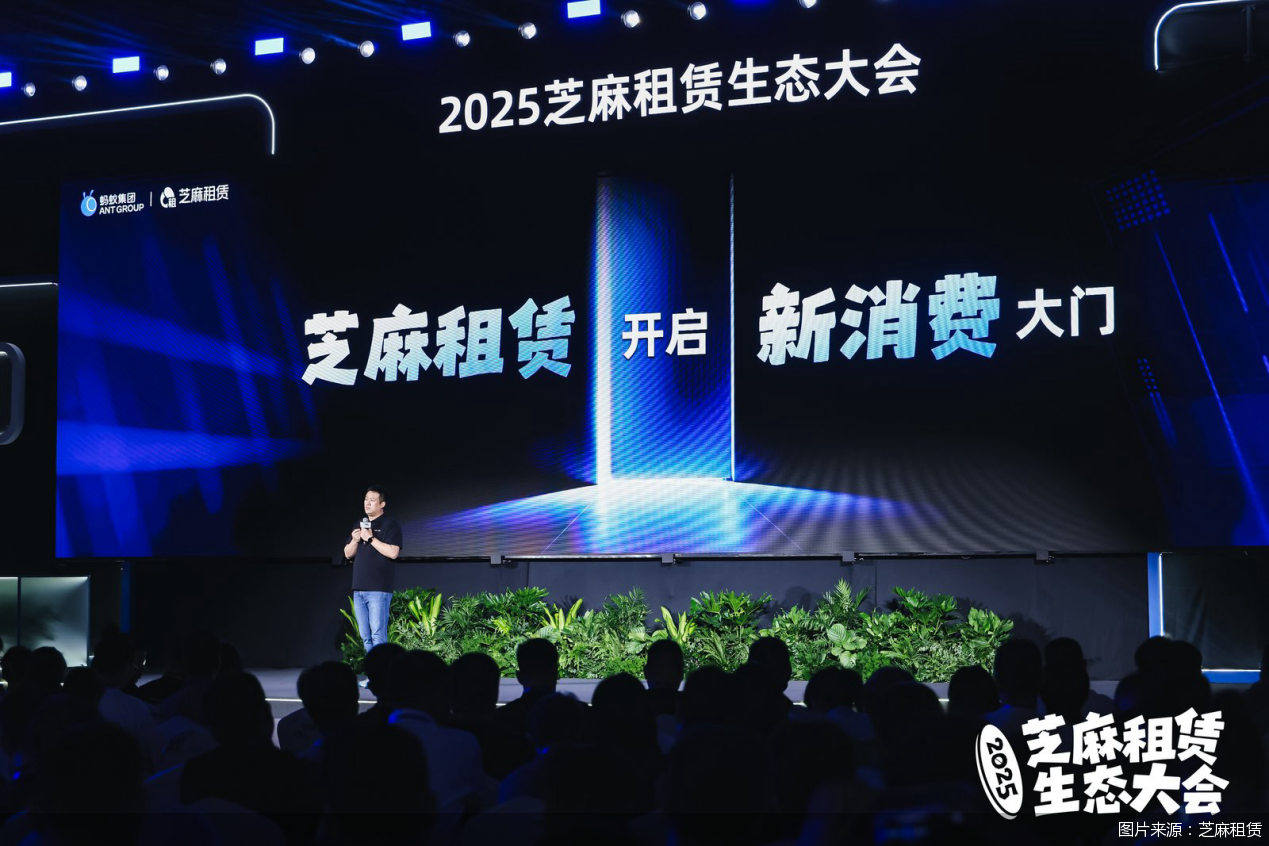
GMV年增长71.6%,芝麻租赁披露最新运营数据与AI布局
Cai Jing Wang· 2025-07-24 04:37
Group 1 - The core viewpoint of the articles highlights the rapid growth of the rental market driven by young consumers, with a significant increase in transaction volume and user engagement on the platform [1][2] - As of June 30, the platform reported a year-on-year GMV growth of 71.6%, with over 60% of users being under 30 years old, and a twofold increase in orders from the post-2000 generation [1][2] - The platform is focusing on "experience-based consumption," with young users renting various items for personal and professional use, indicating a shift in consumer behavior towards renting rather than owning [2][5] Group 2 - The company announced an upgrade of its core capabilities, emphasizing full-domain operations and AI-driven management to enhance service offerings for merchants [3] - The investment of 10 billion yuan in resources aims to support merchant growth through increased traffic, marketing resources, and cash incentives [3] - A white paper on the healthy development of the consumption rental industry was released, outlining the importance of rental economics in resource allocation and green development [3][4] Group 3 - The white paper suggests the establishment of standards to improve consumer decision-making efficiency and address core issues related to trust in rentals [4] - The company has previously published transaction management regulations for the rental industry, which will take effect on September 1, addressing consumer concerns [5] - Industry forecasts predict that the new rental market will approach 1 trillion yuan by 2030, positioning rental as a key consumption driver alongside online retail [5]
普洱“碳”寻绿色发展密码
Zhong Guo Huan Jing Bao· 2025-07-24 02:09
Group 1: Carbon Management Initiatives - Yunnan Province's Pu'er City has established itself as a national forestry carbon sink pilot county, emphasizing ecological and green development [1] - The city has implemented a comprehensive carbon peak action plan, focusing on nine major actions including energy transition, urban construction, and green technology innovation [2][3] - A carbon account platform has been initiated, facilitating over 5,300 tons of carbon trading through a collaborative mechanism involving companies, counties, and farmers [2] Group 2: Green Economic Development - Pu'er City achieved a 100% green electricity supply rate during the 14th Five-Year Plan period, with significant growth in organic product certifications and green food brands [4] - The city is developing a circular economy, integrating agriculture, forestry, and tourism into a diversified industrial structure, with a focus on clean production and resource efficiency [4] - Traditional industries are undergoing green upgrades, exemplified by a salt company's energy-saving project that reduced energy consumption by 65% and carbon emissions by over 35,000 tons [5] Group 3: Sustainable Agricultural Practices - The city is promoting the green transformation of traditional agriculture, leveraging highland specialty products like tea and coffee to create a sustainable agricultural cycle [6] - Initiatives include the establishment of ecological demonstration gardens and the development of a circular industry chain that enhances agricultural productivity [6] - The city has successfully integrated carbon management into its agricultural practices, contributing to high-quality green development [6]
研判2025!中国木浆行业产业链、产量及消费量分析:纸业扩张与废纸限令共驱木浆需求,国产增量仍需进口补位[图]
Chan Ye Xin Xi Wang· 2025-07-24 01:32
Industry Overview - The demand for wood pulp in China is continuously increasing due to the rising production of paper and cardboard, along with restrictions on waste paper imports [1][12] - In 2024, China's wood pulp production is projected to reach 26.26 million tons, a year-on-year increase of 13.58%, while consumption is expected to be 51.39 million tons, up 4.22% [1][12] - The industry is highly dependent on imports to meet downstream demand due to limited domestic wood resources [1][12] Industry Development History - The Chinese wood pulp industry has undergone five stages of development, from a nascent phase (1950-1978) dominated by state-owned enterprises to a rapid growth phase (2000-2010) following China's WTO accession [4][5] - The current phase (2021-present) focuses on green manufacturing and circular economy, driven by dual carbon goals and technological advancements [5] Industry Chain - The upstream of the wood pulp industry includes raw materials (mainly wood) and production equipment, while the midstream involves wood pulp manufacturing [8] - Downstream applications encompass various paper products, including household paper, cultural paper, packaging paper, and specialty paper [8] Current Industry Status - The wood pulp industry in China is transitioning from "import dependence" to "domestic dominance," with domestic wood pulp consumption expected to reach 25.95 million tons in 2024, a 15.49% increase [14] - The market share of major players like Asia Pacific Forest Products and Chenming Paper has increased due to investments and technological upgrades [14][16] Key Companies' Performance - The industry is characterized by "oligopolistic competition" with high market concentration among five major companies, including Asia Pacific Forest Products and Chenming Paper [16] - Chenming Paper's revenue from chemical pulp is projected to reach 1.519 billion yuan in 2024, a significant increase of 175.29% [18] Industry Development Trends - The industry is accelerating its transition towards green and sustainable development, with policies promoting the use of biomass fuels and efficient equipment [22] - Technological innovations, such as continuous cooking processes and digital production systems, are expected to enhance wood utilization rates and product quality [23] - Companies are expanding their global presence and forming regional partnerships to enhance supply chain resilience [24]


AI赋能蓝色生态产业园 共建循环经济新生态
Zhong Guo Huan Jing Bao· 2025-07-24 01:15
Core Viewpoint - Jinko Environment Co., Ltd. focuses on deep water treatment and wastewater resource utilization, providing integrated lifecycle solutions through innovative engineering productization [1] Company Overview - Founded in 2004, Jinko Environment is a national high-tech enterprise specializing in water treatment and wastewater resource recovery [1] - The company has developed the Newater House® smart water treatment unit, which utilizes the WateRobot® AI system for modular design and manufacturing [1] - Jinko Environment has received multiple industry awards, recognizing its technological strength and contributions to national demonstration projects [1] Project Overview - The Tangshan Nanpu Economic Development Zone project aims to address water resource supply and demand conflicts by implementing a comprehensive wastewater resource utilization project [2] - This project serves as a benchmark for the "Blue Ecological Industrial Park" development in the region [2] Project Scale - The Tangshan Nanpu project has an annual production capacity of 87,000 tons of high-quality reclaimed water, with a significant portion supplied to chemical and thermal power enterprises [3] - The project achieves over 70% industrial wastewater reuse, equivalent to replacing 31.755 million tons of fresh water annually [3] Technical Features and Innovations - The project features a comprehensive resource utilization technology system, achieving industrial-grade reclaimed water quality and zero waste of pollutants [4] - The AI-driven WateRobot® system enhances operational efficiency and safety through advanced technologies such as deep learning and fault diagnosis [4] Benefits Analysis - Ecological benefits include the annual replacement of 31.755 million tons of industrial fresh water and a reduction of 952.65 tons of CO2 emissions [7] - Economic benefits are realized through reduced water costs for chemical and thermal power enterprises, enhancing production stability [7] - The project has received recognition as a benchmark for industrial water conservation and has been nominated for international awards, showcasing its value in sustainable development [7]

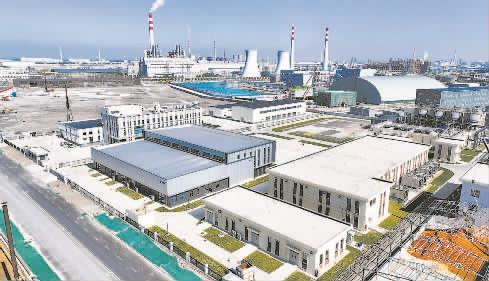
专访德林海董秘刘彦萍:用数字孪生技术为湖库“把脉” 在生态治理浪潮中开辟新航道
Zheng Quan Ri Bao· 2025-07-23 17:15
Core Viewpoint - The company, Delinhai, has developed a "lake ecological hospital" model to address issues like eutrophication and blue-green algae outbreaks in lakes, utilizing a systematic approach of monitoring, diagnosis, treatment, and rehabilitation to restore healthy ecosystems [2][6]. Group 1: Technological Advancements - Delinhai has focused on blue-green algae management since its establishment in 2009, developing a pressurized algae control equipment capable of processing up to 432,000 cubic meters of water daily, with energy consumption only 7% of the first-generation technology [3]. - The company has successfully implemented its technology in the Taihu blue-green algae management project, achieving a significant milestone by ensuring the lake's water quality reaches Class III for the first time in 2024, six years ahead of the planned target [3]. - Delinhai is integrating AI technology into its operations, launching the "Zhongyuzhou Digital Twin Diagnosis System" to enhance lake management through real-time monitoring and algorithmic diagnostics [4]. Group 2: Operational Model - The "lake ecological hospital" model includes a standardized toolkit for diagnosis, blue-green algae prevention, and sediment remediation, allowing for tailored solutions based on specific lake conditions [6]. - The company has transitioned from focusing solely on blue-green algae to a comprehensive management approach, offering full-cycle services from monitoring to rehabilitation [6][7]. - Delinhai's innovative "pay-for-performance" model ensures that clients only pay after achieving satisfactory results in lake management [7]. Group 3: Industry Expansion - Delinhai's ecological hospital model has been successfully applied to over 40 significant lakes and reservoirs in China, with plans to expand to other regions, including the Yangtze River Economic Belt by 2025 [7]. - The company is exploring a circular economy model through the "mud-worm" ecological project, which processes organic waste while promoting resource regeneration [8]. - Delinhai holds 99 patents, including 26 invention patents, and aims to transform environmental management costs into resource regeneration value, aligning with sustainable development goals [8].

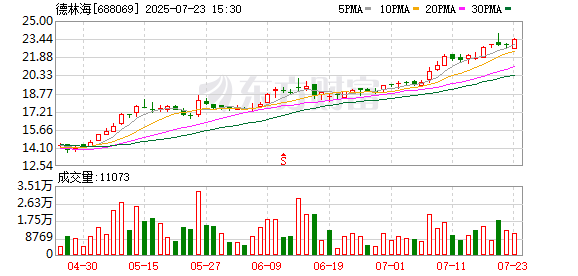
从“一粒粮”到“一滴液” 普瑞特机械制造:全过程数智化管控和智慧酿造引领高质量发展
Qi Lu Wan Bao Wang· 2025-07-23 11:09
位于泰山区徐家楼街道的普瑞特机械制造股份有限公司,是中国制造业单项冠军示范企业,主要生产液 态食品成套智能装备,涉及液态食品、生物医药等行业19大类、39个品种,产品包括自动化、智能化生 产装备以及数字化、信息化控制系统。普瑞特公司致力于推动液态食品装备智能化、绿色化、成套化、 生态化、安全化技术发展,构建了从技术到工艺、从装备到系统、从产线到技术解决方案的技术研发体 系,实现了"一粒粮"到"一滴液"转变全过程的数智化管控和智慧酿造。其"液态食品智能化绿色酿造解 决方案"(以下简称"方案")入选2024年度智能制造系统解决方案"揭榜挂帅"项目,是泰安市唯一一家 入选也是首次入选的企业,实现了泰安"零"的突破。 方案聚焦新兴产业领域和急需补短板的产业领域,以数字技术推动产业升级和转型,综合运用机器人、 人工智能、AGV、智能传感技术,突破酱香型白酒机器人制曲、人工智能"看花摘酒"、智能物料输送 等关键工艺,与山东大学、齐鲁工业大学等省内高等院校合作在行业内推出酿造机器人全生态产线,打 造行业新质生产力。 依托以自动化酿造系统为核心的设备层、自动化生产控制系统为核心的控制层链接MES和ERP系统,普 瑞特公司还建 ...
