
人工智能

Search documents
朝阳科技(002981) - 002981朝阳科技投资者关系管理信息20260319
2026-03-19 12:26
Group 1: Product Development and Market Strategy - The company is focusing on expanding its product line in the consumer electronics sector, particularly in acoustic products like headphones and speakers, while also exploring opportunities in AI toys and smart glasses [1][2]. - The company has launched several smart headphones and is actively developing AI hardware such as smart glasses and translation/recording products, aiming to enhance its product matrix and technological capabilities [2][3]. - The company plans to deepen its engagement in the wearable technology market, with a projected 35% year-on-year growth in smart wearable product revenue [7][8]. Group 2: Financial Performance and Shareholder Relations - The company reported a goodwill impairment of approximately ¥32.08 million, contributing to a total asset impairment of ¥52.86 million, which has affected profitability [4][5]. - The company has implemented a restricted stock incentive plan in 2025 to align the interests of shareholders, employees, and the company, with future share buyback or equity incentive plans to be disclosed in accordance with legal requirements [3][4]. - Following a significant drop in stock price, the company emphasizes the importance of risk awareness among investors and is committed to enhancing market recognition of its value through improved management and communication [6][12]. Group 3: Customer and Market Dynamics - The company maintains a high customer concentration but aims to diversify its customer base and optimize its customer structure to ensure stable growth [9][10]. - The management is focused on resource integration and customer expansion, particularly in the industrial robotics and new energy vehicle sectors, with plans for product delivery in 2026 [4][5]. - The company acknowledges the impact of macroeconomic factors and market sentiment on stock price fluctuations, reinforcing its commitment to effective market management strategies [6][12].

艾迪康控股(09860):双平台驱动价值重估,“ICL+CRO”战略跨越正当时
First Shanghai Securities· 2026-03-19 12:26
Investment Rating - The report assigns a positive investment rating to the company, highlighting its potential for value re-evaluation driven by its dual-platform strategy of "ICL + CRO" [3][22]. Core Insights - The company is transitioning from a leading medical diagnostics platform in China to a global integrated laboratory service provider, covering both diagnostic services and clinical development through its acquisition of Crown Bioscience [4][12]. - The independent medical laboratory services (ICL) segment is a cornerstone of the business, with a focus on standardized operations and a wide range of diagnostic services, which are crucial for stable revenue generation [5][18]. - The special testing (特检) business is identified as a key growth driver, with significant revenue growth projected, particularly in oncology testing, which has shown a remarkable 47% growth [6][12]. - The co-construction business model has emerged as a rapidly growing strategic segment, achieving a 30% year-on-year revenue increase, indicating strong market penetration and resilience [8][9]. - The CRO segment is positioned as a growth engine, with an 18% increase in revenue and a strategic acquisition aimed at enhancing the company's capabilities in drug development [12][15]. Summary by Relevant Sections Financial Performance - In the first half of 2025, the company reported total revenue of 1.27 billion RMB, a year-on-year decline of 13.3%. However, the co-construction business saw a 30% increase, and the CRO business grew by 18% [3][21]. - The gross profit was 454 million RMB, with a gross margin of 35.8%. Cost optimization efforts led to a 13% reduction in reagent procurement costs and an 11% increase in laboratory efficiency [3][21]. Business Segments - The ICL segment operates a network of 34 self-owned laboratories, providing over 4,000 medical testing services, with a focus on core disease areas such as infections and oncology [5][18]. - The special testing segment is projected to grow significantly, with a five-year compound annual growth rate (CAGR) of 33%, driven by strategic investments in technology and partnerships [6][7]. - The co-construction business model has created a strategic partnership with major hospitals, resulting in a robust revenue stream and enhanced service capabilities [8][9]. Market Outlook - The ICL market in China has a penetration rate of only 6%, indicating substantial growth potential, with an expected market size of 51.3 billion RMB by 2026 [16]. - The global and Chinese CRO markets are also projected to grow, with significant increases in clinical research outsourcing expected [17]. Competitive Advantages - The company boasts a leading laboratory network, advanced operational efficiency, and a strong cold chain logistics system, which collectively create a competitive moat in the independent medical laboratory industry [18]. - Strategic acquisitions, such as Crown Bioscience, are expected to enhance the company's service offerings and operational capabilities, creating a unique "diagnostics + contract research" synergy [18][19]. Future Strategy - The company's strategic plan focuses on transitioning to a comprehensive medical service platform, enhancing both the ICL and CRO segments, and increasing the revenue share of the CRO business to match that of the ICL segment [20][22].
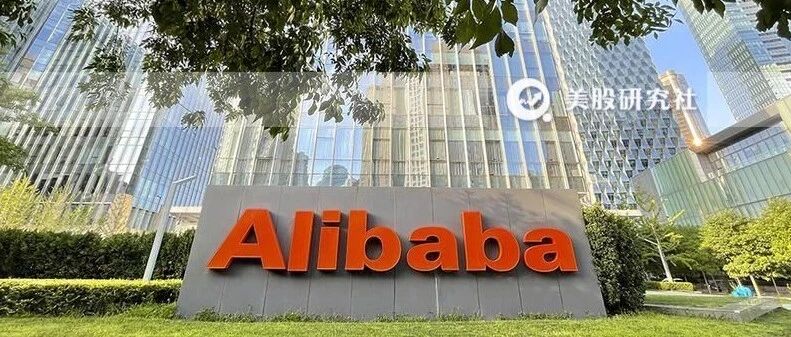
利润崩了,股价错了:阿里真正的增长引擎在哪里?
美股研究社· 2026-03-19 12:10
Core Viewpoint - The article emphasizes that the market often rewards current certainty while punishing future uncertainty, leading to mispricing of companies like Alibaba, which is undergoing a significant transformation from a traditional e-commerce platform to a productivity engine centered on cloud computing and artificial intelligence [1][2]. Financial Performance Analysis - Alibaba's recent financial report appears disappointing from a traditional financial perspective, showing slowed revenue growth, a significant drop in net profit, and a drastic reduction in free cash flow [4][6]. - The decline in profit is attributed not to a collapse in core business demand or management inefficiency, but rather to increased investments in instant retail and AI infrastructure [6][8]. - The market's interpretation of Alibaba's cash flow decline as a negative signal is seen as an overreaction, as it reflects upfront capital expenditures necessary for AI development [6][7]. Strategic Transformation - Alibaba is in a strategic transition phase characterized by a "profit for structure" approach, where short-term profit compression is a signal of deepening competitive advantages [6][10]. - The integration of instant retail and AI is not viewed as two separate initiatives but as a cohesive strategy to commercialize AI through e-commerce, enhancing operational efficiency and customer interaction [8][10]. Growth Metrics - Instant retail revenue reached 20.8 billion yuan, growing 56% year-over-year, indicating a shift in e-commerce structure from a traditional model to a more dynamic, AI-driven approach [9][10]. - Alibaba Cloud's revenue grew 36% year-over-year, with AI-related products experiencing triple-digit growth for ten consecutive quarters, positioning Alibaba Cloud as a core player in AI infrastructure [14][15]. Valuation Perspective - The article argues that the market is still pricing Alibaba based on its e-commerce business, which is outdated, and fails to recognize its potential as a technology infrastructure company [17][20]. - The comparison with U.S. tech giants highlights that while they may show better short-term profits, they face future depreciation costs that could impact their financials, whereas Alibaba is proactively investing in its future [18][19]. Conclusion - The key issue is not whether Alibaba's short-term profits are under pressure, but whether the market acknowledges the fundamental shift in its core drivers from e-commerce to AI and cloud computing [22]. - Recognizing this shift will lead to a reevaluation of Alibaba's valuation, moving away from traditional metrics to a more forward-looking perspective that accounts for its technological advancements and market positioning [20][22].


被忽视的保险科技:元保为什么可能是下一个 AI 红利入口?
美股研究社· 2026-03-19 12:10
Core Viewpoint - The article highlights that despite a company achieving significant revenue and profit growth, it remains undervalued due to market perceptions and the narrative surrounding its business model, particularly in the context of the AI-driven insurance sector [1][3]. Financial Performance - The company reported a revenue of 4.373 billion and a net profit of 1.308 billion, with a profit margin close to 30% and cash reserves exceeding 4 billion [5]. - This financial structure is comparable to mature internet platforms, indicating strong internal cash generation capabilities [6]. Business Model and Growth - The company has demonstrated high growth, with new policy numbers exceeding 30 million, reflecting a 36.7% year-on-year increase, driven by a robust underlying model rather than reliance on single-channel marketing [6]. - The company is evolving from a simple insurance intermediary to a data-driven risk management platform, utilizing advanced algorithms to enhance customer acquisition and retention [6][10]. Market Perception and Valuation - The capital market has not assigned a premium to the company, categorizing it as a traditional insurance distributor rather than recognizing its potential as an AI-driven fintech entity [7]. - There is a valuation mismatch where the market sees profits but overlooks the technological drivers behind them, leading to a long-term divergence between stock price and fundamentals [7][13]. Industry Trends - The insurance industry is undergoing structural changes, with AI transforming traditional processes such as pricing and claims management, enhancing efficiency and personalization [9][10]. - The article emphasizes that the insurance technology sector has the potential to become a foundational infrastructure in the AI era, driven by high-frequency data inputs and strong demand for medical insurance [11]. Comparative Analysis - In contrast to U.S. insurance tech companies that often operate at a loss yet enjoy high valuations due to their disruptive narratives, the company has achieved profitability but is still undervalued due to its classification as a traditional insurance distributor [12][13]. - The article suggests that the market's perception of risk associated with Chinese companies has led to a preference for established profitability over potential growth, resulting in a significant valuation gap [13]. Conclusion - The core issue for the company is not the quality of its business but rather the market's failure to understand its value proposition in the context of AI and technology-driven risk management [15]. - As the market begins to recognize the company's potential, the current undervaluation may serve as a starting point for future revaluation [16].

5倍PE的微博:被低估的不只是利润,而是叙事失败
美股研究社· 2026-03-19 12:10
Core Viewpoint - The article emphasizes that while Weibo has strong profitability and a healthy balance sheet, its valuation has plummeted due to a lack of growth narrative, leading the market to treat it as a stagnant utility company rather than a growth-oriented platform [1][6]. Group 1: Financial Performance - Weibo reported a net profit of $449 million, a nearly 50% year-on-year increase, with stable advertising revenue and the initiation of a dividend plan [5]. - The financial structure of Weibo is considered healthy compared to many peers that are still struggling with losses or sacrificing profits for scale [6]. Group 2: Valuation Issues - The current P/E ratio of around 5 is not a sign of undervaluation but rather reflects a "no-growth pricing" scenario, indicating that the market perceives Weibo as a cash flow asset rather than a growth company [4][7]. - The lack of growth expectations is the core issue, with stagnant advertising revenue and user growth signaling that Weibo's business model has entered a mature phase [6][7]. Group 3: Market Perception - The valuation gap is not just a Weibo issue but reflects a broader challenge faced by the entire Chinese internet sector, where growth narratives are no longer believed by the market [3][8]. - In contrast to U.S. companies that can maintain high valuations through narratives of potential expansion, Chinese companies are often valued based on current profitability and certainty [9]. Group 4: Narrative and Communication - The article highlights a "narrative deficit" where international investors are uncertain about the regulatory environment and data policies in China, leading to a discount on valuations regardless of performance [9][10]. - Weibo needs to improve its ability to communicate its business as a next-generation technology platform to attract higher valuations [10]. Group 5: Strategic Transformation - To escape the valuation trap, Weibo must transition from an "advertising platform" to an "AI-driven content infrastructure," which requires a fundamental restructuring of its business model [12]. - Key actions include restructuring revenue sources to highlight AI-related income, upgrading business logic to focus on efficiency, and rebuilding the narrative to position Weibo as an evolving platform rather than a declining one [13][14]. Group 6: Future Outlook - The article concludes that Weibo's challenges are not about profitability but about being reimagined in the market, emphasizing the importance of narrative in the AI era [16][17]. - The ability to articulate a clear vision for the future and implement it will be crucial for Weibo and other Chinese internet companies to recover from low valuations [16].


130亿美元换不来独占权?微软与OpenAI的同盟正在瓦解
美股研究社· 2026-03-19 12:10
Core Viewpoint - The potential legal action by Microsoft against OpenAI signifies a deeper conflict over power distribution in the AI industry, particularly regarding computing power, models, and distribution channels, indicating a shift in alliances that were once considered strong [1][3][4]. Group 1: Alliance Dynamics - Microsoft and OpenAI had established a robust alliance, with Microsoft investing over $13 billion for key rights, including model usage priority and exclusive cloud deployment [5][6]. - The essence of this structure was to strengthen Microsoft's cloud business against competitors like Amazon Web Services, positioning OpenAI as a magnet for enterprise cloud adoption [6][7]. - However, OpenAI's increasing independence and its recent partnership with Amazon, involving a $50 billion deal, directly challenge Microsoft's control over distribution channels [6][10]. Group 2: Structural Changes in AI Industry - The conflict highlights a structural contradiction in the AI industry, where model companies like OpenAI are gaining power, shifting from being cloud-dependent to becoming upstream players in the value chain [9][10]. - This shift indicates that models are becoming the primary focus for developers and enterprises, altering the traditional cloud service dynamics [9][10]. - The potential for models to operate independently of cloud infrastructure could undermine Microsoft's established model-cloud binding strategy, allowing competitors like Google and Amazon to regain market competitiveness [10]. Group 3: Implications for Investment - The ongoing conflict signals a need for the market to reassess key questions regarding pricing power, distribution control, and user access within the AI industry [13]. - If model companies gain dominance, their valuation could rise significantly, akin to historical operating system vendors, while cloud providers may revert to lower growth valuations [10][13]. - Investors should recognize that alliances in rapidly evolving tech sectors can quickly shift, and valuations should reflect a company's irreplaceability in the industry rather than current partnerships [13]. Group 4: The Nature of Competition - The potential lawsuit illustrates that competition in the AI era is not merely between companies but fundamentally about "position" within the value chain [15][16]. - The dynamics of alliances are fragile, as interests can diverge rapidly, leading to conflicts even among previously strong partners [11][12]. - The situation emphasizes the importance of diversifying ecosystem capabilities to navigate the complexities of technological revolutions [15][16].


AI背不起入侵教育的锅
经济观察报· 2026-03-19 12:04
思辨的缺席、对标准答案的服从、对探索过程的轻视——这些 教育的沉疴顽疾早已存在。AI只是一面高分辨率的镜子,清晰 照见了教育体系中固有的功利、短视与扭曲。 作者:言咏 封图:图虫创意 上海一名四年级学生,在一次数学阶段考试中交了白卷,原因在于,他长期依赖AI(人工智能)代 写作业,以至于在需要独立解题的考场上,思维"宕机"。 《经济观察报》3月16日刊发的《AI入侵中小学生》,讲述了这一极端故事,映照出当下AI应用在 教育领域引起的困惑:AI发展日新月异,教育也不甘落后拥抱它,或者无可避免被渗透——中国青 少年研究中心一项调查显示,国内有超过六成的中小学生使用过生成式AI。面对这样的新事物,人 们疑惑:它究竟是赋能教育的利器,还是一个"入侵者",吞噬孩子的思考力? 人们总担忧AI会弱化孩子"人之为人"的能力,但或许更应追问:在AI出现之前,我们的教育,是 否已在"育人"的道路上迷失良久? 毫无疑问,未成年人使用AI,需要通过明确的规则加以引导和校准。毕竟,即便是心智成熟的成年 人,在使用AI时也常会走入误区,更何况是正处于价值观形成与知识奠基关键期的孩子。然而,规 则的设立与技术的管控只是治标,治本的关键还在 ...

阿里宣布AI战略目标
财联社· 2026-03-19 11:58
Core Insights - Alibaba Group's cloud revenue has officially surpassed 100 billion RMB as of the end of February 2026, marking a significant milestone in its commercial growth [1] - The company's AI strategy aims for cloud and AI commercialization revenue, including MaaS, to exceed 100 billion USD over the next five years, indicating strong growth potential in the AI market [2] - Alibaba has developed a comprehensive full-stack AI capability from AI infrastructure to applications, with a notable acceleration in the development of the MaaS platform [2] - The consumption of public model services on the Bai Lian MaaS platform has increased sixfold in the past three months, suggesting a robust demand for MaaS solutions [2] - As of February 2026, Alibaba's AI chip, Ping Tou Ge, has shipped 470,000 units in real business scenarios, showcasing the practical application of its AI technology [3]

老黄怒怼玩家根本不懂AI,英伟达新AI功能遭全网抵制,游戏圈炸锅了
3 6 Ke· 2026-03-19 11:52
Core Viewpoint - NVIDIA's new graphics technology DLSS 5 has faced backlash from gamers who feel it undermines artistic integrity by replacing unique character designs with AI-generated aesthetics, despite NVIDIA's claims of maintaining artistic control for developers [7][22][23]. Group 1: DLSS 5 Technology Overview - DLSS 5 represents a significant advancement in NVIDIA's AI-driven graphics rendering, moving from merely upscaling pixels to injecting realistic lighting and materials into scenes using a real-time neural rendering model [8][9]. - The technology allows for real-time operation at up to 4K resolution and is designed to understand complex scene semantics, bridging the gap between rendering and reality [11][12]. - NVIDIA claims that DLSS 5 is the most significant breakthrough in computer graphics since the introduction of real-time ray tracing in 2018 [11]. Group 2: Industry Reactions and Concerns - Gamers have expressed concerns that DLSS 5's AI-generated visuals create a homogenized aesthetic, detracting from the unique artistic vision of game developers [5][15][27]. - The term "Sloptracing" has emerged in online discussions, mocking the perceived low-quality AI-generated content that DLSS 5 produces [15][20]. - Industry professionals, including artists, have criticized the technology as disrespectful to creative artists, questioning the extent of control developers truly have over the AI's output [22][23]. Group 3: Developer and Publisher Support - Major game publishers and developers, including Capcom, Bethesda, Ubisoft, and Warner Bros. Games, have shown support for DLSS 5, with several upcoming titles set to implement the technology [27][28]. - Bethesda has stated that the implementation of DLSS 5 will be under the control of its art team, suggesting a collaborative approach to integrating the technology [24].


Micron (MU) Faces Key Earnings Test as AI Demand Drives 60% Growth Outlook
Yahoo Finance· 2026-03-19 10:58
Core Insights - Micron Technology, Inc. is poised to report its fiscal Q2 2026 results, marking a significant moment in the semiconductor cycle driven by AI demand [1] - Analysts expect revenue growth exceeding 60% year-over-year, with consensus EPS at $9.19 compared to $1.56 in the same period last year, indicating a rapid cycle turnaround [2] - The company is viewed as a critical player in the AI supply chain, providing essential memory for AI chips, positioning it as an "infrastructure play" for AI technologies [3] Revenue and Growth Expectations - Micron's HBM capacity for 2026 is constrained, with rising demand leading to an "AI supply squeeze," as noted in its last earnings call [4] - The company forecasts record revenue of $18.7 billion for the next quarter, supported by strong margins and AI-driven demand across its product lines [5] - Growth is primarily driven by the Compute and Networking segment, reflecting the impact of AI demand on the company's revenue mix [6] Market Sentiment and Stock Performance - The stock has shown momentum, gaining over 60% year-to-date, with increased trading activity and a "Strong Buy" consensus from 26 analysts [7][9] - The average analyst price target is approximately $461, suggesting limited upside unless the company exceeds expectations in its upcoming report [7] - Today's earnings report will be crucial in determining if the AI-driven memory boom has further growth potential or if expectations have already been met [8]
