数字金融

Search documents
文莱央行:今年经济有望温和复苏
Shang Wu Bu Wang Zhan· 2025-09-05 17:28
Economic Outlook - The Brunei economy is expected to maintain moderate growth in 2025 despite facing dual challenges from international and domestic factors [1] - In the first quarter of this year, Brunei's GDP contracted by 1.8%, with the oil and gas sector declining by 1.5% and the non-oil sector by 2.0% [1] - Economic recovery is anticipated due to the gradual restoration of oil and gas production, along with the expansion of sectors such as construction, tourism, trade, and information and communication technology [1] Investment and Growth Drivers - Ongoing foreign direct investment projects, particularly in the petrochemical, halal food, and manufacturing sectors, are expected to contribute to economic growth [1] Inflation and Monetary Policy - The average inflation rate for the first half of the year was -0.4%, influenced by government subsidies, price controls, and a global easing of inflation [1] - The central bank's latest forecast for the annual inflation rate ranges from -0.6% to 0.4% [1] Financial System Stability - The financial system remains robust, with total industry assets growing by 1.3% to reach 24.6 billion Brunei dollars by the end of the second quarter [1] - Islamic financial assets account for 14.6 billion Brunei dollars, while traditional financial assets total 10 billion Brunei dollars [1] - The banking capital adequacy ratio stands at a healthy 19.6% [1] Regulatory Developments - The central bank has recently revised the minimum cash reserve requirements and introduced a liquidity coverage ratio standard [1] - Traditional banks are encouraged to establish Islamic finance windows to promote financial inclusivity [1] - To foster digital finance development, the central bank has approved the launch of the "tarus" digital payment system and mandated the use of standardized QR codes for all transactions [1]
券商如何做好金融“五篇大文章”,评价规则发布
Zheng Quan Shi Bao· 2025-09-05 15:15
Core Viewpoint - The China Securities Association has released a trial evaluation method for securities companies to enhance their contributions to the financial "Five Major Articles," focusing on both quantitative and qualitative indicators to promote high-quality development in the securities industry [1][5]. Group 1: Evaluation Methodology - The evaluation method includes both quantitative and qualitative indicators, reflecting the contribution and capabilities of companies in key areas of the financial "Five Major Articles" [2][3]. - Quantitative indicators cover various sectors, including technology finance, green finance, inclusive finance, pension finance, and digital finance, with specific metrics such as bond underwriting amounts and equity financing for technology enterprises [2][3]. - Qualitative indicators assess the establishment of mechanisms and continuous investment in business resources, including whether companies incorporate the financial "Five Major Articles" into their strategic development [3][5]. Group 2: Scoring and Incentives - The scoring system assigns higher points to technology finance, with a total of 50 points available, while other sectors like green finance and digital finance are assigned 10 points each [4]. - The evaluation encourages participation from various types of companies by providing a broad range of scoring and minimizing score differences among the top 50 ranked companies [4]. - A baseline score is established to prevent significant score disparities, promoting differentiated development and specialized operations among industry players [4]. Group 3: Implementation Principles - The evaluation method adheres to three main principles: focusing on key areas, enhancing coordination, and ensuring comprehensive and fair assessments [5]. - It aims to streamline the evaluation process by integrating with existing assessments related to social responsibility, bond practice quality, and digital capability, thereby reducing the reporting burden on companies [5].


券商如何做好金融“五篇大文章”,评价规则发布
证券时报· 2025-09-05 15:13
Core Viewpoint - The China Securities Association has released a trial evaluation method for securities companies to enhance their contributions to the financial "Five Major Articles" and promote high-quality development in the securities industry [1]. Group 1: Evaluation Method Overview - The evaluation method focuses on both quantitative and qualitative indicators, covering various fields of the financial "Five Major Articles" [2][3]. - The evaluation indicators include contributions to key areas and capabilities, as well as mechanisms and resource investments [3][4]. Group 2: Quantitative Indicators - Quantitative indicators include technology finance metrics such as the amount and number of technology innovation bond underwriting, equity financing for technology enterprises, and significant asset restructuring transactions [3]. - Green finance indicators cover the amount and number of green bonds and low-carbon transition bonds underwritten [3]. - Inclusive finance indicators include support for small and micro enterprises through bond underwriting [3]. Group 3: Qualitative Indicators - Qualitative indicators assess whether companies incorporate the financial "Five Major Articles" into their strategic development and establish relevant organizational structures and incentive mechanisms [4]. - Continuous investment in business resources is measured by the comprehensive growth rate of investments in the financial "Five Major Articles" [4]. Group 4: Scoring and Incentives - The evaluation method assigns a higher score to technology finance, with a total of 50 points allocated across various technology-related financing activities [6]. - The scoring system allows for a broad range of additional points and small score differences among the top 50 companies, encouraging participation from various institutions [7]. - A baseline score is set to avoid significant score disparities, promoting differentiated development and specialized operations among companies [7]. Group 5: Implementation and Principles - The evaluation is conducted annually, focusing on the previous year's performance, and aligns with existing evaluation methods of the China Securities Association [8]. - The evaluation principles emphasize focusing on key areas, enhancing coordination with other evaluations, and ensuring fairness and objectivity in the assessment process [8].

如何做好金融“五篇大文章”?中证协,最新发布!
Zheng Quan Shi Bao Wang· 2025-09-05 15:08
Core Viewpoint - The China Securities Association has released a trial evaluation method for securities companies to enhance their contributions to the financial "Five Major Articles" and promote high-quality development in the securities industry [1][5]. Group 1: Evaluation Methodology - The evaluation method combines quantitative and qualitative indicators, focusing on the contributions and capabilities of companies in key areas of the financial "Five Major Articles" [2][6]. - Quantitative indicators include metrics related to technology finance, green finance, inclusive finance, pension finance, and digital finance, with a significant emphasis on technology finance [2][4]. - Qualitative indicators assess the establishment of mechanisms and the continuous investment of business resources by securities companies [3][6]. Group 2: Scoring and Incentives - The scoring system allocates a higher weight to technology finance, with a total of 50 points available in this category, while other categories like green finance and digital finance are assigned 10 points each [4]. - The evaluation encourages participation from various types of companies by providing a broad range of additional scoring opportunities and minimizing score differences among top-ranking companies [4]. - A foundational score is established to account for the high business concentration in the industry, promoting differentiated development and specialized operations among companies [4][5]. Group 3: Implementation and Principles - The evaluation will be conducted annually in the first half of the year, covering the previous calendar year's performance [5]. - The method emphasizes focusing on core business areas, optimizing dynamically, and ensuring fair and objective assessments through 14 representative evaluation indicators [5][6].
如何做好金融“五篇大文章”?中证协,最新发布!
券商中国· 2025-09-05 15:02
Core Viewpoint - The China Securities Association has released a trial evaluation method for securities companies to enhance their contributions to the financial "Five Major Articles" and promote high-quality development in the securities industry [1][2]. Group 1: Evaluation Methodology - The evaluation method incorporates both quantitative and qualitative indicators, focusing on the contributions and capabilities of companies in key areas of the financial "Five Major Articles" [3][4]. - Quantitative indicators include metrics related to technology finance, green finance, inclusive finance, pension finance, and digital finance, with a significant emphasis on technology finance [3][4]. - Qualitative indicators assess the establishment of mechanisms and the continuous investment of business resources in the financial "Five Major Articles" [4]. Group 2: Scoring and Incentives - The evaluation method assigns higher scores to technology finance, with a total of 50 points allocated across various subcategories, while other areas like green finance, inclusive finance, pension finance, and digital finance each receive 10 points [5]. - The scoring system allows for a broad range of additional points, encouraging companies to actively participate based on their resource endowments [5]. - A foundational score is established to prevent excessive score disparities among companies, promoting differentiated development and specialized operations [5]. Group 3: Implementation and Principles - The evaluation is conducted annually, covering the previous year's performance, and aligns with existing evaluation methods of the China Securities Association [6]. - The evaluation method adheres to three main principles: focusing on key areas, enhancing coordination with existing evaluations, and ensuring a comprehensive and fair assessment [6].

券商做好金融“五篇大文章”评价办法来了,科技金融赋分最高
Bei Jing Shang Bao· 2025-09-05 13:29
Core Viewpoint - The China Securities Association has released a new evaluation method for securities companies to enhance their contributions to the financial sector, focusing on five key areas of finance [2][3] Group 1: Evaluation Framework - The evaluation method consists of 25 articles divided into four chapters: general principles, evaluation indicators and scoring methods, implementation and results application, and appendices [2] - The evaluation indicators include both quantitative and qualitative measures, reflecting the company's contributions and capabilities in key financial areas [2] Group 2: Quantitative Indicators - Quantitative indicators cover various aspects such as technology finance, green finance, inclusive finance, pension finance, and digital finance, with specific metrics for each category [2][3] - For technology finance, metrics include the amount and number of technology innovation bond underwriting, equity financing for tech companies, and direct investments in non-listed tech firms [2] - Green finance metrics focus on the underwriting amounts and numbers of green bonds and low-carbon transition bonds [2] - Inclusive finance metrics include amounts and numbers related to bonds supporting small and micro enterprises and private enterprise bonds [2] - Pension finance metrics involve the scale of personal pension product sales, while digital finance metrics assess the maturity of digital capabilities and awards in securities technology [2] Group 3: Qualitative Indicators - Qualitative indicators assess the establishment of mechanisms, including whether the financial "five articles" are integrated into the company's strategic development and the existence of a specialized organizational structure [3] - Continuous investment in business resources is evaluated through the comprehensive growth rate of investments supporting the financial "five articles" [3] - Additional indicators reflect the company's functional roles and adherence to annual policy priorities [3] Group 4: Scoring Methodology - The scoring system emphasizes practical relevance, with a higher score allocation for technology finance (50 points) and lower for other areas (10 points each for green, inclusive, pension, and digital finance) [3] - The scoring method includes both monetary and numerical standards to balance the impact of absolute scale on evaluation results [3] - A basic score is set to encourage differentiated development among companies, considering the high concentration of business in the securities industry [3]
哈尔滨银行发布2025年中期业绩:深度服务实体经济 经营业绩再上新台阶
Zhong Guo Jin Rong Xin Xi Wang· 2025-09-05 12:46
Core Viewpoint - Harbin Bank reported a stable growth in its mid-year performance for 2025, focusing on asset and liability restructuring, risk management, and deepening service to the real economy, achieving improvements in scale, quality, structure, and efficiency [2][4]. Financial Performance - As of June 30, 2025, the total assets of the group reached RMB 9,275.275 billion, an increase of RMB 112.956 billion, or 1.23% from the end of the previous year [2]. - Total customer loans and advances amounted to RMB 3,975.663 billion, up RMB 184.724 billion, or 4.87% [2]. - Total customer deposits were RMB 6,950.559 billion, with a slight increase of RMB 13.765 billion, or 0.20% [2]. - The group achieved operating income of RMB 73.855 billion, a year-on-year increase of 2.59% [2]. - Net profit reached RMB 9.921 billion, up RMB 1.462 billion, or 17.28% year-on-year [2]. - Return on average total assets was 0.22%, up 0.02 percentage points year-on-year [2]. - Return on average equity was 2.07%, an increase of 0.57 percentage points year-on-year [2]. Asset Quality - The non-performing loan balance was RMB 112.697 billion, with a non-performing loan ratio of 2.83%, down 0.01 percentage points from the end of the previous year [3]. - The provision coverage ratio was 209.95%, up 7.36 percentage points [3]. - The loan impairment loss provision ratio was 5.95%, an increase of 0.20 percentage points [3]. Support for Real Economy - The group emphasized financial support for the real economy, focusing on sectors such as technology finance, green finance, and inclusive finance [4]. - Company loans totaled RMB 2,332.248 billion, representing 58.7% of total loans, with an increase of RMB 278.198 billion [4]. Inclusive Finance Initiatives - The group launched a new digital retail credit product "Qian Dao Jia," enhancing online management and digital operations for small and micro enterprises [5]. - Inclusive finance loans for small and micro enterprises reached RMB 169.18 billion, up RMB 16.2 billion year-on-year, with a balance of RMB 411.98 billion, growing at 11.72% [5]. Retail Banking Development - Retail deposits totaled RMB 5,099.701 billion, an increase of RMB 99.931 billion, or 2.0% [7]. - The group maintained a 19.58% market share in retail deposits in Harbin, ranking first in the local market [7]. Cross-Border Business Growth - The group established partnerships with over a hundred financial institutions in 13 Belt and Road countries, promoting cross-border RMB payment services [10]. - Cross-border settlement business volume saw significant growth, enhancing the quality of cross-border financial services [10]. Digital Transformation - The group is advancing its "Digital Harbin Bank" initiative, focusing on enhancing operational security and technology-driven capabilities [12]. - The group is committed to optimizing its international settlement systems and improving efficiency in cross-border financial services [11].

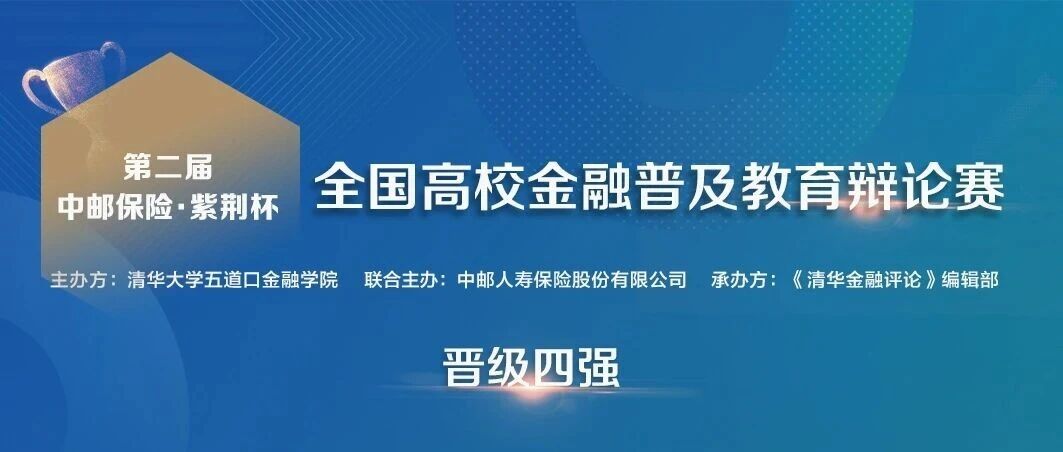
四强晋级|第二届中邮保险•紫荆杯全国高校金融普及教育辩论赛小组赛圆满结束
清华金融评论· 2025-09-05 10:35
Group 1 - The article discusses the second National College Financial Popularization Education Debate Competition, highlighting the importance of financial education in universities [2][4]. - The debate topics include sustainable development of financial culture in China, the role of young people in upgrading the silver industry, and the focus of inclusive finance on equal opportunities versus sustainability [6][7][9]. - The competition features various universities, showcasing their arguments on pressing financial issues, indicating a growing interest in financial literacy among students [5][8][10]. Group 2 - The article emphasizes the need for financial institutions to balance economic compensation and risk prevention in insurance [11]. - It also addresses the effectiveness of fiscal interest subsidies compared to market-based loan rates in solving rural financing difficulties [10]. - The future of health insurance in China is debated, focusing on whether it should prioritize inclusivity or innovation [13].
邮储银行2025中报:营收净利双增 中收双位数增长 剑指均衡增长新周期
和讯· 2025-09-05 10:26
Core Viewpoint - Postal Savings Bank of China (PSBC) demonstrates resilience and potential for transformation, achieving positive growth in key financial metrics despite industry challenges, supported by a unique business model and strategic focus on retail and county-level finance [1][2]. Financial Performance - In the first half of 2025, PSBC reported operating income of 179.4 billion yuan, a year-on-year increase of 1.5%, and net profit of 49.4 billion yuan, up 1.08% [1]. - Total assets and liabilities surpassed 18 trillion yuan and 17 trillion yuan, respectively, indicating continued scale growth [1]. Asset and Liability Management - PSBC has improved its asset-liability management, achieving a net interest margin of 1.7%, positioning it among the industry leaders [3][5]. - The bank's loan portfolio increased by 623 billion yuan, with a notable rise in corporate loans by 14.83% year-on-year [3][4]. - The bank's non-performing loan ratio stood at 0.92%, reflecting strong asset quality management [5]. Strategic Initiatives - PSBC is focused on five strategic areas, including inclusive finance, technology finance, green finance, pension finance, and digital finance, to drive diversified growth [6][7][8]. - The bank's agricultural loan balance reached 2.44 trillion yuan, and small and micro enterprise loans totaled 1.72 trillion yuan, leading in coverage among state-owned banks [6]. - In technology finance, PSBC has served over 100,000 tech enterprises, with a loan balance exceeding 930 billion yuan [7]. Market Response - Following the release of its mid-year report, PSBC's A-share price showed a recovery, with multiple leading brokerages issuing positive ratings [1][2]. - The bank has attracted significant interest from insurance capital, with Ping An Life increasing its stake in PSBC's H-shares, totaling over 10 billion Hong Kong dollars [1].


3亿押注以太坊,马云在下一盘什么棋?
商业洞察· 2025-09-05 09:22
Core Viewpoint - The article discusses the recent strategic move by Yunfeng Financial, which invested $44 million to purchase 10,000 Ethereum (ETH), signaling a potential shift in the company's direction and a renewed focus on digital finance under Jack Ma's influence [5][10]. Group 1: Company Background - Yunfeng Financial, originally established as Wansheng International Securities in the 1980s, has evolved into a significant player in the financial sector, particularly after its acquisition by Jack Ma and his partner Yu Feng in 2015 [6][9]. - The company has been relatively quiet in the capital markets since its acquisition of a 60% stake in Wan Tong Insurance for HKD 3.9 billion in 2018, leading to a prolonged period of low stock performance [8][9]. Group 2: Recent Developments - The announcement of the Ethereum purchase has reignited investor interest, with Yunfeng Financial's stock price increasing by 239% since the beginning of the year, reflecting market optimism regarding Jack Ma's return and the company's strategic repositioning [13]. - The company aims to leverage Ethereum not just as a speculative asset but as a foundational technology for future business applications, particularly in automating financial processes through smart contracts [15][16]. Group 3: Strategic Implications - The investment in Ethereum aligns with Yunfeng Financial's broader strategy to explore Web 3.0, digital currencies, and real-world asset (RWA) tokenization, positioning itself as a comprehensive financial technology group [10][17]. - The recent regulatory developments in Hong Kong, including the introduction of stablecoin regulations, provide Yunfeng Financial with a unique opportunity to legally engage in digital asset operations, enhancing its competitive edge [17][23]. Group 4: Future Outlook - The integration of Yunfeng Financial's existing financial services with emerging technologies could lead to innovative products such as "on-chain Yu'ebao," international digital insurance, and tokenized funds, creating a closed-loop ecosystem from funding to payment [21][22]. - Hong Kong's regulatory environment and its status as a global financial hub make it an ideal testing ground for these new business models, potentially allowing Yunfeng Financial to expand its influence across Southeast Asia, the Middle East, and Europe [23].