
创新药

Search documents
创新药板块:资金涌入,后市怎么看
Huan Qiu Wang· 2025-11-30 01:32
Group 1 - The innovation drug sector is experiencing a volatile trend in the fourth quarter, with positive signals in the funding landscape as significant capital flows into innovation drug-themed ETFs, totaling over 19 billion yuan in net subscriptions as of November 28 [1] - Despite a strong performance earlier in the year, the innovation drug sector faced a correction in the fourth quarter, with an average decline of approximately 10% in themed funds as of November 28, yet funds continued to increase their positions, leading to substantial growth in several innovation drug-themed ETFs [3] - The growth of specific ETFs is notable, with the scale of the GF Hong Kong Innovation Drug ETF increasing from 7.875 billion yuan at the end of last year to 25.276 billion yuan, and the Huatai-PineBridge Hong Kong Innovation Drug ETF rising from less than 700 million yuan to over 24 billion yuan [3] Group 2 - Industry experts believe that the long-term investment value of the innovation drug sector is becoming more apparent, although the phase of broad market gains may be over, necessitating a focus on stock selection for future investments [4] - The report from Industrial Securities indicates that the trend of "innovation + internationalization" in the innovation drug industry remains unchanged, with increased elasticity in the sector following the recent adjustments, and a positive outlook on the fundamentals of the innovation drug industry chain [4]


积极信号!大量资金涌入
Shang Hai Zheng Quan Bao· 2025-11-29 16:57
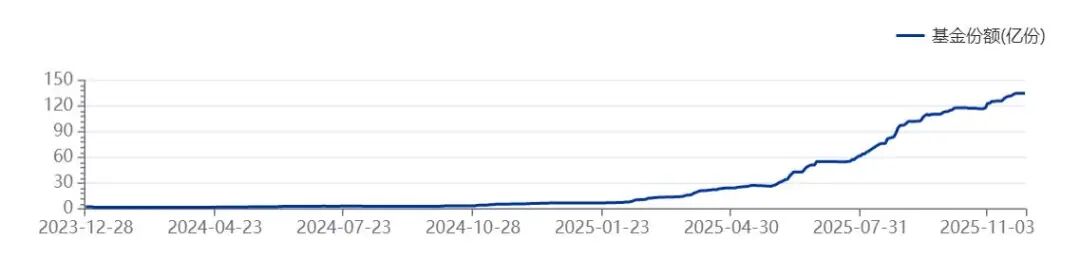
在今年二、三季度经历强势上涨后,近两个月来创新药板块走势逐渐趋于震荡。尽管如此,资金面上却呈现出积极信号——大量资金正借道创新药主题 ETF涌入市场。数据显示,四季度以来,该类ETF合计净申购规模已超过190亿元。 据Choice测算,四季度以来,截至11月28日,创新药主题ETF净申购额超过190亿元。其中,广发港股创新药ETF净申购额为33.27亿元,汇添富港股通创 新药ETF净申购额超过30亿元,银华创新药ETF、广发创新药ETF净申购额也均超过24亿元。 拉长期限来看,今年以来多只创新药主题ETF的规模实现大幅增长。其中,从去年底至今年11月28日,广发港股创新药ETF规模从78.75亿元增至252.76亿 元。类似的还有,汇添富港股通创新药ETF去年底规模不足7亿元,最新规模已超过240亿元。 汇添富港股通创新药ETF的份额变化 从基金公司最新动向看,近期也在加大创新药主题产品的布局力度。 据Choice资讯,11月21日以来,广发上证科创板创新药ETF、银华上证科创板创新药ETF、鹏华上证科创板创新药ETF、永赢上证科创板创新药指数基 金、东财中证沪港深创新药产业ETF联接基金等密集上报。 创新药 ...
医保谈判结果公布在即,关注 ASH 大会
SINOLINK SECURITIES· 2025-11-29 14:55
Investment Rating - The report maintains a positive outlook on the innovative drug sector, indicating a rebound and potential for further growth in the upcoming months [3][6]. Core Insights - The innovative drug sector is expected to see a rebound after previous adjustments, with significant catalysts anticipated in December and January. The results of the national medical insurance negotiations will be released in early December, which may impact the inclusion of domestic innovative drugs in the insurance catalog [3][14]. - The upcoming American Society of Hematology (ASH) conference from December 6-9 is highlighted as a key event, with multiple differentiated hematology products expected to present new data [3][4][42]. - The CXO sector shows a continuous upward trend, supported by the rapid growth of new orders and backlog, ensuring performance release in the next 1-2 years [4][53]. Summary by Sections Innovative Drugs - The report emphasizes the importance of focusing on dual/multi-target drugs for various cancers and chronic diseases, as well as opportunities in ADCs and small nucleic acid therapies [6][15]. - The report notes that the innovative drug financing data is showing marginal improvement, indicating a potential recovery in the sector [6][15]. Biologics - The report mentions positive preliminary results from the Phase II clinical trial of amycretin for Type 2 diabetes, suggesting continued monitoring of its clinical progress [4][46]. Medical Devices - The report highlights the emergence of innovative domestic medical devices, with expectations for profit margins to stabilize and improve as new products are approved [5]. Traditional Chinese Medicine & Pharmacies - The report suggests monitoring companies with strong brand power and good inventory management, such as China Resources Sanjiu and Jichuan Pharmaceutical, due to rising flu incidence [5]. Medical Services and Consumer Healthcare - The report discusses a collaboration between a traditional Chinese medicine group and a local health bureau to enhance the capabilities of grassroots medical services through technology [5]. Key Investment Targets - The report identifies key companies to watch, including Innovent Biologics, Kintor Pharmaceutical, and others in the innovative drug and medical device sectors [7].




对话劲方医药董事长吕强:创业8年,明白了科学家做老板,不能只想着过创新的瘾
Mei Ri Jing Ji Xin Wen· 2025-11-28 13:09
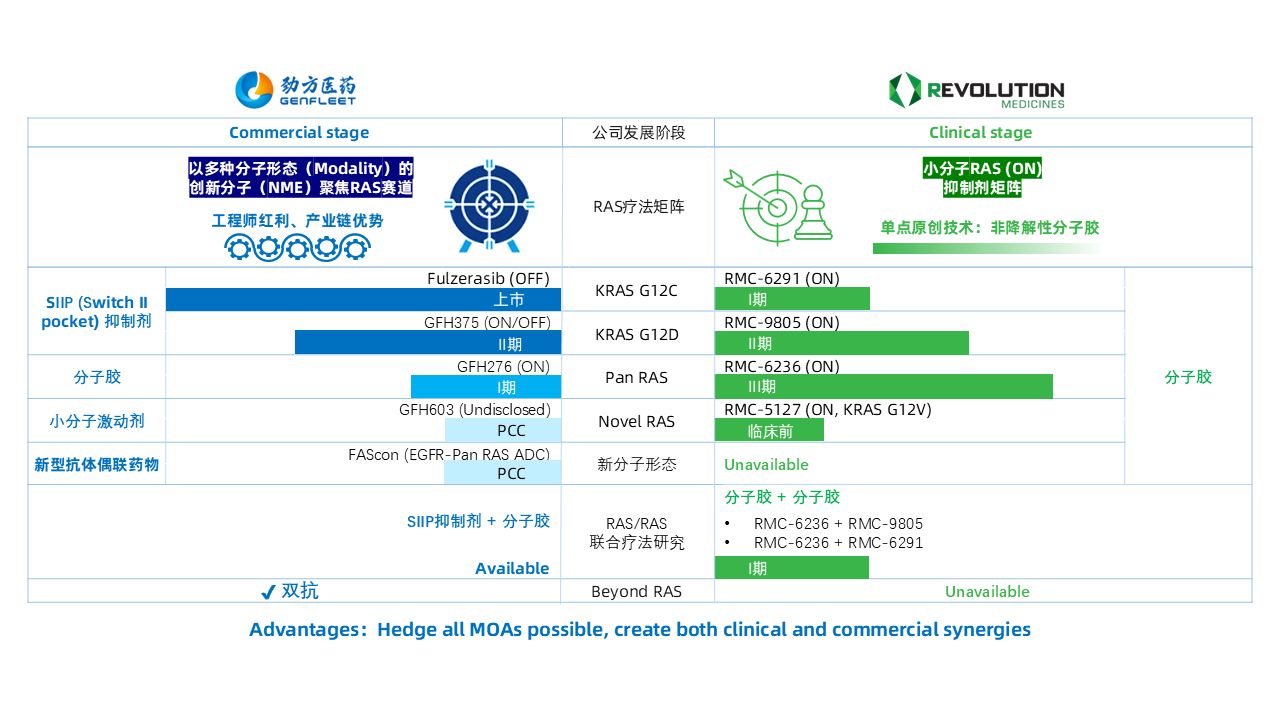
Core Viewpoint - The article discusses the journey of Junfang Pharmaceutical, founded by scientist Lyu Qiang, focusing on its innovative drug development, particularly in targeting RAS proteins, and the challenges faced in the biotech industry in China [1][2][3]. Company Overview - Junfang Pharmaceutical was established in August 2017 in Zhangjiang, Shanghai, during a favorable period for innovative drug development in China [1]. - The company successfully listed on the Hong Kong Stock Exchange, with its stock price increasing over 110% on the first day, but later faced a decline of over 30% due to market adjustments [4]. Innovation and Drug Development - The company is heavily invested in RAS targets, which have historically been considered "undruggable," with no approved drugs for over 40 years until Amgen's Lumakras received FDA approval in May 2021 [2][3]. - Junfang's drug, Daberu (GFH925), became the first RAS-targeted drug approved in China and the third globally, highlighting the company's rapid development capabilities [3]. Market Strategy - Lyu Qiang emphasizes the importance of a product matrix approach rather than relying on a single blockbuster drug, aiming to cover a significant portion of pancreatic cancer patients with multiple RAS-targeted drugs [9][12]. - The company plans to establish a "small but beautiful" commercialization strategy, focusing on complementary drug projects rather than a broad market approach [12]. Competitive Landscape - Junfang's pipeline is compared to that of Revolution Medicines, a leading U.S. company in the RAS space, which has not yet launched products but has a market capitalization exceeding $13.5 billion [5]. - The article notes that many Chinese biotech firms are seen as following international innovations, but Lyu argues that Junfang's approach is based on clinical breakthroughs and a deep understanding of existing research [7][8]. Financial and Strategic Insights - Lyu highlights the need for a balanced approach to business development (BD) and emphasizes that Junfang is not BD-driven but data-driven, focusing on solving patient needs rather than merely financial returns [14][15]. - The article mentions that the financial expectations for BD in the industry may have become unrealistic, suggesting a potential market correction in the future [15].

医药板块本周集体上行,关注恒生创新药ETF(159316)、医药ETF(512010)等配置价值
Sou Hu Cai Jing· 2025-11-28 10:41
Group 1: Market Performance - The pharmaceutical sector experienced a collective rise this week, with innovative drugs and biotechnology sectors leading the gains [1] - The Hang Seng Hong Kong Stock Connect Innovative Drug Index increased by 5.7%, while the CSI Hong Kong Stock Connect Pharmaceutical and Health Comprehensive Index rose by 3.9% [1][3] - Other indices also showed positive performance, including the CSI Innovative Drug Industry Index up by 2.5%, the CSI Biotechnology Theme Index up by 2.3%, and the CSI 300 Pharmaceutical and Health Index up by 1.3% [1][3] Group 2: Industry Outlook - CITIC Securities indicates that the Chinese pharmaceutical industry has entered a critical phase of "innovation realization + global layout," supported by population and domestic demand, as well as comprehensive manufacturing capabilities [1] - Companies are actively exploring diversified overseas paths, with a focus on innovation commercialization, global breakthroughs, policy optimization, and opportunities from industry mergers and acquisitions by 2026 [1]

海外消费周报(20251121-20251128):海外社服:携程和同程旅行3Q25业绩稳健增长-20251128
Shenwan Hongyuan Securities· 2025-11-28 09:02
Group 1: Investment Ratings - The report maintains a "Buy" rating for both Ctrip and Tongcheng Travel, indicating a positive outlook on their performance in the online travel industry [1][2][5][6]. Group 2: Core Insights - Ctrip's Q3 2025 revenue increased by 16% year-on-year to 18.4 billion yuan, with non-GAAP operating profit reaching 6.1 billion yuan, exceeding expectations due to lower marketing expenses [1][5]. - Tongcheng Travel reported a 10% year-on-year revenue growth to 5.5 billion yuan in Q3 2025, with adjusted net profit rising 17% to 1.06 billion yuan, driven by better-than-expected accommodation business performance [2][6]. - Ctrip's accommodation booking revenue grew by 18%, transportation revenue by 12%, and international OTA platform bookings increased by over 60% year-on-year [1][5]. - Tongcheng Travel's core OTA business revenue grew by 15%, with accommodation booking revenue also up by 15%, benefiting from increased hotel average prices and record daily room nights [2][6]. - Ctrip's international hotel and flight bookings have increased by 140% compared to 2019, while Tongcheng Travel expects outbound travel business to grow rapidly, contributing 10-15% to overall revenue by 2027 [1][2][5][6]. Group 3: Summary by Sections Section 1: Overseas Social Services - Ctrip's Q3 2025 performance shows strong growth across various segments, with significant increases in international bookings and a solid market position in China [1][5]. - Tongcheng Travel's performance reflects a robust growth trajectory, particularly in accommodation and outbound travel, with a strong user base [2][6]. Section 2: Overseas Pharmaceuticals - CSPC Pharmaceutical Group reported a 12.3% year-on-year decline in revenue for the first three quarters of 2025, totaling 19.89 billion yuan, but showed a 3.4% revenue growth in Q3 [3][10]. - The company's net profit for Q3 2025 increased by 27.2% to 964 million yuan, aligning with expectations despite a decline in overall revenue for the year [3][10]. Section 3: Overseas Education - The education index saw a 2% increase, with a year-to-date growth of 7.3%, indicating a recovery in the sector [4][16]. - The report suggests a positive outlook for private higher education companies, with expectations of improved profitability and growth potential [4][18].

刚刚,重磅期指来了!
Ge Long Hui· 2025-11-28 07:22
Core Viewpoint - The Hong Kong stock market has transitioned from a valuation low to a liquidity high, with significant inflows of capital driving this change, as evidenced by the performance of the Hang Seng Index and the Hang Seng Tech Index outperforming major US indices [1][5]. Group 1: Market Performance - As of November 27, the Hang Seng Index has risen by 29.34% and the Hang Seng Tech Index by 25.29% year-to-date, both surpassing key US indices [1]. - The average daily trading volume for the Hang Seng Index reached 256.125 billion yuan, the highest since 1969, while the Hang Seng Tech Index saw an average daily trading volume of 79.025 billion yuan, a record since its inception [5]. Group 2: Capital Inflows - A significant capital inflow has been observed, with net inflows from mainland investors through the Stock Connect and ETFs reaching 137.9185 billion HKD year-to-date, marking a record since the launch of the Stock Connect [6]. - The cumulative inflow into A-share investable ETFs for Hong Kong stocks reached 34.2663 billion yuan, with 28.6858 billion yuan flowing in during the second half of the year, accounting for 83.71% of the total [6]. Group 3: Structural Changes - The influx of stable and large-scale capital has driven a revaluation of liquidity in the Hong Kong market, leading to a demand for more sophisticated risk management tools [7]. - The Hong Kong Stock Exchange launched the "Hang Seng Biotechnology Index Futures" on November 28, marking a significant expansion of the derivatives market and providing a dedicated risk management tool for the biotechnology sector [8][12]. Group 4: ETF and Index Performance - The Hang Seng Biotechnology Index has seen a year-to-date increase of 83.36%, with a peak increase of 112% earlier in the year, reflecting strong performance despite adjustments to its constituent stocks [15]. - The Hang Seng Medical ETF (159892) has become a key entry point for institutions into the biotechnology sector, with a scale of 6.207 billion yuan, focusing on high-growth areas such as innovative drugs and CXO services [13]. Group 5: Industry Trends - The biotechnology sector is experiencing a transformation with the introduction of commercial insurance for innovative drugs, indicating a shift from a single-payer system to a multi-payer model [19]. - The sector is entering a phase of performance realization, with constituent companies of the Hang Seng Biotechnology Index reporting a 56% year-on-year increase in net profits, with eight companies exceeding 100% growth [20]. - The globalization of Chinese innovative drugs is accelerating, with an export scale of 115 billion USD by the end of October 2025, highlighting the sector's growing global influence [20]. Group 6: Market Evolution - The launch of the Hang Seng Biotechnology Index Futures signifies a shift from liquidity-driven growth to a more structured financial ecosystem, enhancing the role of Hong Kong stocks in the global pricing system [21][22]. - The market is evolving towards a mature stage where asset values are determined by performance, institutional frameworks, and globalization, rather than market sentiment [24].

创新药港股IPO排长龙
2 1 Shi Ji Jing Ji Bao Dao· 2025-11-28 06:30
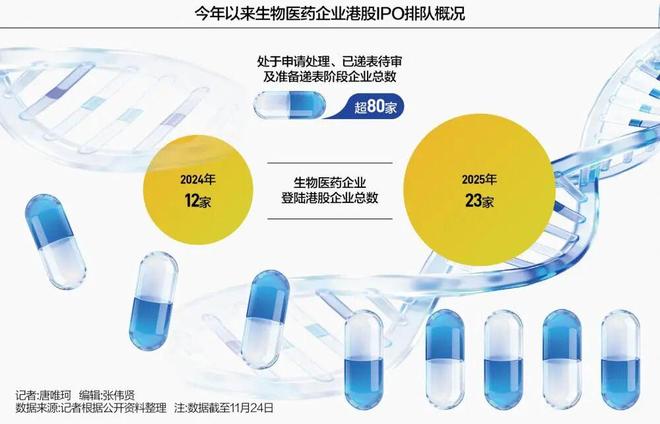
Core Insights - The number of biopharmaceutical companies applying for IPOs in Hong Kong has exceeded 80, marking a historical high, with 23 companies successfully listed this year, doubling last year's figures [1][4] - The valuation logic for innovative drugs in Hong Kong is a combination of market sentiment and fundamentals, with a shift towards more reasonable valuations following recent corrections [1][4] - The IPO congestion is expected to persist until 2026, with high-quality companies more likely to secure listings while weaker firms may face a cycle of queuing and failure [4][6] Market Dynamics - The introduction of the "Specialized Technology Company" listing channel by the Hong Kong Stock Exchange has improved the efficiency of the IPO process, allowing for confidential submissions and reducing the review cycle [4] - Recent reforms in the IPO pricing mechanism have lowered the minimum allocation for cornerstone investors, thereby reducing the risk of share price drops and allowing for more flexible public subscription ratios [5] - The urgent financing needs of companies are driving them to queue for IPOs, as the capital market remains a crucial lifeline for many biotech firms facing cash flow challenges [6][7] Investment Landscape - The differentiation in the IPO market is evident, with leading companies easily securing large amounts of financing due to mature pipelines, while smaller firms struggle [7][10] - The new healthcare insurance policies are encouraging commercial health insurance to expand coverage for innovative drugs, attracting patient capital that can tolerate long development cycles [7][8] - The expectation of profitability among innovative drug companies is becoming clearer, with over 50% of innovative firms projected to achieve profitability by 2026 [8][10] Valuation Discrepancies - The valuation system is undergoing a significant restructuring, with a disconnect between primary market financing valuations and secondary market listing valuations, leading some companies to expedite their IPO processes [10][11] - The rise of the License-out model is bridging the valuation gap, providing companies with stable upfront payments and milestone revenues, while also enhancing pipeline value through recognition from overseas giants [11] - The Chinese pharmaceutical industry is transitioning from a focus on generics to innovation-driven growth, with a clear distinction between short-term valuations and long-term value across both primary and secondary markets [11]
百奥泰跌2.02%,成交额2032.61万元,主力资金净流出53.37万元
Xin Lang Cai Jing· 2025-11-28 03:09
Group 1 - The core viewpoint of the news is that Baiotai's stock has experienced fluctuations, with a current price of 24.77 CNY per share, reflecting a year-to-date increase of 27.81% but a decline of 20.02% over the past 60 days [1] - As of November 28, Baiotai's market capitalization stands at 10.257 billion CNY, with a trading volume of 20.3261 million CNY and a turnover rate of 0.20% [1] - The company primarily engages in the research and production of innovative drugs and biosimilars, with 91.90% of its revenue coming from drug sales [1] Group 2 - As of September 30, 2025, Baiotai reported a revenue of 684 million CNY, marking a year-on-year growth of 17.57%, while the net profit attributable to shareholders was -224 million CNY, reflecting a 38.72% increase in losses [2] - The number of shareholders decreased by 0.89% to 9,397, while the average circulating shares per person increased by 0.89% to 44,065 shares [2] - The company is categorized under the pharmaceutical and biological industry, specifically in the bioproducts sector, and is involved in concepts such as innovative drugs and cancer treatment [1]

欧林生物跌2.00%,成交额5418.59万元,主力资金净流出267.12万元
Xin Lang Cai Jing· 2025-11-28 02:19
Core Viewpoint - Oulin Biotech's stock has experienced significant fluctuations, with a year-to-date increase of 135.66% and a recent decline in trading performance, indicating potential volatility in the market [1][2]. Company Overview - Oulin Biotech, established on December 11, 2009, and listed on June 8, 2021, is located in Chengdu, Sichuan Province. The company specializes in the research, production, and sales of human vaccines [1]. - The main revenue sources for Oulin Biotech include: Tetanus vaccine (90.99%), A and C group meningococcal polysaccharide conjugate vaccine (4.49%), Haemophilus influenzae type b conjugate vaccine (3.99%), and others (0.47%) [1]. Financial Performance - For the period from January to September 2025, Oulin Biotech reported a revenue of 507 million yuan, reflecting a year-on-year growth of 31.11%. The net profit attributable to the parent company was approximately 47.48 million yuan, showing a substantial increase of 1079.36% [2]. - Since its A-share listing, Oulin Biotech has distributed a total of 15.43 million yuan in dividends [3]. Shareholder Information - As of September 30, 2025, Oulin Biotech had 10,200 shareholders, an increase of 56.42% from the previous period. The average number of circulating shares per shareholder was 39,746, a decrease of 36.07% [2]. - Among the top ten circulating shareholders, notable positions include: Xingquan Helun Mixed A (holding 15.44 million shares), Xingquan Heyi Mixed A (holding 8.92 million shares), and Xingquan Commercial Model Mixed (LOF) A (holding 4.64 million shares, a new entry) [3].
