碳中和

Search documents
COP30会场闷热?腾讯翟永平:中国科技开出“清凉处方”
2 1 Shi Ji Jing Ji Bao Dao· 2025-11-21 15:29
Core Insights - The COP30 conference in Belem, Brazil, has seen a significant turnout, reflecting the global urgency surrounding climate change issues [1][2] - Key discussions at the conference include enhancing Nationally Determined Contributions (NDCs), funding arrangements, just transitions, and global carbon market mechanisms, with a notable focus on China's climate policies and technological solutions [2][3] - Tencent showcased its digital solutions, including the "Carbon LIVE" platform, aimed at connecting technology providers, application users, and funding sources to facilitate carbon reduction efforts [3][4] Climate Action and Technology - The "Carbon LIVE" platform has evolved to support various international initiatives, including the UNSH platform and the Global Low Carbon Technology Joint Search (CTS), enabling users to publish needs and seek technological solutions [4][5] - Tencent's "Carbon Seeking Program" aims to gather innovative low-carbon technologies to support developing countries, focusing on areas like carbon removal and long-duration energy storage [5][6] - The company emphasizes the importance of engaging the gaming community to raise awareness and promote climate action through interactive experiences [6][7] Data Center Sustainability - Tencent is addressing the rising energy demands of data centers, which are projected to double by 2030, by committing to achieve carbon neutrality across its operations and supply chain by 2030 [7][8] - The company is implementing energy-efficient practices in its data centers, including strategic site selection and the use of renewable energy sources, with 22% of its total electricity coming from green energy [7][8] - Tencent's microgrid project in Huailai, which integrates wind, solar, and storage, has successfully reduced carbon emissions by nearly 8,000 tons annually and saved over 3.5 million yuan in electricity costs [10]

通领科技IPO:专注汽车内饰创新,向智能化进军
Cai Jing Wang· 2025-11-21 11:03
Core Viewpoint - Tongling Technology is set to be reviewed by the Beijing Stock Exchange on November 21, 2025, with a profit of 128 million yuan in 2024, making it the best performer among the four companies [1] Company Overview - Tongling Technology, established in 2007, specializes in the R&D, production, and sales of automotive interior components, including door trim strips and dashboard panels, primarily for passenger vehicles [1] - The company has a significant market share in the automotive interior components sector, with a domestic market share of 15.44%, 10.95%, 9.02%, and 9.40% over the past four years [3] Industry Context - China's automotive market has seen rapid growth, maintaining the largest global sales for 15 consecutive years, although the per capita car ownership remains lower than in traditional automotive powerhouses like the US, Germany, and Japan [2] - The demand for automotive interior components is closely linked to the overall development of the automotive industry, with increasing importance placed on design and functionality [1][2] Market Growth Potential - The market for automotive interior components in China is projected to grow from 231.1 billion yuan in 2024 to 276.5 billion yuan by 2029, indicating substantial growth potential [3] - The shift towards electric vehicles (EVs) has created new demands for interior components, such as battery management systems and smart cockpit designs, further driving industry growth [3] Technological Innovation - Tongling Technology's core competitiveness lies in its technological innovation, having obtained 127 patents, including 44 invention patents [4] - The company has established a research and development center since 2009, focusing on mold design and new process development to meet the evolving needs of the automotive market [4] Financial Performance - The company reported revenues of 892 million yuan, 1.013 billion yuan, and 1.066 billion yuan for the years 2022 to 2024, with a compound annual growth rate of 9.29% [5] - The net profit after deducting non-recurring items was 62.15 million yuan, 107 million yuan, and 128 million yuan for the same period, showing a compound growth rate of 43.38% [5] IPO Plans - Tongling Technology plans to publicly issue up to 15.6 million shares, accounting for 25% of the total share capital post-issue, with funds allocated for various projects including production and R&D upgrades [6]
外资航运巨头投资逾10亿 临港综合仓储设施投运
Jie Fang Ri Bao· 2025-11-21 10:25
Core Insights - Maersk has officially launched its largest and most advanced integrated logistics flagship warehouse in the Lingang area of Shanghai, marking a significant shift from a "port-to-port" to an "end-to-end" service strategy with an investment exceeding 1 billion yuan [1][2] Group 1: Strategic Importance - The flagship warehouse is strategically located near the Yangshan Deep Water Port, which is crucial for both exports and imports, allowing customers to streamline their logistics processes [2] - The facility benefits from policy advantages as it is situated within the Yangshan Special Comprehensive Bonded Zone, enabling simplified regulatory support and innovative customs management [2][3] Group 2: Operational Efficiency - The new logistics center allows for the simultaneous storage of bonded and non-bonded goods, facilitating quicker customs processes and reducing logistics costs significantly [2] - Companies can now manage their inventory more flexibly, as they do not need to pre-stock goods, enhancing supply chain resilience [2] Group 3: Growth Potential - The flagship warehouse is envisioned to become a hub for both import and export distribution, as well as a center for cross-border e-commerce fulfillment, leveraging Maersk's "Twin Stars" network for global distribution [3] - Shanghai Port's container throughput has reached record levels, with over 5.02 million TEUs in a single month, supported by the operational alliance between Maersk and Hapag-Lloyd [4] Group 4: Industry Transformation - The facility is positioned as a benchmark for the green, low-carbon, and intelligent transformation of the global shipping industry, showcasing the latest smart technologies and carbon-neutral initiatives [6] - Maersk's investment reflects its long-term confidence in the Chinese market, which has become one of its largest globally, despite changes in the global trade landscape [6]
【可持续发展】港华智慧能源发行第三期"类REIT" 规模达8.12亿人民币
Ge Long Hui· 2025-11-21 09:52
Core Insights - The company successfully issued the "Zero Carbon Smart Phase 3 Green Asset-Backed Special Plan (Carbon Neutral)" REIT on the Shenzhen Stock Exchange, with a scale of 812 million RMB [1][2] - This issuance marks the second REIT product launched by the company this year and is the third project within a 5 billion RMB shelf program, maintaining a priority security coupon rate of 2.3% [1][2] - The funds raised will be invested in photovoltaic and energy storage projects, enhancing the company's development in the renewable energy sector [1][2] Company Developments - By June 2025, the company's cumulative grid-connected photovoltaic project capacity is expected to reach 2.6 GW, with rapid growth in energy storage services expanding to eight provinces [2] - The company is advancing an "Energy as a Service" (EaaS) model, promoting integrated services in photovoltaic, energy storage, and electricity sales, while enhancing asset monitoring and electricity trading efficiency through a smart energy ecosystem platform [2] - The issuance of the third REIT will further expand the company's green financing channels, with plans to deepen collaboration with financial institutions to promote renewable energy development in line with national energy transition goals [2]

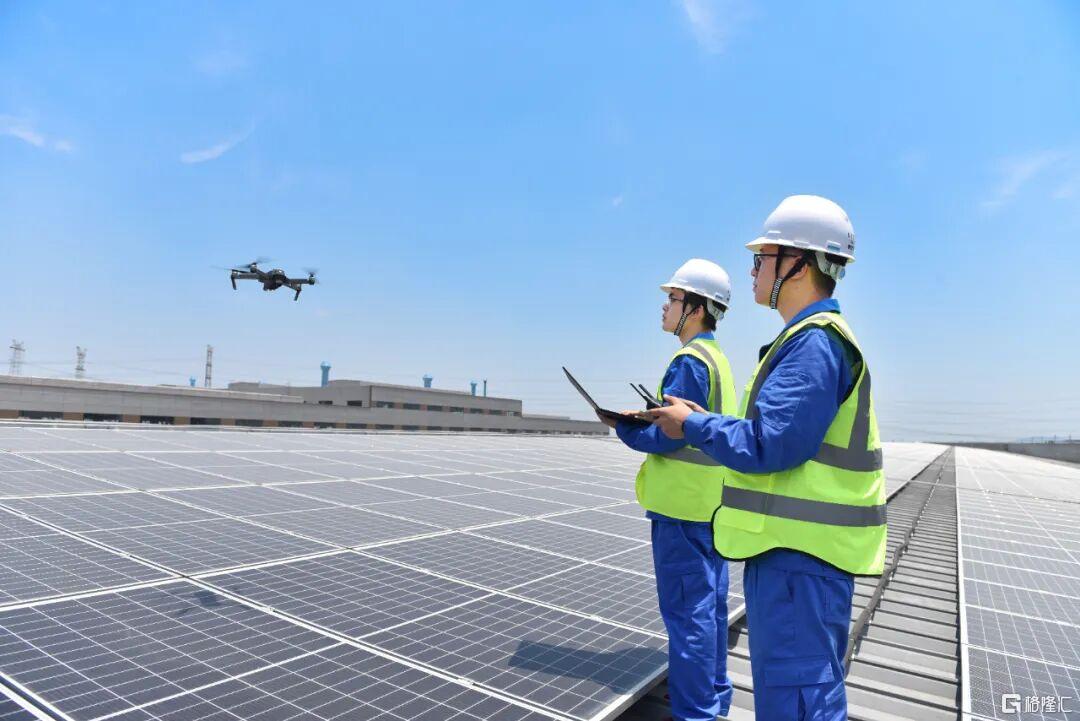
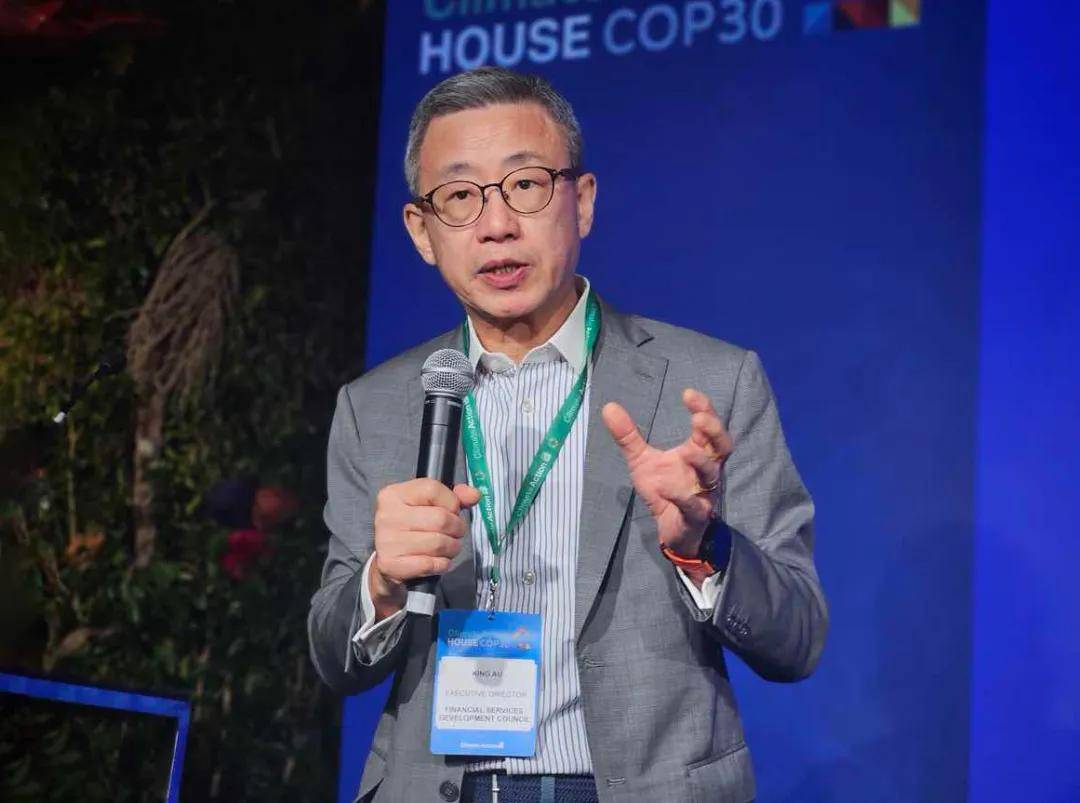
COP30转型计划训练营:洞悉毕马威权威报告,共创可持续价值新未来
Sou Hu Cai Jing· 2025-11-21 07:11
Core Viewpoint - The article emphasizes the necessity for companies to develop and implement transformation plans in response to climate change and the global shift towards net-zero emissions, highlighting that such plans are essential for survival, compliance, and future value creation in a competitive landscape [1]. Group 1: Governance and Strategy - High-quality transformation plans must integrate climate goals, such as net-zero emissions, into the core of corporate strategy, supported by a robust governance framework where the board and executives are accountable for climate strategies [2]. Group 2: Setting Goals - Companies should establish clear, measurable, and scientifically-backed mid- to long-term emission reduction targets, with specific milestones to ensure transparency and verification of progress, thereby mitigating greenwashing risks and building stakeholder confidence [3]. Group 3: Implementation Steps - Transformation plans should be broken down into actionable steps across various dimensions, including finance, operations, supply chain, and technology, with clear resource allocation and accountability mechanisms [4]. Group 4: Data Disclosure and Performance Management - High-quality data disclosure enhances corporate transparency, and tracking key performance indicators (KPIs) can link performance assessments and incentives to transformation goals, facilitating a shift from compliance-driven to value-creating approaches [5]. Group 5: Collaboration and Industry Engagement - Individual companies cannot achieve systemic transformation alone; collaboration with supply chain partners, industry organizations, financial institutions, and regulatory bodies is essential to establish unified standards and methodologies for systemic decarbonization [6]. Group 6: Global Trends and Local Initiatives - Over 60% of major economies have policies promoting transformation plans, with more than half of listed companies incorporating these plans into governance and disclosing climate strategies according to international standards. Over 140 countries have set net-zero targets, emphasizing the need for fair transitions and international cooperation [9]. Group 7: Financial Sector's Role - The financial sector is increasingly recognizing the importance of transition planning as a means to manage risks and unlock new value opportunities, with a focus on integrating transition goals into investment and risk management processes [10][12].
福能股份跌2.06%,成交额1.25亿元,主力资金净流出816.77万元
Xin Lang Cai Jing· 2025-11-21 06:51
Core Viewpoint - Fuzhou Funiu Co., Ltd. has experienced a decline in stock price and trading volume, with a notable net outflow of funds, despite a year-to-date increase in stock price [1][2]. Group 1: Stock Performance - On November 21, Fuzhou Funiu's stock price fell by 2.06%, trading at 9.96 CNY per share, with a total market capitalization of 27.69 billion CNY [1]. - Year-to-date, the stock price has increased by 3.89%, but it has decreased by 4.78% over the last five trading days [1]. - The stock has shown a slight increase of 1.01% over the last 20 days and a 2.61% increase over the last 60 days [1]. Group 2: Financial Performance - For the period from January to September 2025, Fuzhou Funiu reported a revenue of 10.03 billion CNY, a decrease of 4.29% year-on-year, while the net profit attributable to shareholders increased by 12.17% to 1.99 billion CNY [2]. - The company has distributed a total of 5.55 billion CNY in dividends since its A-share listing, with 2.65 billion CNY distributed over the last three years [2]. Group 3: Shareholder Information - As of September 30, 2025, the number of shareholders increased by 15.91% to 37,700, while the average number of circulating shares per person decreased by 13.73% to 73,757 shares [2]. - Among the top ten circulating shareholders, ICBC Hongli Youxiang Mixed A Fund holds 24.01 million shares, an increase of 6.24 million shares from the previous period [2].

碳中和50ETF(159861)跌超3%,光伏需求预期与能源转型催化,回调或可布局
Mei Ri Jing Ji Xin Wen· 2025-11-21 06:22
Group 1 - The Carbon Neutrality 50 ETF (159861) has dropped over 3%, driven by expectations of photovoltaic demand and energy transition catalysts [1] - Huazhong Securities emphasizes the need for the power equipment industry to focus on "high proportion of renewable energy consumption" and innovate regulatory models to ensure the safe and stable operation of the power system [1] - The public review of the environmental impact assessment for the Yantai-Weihai ultra-high voltage project indicates that ultra-high voltage construction is expected to accelerate [1] Group 2 - In the photovoltaic equipment sector, the industry chain prices remain weak but stable, with a high focus on anti-involution storage policies, although actual implementation requires detailed rules [1] - Domestic industry self-regulation continues, and policy details are still under observation, with the main photovoltaic industry chain prices expected to stabilize above the cost line [1] - In the wind power sector, domestic offshore wind progress remains high, with four offshore wind projects in Jiangsu undergoing sea area usage verification, and the launch of a 20MW deep-sea floating wind demonstration project in Yangjiang [1] Group 3 - The Carbon Neutrality 50 ETF tracks the Environmental Protection 50 Index (930614), which selects 50 companies that perform well in environmental protection, covering clean energy, energy conservation, and environmental governance [1] - This index reflects the overall performance and development trends of publicly listed companies in the environmental protection industry, showcasing distinct characteristics of the green economy [1]
川仪股份跌2.02%,成交额1.36亿元,主力资金净流入300.09万元
Xin Lang Zheng Quan· 2025-11-21 06:00
Core Viewpoint - The stock price of Chuan Yi Co., Ltd. has experienced fluctuations, with a recent decline of 2.02% and a year-to-date increase of 17.95%, indicating volatility in the market performance of the company [1] Financial Performance - For the period from January to September 2025, Chuan Yi Co., Ltd. reported a revenue of 4.89 billion yuan, a year-on-year decrease of 13.02%, and a net profit attributable to shareholders of 462 million yuan, down 17.28% year-on-year [2] - Cumulative cash dividends since the company's A-share listing amount to 1.527 billion yuan, with 828 million yuan distributed over the past three years [3] Shareholder Information - As of September 30, 2025, the number of shareholders for Chuan Yi Co., Ltd. was 18,600, a decrease of 2.54% from the previous period, while the average circulating shares per person increased by 2.60% to 27,482 shares [2] - The fifth largest circulating shareholder is Hong Kong Central Clearing Limited, holding 12.0266 million shares, which increased by 8.5233 million shares compared to the previous period [3] Market Activity - As of November 21, 2023, Chuan Yi Co., Ltd.'s stock was trading at 24.74 yuan per share, with a total market capitalization of 12.696 billion yuan and a trading volume of 136 million yuan [1] - The stock has seen a 20.45% increase over the past 60 days, indicating a positive trend in the longer term despite recent short-term declines [1]

隆基于巴西COP30发布气候行动白皮书 锚定“可量化”转型路径
Jing Ji Guan Cha Wang· 2025-11-21 05:57
Core Insights - Longi Green Energy has released its "2024-2025 Climate Action White Paper," outlining its strategic ambition to achieve net-zero emissions across its entire value chain by 2050, aligning with international disclosure frameworks [1][2] Group 1: Emission Reduction Goals - Longi aims to reduce Scope 1 and Scope 2 emissions by 60% and Scope 3 emissions intensity by 52% by 2030, compared to 2020 levels [2] - The company plans to cover all production and operational sites with charging facilities by 2030 [2] - In 2024, Longi's total operational carbon emissions are projected to be 3,184,782 tons of CO2 equivalent, a 23.8% increase from 2020 but a 37% decrease from the peak in 2023 [2] Group 2: Energy Structure Optimization - In 2024, Longi plans to use 4.746 billion kWh of renewable electricity, accounting for 47.5% of total electricity consumption, an increase of 5.7 percentage points from 2020 [3] - The company aims to achieve 70% renewable electricity usage by 2027 and 100% by 2028 [3] Group 3: Supply Chain and Product Carbon Footprint - Scope 3 emissions account for nearly 90% of Longi's total value chain emissions, with 27.34 million tons of CO2 equivalent projected for 2024 [4] - Longi has initiated a "Green Supply Chain Partner Empowerment Program" to encourage 50 suppliers to conduct carbon audits [4] - The company achieved 53 carbon footprint certifications for its products in 2024, with the Hi-MO 9 module's carbon footprint reduced to below 350 kgCO2e/kW [4] Group 4: Governance and Financial Planning - Longi has established a governance structure centered around its board and sustainability committee, linking climate performance to management compensation [6] - The company plans to incorporate climate strategy into its budgeting process and conduct its first ESG dual materiality assessment in 2024 [6] - Longi is transitioning from a solar product supplier to a builder and advocate of a zero-carbon energy ecosystem, showcasing its commitment to addressing climate change [6]

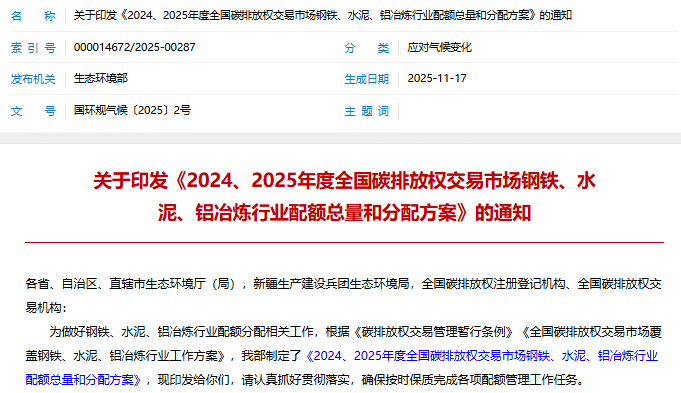
碳市场大扩容,2027年八大行业全覆盖
Huan Qiu Wang· 2025-11-21 05:36
Core Insights - The expansion roadmap for China's national carbon emissions trading market has been officially unveiled, with a clear timeline for including additional industries by 2027, aiming to cover approximately 75% of national CO2 emissions [1][4]. Summary by Sections Carbon Market Expansion - The Ministry of Ecology and Environment has released a quota distribution plan for the steel, cement, and aluminum smelting industries for 2024 and 2025, marking a significant step in the carbon market's expansion [1][4]. - By including these three industries, the total number of key emission units will reach around 3,700, covering emissions of approximately 8 billion tons, which accounts for over 60% of national carbon emissions [4]. Future Industry Inclusion - The final goal is to achieve full coverage of major emission industries in the industrial sector by 2027, with preliminary preparations already underway for the chemical, petrochemical, civil aviation, and paper industries [4][5]. - Predictions suggest that once eight major industries are fully included, over 8,000 enterprises will enter the market, covering more than 70% of greenhouse gas emissions nationwide [4]. Technical Preparations - The Ministry has collected and verified carbon emission data from relevant industries since 2013, laying the groundwork for scientifically determining total quotas [5]. - A comprehensive set of technical documents related to quota distribution, accounting, reporting, and verification is being expedited, alongside upgrades to the national carbon market management platform and trading systems [5]. Market Dynamics and Pricing - The diversity of market participants is expected to enhance the pricing function of the carbon market, with the current closing price around 66 yuan per ton [5]. - Industry experts predict that carbon prices could rise significantly, potentially reaching between 130 to 180 yuan per ton by 2027, driven by quota control and paid distribution mechanisms [5]. Industry-Specific Impacts - Different industries will experience varying impacts from the carbon market expansion, with sectors like electricity and steel being better prepared compared to more complex industries like petrochemicals and paper [6]. - The aviation sector faces additional challenges, including external pressures such as the EU carbon border tax [6]. Future Market Development - By 2030, the goal is to establish a carbon market based on total quota control, combining free and paid distribution, to create a reasonable carbon pricing mechanism [7]. - The Ministry has indicated that total quota control will be prioritized in stable emission sectors, gradually tightening quotas to enhance market efficiency and optimize carbon reduction resource allocation [7].