人工智能技术

Search documents
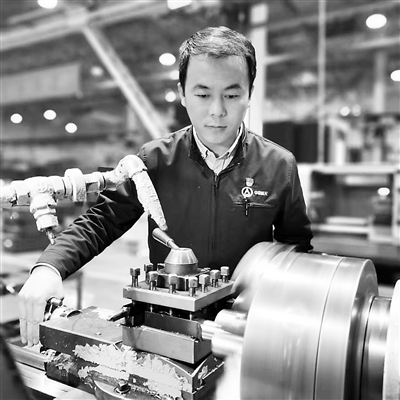
精工铸就“火箭心” 创新育出工匠才——专访全国技术能手何小虎
Ke Ji Ri Bao· 2025-07-18 02:10
Core Viewpoint - The article highlights the importance of precision and responsibility in the manufacturing of rocket engines, emphasizing the role of skilled workers in China's aerospace industry [1][4]. Group 1: Achievements and Innovations - The company has achieved a product precision enhancement to 0.02 mm and resolved 75 production challenges related to rocket engines, alongside filing 25 technical patents [1]. - A significant breakthrough was made in 2016 when a team successfully achieved micron-level precision control in a non-precision environment, with a first trial pass rate of 100% after nearly 50 attempts [3]. Group 2: Skills Development and Training - The company emphasizes a strong focus on talent cultivation, utilizing a "master-apprentice" model to train new employees, which includes hands-on project involvement to foster innovation and problem-solving skills [6][7]. - The establishment of a workshop named after a skilled worker has led to the formation of a talent pool that includes many high-skilled individuals, with over 20 projects completed and 32 invention patents filed in the past two years [7]. Group 3: Future Directions and Educational Integration - The company is exploring digital and intelligent manufacturing technologies, aiming to transition traditional manufacturing from small-batch processing to a more integrated digital and intelligent production model [5]. - There is a call for enhanced vocational education that integrates new production quality development, promoting industry collaboration and a dual-mentor training model to better prepare students for advanced manufacturing roles [8].

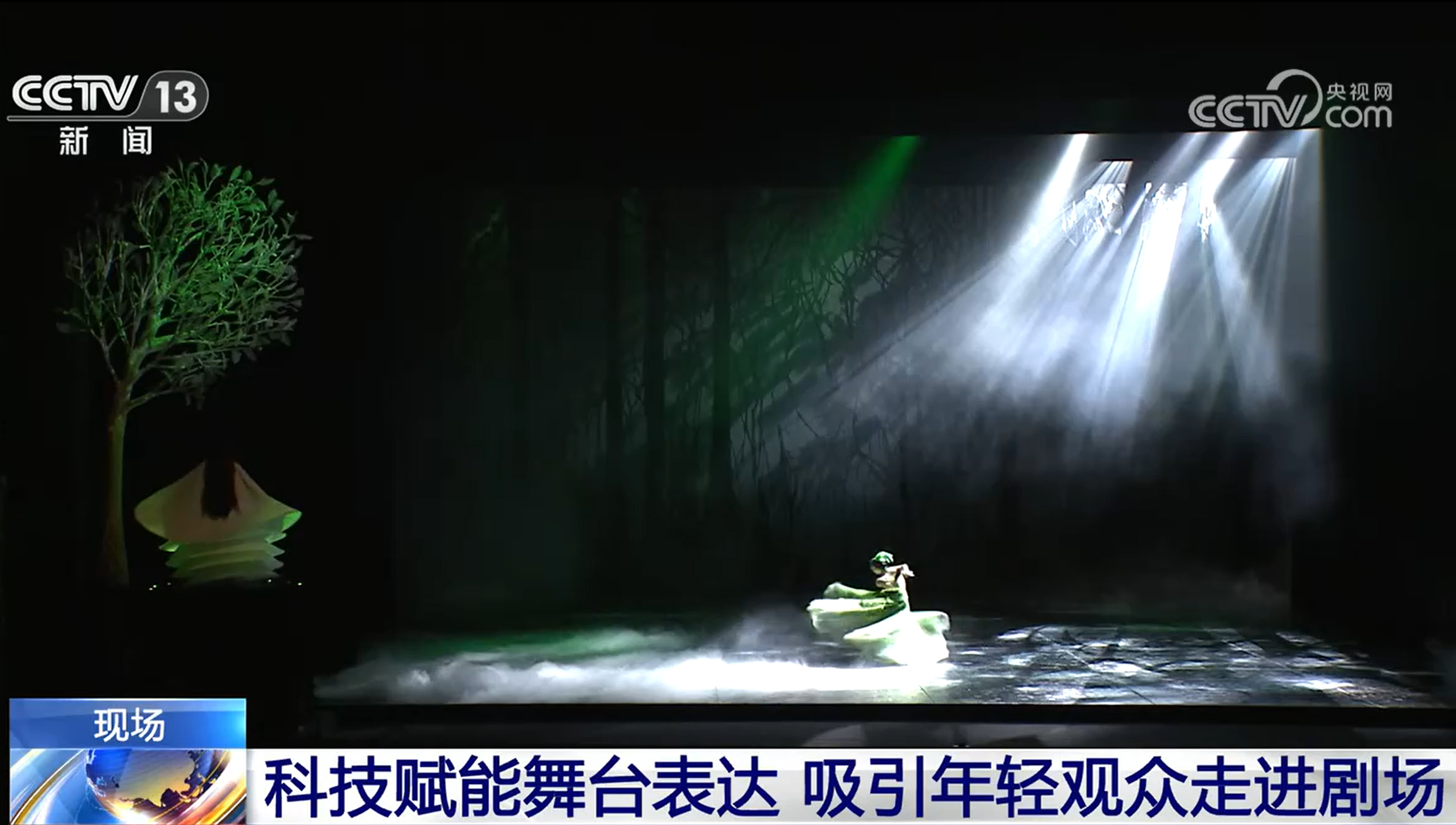
虚实光影+3D投影……超多“黑科技”加持 这个暑期一起去看舞台剧!
Yang Shi Wang· 2025-07-17 22:34
Core Viewpoint - The integration of technology in performances, such as dance and children's theater, is attracting younger audiences to theaters, enhancing their viewing experience and engagement with the arts [1][2]. Group 1: Dance Performances - The dance drama "Peacock" has commenced its national tour in 2025, showcasing Eastern aesthetics through modern stage language and innovative technologies like 3D projection and a specially designed 2000-piece feather magnetic device [2]. - The artistic director Yang Liping emphasizes that the "Peacock" represents a natural life form and reflects Eastern people's understanding of beauty and life, symbolizing the changes of seasons [2]. Group 2: Children's Theater - The 14th China Children's Theater Festival featured 42 productions from 21 theater groups across four countries, totaling 185 performances, including the XR digital music children's drama "Dunhuang Nine-Colored Deer King," which tells a fantastical story of a boy's adventure in the Dunhuang mural world [2][4]. - The use of XR digital technology and artificial intelligence in children's theater breaks traditional stage limitations, creating immersive experiences that captivate young audiences [4]. Group 3: Cultural Integration and Accessibility - The festival also launched the "Excellent Productions 2025 Summer Tour 100+" initiative, providing affordable and public tickets to ensure quality cultural resources reach grassroots communities [4]. - The China Children's Art Theater is enhancing cultural tourism integration by organizing children's theater workshops and travel activities, allowing children to experience the charm of theater both on and off stage [5].
金砖国家媒体智库携手发声 共绘“大金砖合作”与全球南方新图景
Xin Hua She· 2025-07-17 13:43
Group 1 - The forum held in Rio de Janeiro aimed to promote high-quality development of "Big BRICS cooperation" and enhance collaboration among Global South countries [1][2] - The forum emphasized the importance of South-South cooperation for achieving fairer development and creating a global stage where everyone has dignity [2] - A report titled "BRICS Cooperation Promotes Global South to Move Forward Together" was released during the forum, along with the launch of a media think tank cooperation initiative [2] Group 2 - The forum marked the seventh plenary meeting of the BRICS media think tank mechanism and the first meeting after the historic expansion of BRICS [2] - Key representatives from various countries expressed the need for new cooperation models and voices in global governance reform [2] - The forum highlighted the role of BRICS as a representative of emerging economies and cultural diversity, especially in the face of unprecedented challenges in the global media landscape [2]
广州首张“AI帮办”营业执照出炉
Guang Zhou Ri Bao· 2025-07-16 01:43
Core Viewpoint - The introduction of the "AI Helper" service in Guangzhou aims to simplify the registration process for individual businesses and facilitate their transformation into enterprises through innovative AI technology [2][4]. Group 1: AI Helper Service - Starting from July 15, individual business owners in Guangzhou can establish their businesses without filling out forms, and can directly change their status from individual to enterprise via a WeChat mini-program [2]. - The "AI Helper" service allows applicants to interact with an AI assistant using natural language to describe their business needs, which then generates a standardized application form based on regulatory requirements [4]. - The time taken for individual businesses to receive their business licenses has been reduced to as fast as the same day due to the "AI Helper" model [4]. Group 2: Transition from Individual to Enterprise - The "Individual to Enterprise" function on the Guangzhou business registration platform has achieved two major breakthroughs: direct submission of transformation applications via WeChat mini-program and the introduction of a "change connection" mechanism [5]. - Eligible individual business owners can complete the transformation process by uploading necessary materials and confirming information, without needing to go through the cumbersome process of deregistration and new establishment [5]. - The new process allows for online appointment scheduling for business licenses, seal engraving, and bank account opening, significantly enhancing convenience for business owners [5].

THPX信号源:AI技术提升XAUBTC黄金交易的精准度
Sou Hu Cai Jing· 2025-07-14 05:43
Core Insights - The rapid development of artificial intelligence (AI) technology is providing new perspectives and tools for gold trading, particularly through the THPX signal source, which enhances the precision of XAUBTC trading [1][12] - THPX signal source utilizes advanced AI algorithms and machine learning to analyze financial market data, offering accurate trading signals and improving decision-making for investors [5][10] - The integration of big data analysis within THPX significantly enhances the efficiency and accuracy of XAUBTC gold trading by providing real-time and precise trading signals [5][12] AI and Machine Learning in Trading - AI technology plays a crucial role in improving the accuracy and efficiency of trading decisions by analyzing vast amounts of historical data and market trends [7][12] - Machine learning algorithms demonstrate significant advantages in data analysis and prediction, enabling quick identification of market trends and trading signals [6][12] - The adaptive nature of these algorithms allows for continuous optimization of trading strategies, ultimately leading to higher returns for investors [7][12] Risk Management and Market Insights - THPX signal source employs multi-layered data analysis and predictive models to effectively mitigate potential losses from market volatility [6][12] - The system's real-time market dynamic capture enhances trading strategies and provides a solid foundation for risk management [6][12] - By integrating various data sources, THPX offers deep insights into market trends and potential trading opportunities, thereby improving overall investment returns [5][12] Future Trends in Gold Trading - The future of gold trading will be profoundly influenced by big data and blockchain technology, promoting greater transparency and efficiency in transactions [7] - The combination of AI and machine learning will further enhance market prediction capabilities, aiding investors in analyzing market dynamics more effectively [7][12]


奥特曼笑称:不懂美国党,但懂马斯克,他和谁都可能闹掰
Xin Lang Cai Jing· 2025-07-13 10:34
Core Viewpoint - The article discusses the evolving relationship between Sam Altman, CEO of OpenAI, and Elon Musk, highlighting their past collaboration, subsequent ideological conflicts, and ongoing rivalry in the tech industry [1][4][6]. Group 1: Historical Context - In 2015, Altman and Musk, along with other tech leaders, founded OpenAI with the vision of ensuring artificial intelligence benefits all humanity rather than a select few [3]. - Musk was initially a prominent figure in OpenAI, actively participating in the board and investing heavily [4]. - The initial collaboration was characterized by shared ideals, but it quickly deteriorated due to fundamental disagreements over the direction of OpenAI [4]. Group 2: Ideological Conflicts - The split began in 2018 when Musk left the OpenAI board, primarily due to differing views on whether to open-source AI technology [4]. - Musk advocated for open-source technology to benefit humanity, while Altman favored a more cautious approach to commercialization to mitigate risks [4]. - Following his departure, Musk publicly criticized OpenAI for straying from its non-profit mission and later took legal action against the company [4][5]. Group 3: Ongoing Rivalry - The rivalry intensified as both parties clashed over overlapping projects, such as Musk's Starlink and OpenAI's satellite AI monitoring initiatives [5]. - Musk accused OpenAI of stealing Tesla's autonomous driving data, while Altman defended OpenAI with evidence of patent ownership [5]. - The article likens their conflict to a "tech version of Romeo and Juliet," emphasizing the philosophical differences driving their rivalry [5]. Group 4: Current Developments - Musk's formation of the "American Party" is seen as another manifestation of his confrontational nature, which Altman critiques [6]. - Despite their ongoing disputes, both figures continue to intersect in the tech landscape, with significant developments occurring in their respective companies [6]. - The article concludes that their relationship reflects the broader dynamics of Silicon Valley, where former allies can become adversaries and vice versa, driven by innovation and disruption [6][7].

以技为桥,共育英才:鲁班工坊谱写中哈职教合作新篇章
人民网-国际频道 原创稿· 2025-07-11 06:22
Group 1 - The core idea of the news is the establishment of the second Luban Workshop in Kazakhstan, aimed at enhancing vocational education and training through collaboration between Chinese and Kazakh institutions [2][3] - The Luban Workshop, named after the ancient Chinese craftsman, serves as a model for China's vocational education going global, with 34 workshops established in 30 countries, including 10 in Central Asian countries [2] - The first Luban Workshop in Kazakhstan, co-constructed by Tianjin Vocational University and East Kazakhstan Technical University, is set to train approximately 400 students focusing on transportation equipment and technology [2] Group 2 - The training program is tailored to meet Kazakhstan's demand for talent in artificial intelligence, with a focus on areas such as smart agriculture, smart mining, and intelligent manufacturing [3] - The training includes courses on data mining, machine learning, deep learning, and industrial internet security, which are expected to significantly advance Kazakhstan's technical education [3] - The Luban Workshop is positioned as a platform for international vocational education exchange, fostering friendly relations between countries and contributing to mutual development [3]
华银电力7个交易日斩获6板 电力股因何疯涨
Jing Ji Guan Cha Wang· 2025-07-09 12:12
Core Viewpoint - The power sector has been experiencing significant investor interest since July, with companies like Huayin Power leading the surge in stock prices, driven by increased electricity demand due to high temperatures and favorable market conditions [1][4]. Group 1: Stock Performance - Huayin Power's stock has achieved six consecutive trading limit-ups from July 1 to July 9, with a cumulative increase of 63.41% during this period, significantly outperforming the Shanghai Composite Index [2][1]. - As of July 9, Huayin Power's stock price reached 8.11 yuan per share, with a total market capitalization of 16.5 billion yuan, reflecting a year-to-date price increase of 160.77% [1][2]. - Nearly 20 other power stocks have also seen price increases exceeding 10%, with several stocks like Huadian Liaoning and Leshan Power showing gains over 20% [1]. Group 2: Market Drivers - The surge in electricity demand is attributed to extreme summer temperatures, with national peak electricity load surpassing 465 million kilowatts, driven largely by air conditioning usage [4][5]. - The International Energy Agency (IEA) predicts a 4% increase in global electricity demand over the next two years, the highest annual growth rate since 2007, fueled by advancements in artificial intelligence and increased electrification across various sectors [5][6]. - Ongoing upgrades to the power grid are expected to enhance the profitability of power generation companies by improving transmission capacity and resource allocation [5]. Group 3: Cost Factors - Recent declines in coal prices are beneficial for thermal power companies, as coal is a significant production cost, and lower costs can lead to increased profitability [5][6]. - The long-term outlook for the power industry suggests stable demand and a favorable cost environment, with thermal power companies expected to maintain reasonable profit margins despite market fluctuations [6].

跨境支付便利化有助于增强企业国际竞争力
Jin Rong Shi Bao· 2025-07-07 03:11
Core Insights - The article discusses the launch of the "Action Plan" by the People's Bank of China and Shanghai government to enhance cross-border payment services, addressing pain points for enterprises involved in the Belt and Road Initiative [1] Group 1: Efficiency and Cost Advantages - The "Action Plan" aims to improve cross-border payment efficiency and reduce costs by enabling "instant processing, zero paperwork, low cost, and high control" for enterprises [2] - It significantly enhances settlement efficiency by optimizing foreign exchange processes, reducing transaction time from hours to minutes for premium clients [2][3] - The introduction of integrated currency pools and cross-border fund allocation in free trade zones allows for better management of multi-currency funds, improving allocation efficiency and lowering exchange costs [2] Group 2: Compliance and Risk Management - The "Action Plan" simplifies compliance and risk control processes, reducing operational complexity through mechanisms that allow for quick rectification of compliance judgments [3] - Digital identity verification and blockchain technology eliminate the need for paper documents, reducing review times from days to minutes [3] - The plan supports smoother funding channels for large mergers and overseas projects by optimizing foreign debt registration and cross-border guarantees [3] Group 3: Product Innovation and Cost Reduction - The "Action Plan" encourages banks to develop diverse hedging tools, helping enterprises lock in exchange rate risks and reduce hidden costs [3] - Trade refinancing options allow companies to finance directly against receivables, significantly lowering financing rates and multi-currency settlement costs [3] - A "local currency first" evaluation mechanism promotes the use of RMB in settlements, minimizing transaction fees from frequent currency conversions [3] Group 4: Service Enhancement and User Experience - The "Action Plan" extends service hours to 24/7, allowing businesses to initiate payments at any time, breaking the constraints of traditional office hours [4] - Online platforms consolidate payment progress, risk alerts, and operational guidelines, simplifying the process for users [4] - Automation of document verification through blockchain technology enhances the reliability and efficiency of cross-border payments [4] Group 5: CIPS Functionality and Global Reach - The enhancement of the Cross-Border Interbank Payment System (CIPS) aims to lower transaction costs and improve the use of RMB in international payments [5] - CIPS facilitates real-time and batch clearing, significantly reducing the time for cross-border fund transfers and minimizing opportunity costs and exchange rate risks for enterprises [5][6] - The development of innovative financial products based on CIPS data will expand the use of RMB beyond trade payments to global fund operations and cross-border financing [6] Group 6: Market Trends in Cross-Border Financial Services - The demand for cross-border payment services is evolving towards instant, multi-currency, customized intelligent services, and ecosystem collaboration [7] - Financial institutions need to adapt by building 24/7 digital platforms and offering integrated payment solutions to meet the growing expectations of clients [8] - There is an increasing need for diversified product offerings that combine cross-border payments with trade financing to streamline funding flows [8] Group 7: Technological Disruption in Cross-Border Payments - Blockchain technology is expected to enhance payment efficiency and reduce costs by simplifying cross-border payment processes and minimizing reliance on intermediaries [9] - Artificial intelligence will play a crucial role in risk prevention and optimizing user experience by providing personalized payment solutions [10] Group 8: Challenges in Global Cross-Border Payment Facilitation - Geopolitical conflicts and trade frictions are increasing costs and reducing efficiency in cross-border payments, necessitating innovative solutions [11] - The instability of settlement systems and the limitations of traditional currencies are exacerbated by geopolitical risks, leading to increased complexity in cross-border payment channels [12] - Regulatory coordination challenges and rising compliance costs are significant hurdles, requiring a shift towards a more efficient and secure cross-border payment system [13]
足球与电视的双向奔赴,海信RGB-Mini LED点亮全球高端足球赛事
Xin Lang Cai Jing· 2025-07-04 09:49
Group 1: Core Insights - The FIFA Club World Cup showcased the growing influence of Chinese brands, particularly Hisense, on the global stage, despite the absence of Chinese teams in the tournament [1] - Hisense's 100-inch television was selected as the official choice for the FIFA Club World Cup, highlighting its market leadership, with a global share of 58.8% in 100-inch and larger TVs projected for 2024 [6][11] - The introduction of RGB-Mini LED technology by Hisense represents a significant advancement in display technology, enhancing the viewing experience with improved color accuracy and dynamic performance [7][9] Group 2: Historical Context - The relationship between football and television has evolved significantly, with FIFA adapting rules and equipment to enhance broadcast quality since the introduction of the "Telstar" ball in 1970 [3][4] - Technological advancements in broadcasting, such as the introduction of high-definition and VAR (Video Assistant Referee) systems, have transformed how football is experienced by fans [4][8] Group 3: Technological Innovations - Hisense's RGB-Mini LED technology marks a fundamental shift from traditional backlighting to RGB multi-color backlighting, improving efficiency by 15% and enhancing color purity [9][10] - The company's proprietary AI picture quality chip, H7, allows for precise control over lighting and color, significantly enhancing the viewing experience [10] Group 4: Market Positioning - Hisense's branding strategy has evolved from "China's first" to "world's first" in the context of large-screen televisions, reflecting its ambition to lead in global display technology [12][11] - The company's commitment to innovation and technology positions it as a key player in defining future display standards, moving from merely producing products to setting industry benchmarks [12][13]