
全国统一大市场建设

Search documents
财政部推动解决政府采购异常低价问题——让政府采购更加“优质优价”
Sou Hu Cai Jing· 2026-01-27 01:25
Core Viewpoint - The Ministry of Finance has issued a notice to address the issue of "involution-style" low-price competition in government procurement, aiming to establish a market order characterized by quality and fair pricing, effective from February 1, 2026 [1][2]. Group 1: Government Procurement Issues - In government procurement, some suppliers engage in "involution-style" low-price competition, leading to quality issues and instability in service supply [1]. - The notice highlights that the occurrence of abnormal low prices disrupts market order and can result in increased actual costs post-bid [1]. Group 2: Procurement Guidelines - The notice requires procurement entities to set reasonable maximum prices based on comprehensive market research, including similar project bid information and industry cost standards [1]. - Emphasis is placed on managing procurement for information technology projects and equipment with high material usage [1]. Group 3: Review and Compliance - The notice specifies four scenarios that trigger a review for abnormal low pricing, including bids below 50% of the average bid of compliant suppliers and below 45% of the maximum price [2]. - Procurement entities are responsible for conducting thorough acceptance checks and monitoring the fulfillment of contractual obligations by suppliers [2]. Group 4: Ongoing Oversight and Improvement - The Ministry of Finance plans to continue optimizing the government procurement market and will conduct special inspections focusing on significant issues in the sector starting in 2024 [2][3]. - A unified and standardized supervision mechanism will be established to address violations in government procurement practices [3].
让政府采购更加“优质优价”
Ren Min Ri Bao· 2026-01-26 22:54
Group 1 - The core viewpoint of the article is that the Ministry of Finance has issued a notice to address the issue of "involution-style" low-price competition in government procurement, aiming to establish a market order characterized by quality and fair pricing, effective from February 1, 2026 [1] - The notice highlights that low-price competition among suppliers can lead to poor quality products and unstable service supply, disrupting market order [1][2] - The Ministry of Finance emphasizes the need for procurement entities to set reasonable maximum prices based on comprehensive market research and to manage procurement projects effectively, especially in areas like information technology and medical equipment [1][2] Group 2 - The notice specifies four conditions that trigger a review for abnormal low pricing, including bids below 50% of the average bid of compliant suppliers and below 45% of the maximum price [2] - It mandates that procurement entities must take responsibility for contract fulfillment and conduct thorough acceptance checks, focusing on the actual performance of suppliers who win contracts despite low bids [2] - The Ministry of Finance plans to continue optimizing the government procurement market and will conduct special inspections on over 80,000 government procurement projects executed by more than 19,000 agencies starting in 2024 [2][3]
畅通国内大循环,激活经济高质量发展“新引擎”
Xin Lang Cai Jing· 2026-01-26 22:08
Core Viewpoint - The article emphasizes the importance of building a strong domestic market and accelerating the construction of a new development pattern, focusing on expanding domestic demand as a strategic foundation to enhance the internal dynamics and reliability of the domestic circulation [2][5]. Group 1: Domestic Market Construction - The construction of a unified national market is essential for smooth circulation, which includes "five unifications and one openness" [2]. - Unifying market basic systems is crucial for efficient market operation, including property protection, market access, fair competition, social credit, and quality standards [2]. - Unifying government behavior standards is necessary to prevent administrative power interference in the market, ensuring fair competition [2]. Group 2: Expanding Domestic Demand - Strengthening the income foundation for consumption is vital, which involves implementing employment-first policies and supporting small and medium enterprises to stabilize employment and promote wage growth [3]. - Reducing precautionary savings is necessary, as the current household savings rate in China is around 30%, significantly higher than the approximately 10% in developed countries [3]. - Stimulating market vitality to encourage consumption includes expanding consumption scenarios and promoting service consumption upgrades to meet diverse and high-quality demands [3]. Group 3: Investment Efficiency and Supply Chain Strengthening - Constructing an effective investment growth mechanism is essential, focusing on key areas such as new infrastructure and technological innovation to enhance overall productivity [4]. - Strengthening and extending supply chains is crucial for enhancing domestic circulation supply foundations, fostering resilient and self-controlled industrial ecosystems [4]. - Promoting industrial integration and improving collaborative efficiency within industrial chains can lower costs for small and medium enterprises and enhance innovation capabilities [4]. Group 4: Strategic Choices for Economic Development - The strategy of building a strong domestic circulation and activating high-quality development is a response to economic laws and global changes [5]. - Establishing a unified national market to facilitate circulation and expanding domestic demand is fundamental for creating a new development pattern that promotes mutual reinforcement between domestic and international dual circulations [5].
豫政现场丨省十四届人大四次会议今日开幕
He Nan Ri Bao· 2026-01-26 03:27
Core Viewpoint - The meeting emphasizes the implementation of Xi Jinping's thoughts and the spirit of the 20th National Congress, focusing on high-quality development and efficient governance in Henan province [2] Group 1 - The meeting is guided by Xi Jinping's thoughts and aims to mobilize the provincial population towards the "1+2+4+N" target task system [2] - It aims to fully implement the new development concept and actively integrate into the national unified market construction [2] - The meeting seeks to ensure a good start for the "14th Five-Year Plan" and contribute to the modernization of China [2]
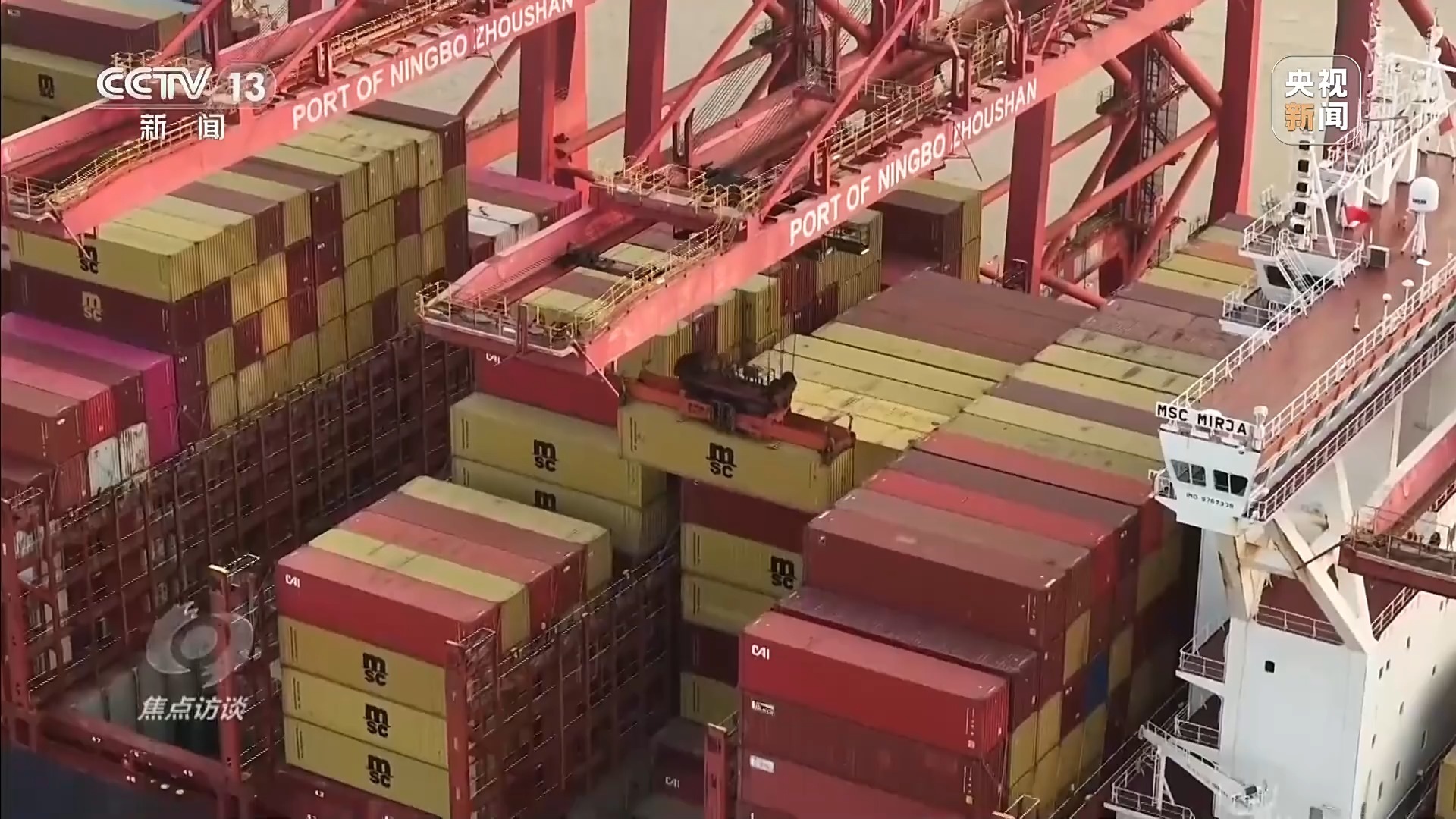
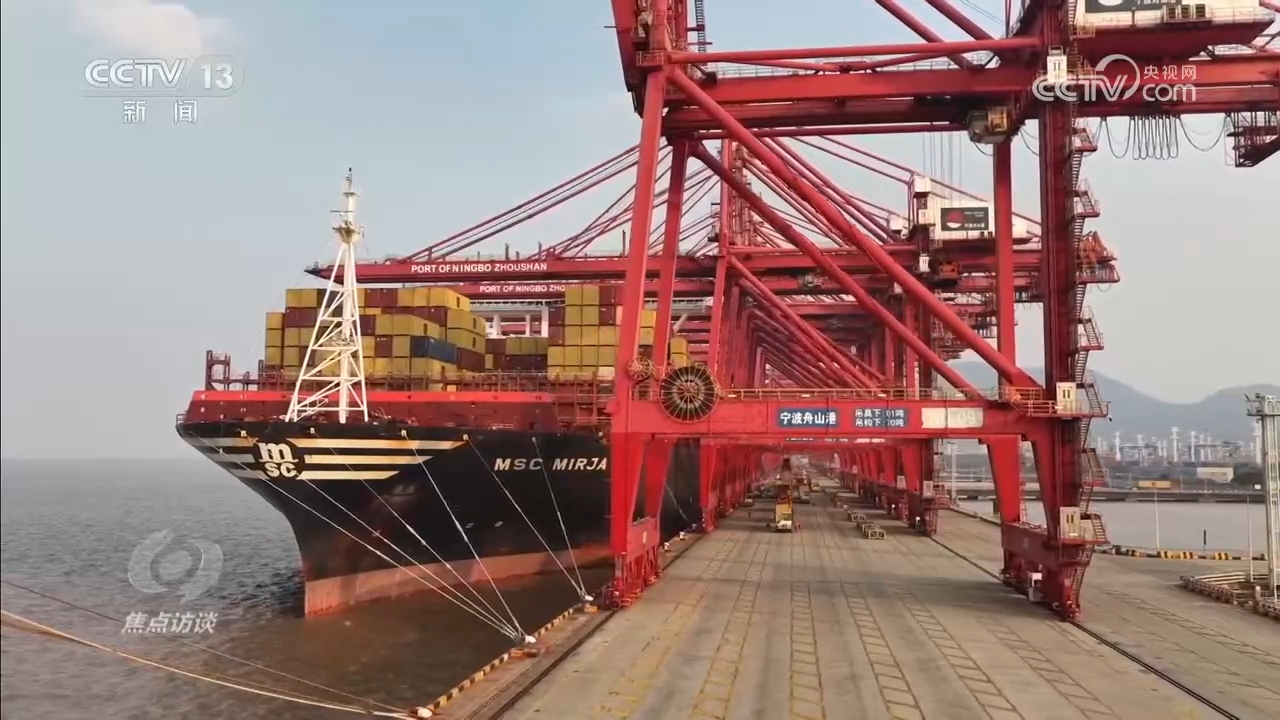
焦点访谈|“软硬件”升级 港口码头里藏着中国外贸迈上新台阶的密码
Yang Shi Xin Wen Ke Hu Duan· 2026-01-25 07:48
Core Insights - In 2025, China's total import and export value exceeded 45 trillion yuan, marking a historical high and maintaining its position as the world's largest goods trading nation. The growth rate was 3.8%, continuing a nine-year streak of growth despite a complex international environment [1][9][11]. Trade Performance - The total import and export value reached 45,468.7 billion yuan, with exports at 26,989.2 billion yuan (up 6.1%) and imports at 18,479.5 billion yuan (up 0.5%) [11]. - China engaged in trade with 249 countries and regions, with 14 exceeding 1 trillion yuan, 62 over 100 billion yuan, and 137 over 10 billion yuan, indicating an expanding trade network [8][13]. Port Development - Ningbo-Zhoushan Port has expanded its global shipping network, connecting over 700 ports in more than 200 countries and regions. The number of shipping routes increased from 289 in 2021 to 309 by the end of 2025 [5][7]. - The port achieved a cargo throughput of over 1.4 billion tons in 2025, maintaining its status as the world's busiest port for 17 consecutive years [25]. Infrastructure Enhancements - The expansion of the Tiaozhoumen waterway was included in the "14th Five-Year Plan," allowing for the passage of larger vessels, thus improving port efficiency [23]. - The establishment of a one-stop service station at the Nansha Automobile Terminal has significantly reduced the time required for customs and export procedures, enhancing operational efficiency [29][34]. Policy and Economic Context - The growth in foreign trade is closely linked to broader economic strategies and timely government measures aimed at stabilizing trade amidst external pressures [17][19]. - The continuous improvement of both "hard" (infrastructure) and "soft" (service efficiency) environments has been crucial for enhancing China's export capabilities and ensuring the stability of global supply chains [38].

出席省十四届人大四次会议的代表报到
He Nan Ri Bao· 2026-01-24 23:01
Group 1 - The representatives attending the provincial congress are focused on providing practical suggestions for high-quality development and efficient governance in the province [1] - There is a strong emphasis on integrating into the national unified market and enhancing both internal and external openness, supported by legal frameworks to optimize the business environment [1] - The proposal for smart agriculture as a core engine for agricultural modernization highlights the need for precise policies and the involvement of farmers in planning, ensuring sustainable project development [1] Group 2 - The focus for the year is on transforming "people's aspirations" into tangible "happiness" for the public, with representatives advocating for a dual-carbon strategy to promote comprehensive green transformation [2] - Continuous improvement of air quality through low-emission transformations in key industries and comprehensive management of volatile organic compounds is a priority [2] - Representatives aim to act as a voice for the public and ensure the successful completion of the congress's agenda, contributing to the modernization of the region [2]
焦点访谈|迈上新台阶 “十四五”外贸圆满收官
Yang Shi Wang· 2026-01-24 13:31
Core Insights - In 2025, China's total import and export value exceeded 45 trillion yuan, marking a historical high and maintaining its position as the world's largest goods trading nation [1][7] - Despite a complex international environment, China's foreign trade achieved a growth rate of 3.8%, marking the ninth consecutive year of growth [1][7] Trade Performance - The total import and export value reached 45,468.7 billion yuan, with exports at 26,989.2 billion yuan (up 6.1%) and imports at 18,479.5 billion yuan (up 0.5%) [7] - The number of countries and regions trading with China reached 249, with significant increases in trade volume with 14 countries exceeding 1 trillion yuan, 62 countries exceeding 100 billion yuan, and 137 countries exceeding 10 billion yuan [5][7] Infrastructure Development - Ningbo-Zhoushan Port has expanded its shipping routes from 289 to 309 between 2021 and 2025, enhancing its capacity to support foreign trade [5] - The port completed a cargo throughput of over 1.4 billion tons in 2025, maintaining its position as the world's busiest port for 17 consecutive years [15][17] Policy and Economic Support - The growth in foreign trade is closely linked to the broader economic context, with timely government measures to stabilize trade playing a crucial role [11] - The focus on high-quality development and the establishment of a unified national market have been fundamental strategies supporting foreign trade [11] Efficiency Improvements - The introduction of a "one-stop" service station at the Nansha Automobile Terminal has significantly reduced the time required for customs and export procedures [19][21] - Innovations in customs and border inspection processes have streamlined operations, allowing for direct transport from warehouses to ships, enhancing overall efficiency [23] Conclusion - The combination of upgraded infrastructure and improved service efficiency has positioned China's foreign trade for continued growth, despite external challenges [25] - The resilience and vitality of China's trade sector are expected to contribute positively to global economic stability and create new opportunities [25]
严查地方违规补贴、整顿政府采购秩序,多部委发布会为2026年“反内卷”划重点
Xin Lang Cai Jing· 2026-01-24 04:11
Core Viewpoint - The Chinese government is enhancing its procurement policies to ensure equal treatment of domestic and foreign products, aiming to eliminate discrimination and promote a unified national market by 2026 [2][3]. Group 1: Government Procurement Policy - Starting January 1, 2026, the government procurement policy will officially implement equal treatment for all types of suppliers, prohibiting discrimination based on ownership, organization form, equity structure, investor nationality, or other unreasonable conditions [3]. - The Ministry of Finance has encouraged foreign entities to report any violations of these procurement regulations, emphasizing transparency and fairness in the procurement process [2]. Group 2: Economic Development and Market Competition - The Chinese government is focusing on building a unified national market and addressing "involution" in competition as key tasks for high-quality economic development [3][4]. - Recent data indicates a positive trend in economic indicators, with the core Consumer Price Index (CPI) rising by 1.2% year-on-year in December 2025, and manufacturing profits increasing by 5.0% from the previous year [4][5]. - The government acknowledges existing issues of weak demand and insufficient supply, emphasizing the need to expand domestic demand and optimize supply to achieve a dynamic balance in the economy [5]. Group 3: Regulatory Measures and Market Order - The government plans to implement targeted measures to enhance the effectiveness of the unified market, including refining market operation rules and addressing barriers in procurement and investment [7][8]. - A comprehensive approach will be taken to regulate local government economic promotion behaviors, particularly concerning illegal subsidies and incentives in attracting investments [8]. - The establishment of a clear framework for encouraging and prohibiting local government actions in investment will be prioritized to ensure compliance and fair competition [8].

GDP年报显经济韧性,预制菜将有国家标准丨一周热点回顾
Di Yi Cai Jing Zi Xun· 2026-01-24 03:00
Economic Growth - In 2025, China's GDP reached 1401879 billion yuan, growing by 5% year-on-year, maintaining the same growth rate as the previous year [1] - The GDP growth in the fourth quarter was 4.5%, a slowdown of 0.3 percentage points from the third quarter, but showed a quarter-on-quarter increase of 1.2% [1] - The urban unemployment rate averaged 5.2%, indicating overall employment stability, while foreign exchange reserves exceeded 3.3 trillion USD [1] Income Growth - In 2025, the per capita disposable income of residents reached 43377 yuan, with a nominal growth of 5% and an actual growth of 5% after adjusting for price factors [2] - Urban residents' per capita disposable income was 56502 yuan, growing by 4.3% nominally and 4.2% in real terms, while rural residents saw a 5.8% nominal increase and a 6% real increase [2] - Seven provinces had per capita disposable incomes exceeding 50,000 yuan, with Shanghai leading at 91987 yuan [2] Domestic Demand Strategy - The National Development and Reform Commission (NDRC) announced plans to develop a domestic demand expansion strategy for 2026-2030, focusing on consumption-driven economic growth [3] - The NDRC is also working on plans to enhance residents' income and optimize consumption supply [3] - The Ministry of Finance introduced six policies aimed at stimulating private investment and promoting consumer spending [3] Market Regulation - Multiple ministries have recently addressed "anti-involution" measures, focusing on regulating capacity in key industries and standardizing fiscal subsidies [4][5] - The NDRC emphasized the need to enhance market vitality and transition from price competition to value competition [5] - The Ministry of Finance is committed to correcting any irregular subsidy behaviors by local governments [5] Pre-prepared Food Standards - The State Council's Food Safety Office is drafting national standards for pre-prepared foods, aiming to protect consumer rights and promote high-quality industry development [7] - The upcoming standards will provide a unified basis for production, circulation, and regulation, helping the industry move towards compliance [7] TikTok's US Operations - TikTok announced the establishment of a joint venture for data security in the US, ensuring data protection and algorithm security for over 200 million American users [11] - The joint venture will be managed by a seven-member board, with ByteDance retaining a 19.9% stake as the largest single shareholder [11]
深化要素市场化配置改革 天津交易集团成立
Zhong Guo Xin Wen Wang· 2026-01-23 06:10
Core Viewpoint - The establishment of Tianjin Trading Group marks a new phase in the market-oriented allocation reform of factors in Tianjin, aiming to optimize the layout of state-owned economy and create a new engine for regional development [1][2]. Group 1: Company Formation and Background - Tianjin Trading Group Co., Ltd. was officially established on January 22, 2023, evolving from Tianjin Property Rights Exchange Co., Ltd., which underwent a "business transformation" reform in 2020 [1]. - The group has developed ten specialized platforms focusing on financial asset trading, small asset disposal, intellectual property and technology achievement transformation, and state-owned enterprise procurement [1]. Group 2: Strategic Partnerships and Agreements - On its founding day, Tianjin Trading Group signed cooperation agreements with Beijing Property Exchange and Hebei Property Market Co., Ltd. to build a property market in the Beijing-Tianjin-Hebei region [2]. - Additional agreements were made with Tianjin Supply and Marketing Cooperative to establish a supply and marketing asset trading platform, and with China Geological Survey's Langfang Natural Resources Comprehensive Survey Center [2]. Group 3: Future Goals and Projections - By 2025, the overall transaction scale is projected to reach 343.2 billion yuan, which is 11 times the scale at the beginning of the 14th Five-Year Plan [1]. - The group aims to create a unified trading system for factor resources, enhancing the efficiency of resource allocation and promoting fair trading [2].