
内卷式竞争整治

Search documents
基础化工行业深度报告:“十五五”报告解读-向绿向新向智,迈向化工强国
Zhong Guo Yin He Zheng Quan· 2026-03-14 10:24
Investment Rating - The report does not explicitly state an investment rating for the chemical industry, but it provides various investment suggestions based on the analysis of different segments within the industry [6]. Core Insights - The petrochemical industry is a pillar of the national economy, with a significant economic volume, long industrial chain, and wide product variety, impacting supply chain security, green development, and public welfare [8]. - The report identifies four major directions related to the chemical industry based on the "14th Five-Year Plan": security assurance in key areas, comprehensive rectification of "involution" competition, domestic substitution of new materials, and green low-carbon economy [8][9]. Summary by Sections 1. National Economic Pillar Industry - The petrochemical industry is crucial for economic stability, with projected revenues of 15.7 trillion yuan in 2025, a 3% decrease year-on-year, and total profits of 702.09 billion yuan, down 9.6% [8]. 2. Strengthening Strategic Material Supply - The "14th Five-Year Plan" aims for a grain production capacity of 1.45 trillion jin and energy production capacity of 5.8 billion tons of standard coal, emphasizing the importance of fertilizer supply stability and energy resource security [9]. - Key companies to watch include Hualu Hengsheng, Yuntianhua, and China Petroleum [9]. 3. Comprehensive Rectification of "Involution" Competition - The report suggests that the PTA industry is expected to see an upward correction in demand due to improved supply and demand conditions, with a focus on companies like Hengli Petrochemical and Rongsheng Petrochemical [9][10]. - The report highlights the need for industry self-discipline to combat excessive competition and improve profitability [9]. 4. Empowering Emerging Industries - The report discusses the acceleration of domestic substitution in new materials, with a focus on PEEK, electronic-grade PPO, and OLED materials, suggesting companies like Zhongyan Co., Guoen Co., and Aolaide [10][11]. 5. Accelerating Green Low-Carbon Transition - The report emphasizes the importance of achieving carbon peak targets and highlights the competitive advantages of light hydrocarbon chemicals and bio-chemicals in the green economy [10][11]. 6. Investment Recommendations - The report suggests focusing on companies with integrated advantages and strong R&D capabilities in the fertilizer sector, as well as those involved in oil and gas exploration and production [9][10].






黑色:需求端刺激政策有限,供给面临减量提质
Wu Kuang Qi Huo· 2026-03-12 01:53
Group 1: Report Industry Investment Rating - Not provided Group 2: Core Viewpoints of the Report - The impact of the 2026 government work report on the black sector is relatively neutral, in line with market expectations, with neither excessive policy stimulus nor significant under - performance [1] - On the demand side, policies support "two important" and "two new" work, providing structural demand support for the black metal sector, but real - estate - related steel demand release is still restricted [4] - On the supply side, policies promote green - low - carbon transformation and comprehensive rectification, leading to potential reduction and quality improvement of crude steel supply, and putting marginal pressure on upstream raw material demand [7] Group 3: Summary by Related Catalogs Demand - side Analysis - **Macro - policy support**: In 2026, the government continues to implement a more proactive fiscal policy and a moderately loose monetary policy. The deficit rate is about 4%, the deficit scale is 5.89 trillion yuan, an increase of 230 billion yuan from the previous year. 1.3 trillion yuan of ultra - long - term special treasury bonds and 4.4 trillion yuan of local government special bonds are to be issued. The total amount of ultra - long - term special treasury bonds and local government special bonds is the same as the previous year. Policies support "two important" and "two new" work, providing long - term support for steel demand [4] - **Real - estate situation**: The real - estate policy is still focused on stability. There is a low probability of large - scale stimulus, and the release of real - estate - related steel demand is restricted [5] - **Product - specific demand**: For rebar, infrastructure investment may support demand, but real - estate - related construction steel demand will continue to drag down. For hot - rolled coils, there is obvious demand support, but the increment may be limited due to the weakened policy subsidy for consumer goods replacement [6] Supply - side Analysis - **Policy - driven transformation**: The report promotes green - low - carbon transformation in key areas, controls high - energy - consumption and high - emission projects, and sets a target of reducing carbon dioxide emissions per unit of GDP by about 3.8%. It also strengthens anti - monopoly and anti - unfair competition, and rectifies "involution - style" competition [7][10] - **Impact on supply and related industries**: These policies contribute to the reduction and quality improvement of crude steel supply, and may lead to a decline in the demand for iron ore, coke, and coking coal. For manganese - silicon and silicon - iron, although their demand is affected by the expected reduction in crude steel output, there are also structural opportunities, and the supply pattern may be optimized [10]
居民增收计划、养老金上涨、支持AI开源社区……45个关键词读懂2026政府工作报告
经济观察报· 2026-03-05 09:11
Economic Growth - The GDP growth target for 2026 is set at 4.5% to 5%, reflecting a pragmatic policy approach and considering both internal and external pressures on the economy [4][5] - The adjustment in the growth target aims to balance quality and reasonable growth, laying a foundation for high-quality economic development [5] Fiscal Policy - The proposed deficit rate for 2026 is around 4%, with a deficit scale of 5.89 trillion yuan, an increase of 230 billion yuan from the previous year [7] - Public budget expenditure is expected to reach 30 trillion yuan for the first time, with a focus on optimizing expenditure structure to support consumption and improve living standards [9][10] Tax and Financial Reforms - The government plans to advance tax and financial system reforms, including increasing the proportion of state-owned capital returns and enhancing local tax systems [12] - The emphasis on zero-based budgeting aims to optimize fund allocation and improve the efficiency of fiscal spending [12] Employment and Income - The urban survey unemployment rate target is set at around 5.5%, reflecting the need for policies to stabilize employment amid structural pressures [18] - The government aims to synchronize resident income growth with economic growth, emphasizing measures to increase income for low-income groups and improve social security systems [20][22] Environmental Goals - The target for reducing carbon dioxide emissions per unit of GDP is set at around 3.8%, aligning with the goal of achieving carbon peak by 2030 [26][27] - The shift from energy consumption control to carbon emission control reflects the need for a more precise approach to managing carbon emissions [27][28] State-Owned Enterprise Reforms - The government plans to implement a systematic approach to deepen state-owned enterprise reforms, focusing on optimizing the layout of state-owned capital and structural adjustments [29][30] - The emphasis on improving the modern enterprise system aims to enhance corporate governance and promote market-oriented reforms [31] Open Economy - The government intends to further expand high-level opening-up, focusing on service sector liberalization and enhancing international cooperation [35][36] - The approach aims to balance reform depth with security, promoting a competitive and fair business environment [36] Agricultural and Rural Development - The government is set to promote agricultural insurance development and enhance comprehensive disaster prevention capabilities in agriculture [59] - Policies will focus on improving rural elderly care services and implementing long-term care insurance systems to address the challenges of an aging population [45][47] Capital Market Stability - Measures to stabilize the stock market include comprehensive policies to enhance market confidence and promote active trading [54] - The government aims to improve the mechanism for long-term capital entering the market, ensuring a stable and healthy capital market [63] Innovation and Technology - The government plans to cultivate emerging and future industries, encouraging state-owned enterprises to lead in opening application scenarios for new technologies [69][70] - Support for artificial intelligence and open-source community development is expected to drive innovation and commercialization in various sectors [75]

2026年风光储网行业投资策略:全球储能电网设备需求持续共振
Sou Hu Cai Jing· 2026-02-26 23:13
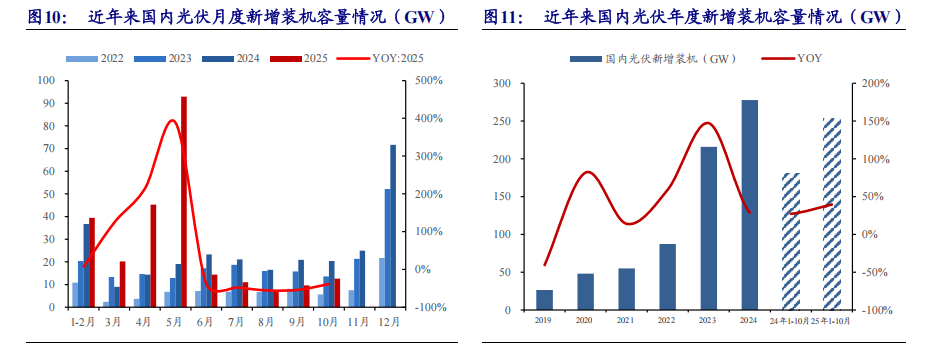
Group 1: Solar Industry Overview - The core viewpoint is that the solar industry is experiencing a gradual improvement in supply-demand dynamics, with ongoing measures to address "involution" competition [1] - By 2025, the solar industry is expected to reach a bottoming out phase, with significant changes in the supply side and a notable recovery in upstream raw material prices [1][13] - The domestic solar demand is projected to see explosive growth in the first half of 2025, primarily driven by the implementation of the 136 document [2] Group 2: Policy and Market Dynamics - The National Development and Reform Commission and the National Energy Administration issued a notification to promote market-based pricing for renewable energy, which will significantly impact the solar market [2] - The notification distinguishes between existing and new projects, with different pricing mechanisms to be applied based on their operational dates [2] - The entry of renewable energy into market trading is expected to lay a solid foundation for the long-term development of the industry [3] Group 3: International Market Trends - In the European market, the solar installation capacity is expected to remain high, with an estimated 65.1GW of new installations in 2025, showing a year-on-year stability [7] - The U.S. solar market is projected to face challenges, with expected new installations of 49GW in 2025, reflecting a year-on-year decline of 2% [11] - Emerging markets are showing robust growth, with a stable export scale of 208GW in the first ten months of 2025, despite a 10% decline in export value [10] Group 4: Supply-Side Improvements - The domestic measures to rectify "involution" competition have been strengthened since 2025, with relevant policies being implemented [13] - The supply side is showing positive signals, with a focus on limiting existing production capacity to stabilize the market [1][13] Group 5: Wind Energy Overview - The wind energy sector is experiencing significant growth, with a projected installation capacity increase of around 40% in 2025 [16] - The domestic wind turbine market is expected to maintain high growth, with a notable increase in the proportion of larger turbines [18] - The export of wind turbines has also seen substantial growth, reaching an export value of approximately 1.6 billion USD in 2025 [17] Group 6: Grid Investment and Development - Domestic grid investment is expected to continue stable growth, with a completion amount of 482.4 billion CNY in the first ten months of 2025, reflecting a 7% year-on-year increase [29] - The focus on high-quality development of distribution networks is anticipated to drive an increase in investment in this area [29]
他们,将影响你的生意和生活|国家发改委主任郑栅洁
Jing Ji Guan Cha Bao· 2026-02-25 05:06
Core Insights - The article emphasizes the importance of implementing the "14th Five-Year Plan" and enhancing economic monitoring and policy management to achieve a stable economic recovery and a good start for the "15th Five-Year Plan" [1][4]. Group 1: Investment and Economic Policy - The national development and reform meeting highlights the need to leverage various government investment funds, including new local government special bonds, to increase central budget investments and utilize new policy financial tools [2]. - There is a focus on promoting investment recovery through multiple measures, including optimizing consumption policies and removing unreasonable restrictions in the consumption sector [5][6]. - The article discusses the importance of comprehensive reforms and deepening high-level opening-up to stimulate economic growth [8][9]. Group 2: Industry and Technological Development - The article stresses the need for capacity governance in key industries and the cultivation of emerging industries, particularly in the context of advancing the "Artificial Intelligence+" initiative and enhancing the digital economy [2][10]. - It mentions the importance of addressing structural contradictions in key industries and implementing policies to support the private economy [13][14]. Group 3: Social and Public Resource Management - The article calls for a coordinated approach to high-quality population development and the optimization of public resource allocation in response to demographic changes [3][12]. - It emphasizes the need for policies that ensure employment stability and improve living standards, which are crucial for maintaining social harmony and stability [11][14].
光伏行业周报(20260119-20260123):本周光伏设备(申万)指数表现
Guoxin Securities Co., Ltd· 2026-01-29 05:45
Investment Rating - The report maintains a "Positive" outlook for the photovoltaic industry, expecting the industry index to outperform the market index by over 5% in the next six months [39]. Core Insights - The photovoltaic equipment industry index increased by 6.49% during the week of January 19-23, 2026, outperforming the broader market index by 4.19 percentage points [2][13][15]. - Key companies in the photovoltaic equipment sector that showed significant gains include Aotwei, Maiwei, Dike, Dier Laser, and Goodway, while companies like Weidao Nano, Polymer Materials, Sunshine Power, Aerospace Machinery, and Jing Shan Light Machine experienced declines [19][20]. - The report suggests focusing on investment opportunities in leading companies in polysilicon, components, and those with technological advantages, driven by supply-side reforms and demand expectations [4]. Market Performance - The Shanghai Composite Index decreased by 0.62% during the same week, while the electric power equipment index rose by 3.57%, ranking 11th among 31 industry indices [2][13]. - The photovoltaic equipment sector's performance was notably strong, with a weekly increase of 6.49%, indicating robust market dynamics [15]. Price Trends in the Industry Chain - As of January 21, 2026, the prices for key materials in the photovoltaic supply chain were as follows: silicon material at 59 CNY/kg (unchanged), silicon wafers at 1.50 CNY/piece (unchanged), battery cells at 0.42 CNY/W (unchanged), and modules at 0.81 CNY/W (up by 0.01 CNY/W) [3][22]. - The price of silver paste increased by 4.8% to 23,438 CNY/kg, while photovoltaic glass prices decreased by 0.5 CNY/m² for both 3.2mm and 2mm thicknesses [3][22]. Industry News - By the end of 2025, Shaanxi Province aims to achieve a photovoltaic installed capacity of 4,193 MW, contributing to a significant increase in renewable energy's share of total electricity consumption [29]. - The Ministry of Industry and Information Technology reported improvements in the competitive landscape of key industries, including photovoltaics, as part of ongoing efforts to stabilize and enhance industrial growth [30][31]. - The Ministry of Finance announced the cancellation of export tax rebates for photovoltaic products starting April 1, 2026, aimed at promoting resource efficiency and reducing environmental impact [35].
【财闻联播】易方达黄金主题LOF:暂停申购!*ST波导:公司股票可能被终止上市
券商中国· 2026-01-27 11:15
Macro Dynamics - The People's Bank of China reported that by the end of Q4 2025, the balance of real estate development loans will decrease by 3% year-on-year, amounting to 13.16 trillion yuan, with an annual reduction of 357.5 billion yuan [2] - The total balance of RMB real estate loans will be 51.95 trillion yuan, down 1.6% year-on-year, with an annual decrease of 963.6 billion yuan [2] Market Regulation - The State Administration for Market Regulation announced ten major cases of "involution" competition for 2025, emphasizing a strict enforcement approach to combat infringement, quality violations, and monopolistic agreements [3] Real Estate Market - In major cities like Shanghai, the number of second-hand housing listings is declining as transaction volumes recover, with listings returning to levels seen in February of the previous year [5] Financial Institutions - China Merchants Securities reported a net profit of 12.3 billion yuan for 2025, an increase of 18.43% year-on-year, with total revenue of 24.9 billion yuan, up 19.19% [8] - Dongfang Securities expects a net profit of 5.62 billion yuan for 2025, a year-on-year increase of 67.8%, with projected revenue of 15.34 billion yuan [9] Market Data - The ChiNext Index rose by 0.71%, with the semiconductor sector showing strong performance, while the overall market saw over 1,900 stocks increase in value [11] - The total margin financing balance across both exchanges increased by 19.55 billion yuan, reaching 26.99 trillion yuan [12] Company Dynamics - Mu Xi Co. launched the X series scientific intelligent GPU, aimed at enhancing the AI for Science ecosystem [14] - *ST Boda announced a projected net profit of 6 to 8 million yuan for 2025, with a significant expected loss in net profit after non-recurring items [15] - Zhongjin Gold expects a net profit of 4.8 to 5.4 billion yuan for 2025, a year-on-year increase of 41.76% to 59.48%, driven by improved profitability in gold mining [16] - Ideal Auto plans to close a small number of inefficient retail stores as part of normal operational adjustments [17] - Guandun Quantum anticipates a net profit of around 5 million yuan for 2025, marking a turnaround from losses [18] - Zhenlei Technology expects a net profit of 123 to 145 million yuan for 2025, a significant increase of 529.64% to 642.26% year-on-year [19]






多部门部署规范招商引资,“反内卷”制度性政策将落地
第一财经· 2026-01-23 00:34
Core Viewpoint - The article discusses the recent policy initiatives aimed at building a unified national market in China and addressing "involution" competition through institutional reforms rather than mere administrative measures [2][3]. Group 1: Policy Initiatives - The National Development and Reform Commission (NDRC) and other ministries are focusing on enhancing competition mechanisms and promoting high-quality economic development by addressing "involution" in various sectors [2]. - New policy documents, including regulations for the unified national market and lists of encouraged and prohibited investment behaviors, are expected to be released, providing legal support for the "anti-involution" efforts [2][3]. - The NDRC aims to shift market regulation from price competition to value competition, addressing the oversupply issues in certain sectors [2]. Group 2: Government Regulation - The government is working to standardize local government economic promotion behaviors to eliminate local protectionism and market segmentation [3][4]. - The Ministry of Finance is taking steps to rectify any illegal subsidy practices by local governments, with a focus on ensuring compliance by 2025 [3][4]. - A unified list of behaviors for local investment promotion will be established to clarify what is permissible and what is not, aiming to reduce excessive competition among local governments [4][5]. Group 3: Industry-Specific Measures - The Ministry of Industry and Information Technology (MIIT) is monitoring key industries for capacity management and addressing irrational competition, particularly in sectors like new energy vehicles and photovoltaics [8][9]. - The focus is on establishing a regulatory framework that encourages industry self-discipline and enhances market order [8][9]. Group 4: Economic Environment - The article highlights the importance of creating a conducive business environment by reducing barriers and improving the regulatory framework for investment [5][10]. - Local governments are encouraged to align their investment strategies with the national goal of a unified market, promoting a more integrated economic landscape [5][10]. Group 5: Future Directions - The central government emphasizes the need for a comprehensive approach to advance the unified national market, focusing on both effective market mechanisms and proactive government involvement [10][11]. - The construction of a robust legal framework and regulatory systems is deemed essential for the successful implementation of these policies [10][11].
综合整治“内卷式”竞争典型案例发布
Ren Min Ri Bao· 2026-01-21 23:25
Core Viewpoint - The article discusses the regulatory measures taken by the market supervision administration to address "involution" risks in various industries, particularly in the photovoltaic and new energy vehicle sectors, emphasizing the importance of preemptive actions, flexible regulatory approaches, and collaborative governance [1]. Group 1: Preemptive Measures - The photovoltaic industry is undergoing "pre-warning + compliance guidance" to help companies correct issues before "involution" risks materialize [1] - In the new energy vehicle sector, the first implementation of complete vehicle quality inspections aims to prevent potential low-price, low-quality risks [1] - Strengthening certification consistency checks is intended to prevent companies from lowering quality after obtaining certifications, thereby eliminating "price-quality" competition from the production source [1] Group 2: Flexible Regulatory Approaches - The administration is diversifying regulatory methods, using softer tools like consultations to guide companies towards self-discipline in cases involving platforms like Huolala and food delivery services [1] - There is an emphasis on enhancing guidance in advertising compliance, which has significantly reduced the rate of violations [1] - For issues related to false advertising in private domain live streaming, the administration is implementing thorough crackdowns and mandatory recalls to reinforce safety and integrity standards [1] Group 3: Collaborative Governance - The administration is actively building a multi-faceted regulatory framework that encourages participation from platforms, enterprises, and consumers to create a collective governance effort [1] - This collaborative approach aims to enhance overall effectiveness in regulatory work [1]
整治“内卷式”竞争!十大典型案例发布
Xin Lang Cai Jing· 2026-01-21 13:24
Core Viewpoint - The article discusses the Chinese market regulatory authority's efforts to address "involution" competition through various measures, highlighting ten typical cases and emphasizing the importance of preemptive actions, a balanced regulatory approach, and collaborative governance to foster a fair and orderly market environment. Group 1: Regulatory Actions - The market regulatory authority conducted a public interview with Huolala based on the Anti-Monopoly Law, implementing a tiered regulatory approach to enhance deterrence and social supervision, thereby promoting win-win development for platform companies and truck drivers [1] - The regulatory body issued a warning and initiated corrective actions in the photovoltaic industry to prevent internal coordination behaviors from leading to overseas antitrust risks, shifting the industry's competitive focus from "price internal friction" to "innovation-driven" [1] - The authority held two meetings with food delivery platforms to address the negative effects of low-price disorderly competition, urging platforms to operate legally and transparently while ensuring fair competition [3] Group 2: Consumer Protection - The market regulatory bureau in Kaifeng investigated Baikang Health Consulting for false advertising through private live streaming, which misled elderly consumers, resulting in a crackdown that demonstrated a zero-tolerance stance against fraud targeting seniors [2] - Regulatory departments in Guangdong, Hunan, and Beijing conducted defect investigations and recalls for mobile power products, leading to 139.77 million units being recalled to ensure consumer safety [4] Group 3: Quality and Compliance - The market regulatory authority initiated a national quality supervision special inspection for new energy vehicle products, focusing on models with significant price reductions, conducting tests on safety performance and crash tests to ensure compliance with quality standards [5] - A special action was organized to enhance advertising compliance awareness among businesses, aiming to reduce illegal advertising rates and promote quality branding [6] - Efforts were made to strengthen product consistency management to prevent low-quality products from entering the market by ensuring that certified products meet established standards [7] Group 4: International Standards and Governance - The authority led the development and publication of international standards in organizational governance and new energy vehicles, promoting the adoption of over 14 new energy vehicle standards by multiple countries to shift from "involution" competition to quality competition [8] - A comprehensive review of important policy measures was conducted, with 58,000 cases reviewed to prevent policies that could disrupt fair competition and market unity [10] Group 5: Future Directions - The market regulatory authority plans to enhance overall governance effectiveness through a multi-faceted approach, aiming to create a fair and orderly market ecosystem that supports high-quality development and the construction of a unified national market [11]