
员工持股计划

Search documents
九江德福科技股份有限公司 关于回购股份事项前十名股东及前十名无限售条件股东持股情况的公告
Zhong Guo Zheng Quan Bao - Zhong Zheng Wang· 2026-01-22 23:47
Core Viewpoint - The company, Jiujiang Defu Technology Co., Ltd., has announced a share repurchase plan aimed at implementing an employee stock ownership plan or equity incentive, with a total funding of between RMB 75 million and RMB 150 million, and a maximum repurchase price of RMB 53.46 per share [4][6][11]. Group 1: Share Repurchase Plan - The company plans to use its own funds and self-raised funds, including special loans for stock repurchase, to buy back shares through centralized bidding [4][12]. - The repurchase will be conducted within 12 months from the board's approval date [13]. - The estimated number of shares to be repurchased is between approximately 1.4029 million and 2.8058 million shares, accounting for about 0.22% to 0.45% of the company's total share capital [11][14]. Group 2: Financial Details - The total amount for the repurchase is set to be no less than RMB 75 million and no more than RMB 150 million [4][11]. - The maximum repurchase price is capped at RMB 53.46 per share, which does not exceed 150% of the average trading price over the previous 30 trading days [9]. - As of September 30, 2025, the company's total assets were RMB 188.96 billion, with a net asset of RMB 40.63 billion and a debt ratio of 72.42% [18]. Group 3: Compliance and Conditions - The repurchase plan complies with relevant regulations, including having been listed for over six months and having no major legal violations in the past year [7][8]. - The company has established a dedicated securities account for the repurchase, which will only be used for this purpose [22]. - The board has authorized management to handle all matters related to the repurchase, including adjustments to the plan if necessary [18][19].
浙江久立特材科技股份有限公司 2025年第一期员工持股计划第一次持有人会议决议公告
Zhong Guo Zheng Quan Bao - Zhong Zheng Wang· 2026-01-22 23:41
Group 1 - The first meeting of the 2025 Employee Stock Ownership Plan (ESOP) was held on January 22, 2026, with 690 participants representing 138,502,155 shares, accounting for 56.32% of the total ESOP shares [2] - The meeting approved the establishment of a management committee for the ESOP to enhance daily management efficiency and protect the rights of shareholders, with 100% approval from the voting shares [4] - The meeting elected three members to the management committee, including the company's chairman and general manager, with 100% approval from the voting shares [5] Group 2 - The management committee was authorized to handle various matters related to the ESOP, including convening meetings, daily management, and representing shareholders' rights, with 100% approval from the voting shares [6] - The authorization is effective from the date of the first meeting until the termination of the ESOP [6] - The meeting's resolutions will be documented for future reference [6]

恒为科技(上海)股份有限公司关于2021年员工持股计划处置完毕暨终止的公告
Shang Hai Zheng Quan Bao· 2026-01-22 19:43
证券代码:603496 证券简称:恒为科技 公告编号:2026-002 恒为科技(上海)股份有限公司 关于2021年员工持股计划处置完毕暨终止的公告 本公司董事会及全体董事保证本公告内容不存在任何虚假记载、误导性陈述或者重大遗漏,并对其内容 的真实性、准确性和完整性承担法律责任。 恒为科技(上海)股份有限公司(以下简称"恒为科技"或"公司")于2021年11月18日召开第三届董事会 第九次会议、第三届监事会第九次会议,2021年12月6日召开2021年第三次临时股东大会审议通过了 《关于〈恒为科技(上海)股份有限公司2021年员工持股计划(草案)〉及摘要的议案》。具体内容详 见公司于2021年11月19日、2021年12月7日在上海证券交易所网站(http://www.sse.com.cn)披露的相关 公告(公告编号:2021-082、2021-083、2021-086)。 鉴于公司2021年员工持股计划(以下简称"员工持股计划")存续期于12月28日届满,根据《上海证券交 易所上市公司自律监管指引第1号一一规范运作》的相关规定,现将相关情况公告如下: 一、2021年员工持股计划的基本情况 2021年11月1 ...

泰晶科技股份有限公司关于2024年员工持股计划第一个锁定期解锁条件成就的公告
Shang Hai Zheng Quan Bao· 2026-01-22 19:04
Core Viewpoint - The announcement details the completion of the first lock-up period for the 2024 employee stock ownership plan of Taijing Technology Co., Ltd, with 211 eligible holders unlocking a total of 2,247,240 shares, representing 0.58% of the company's total share capital [5][18]. Summary by Sections Employee Stock Ownership Plan Overview - On September 12, 2024, the company held a staff representative meeting to approve the draft of the 2024 employee stock ownership plan [2]. - On September 13, 2024, the company’s Compensation and Assessment Committee approved the plan and its management measures, with related committee members abstaining from voting [2][3]. - On September 30, 2024, the company held a temporary shareholders' meeting to approve the implementation of the employee stock ownership plan, with related shareholders abstaining from voting [3]. Lock-up Period and Unlocking Conditions - The first lock-up period for the employee stock ownership plan began on November 8, 2024, when 7.65 million shares were transferred to the plan's account, with the lock-up period lasting up to 36 months [5][6]. - The unlocking conditions were based on individual performance assessments, with 210 holders scoring above 80 points unlocking 2,241,000 shares, while one holder with a score between 70-80 unlocked 6,240 shares [6][14]. Subsequent Arrangements Post Unlocking - After the lock-up period, the management committee will decide on the timing for liquidating the assets of the employee stock ownership plan and distributing the proceeds to holders [8]. - Any unallocated shares and corresponding dividends will be handled by the management committee, with profits reverting to the company [9]. Trading Restrictions and Plan Duration - The employee stock ownership plan will adhere to trading restrictions during specific periods, including before the announcement of annual and semi-annual reports [10]. - The plan has a duration of 60 months, starting from the approval date, and can be extended or terminated under certain conditions [12][13]. Board Committee Opinion - The Compensation and Assessment Committee confirmed that the unlocking conditions for the first lock-up period have been met, with no harm to the interests of the company or its shareholders [14].

恒为科技:2021年员工持股计划处置完毕并终止
Xin Lang Cai Jing· 2026-01-22 09:24
恒为科技公告称,2021年员工持股计划存续期于2026年1月28日届满。该计划于2021年12月28日以非交 易过户形式获276.003万股。标的股票权益分三期解锁,比例分别为30%、40%、30%,存续期48个月。 管理委员会于2026年1月21日将剩余全部股票过户至持有人个人账户,计划实施完毕并终止,后续将进 行财产清算和分配工作,实施期间无内幕交易情形。 ...
苏州华之杰电讯股份有限公司 关于以集中竞价交易方式回购公司股份的回购报告书
Zheng Quan Ri Bao· 2026-01-21 23:11
登录新浪财经APP 搜索【信披】查看更多考评等级 证券代码:603400 证券简称:华之杰 公告编号:2026-008 本公司董事会及全体董事保证本公告内容不存在任何虚假记载、误导性陈述或者重大遗漏,并对其内容 的真实性、准确性和完整性依法承担法律责任。 重要内容提示: ● 回购股份金额:不低于人民币3,000万元(含),不超过人民5,000万元(含) ● 回购股份资金来源:自有资金及自筹资金 ● 回购股份用途:用于员工持股计划或股权激励。若公司未能在股份回购实施结果暨股份变动公告日后 3年内转让完毕已回购股份,未转让的已回购股份将履行相关程序予以注销。 ● 回购股份价格:不超过人民币79.79元/股(含)(不高于公司董事会通过回购股份方案决议前30个交 易日公司股票交易均价的 150%)。 ● 回购股份方式:集中竞价交易方式 ● 回购股份期限:自公司董事会审议通过本次回购股份方案之日起12个月内 ● 相关股东是否存在减持计划:经问询,截至本公告披露日,公司董事、高级管理人员、控股股东、实 际控制人及一致行动人、持股5%以上的股东在未来3个月、未来6个月无减持计划。若上述主体未来有 减持计划,公司将严格按照有 ...
珠海格力电器股份有限公司 关于第三期员工持股计划锁定期届满且继续履行自愿锁定期承诺的公告
Zhong Guo Zheng Quan Bao - Zhong Zheng Wang· 2026-01-20 23:30
本公司及董事会全体成员保证信息披露的内容真实、准确、完整,没有虚假记载、误导性陈述或重大遗 漏。 珠海格力电器股份有限公司(以下简称"公司")于2024年8月2日召开第十二届董事会第十九次会议、第 十二届监事会第十六次会议,审议通过了《关于〈珠海格力电器股份有限公司第三期员工持股计划(草 案)〉的议案》(以下简称《草案》)等相关议案,并于2024年8月19日召开2024年第一次临时股东大 会审议通过了《关于〈珠海格力电器股份有限公司第三期员工持股计划(草案)〉的议案》等相关议 案,同意公司实施第三期员工持股计划(以下简称"本员工持股计划")。具体内容详见公司在巨潮资讯 网披露的相关公告。 根据中国证监会《关于上市公司实施员工持股计划试点的指导意见》《深圳证券交易所上市公司自律监 管指引第1号一一主板上市公司规范运作》及公司《草案》的相关规定,公司本员工持股计划锁定期于 2026年1月20日届满。同时,本员工持股计划持有人承诺在2034年5月1日前,因本员工持股计划股票权 益过户至个人证券账户而直接持有的股票,未经工会事先书面确认,不得自行出售或设定质押,否则工 会有权收回其对应的股份收益(统称"自愿锁定期承诺 ...

三七互娱网络科技集团股份有限公司第七届董事会第五次会议决议公告
Shang Hai Zheng Quan Bao· 2026-01-20 19:04
Core Viewpoint - The company has approved the establishment of a special account for the management of raised funds and authorized the management to handle related matters, as well as approved a foreign exchange hedging business to mitigate risks associated with currency fluctuations [1][4][8]. Group 1: Fund Management - The board of directors has authorized the establishment of a special account for the storage and use of raised funds to improve efficiency [1]. - The management is responsible for the implementation of related matters, including opening the special account and signing the regulatory agreement [1][2]. Group 2: Foreign Exchange Hedging - The company plans to conduct foreign exchange hedging business with a limit of $800 million or equivalent currencies to mitigate risks from currency fluctuations due to the increasing proportion of foreign currency transactions [4][8]. - The hedging business will include various financial instruments such as forward foreign exchange contracts, foreign exchange swaps, and options [9]. - The authorized amount for the hedging business is valid for 12 months from the date of board approval and can be rolled over within that period [10]. Group 3: Risk Management - The company has established a management system for foreign exchange hedging to define operational principles, approval authority, and risk control measures [15]. - The internal audit department will regularly check the execution of hedging contracts to ensure compliance and effectiveness [16].

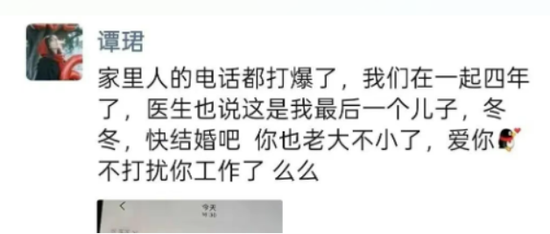
性丑闻!搞大女分析谭郡肚子被炮轰,广发基金300亿杨冬私德崩塌,还或涉利益输送
Xin Lang Cai Jing· 2026-01-20 15:29
Core Viewpoint - The scandal involving Yang Dong, a fund manager at GF Fund managing nearly 30 billion, raises serious concerns about personal ethics and compliance within the fund management industry, particularly in light of investor losses and increased regulatory scrutiny [2][6][23]. Group 1: Scandal Details - Yang Dong has been accused by Tan Jun, a former analyst, of having a personal relationship that resulted in an unexpected pregnancy, which has been publicly disclosed [4][21]. - Tan Jun also alleges that Yang Dong deceived her into participating in a knowledge-sharing platform task, suggesting potential conflicts of interest and violations of fund management regulations [4][30]. - The scandal highlights broader issues of professional ethics and compliance standards for fund managers, especially in a context where investor trust is critical [6][28]. Group 2: Background on Key Individuals - Tan Jun gained notoriety as a prominent analyst after predicting the Shanghai Composite Index would reach 4,000 points, leading to her rapid rise in the industry [6][24]. - Yang Dong, with 19 years of experience, has been recognized for his investment strategies, managing significant assets and achieving notable returns for his funds [7][24]. - The personal and professional implications of Yang Dong's actions could undermine investor confidence in his ability to manage funds effectively [10][28]. Group 3: Compliance and Regulatory Concerns - The allegations against Yang Dong raise questions about compliance with the Code of Conduct for fund managers, particularly regarding conflicts of interest and the use of insider information [30]. - If the claims regarding the knowledge-sharing platform are substantiated, they could indicate serious breaches of regulatory standards, potentially impacting the reputation of GF Fund [30]. - The ongoing scrutiny of fund management practices, especially in light of past issues like "mouse warehouses," suggests a need for stricter adherence to ethical guidelines within the industry [31][34]. Group 4: Employee Stock Ownership Plan - The employee stock ownership plan at GF Fund has resulted in significant financial gains for executives, raising concerns about the alignment of interests between fund managers and investors [31][34]. - The plan has led to a dramatic increase in dividend payouts, with over 6 billion distributed to employees, while many investors have faced losses [31][34]. - This disparity highlights potential ethical issues regarding compensation structures and their impact on long-term company performance and investor trust [34].

英思特(301622) - 2026年1月19日投资者关系活动记录表
2026-01-20 01:08
Group 1: Employee Incentives and Management - The company is actively discussing employee stock ownership and incentive plans to enhance employee motivation and attract talent, aligning with its "people-oriented" management philosophy [3] - The company aims to develop incentive plans that balance strategic goals with employee interests, ensuring mutual growth [3] Group 2: Financial Performance and Profitability - The gross margin for the first three quarters of 2025 is stable at 25%, influenced by raw material prices, market competition, and internal cost control [3] - The company plans to optimize supply chain management and enhance product competitiveness to maintain gross margin levels [3][4] Group 3: Raw Material Procurement and Price Control - The company employs a "cost-plus" pricing model to manage fluctuations in rare earth prices, ensuring stable supply through long-term agreements with various suppliers [4] - A procurement model based on "production-based ordering + demand forecasting" is utilized to maintain necessary safety stock and respond to market changes [4] Group 4: Market Strategy and Product Development - The company focuses on high-end, high-value products in the consumer electronics sector, aiming to deepen collaborations with key customers through technological innovation [4][5] - Plans include expanding into emerging fields and diversifying business structures by increasing R&D investments and forming cross-disciplinary teams [5] Group 5: Investor Relations Management - The company prioritizes investor relations, planning to enhance communication through regular performance briefings, investor meetings, and online platforms [5][6] - Efforts will be made to maintain long-term relationships with investors through feedback mechanisms and surveys to understand their needs [6]