
数字孪生

Search documents
从“建”到“用”:工业互联网标识迈向规模化“贯通”
Ke Ji Ri Bao· 2026-01-31 09:07
Core Viewpoint - The industrial internet, as a key engine for industrial transformation and competitive advantage, is advancing in China with the establishment of a unique identification and resolution system that enables data interoperability and value sharing across various sectors and regions [1][2]. Group 1: Development of the Identification and Resolution System - China's identification and resolution system for the industrial internet has transitioned from a "construction period" to an "application period" and "integration period," marking a significant advancement in its capabilities [1]. - The system has achieved controllable architecture, facilities, and technology, becoming an essential infrastructure for interconnectivity among various entities since its initiation in 2018 [1][2]. - The release of the "2024-2026 Action Plan" by the Ministry of Industry and Information Technology and other departments signifies the start of a new phase focused on large-scale applications [1]. Group 2: Trends and Applications - The recently published "Case Collection" includes 24 benchmark cases across 19 key industries and 5 major fields, showcasing the current state of industry development [2]. - Three major trends in the industry are identified: moving from internal management to full-process collaboration, from single-function applications to integrated innovation, and from key industries to broader fields [2]. - The application of identification technology has expanded from internal production tracking to encompassing the entire value chain, including R&D, production, supply chain, marketing, service, and recycling [2]. Group 3: Integration with New Technologies - Identification resolution is evolving beyond a mere tracking tool, integrating with technologies like 5G, artificial intelligence, and digital twins to create innovative applications [3]. - For instance, in the photovoltaic industry, a distributed certification platform combining identification and blockchain technology has been developed to provide each device with an immutable "digital identity," supporting green electricity trading and carbon footprint tracking [3]. Group 4: Value Creation and Impact - The application of identification resolution technology has led to significant improvements in operational efficiency and competitiveness for various companies [3]. - For example, a company increased its custom product order capacity from 5% to 30%, reduced changeover costs by 70%, and shortened order delivery cycles by 40% [3]. - The integration of the identification resolution system has improved on-time delivery rates to 98.5%, enhanced overall production efficiency by approximately 10%, and reduced inventory turnover from 226 days to 171 days [3].
奥比中光科技集团股份有限公司 2025年年度业绩预告
Xin Lang Cai Jing· 2026-01-30 23:25
Performance Forecast - The company expects to achieve an operating revenue of approximately 940 million yuan for the year 2025, representing an increase of about 375.54 million yuan or a year-on-year growth of approximately 66.53% [1] - The net profit attributable to the parent company is projected to be around 123 million yuan, an increase of approximately 185.91 million yuan, marking a turnaround from a loss to profit [1] - The net profit attributable to the parent company after deducting non-recurring gains and losses is estimated to be about 75 million yuan, reflecting an increase of approximately 187.23 million yuan, also indicating a turnaround from a loss to profit [1] Previous Year Performance - In 2024, the company's operating revenue was 564.46 million yuan [1] - The net profit attributable to the parent company for 2024 was -62.91 million yuan [1] - The net profit attributable to the parent company after deducting non-recurring gains and losses for 2024 was -112.23 million yuan [1] Reasons for Performance Change - The company has focused on niche industry demands and advanced product development, successfully integrating with major international platforms such as NVIDIA Jetson Thor and Intel [2] - The rapid development of AI edge applications, including 3D scanning and robotics, has contributed to the expected revenue increase for 2025 [2] - The company has built a standardized, cost-effective product matrix and is exploring innovative applications of 3D visual perception technology in emerging fields, driving long-term sustainable development [2] Future Outlook - The company plans to align with global industrial chain upgrades, focusing on breakthroughs in 3D visual perception technology and providing innovative solutions for industry pain points [3] - The strategy includes creating a high-efficiency innovation cycle that integrates demand insights, technical breakthroughs, and scenario validation [3] - The company aims to strengthen its competitive advantages in core business areas and build global market competitiveness through innovation and ecosystem collaboration [3]

奥比中光科技集团股份有限公司2025年年度业绩预告
Shang Hai Zheng Quan Bao· 2026-01-30 20:39
Core Viewpoint - The company, Aobi Zhongguang Technology Group Co., Ltd., forecasts significant growth in its 2025 annual performance, projecting a revenue increase of approximately 66.53% compared to the previous year, alongside a turnaround to profitability [1][3]. Performance Forecast - The company expects to achieve an operating revenue of around 940 million yuan in 2025, an increase of approximately 375.54 million yuan from the previous year [1]. - The projected net profit attributable to the parent company for 2025 is approximately 123 million yuan, representing an increase of about 185.91 million yuan, marking a return to profitability [1]. - The net profit attributable to the parent company after deducting non-recurring gains and losses is expected to be around 75 million yuan, an increase of approximately 187.23 million yuan, also indicating a return to profitability [1]. Previous Year Performance - In 2024, the company reported an operating revenue of 564.46 million yuan [2]. - The net profit attributable to the parent company for 2024 was -62.91 million yuan [2]. - The net profit attributable to the parent company after deducting non-recurring gains and losses for 2024 was -112.23 million yuan [2]. Reasons for Performance Change - The company has focused on niche industry demands and product development in potential areas, successfully integrating with major international platforms like NVIDIA Jetson Thor and Intel [3]. - The rapid development of AI edge applications, including 3D scanning and robotics, is expected to drive the projected revenue increase to approximately 940 million yuan in 2025, with a net profit increase to about 123 million yuan [3]. - The company has established a standardized, cost-effective product matrix and is actively exploring innovative applications of 3D visual perception technology in emerging fields, contributing to long-term sustainable growth [3]. Future Outlook - The company plans to align with global industrial chain upgrades, focusing on breakthroughs in 3D visual perception technology and providing innovative solutions to industry pain points [4]. - The strategy includes creating a high-efficiency innovation cycle that integrates demand insights, technical breakthroughs, and scenario validation, enhancing the integration of technology and products into core industries [4]. - The company aims to strengthen its competitive advantages in core business areas and build technological barriers through innovation and ecosystem collaboration, supporting its global strategy implementation [4].
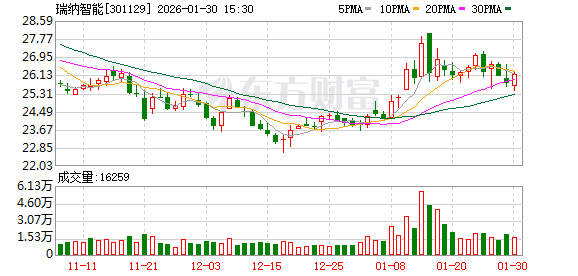
瑞纳智能:公司打造了“云、边、端”的完整产品体系
Zheng Quan Ri Bao· 2026-01-30 11:11
Core Viewpoint - The company, Ruina Intelligent, is leveraging its technological reserves and advantages in smart manufacturing to transform from a single manufacturer to a comprehensive solution provider, focusing on energy-saving technologies and industrial efficiency [2] Group 1: Technological Development - The company is investing in various "Internet+" technologies, including IoT, cloud computing, big data, AI algorithms, digital twins, low-code, dynamic simulation, and edge computing [2] - A complete product system has been established based on a "cloud, edge, and terminal" framework, integrating physical systems with digital information systems [2] Group 2: Business Strategy - The company aims to strengthen its core competitiveness through continuous R&D investment, optimized production capacity layout, and a comprehensive service system [2] - The focus is on capturing market share in the clean heating and industrial energy-saving sectors to promote long-term high-quality development [2]

奥比中光(688322.SH):预计2025年度归母净利润约1.23亿元,实现扭亏为盈
Ge Long Hui A P P· 2026-01-30 08:10
Core Viewpoint - The company, Orbbec (688322.SH), is focusing on niche industry demands and advancing product development in potential areas, leading to a projected revenue increase and profitability turnaround by 2025 [1][2] Group 1: Financial Performance - For the fiscal year 2025, the company expects revenue of approximately 940 million yuan, an increase of about 376 million yuan year-on-year [1] - The net profit attributable to the parent company is projected to be around 123 million yuan, representing a year-on-year increase of approximately 186 million yuan, achieving a turnaround to profitability [1] Group 2: Product Development and Market Strategy - The company has successfully integrated with major international platforms such as NVIDIA Jetson Thor and Intel, enhancing its product competitiveness and market coverage [1] - A standardized and cost-effective product matrix has been established, focusing on the rapid development of AI edge applications, including 3D scanning and robotics [1] Group 3: Future Outlook and Innovation - The company plans to align with global industrial chain upgrades, focusing on breakthroughs in 3D visual perception technology and its application in key industries [2] - An efficient innovation cycle is being formed, emphasizing "demand insight - technical breakthroughs - scenario validation" to integrate technology and products into core industries [2] - The company aims to strengthen its competitive advantages in core business areas and build technological barriers through innovation and ecosystem collaboration [2]
在电脑上建个一模一样的“自己”
Liao Ning Ri Bao· 2026-01-30 02:03
Core Insights - The article discusses the concept of "digital twin" technology, its applications, and its significance in various industries, particularly in enhancing efficiency and decision-making processes [5][6][10]. Group 1: Definition and Functionality - Digital twin technology creates a virtual model that mirrors a physical entity, allowing for real-time interaction and predictive capabilities [5][6]. - This technology can significantly improve operational efficiency, reduce resource consumption, and potentially replace human cognitive tasks in repetitive thinking [5][6]. Group 2: Applications and Impact - Digital twins can be utilized in various sectors, such as automotive manufacturing for simulating assembly and collision scenarios, and in maritime training for risk management [6]. - The technology is also applicable in high-end equipment production, allowing for virtual understanding and maintenance without the need for physical transport [6]. Group 3: Current Status and Challenges in China - China is advancing in the application of digital twin technology, particularly in smart manufacturing and smart cities, with a growing market size [7]. - The province of Liaoning has a strong industrial foundation that supports the implementation of digital twin technology, but it faces challenges in data collection and the digital transformation of small and medium enterprises [7][8]. Group 4: Solutions and Future Directions - To address the challenges faced by small and medium enterprises, the article suggests implementing demonstration projects and creating standardized solutions for digital twin applications [8][9]. - The future direction of digital twin technology includes achieving autonomous decision-making capabilities, transitioning from mere visualization to intelligent thinking [10][11].

2026年中国电力系统仿真行业概述、发展阶段、产业链图谱、市场现状及趋势分析:“双碳”战略驱动需求爆发,技术自主与应用深化并举[图]
Chan Ye Xin Xi Wang· 2026-01-30 01:19
内容概况:当前,中国电力系统仿真行业正处于技术突破与应用扩展的关键期,其发展由"双碳"目标下 构建新型电力系统的紧迫需求直接驱动,并呈现出技术自主、应用深化、生态协同的鲜明特征。2024 年,中国电力系统仿真行业市场规模约为3.01亿元,同比增长10.26%。 相关上市企业:国电南瑞(600406)、国网信通(600131)、国能日新(301162)、东方电子 (000682) 电力系统仿真通过数学模型与计算机技术模拟电力系统的运行状态、动态行为及规划设计过程。其核心 目标包括验证理论模型、测试控制策略、评估故障影响、优化系统设计及支撑运行培训等。该技术通过 虚拟环境替代实际系统,实现安全、高效的分析验证,广泛应用于电网规划、运行优化、新能源并网、 故障诊断及人员培训等领域。按时间尺度分类,电力系统仿真主要分为电磁暂态仿真、机电暂态仿真、 中长期动态仿真三大类。 相关企业:中芯国际集成电路制造有限公司、超聚变数字技术股份有限公司、浪潮电子信息产业股份有 限公司、北京华大九天科技股份有限公司、浙江中控技术股份有限公司、武汉达梦数据库股份有限公 司、国家电网有限公司、中国华能集团有限公司、寒武纪科技股份有限公司 ...


一根甘蔗怎么“榨”,才能让工人尝到更多“甜头”?
Xin Lang Cai Jing· 2026-01-29 19:50
Core Insights - The traditional sugar industry in Guangxi Laibin is undergoing a transformation towards high-end, intelligent, and green development, leading to the creation of new job roles and skill enhancement for workers [1][2][5] Industry Transformation - The sugar industry, previously labor-intensive, is shifting to a model where a single sugarcane is fully utilized, enhancing worker skills and income [1][2] - The introduction of smart control systems has replaced traditional labor-intensive methods, allowing workers to monitor and manage production processes from control rooms [2][3] Workforce Development - Laibin has established a training mechanism for workers, transitioning them from traditional roles to skilled positions, resulting in increased job security and income [5][6] - The city has seen the emergence of new job roles such as environmental material development engineers and automated process technicians, driven by the need for skilled labor in the upgraded industry [6][7] Economic Impact - The development of a circular economy in Laibin includes over 30 product categories, enhancing the overall economic structure and providing diverse employment opportunities [4][6] - The high-end refined sugar produced in Laibin has a value addition of over 40% compared to regular sugar, necessitating specialized talent for process optimization and product development [6][7] Technological Integration - The integration of artificial intelligence and manufacturing is reshaping job roles, with workers now required to possess technical skills to operate and maintain automated systems [2][3] - The shift towards smart agriculture and service roles is creating demand for new positions such as agricultural data analysts and drone operators, reflecting the industry's modernization [6][7]
电力巡检无人机行业深度报告:智能电网时代的平台化演进
Tou Bao Yan Jiu Yuan· 2026-01-29 12:33
Investment Rating - The report indicates a strong investment opportunity in the power inspection drone industry, highlighting its transition towards intelligent grid systems and the expected market growth [5][19]. Core Insights - The power inspection drone industry is evolving from a simple aerial imaging tool to a comprehensive diagnostic platform, driven by the increasing demand for efficient inspection methods and advancements in AI and IoT technologies [6][8]. - The market is projected to grow significantly, with the global market size reaching approximately 19.516 billion yuan in 2023, and expected to exceed 23.4 billion yuan in 2024, driven by smart grid upgrades and aging infrastructure [19][20]. Summary by Sections Industry Overview - The report outlines the evolution of power inspection drones, emphasizing the shift from manual inspections to automated systems due to the expansion of the power grid and aging equipment [7][12]. - The National Grid's investment of 12 billion yuan aims to establish a nationwide drone inspection system covering 80% of high-voltage lines by 2025, which is expected to drive the industry scale beyond 20 billion yuan [7][19]. Technological Architecture - The report discusses the critical technological advancements in the industry, including multi-modal sensor integration, lightweight AI models, and digital twin technology, which enhance the accuracy and efficiency of inspections [24][25]. - Key performance indicators for 2025 include a defect recognition accuracy of 98.7% and the ability to conduct inspections over distances of 50 kilometers per flight [16][19]. Platform Evolution - The platformization of drone technology is transforming traditional power maintenance processes, enabling real-time monitoring and automated defect identification, significantly reducing response times from 8 hours to 2.5 hours [43][44]. - The report highlights a successful case study where a drone group combined with digital twin technology achieved a 95% warning accuracy rate and reduced fault rates by 40% [44][45]. Market Dynamics - The report identifies three phases of market growth: hardware sales dominance from 2023 to 2025, a rise in software and services from 2025 to 2027, and platform ecosystem competition from 2028 to 2030 [20][21]. - The growth is fueled by the demand for smart grid upgrades, government subsidies, and the need for efficient maintenance of aging infrastructure [19][20]. Challenges and Solutions - The report addresses challenges such as airspace management, algorithm adaptability, and data fusion, proposing solutions like geographic fencing technology and federated learning to enhance operational efficiency [59][64]. - A pilot project in Shenzhen demonstrates effective urban drone application management, achieving a threefold increase in inspection efficiency while maintaining compliance with urban airspace regulations [60][62].

我国建成全球最大电动汽车充电网络 充电设施数量突破2000万大关
Jing Ji Ri Bao· 2026-01-29 06:59
Core Insights - China's electric vehicle charging infrastructure has reached 20.092 million units by the end of December 2025, including 4.717 million public charging facilities and 15.375 million private ones, supporting the charging needs of over 40 million new energy vehicles [1][3] Group 1: Infrastructure Development - The rapid development of charging infrastructure in China has transformed from a functional guarantee to a scene economy, as evidenced by the Yangcheng Lake service area, which now has 84 charging guns, significantly reducing wait times from 2 hours to a more efficient process [1] - The total charging power at the Yangcheng Lake service area has been increased to 5,120 kW, which is 21 times higher than five years ago, showcasing significant upgrades in capacity [1] - The Jiangsu Electric Power Company has implemented a health management system for charging facilities, utilizing digital twin and AI technologies for real-time monitoring and diagnostics, covering over 100 charging stations and thousands of charging piles [1] Group 2: Upgrades in Popular Areas - Charging facilities at popular tourist sites, such as the Tongli Ancient Town in Jiangsu, have been upgraded to enhance charging speed by 167%, reducing the time to charge from 10% to 90% battery capacity from 50 minutes to approximately 20 minutes [2] - A special upgrade plan initiated by the State Grid Suzhou Electric Power Company aims to enhance 698 charging piles in key areas and replace 558 old charging piles to eliminate "range anxiety" and improve urban green travel networks [2] Group 3: Future Goals and Trends - The development of charging facilities in China is characterized by rapid growth, with the number of charging stations reaching 10 million in just 18 months, compared to 5 years for the previous million [3] - Charging efficiency has improved, with the average charging power of public stations reaching 46.5 kW, a 33% year-on-year increase, enhancing the overall charging service experience [3] - By the end of 2027, China aims to establish 28 million charging facilities with over 300 million kW of public charging capacity, meeting the needs of over 80 million electric vehicles, effectively doubling the service capacity [3] Group 4: Industry Perspective - Experts indicate that the charging network is essential for the electric vehicle industry, ensuring that every electric vehicle can charge efficiently, thereby expanding the development space for China's new energy vehicle sector [4]