
数实融合

Search documents
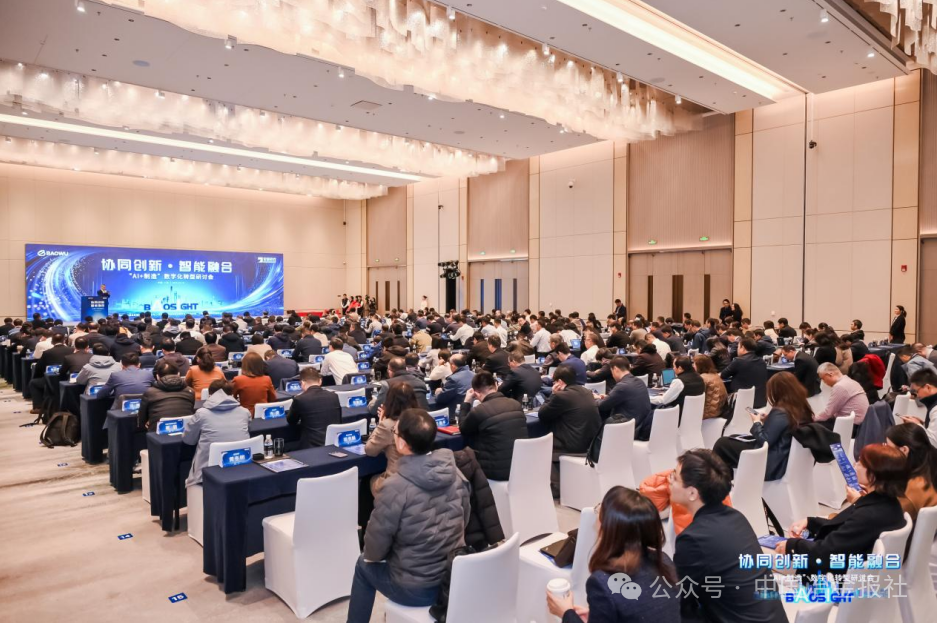
全链条展示“AI+制造”宝武方案 2025年宝信软件科技创新日暨“AI+制造”数字化转型研讨会在上海举办
Xin Lang Cai Jing· 2025-12-22 11:22
中国冶金报社 记者 吕林 刘加军 报道 图片由宝信软件提供 12月18日,由中国宝武钢铁集团有限公司、上海市经济和信息化委员会指导,上海宝信软件股份有限公司主办的2025年宝信软件科技 创新日暨"AI+制造"数字化转型研讨会在上海成功举办。会议以"协同创新·智能融合"为主题,围绕人工智能关键技术、典型应用场景 与落地路径展开深入交流,为业界提供了观察中国钢铁工业智能化进程的重要窗口。宝信软件在会上系统呈现了覆盖钢铁制造全流 程、全层次、全生命周期的数字化解决方案,勾勒出一幅以自主创新为底色、以协同融合为路径的"AI+制造"未来图景,清晰传递了 驱动钢铁工业新质生产力发展的"宝武方案"。 中国工程院院士、全国政协常委、上海市政协副主席、华东理工大学教授钱锋到会做《工业具身智能技术与系统——构建工业大脑, 发展新质生产力》报告。中国宝武钢铁集团有限公司副总经理费鹏,上海宝信软件股份有限公司党委书记、董事长田国兵,复旦大学 副校长周磊,上海市经济信息化委员会总工程师裘薇为会议致辞。上海宝信软件股份有限公司总裁、党委副书记王剑虎做答谢致辞。 会议由宝武工程科学家钱卫东主持。 钱锋在报告中指出,人工智能赋能制造业绝非一 ...


“游戏经济”展现出广阔生态
Zhong Guo Zheng Quan Bao· 2025-12-22 11:16
Core Insights - The Chinese gaming industry is transitioning from rapid growth to a focus on "high-quality development," with projected sales revenue reaching 350.79 billion yuan in 2025, reflecting a year-on-year growth rate of 7.68% [1][2] - The industry is evolving towards a "game economy" with a market size exceeding 1.2 trillion yuan, driven by technological innovations like artificial intelligence and a deepening of traditional cultural content [1][2] - The gaming sector is at a pivotal point, shifting from "product export" to "cultural export," emphasizing long-term value creation in response to new challenges [1][2] Industry Growth and Structure - The gaming market in China is expected to achieve historical highs, with actual sales revenue surpassing 350 billion yuan and a user base reaching 683 million by 2025 [2] - Client games are experiencing significant growth, with a year-on-year revenue increase of 14.97%, while the console gaming market is seeing explosive growth at 86.33% [2] - The esports sector is becoming a vital industry engine, with market revenue exceeding 170 billion yuan, reflecting a nearly 19% increase [2] Economic Impact - The gaming economy is structured into three layers: the core economic layer generating over 480 billion yuan, the associated economic layer contributing approximately 554.8 billion yuan, and the radiating economic layer adding over 173 billion yuan [3] - Examples of successful integration of gaming with cultural and urban development include the "Metaverse" districts in Shanghai and major events like the "Honor of Kings" finals attracting 60,000 global spectators [3] Regional Development - Shanghai's gaming industry is projected to generate 170.7 billion yuan in sales by 2025, with a growth rate of 9.57%, supported by initiatives like the "Game Ten Measures" [4] Technological and Cultural Drivers - Artificial intelligence is becoming a core productivity tool in game development, enhancing efficiency by over 80% in art asset production and achieving a 95% accuracy rate in localization [7] - The gaming industry is increasingly viewed as a vehicle for cultural transmission, with traditional elements being integrated into popular games, enhancing their global appeal [8] International Expansion and Responsibility - By 2025, China's self-developed games are expected to generate 20.455 billion USD in overseas sales, with mobile games contributing over 90% of this revenue [10] - The industry is recognizing the importance of social responsibility, with over 70% of minors' gaming time being controlled to within three hours, although challenges remain regarding account misuse [11] - Companies are exploring the social value of gaming beyond commercial returns, with initiatives aimed at integrating cultural heritage into educational programs [11]
游戏产业多项数据创新高,三大龙头涨幅翻倍!机构密集关注这些股
Zheng Quan Shi Bao Wang· 2025-12-22 05:16
Core Insights - The Chinese gaming industry demonstrates strong resilience and growth potential amid global economic fluctuations and intensified competition, driven by innovation and adaptability [1][2] Industry Performance - The Chinese gaming market is projected to reach an actual sales revenue of 350.79 billion yuan in 2025, reflecting a year-on-year growth of 7.68%, with a user base expanding to 683 million, a 1.35% increase [2] - The console gaming market continues its rapid growth, with actual sales revenue reaching 8.36 billion yuan, a staggering year-on-year increase of 86.33% [2] - Mini-program games have emerged as a significant highlight, generating revenue of 53.54 billion yuan, up 34.39% year-on-year, driven by dual monetization through in-app purchases and advertising [2] - The overseas market for self-developed games has also shown impressive performance, with actual sales revenue of $20.46 billion, marking a 10.23% increase and maintaining a scale exceeding 100 billion yuan for six consecutive years [2] Policy and Support - The "Game Shanghai Ten Measures" was officially released, introducing systematic support policies for key areas of industry development, with an annual funding total of 50 million yuan aimed at building a globally influential gaming and esports ecosystem [2] Cross-Industry Integration - The gaming industry is evolving beyond mere entertainment, integrating with traditional sectors such as healthcare, education, and manufacturing, thus reshaping perceptions and creating new growth opportunities [3] - The demand for AI technology within gaming companies is accelerating the application of AI, further enhancing the value of technology in society [3] Market Trends - The gaming sector is expected to maintain a high level of prosperity, with new products being launched and cross-platform connectivity contributing to growth, while seasonal activities are likely to boost user engagement and average revenue per user (ARPU) [3] - The mini-program gaming segment is anticipated to exhibit sustained high prosperity, stable growth rates, and optimized profit structures, supported by collaborations between WeChat and Apple [3] Stock Performance - The average increase in gaming stocks this year is 44.36%, with three leading gaming stocks, Giant Network, Century Huatong, and G-bits, doubling their value [4] - Giant Network has seen a remarkable increase of 260.13% year-to-date, attributed to the integration of AI technology into its core gaming business [6] - As of December 19, 2025, the net buying of gaming stocks exceeded 500 million yuan, with Giant Network, Zhejiang Shuju, and G-bits leading the net buying amounts [6] Institutional Research - The most frequently researched company this year is Shunwang Technology, with 23 institutional research instances, followed by Tom Cat and G-bits [7]

内蒙古自治区数据AI新场景发布会在呼和浩特市举办
Zhong Guo Jin Rong Xin Xi Wang· 2025-12-22 03:24
Core Insights - The event titled "Data AI New Scene Release Conference" was successfully held in Hohhot, focusing on the theme of "Digital Transformation and Integration of Data and Reality" to promote the deep integration of the digital economy with the real economy [1] Group 1: Event Overview - The conference was organized by the Inner Mongolia Autonomous Region's Government Service and Data Management Bureau and the Hohhot Municipal Government, with over 130 participants from various sectors [1] - Keynote speeches were delivered by officials from the Inner Mongolia government and a representative from Beijing Zhongguancun Zhiku Innovation Talent Service Co., Ltd [1] Group 2: Data and AI Initiatives - A total of 19 demonstration scenarios for public data and 50 supply-demand scenarios in the field of artificial intelligence were released during the event [1] - The event featured a signing ceremony for "Artificial Intelligence+" scenarios, resulting in partnerships between 8 companies [1] Group 3: Future Plans - Inner Mongolia aims to leverage its rich application scenarios to build integrated industry-specific scenarios and high-value niche scenarios, promoting the synergy of green computing power, data, artificial intelligence, and industrial applications [2] - The region aspires to become a "best testing ground" for new technologies and models, contributing to the modernization of Inner Mongolia [2]
制造业创新迈向系统性跃迁
Xin Lang Cai Jing· 2025-12-21 22:46
Core Insights - The sales revenue of China's high-tech manufacturing industry increased by 11.1% from January to November this year, with integrated circuits and industrial mother machines growing by 19.3% and 11% respectively [1][2] - Traditional industry key tax source enterprises increased R&D investment by 12.3% year-on-year, indicating a surge in innovation vitality within the manufacturing sector [1] Group 1: Manufacturing Innovation Trends - China's manufacturing innovation is transitioning from fragmented breakthroughs to systematic leaps, focusing on deep restructuring across the entire production chain, innovation elements, and development cycles [1] - The competition in manufacturing must be systemic, with a focus on technology integration, resource allocation, and scenario innovation to gain an advantage in the new technological revolution and industrial transformation [1] Group 2: Technological and Scenario Integration - The integration of technology is deepening, with digital technology becoming a core element embedded in manufacturing processes, driving transformation and upgrades [2] - Manufacturing innovation is extending beyond workshops to encompass R&D design, supply chain management, and after-market services, enhancing industry resilience and giving rise to new business models like shared manufacturing and customized services [2] Group 3: Policy and Ecosystem Support - To foster a better innovation ecosystem, there is a need to strengthen digital support and address challenges such as data silos and inconsistent standards [2] - Policies should be enhanced to encourage participation in deep innovation areas like core algorithms and high-end equipment, while also promoting collaboration between academia and industry to expedite the transition of laboratory results to production lines [2]
锚定高质量发展 万亿元级“游戏经济”生态浮现
Zhong Guo Zheng Quan Bao· 2025-12-21 20:12
Core Insights - The Chinese gaming industry is transitioning from a phase of rapid growth to a new stage focused on "high-quality development" amid an improving policy environment and sufficient supply of game licenses [1] - The 2025 China Gaming Industry Report forecasts that the domestic gaming market will achieve actual sales revenue of 350.79 billion yuan, with a year-on-year growth rate of 7.68% [1] - The industry is experiencing a structural transformation, with the "gaming economy" showcasing a vast ecosystem exceeding 1.2 trillion yuan, driven by technological innovations like artificial intelligence and a deepening of traditional cultural content [1][2] Industry Growth - By 2025, the domestic gaming market is expected to reach a historical high with actual sales revenue surpassing 350 billion yuan and a user base of 683 million [1] - The client game segment is projected to see a significant revenue increase of 14.97% due to the simultaneous release of high-quality mobile and PC games, while the console gaming market is expected to grow by 86.33% [1] - The esports sector is becoming a crucial industry engine, with market revenue exceeding 170 billion yuan, reflecting a nearly 19% year-on-year growth [1] Economic Impact - The gaming industry is evolving beyond mere entertainment, becoming a new economic force that integrates culture and technology, contributing over 1.2 trillion yuan to the economy by 2025 [2] - The core economic layer of the gaming economy generates over 480 billion yuan, while the associated economic layer, including hardware and esports, is valued at approximately 554.8 billion yuan [2] - The outer radiation economic layer contributes over 173 billion yuan, showcasing the deep integration of gaming with sectors like cultural tourism and education [2] Technological and Cultural Drivers - The gaming industry is experiencing a qualitative leap driven by technological innovations and cultural depth, with AI becoming a core productivity tool in game development [4] - AI is enhancing production efficiency by over 80% in art asset creation and is widely adopted across the game development process, with 62% of studios utilizing AI technology [4] - Games are increasingly serving as digital vessels for the transmission and innovation of traditional Chinese culture, enhancing their global appeal [5][6] Global Expansion and Responsibility - By 2025, China's self-developed games are expected to generate overseas sales revenue of 20.455 billion USD, with mobile games contributing over 90% of this revenue [6] - Successful overseas strategies emphasize localization and community engagement, with companies establishing local teams to maintain user connections [7] - The industry is also addressing social responsibilities, with over 70% of minors' gaming time controlled within three hours, although challenges remain regarding account misuse [7][8] Social Value Exploration - The "gaming+" initiative is exploring the social significance of gaming beyond commercial returns, with companies integrating cultural education into their offerings [8] - This approach reflects a mature development perspective in the gaming industry, aiming to unify commercial and social values for sustainable growth [8]
2025飞梭链FISCO BCOS产业应用发展报告-FISCO金链盟
Sou Hu Cai Jing· 2025-12-21 17:02
Core Insights - FISCO BCOS has established itself as one of the largest and most active domestic open-source alliance blockchain ecosystems in China, gathering over 5,000 institutions and 100,000 individual developers, with 600 industry digitalization benchmark applications [1][24][20] - The value reassessment of FISCO BCOS revolves around three main logics: deep integration with the real economy, driving data infrastructure upgrades, and stimulating global financial innovation [1][27][32] Group 1: Industry Applications - The blockchain applications cover 19 major fields, with significant benchmark case results in infrastructure, cross-border services, smart governance, green low-carbon initiatives, healthcare, social welfare, rural revitalization, financial services, and more [2][43] - In the infrastructure sector, the Blockchain Service Network (BSN) has established a national digital credential system, while cross-border data verification platforms have addressed credit isolation issues, facilitating cross-border financing and talent mobility [2][8] - In the financial services sector, blockchain solutions have alleviated financing difficulties for small and micro enterprises through supply chain finance systems and regional equity platforms [2][10] Group 2: Technological Advancements - FISCO BCOS boasts a high performance of over 200,000 TPS (transactions per second) and is compatible with mainstream software and hardware, integrating privacy computing and artificial intelligence technologies [2][24] - The open-source nature of FISCO BCOS promotes multi-party collaboration, forming a trusted collaborative network across industries and regions [2][24] Group 3: Future Directions - FISCO BCOS aims to continue deepening technological development and expanding application scenarios, pushing blockchain further into production and daily life, becoming a cornerstone of the digital civilization era [2][20] - The establishment of cross-border data verification platforms, such as the Shenzhen-Singapore platform, exemplifies the practical value and demonstration effect of blockchain in enhancing economic cooperation and talent flow [28][30]

多元业态解锁消费新体验 冬季文旅市场焕发新活力
Zheng Quan Ri Bao· 2025-12-21 16:10
"当前,各地各部门正通过'政策引流'与'业态融合'双管齐下,持续推动冬季文旅市场升温。"洪勇表 示。 国研新经济研究院创始院长朱克力对《证券日报》记者表示,今年冬季文旅消费有望迎来"量质齐升"的 旺盛态势,成为全年消费增长的重要引擎。从需求端看,元旦的短途休闲、春节的家庭团聚游、寒假的 研学旅行需求集中释放,叠加"旅游迎春休闲过年""欢乐冰雪旅游季"等全国性活动,家庭游、亲子游、 冰雪游、民俗游将成为消费热点,跨省跨区域旅游热度预计持续走高。 那么,各地各部门如何进一步推动冬季文旅消费升温?朱克力认为,需构建"供给提质、政策赋能、服 务优化"的三维推进体系,全方位激活市场潜力。 近日,全国各地以"冰雪+""温泉+""文化+"等融合模式为抓手,积极创新多元化冬季文旅消费新业态, 通过资源整合、活动创新与政策赋能,丰富游客体验,激发市场活力。多元化供给让冬季旅游告别"淡 季"标签,焕发出全新生机。 例如,贵州统筹省内9个市州策划推出超600项系列文旅活动,围绕温泉、滑雪、民俗、南部阳光带等核 心资源,精心打造6大特色旅游产品,发布贵州冬季10大特色主题线路;辽宁"九九消费季"活动自12月 16日起持续至明年3月1 ...
提高金融服务的便利性和竞争力
Jing Ji Ri Bao· 2025-12-20 22:07
Core Viewpoint - The People's Bank of China and six other departments have jointly issued an action plan to promote the high-quality development of digital finance, emphasizing the importance of digital transformation in financial institutions to enhance service convenience and competitiveness [1] Group 1: Digital Finance Development - The integration of digital technology and the financial industry is accelerating, leading to new digital finance business models that improve service convenience and competitiveness [2] - The financial technology market in China is projected to reach 394.96 billion yuan in 2024, with a year-on-year growth of 9.7% [2] - Major state-owned banks reported a financial technology investment of 125.4 billion yuan in 2024, reflecting a 2.15% increase year-on-year, maintaining a high investment level [2] Group 2: Financial Ecosystem and Infrastructure - As of June this year, 836 institutions have registered 2,664 mobile financial apps, significantly enhancing the convenience of financial services [2] - In 2024, banks processed 301.668 billion electronic payment transactions, amounting to 342.699 trillion yuan, with online payments accounting for 75.435 billion transactions worth 27.9832 trillion yuan, and mobile payments totaling 210.98 billion transactions worth 56.370 trillion yuan [2] Group 3: Challenges and Opportunities - Despite being a major financial power with the largest banking system and significant market shares in insurance, stocks, and bonds, there are still gaps in financial support for key areas like domestic demand expansion and innovation [3] - The application of digital technology in finance is uneven, with some small and medium-sized financial institutions facing challenges in funding and talent, leading to slow digital transformation [3] - Digital finance is crucial for supporting the integration of digital and real economies, and there is a need to enhance financial service quality and efficiency [3] Group 4: Strategic Recommendations - Promote deep integration of digital and real economies by increasing financial support in areas like original innovation and key technology innovation [4] - Encourage financial institutions to invest in technology and talent, utilizing digital technology to enhance financial products and services [4] - Optimize financial service supply to align with the demands of the digital economy, including the development of innovative financial products and services [4] - Uphold ethical principles in technology application, ensuring consumer rights are protected through ethical reviews of new technology developments [4]
全球AI治理陷入“叙事竞争”,学者警示人类面临主体性危机
Nan Fang Du Shi Bao· 2025-12-20 05:26
Core Insights - The discussion on AI has transcended technical aspects, touching upon fundamental issues of human existence and dignity, as highlighted by Huang Renxun's warning about the potential erosion of human subjectivity by AI [1] - Zhang Xin's keynote at the Ninth Woodpecker Data Governance Forum emphasized the need for AI governance to address the crisis of human subjectivity, marking a shift from traditional ethical discussions to core existential questions regarding AI's transformative principles [1] Group 1: Global AI Competition and Governance - AI is profoundly reshaping global industries, trade, and power dynamics, becoming a central battleground for major powers, with China breaking traditional Western technological monopolies through intelligent industrial chains [3] - The rapid iteration of AI technology has outpaced global governance efforts, leading to a multi-faceted governance model that includes government, market, and AI enterprises, thus transforming societal operational rules [3][4] - AI safety has emerged as a critical aspect of global governance, as it fundamentally relates to the acceptance, diffusion, and application of technology, with the current competition characterized by four key elements: talent, technology, products, and safety systems [3][4] Group 2: Narrative Competition in AI - The logic behind AI governance is framed as a competition of narratives, with different countries constructing their own narratives around AI, such as the U.S. promoting "democratic and free AI" and the EU emphasizing "human rights and high standards" [4] - Trust is essential for the global expansion of AI technologies, and without it, even the most efficient products cannot drive the international spread of Chinese AI technology [4][5] - The competition in AI technology is no longer superficial but encompasses the entire technology stack, with actual competition depending on a country's broad technological application capabilities and talent foundation [4] Group 3: China's Approach to AI Governance - China advocates for an AI narrative centered on "human-centric, benevolent intelligence, and inclusive technology," which should guide technology development, product implementation, and international cooperation [5][7] - The current global AI governance landscape is characterized by both multilateral cooperation and geopolitical competition, with AI safety governance evolving beyond mere technical aspects to become integral to national governance modernization [6] - China aims to enhance its discourse power in global AI governance through initiatives like the Belt and Road, and by establishing safety standards and international alignment, particularly in technology benchmarks and "new soft law" [7]
