新能源汽车转型

Search documents
东风汽车接连出售资产,现在还有人买发动机工厂吗?
经济观察报· 2025-08-19 10:31
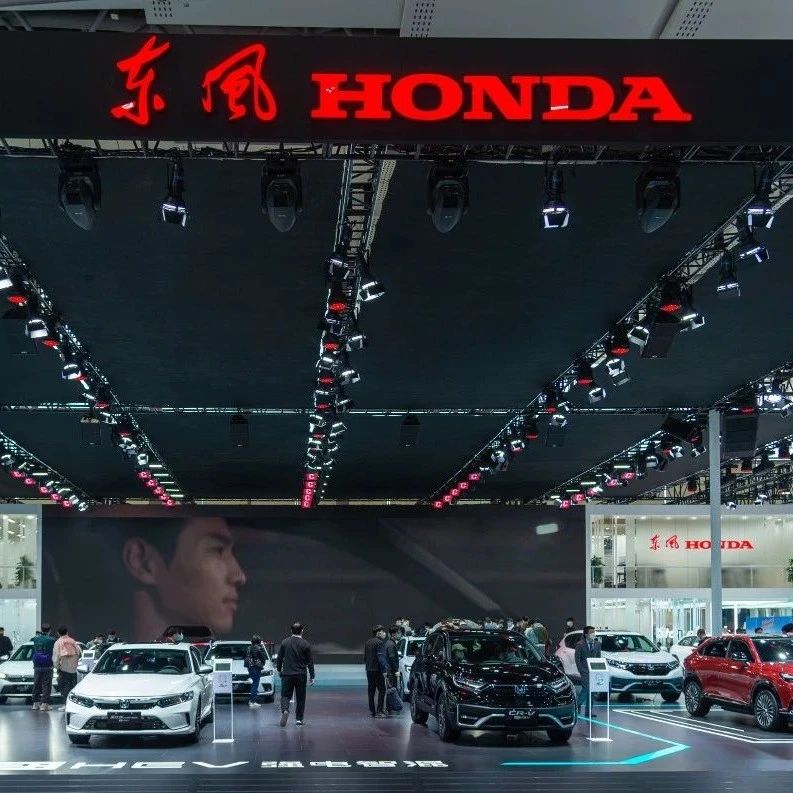
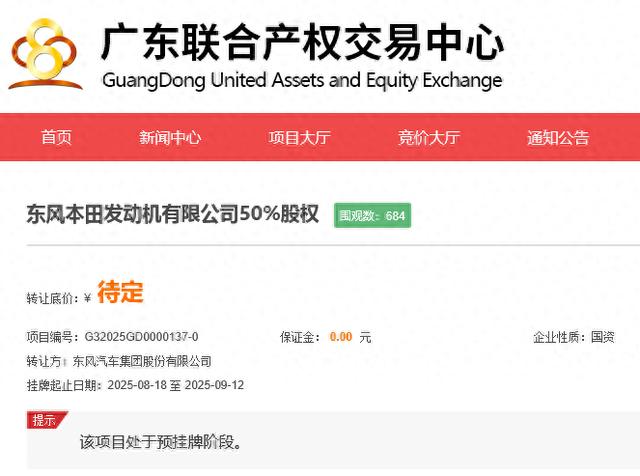
Core Viewpoint - The article discusses the strategic asset sales by Dongfeng Motor Group, particularly the sale of a 50% stake in Dongfeng Honda Engine Company, as part of its transition towards electric vehicles amidst declining performance in traditional automotive sales [2][4]. Group 1: Asset Sale Details - Dongfeng Motor Group is selling a 50% stake in Dongfeng Honda Engine Company, with the project currently in the pre-listing phase and a deadline for bids set for September 12 [2]. - Dongfeng Honda Engine Company was established in May 1998, has a registered capital of approximately $122 million (about 873 million RMB), and employs 827 people [2]. - The company's financials show a projected revenue of 9.566 billion RMB for 2024, with a net loss of 228 million RMB, while the first half of 2025 reported a revenue of 3.807 billion RMB and a net profit of 371 million RMB [2]. Group 2: Strategic Shift and Performance - Dongfeng Motor's decision to sell assets is linked to its market performance, with a reported 8.9% decline in vehicle sales from January to July, totaling 978,500 units [4]. - The company’s net profit for the first half of the year is projected to be between 30 million and 70 million RMB, representing a decline of 90% to 95% compared to the same period in 2024 [4]. - Dongfeng is focusing on reducing and selling off joint venture assets while expanding its presence in the electric vehicle sector, indicating a strategic shift towards self-owned brands [4][5]. Group 3: Production Capacity and Market Context - Dongfeng Honda has a design capacity of 768,000 vehicles per year, with a production of 425,900 vehicles in 2024, resulting in a capacity utilization rate of 55.46%, which is better than Dongfeng Nissan's 43% [6]. - The article highlights that, despite the high penetration rate of electric vehicles in China at 45%, the Dongfeng Honda Engine Company, with a capacity to produce 480,000 engine assemblies annually, has become a burden for Dongfeng [6]. - The ongoing transition to electric vehicles raises questions about the future demand for traditional engine manufacturing capabilities, as the industry shifts focus [6].


东风拟转让本田发动机全部股权
Di Yi Cai Jing· 2025-08-18 15:40
Core Viewpoint - Dongfeng Motor Group Co., Ltd. plans to transfer its entire 50% stake in Dongfeng Honda Engine Co., Ltd. amid the rapid growth of the electric vehicle market in China, which is approaching a 50% penetration rate for new energy vehicles [1] Group 1: Company Actions - Dongfeng Group intends to optimize and adjust its fuel vehicle asset structure to better support Honda's automotive strategy in China and accelerate its own transition to new energy [1] - The project for the stake transfer has been pre-listed at the Guangdong United Property Rights Exchange [1] Group 2: Financial Performance - In the first half of this year, Dongfeng Honda Engine reported revenue of approximately 3.8 billion yuan, a year-on-year decrease of 60%, but managed to turn a profit with a net income of about 371 million yuan [1] - The company has a workforce of 827 employees [1] Group 3: Market Context - The Japanese automotive industry, particularly fuel vehicles, is facing significant challenges in the Chinese market due to the increasing dominance of new energy vehicles [1] - Dongfeng Group's decision reflects a broader industry trend where both domestic and joint venture companies are adapting to the evolving automotive landscape [1]
推动转型,东风汽车将出售所持东风本田发动机股权
Guan Cha Zhe Wang· 2025-08-18 10:39
Group 1 - Dongfeng Motor Group Co., Ltd. is selling its 50% stake in Dongfeng Honda Engine Co., Ltd. to accelerate the company's transition to new energy vehicles [1][3] - Dongfeng Honda Engine Co., Ltd. was established in 1998 and is jointly owned by Dongfeng Motor Group (50%), Honda Motor Co., Ltd. (40%), and Honda Motor (China) Investment Co., Ltd. (10%) [3] - In 2024, Dongfeng Honda Engine is projected to generate revenue of 9.566 billion yuan, with a net loss of 228 million yuan, while in the first half of the year, it achieved a revenue of 3.807 billion yuan and a net profit of 371 million yuan, marking a turnaround [3][5] Group 2 - Honda's sales in China for 2024 are expected to be 850,000 units, a decrease of one-third compared to the previous year, marking the first time in nine years that sales have fallen below 1 million units [3][5] - Honda is facing challenges in the Chinese market, prompting a restructuring and a shift towards electric vehicles, with plans for 70% of new models in 2024 to be electric [5][6] - Dongfeng Honda Engine's production capacity for fuel vehicle engines has been halved, representing 30% of its fuel engine production in China [5]

“听见炮火”、拥抱华为,汽车央国企如何蹚过转型深水区
第一财经· 2025-08-15 06:15
Core Viewpoint - The article discusses the recent reforms and integration efforts among China's state-owned automotive enterprises, particularly in response to the rapid growth of the new energy vehicle (NEV) market, highlighting the need for efficiency and collaboration with technology companies like Huawei [3][4][6]. Group 1: Industry Trends - The penetration rate of new energy vehicles in the market increased to 45% from January to July 2025, indicating a significant shift in consumer preferences towards NEVs [3]. - The automotive industry is undergoing a transformation where traditional competition dynamics are shifting from "big fish eating small fish" to "fast fish eating slow fish," necessitating quicker adaptation by enterprises [4]. Group 2: Reform Initiatives - Major state-owned automotive companies are focusing on three key reform characteristics: enhancing efficiency by integrating R&D, product, and marketing; increasing collaboration with ICT companies; and maintaining a dual approach of independent R&D and joint ventures [3][4][6]. - The State-owned Assets Supervision and Administration Commission (SASAC) plans to implement separate assessments for NEV businesses of major state-owned automotive companies, emphasizing technology, market share, and future development [6]. Group 3: Company-Specific Developments - Dongfeng Motor Group has integrated its brands into Dongfeng Yipai Technology, aiming to streamline operations and improve decision-making efficiency [7]. - GAC Group is restructuring its marketing and R&D processes to enhance product development and align with user demands, while also focusing on reducing operational costs [8]. - Changan Automobile is pursuing a dual strategy of independent innovation and collaboration with global automotive firms, while also investing in smart technology solutions [9]. Group 4: Collaboration with Technology Firms - State-owned automotive companies are increasingly collaborating with Huawei and other ICT firms to enhance their technological capabilities, with projects focusing on joint development and marketing strategies [10][11]. - GAC Group has established a new company, Huawang Automotive, in partnership with Huawei, aiming to create high-end smart NEVs, with the first model expected to launch in 2026 [10][11]. Group 5: Future Outlook - The ongoing reforms and collaborations are expected to enhance the competitiveness and profitability of state-owned automotive enterprises, leading to improved operational efficiency and market positioning [13].



“听见炮火”、拥抱华为 汽车央国企如何蹚过转型深水区
Di Yi Cai Jing· 2025-08-15 03:43
Core Insights - The recent developments in the automotive state-owned enterprise reform reflect a broader trend of consolidation and integration within the industry, particularly in response to the rapid growth of the new energy vehicle (NEV) market, which is projected to reach a penetration rate of 45% by mid-2025 [1][2] - Major state-owned automotive companies are accelerating their reform efforts, focusing on enhancing efficiency through integrated R&D, product development, and marketing strategies, while also increasing collaboration with ICT companies like Huawei and Tencent [1][4][6] Industry Trends - The automotive industry is undergoing a critical transformation, with a shift from traditional competitive dynamics to a scenario where "fast fish eat slow fish," necessitating rapid adaptation and innovation from enterprises [2] - The central enterprises are expected to leverage the current industry transformation opportunities by addressing issues such as slow market response and insufficient integration within the supply chain [2] Company Strategies - Dongfeng Motor Group has restructured its brands by integrating its subsidiaries into Dongfeng Yipai Technology, aiming to streamline operations and enhance decision-making efficiency [1][4] - GAC Group is implementing a three-year action plan to unify its supply chain and reduce operational costs while focusing on the relationship between its own brands and joint venture brands [5][6] - Changan Automobile is pursuing a dual strategy of independent innovation and collaboration with global automotive companies, while also investing in smart technology firms to enhance its capabilities [6][8] Collaboration with ICT Companies - The collaboration with Huawei has become a common strategy among major automotive state-owned enterprises, with projects aimed at joint development and marketing of new energy vehicles [6][7] - GAC Group has established a new company, Huawang Automotive, in partnership with Huawei, focusing on high-end smart electric vehicles, with plans to launch its first model by 2026 [7][8] Performance Metrics - In the first half of 2025, major state-owned automotive companies collectively sold approximately 1 million NEVs, with individual sales figures of 145,000 for FAW Group, 402,000 for Dongfeng, and 451,700 for Changan, compared to BYD's 2.146 million and Geely's 725,000 during the same period [3][4]
“听见炮火”、拥抱华为,汽车央国企如何蹚过转型深水区
Di Yi Cai Jing· 2025-08-15 03:38
Group 1: Industry Trends - The automotive industry is undergoing a transformation with a focus on new energy vehicles (NEVs), where the penetration rate is expected to reach 45% by July 2025 [1] - The competition is shifting from "big fish eating small fish" to "fast fish eating slow fish," necessitating rapid transformation among enterprises to avoid being eliminated [2] - The integration of resources among state-owned automotive enterprises is a reflection of broader reforms, emphasizing efficiency in R&D, product development, and marketing [1][4] Group 2: Company Strategies - Dongfeng Motor Group has consolidated its brands into Dongfeng Yipai Technology, aiming to enhance efficiency and collaboration with Huawei [1][4] - GAC Group is implementing a three-year action plan to unify its supply chain and reduce operational costs while focusing on user-driven product development [5][6] - Changan Automobile is pursuing a dual strategy of independent innovation and collaboration with global automakers, while also investing in smart technology companies [6][8] Group 3: Collaboration with Technology Firms - State-owned automotive companies are increasingly collaborating with ICT firms like Huawei and Tencent to enhance their technological capabilities [6][7] - Dongfeng's partnership with Huawei involves joint product development and marketing, aiming for a comprehensive collaboration across the value chain [7] - GAC Group has established a new company, Huawang Automotive, in partnership with Huawei to develop high-end smart NEVs, with plans for a new model launch in 2026 [7][8] Group 4: Innovation and Future Outlook - The focus on technological innovation is critical for state-owned enterprises, with an emphasis on breakthroughs in key technologies such as smart driving and solid-state batteries [9] - The ongoing reforms and improved assessment metrics for state-owned enterprises are expected to enhance their operational efficiency and competitive strength, leading to better profitability and market valuation [9]
又一家车企牵手华为!月销2.8万台一飞冲天?
电动车公社· 2025-08-08 16:01
Core Viewpoint - The establishment of Yipai Technology marks a significant shift in Dongfeng's strategy, focusing on resource integration and collaboration with Huawei to enhance its position in the competitive electric vehicle market [5][10][35]. Group 1: Company Overview and Market Position - Yipai Technology has quickly gained traction, achieving monthly sales exceeding 20,000 units, surpassing competitors like Aion and Extreme Fox [1][2]. - The merger of Yipai, Fengshen, and Nami brands aims to streamline operations and leverage synergies, reflecting a broader trend of consolidation in the automotive industry [6][12]. Group 2: Strategic Initiatives and Collaborations - Yipai Technology's product lineup will feature advanced technologies, including Huawei's ADS 4 and HarmonyOS 5, with the first high-end SUV expected to launch in 2026 [10][45]. - The collaboration with Huawei is comprehensive, integrating their marketing and product development systems to enhance Yipai's market presence and product appeal [49][54]. Group 3: Industry Trends and Challenges - The automotive industry is witnessing a shift towards consolidation and focus, as companies like Dongfeng recognize the inefficiencies of maintaining multiple overlapping brands [13][15]. - Dongfeng's ambitious goals include achieving 100% electrification of its main passenger vehicle brands by 2024 and balancing sales between its own and joint venture brands by 2025 [42][62]. Group 4: Future Outlook - Yipai Technology is positioned as a key player in Dongfeng's strategy to capture the growing electric vehicle market, with plans to introduce ten new models by 2028 [57][64]. - The success of Yipai will depend on its ability to quickly establish a competitive edge and respond to consumer needs effectively [59][65].
东风集团预警:上半年净利润同比下降90%至95%,仅剩0.3亿至0.7亿元
Jin Rong Jie· 2025-08-08 06:09
Core Viewpoint - Dongfeng Group recently issued a profit warning, expecting a year-on-year decline of 90% to 95% in net profit attributable to shareholders for the first half of the year, amounting to only 30 million to 70 million yuan, highlighting the significant challenges faced by traditional automakers during the transition to new energy vehicles [1][3]. Group 1: Performance Decline - The decline in performance is primarily attributed to the severe impact on the joint venture passenger vehicle business, which has seen a significant drop in both sales and profits due to the continuous loss of market share in the non-luxury joint venture segment [2][3]. - Traditional profit-generating brands under the company, such as Dongfeng Honda and Dongfeng Nissan, are also facing developmental obstacles, struggling to maintain previous profit levels amid changing market conditions [3]. Group 2: Increased Investment in Transformation - The company has significantly increased its investment in its independent business sector, covering research and development, brand building, channel development, and marketing, which, while beneficial for long-term growth, has put noticeable pressure on short-term profits [4]. - During the transition to new energy, Dongfeng Group is committed to investing 50 billion yuan over the next three years in the development of new energy businesses, indicating a strong determination to transform despite the current performance pressures [4].

星海S7季度销量环比暴涨358%:传统车企回归家庭场景 重构新能源造车逻辑
Zheng Quan Ri Bao· 2025-08-07 03:49
Core Insights - Dongfeng Fengxing's new energy mid-size sedan, Xinghai S7, achieved a remarkable quarter-on-quarter sales growth of 358%, making it the fastest-growing model in its segment [1] - The model competes with the market leader, Xiaomi SU7, which sold nearly 80,000 units in the same quarter, indicating a strong "dual S" market dynamic [1] Product Strategy - Dongfeng Fengxing has repositioned itself to focus on family car scenarios, aiming to be the "first family sedan with the highest scene reuse rate" with the Xinghai S7 [2] - The Xinghai S7 features a spacious design with a length of 4935mm and a wheelbase of 2915mm, providing ample rear legroom of 830mm, catering to family comfort [2] - The hatchback trunk offers a capacity of 496L, accommodating various family needs, and the rear seats can be folded to create a flat space of 1.8 meters [2] Health and Safety Features - The Xinghai S7 elevates cabin health standards to "mother and baby level," with 98% of interior materials being recyclable and 100% of adhesives using water-based eco-friendly formulas [3] - The vehicle's air conditioning system has an antibacterial function with a 99% sterilization rate, appealing to young families and allergy-prone passengers [3] Market Positioning - The Xinghai S7 adopts a "sufficient is good" philosophy, offering both pure electric and range-extended versions with ranges of 555km and 650km, respectively, targeting commuting and mid-range travel [4] - The starting price is set below 100,000 yuan, significantly lower than the average price of mid-size sedans, making it competitive in lower-tier markets [4] Technical Innovations - The vehicle features a unique FSD suspension system, emphasizing stability and comfort over performance, with a side tilt control optimization of 42% during cornering at 60km/h [5] - Safety is prioritized with the use of high-strength materials, including 1500 MPa hot-formed steel, and rigorous battery safety tests that exceed industry standards [6] Brand Strategy - Dongfeng Fengxing is leveraging its 70 years of manufacturing experience to transition from traditional vehicles to smart, user-friendly electric vehicles [7] - The launch of the Xinghai S7 is seen as a pivotal step in restructuring Dongfeng Fengxing's new energy product line, focusing on family users in a competitive market [7] - The company aims to serve ordinary users with durable products, addressing the shift from an "incremental market" to "stock competition" in the new energy vehicle sector [7]
全新MG4承诺自燃就赔车 上汽新能源打响突围战
Bei Jing Shang Bao· 2025-08-06 14:50
8月5日,全新MG4开启预售,这是上汽集团旗下MG品牌首款纯电汽车。全新MG4在技术领域实现多项 创新,并大胆承诺电池自燃就赔车。这也释放了上汽集团正在加快向新能源转型的信号。今年上半年, 我国新能源汽车市场渗透率已达44.3%。在行业全新竞争格局下,上汽集团也面临多重挑战。去年,上 汽集团新管理团队成型,把自主品牌和智电技术定为主攻方向,由此拉开了转型的大幕。 中国汽车行业的竞争日趋激烈。根据中国汽车工业协会数据,2024年我国汽车产销累计分别完成3128.2 万辆和3143.6万辆,同比分别增长3.7%和4.5%。其中,新能源乘用车的新车渗透率已连续多月超过 50%。 销量攀升的同时,行业利润空间持续承压。中国汽车流通协会统计数据显示,2024年全国乘用车市 场"价格战"持续激烈,2024年1—12月,新能源车新车降价车型的降价力度平均达到1.8万元,降幅达到 9.2%;常规燃油车新车降价车型的降价力度平均达到1.3万元,降幅达到6.8%。2024年汽车行业利润率 仅为4.3%,低于整个下游工业利润率及2023年的水平。 在价格战的竞争中,上汽集团也面临深刻变革。2024年,集团在销量等方面挑战显著。20 ...