
量子计算

Search documents
马斯克火箭与AI公司合并,后或与特斯拉合并,地空天机器与AI一体
Sou Hu Cai Jing· 2026-02-04 04:15
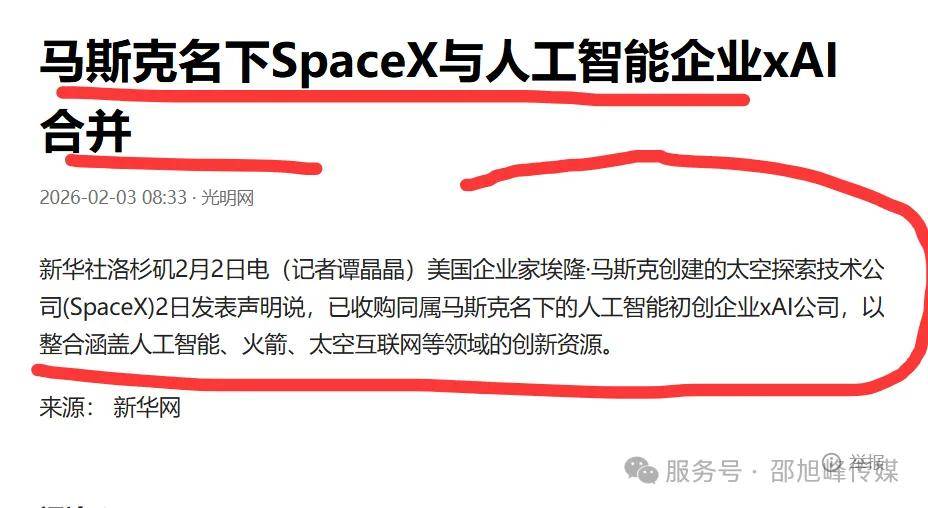
马斯克火箭与AI公司合并,后或与特斯拉合并,地空天机器与AI一体 ——马斯克是要在太空百万计的卫星和地面超级中心推超算,但由于谷歌在量子计算的绝对领先,可能最后还是谷歌AI接管一切, 除非英伟达和OpenAI重大突破,马斯克也全面介入量子计算,同时都在核电等领域突破和全面接入(咱们说的,是终端全面使用核 电) 邵旭峰 最新消息,马斯克旗下火箭公司与其近年倾力打造的xAI公司合并——全球知名社交平台X(原推特)在xAI旗下。 也就是马斯克旗下火箭、星舰飞船项目和AI及社交平台完全整合。 基于此,我判断,之后马斯克旗下特斯拉也可能与SpaceX继续整合,实现地空天智能机器与AI及社交平台高度整合的独立生态系统 闭环——你依稀可以看到机器人、车、飞行器打通——变形金刚成为现实?依赖AI高度智能化,互相助力发展。 请注意,这个事态,咱们这里还是最先预断的。 现在特斯拉市值已经在全球六七的位置(和博通、meta、台积电相当)——这样整合之后的公司,市值可能仅次于英伟达和谷歌, 从而形成全球最大GPU及综合生态提供者英伟达,独立超级生态谷歌(全球最大搜索、全球最大视频、三四十亿用户的安卓系统, 独立TPU支撑的AI集群以 ...




商业航天界的“拼多多”要IPO了,商业卫星企业走向资本市场;工信部推动量子科技等领域攻关突破,中国科学家在量子世界实现了一项关键控制——《投资早参》
Mei Ri Jing Ji Xin Wen· 2026-02-03 23:39
Market News - The three major US stock indices closed lower, with the Dow Jones down 0.34%, Nasdaq down 1.43%, and S&P 500 down 0.83%. Popular tech stocks fell, with Boton down over 3%, and Microsoft, Nvidia, and Meta down over 2% [1] - International oil prices rose, with WTI crude oil up 3.12% at $64.08 per barrel and Brent crude oil up 2.88% at $68.21 per barrel. Gold prices saw a significant rebound, with spot gold rising 6.44% to $4956.21 per ounce [2] Industry Insights - Tianyi Space Technology Co., Ltd. has completed IPO counseling registration with the Hunan Securities Regulatory Bureau, aiming to enter the capital market. The company is recognized as a pioneer in the commercial satellite sector in China, particularly in SAR satellite operations [3] - The satellite internet sector is becoming a new frontier in global technology competition, with the satellite communication industry expected to reach a market size of 200 billion to 400 billion yuan by 2030, with an annual compound growth rate of 10%-28% [4] - The Ministry of Industry and Information Technology emphasized the importance of advancing major national science and technology projects, focusing on breakthroughs in 6G, quantum technology, and brain-computer interfaces [5] - The Central Document No. 1 outlines strategies for rural revitalization, emphasizing the development of e-commerce in rural areas to enhance agricultural productivity and improve farmers' livelihoods [7]
上海:更大力度培育壮大 长期资本耐心资本
Zhong Guo Zheng Quan Bao· 2026-02-03 22:20
Economic Growth Targets - Shanghai's GDP growth target for this year is set at approximately 5% [2][3] - By 2025, Shanghai's GDP is projected to reach 5.67 trillion yuan, with a growth rate of 5.4% [2] - The local general public budget revenue is expected to grow by 2% this year, reaching 850 billion yuan [2] Industrial Development Initiatives - Shanghai aims to accelerate the construction of a modern industrial system, focusing on future industries such as brain-computer interfaces, quantum computing, silicon photonics, and 6G [3] - The city plans to implement the "Artificial Intelligence +" initiative, adding over 50 advanced intelligent factories this year [3] - There will be a strong emphasis on enhancing the service sector and modernizing the industrial chain [3] Financial Sector Enhancements - The report highlights the need to deepen financial system reforms and improve the construction of the Sci-Tech Innovation Board [4] - Efforts will be made to enhance the competitiveness and influence of Shanghai as an international financial center, including the establishment of a cross-border payment system for the renminbi [4][5] - The focus will be on fostering long-term and patient capital, improving the integration of finance and industry, and supporting sectors such as technology innovation and green development [4][5]
香港金管局公布金融科技推广蓝图 四大举措强化风险管理
2 1 Shi Ji Jing Ji Bao Dao· 2026-02-03 12:31
Core Insights - The Hong Kong Monetary Authority (HKMA) has launched a financial technology promotion blueprint, introducing four key initiatives to address risks in the banking sector related to artificial intelligence and distributed ledger technology [1][2] Group 1: Key Initiatives - The four major initiatives include the Quantum Readiness Index, cybersecurity benchmarks, risk data strategy, and talent training [1][2] - The Quantum Readiness Index aims to assess the banking sector's preparedness for post-quantum cryptography, providing measurable development goals for the transition to a post-quantum computing era [1] - Cybersecurity benchmarks will be developed in collaboration with the industry to establish standardized security guidelines for AI and distributed ledger technology, enhancing due diligence efficiency when banks engage with partners [2] - The risk data strategy emphasizes the asset nature of data, encouraging banks to integrate structured and unstructured data to improve the timeliness and accuracy of risk analysis [2] Group 2: Industry Challenges and Opportunities - Data from HKMA indicates that 73% of banks are concerned about data and cybersecurity risks associated with new technologies, with over 40% citing insufficient data quality and nearly 60% facing talent shortages [1] - Currently, only 7% of banks are exploring quantum computing, but this figure is expected to rise to 53% by 2028 [1] - The HKMA aims to enhance the integration of financial technology into business operations and everyday life, balancing risks and opportunities in the future financial system [2] Group 3: Talent Development - Talent training will target not only technical personnel but also general practitioners, equipping them with skills to effectively describe business needs and interpret AI feedback [2] - The HKMA plans to collaborate with industry and academia to develop training tools such as a human-machine interaction reference database and smart contract application guidelines [2]
大模型独角兽,完成超50亿元融资 | 上海融资周报(2026年第5期)
Sou Hu Cai Jing· 2026-02-03 07:37
Financing Overview - Shanghai enterprises experienced 23 financing events from January 26 to February 1, with 12 disclosing financing amounts totaling 6.27 billion yuan, marking an increase of 4 events compared to the previous week [2] - The majority of financing events occurred in the Pudong New Area with 12 events, followed by Xuhui District with 6 events [2] AI Sector - Jumpspace completed over 5 billion yuan in B+ round financing on January 26, led by various industry investors including Tencent and Qiming Venture Partners, aimed at developing foundational models and accelerating AI+ terminal strategies [3] - Trooly.AI secured nearly 10 million dollars in seed round financing on January 30, led by BlueRun Ventures, focusing on product development and market expansion [5] - FoloToy raised several million yuan in Pre-A+ round financing on January 30, with investments aimed at technology development and product iteration [6] Biopharmaceutical Sector - SciBrunch raised over 350 million dollars in Pre-A round financing on January 30, led by HLC, to accelerate clinical development of its core pipeline [13] - Neuoshen Pharmaceuticals completed several million dollars in A+ round financing on January 28, focusing on advancing its CNS drug pipeline [14] - Biling Bio secured over 200 million yuan in B round financing on January 28, aimed at advancing clinical pipelines and expanding its team [15] Future Industries - Turing Quantum raised several hundred million yuan in B round financing on January 27, focusing on quantum computing technology and talent development [21] - Hengfeng New Materials completed nearly 100 million yuan in B round financing on January 27, aimed at expanding production capacity and manufacturing upgrades [22] - Xixi Intelligent raised several million yuan in angel round financing on January 29, focusing on R&D and product promotion [23]
微算法科技(NASDAQ:MLGO)基于后量子阈值算法的区块链隐私保护技术
Sou Hu Cai Jing· 2026-02-03 06:20
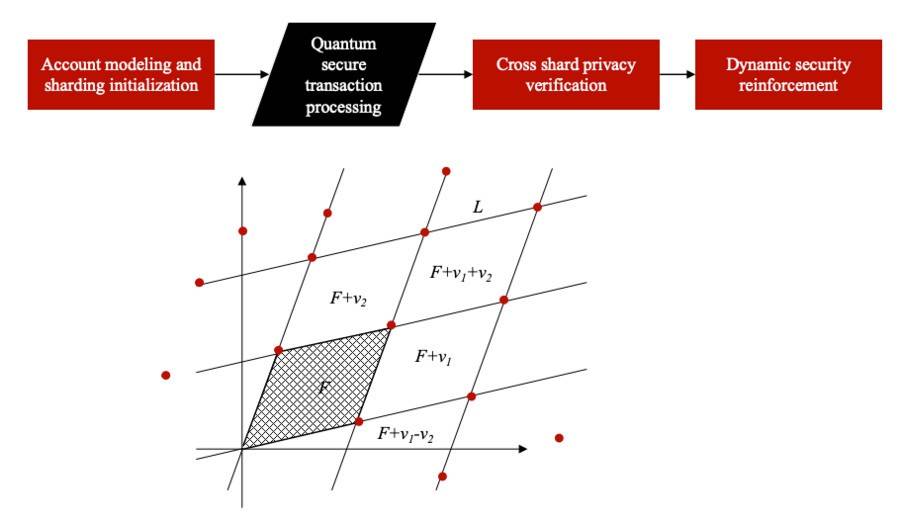
Core Viewpoint - The traditional cryptographic systems face threats from quantum computing, which can compromise blockchain security. MicroAlgorithm Technology (NASDAQ: MLGO) proposes a post-quantum threshold algorithm framework to ensure quantum resistance and privacy protection in blockchain infrastructure for the Web 3.0 era [1][5]. Group 1: Technology Overview - The proposed technology utilizes post-quantum cryptography, specifically the CRYSTALS-Dilithium signature algorithm, replacing traditional ECDSA to enhance security against quantum attacks [1][4]. - The framework incorporates threshold signature technology, distributing key management across multiple nodes to prevent single points of failure and enhance privacy [4][5]. - A dynamic sharding mechanism maps blockchain accounts to a weighted graph structure, optimizing transaction density within shards while controlling cross-shard communication costs [3][4]. Group 2: Transaction Processing - The transaction signing module employs the CRYSTALS-Dilithium algorithm to generate quantum-resistant signatures, with storage space for these signatures controlled to be 1.2 times that of non-quantum signatures [3][4]. - Communication between nodes utilizes the NewHope key exchange protocol, combined with Physical Unclonable Functions (PUF) to defend against quantum man-in-the-middle attacks [3][4]. - Smart contracts are enhanced with lattice-based homomorphic encryption, allowing for condition-based payment verification without exposing original data, particularly in supply chain finance scenarios [3][4]. Group 3: Privacy and Compliance - Cross-shard privacy verification is achieved through zero-knowledge proofs generated by the source shard, ensuring transaction legitimacy and state verification while minimizing data exposure [4]. - The system supports a dual-chain architecture, where the main chain handles quantum-safe transactions and the side chain remains compatible with existing protocols, facilitating a smooth transition [4][5]. - A linkable group signature scheme is implemented for regulatory compliance, enabling transaction audits without revealing user identities, thus maintaining privacy while ensuring compliance with regulations [4][5]. Group 4: Future Prospects - As quantum computing technology advances, the quantum resistance of MicroAlgorithm Technology's blockchain privacy protection technology will become increasingly significant [5][6]. - Future optimizations in algorithm efficiency and scalability are expected to accommodate larger blockchain networks and enhance applications in privacy-sensitive areas [5][6].

德国机构得出结论:中国已经开始在所有领域,冲击美国的优势地位
Sou Hu Cai Jing· 2026-02-03 04:50
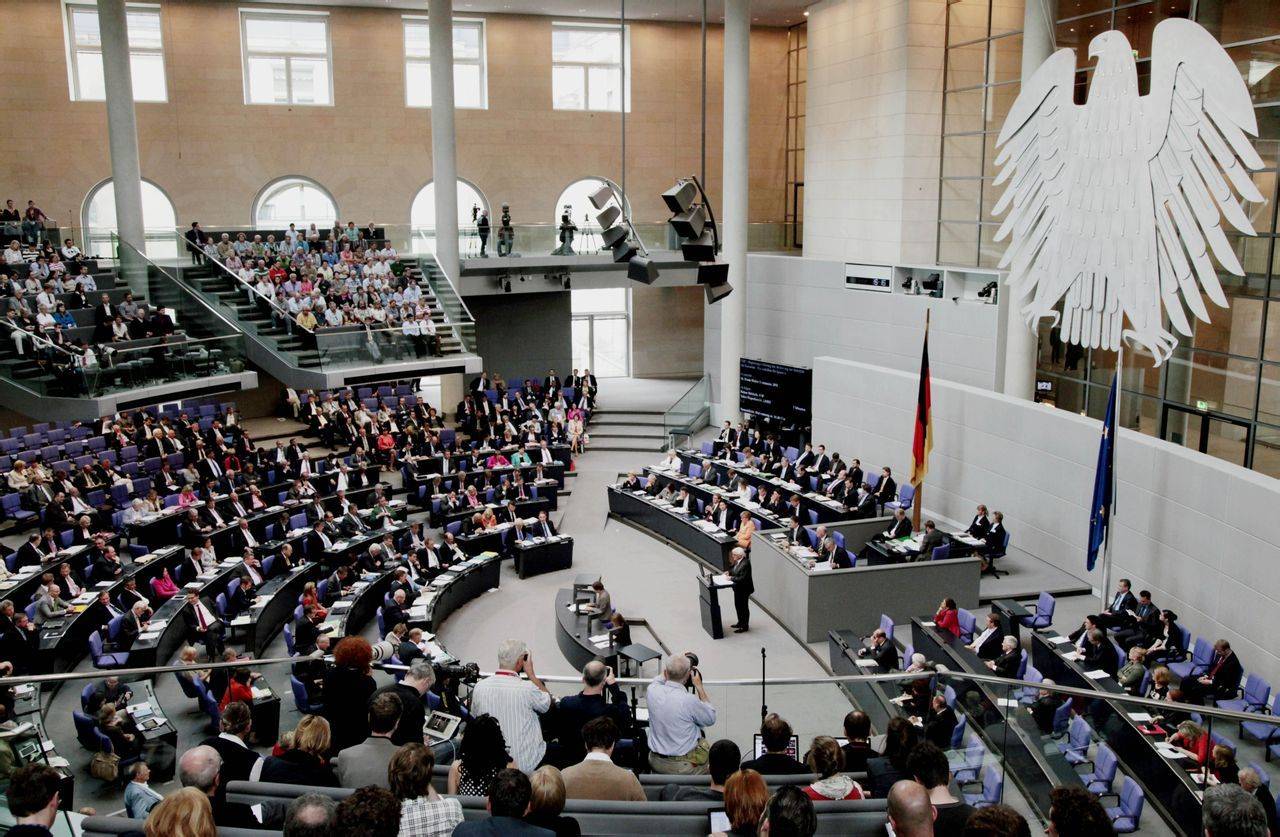
德国联邦统计局最新发布的数据引起了全球关注:去年前八个月,中国以高达1663亿欧元的贸易总额,首次超过美国,成为德国最大的贸易伙伴。这一数字 不仅仅是冰冷的统计,更像是一枚重磅信号,宣告全球经济格局正在悄然改变。事实上,这一趋势早有端倪——自2020年起,中国便已取代美国,成为整个 欧盟最大的贸易伙伴。不过在德国,这种变化显得更为彻底和深刻。 展望2025年,德国对中国的出口虽然略有下降,但从中国进口的商品数量却呈持续增长态势。这意味着德国在越来越多的产业环节依赖中国制造,依赖程度 与日俱增。正是这种深度依赖,促使德国企业进行战略性调整。2025年,德国企业在中国的投资达到近四年来的新高,许多公司开始重新布局,将中国视为 规避美国关税与地缘政治风险的首选之地。这些调整绝非一时冲动,而是经过深思熟虑后的现实选择——与中国紧密捆绑,寻找在全球不确定性中稳定生存 的立足点。 经济联系之外,技术竞争同样激烈。德国专利分析机构econsight发布的一份报告,对中美欧在前沿科技领域的专利布局进行了深度解析。报告涵盖23个关键 技术领域,包括人工智能、量子计算、可控核聚变以及卫星航天等,基本囊括了全球技术版图的制高点。结 ...
【科技日报】突破量子热化难题,我国78量子比特芯片实验成果登上《自然》
Ke Ji Ri Bao· 2026-02-03 02:52
实验显示,预热化阶段系统保留初始信息、熵增受抑,结束后纠缠快速增长、信息呈体积律扩散, 经典算法无法精准描述。78比特芯片虽非当前最高比特数,却凭借创新方案、特色测控与芯片性能协 同,首次在量子模拟器上实现超越周期驱动的可调预热化研究,为量子模拟提供新范式。 该成果为人工驱动调控量子系统开辟新方向,可与时间晶体、多体局域化等热点问题结合,同时为 大规模量子模拟数值方法提供新思路。该团队表示,未来将研制百比特以上超导芯片,探索更复杂的多 体问题,力争实现"可验证的实用化量子优势",推动量子计算从基础研究迈向实用化。 1月28日,中国科学院物理研究所/北京量子信息科学研究院智能量子团队联合北京大学等国内外机 构,在78量子比特超导芯片"庄子2.0"上完成量子系统预热化调控实验,相关成果在线发表于《自然》 国际期刊,为理解与控制复杂量子动力学迈出关键一步。 量子系统热化是指能量与信息均匀分布、趋近热平衡的过程,过快热化会导致量子信息丢失,直接 制约量子计算实用化。研究发现,量子系统受外场驱动时并非立即混乱,而是存在稳定的"预热化平 台",类似冰融水时温度长期维持在0℃的阶段,该反直觉现象超出经典计算机模拟能力。团队 ...
在量子世界找到“慢放键”
Huan Qiu Wang Zi Xun· 2026-02-03 01:41
来源:光明日报 本报北京2月2日电(记者崔兴毅) 就像为一段混乱的进程找到慢放键,中国科学家在量子世界实现了一项关键控制。中国科学院物理研究 所与北京大学的联合科研团队在国际上首次利用超导量子芯片,实验观测并人工调控量子多体系统走向 混沌前的关键中间状态——"预热化"平台。这一发现为理解并控制复杂的量子动力学过程打开了新窗 口,相关成果日前在线发表于国际学术期刊《自然》。 在量子世界中,系统在外部驱动下通常会逐步丢失初始信息,最终达到混乱的热平衡状态,该过程被称 为"热化"。然而,实验揭示,在完全热化之前,系统会经历一个反直觉的、相对稳定的"预热化"平台 期。这类似于给冰加热——在冰完全融化成水之前,温度会长时间稳定在0摄氏度。在预热化阶段,量 子系统虽受驱动,但信息扩散被抑制,有序性得以短暂保持。 研究团队在集成78个量子比特的超导量子处理器"庄子2.0"上完成这项实验。他们采用一种名为"随机多 极驱动"的特殊序列对系统进行精确操控。该驱动方式基于非周期的数学序列,通过调节序列的阶数与 周期,研究人员如同掌握不同的"加热节奏",成功实现对预热化平台持续时间的主动调控。当平台期结 束后,系统内部纠缠度急剧增长 ...
英国分析师:英国人应该亲自去中国看看
Xin Lang Cai Jing· 2026-02-02 23:09
来源:环球 让我们来正面回答关于英国人是否应该亲自去中国旅游的问题。中国是当今世界最重要的国家之一,拥 有14亿多人口,幅员辽阔,是延续数千年的文明古国,文化底蕴与历史积淀举世罕见。在中国,有太多 值得探索与体验的事物:丰富多样的地方美食、壮丽秀美的自然风光、举世闻名的世界奇迹、上海等现 代化大都市,甚至还有迪士尼乐园。面对这一切,谁不会心生赞叹与欣赏之情?这些不需要带有任何地 缘政治色彩。 毋庸讳言,近年来在某些西方媒体连篇累牍的负面渲染下,一些英国人对中国的认知已经故步自封。但 随着将来入境规定的调整,改变的契机已然出现。英中关系不必建立在地缘政治联姻或意识形态结盟之 上,而应立足于务实精神、常识与理性。 中国人民对英国及其文化持友好态度——只需看看北京环球影城中身着霍格沃茨长袍、热衷哈利·波特 主题的年轻人便可见一斑。我们期待两国在贸易、旅行与人文交流方面不断深化,也希望部分英国民众 不再任由右翼小报为其灌输对华刻板印象。(作者汤姆·福迪是英国知名政治和国际关系分析师) 英中关系为欧洲各国提供了一种可能性:在新的地缘政治格局中,英国及欧洲其他国家可以战略性地思 考该如何行事。(作者凯瑞·布朗是伦敦国王学 ...