智能制造

Search documents
“一带一路”秘鲁智能物流装备产业投资评估报告(2026版)
Sou Hu Cai Jing· 2025-12-02 01:37
Industry Overview - The smart logistics equipment industry focuses on the intelligent movement of goods from suppliers to demanders, incorporating six basic activities: smart packaging, unloading, warehousing, transportation, distribution, and processing [2] - Smart logistics equipment integrates technologies such as perception sensors, information technology, and artificial intelligence, making it a key component of the intelligent manufacturing equipment system [2] Application Scenarios - Smart logistics equipment is primarily applied in two fields: industrial production logistics and commercial distribution logistics [3] - Industrial production logistics involves the storage and transportation of raw materials and semi-finished products within factories, enhancing production efficiency and warehouse management [3] - Commercial distribution logistics emphasizes the connection between factories, merchants, and consumers, focusing on the storage, sorting, and distribution of goods [3] Industry Development History - The smart logistics industry originated in the 1950s in the United States, evolving from automated logistics equipment to intelligent logistics systems over the decades [7] - Key milestones include the establishment of the first automated warehouse in 1962 and the transition to intelligent logistics around 2010, driven by advancements in IoT and digital technologies [7] - China's smart logistics equipment industry began developing in the early 1990s, gaining momentum with the rapid growth of manufacturing and technological upgrades [7][8] Industry Chain Analysis - The smart logistics equipment industry chain consists of upstream raw materials (components, metals, motors, etc.), midstream manufacturing (intelligent conveying, warehousing, sorting equipment), and downstream customers (manufacturers and system solution providers) [8] - The upstream market for raw materials is competitive and well-supplied, while midstream manufacturers focus on producing equipment tailored to various industry needs [11][12] Market Size and Growth - The Chinese smart logistics equipment market grew from 31.92 billion yuan in 2018 to 100.39 billion yuan in 2023, with a compound annual growth rate (CAGR) of approximately 25.76% [12] - The market is projected to reach 192.02 billion yuan by 2027, with a CAGR of 17.60% from 2023 to 2027, driven by advancements in logistics technology and industrial automation [12]

数字赋能 老企业“泵”发新活力
Liao Ning Ri Bao· 2025-12-02 00:54
Core Insights - The company has implemented a digital testing and monitoring system in collaboration with the Chinese Academy of Sciences, significantly improving data accuracy and testing efficiency for their centrifugal pumps [1] - The transition to a digital production management platform has enabled the company to effectively manage urgent orders without disrupting the regular production schedule, enhancing overall operational efficiency [1] - The company has invested in digital transformation since 2019, resulting in a 25% increase in equipment utilization and a 30% boost in production efficiency [2] Group 1 - The digital testing system allows real-time data collection and automatic generation of test curves, improving the accuracy and efficiency of product testing [1] - The use of an industrial internet platform and sensors has provided each production material with an "internet ID," facilitating better order and resource matching [1] - The company has adopted a digital platform to track inventory changes in real-time, reducing inventory backlog and ensuring that all necessary components are available for assembly [2] Group 2 - The company has undergone multiple rounds of digital transformation, including lean production management reforms and the introduction of an ERP system [2] - Future plans include building an enterprise-level industrial data platform to manage and circulate data across the entire business chain and lifecycle [2] - The company aims to set a new benchmark in intelligent manufacturing within the industry through its digital development initiatives [2]
中创智领:“A+H”双平台助力企业战略转型 煤机龙头助推区域经济高质量发展
证券时报· 2025-12-02 00:18
Core Viewpoint - The article highlights the strategic transformation of Zhengzhou Coal Mining Machinery Group Co., Ltd., now renamed Zhongchuang Zhiling, towards intelligent and diversified development, marking a new phase in the company's evolution [1][2]. Group 1: Company Transformation and Strategy - Zhongchuang Zhiling has successfully entered the automotive parts sector, optimizing its industrial structure and diversifying revenue streams, while also supporting the development of upstream and downstream enterprises in the industry chain [2]. - The company has leveraged capital markets to support technological innovation and industrial upgrades, establishing a "second growth curve" to mitigate the impact of cyclical fluctuations in the coal machinery industry [5][6]. - Through strategic acquisitions, including the purchase of German company Sogger, Zhongchuang Zhiling has enhanced its technological capabilities in electric motor development and established a global production footprint [5][6]. Group 2: Financial Performance and Market Position - Since its A-share IPO in 2010, Zhongchuang Zhiling has achieved a cumulative net profit of 19.932 billion yuan and has distributed cash dividends totaling 7.549 billion yuan, exceeding its total capital market financing of 5.369 billion yuan [6]. - The company's total market capitalization has increased by 197% from 140 billion yuan at IPO to approximately 416 billion yuan by October 2025, reflecting strong shareholder returns and value creation [6]. Group 3: Industry Leadership and Regional Development - As a leading enterprise in the coal machinery sector, Zhongchuang Zhiling has played a crucial role in the intelligent and green transformation of traditional industries in Henan province, supporting the region's status as a key energy materials base [8][9]. - The company has been recognized as the first "lighthouse factory" in the global coal machinery industry, showcasing its commitment to intelligent manufacturing and serving as a model for regional economic development [8][9]. Group 4: Future Plans and Innovations - Over the next 3 to 5 years, Zhongchuang Zhiling plans to focus on R&D investment and capacity expansion, aligning its goals with Henan province's high-quality development objectives [12]. - The company aims to enhance its technological barriers by investing in cutting-edge fields such as industrial intelligent manufacturing and new energy components, while also expanding its product offerings in coal mining equipment and intelligent systems [12].

大湾区应用场景创新中心(智能制造)落户深圳
Ren Min Ri Bao· 2025-12-01 23:06
Core Insights - The "Baijing Chuangxiang" scenario docking conference was held in Bao'an District, Shenzhen, focusing on the establishment of the Guangdong-Hong Kong-Macao Greater Bay Area Application Scenario Innovation Center for Intelligent Manufacturing [1][2] - The center aims to leverage Bao'an's manufacturing base and application resources to develop new fields and high-value scenarios in technologies such as artificial intelligence, industrial internet, big data, and cloud computing [1][2] Group 1 - The conference attracted over 760 companies, releasing more than 500 scenario opportunities and capabilities, with over 60 companies signing agreements on-site [2] - More than 150 companies showcased over 500 new technologies and products, covering various fields including intelligent manufacturing, artificial intelligence, low-altitude economy, and unmanned systems [2] - The government-led scenarios included 288 opportunities, focusing on social governance, public services, and industry applications, while enterprise application scenarios totaled 220, targeting sectors like smart terminals and semiconductor industries [2] Group 2 - Bao'an District has nearly 560,000 enterprises, with around 5,600 above-scale manufacturing companies, covering all 31 major categories of manufacturing [2] - The district features a comprehensive transportation hub with nearly 400 square kilometers of land and 175 square kilometers of sea, integrating multiple transportation modes [2] - Bao'an has proposed to become a "benchmark city for fully open scenarios," aiming to open over 100 innovative application scenarios and release more than 1,000 new technologies, products, and solutions [2]
智造筑基 并购拓疆 出海破局 华润双鹤三维发力启新程
Shang Hai Zheng Quan Bao· 2025-12-01 19:23
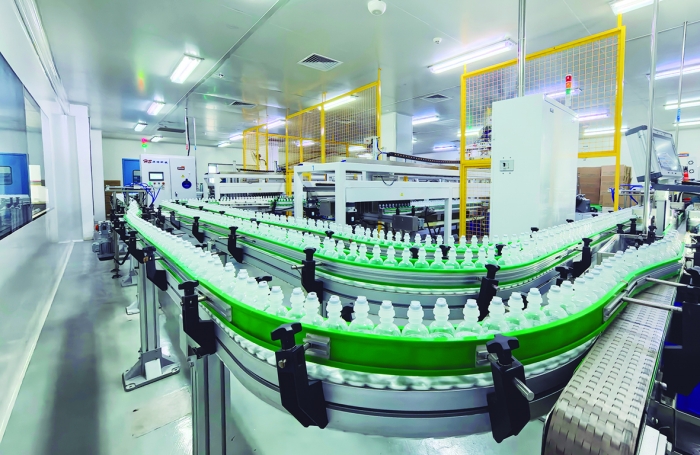
Core Viewpoint - The article highlights the transformation of China Resources Double Crane into a leading pharmaceutical group through smart manufacturing, strategic acquisitions, and international expansion, particularly in the medical infusion sector and innovative drug development [1][3][8]. Group 1: Smart Manufacturing - Henan Double Crane Huali Pharmaceutical Co., a subsidiary of China Resources Double Crane, has achieved a production speed of nearly 800 bottles (bags) per minute, positioning itself as a benchmark in the medical infusion industry [1][4]. - The company has implemented a fully automated production line, achieving "unmanned" operations throughout the entire process, which has led to a 15% to 20% increase in production efficiency and a 10% to 15% rise in daily output [4][5]. - The intelligent warehouse, with a capacity of approximately 50 million bottles (bags), is the largest modern smart warehouse in Henan Province, further enhancing operational efficiency [4]. Group 2: Strategic Acquisitions - China Resources Double Crane has a strong track record in acquisitions, having acquired companies like Shenzhou Biological, Tianan Pharmaceutical, and Huaren Zizhu to diversify its product portfolio and expand beyond infusion products [6]. - The recent acquisition of Zhongshu Pharmaceutical allows the company to enter the psychotropic drug market, with expectations for significant revenue growth from its core product, which is anticipated to reach a billion-level market size by 2025 [6][7]. - The company is focusing on acquiring leading firms in high-growth areas such as mental health, ophthalmology, and pediatrics, while also enhancing its biomanufacturing capabilities [7]. Group 3: International Expansion - China Resources Double Crane aims to shift from raw material exports to finished product exports, emphasizing product differentiation as a key strategy for international markets [8]. - The company plans to establish an international business department to coordinate its global operations and enhance its competitive edge in the international pharmaceutical market [8]. - Future international strategies include leveraging the Hainan Free Trade Port's advantages to create a global health production base and pursuing overseas acquisitions, particularly in Europe and the U.S. [8].

中国对外投资大国地位日益稳固
Ren Min Ri Bao· 2025-12-01 19:11
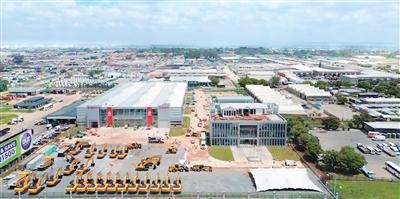
Core Insights - China's foreign direct investment (FDI) reached 1,033.23 billion RMB from January to October this year, marking a 7% year-on-year increase [5] - Chinese investors have made non-financial direct investments in 9,553 overseas enterprises across 152 countries and regions, totaling 872.6 billion RMB, which is a 6% growth [5] - The trend of Chinese enterprises is shifting from merely "going out" to "going in," indicating a focus on both product export and service export alongside foreign investment [6] Investment Trends - As of the end of 2024, Chinese investors have established 52,000 overseas enterprises in 190 countries, with 19,000 in Belt and Road Initiative countries [7] - Nearly 80% of China's FDI flows to Asia, with significant growth in investments in South America, Europe, and Oceania [7] - Investment in wholesale and retail, leasing and business services, manufacturing, finance, and mining has exceeded 10 billion USD each, with construction and IT services seeing growth rates of 80.5% and 205.5% respectively [7] Corporate Strategies - Companies like SANY Group are establishing manufacturing hubs abroad, such as a 28,000 square meter industrial park in South Africa, which is expected to produce 1,000 excavators annually [6] - Haier's new air conditioning production base in Thailand has achieved a production capacity of 6 million units per year, incorporating advanced technologies for efficiency and sustainability [9][10] - SF Express is enhancing logistics for Chinese automotive brands in the Philippines, establishing a smart delivery network to meet the unique geographical challenges of the region [11] Local Engagement and Sustainability - Chinese enterprises are increasingly focusing on local development and environmental sustainability, as demonstrated by the successful implementation of the Hafei Natural Gas Processing Plant project, which significantly reduces emissions and creates local jobs [12] - China Nonferrous Metal Mining Group operates multiple overseas mining and smelting facilities, emphasizing safety, efficiency, and environmental protection in their operations [13] Future Directions - Experts suggest that to enhance the effectiveness of overseas investments, there should be improvements in management systems and encouragement of diversified investment models [13] - The emphasis is on increasing the quality and safety of investments while ensuring sustainable development and local community engagement [13]




凯旺科技(301182.SZ):拟与稳尖科技设立合资公司
Ge Long Hui A P P· 2025-12-01 14:13
Core Viewpoint - Kaiwang Technology (301182.SZ) is expanding its business into high value-added and high-tech barrier fields to enhance its market competitiveness and output value in response to increasing demands for heat dissipation performance in downstream markets [1] Group 1: Company Strategy - The company has established a complete industrial chain that includes precision cable components, hardware parts, plastic components, and finished assembly, accumulating rich experience in precision manufacturing [1] - The management adheres to a "dual-wheel drive" strategy, positioning heat dissipation solutions as the company's second growth curve [1] - The company plans to strengthen its core component manufacturing capabilities through a joint venture with Dongguan Wanjian Precision Technology Co., Ltd., establishing a subsidiary named Wenkai Technology (Dongguan) Co., Ltd. [1] Group 2: Market Challenges - The company faces challenges such as declining profit margins and product homogenization in the consumer electronics, communications, and security sectors, necessitating technological innovation to explore new business growth points [1] - The existing R&D team has begun developing and reserving heat dissipation-related technologies to address these market challenges [1]
视频丨AI赋能千行百业 “制造”迈上“智造”新台阶
Yang Shi Xin Wen Ke Hu Duan· 2025-12-01 14:06
Group 1 - The core viewpoint of the article highlights the strategic deployment of artificial intelligence (AI) in various industries, particularly in Sichuan's manufacturing sector, following the State Council's guidelines on implementing the "AI+" initiative [2] - Intelligent manufacturing in Sichuan has achieved significant improvements in precision and efficiency, with a turbine blade factory reporting a 650% increase in per capita efficiency and a quality level exceeding 99% [3][5] - The integration of AI in quality control processes has transformed traditional methods, allowing for real-time monitoring and reducing order delivery cycles from 49 days to 11 days through a digital management platform [7][9] Group 2 - Technological breakthroughs in core technologies have enhanced the efficiency of robotic operations, with Sichuan's autonomous AI technology contributing to continuous improvements in intelligent manufacturing [11][13] - The stability of robotic welding operations has been emphasized, with autonomous robots maintaining consistent quality over long periods, showcasing the advantages over manual welding [11][15] - Innovations in AI have enabled robots to understand human language and perform complex tasks, such as accurately identifying and sorting various types of waste, marking a significant advancement in industrial applications [19][21] Group 3 - The value of AI extends beyond manufacturing, with Sichuan's embodied intelligent robot training center exploring applications across various sectors, including logistics, healthcare, and elder care [23][25] - The training center aims to reduce the need for specialized programming personnel, allowing workers to control robots through voice commands, thereby enhancing operational efficiency [23][27] - Sichuan is building a comprehensive ecosystem for the robotics industry, with a focus on the "587+" industrial system, supported by a collaborative development mechanism across multiple locations [33][35]


“环两江”核心镇迎来新产业,有望成为国家级“小巨人”企业
Sou Hu Cai Jing· 2025-12-01 13:48
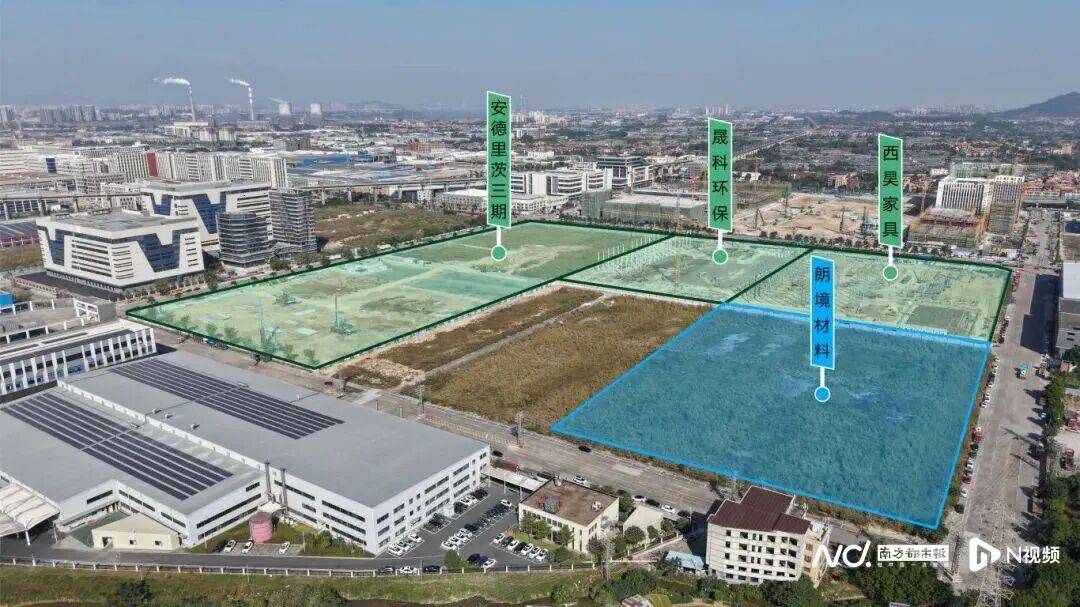
Core Insights - Guangdong Langjing Material Technology Co., Ltd. has successfully acquired 40 acres of industrial land in Jiujiang Town for a total investment of 300 million yuan, aimed at establishing a high-end sealing material R&D and production base [1][3] Company Overview - Langjing Material focuses on independent R&D as a key to enhancing core competitiveness, with nearly 10 invention patents and 16 utility model patents [3] - The company maintains close partnerships with institutions like Guangdong Engineering Technology Research Center and South China University of Technology for collaborative research [3] - Its product range includes hydraulic seals, oil and gas seals, and rotary seals, with nearly 20,000 specifications, serving industries such as machinery, petrochemicals, aerospace, and new energy [3] - Langjing Material holds a leading position in the oil valve sealing niche, with clients including major industry players like PetroChina and Sinopec [3] Industry Context - The sealing materials industry in China is entering a critical transformation period, driven by the rapid development of emerging sectors like aerospace, marine economy, and new energy, leading to increased demand for high-end sealing products [3] - The domestic sealing ring market is projected to reach $2.24 billion in 2024, with large-diameter high-performance products expected to grow over 15% [3] - The industry is characterized by three major trends: material innovation, smart manufacturing, and green low-carbon development [3] Regional Development - The establishment of Langjing Material aligns with the industrial development direction of Jiujiang Town, as outlined in the "Overall Planning for High-Quality Development of the Ring West River—North River District" [4] - Jiujiang Town is designated as a high-end equipment and new materials industrial cluster, contributing to the vitality of the Ring Two Rivers area [4] - The Lingang International Industrial Community is a key platform for Jiujiang's industrial development, with 52 projects introduced and a total planned investment exceeding 21.3 billion yuan [4] - The town has efficiently integrated and released nearly 1,300 acres of industrial land this year, setting records for rapid land transactions [4]
森麒麟:公司通过多项措施努力追赶及至赶超老牌国际轮胎品牌
Zheng Quan Ri Bao Wang· 2025-12-01 13:11
证券日报网讯12月1日,森麒麟(002984)在互动平台回答投资者提问时表示,在公司核心管理层的持 续带领下,森麒麟正通过持续优化全球化布局、技术创新、智能制造、精细化管理、市场份额提升、品 牌力打造等措施,努力追赶及至赶超老牌国际轮胎品牌。以公司为代表之一的中国优秀制造企业势必将 在未来实现"创世界一流轮胎品牌,做世界一流轮胎企业"的企业愿景。 ...