
产业转移

Search documents
长三角客商湖南新晃签约34.52亿元
Zhong Guo Xin Wen Wang· 2025-07-13 16:40
Group 1 - The "Daxin Cooperation · Yangtze River Delta Businessmen New Huangxing Action" investment promotion conference was held in Hunan, resulting in the signing of 9 key projects worth 3.452 billion yuan, focusing on industries such as new energy, fine chemicals, new materials, and specialty agriculture [1] - New Huangxing County is strategically located at the intersection of the national western development and central rise strategies, serving as a frontier for Hunan's integration into the "Western Land-Sea New Corridor" [1] - The collaboration with Guizhou's Daluo Economic Development Zone aims to establish the "Xiangqian Daxin Economic Cooperation Demonstration Park," facilitating efficient resource flow and integrated development in infrastructure and logistics [1] Group 2 - New Huangxing is cultivating a modern industrial system with a focus on fine chemicals and new metal materials, while also emphasizing the deep processing of local specialties like Huangjing and Huangniu [2] - The county is accelerating the construction of key platforms such as the provincial chemical park and a 500,000-ton high-carbon ferrochrome processing base, enhancing its industrial capacity [2] - New Huangxing prioritizes a favorable business environment, implementing "one-stop" government services and "nanny-style" full-process support for key projects, significantly reducing operational costs for enterprises [2]
新型工业化背景下的企业实践
3 6 Ke· 2025-07-11 01:41
Core Viewpoint - The article emphasizes the critical role of enterprises in driving high-quality economic development through new industrialization, highlighting the need for innovation, digital transformation, cross-industry collaboration, and organizational vitality to navigate opportunities and challenges in the current economic landscape [1][3][22] Group 1: Opportunities in New Industrialization - New industrialization is characterized by the integration of information technology and service-oriented industrial structure adjustments, aiming for a transition of traditional manufacturing towards intelligent, efficient, green, and sustainable development [4] - The core features of new industrialization include independent innovation, integration of digital and physical realms, green low-carbon initiatives, and internal and external circulation, all aimed at achieving coordinated economic growth and social progress [4] Group 2: Technological Innovation and Industry Upgrade - The current technological revolution, driven by AI, big data, IoT, and cloud computing, accelerates the new industrialization process, enabling enterprises to optimize production processes and enhance market competitiveness [5] - However, the high technical barriers and significant resource investments required for innovation pose challenges, particularly for small and medium-sized enterprises [5] Group 3: Policy Support for Enterprise Development - Recent government meetings have emphasized accelerating new industrialization and fostering advanced manufacturing clusters, with various supportive policies introduced, including financial subsidies, tax reductions, and low-interest loans for enterprises engaged in technological innovation [6] - Enterprises are encouraged to actively engage with government policies to leverage these benefits for transformation and rapid growth [6] Group 4: Market Demand and Opportunities - Rising consumer living standards lead to increasingly personalized and diverse product and service demands, prompting enterprises to accelerate digital transformation and enhance customer satisfaction through tailored offerings [7] - The rapid changes in market demand intensify competition, necessitating continuous innovation and improvement of core competencies [7] Group 5: Industry Collaboration - New industrialization emphasizes collaborative innovation and integration among upstream and downstream enterprises, with specialized small and medium enterprises playing a crucial role in resource sharing and competitive advantage [8] - There is a need for deeper collaboration within the industry chain to enhance efficiency and leverage the benefits of collaboration [8] Group 6: Recommendations for Enterprises - Enterprises should identify suitable transformation points and implement changes in line with the new industrialization context [9] - Focusing on specialized, refined, unique, and novel characteristics can help small and medium enterprises gain competitive advantages [10][11] Group 7: Digital Transformation - Digital technologies are pivotal in driving industrial transformation, with a focus on utilizing big data, cloud computing, and AI to enhance operational efficiency and product quality [14][15] - The digital transformation process involves a systematic approach, including diagnosis, top-level design, implementation, and ecosystem construction [17] Group 8: Cross-Industry Innovation - Cross-industry innovation is essential for breaking down barriers and creating value, requiring enterprises to identify opportunities and establish partnerships across different sectors [18] - Building a culture of innovation and investing in research and development are crucial for enhancing technological capabilities [18] Group 9: Organizational Vitality - Organizational vitality is vital for adapting to uncertainties, necessitating a positive corporate culture and effective leadership to foster employee engagement and innovation [21] - Enhancing operational mechanisms and optimizing workflows can improve resource allocation and responsiveness to market changes [21]


日本央行福冈分行行长:南部地区的一些企业正将汽车生产转移到美国,而不是从日本出口。
news flash· 2025-07-10 07:33
Group 1 - The core viewpoint is that some companies in the southern region of Japan are shifting their automobile production to the United States instead of exporting from Japan [1]
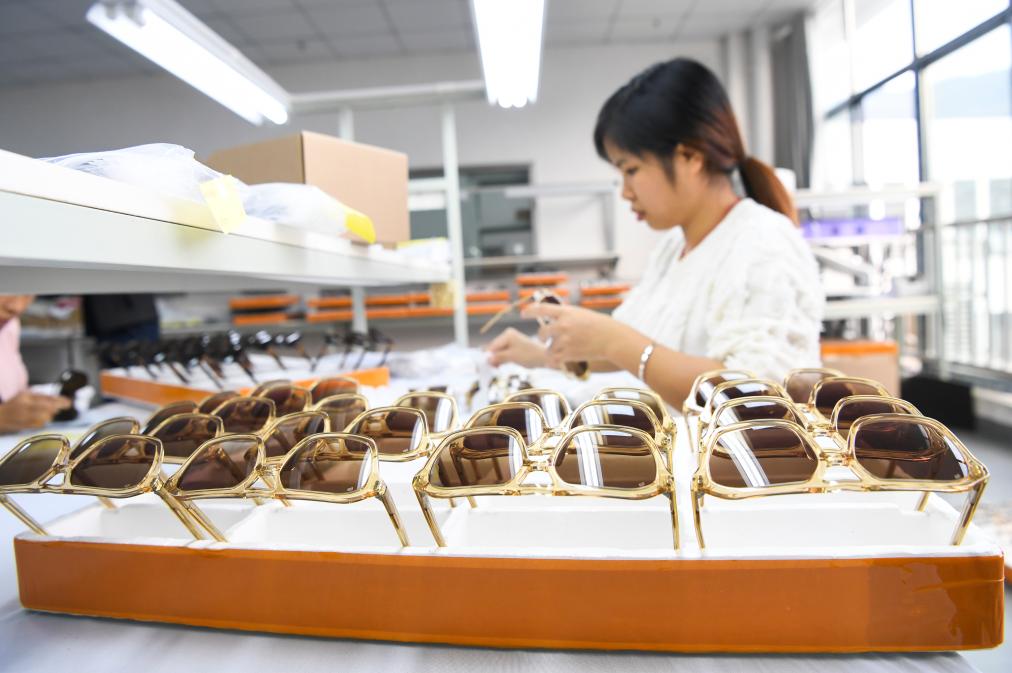
“筑巢引凤” 聚企成“链”——重庆奉节眼镜产业“从无到有”成长记
Xin Hua She· 2025-07-07 14:01
Core Insights - The eyewear industry in Fengjie County has rapidly developed into a significant industrial cluster, achieving a comprehensive output value of 3.02 billion yuan in 2024, transforming from a non-existent sector a few years ago [1][4]. Group 1: Industry Development - Fengjie County has shifted from coal mining, which caused environmental damage, to developing a labor-intensive and low-pollution eyewear industry, aligning with green development needs [1][2]. - The county closed all coal mines with an annual output of less than 90,000 tons in 2016, prompting the search for new sustainable industries [1]. Group 2: Infrastructure and Support - Fengjie has invested in infrastructure, including 849,000 square meters of standard factory buildings and various housing facilities, to attract eyewear companies [2]. - The establishment of a quality testing center and a display center for eyewear products has further enhanced the industrial park's capabilities [2]. Group 3: Economic Impact - The eyewear industry in Fengjie has created over 3,500 jobs, with 76 eyewear companies currently in operation, including 21 above-scale enterprises capable of producing 200 million pairs of glasses and 300 million lenses annually [4]. - In 2023, Fengjie signed contracts with 10 new eyewear companies, with a total investment of 398 million yuan, indicating strong interest in the local industry [4].
新加坡企业登顶东南亚500强:全球大宗商品巨头,年入1.7万亿元
Sou Hu Cai Jing· 2025-07-06 12:45
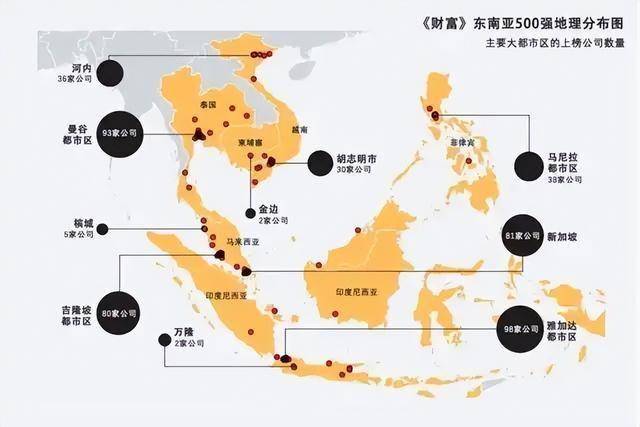
Core Insights - Southeast Asia, with a population of nearly 700 million, is one of the most dynamic regions in global economic development, with a GDP of approximately $3.97 trillion last year, growing by 4.6% year-on-year [1] - The 2025 Southeast Asia 500 list published by Fortune shows that the revenue threshold for inclusion is $349.4 million, with total revenues of listed companies reaching $1.82 trillion, an increase of 1.7% from the previous year [1][3] Industry Overview - The energy sector, including mining, power generation, and transmission, dominates the revenue landscape, accounting for nearly one-third of total revenues. The financial sector is the second-largest, with banks and financial institutions occupying 13 of the top 20 profit positions [3] - The top 10 companies contributed $660 billion in total revenue, with the top five generating $516 billion, representing 28% of the total revenue of the 500 companies [5][9] Company Performance - The largest company, Trafigura Group, achieved revenues of $243.2 billion, making it the only company on the list to surpass the $100 billion mark. It is a leader in the global oil, gas, metals, and commodities trading sector [9][11] - Singapore-based Sea Group, the largest tech company in Southeast Asia, reported revenues of $16.82 billion, a year-on-year increase of 28.8%, and a net profit of $444.3 million, up 173.1% [5][11] - DBS Group Holdings emerged as the most profitable company in Southeast Asia 500, with a net profit of $8.45 billion, followed by OCBC and UOB, all three being Singaporean banks [7][11] Country Distribution - Indonesia leads with the highest number of companies on the list at 109, followed by Thailand with 100, Malaysia with 92, and Singapore with 81. Vietnam has 76, the Philippines 40, and Cambodia 2 [3] - Singaporean companies generated $637.1 billion in revenue, accounting for over one-third of the total, with the top ten companies dominating the revenue share [3]
北大汇丰智库宏观经济分析会举行 粤港澳大湾区经济呈现新态势
Shen Zhen Shang Bao· 2025-07-05 17:21
Group 1 - The Middle East, particularly Saudi Arabia, UAE, Kuwait, and Qatar, presents significant investment opportunities due to the continuous influx of people and capital [1][3] - Southeast Asia is becoming a crucial node in the global supply chain, with a projected GDP growth of 4.8% in 2024 and a 6.8% increase in exports [1] - The Middle East accounts for 5.2% of global GDP and is a major source of energy imports for China, with strong growth in imports of machinery and vehicles [1] Group 2 - China's macroeconomic policies have room for maneuver, with an expected growth target of around 5% for the year [2] - The Guangdong-Hong Kong-Macao Greater Bay Area is experiencing consumption-driven growth, with a projected GDP growth of 4.3% in the second quarter of 2025 [2] - The UAE has a population of 12.5 million, with over 80% being expatriates, indicating a dynamic market environment [3] Group 3 - Key investment sectors in the Middle East include agriculture, digital products in service trade, the used car market, and advanced manufacturing [3] - The global industrial transfer is accelerating, with China’s share of U.S. imports declining while emerging economies like Bangladesh and India are increasing their share [3] - Strategies for China include trade negotiations, encouraging companies to explore overseas markets, and developing service trade to reduce trade deficits [3]
2025中国产业转移发展对接活动(江西)开幕 签约超百亿元
Zhong Guo Xin Wen Wang· 2025-07-04 13:40
Group 1 - The event "2025 China Industrial Transfer Development Docking Activity (Jiangxi)" was held in Nanchang, featuring the signing of 12 key industrial transfer cooperation projects with a total investment exceeding 10 billion yuan [1] - The event was co-hosted by the Ministry of Industry and Information Technology and the Jiangxi Provincial Government, aiming to build a high-level industrial transfer docking platform to attract global high-quality resources and promote high-quality development in the central region [1] - The signed projects cover key industries such as advanced equipment manufacturing, electronic information, and new energy, highlighting Jiangxi's strong industrial foundation and its role in domestic industrial gradient transfer [1] Group 2 - The event attracted numerous heavyweight companies, including Fortune Global 500, China 500, and private enterprises, indicating significant interest from major industry players [2] - In addition to the opening ceremony and signing ceremony, the organizers arranged specialized docking activities for four industrial chains: electronic information, non-ferrous metal new materials, advanced equipment, and aviation, along with discussions on manufacturing digital transformation [2]
破解内陆企业创新困局!企知道联合远鸣集团助推中西部制造业转型升级
Sou Hu Wang· 2025-07-02 09:52
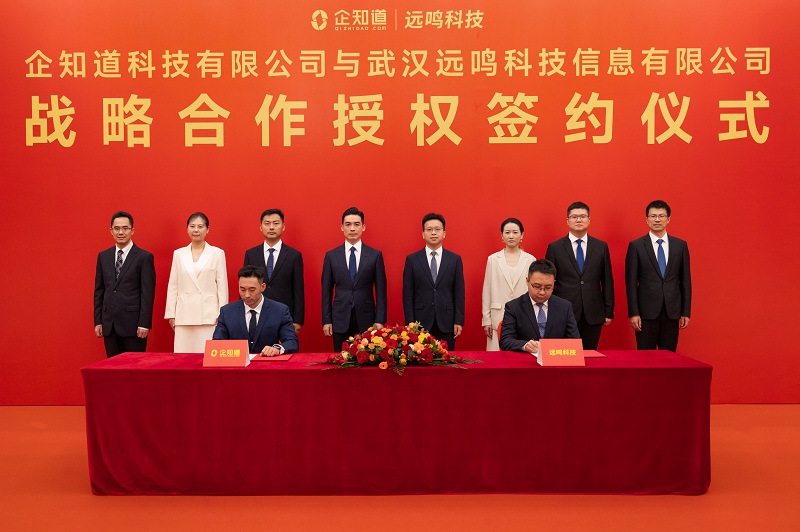
Group 1 - On July 1, Qizhidao signed a strategic cooperation agreement with Wuhan Yuanming Group, with Yuanming acting as a service provider for Qizhidao's "Innovation Space" and "Trade Space" products, aimed at enhancing digital efficiency for enterprises in six provinces: Hubei, Hunan, Henan, Sichuan, Chongqing, and Shaanxi [1][6] - The central and western regions of China are experiencing opportunities for industrial transfer, particularly in emerging industries such as new energy, new materials, and intelligent equipment, which provide significant space for enterprise transformation and upgrading [2] - Yuanming Group is a leading institution in science and technology innovation services in Central and Western China, with over 700 professionals and extensive experience in technology transfer, intellectual property, policy application, and certification [6] Group 2 - Qizhidao's global science and technology innovation big data AI platform will assist enterprises in the central and western regions to enhance their innovation capabilities by rapidly completing product deconstruction and generating innovative solutions [8] - The collaboration aims to provide a one-stop empowerment for regional enterprises through "technology innovation + market expansion," facilitating the transition from manufacturing hubs to innovation centers [8] - Yuanming Group is committed to deepening professional services and enhancing customer experience, positioning Qizhidao's Innovation Space and Trade Space as essential tools for innovation and upgrading for more enterprises in the central and western regions [8]
江西积极有序承接产业转移 努力构建现代化产业体系
Zhong Guo Xin Wen Wang· 2025-06-25 15:54
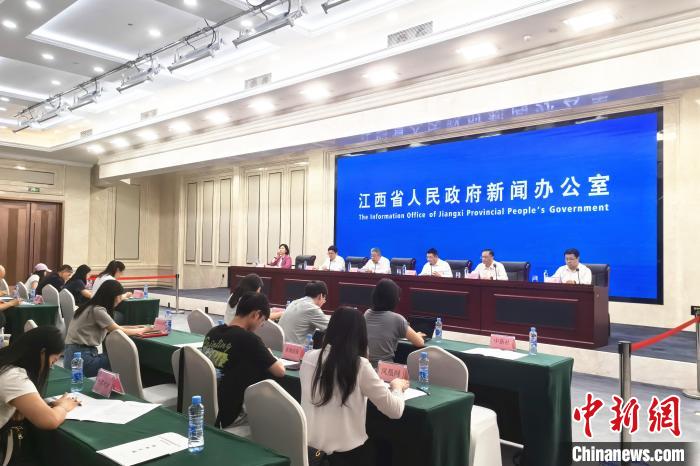
Core Viewpoint - Jiangxi province is actively and orderly undertaking industrial transfer to build a modern industrial system, leveraging its geographical advantages and solid manufacturing foundation [3][4]. Group 1: Industrial Transfer and Development - Jiangxi has a unique geographical advantage, connecting the east and west, and the north and south, with a well-established industrial system and a solid manufacturing base [3]. - The province is focusing on domestic industrial gradient transfer, aiming to create an inland open highland [3]. - Typical cases of industrial transfer projects have emerged, such as the establishment of electronic information and lithium battery industry clusters in Longnan City [3][4]. Group 2: Specific Industry Focus - In the electronic information sector, Longnan City is concentrating on the "chip-screen-device-end" direction, attracting leading enterprises and covering various fields including electronic materials and smart terminals [3]. - The lithium battery new materials industry in Longnan focuses on raw material production and recycling, forming a closed-loop chain from upstream lithium carbonate and lithium iron phosphate to downstream energy storage batteries [3]. Group 3: Future Plans and Initiatives - The Jiangxi Provincial Department of Industry and Information Technology plans to deepen cooperation with major economic regions such as the Yangtze River Delta and the Guangdong-Hong Kong-Macau Greater Bay Area to expand industrial development [4]. - The 2025 China Industrial Transfer Development Matching Event in Jiangxi aims to build a platform for industrial transfer, attracting more enterprises and resources to the province [4][5]. - The event will take place from July 3 to 5 in Nanchang, with participation from major companies including Fortune Global 500 and China’s top 500 enterprises [4].
广西多措并举大力承接产业转移
news flash· 2025-06-24 08:29
Core Viewpoint - The article highlights the efforts of Guangxi to actively undertake industrial transfer, with significant events and projects planned to enhance economic development in the region [1]. Group 1: Event Overview - The 2025 China Industrial Transfer Development Matching Event (Guangxi) is scheduled to take place on July 19-20 this year [1]. - The Ministry of Industry and Information Technology and the Guangxi Zhuang Autonomous Region government have organized this event for two consecutive years [1]. Group 2: Project Data - A total of 716 projects have been signed over the past two years, with a total signing amount of 696.6 billion yuan [1]. - Currently, 505 projects have been implemented, 361 projects have commenced construction, and 127 projects have been completed and put into production [1].