
公募基金费率改革

Search documents
这家券商研究所所长,拟离职!
中国基金报· 2025-09-10 13:02
Group 1 - The core viewpoint of the article is the significant personnel change at AVIC Securities, with the departure of its research director Zou Runfang after over four years in the position [2][3][4] - Zou Runfang has a 16-year career in the securities industry, having worked at various firms including Everbright Securities and Tianfeng Securities, with a focus on the machinery and military industries [4][5] - AVIC Securities, established in October 2002, is the only securities company under a Chinese military central enterprise, with a registered capital of 7.328 billion yuan [4][5] Group 2 - The article highlights a trend of frequent personnel changes in brokerage research departments this year, with several star analysts moving to different firms or transitioning to buy-side roles or entrepreneurship [6][7] - The decline in commission rates due to public fund fee reforms has significantly impacted the revenue of research departments, leading to reduced salaries and accelerating talent mobility within the industry [8]


投资利器再度升级!每年节省上千元,公募费率改革诚意满满
Sou Hu Cai Jing· 2025-09-10 08:05
Core Viewpoint - The recent reform in the public fund industry aims to reduce costs for investors while enhancing service quality from fund companies, coinciding with the ETF market surpassing 5 trillion [1][5][11] Summary by Sections Regulatory Changes - The "Regulations on the Management of Sales Expenses for Publicly Raised Securities Investment Funds" was released for public consultation on September 5, marking a significant step in the fee reform process initiated in July 2023 [1][4] - This reform is structured in three phases, with the third phase being the final critical step to implement fee reductions across the public fund sector [4] Fee Reductions - Management fees for actively managed equity funds have been reduced from 1.5% to 1.2%, and custody fees from 0.25% to 0.2% [5][6] - Transaction commissions for actively managed public funds have decreased from 0.08% to 0.05%, while ETF transaction commissions have been lowered to 0.025% [6] - Sales fees have seen significant cuts, with equity fund subscription fees dropping from 1.5% to 0.8%, and mixed fund fees from 1.5% to 0.5% [6][7] Investor Benefits - An example calculation shows that a 10,000 yuan investment in a fund could save approximately 35 yuan annually due to reduced management and custody fees [6] - For a 100,000 yuan investment in actively managed equity or mixed funds, total savings could exceed 1,000 yuan annually, with the overall annual benefit to investors estimated to exceed 50 billion yuan [7][11] Market Response - The fee reduction has led to a surge in fund sales, with multiple funds being fully subscribed on their first day of issuance, indicating a positive market response [8][11] - As of September 8, 12 funds have announced early closure of their fundraising periods, reflecting strong investor interest [8] Industry Outlook - The fee reform is expected to lower investor costs and enhance their experience, contributing to the high-quality development of the fund industry [11]
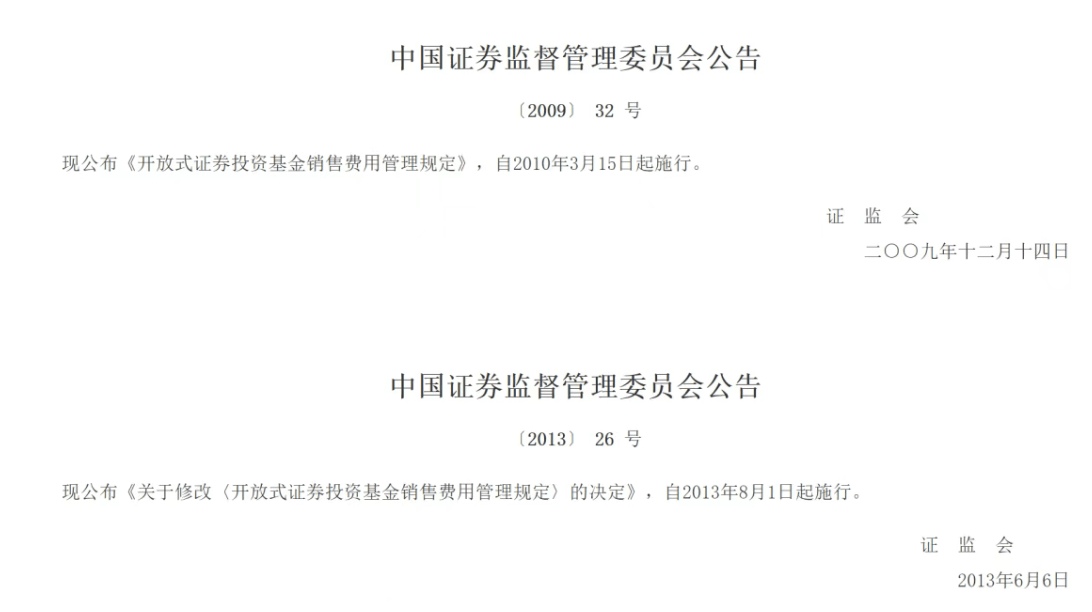
华夏基金:以投资者为中心,切实提升投资体验与获得感
Xin Lang Ji Jin· 2025-09-10 06:49
Group 1 - The core theme of the event is to promote the high-quality development of public funds in Beijing, aligning with the national financial management center's role [1] - The recent fee reform in the public fund industry aims to lower investor costs, enhance long-term investment, and improve the overall investment experience [2][3] - The reform is seen as a shift from a scale-oriented approach to one focused on investor returns and satisfaction, fostering a healthier development model for the industry [2] Group 2 - The fee reform is expected to compel fund managers to enhance their investment management, product innovation, and customer service capabilities [2] - The third phase of the fee reform is projected to save investors approximately 30 billion yuan annually, with cumulative savings exceeding 50 billion yuan across all three phases [3] - The reform includes provisions that eliminate subscription and service fees when purchasing funds directly from the fund management companies [3]
“旗手”躁动,顶流券商ETF(512000)高频溢价,近20日“疯狂吸金”超60亿元
Xin Lang Ji Jin· 2025-09-10 06:08
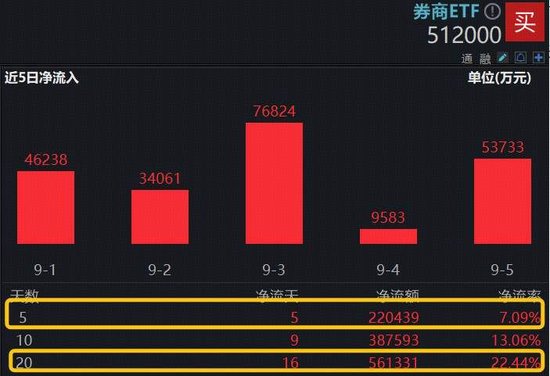
Group 1 - The core viewpoint of the articles indicates a significant recovery in the brokerage sector's performance in the first half of the year, driven by continuous capital inflow and the opening of new growth areas in virtual assets [3][4] - The brokerage ETF (512000) has reached a new historical high with a total scale exceeding 32.2 billion, and the average daily trading volume for the year has reached 957 million, highlighting its leading position in A-share scale and liquidity [3][4] - The valuation of the brokerage sector remains at historically low levels, with the price-to-book ratio (PB) of the index tracked by the brokerage ETF at only 1.56 times, indicating a potential for future market space [3][4] Group 2 - The brokerage sector has seen a substantial influx of funds, with the brokerage ETF (512000) attracting 537 million in a single day and over 6 billion in net inflows over the past 20 days [4] - The public fund fee reform is expected to lower trading costs for investors, thereby enhancing their willingness to invest in the market, which may continue to support the recovery trend in brokerage performance [3][4] - The brokerage ETF (512000) passively tracks the CSI All Share Securities Companies Index, encompassing 49 listed brokerage stocks, with nearly 60% of its holdings concentrated in the top ten leading brokerages, while also including mid and small brokerages for high elasticity in performance [6]
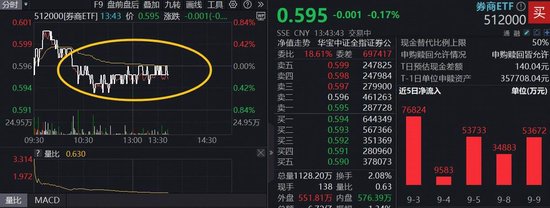
公募销售费用新规点评来了!对券商业绩影响有限,机构重申看好,顶流券商ETF(512000)20日吸金超56亿元
Xin Lang Ji Jin· 2025-09-08 02:57
Core Viewpoint - The China Securities Regulatory Commission (CSRC) has revised the regulations on the management of sales fees for publicly offered securities investment funds, marking the completion of a two-year reform process aimed at reducing sales fees for public funds [1][2]. Fee Adjustments - The maximum rates for subscription and purchase fees for equity, mixed, and bond funds have been reduced from 1.2%/1.5%, 1.2%/1.5%, and 0.6% to 0.8%, 0.5%, and 0.3% respectively [2]. - The maximum sales service fee for equity and mixed funds has been lowered from 0.6% per year to 0.4% per year, while for index and bond funds, it has been reduced from 0.4% per year to 0.2% per year. Money market funds' maximum fee has decreased from 0.25% per year to 0.15% per year. Funds held for over a year will no longer incur sales service fees [2]. - The trailing commission ratio for sales to individual investors remains capped at 50%, while for institutional investors, the cap for equity funds is 30%, and for bond and money market funds, it has been reduced from 30% to 15% [2]. Impact on Brokerage Firms - The overall impact on brokerage firms' performance is considered limited, as the front-end subscription/purchase fees are already discounted, and the primary products are equity-based, which minimizes the effect of the reduced sales service fees [3]. - The maintenance of the trailing commission payment ratio is viewed positively, exceeding market expectations, and supports a favorable outlook for the brokerage sector [4]. Market Sentiment and Future Outlook - The fee reform is expected to enhance investor participation and drive capital into the market, which will benefit brokerage businesses in the long term. Positive fiscal and monetary policies are anticipated to sustain market sentiment [5]. - The brokerage sector is experiencing a recovery trend, with active trading levels remaining high. Recent data indicates significant net inflows into the leading brokerage ETF, reflecting strong investor interest [5]. - The brokerage sector's performance is closely tied to capital market conditions, and with improved market risk appetite, the sector's outlook is expected to remain positive [7]. ETF Performance - The brokerage ETF has surpassed 31.6 billion yuan in size, achieving a historical high, with an average daily trading volume of 9.56 million yuan, indicating strong liquidity and interest in the sector [9]. - The ETF tracks the CSI All Share Securities Companies Index, encompassing 49 listed brokerage stocks, with a significant portion allocated to leading firms while also including smaller firms with high growth potential [9].
公募基金销售费用管理规定征求意见,券商ETF(159842)近10日累计“吸金”超14亿,机构:重申看好券商板块机会
2 1 Shi Ji Jing Ji Bao Dao· 2025-09-08 02:03
Group 1 - The brokerage ETF (159842) experienced a slight decline of 0.25% as of the report date, with a trading volume exceeding 300 million yuan, indicating active trading [1] - Among the constituent stocks, notable gains were observed in Guotou Capital (over 2%), along with Pacific Securities, First Capital, Guoxin Securities, Dongfang Wealth, GF Securities, and Guohai Securities [1] - In terms of fund flow, the brokerage ETF (159842) recorded net inflows for 9 out of the last 10 days, accumulating over 1.48 billion yuan [1] Group 2 - The China Securities Regulatory Commission (CSRC) released a draft regulation on public fund sales fees, marking a significant step in the long-awaited fee reform in the public fund industry [2] - This reform is expected to benefit investors by reducing costs by over 50 billion yuan annually, reflecting a commitment to investor interests [2] - The new sales fee regulations are anticipated to positively impact the brokerage industry, supporting its long-term steady development, while maintaining existing commission payment ratios, which is better than market expectations [2]
银河证券:后续A股大概率将延续震荡上行走势
Zheng Quan Shi Bao Wang· 2025-09-08 00:22
Group 1 - The report from Galaxy Securities indicates a shift in financing trends, with sectors like electronics, computers, and communications seeing a reversal in net financing since the market fluctuations on September 2, while sectors such as power equipment, non-bank financials, automotive, transportation, and pharmaceuticals continue to experience net inflows [1] - The outlook for the A-share market suggests a likely continuation of a fluctuating upward trend, although short-term volatility risks should be monitored, particularly regarding marginal changes in market volume [1] - Domestic and international conditions are influencing the market, with weak U.S. non-farm payroll data in August reinforcing expectations for Federal Reserve interest rate cuts, alongside enhanced policy expectations under the "14th Five-Year Plan," which provide support for market performance [1] Group 2 - On September 5, the China Securities Regulatory Commission revised and released the "Publicly Raised Securities Investment Fund Sales Fee Management Regulations (Draft for Comments)," marking the completion of the third phase of fee rate reforms in the public fund industry [1] - The ongoing deepening of capital market reforms is expected to inject incremental funds into the A-share market and boost market confidence, aiding in the stabilization and improvement of market conditions [1]
公募基金费率改革再下一城,年内再现“日光基”【国信金工】
量化藏经阁· 2025-09-08 00:08
Market Review - The A-share market showed a mixed performance last week, with the ChiNext Index, CSI 300, and Shenzhen Component Index gaining 2.35%, while the Sci-Tech 50, CSI 1000, and SME Index lost -5.42%, -2.59%, and -2.29% respectively [6][14] - The total trading volume of major indices decreased, except for the ChiNext Index, indicating a decline in market activity [17] - The People's Bank of China conducted a net withdrawal of 1,204.7 billion yuan through reverse repos, with a total of 2,273.1 billion yuan maturing [24] Fund Performance - Last week, the performance of active equity, flexible allocation, and balanced mixed funds was -0.57%, -0.49%, and -0.26% respectively [32] - Year-to-date, active equity funds have shown the best performance with a median return of 24.10%, followed by flexible allocation and balanced mixed funds at 17.59% and 10.09% respectively [34] - The median excess return for index-enhanced funds was 0.00%, while quantitative hedging funds had a median return of 0.21% last week [36] Fund Issuance - A total of 39 new funds were established last week, with a combined issuance scale of 27.573 billion yuan, an increase from the previous week [4] - 48 funds were reported for issuance, including 10 FOFs and 2 QDIIs, indicating a growing interest in diverse fund products [5] Regulatory Changes - The China Securities Regulatory Commission announced a revision to the sales fee management regulations for public funds, aiming to reduce investor costs by lowering subscription, purchase, and service fees [10] Index Adjustments - FTSE Russell announced adjustments to the FTSE China A50 Index, which will include new stocks such as BeiGene and WuXi AppTec, while removing others like China Nuclear Power and China Unicom [11][12]

《公开募集证券投资基金销售费用管理规定(征求意见稿)》发布 拟大幅降低投资者成本,累计每年或让利超500亿元
Sou Hu Cai Jing· 2025-09-07 23:55
Core Viewpoint - The China Securities Regulatory Commission (CSRC) has released a draft regulation aimed at reducing public fund sales fees, marking the completion of the third phase of the public fund fee reform, which is expected to benefit investors significantly by lowering costs [5][12]. Group 1: Key Changes in Fee Structure - The new regulation includes a reduction in subscription fees for equity funds, mixed funds, and bond funds, with maximum rates lowered to 0.8%, 0.5%, and 0.3% respectively [6][7]. - Redemption fees will now be fully included in the fund's assets, and the structure of redemption fees has been simplified from four tiers to three [7]. - Sales service fees for equity and mixed funds will be capped at 0.4% per year, while index funds and bond funds will be capped at 0.2% per year, and money market funds at 0.15% per year [6][7]. Group 2: Impact on the Industry - The fee reduction is projected to save investors approximately 300 billion yuan annually, representing a 34% decrease in sales fees [7][11]. - The cumulative savings from all three phases of the fee reform are expected to exceed 500 billion yuan per year, enhancing the competitiveness of the public fund industry [12]. - The reform is anticipated to shift the focus of fund management companies from scale to investor returns, promoting a more sustainable and investor-centric business model [14][15]. Group 3: Industry Response - Industry players have responded positively, emphasizing that the regulation prioritizes investor interests and will enhance the quality of services provided to clients [13][14]. - The establishment of the Fund Industry Service Platform (FISP) aims to streamline direct sales to institutional investors, improving efficiency and reducing operational costs [9][10]. - Experts believe that the fee reform will not only lower costs but also encourage the development of equity funds, thereby increasing long-term investment potential [15].

公募基金销售费用迎新规 每年为投资者让利超500亿
Chang Jiang Shang Bao· 2025-09-07 23:10
Core Viewpoint - The Chinese public fund industry is undergoing a significant transformation, shifting from a focus on "scale" to "returns" as a result of the newly revised regulations by the China Securities Regulatory Commission (CSRC) [1][4]. Group 1: Fee Reduction Measures - The revised regulations will lead to a comprehensive reduction in subscription fees, redemption fees, and sales service fees across various fund types, with estimated annual savings for investors of approximately 30 billion yuan [1][2]. - Subscription fee rates for stock funds will decrease from a maximum of 1.2% and 1.5% to 0.8%, while mixed funds will drop from 1.2% and 1.5% to 0.5%, and bond funds from 0.6% and 0.8% to 0.3% [2][3]. - The redemption fee structure has been simplified, with all fees now allocated to fund assets, and the number of holding period tiers reduced from four to three, encouraging long-term investment [2][4]. Group 2: Sales Service Fee Adjustments - Sales service fee rates for stock and mixed funds will be capped at 0.4%, down from 0.6%, while index and bond funds will see a reduction from 0.4% to 0.2%, and money market funds from 0.25% to 0.15% [3][4]. - Notably, no sales service fees will be charged for investors holding stock, mixed, or bond funds for over a year, promoting long-term holding [3]. Group 3: Regulatory Enhancements - The regulations aim to enhance market order and transparency by prohibiting disguised commission payments and ensuring fair competition among sales institutions [4][5]. - The legal status and functions of the Direct Sales Service Platform (FISP) have been established, which will help reduce operational costs and improve efficiency [4][5]. Group 4: Overall Impact and Future Outlook - The three-phase fee reform initiated in July 2023 is expected to result in cumulative annual savings exceeding 50 billion yuan for investors, significantly lowering the overall investment costs in the public fund industry [5]. - The industry is anticipated to transition towards a focus on "returns and services," with sales institutions shifting from a "traffic-driven" model to one that emphasizes client retention [5].