大食物观

Search documents
“十四五”成绩单丨14亿多中国人的饭碗端得更牢 农民的腰包越来越鼓
Yang Shi Wang· 2025-10-14 19:26
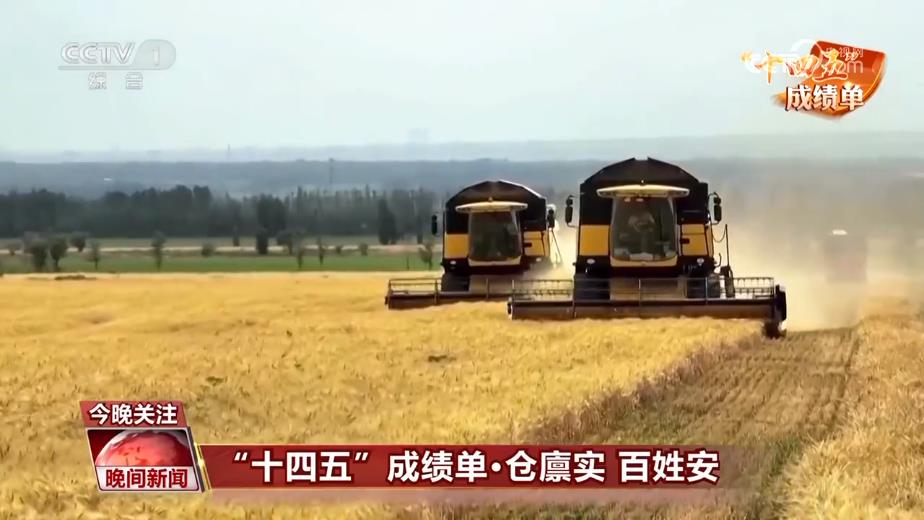
Core Insights - China has achieved significant agricultural milestones during the "14th Five-Year Plan," with grain production surpassing 1.4 trillion jin for the first time, reflecting a stable and positive trend in agricultural and rural development [1][3]. Group 1: Agricultural Production - The annual grain production has stabilized above 1.3 trillion jin, with a projected increase to 1.4 trillion jin by 2024, marking a growth of 74 billion jin since 2020 [3]. - China leads the world in the production of various agricultural products, including grains, meat, peanuts, vegetables, tea, and fruits, ensuring food security for over 1.4 billion people [3]. Group 2: Technological Advancements - Over 100 million acres of high-standard farmland have been established, with a comprehensive mechanization rate of over 75% for crop farming and a good seed coverage rate exceeding 96% [5]. Group 3: Rural Infrastructure and Livelihood - The total length of rural roads has exceeded 4.64 million kilometers, facilitating the development of industrial and tourism routes, enhancing rural economies [6]. - The average disposable income of rural residents has increased from 17,131 yuan in 2020 to 23,119 yuan in 2024, reflecting an annual growth rate of nearly 8% [8]. Group 4: Environmental and Economic Development - Significant improvements in rural living environments have been noted, with 140,000 villages undergoing greening and beautification [8]. - New business models such as rural e-commerce and live-streaming sales have emerged, contributing to the economic upliftment of rural areas [8].

新华社权威速览·非凡“十四五”丨粮食流通改革发展,五年成绩单来了!
Xin Hua She· 2025-10-14 09:09
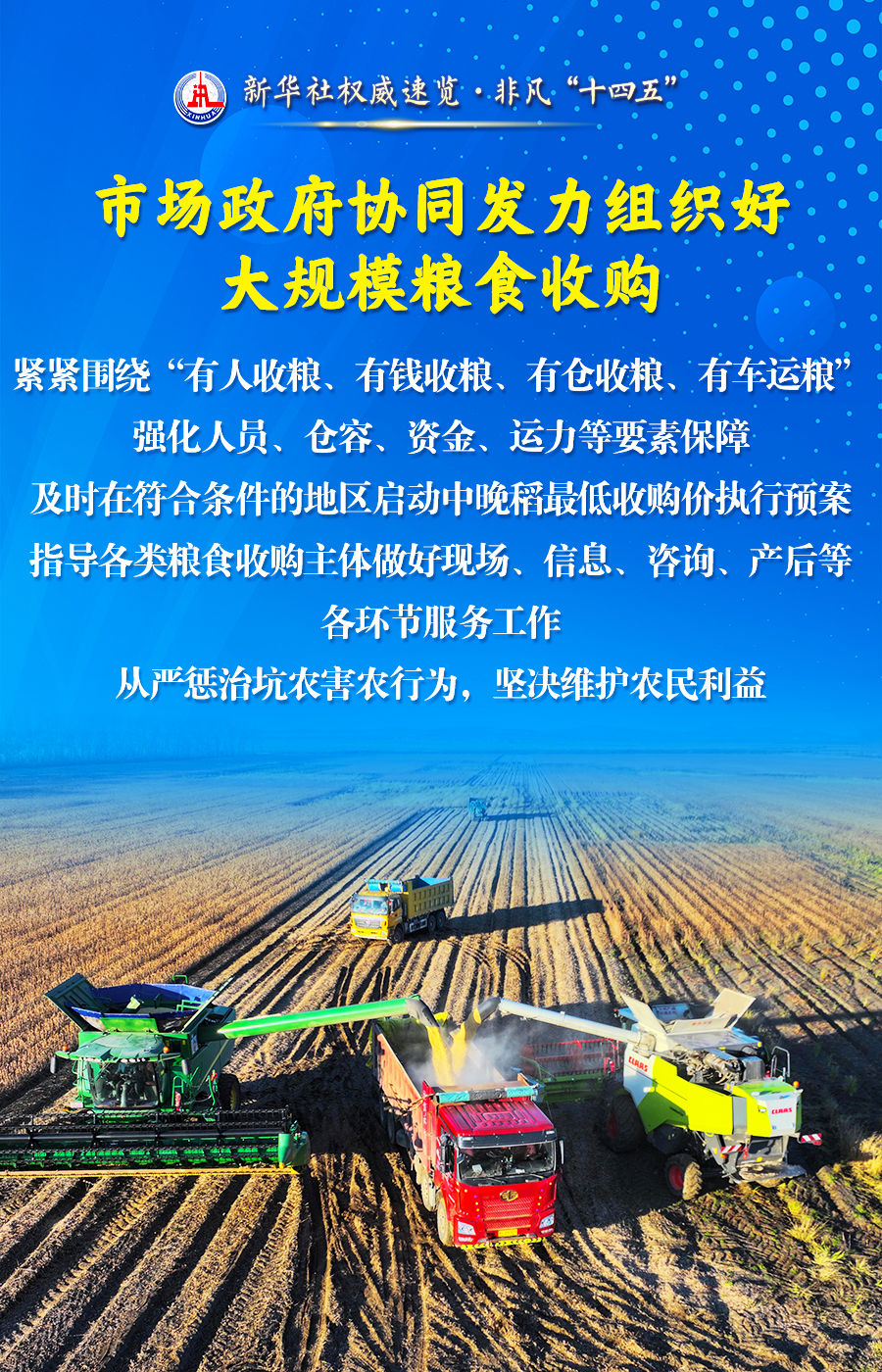
Core Insights - The grain circulation sector has achieved significant results in reducing waste and losses, transitioning from "sufficient food" to "good food" and "nutritionally healthy food," thereby continuously enhancing grain circulation supervision [1][5][10] Summary by Categories Grain Circulation Reform - The progress of grain circulation reform during the "14th Five-Year Plan" period aligns with expectations, providing strong support for high-quality economic and social development [1] Legal and Regulatory Framework - The introduction of the "Food Security Law" and the revision of the "Grain Circulation Management Regulations" are part of a broader effort to strengthen the legal framework for food security [3] Loss Reduction and Storage Innovations - Over the past three years, the average annual loss in grain storage, processing, and transportation has been about 2% of the annual grain production [5] - Advanced storage technologies, such as the "four-in-one" storage technique, have been widely adopted in grain depots [5] Technological Advancements - Five national-level technological innovation platforms for grain storage and transportation have been established, along with 26 departmental grain technology innovation centers [7] - The proportion of high-skilled talent in the grain industry has reached 36.7% [7] Nutritional Initiatives - The implementation of the National Whole Grain Action Plan aims to increase the proportion of whole grains in residents' diets [10] Regulatory Enforcement - A series of special enforcement actions, including "Iron Fist Actions," have been launched to enhance grain circulation supervision [12] Emergency Response Systems - A four-level grain emergency response system has been established, ensuring that major cities maintain a supply of finished grain and oil for over 15 days [15] - The emergency processing capacity for finished oil has increased by 48%, and daily supply capacity for finished grain and oil has risen by 57% [16] Financial Support and Investment - Local governments have allocated 46.2 billion yuan, leading to over 84 billion yuan in social investment, supporting more than 8,400 projects [18] - The first batch of support for 40 major grain-producing counties includes over 270 projects, driving nearly 10 billion yuan in total investment [19] Quality Assurance - Efforts are being made to ensure food safety and quality through the revision of over 100 national standards and 50 industry standards in the grain sector [22]
豫宴东盟 一席和韵
He Nan Ri Bao· 2025-10-12 23:36
Core Insights - Henan province is committed to ensuring food security and connecting domestic supply with global markets, leveraging its status as a major agricultural and grain-producing region [3][4]. Group 1: Agricultural Production - Henan's grain production has consistently exceeded 130 billion jin (approximately 65 million tons) for eight consecutive years, with stable planting areas around 1.6 million acres [4]. - The province is transitioning from traditional agriculture to smart modern agriculture, with expectations that by the end of the 14th Five-Year Plan, the contribution rate of agricultural technology will surpass 67% and the coverage rate of quality seeds will remain above 97% [4]. Group 2: Agricultural Processing - Henan is focusing on enhancing its agricultural processing industry, aiming to transform grains, oils, and meat products into convenient and delicious food and beverages, targeting a trillion-yuan industry [5]. - The province has over 6,103 large-scale agricultural processing enterprises, ranking second nationally, with 119 national-level agricultural industrialization leading enterprises [5]. Group 3: International Trade and Cooperation - In 2024, Henan's trade with ASEAN countries is projected to reach 109.15 billion yuan, making ASEAN its largest trading partner, with a 9.9% increase in trade volume in the first half of the year [8]. - Henan's agricultural exports to ASEAN are expected to total 640 million USD in 2024, accounting for 30% of the province's total agricultural exports, with key products including edible fungi, garlic, poultry, and chili peppers [15]. Group 4: Agricultural Innovation and Events - The 2025 China (Henan) - ASEAN Grain and Agricultural Cooperation Development Conference will take place from October 12 to 14, focusing on "Smart Empowerment of Grain and Agricultural Cooperation" [8]. - The conference will feature nine major exhibition areas, including international and domestic sections, showcasing agricultural technology innovations and products [10].

以科技攻关支撑耕保实践创新——关于南方山区耕地保护的探索与思考
Zhong Guo Zi Ran Zi Yuan Bao· 2025-10-10 05:35
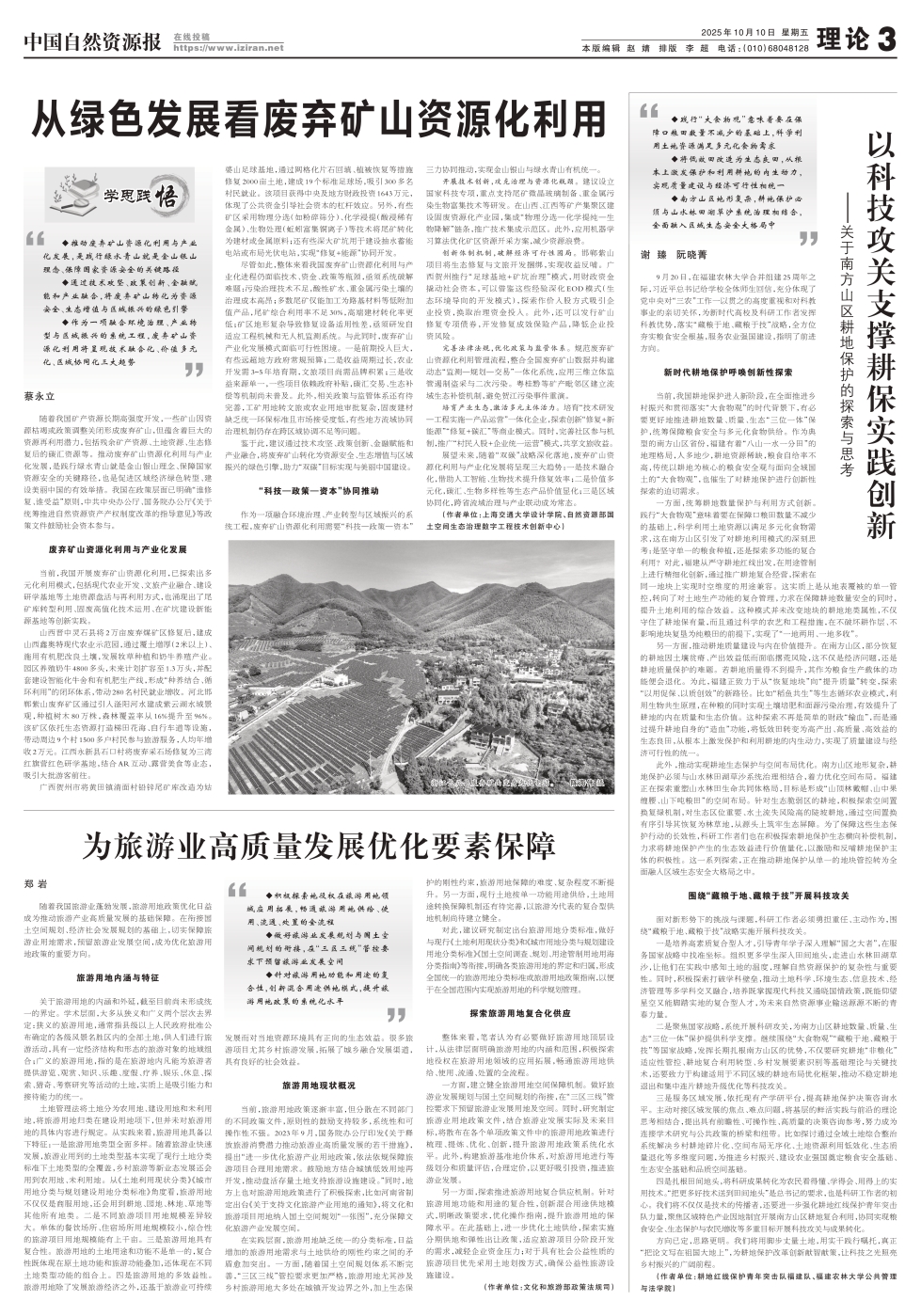
Core Viewpoint - The article emphasizes the need for innovative exploration in farmland protection, particularly in the context of China's "Big Food Concept" and rural revitalization efforts, highlighting the importance of balancing quantity, quality, and ecological protection of farmland to ensure food security and diverse food supply [3][23]. Summary by Sections Farmland Protection and Utilization - The concept of "Big Food" requires maintaining the quantity of staple food farmland while scientifically utilizing land resources to meet diverse food needs, prompting a deep reflection on farmland utilization models in southern mountainous regions [3][23]. - Fujian province is implementing refined innovations in land use regulation, promoting composite farming practices that allow for multiple uses of the same plot of land, thereby enhancing overall land utilization efficiency without changing the land's classification [3][4][23]. Quality Improvement and Ecological Value - There is a shift from merely restoring degraded farmland to enhancing its quality, with initiatives like "rice-fish co-culture" that improve soil health and reduce pollution while increasing the ecological value of farmland [4][23]. - The goal is to transform low-efficiency farmland into high-yield, high-quality ecological farmland, thereby stimulating the intrinsic motivation for farmland protection and utilization [4][23]. Ecological Protection and Spatial Optimization - Farmland protection in complex mountainous terrains must integrate with the management of water, forests, fields, lakes, grasslands, and deserts, focusing on optimizing spatial layouts [5][23]. - Fujian is exploring mechanisms for spatial replacement and ecological restoration, aiming to create a harmonious ecosystem that supports both agricultural productivity and ecological sustainability [5][23]. Technological Innovation and Talent Development - Research efforts are focused on cultivating high-quality, interdisciplinary talent to support the implementation of the "Big Food" strategy, emphasizing practical experience in natural resource protection [6][24]. - The article advocates for systematic research to provide scientific support for the integrated protection of farmland quantity, quality, and ecology in southern mountainous areas [6][24]. Decision-Making and Practical Application - There is a call for improved decision-making capabilities in farmland protection, integrating grassroots practices with advanced theoretical insights to address regional development challenges [8][24]. - The aim is to translate research findings into practical technologies that farmers can easily understand and apply, thereby enhancing food security, ecological protection, and farmer income [8][25].
饭碗端得更牢 我国粮食供给保障能力持续增强
Yang Shi Wang· 2025-10-07 01:02
Core Viewpoint - Food security is a top priority for China, emphasizing self-sufficiency to ensure the food supply for over 1.4 billion people [1][2]. Group 1: Food Production Capacity - During the 14th Five-Year Plan, China's grain production capacity has been solidified, maintaining an annual output of over 1.3 trillion jin, with a target to exceed 1.4 trillion jin in 2024 [2][3]. - The comprehensive production capacity of grain has steadily increased across major production areas, with improvements in sowing area, yield per unit, and total production compared to the end of the 13th Five-Year Plan [4]. Group 2: Agricultural Infrastructure and Technology - Over 1 billion acres of high-standard farmland have been established, with more than half of the arable land capable of irrigation and drainage [5]. - The mechanization rate of crop farming has exceeded 75%, with advanced machinery improving operational efficiency [5]. - Agricultural technology advancements contribute 63.2% to production progress, with effective pest control saving over 280 billion jin in yield losses annually [6]. Group 3: Policy and Strategic Initiatives - The government has implemented various policies to enhance food security, including strict land protection measures, seed industry revitalization actions, and the establishment of the Food Security Guarantee Law [3][5]. - By 2030, the goal is to increase grain production capacity by over 100 billion jin, reinforcing the foundation of food security for economic and social development [7].
餐桌上的“大食物”如何迭代升级
Jing Ji Ri Bao· 2025-10-06 22:01
Group 1 - The core viewpoint emphasizes the progress made in China's food supply system during the "14th Five-Year Plan" period, with significant increases in grain, livestock, and aquatic product production [1][2] - In 2024, grain production is expected to exceed 1.4 trillion jin, an increase of 74 billion jin compared to 2020; total livestock products will reach 175 million tons, up 18.8% from 2020; and total aquatic product output will be 73.58 million tons, a 12.3% increase from 2020 [1] - The concept of "big food" reflects a shift towards a diversified food supply system, focusing on the integration of various agricultural resources and the importance of non-grain food sources [2][3] Group 2 - The agricultural sector is encouraged to leverage local resources effectively, integrating forestry, animal husbandry, and aquaculture to enhance food supply [2] - Technological innovation is crucial for improving agricultural supply adaptability, with a contribution rate of agricultural technology progress reaching 63.2% and over 75% mechanization in crop farming [3] - The focus on the entire agricultural value chain aims to align production with market demand, promoting the development of specialized agricultural clusters and enhancing the quality and diversity of agricultural products [3][4] Group 3 - Looking ahead to the "15th Five-Year Plan," there is an expectation for further upgrades in the food supply system, emphasizing the importance of improving both supply and distribution channels [4]
我国高端功能糖实现自主创新突破
Jing Ji Ri Bao· 2025-09-24 11:45
Core Viewpoint - The launch of D-allulose by COFCO Group marks a significant advancement in China's high-end functional sugar market and breaks international technological monopolies in the field of biological manufacturing [1][2]. Group 1: Product Launch and Market Impact - COFCO Group, through its subsidiaries, has introduced the first domestically produced D-allulose product, filling a gap in the high-end functional sugar market in China [1]. - D-allulose is recognized as a promising sugar substitute, with a sweetness level approximately 70% that of sucrose but only 10% of its calories, making it suitable for various food applications [1]. - The global D-allulose market is projected to reach $14.77 million in 2024, with a compound annual growth rate (CAGR) exceeding 14% from 2025 to 2034 [1]. Group 2: Industry and Health Implications - The introduction of D-allulose aligns with national public health initiatives, such as the "Weight Management Year," providing essential support for the Healthy China strategy [2]. - The product opens new innovation opportunities in low-sugar tea and baking industries, allowing consumers to enjoy healthier sweetness without compromising taste [2]. Group 3: Technological Advancements and Research - COFCO Group has invested significantly in research and development, successfully developing high-performance D-allulose-3-epimerase after extensive trials and genetic modifications [2]. - The company has established a comprehensive patent portfolio related to the biological synthesis of D-allulose, covering production strains, enzyme preparations, and separation processes, with 10 core patents already authorized [2][3]. - COFCO Group's commitment to technological innovation is reflected in its strategic initiatives, including policies that incentivize research and development as a core part of its business strategy [3].
水产品食物消费显著增长 成居民优质蛋白重要来源
Zhong Guo Jing Ji Wang· 2025-09-24 04:20
Core Viewpoint - The 17th National Nutrition Science Conference highlighted the significant growth in China's seafood production and consumption, emphasizing its role in improving public health and nutrition quality [1][2]. Group 1: Production Data - China's per capita seafood production increased from 4.5 kg/person/year in 1980 to 50.4 kg/person/year in 2023, marking a growth of 10.2 times [2]. - The energy, protein, and fat production from seafood as a percentage of total food increased by 2.6%, 9.1%, and 1.9% respectively [2]. Group 2: Consumption Data - Per capita seafood consumption rose from 4.4 kg/person/year in 1980 to 43.5 kg/person/year in 2023, representing an 8.9 times increase [2]. - The energy, protein, and fat consumption from seafood as a percentage of total food increased by 4.1%, 13.8%, and 1.7% respectively [2]. Group 3: Nutritional Importance - Over the past four decades, seafood has become a vital component of residents' dietary structure, particularly as a key source of high-quality protein [2]. - The "Food and Nutrition Development Outline (2025-2030)" aims for an average annual seafood consumption of over 29 kg per person by 2030, promoting nutritional cooking techniques for fish bones and encouraging seafood in school meals [2]. Group 4: Recommendations for Future Growth - To achieve seafood consumption goals, it is essential to adopt a comprehensive food perspective, fully develop marine and freshwater resources [3]. - Policy support is crucial for industry optimization and market expansion [3]. - A nutrition-oriented approach should be maintained throughout the entire supply chain, from breeding and farming to processing [3]. - Public consumption guidance is necessary to create a positive cycle of "nutrition-guided consumption and consumption-driven production" [3].
水产品食物消费显著增长 成居民优质蛋白重要来源
Zhong Guo Jing Ji Wang· 2025-09-24 04:01
Core Insights - The 17th National Nutrition Science Conference was held in Beijing from September 21 to 23, focusing on "Nutritional Innovation - Promoting High-Quality Development of National Health" [1] Production and Consumption Data - China's per capita production of aquatic food has significantly increased from 4.5 kg/person/year in 1980 to 50.4 kg/person/year in 2023, a growth of 10.2 times [2] - The share of energy, protein, and fat from aquatic food in total food production has increased by 2.6%, 9.1%, and 1.9% respectively [2] - Per capita consumption of aquatic food rose from 4.4 kg/person/year in 1980 to 43.5 kg/person/year in 2023, an increase of 8.9 times [2] - The share of energy, protein, and fat from aquatic food in total food consumption has increased by 4.1%, 13.8%, and 1.7% respectively [2] - Aquatic food has become an important part of residents' dietary structure, particularly as a source of high-quality protein [2] Future Goals and Strategies - The "Food and Nutrition Development Outline of China (2025-2030)" aims for an average annual consumption of aquatic food to exceed 29 kg by 2030 [2] - Strategies to achieve aquatic food consumption goals include a comprehensive approach to developing marine and freshwater food resources, enhancing policy support, and promoting industry optimization and market expansion [3] - Emphasis on nutrition-oriented practices throughout the entire supply chain, from breeding and aquaculture to processing, is essential [3] - Public consumption guidance is necessary to create a virtuous cycle of "nutritional guidance for consumption and consumption guiding production" [3]
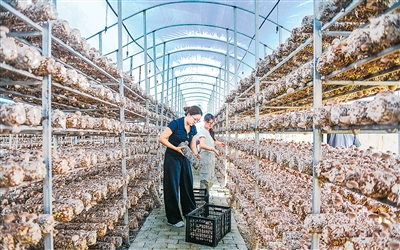
这个“菌子季”,有啥不一样?
Ren Min Ri Bao Hai Wai Ban· 2025-09-23 22:50
Core Insights - The article highlights the growth and diversification of the edible mushroom industry in China, emphasizing its status as the world's largest producer and consumer, accounting for over 70% of global production [8][9][12]. Market Dynamics - The summer season has seen increased consumer enthusiasm for mushrooms, with various new culinary applications emerging across China [5][6]. - Major provinces for mushroom production and sales include Henan, Fujian, Heilongjiang, and Hebei, with Yunnan leading in wild mushrooms [5]. Economic Impact - The edible mushroom industry in China has an annual production exceeding 40 million tons, with a market value surpassing 380 billion yuan [8]. - The industry is recognized as a "3000 billion-level" sector, following grains, oils, vegetables, and fruits [8]. Technological Advancements - The cultivation of mushrooms requires technical expertise, with factors such as temperature, humidity, and light being critical for success [9][10]. - Investments in technology and collaboration with regions like Fujian have improved production efficiency and reduced costs significantly [10][11]. Consumer Trends - The demand for mushrooms is driven by their nutritional benefits, including being a source of dietary fiber, amino acids, and proteins [12]. - The rise of e-commerce and new marketing strategies has expanded the sales reach of mushroom products [12]. Policy Support - Recent government policies have focused on enhancing the edible mushroom industry, including talent development and standardization of production [13][14]. - The establishment of specialized academic programs and the implementation of national standards are part of the efforts to support industry growth [13]. Future Outlook - The article suggests that the edible mushroom industry will continue to grow, with expectations for increased market size and product diversification [15]. - Emphasis on quality control, brand development, and technological upgrades in processing are seen as key areas for future improvement [14][15].