绿色低碳高质量发展

Search documents
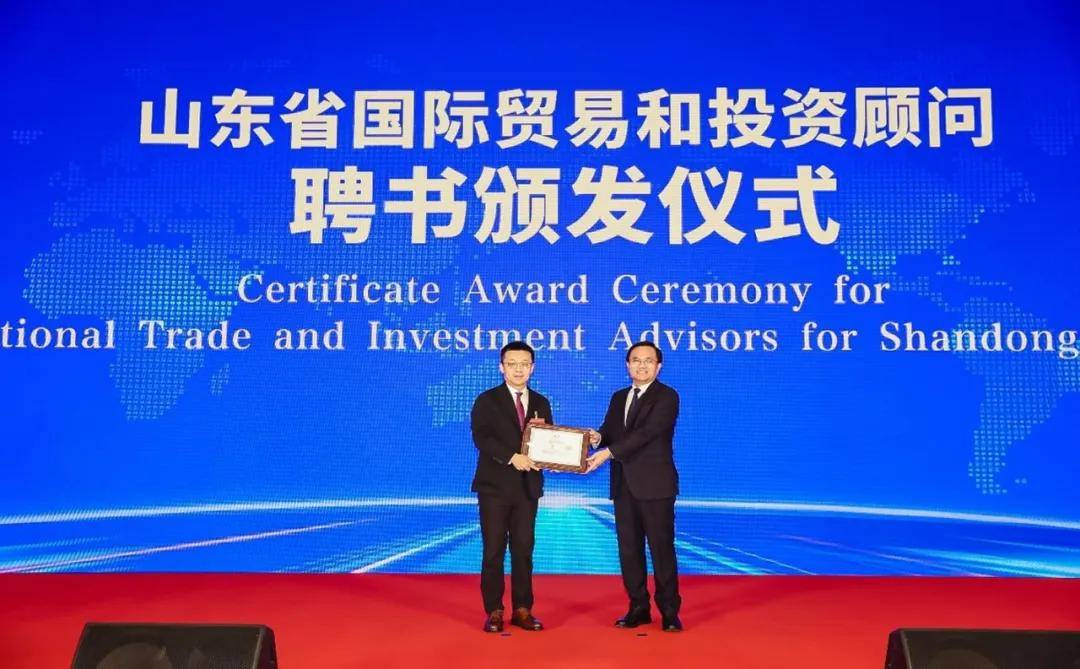
毕马威受邀参加2025年山东省国际贸易和投资顾问会议系列活动
Sou Hu Cai Jing· 2025-11-25 02:38
Core Insights - The 2025 Shandong International Trade and Investment Advisory Conference was held in Jinan, focusing on promoting high-quality development and modern industrial systems in Shandong [1][3] - KPMG has been invited to the conference for the fifth consecutive year, highlighting its role as a key advisor in international trade and investment for Shandong [1][5] Group 1: Economic Performance - China's exports showed strong resilience in 2023, with a year-on-year growth of 6.1% in the first three quarters, an increase of 1.7 percentage points compared to the previous year [5] - Shandong, as the fifth largest exporting province in China, also performed well, with export growth exceeding 5% in the same period, driven by emerging markets and enhanced recognition of traditional products [5] Group 2: Challenges and Recommendations - Despite positive growth, challenges remain, including potential additional tariffs on transshipped goods by the U.S. and tightening scrutiny on re-export trade [5] - KPMG suggests that relevant departments provide policy support for foreign trade enterprises from both short-term and long-term perspectives to navigate these challenges [5] Group 3: KPMG's Commitment - KPMG has been operating in Shandong for nearly 20 years, providing high-quality audit, tax, and consulting services to local governments and businesses [5] - The firm plans to continue its engagement in Shandong, leveraging its platform and expertise to support the province's economic and social development [5]

山东出台15条新政推进水资源节约集约利用
Zheng Quan Shi Bao Wang· 2025-11-23 02:34
人民财讯11月23日电,近日,山东省人民政府正式印发《关于落实节水优先方针全面推进水资源节约集 约利用的意见》,出台15项具体举措,全面落实水资源刚性约束制度,加快形成节水型生产生活方式, 促进绿色低碳高质量发展。明确到2030年,全省农田灌溉水有效利用系数达到0.655以上,水肥一体化 应用面积达到2000万亩,城市公共供水管网漏损率控制在7.85%以内,城市再生水利用率达到60%,海 水淡化工程日产规模达到150万吨。 ...
统筹保护发展 共护一江碧水
Jing Ji Ri Bao· 2025-11-22 22:00
Core Viewpoint - The Yangtze River Economic Belt is positioned as a key area for ecological priority and green development, contributing significantly to China's economic growth and environmental protection efforts [1][2]. Economic Performance - The GDP of the Yangtze River Economic Belt is projected to exceed 63 trillion yuan in 2024, accounting for over 46% of the national total [1]. - The per capita GDP in the Yangtze River Delta region is 139,400 yuan, with Shanghai at 217,100 yuan, while the central and upper reaches show lower figures, indicating significant regional economic disparities [2]. Environmental Challenges - There are ongoing issues with ecological protection, including problems with drainage systems in older urban areas along the river, which need comprehensive solutions [2]. - The ecological environment in some river sections and bays still poses risks, necessitating improved governance models [2]. Innovation and Development - Emphasis on leveraging innovation as a primary driver for high-quality development, with a focus on transforming research and talent advantages into development strengths [4]. - The integration of technology and industry is crucial, with efforts to ensure that scientific innovations transition from laboratories to production lines [4]. Regional Collaboration - The need for enhanced regional cooperation is highlighted, advocating for a unified approach to ecological governance and shared development among provinces along the river [5]. - The establishment of mechanisms for cross-administrative cooperation and benefit-sharing is essential for promoting sustainable development and improving living standards [5].
省级创业类人才项目股权投资持续加力
Da Zhong Ri Bao· 2025-11-10 01:09
Group 1 - The core viewpoint of the news is the enhancement of equity investment in entrepreneurial talent projects in Shandong Province, with the investment cap for the Taishan Industry Entrepreneurial Talent Project raised from 10 million yuan to 15 million yuan [2][3] - The new implementation rules allow for a general investment period of 5 years, extendable to a maximum of 10 years, reflecting the support of "patient capital" for technological innovation [2][3] - Since the initiation of the talent equity investment project in 2022, a total of 38 projects have been implemented with provincial science and technology financial funding amounting to 262.6 million yuan [3] Group 2 - The investment is not merely a financial injection but also serves to enhance credibility in the capital market and connect enterprises with essential resources [3] - The investment targets include top talent and enterprises selected under the Taishan Industry Entrepreneurial Talent Project, focusing on areas such as new and old kinetic energy conversion and green, high-quality development [3] - The maximum investment amount for individual projects under the Taishan Industry Entrepreneurial Talent Project is capped at 15 million yuan, while projects involving top talent can reach up to 60 million yuan [3] Group 3 - The implementation rules allow for a potential yield transfer of up to 30% upon exit from equity investments, particularly if the invested company goes public or is acquired [4]

前三季度山东16市经济解读:“头号”压舱,凸显消费主引擎
Feng Huang Wang Cai Jing· 2025-11-06 08:23
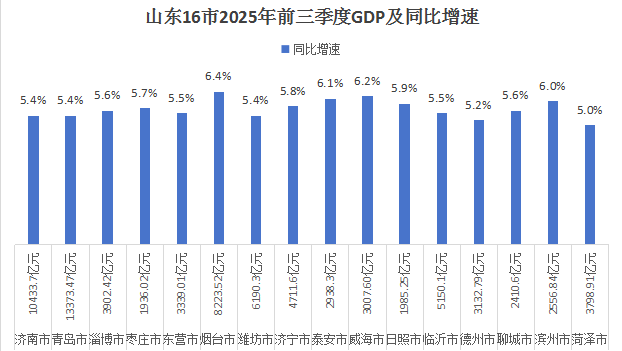
Economic Overview - Shandong's 16 cities reported stable economic performance in the first three quarters, with a provincial GDP growth rate of 5.6% [3] - Seven cities, including Yantai and Weihai, exceeded the provincial average growth rate, while two cities maintained parity with it [3] - Yantai leads the province in economic growth, with a GDP of 8223.52 billion yuan, growing by 6.4% year-on-year [4] Industrial Development - Shandong's industrial sector is a key driver, with industrial added value increasing by 7.8% year-on-year in the first three quarters, surpassing GDP growth [4] - Yantai's industrial added value grew by 13.9%, while Linyi aims for an industrial output exceeding 1 trillion yuan [4] - Zaozhuang has seen consistent economic growth since Q1 2022, attributed to the implementation of significant development plans [5][6] Consumption and Tourism - Cities like Binzhou and Rizhao have shown GDP growth rates exceeding the provincial average, driven by strong retail sales growth [9][10] - The retail sales in Rizhao reached 631.01 billion yuan, with significant increases in categories like home appliances and new energy vehicles [10] - The tourism sector is being developed as a pillar industry, with plans to attract 900 million tourists and generate over 1 trillion yuan in tourism revenue by 2024 [12] Private Economy - The private sector is increasingly significant, with Jinan's import and export volume surpassing 200 billion yuan, a 28% increase year-on-year [13] - In Zaozhuang, fixed asset investment grew by 5.4%, with private investment accounting for 58.8% of total investment [13] - Local governments are focusing on enhancing the business environment and supporting private enterprises to drive economic growth [14][15]
北方首个经济总量过万亿地级市,澎湃力量从何而来?
Zhong Guo Jing Ji Wang· 2025-11-05 11:20
Core Viewpoint - Yantai, located in the Jiaodong Peninsula, has become the first city in northern China with an economic output exceeding 1 trillion yuan, reaching 1.03 trillion yuan in 2023 and projected to grow to 1.08 trillion yuan in 2024. The city is focusing on green, low-carbon, and high-quality development as a major opportunity for its future growth [1][6][36]. Economic Performance - In the first three quarters of 2023, Yantai's GDP reached 822.35 billion yuan, with a year-on-year growth of 6.4% [1]. - Yantai's industrial added value is expected to grow by 9% in 2024, surpassing national and provincial averages [19]. Green Development Initiatives - The city is committed to becoming a model for green, low-carbon, and high-quality development, with specific goals set for 2027 and 2030 [7][8]. - Yantai has been recognized as a leading city in high-quality development assessments for three consecutive years from 2022 to 2024 [8]. Energy Transition - Yantai is transitioning from coal-based energy to clean energy sources, including offshore wind and nuclear power, with significant projects underway [12][10]. - The city has established a new energy system that integrates nuclear, wind, solar, hydrogen, and storage technologies, aiming for a clean energy capacity exceeding 18 million kilowatts [12][18]. Industrial Structure Transformation - Yantai's economy is heavily reliant on traditional industries, with 70% of its industrial structure being traditional, and 70% of that being heavy and chemical industries [6][20]. - The city is actively promoting the upgrade of its industrial structure through green and high-tech innovations, particularly in the petrochemical and non-ferrous metal sectors [20][21]. Innovation and Technology - Yantai is focusing on technological innovation as a key driver for its green transition, with significant advancements in clean energy technologies and materials [17][18]. - The establishment of various innovation platforms and the integration of technology with industry are central to Yantai's strategy for sustainable development [9][10]. Urban and Lifestyle Changes - The green development initiatives are transforming urban living, with projects aimed at enhancing the quality of life through improved environmental conditions and sustainable practices [26][27]. - Yantai is implementing clean heating solutions and promoting low-carbon lifestyles among its residents, contributing to a significant reduction in coal usage [29][30]. International Cooperation and Open Economy - Yantai is enhancing its international presence by participating in global dialogues on sustainable development, such as the establishment of an international zero-carbon island cooperation organization [11]. - The city is leveraging its historical openness and geographical advantages to foster trade and investment, aiming for a 45% economic openness rate [10][11].
山东烟台五名企业负责人致信本报编辑部——做高质量发展的实干家
Jing Ji Ri Bao· 2025-11-04 22:52
Group 1 - The article emphasizes the importance of Yantai as a pioneer in promoting green, low-carbon, and high-quality development, aligning with national expectations for Shandong's development [1][2] - Companies are encouraged to enhance their core competitiveness by integrating green development concepts throughout the entire industrial chain, focusing on energy conservation, emission reduction, and efficiency improvement [1] - The need for technological innovation is highlighted, with a call for breakthroughs in key green manufacturing technologies and collaborative efforts across the industry to reduce carbon emissions [1][2] Group 2 - The article calls for companies to actively engage in green circular transformation and to create "waste-free enterprises" and green factories, making sustainability a core aspect of their development [1] - There is a strong emphasis on the role of enterprises in contributing to the establishment of Yantai as a model city for green, low-carbon, and high-quality development, showcasing corporate responsibility and commitment [2] - The collective effort of various industry leaders is noted, indicating a unified approach towards achieving these developmental goals [3]


找准绿色低碳高质量发展着力点
Jing Ji Ri Bao· 2025-11-04 22:15
Core Viewpoint - The article emphasizes the importance of green, low-carbon, and high-quality development as a complex and long-term task that varies by region, with Yantai serving as a model city in Shandong Province to accelerate this transformation through energy, industry, urban, and lifestyle transitions [1][2][3]. Group 1: Energy Transition - Energy transition is fundamental to green, low-carbon, and high-quality development, providing a cleaner and safer environment while reducing pollution control costs and promoting industrial optimization [1]. - Yantai focuses on building a new energy system that is clean, low-carbon, safe, and efficient, emphasizing the integration of traditional and new energy sources [1]. Group 2: Industrial Transition - Industrial transition is key to achieving green, low-carbon, and high-quality development, with Yantai promoting the deep integration of digitalization, intelligence, and greening in industries [2]. - The city aims to prevent the blind launch of high-energy-consuming and high-emission projects while enhancing traditional industries through new technologies and fostering emerging industries to achieve high-quality development [2]. Group 3: Urban Transition - Urban transition serves as a driving force for green, low-carbon, and high-quality development, with Yantai prioritizing beautiful city construction and optimizing spatial layouts across various sectors [2]. - The city aims to balance environmental constraints with public demands for clean air, beautiful surroundings, and efficient transportation, promoting coordinated efforts in pollution reduction, carbon lowering, and green expansion [2]. Group 4: Lifestyle Transition - Lifestyle transition is fundamental to green, low-carbon, and high-quality development, with Yantai focusing on benefiting the public through ecological improvements and encouraging community participation in sustainable living [3]. - The city promotes a societal atmosphere that values ecological civilization, urging individuals and organizations to adopt green, low-carbon, and healthy lifestyles [3]. Group 5: Overall Development Strategy - The article highlights that while regions may differ in development foundations and resource endowments, a consistent approach involves understanding local conditions and identifying key focus areas for green, low-carbon, and high-quality development [3].
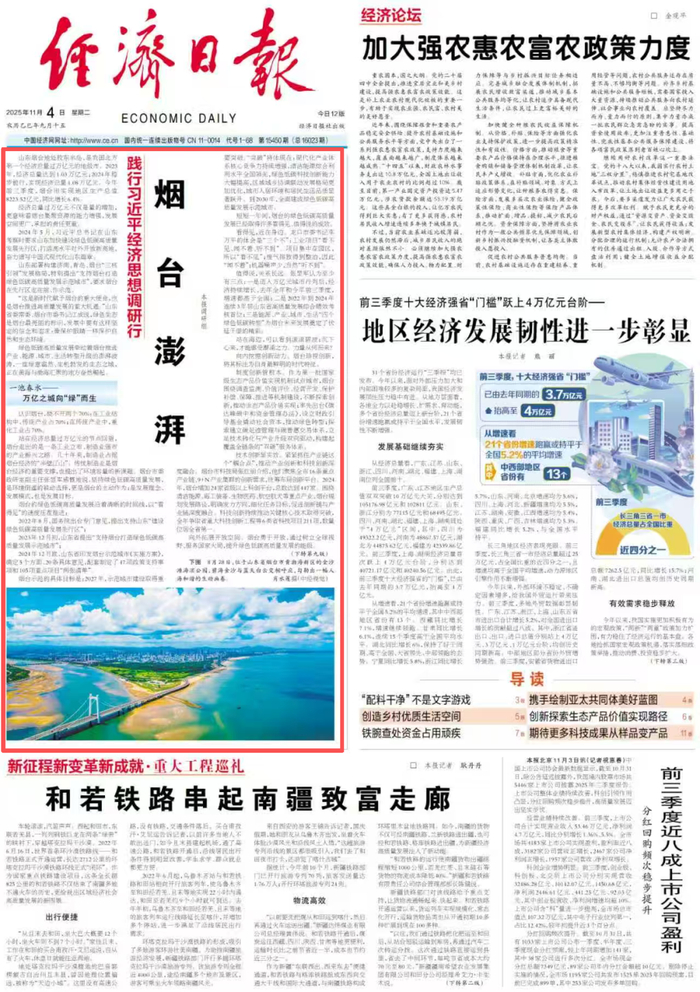
烟台澎湃
Jing Ji Ri Bao· 2025-11-04 05:06
Economic Overview - Yantai, located in the Jiaodong Peninsula, is the first city in northern China to exceed a GDP of 1 trillion yuan, achieving an economic total of 1.03 trillion yuan in 2023 and projected to reach 1.08 trillion yuan in 2024 [1][2] - In the first three quarters of 2023, Yantai's GDP reached 822.35 billion yuan, with a year-on-year growth of 6.4% [1] Green Development Initiatives - Yantai is designated as a model city for green, low-carbon, and high-quality development, with a focus on transforming its industrial, energy, urban, and living sectors [1][3] - The city aims to establish a modern industrial system with enhanced core competitiveness and significant improvements in clean energy utilization by 2027, with a goal to fully develop into a green, low-carbon, high-quality demonstration city by 2030 [3][4] Industrial Structure and Transition - Traditional industries account for 70% of Yantai's industrial structure, with heavy chemical industries making up 70% of that [2] - The city is actively pursuing industrial upgrades to achieve green, low-carbon development, emphasizing the importance of innovation and technology in this transition [5][15] Clean Energy Development - Yantai is investing in clean energy sources, including offshore wind power and nuclear energy, with several projects underway to reduce reliance on coal [7][8] - The city has become a leader in clean energy development, with a clean energy installed capacity exceeding 18 million kilowatts, the highest in Shandong Province [8] Technological Innovation - Yantai is focusing on technological innovation to drive its energy transition, with advancements in energy storage and digital management systems [9][10] - The establishment of a regional energy storage center and the development of a digital virtual power plant are key initiatives to enhance energy efficiency and sustainability [9][10] Economic Performance and Future Outlook - Yantai's industrial output value is expected to grow by 9% in 2024, with significant contributions from over 2,900 manufacturing enterprises [15] - The city is prioritizing the development of high-tech industries, with over 60% of its industrial output coming from high-tech sectors [15][20] Urban and Environmental Transformation - The city is transforming its urban landscape to incorporate green spaces and sustainable living practices, enhancing the quality of life for residents [21][22] - Initiatives such as clean heating projects and the development of zero-carbon communities are part of Yantai's commitment to environmental sustainability [24][26] Conclusion - Yantai is positioned as a leader in green, low-carbon development, with a comprehensive strategy that integrates economic growth with environmental stewardship, aiming to serve as a model for other cities [31][35]
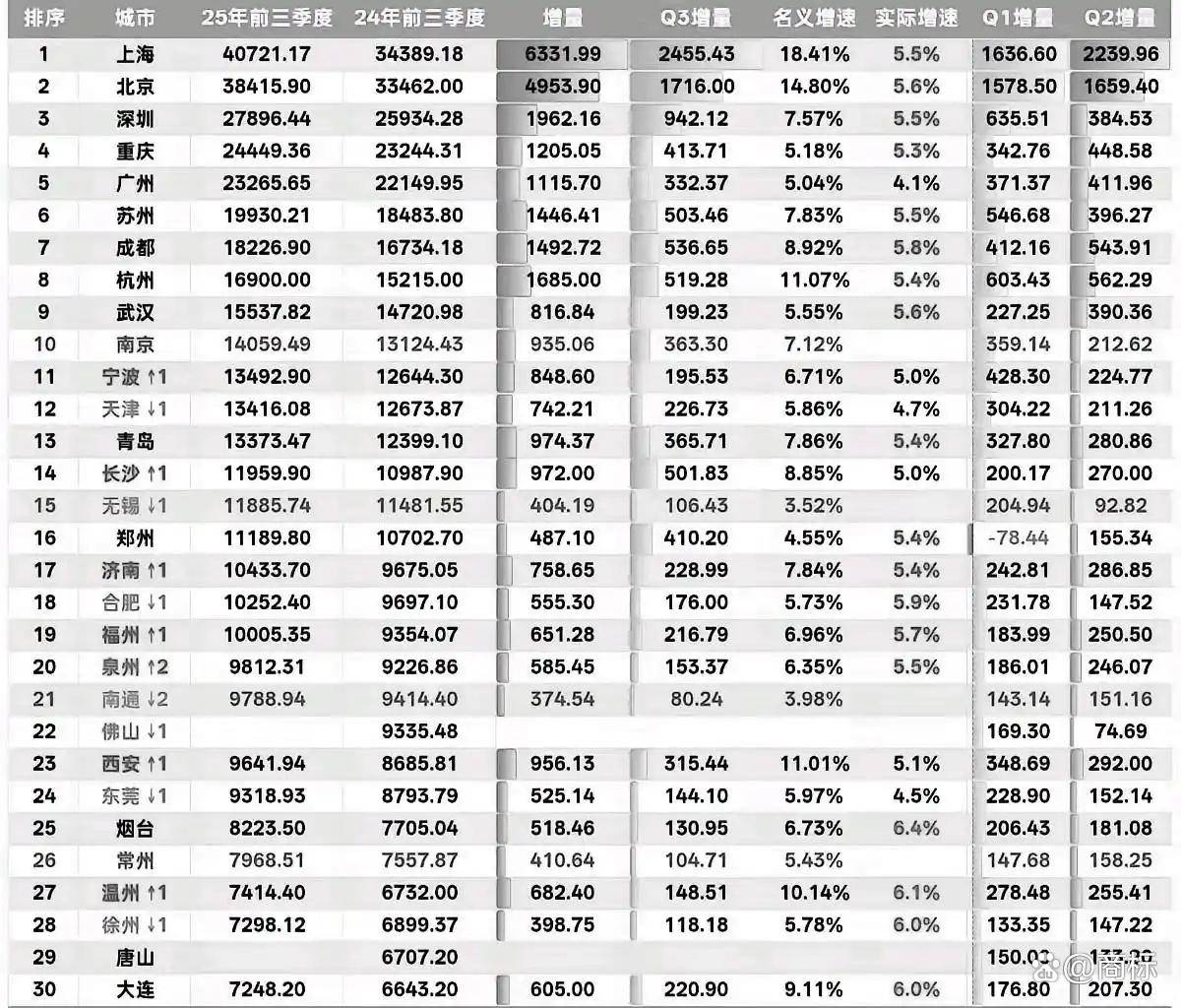
我国前三季度GDP30强城市洗牌:杭州约1.7万亿,长沙逆袭无锡,烟台增速6.4%!
Sou Hu Cai Jing· 2025-11-03 18:52
Core Insights - The resilience growth of China's economy in the first three quarters of 2025 is attributed to precise macro policies and the deepening of regional development strategies [1] - The latest GDP rankings of the top 30 cities serve as both a report card and a dynamic map depicting regional economic vitality, industrial transformation effectiveness, and endogenous driving forces [1] Group 1: Economic Performance of Major Cities - Shanghai, Beijing, and Shenzhen lead the rankings with GDPs exceeding 2.5 trillion yuan, showcasing their strong engine role in the economy [1] - Hangzhou's GDP reached approximately 1.69 trillion yuan with a nominal growth rate of 11.07%, the highest among the top ten cities, driven by its robust digital economy and innovation [2][3] - Changsha's GDP growth of 8.85% and a significant increase of nearly 100 billion yuan highlight its strong economic momentum, attributed to its focus on smart manufacturing and traditional industries [5] - Yantai, while not ranking high in total GDP, achieved a notable actual growth rate of 6.4%, driven by its port economy and participation in green and high-quality development initiatives [6][7] Group 2: Key Drivers of Growth - The growth in Hangzhou is supported by leading platform companies like Alibaba and NetEase, which have fostered a thriving ecosystem in e-commerce, cloud computing, and digital content [3] - Changsha's economic advancement is bolstered by major players in the engineering machinery sector, such as SANY Heavy Industry and Zoomlion, which are pushing for internationalization and smart transformation [5] - Yantai's development is rooted in its marine economy, leveraging its port advantages to enhance industries like marine high-end equipment manufacturing and modern fisheries [6][7] Group 3: Competitive Dynamics - The changes in GDP rankings reflect deeper competitions in development models, industrial tracks, and policy effectiveness among cities [9] - The innovative ecosystem in Hangzhou, the industrial resilience in Changsha, and the open vitality in Yantai provide valuable examples for regional economic development [9]