能源结构转型

Search documents
能源结构转型+AI引爆储能需求 恩捷股份开启新增长周期
起点锂电· 2025-12-03 10:13
Core Insights - The energy storage industry is set to experience rapid growth starting in 2025, with leading companies like CATL, EVE Energy, and others already reporting full production capacity and extending order schedules into 2026, indicating a significant demand for energy storage batteries [2][3]. Group 1: Industry Growth Drivers - The surge in the energy storage sector is driven by increasing traditional storage demand, breakthroughs in AI technology, and favorable policies. AI advancements are expected to boost intelligent computing power demand, with global AI computing needs growing at an annual rate of 4.5 times [3]. - The National Development and Reform Commission and the National Energy Administration of China have set a target for new energy storage installations to exceed 180 million kilowatts by 2027, leading to direct investments of approximately 250 billion yuan [3]. Group 2: Lithium Battery Separator Market - The lithium battery separator industry is a critical component of the energy storage supply chain, benefiting significantly from the growth in the energy storage market. In the first half of 2025, China's lithium battery separator shipments are projected to reach approximately 13.3 billion square meters, a year-on-year increase of 47.6% [6]. - The wet separator segment, which accounts for 82.3% of shipments, has seen an 11.1% increase year-on-year, highlighting the growing importance of this technology in the energy storage landscape [6]. Group 3: Company Performance and Innovations - Enjie Co., a leading player in the wet separator market with over 30% global market share, reported a 27.85% year-on-year increase in revenue for the first three quarters of 2025. The company has secured significant contracts with major domestic and international clients [7]. - Enjie has developed a 5μm ultra-thin high-strength separator, which addresses key performance challenges and supports the industry's shift towards higher safety and energy density requirements [9][11]. - The company is also advancing in solid-state battery technology, having achieved breakthroughs in solid electrolyte materials and initiating plans for large-scale production, positioning itself for future growth in this emerging segment [12]. Group 4: Long-term Strategic Positioning - Enjie's growth is not solely attributed to external demand; its continuous technological advancements in lithium battery separators and solid-state batteries are creating a sustainable competitive advantage [9]. - The company’s strategic focus on solid-state battery materials and its early investments in this area are expected to provide resilience against market fluctuations and enhance its long-term growth prospects [12].

蜀道装备设立气体产业基金
Zhong Guo Hua Gong Bao· 2025-12-03 03:26
Core Viewpoint - Shudao Equipment plans to establish a gas industry equity investment fund with a total scale of 2 billion yuan, focusing on hydrogen energy, liquefied natural gas (LNG), and industrial gases, aiming for deep synergy between industry and capital [1] Group 1 - The fund will target high-growth sectors such as hydrogen energy, LNG, and industrial gases, benefiting from the transformation of the energy structure and the demand for high-end manufacturing upgrades [1] - The establishment of the fund aligns with national strategies for energy structure transformation and the optimization of state-owned capital [1] - The fund aims to help Shudao Equipment accelerate the construction of a comprehensive platform for industrial gases, clean energy, and hydrogen energy, expanding its business boundaries and investment landscape [1] Group 2 - The investment is expected to cultivate new profit growth points and enhance the company's core competitiveness [1] - As the fund gradually invests and projects are implemented, Shudao Equipment is likely to strengthen its competitive advantage in high-end equipment manufacturing and clean energy [1] - The company aims to create an industrial ecosystem of "high-end manufacturing + energy operation + capital empowerment," forming a new development pattern characterized by technological leadership, capital support, and industrial synergy [1]

蜀道装备联合蜀道资本设立气体产业基金 加快实施产业转型升级
Zhong Zheng Wang· 2025-12-02 02:51
Core Viewpoint - Shudao Equipment plans to establish a 2 billion yuan gas industry equity investment fund to enhance its strategic development and optimize its industrial layout, focusing on hydrogen energy, LNG, and industrial gases, which are high-growth sectors [1][2] Group 1: Fund Establishment - The fund will be jointly established with Shudao Chanquan (Sichuan) Private Fund Management Co., Ltd. and Shudao (Sichuan) Equity Investment Fund Co., Ltd. [1] - The fund aims to achieve deep synergy between industry and capital, targeting high-growth sectors such as hydrogen energy, LNG, and industrial gases [1] Group 2: Strategic Alignment - The establishment of the fund aligns with national strategies for energy structure transformation and the optimization of state-owned capital [1] - The fund will provide strong financial support for Shudao Equipment's investment and acquisition activities, facilitating the integration of quality assets within the industry [2] Group 3: Business Expansion - The fund's establishment will help Shudao Equipment build a comprehensive platform for industrial gases, clean energy, and hydrogen energy, expanding its business boundaries and investment landscape [2] - The company aims to enhance its core competitiveness and create new profit growth points through this strategic move [2]
中国领跑全球清洁能源投资
中国能源报· 2025-12-01 02:01
Core Insights - China's energy investment expenditure has reached twice that of the EU and is close to the combined total of the EU and the US, solidifying its position as the global leader in energy investment [2][4][7] Global Clean Energy Investment Trends - Global clean energy investment is expected to grow to $3.3 trillion by 2025, with clean energy investments projected to reach $2.2 trillion, approximately double that of fossil fuel investments [4] - China is projected to account for $630 billion, or 29% of global clean energy investments, exceeding the total expected investment from all developed economies [6][4] Investment Structure and Key Sectors - Over the past decade, China's share of global clean energy investment has increased from 25% to nearly 33%, maintaining a leading position in solar manufacturing, onshore and offshore wind power, and electric vehicle supply chains [6][7] - Solar photovoltaic investment is expected to attract $450 billion by 2025, making it the largest single energy investment sector globally [7] Regional Investment Disparities - There is a growing disparity in investment activity across regions, influenced by policy environments, electricity price changes, and adjusted return expectations [9][11] - The US has seen a significant decline in renewable energy investment, with a 36% drop in the first half of 2025 compared to the previous year [11] Emerging Markets and Growth Areas - Emerging markets like Saudi Arabia, India, Turkey, and Indonesia are experiencing stable growth in solar and wind investments, with Indonesia's investment scale increasing nearly fivefold [12] - Southeast Asia's renewable energy investment has grown by 7% quarter-on-quarter, indicating ongoing expansion in distributed solar and other sectors [12] Technological Investment Shifts - Solar photovoltaic continues to dominate global clean energy investment, with $252 billion invested in the first half of 2025, significantly outpacing wind investment [14] - Distributed solar is becoming a key growth area due to its shorter construction cycles and clearer revenue mechanisms, with investment in this sector doubling in China this year [14][15] Grid Investment Challenges - Despite global grid investments reaching $400 billion annually, this is insufficient to meet the rapid expansion of renewable energy, with complex approval processes and supply chain constraints hindering further investment [15]
TCL Solar与韩国I-Solar Energy签署合作备忘录
Ju Chao Zi Xun· 2025-11-27 18:29
Group 1 - TCL Solar and I-Solar Energy have signed a Memorandum of Agreement (MOA) to collaborate in the South Korean commercial solar market, focusing on rooftop installations [1][3] - The partnership aims to enhance project development, solution design, and operational services by leveraging TCL's technology expertise and I-Solar's local resources [3] - The collaboration is expected to improve project implementation efficiency through bundled solutions, addressing the growing demand for high-efficiency components and integrated services in South Korea [3][4] Group 2 - The South Korean market is experiencing a shift towards renewable energy, with commercial rooftop solar seen as a key strategy to increase renewable energy share [4] - The cooperation between TCL Solar and I-Solar Energy is anticipated to complement component supply, system design, and local services, thereby increasing the penetration of Chinese solar brands in the South Korean commercial sector [4] - The actual progress of the collaboration may be influenced by local policy environments, electricity pricing mechanisms, and project development timelines, with results expected to take time to materialize [4]

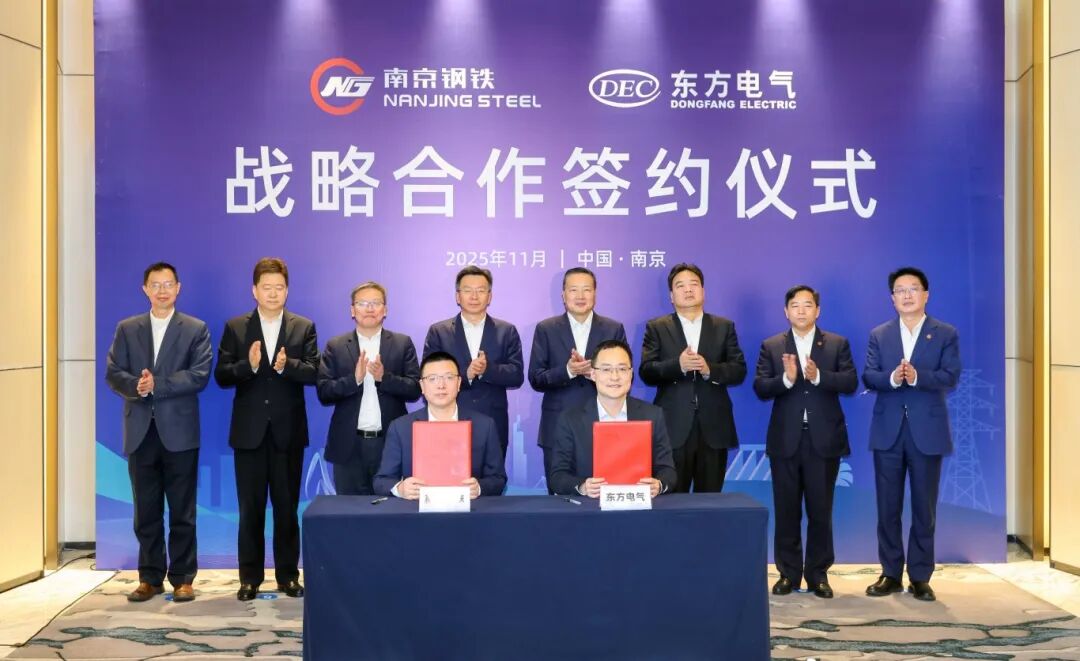
南钢集团与东方电气签署战略合作协议
Nan Jing Ri Bao· 2025-11-27 15:07
Core Viewpoint - Nanjing Steel Group and China Dongfang Electric Corporation signed a strategic cooperation agreement to enhance collaboration in the context of China's "dual carbon" strategy and promote the development of advanced manufacturing in the Yangtze River Delta region [1][3]. Group 1: Companies Involved - China Dongfang Electric is a globally recognized manufacturer of power generation equipment and a leader in engineering contracting, with advantages in equipment manufacturing and technology research and development [3]. - Nanjing Steel Group is a leading enterprise in the steel industry in Nanjing, focusing on technological innovation and digital transformation to enhance its competitive strength and brand influence [3]. Group 2: Strategic Goals - The agreement aims to align with national "dual carbon" goals and energy structure transformation needs, emphasizing principles of complementary advantages, strategic collaboration, and mutual benefits [3]. - The cooperation will focus on joint technological innovation, industrial interconnection upgrades, and integration of industrial chain ecosystems to build a self-controlled, safe, and efficient energy equipment industry chain and supply chain [3].

业绩波动+股价疲软之下,沧港铁路或面临剔除港股通风险?
Zhi Tong Cai Jing· 2025-11-27 13:55
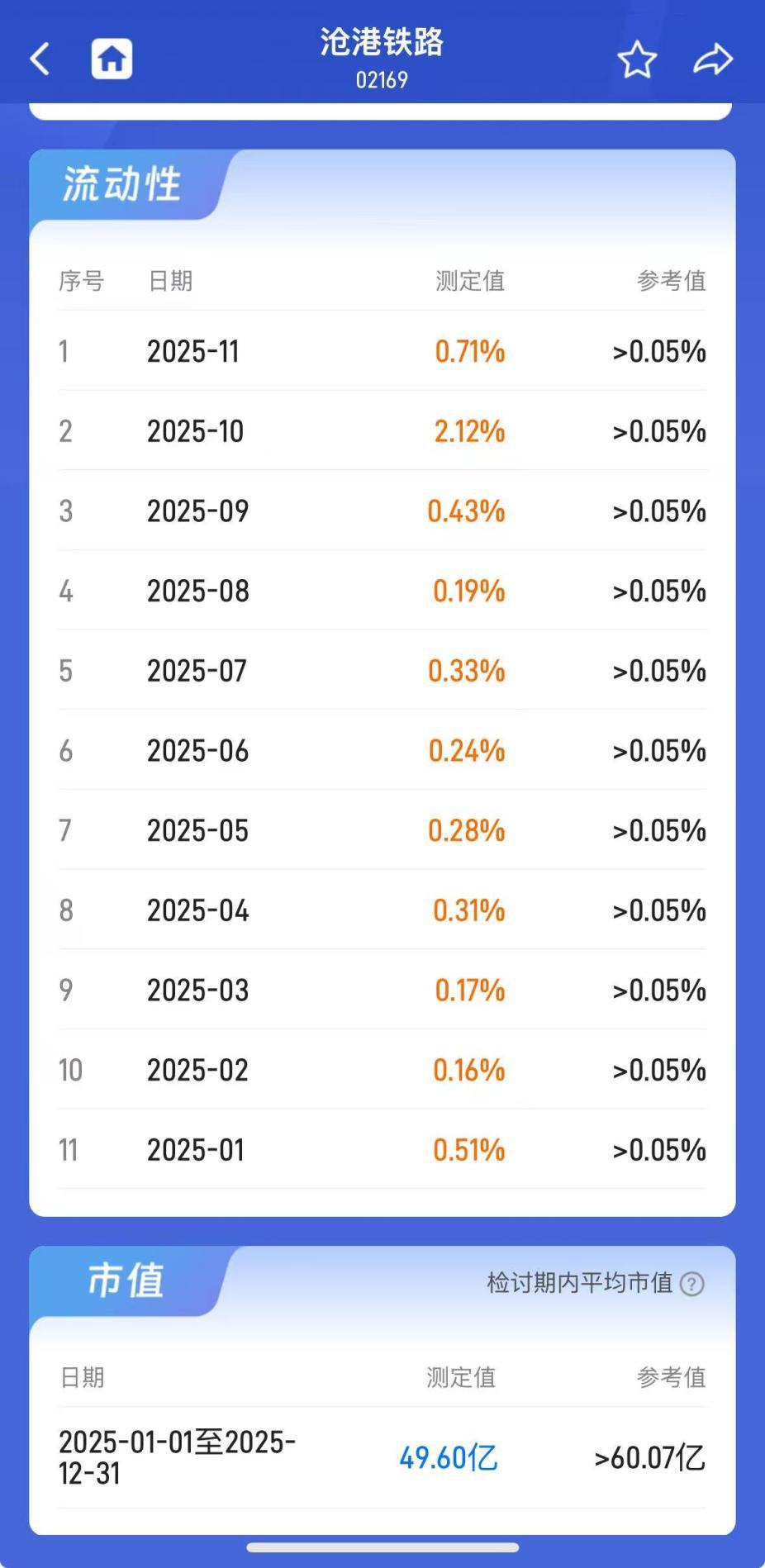
Core Viewpoint - Canggang Railway is at risk of being removed from the Hong Kong Stock Connect due to its average market capitalization of HKD 49.60 billion, which is below the threshold of HKD 60.07 billion, and its declining stock liquidity [1][3] Financial Performance - In the first half of 2025, Canggang Railway reported revenue of HKD 13.17 million, a slight decrease of 0.3% compared to HKD 13.21 million in the same period of 2024, primarily due to a 0.5% decline in core railway freight business revenue [4] - The company's net profit for the same period was HKD 30.88 million, reflecting a year-on-year increase of 17.2%, attributed to cost control and improved operational efficiency [4] - For the full year of 2024, the company experienced a significant revenue drop of 25.82% to HKD 25.9 million, mainly due to reduced demand in the coal market [5] Business Structure and Risks - Canggang Railway's core business is heavily reliant on coal transportation, which accounts for over 85% of its revenue, making it vulnerable to fluctuations in coal demand and regulatory changes related to energy transition [3][5] - The company has been facing liquidity issues, with its stock liquidity often falling below the required threshold, as evidenced by liquidity measurements from May to November 2025 [2] Management Actions - Recent actions by the company's executives, including significant share sell-offs by the chairman, have raised concerns about internal confidence in the company's future performance [6] - In contrast, the Hebei Cangzhou Transportation Control Group has increased its stake in Canggang Railway, indicating a commitment to support the company and stabilize market confidence [7] Future Outlook - Canggang Railway plans to expand its operations through new branch line construction, infrastructure upgrades, and market diversification strategies to mitigate reliance on coal [8] - The success of these initiatives will be crucial for the company to achieve sustainable growth and reduce its dependency on coal transportation [8]
业绩波动+股价疲软之下,沧港铁路(02169)或面临剔除港股通风险?
智通财经网· 2025-11-27 13:51
Core Viewpoint - Canggang Railway is at risk of being removed from the Hong Kong Stock Connect due to its average market capitalization of HKD 49.60 billion being below the threshold of HKD 60.07 billion, alongside a significant decline in stock liquidity and trading volume [1][3]. Financial Performance - In the first half of 2025, Canggang Railway reported revenue of HKD 13.17 million, a slight decrease of 0.3% compared to HKD 13.21 million in the same period of 2024, primarily due to a 0.5% drop in core railway freight business revenue [4]. - The company's net profit for the same period was HKD 30.88 million, reflecting a year-on-year increase of 17.2%, attributed to cost control and improved operational efficiency [4]. - For the full year of 2024, Canggang Railway's revenue was HKD 25.9 million, a decrease of 25.82% year-on-year, mainly due to reduced demand in the coal market impacting core freight business [5]. Business Structure and Risks - Canggang Railway's core business is heavily reliant on coal transportation, which accounts for over 85% of its revenue, making it vulnerable to fluctuations in coal demand and regulatory changes aimed at reducing carbon emissions [3][5]. - The company has been facing significant stock price volatility, with a cumulative decline of over 36% from its peak in October 2023, leading to concerns about its liquidity and market confidence [1][3]. Management Actions - Recent actions by the company's executives, including significant share sell-offs by the chairman, have raised concerns about internal confidence in the company's future performance [6]. - In contrast, the Hebei Cangzhou Transportation Control Group has increased its stake in Canggang Railway, indicating a commitment to support the company and stabilize market confidence [7]. Future Outlook - Canggang Railway plans to enhance its operations through new branch line construction, infrastructure upgrades, and market expansion into new freight categories to mitigate the risks associated with its heavy reliance on coal [8]. - The company's ability to diversify its revenue streams and reduce dependence on coal will be critical for its long-term sustainability and growth potential [8].
海博思创与青海省西宁开发区签约大型储能产业项目
Zheng Quan Shi Bao Wang· 2025-11-27 08:54
Core Viewpoint - The signing of a large-scale energy storage industry project between Haibo Sichuang and Xining Economic and Technological Development Zone marks a significant step towards long-term cooperation in the energy storage sector in Xining [1] Group 1: Project Overview - The signed project includes two main components: energy storage system integration production and energy storage power station construction [1] - This initiative is part of Haibo Sichuang's strategic move in the northwest market, aimed at enhancing production capacity and business layout [1] Group 2: Regional Impact - Haibo Sichuang plans to use the Xining Development Zone as a core to radiate throughout Qinghai Province, promoting the construction of large-scale energy storage power stations [1] - During the 14th Five-Year Plan period, the company aims to implement several independent energy storage projects in Qinghai Province, contributing to the province's clean energy demonstration efforts [1] Group 3: Strategic Goals - The project supports the construction of a new integrated power system that includes source, grid, load, and storage, facilitating the consumption of clean energy and peak regulation of the power grid [1] - The initiative aligns with Qinghai Province's energy structure transformation strategy, promoting efficient utilization of green electricity resources [1]
西北市场战略落子关键一步,海博思创正式进军青海
海博思创· 2025-11-27 08:43
Core Viewpoint - The company is strategically expanding its presence in the growing energy storage market in Northwest China by signing a large-scale energy storage project in Xining Economic and Technological Development Zone, Qinghai Province [1][2]. Group 1: Project Overview - The signed project includes two main components: energy storage system integration production and energy storage station construction, which are crucial for the company's strategic development in the Northwest region [2]. - Qinghai Province is identified as a strategic area rich in wind and solar resources, making it a key market for the company's national expansion efforts [2]. Group 2: Future Plans and Development - The company plans to establish a new smart manufacturing base in the Nanchuan Industrial Park in Xining, focusing on green and intelligent development, aiming for a fully zero-carbon operation throughout the production process [2]. - To ensure rapid project implementation, the Xining Development Zone is coordinating existing industrial facilities and land, significantly reducing the project preparation period [2]. - Once fully operational, the project is expected to boost regional economic development and enhance local employment opportunities, achieving both economic and social benefits [2]. Group 3: Broader Impact and Goals - The company aims to use the Xining Development Zone as a core hub to promote large-scale energy storage station construction across Qinghai Province, contributing to the province's clean energy demonstration initiatives [3]. - The company will participate in the construction of an integrated new power system, supporting clean energy consumption, grid peak regulation, and efficient utilization of green electricity resources [3]. - The long-term goal is to help Qinghai and Xining become a significant national base for the new energy storage industry, facilitating the large-scale and clustered development of the energy storage sector [3].