
能源绿色低碳转型

Search documents
新华鲜报·“十四五”发展亮点|能源向“绿”!每3度电就有1度绿电
Xin Hua She· 2025-12-05 03:36
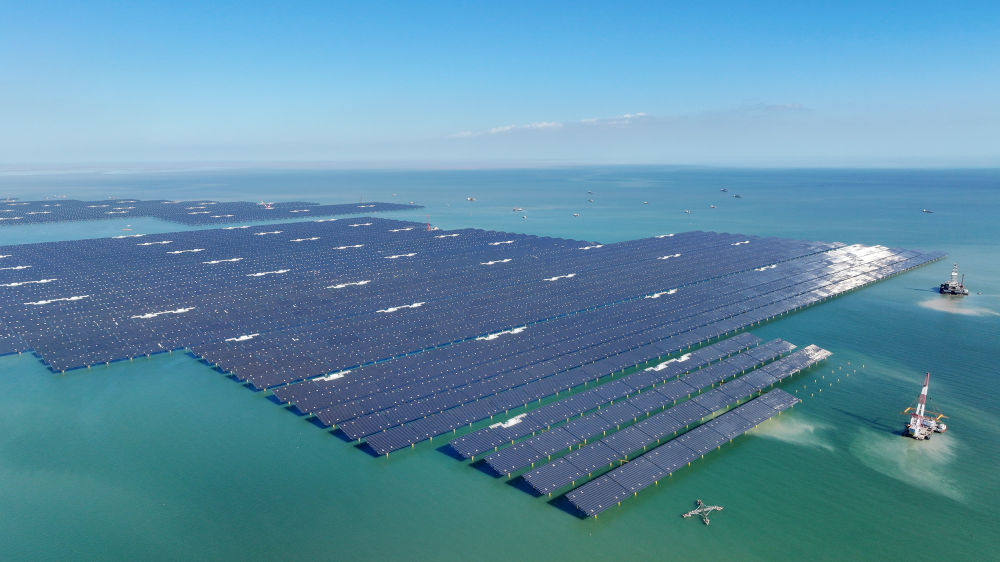
"十五五"规划建议提出,"持续提高新能源供给比重""着力构建新型电力系统,建设能源强国"。回望"十四五",我国逐光驭风、向"绿"而行, 全社会用电量中,每3度电就有1度绿电。 11月13日拍摄的位于山东东营市的国华HG14海上光伏项目(无人机照片)。新华社发(周广学摄) 看用电侧,绿色低碳的能源消费方式深入人心。 生活中,"开绿车、用绿电"成为越来越多人的选择。截至今年10月底,我国电动汽车充电基础设施总数达1864.5万个,同比增长54%。 当前,北方地区已进入供暖季。在内蒙古兴安盟科右前旗大坝沟小学,教室内暖意融融,师生们告别了煤炉取暖的"煤烟味"。今年以来,当地 27所中小学校完成清洁能源供暖改造。 工厂里,绿电为产业升级注入新活力。例如,惠达卫浴股份有限公司2024年消费绿电2560万千瓦时,折合节约3146.24吨标准煤,减排二氧化 碳8463.39吨。"使用绿电有助于满足国外客户的环保要求,突破贸易壁垒。"惠达卫浴设备能源动力部副部长侯鑫说。 展望"十五五",中国电力企业联合会常务副理事长杨昆表示,一方面要保障新建及存量新能源发电项目的合理利用率,另一方面要拓展新能源 非电多元化利用场景,如绿电制 ...

能源向“绿”!每3度电就有1度绿电
Xin Hua Wang· 2025-12-05 02:31
工厂里,绿电为产业升级注入新活力。例如,惠达卫浴股份有限公司2024年消费绿电2560万千瓦时,折 合节约3146.24吨标准煤,减排二氧化碳8463.39吨。"使用绿电有助于满足国外客户的环保要求,突破贸 易壁垒。"惠达卫浴设备能源动力部副部长侯鑫说。 展望"十五五",中国电力企业联合会常务副理事长杨昆表示,一方面要保障新建及存量新能源发电项目 的合理利用率,另一方面要拓展新能源非电多元化利用场景,如绿电制氢、新能源供暖等,加快各类消 纳技术的创新突破。 (责任编辑:谭梦桐) 今年10月,内蒙古的风光资源跨越3000公里"电力天路",转化为海南岛的万家灯火;8月,宁夏—湖南 ±800千伏特高压直流输电工程投产送电,每年向湖南输送电量超360亿千瓦时,其中新能源电量占比超 50%……如今,来自西部的绿电支撑了东中部地区五分之一的用电需求。 看用电侧,绿色低碳的能源消费方式深入人心。 生活中,"开绿车、用绿电"成为越来越多人的选择。截至今年10月底,我国电动汽车充电基础设施总数 达1864.5万个,同比增长54%。 当前,北方地区已进入供暖季。在内蒙古兴安盟科右前旗大坝沟小学,教室内暖意融融,师生们告别了 煤炉 ...
国网重庆市电力公司:向“绿”而行 向“新”求质 为经济社会高质量发展增添绿色动能
Ren Min Ri Bao· 2025-12-05 00:48
Core Viewpoint - The development of the Chongqing power grid is crucial for enhancing energy supply security and supporting economic growth, with significant investments and projects underway to improve infrastructure and integrate renewable energy sources [1][4][9]. Group 1: Infrastructure Development - The approval of the Yuchuan back-to-back interconnection project will establish a new flexible DC back-to-back converter station in Chongqing, increasing the conversion capacity by 3 million kilowatts, thereby enhancing interconnectivity between the national and southern power grids [1]. - During the 14th Five-Year Plan, the Chongqing power grid has focused on building a strong power supply network, with significant projects like the 1000 kV ultra-high voltage project increasing power transmission capacity by 4 million kilowatts [2]. - The total investment in power grid construction during the 14th Five-Year Plan reached 58.2 billion yuan, a 39.9% increase compared to the end of the 13th Five-Year Plan, with installed power capacity exceeding 42 million kilowatts [3]. Group 2: Renewable Energy Integration - Chongqing has seen a significant increase in renewable energy capacity, with an annual growth rate of over 35.75% for wind and solar energy installations, reaching a total of 8.15 million kilowatts [6]. - The commissioning of the first million-kilowatt pumped storage power station in the Southwest region has enhanced the grid's ability to adjust and integrate renewable energy sources [4]. - The city has implemented a "Million Kilowatt Rooftop Distributed Photovoltaic" initiative, adding 239.64 thousand kilowatts of rooftop solar capacity, contributing to a total of over 5 million kilowatts of solar power [6]. Group 3: Energy Consumption and Electric Vehicles - The rise of electric vehicles in Chongqing has led to a significant increase in charging infrastructure, with 6,170 public charging stations and 382,000 private charging piles installed, achieving a total charging volume of 1.705 billion kilowatt-hours [8]. - The company has invested 1.6 billion yuan in enhancing the power supply for charging facilities, ensuring stable and quality electricity for electric vehicle users [7]. - The promotion of green energy consumption is transforming the lifestyle of residents and tourists, with a growing emphasis on low-carbon energy use in transportation and daily activities [7]. Group 4: Future Plans and Goals - The company aims to develop a new power system that is clean, low-carbon, safe, and efficient, while actively integrating high-quality clean energy and advancing new business models like virtual power plants [9]. - Plans for the 15th Five-Year Plan include enhancing the power grid's capacity and flexibility, ensuring a balance between local and external power sources, and supporting the transition to a low-carbon economy [9].
谢戎彬:共建中国—中东能源合作新生态
中国能源报· 2025-12-04 11:48
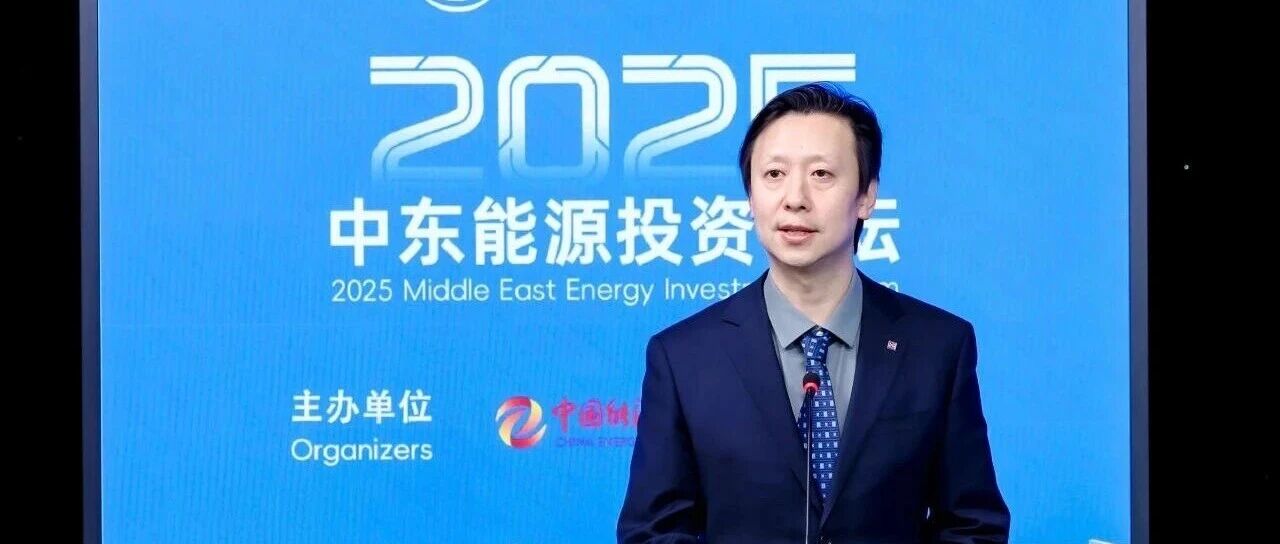
以下为发言内容整理 当今世界,应对气候变化已是全球重要议题,世界能源格局深度调整。这一背景下,以能 源绿色低碳转型助力可持续发展成为国际社会的共同选择。中东地区,这片曾以油气资源 成就世界能源版图中心的广袤之地,正依托突出的资源禀赋、广阔的发展潜力,以前所未 有的决心与行动,改变单一油气结构,加快推进经济多元化战略和能源结构转型,努力在 全球清洁能源领域占据一席之地。 沙特阿拉伯开启以" 2030愿景"为蓝图的宏大转型,实施了如新未来城(NEOM)、 阿菲 夫光伏电站等诸多可再生能源旗舰项目。阿联酋制定" 2 0 5 0年能源战略",定位多元化发 展领跑者,马斯达尔城是全球首个零碳城市概念的实验地,阿布扎比的艾尔达芙拉光伏电 站是全球最大的单体太阳能电站。卡塔尔的绿色转型与天然气主业紧密结合,在天然气田 启动规模巨大的碳捕集与封存(CCS)项目,利用天然气资源和CCS技术生产蓝氢和蓝 氨,以此打造"绿色LNG"标杆。这样的案例还有很多。 世界看到,中东海湾国家正从全球"油气重地"向"绿色技术试验场"转变,凭借资本、资源 和雄心,重塑未来全球清洁能源版图。作为全球最大的能源生产国和消费国,中国是全球 绿色转型的 ...
人民日报|加强能源产供储销体系建设 夯实能源安全供应保障基础
国家能源局· 2025-12-04 03:56
Core Viewpoint - Energy security is a strategic issue that is crucial for national economic and social development, and it requires comprehensive measures to ensure supply and demand balance while promoting green and low-carbon energy transformation [2][3]. Background - As the world's largest energy consumer, ensuring energy security is a primary concern for China, driven by stable economic growth and increasing energy consumption needs [3]. - The transition to green and low-carbon energy is ongoing, but challenges remain due to the intermittent nature of renewable energy sources like wind and solar, which complicates reliable energy supply [3]. Main Practices and Achievements - The energy supply capacity has been continuously enhanced through the development of renewable energy, with installed capacity expected to reach 1.89 billion kilowatts by the end of 2024, accounting for 56% of total installed capacity [5]. - The construction of energy infrastructure has been strengthened, with a comprehensive network established to support energy transmission across regions [6][7]. - Energy storage facilities have been improved, with significant increases in coal, oil, and gas storage capabilities, enhancing overall energy security [8]. - The establishment of a unified energy market system is underway, promoting market-oriented electricity trading and improving the efficiency of energy consumption [9]. Experience Insights - A strong energy supply capability is fundamental for energy security, emphasizing the need for both increasing clean energy supply and stabilizing traditional energy sources like coal [11]. - The transition to a new energy system must focus on green transformation, addressing ecological concerns while ensuring energy development [12]. - Coordinated national energy management is essential to optimize resource allocation and ensure reliable energy supply across regions [12].
绿色产业上新 能源转型推动经济发展提质
Ren Min Wang· 2025-12-04 03:11
Group 1 - The core viewpoint emphasizes the importance of green and low-carbon energy transition in addressing climate change and promoting economic development and ecological civilization [1][2][3] - The offshore wind power project in Jiangsu has completed the installation of all wind turbines, with an expected annual power generation of 2.842 billion kilowatt-hours, equivalent to saving 860,000 tons of standard coal and reducing carbon dioxide emissions by 2.37 million tons [1] - As of the end of October, China's total installed power generation capacity reached 3.75 billion kilowatts, a year-on-year increase of 17.3%, with solar power capacity growing by 43.8% and wind power capacity by 21.4% [1] Group 2 - Shanxi is promoting clean and efficient coal utilization by developing low calorific value coal power projects, integrating coal and electricity [2] - Hainan is advancing the "clean energy island" initiative, with wind and solar power projects contributing to local energy needs and supporting the construction of a free trade port [2] - The energy transition is fostering new industries and business models, such as distributed energy and vehicle-grid integration, which are becoming new engines for economic growth [2][3] Group 3 - The energy sector in China is accelerating innovation and upgrading, establishing the world's largest clean energy system, which optimizes energy structure and promotes high-quality economic development [3] - Hydrogen fuel trucks are being utilized for coal transportation, with 20 trucks already in operation, transporting 262,700 tons of coal and reducing carbon emissions by 1,022.78 tons [3] - There is a need for innovation in the energy sector to address the challenges posed by the volatility of renewable energy and to enhance the market mechanisms for better integration of these resources [3][4] Group 4 - The development of distributed energy and the utilization of renewable resources like wind and solar are crucial for reducing system costs and empowering industrial development [4] - Increased investment in technology research and development is necessary to overcome critical technological bottlenecks [4] - Market-oriented reforms in the energy sector should be deepened to enhance the role of the market in resource allocation [4]
加强能源产供储销体系建设 夯实能源安全供应保障基础
Ren Min Ri Bao· 2025-12-04 01:47
Core Viewpoint - Energy security is a critical issue for national economic and social development, emphasized by Xi Jinping's statements on the importance of energy supply and security [1][2]. Background Situation - China, as the world's largest energy consumer, faces challenges in ensuring energy security amid stable economic growth and increasing energy consumption [2]. - The transition to green and low-carbon energy is ongoing, but renewable energy sources like wind and solar still face reliability issues, impacting grid stability [2]. Main Practices and Achievements - The government has strengthened the energy production, supply, storage, and sales system, effectively meeting energy demands for both livelihood and economic development [3]. - The capacity for energy supply security has been enhanced through the development of renewable energy, with a projected installed capacity of 1.89 billion kilowatts by the end of 2024, accounting for 56% of total installed capacity [4]. - Fossil energy supply has also been improved, with stable crude oil production at 200 million tons and continuous natural gas production increases [4]. Energy Infrastructure Development - A comprehensive energy infrastructure network has been established, enhancing energy transmission capabilities across regions [5]. - By the end of 2024, the length of 220 kV and above transmission lines is expected to reach 960,000 kilometers, with a capacity of 5.78 billion kilovolt-amperes [5]. Energy Reserve Facilities - The construction of coal and gas reserve facilities has been prioritized, improving the government's ability to manage energy supplies [6]. - By the end of 2024, the installed capacity of pumped storage power stations is projected to reach 58.69 million kilowatts, with new energy storage projects increasing by over 130% [6]. Energy Market System - The establishment of a unified national electricity market is underway, with an increasing proportion of market-based electricity transactions [7]. - Reforms in the oil and gas market are being implemented to enhance the efficiency of energy distribution and pricing mechanisms [7]. Ensuring Livelihood Energy Supply - Measures have been taken to ensure energy supply during peak demand periods and major events, with a focus on maintaining stable electricity supply [8]. - Long-term contracts for coal and natural gas are being emphasized to stabilize energy prices and ensure supply [8]. Lessons Learned - A strong energy supply capability is fundamental for energy security, with a focus on both increasing clean energy supply and stabilizing existing fossil fuel production [9]. - The transition to a new energy system must prioritize green transformation while balancing economic and environmental needs [10]. - Coordinated national energy resource management is essential to address the imbalance in energy production and consumption across regions [10].
加强能源产供储销体系建设 夯实能源安全供应保障基础(深学笃行阐释习近平经济思想)
Ren Min Ri Bao· 2025-12-03 22:29
引 言 习近平总书记指出,能源保障和安全事关国计民生,是须臾不可忽视的"国之大者"。《习近平经济文 选》第一卷中的《积极推动我国能源生产和消费革命》一文指出,"能源安全是关系国家经济社会发展 的全局性、战略性问题,对国家繁荣发展、人民生活改善、社会长治久安至关重要。"党的十八大以 来,各有关方面深入学习领会习近平总书记关于能源保供的重要指示批示精神,始终坚持以习近平经济 思想和习近平生态文明思想为指导,深入推进能源产供储销体系建设,多措并举加强供需调节,全面推 进能源高质量发展,不断筑牢能源安全保障根基。 一、背景情况 习近平总书记指出,能源安全事关经济社会发展全局。我国作为世界上最大的能源消费国,如何有效保 障国家能源安全,始终是能源发展的首要问题。从需求端看,我国经济持续稳定增长,终端用能电气化 进程加快,人民对改善生活舒适度意愿增强,带动能源消费较快增长。从供给端看,我国能源绿色低碳 转型持续推进,清洁能源装机占比不断提升,但风电、光伏具有随机性、间歇性和波动性特征,在电量 方面仍处于增量替代阶段,在电力方面难以提供稳定、可靠的电力支撑,在安全方面一定程度上加剧了 电网安全稳定运行风险,实现新能源对传统 ...
140亿,南网工融基金设立
FOFWEEKLY· 2025-12-03 10:01
Core Viewpoint - The establishment of the South Network Industrial Fund, with a total scale of 14 billion yuan, aims to support the construction of a new power system and facilitate the green and low-carbon transformation of energy [2]. Group 1 - The South Network Industrial Fund is a collaboration between the South Network Industrial Group and ICBC Financial Asset Investment Co., Ltd., marking the first strategic fund specifically supporting national "dual carbon" projects [2]. - The fund will focus on major infrastructure, technological innovation, and key links in the industrial chain related to the new power system [2]. - This fund is the first of its kind with a scale exceeding 10 billion yuan, aiming to double the management scale of industrial funds for the company [2]. Group 2 - The fund represents a significant step in deepening the synergy between industry and finance, enhancing the efficient connection and deep integration of industrial resources and financial capital [2]. - It is also the first time the South Network has partnered with a banking financial institution to establish an industrial fund, expanding the boundaries of the industrial-financial ecosystem [2].


多地探索“强网智控”助力新能源高效消纳
Xin Hua Cai Jing· 2025-12-02 04:45
Core Insights - The rapid increase in new energy installation capacity necessitates measures to ensure green electricity can be generated, transmitted, and utilized effectively, which is crucial for building a new power system [1] Group 1: Technological Empowerment - Various regions are enhancing the grid's ability to manage new energy through digital and intelligent methods, improving precise perception and flexible control [2] - In Guangxi, the distributed photovoltaic capacity has doubled for two consecutive years, exceeding 1.44 million kilowatts, with innovative strategies implemented to address high penetration challenges [2] - The Southern Power Grid in Guangxi has introduced a distributed photovoltaic scheduling management module to enhance collaborative control capabilities [2] Group 2: Infrastructure Development - A robust grid structure is essential for the large-scale and long-distance transmission of new energy, with the Laishan 500 kV substation in Shandong set to support the transmission of 10 billion kilowatt-hours of green electricity annually by 2026 [4] - As of October, Shandong's new energy installation capacity reached 124.6 million kilowatts, with significant developments in the Yantai-Weihai region [4] - Sichuan is constructing an interconnected energy infrastructure network, with a ±800 kV high-voltage direct current project expected to transmit 40 billion kilowatt-hours annually [4] Group 3: Market Mechanism Innovation - Market mechanisms play a vital role in promoting green electricity consumption, with Guangxi's Guilin Power Supply Bureau facilitating long-term trading to stabilize electricity demand [5] - In Sichuan, expanding new energy application scenarios is crucial for local consumption, exemplified by a project that integrates photovoltaic power with agricultural facilities [5] - The project in Aba Prefecture utilizes solar energy to meet the energy needs of agricultural equipment, achieving 100% green energy usage and reducing carbon emissions [5]