具身智能

Search documents
春晚机器人技惊四座,关注表演背后的技术提升
Caixin Securities· 2026-02-24 07:25
Investment Rating - The industry investment rating is "Outperform the Market" [3][9] Core Insights - The report highlights significant advancements in humanoid robots showcased during the Spring Festival Gala, which have positively influenced market sentiment and are expected to accelerate the commercialization process of robots in 2026 [5][8] - The humanoid robot industry is projected to see a substantial increase in shipment volumes, with a forecasted global shipment of approximately 18,000 units in 2025, representing a year-on-year growth of about 508% [8] - The report emphasizes the importance of high-performance components in the evolution of humanoid robots, particularly in enhancing their dexterity and functionality [7][8] Summary by Sections Industry Performance - The specialized equipment sector has outperformed the CSI 300 index since 2025, driven by many companies in the sector belonging to the emerging manufacturing industry, which has shown significant elasticity [8] Market Trends - The Spring Festival Gala's robot performances led to a surge in market interest, with a reported increase of over 300% in robot search volume and a 150% rise in order volume on platforms like JD.com [8] - Notable companies such as Yushutech and Galaxy General Robotics have made significant technological breakthroughs, enhancing the capabilities of their humanoid robots [7][8] Investment Recommendations - The report suggests focusing on key domestic component manufacturers such as Sanhua Intelligent Control and quality suppliers like Zhejiang Rongtai and Meihu Co., as they are expected to benefit from the ongoing advancements in the humanoid robot sector [8]
广东召开“新春第一会” 推动制造业与服务业协同发展
Zhong Guo Xin Wen Wang· 2026-02-24 07:08
中新社广州2月24日电 (记者程景伟)广东省委、省政府24日在广州召开全省高质量发展大会,广东省委 书记黄坤明表示,广东要以制造业之强牵引服务业之优,以服务业之优增进制造业之强,在"制造强 省"与"服务高地"相互成就中打开产业发展新天地。 这是广东省连续第四年召开"新春第一会",以制造业与服务业协同发展为主题。 此外,广东要以深化改革强化新赛道新领域制度供给,着力破解"老规矩管新质生产力"的问题,最大限 度为技术创新和市场探索"松绑",让低空经济"飞"起来、自动驾驶"跑"起来、具身智能"用"起来,确保 既"放得活"又"管得好";要以扩大开放走在两业协同发展最前沿,深度融入全球产业分工网络,加快集 聚全球制造资源、服务资源,在高水平"引进来"、高质量"走出去"中擦亮"广东制造""广东服务"双品 牌。(完) (文章来源:中国新闻网) 黄坤明在会上提及广东到2035年的远景目标:经济总量相比2022年实现倍增、达25.8万亿元(人民币, 下同)左右;人均地区生产总值相比2020年翻一番,达到中等发达国家水平。 据介绍,广东要推动传统优势产业稳规模、提品质、增效益,发展壮大新兴产业、未来产业,"群链一 体化"打造产业 ...
对话荣耀方飞:为什么荣耀要做Pro Air和“机器人手机”?
Xin Lang Cai Jing· 2026-02-24 06:57
Core Insights - The iPhone Air, released in October 2025, has faced significant market challenges due to its design sacrifices in battery life and imaging capabilities, leading to a production line reduction by Foxconn and a substantial price cut from 7999 to 5999 yuan [1][2] - Honor's Magic8 Pro Air, launched at a starting price of 4999 yuan, has reportedly surpassed iPhone Air's first-day sales, despite facing criticism over its pricing strategy [2][3] - The market's perception of the Air category is shifting, with analysts noting that ultra-thin designs often compromise essential features like battery life and camera quality, making it difficult to attract flagship consumers [3][4] Company Strategies - Honor continues to push forward with the Magic8 Pro Air project, emphasizing its engineering capabilities to create a more comprehensive product compared to Apple [3][4] - The pricing strategy for the Magic8 Pro Air is influenced by its high-end positioning and rising component costs, with recent adjustments bringing its price down to 4699 yuan [5][4] - Honor is also exploring future terminal forms with the introduction of the ROBOT PHONE, which integrates AI and advanced camera functionalities, aiming to redefine the smartphone experience [6][7] Market Dynamics - The significant price drop of the iPhone Air has created competitive pressure for Honor, but the company remains confident in its market segmentation and product differentiation [5][6] - The ROBOT PHONE is positioned as a forward-looking product that explores the boundaries of smartphone technology, with a focus on integrating AI capabilities and enhancing user interaction [6][7][8] - Honor's approach emphasizes the importance of scene-based experiences over mere technical specifications, aiming to carve out a unique market position through innovative imaging and user engagement strategies [8]

千寻智能获近20亿融资,顶级资本天团联合押注,跃升百亿独角兽
机器人圈· 2026-02-24 06:45
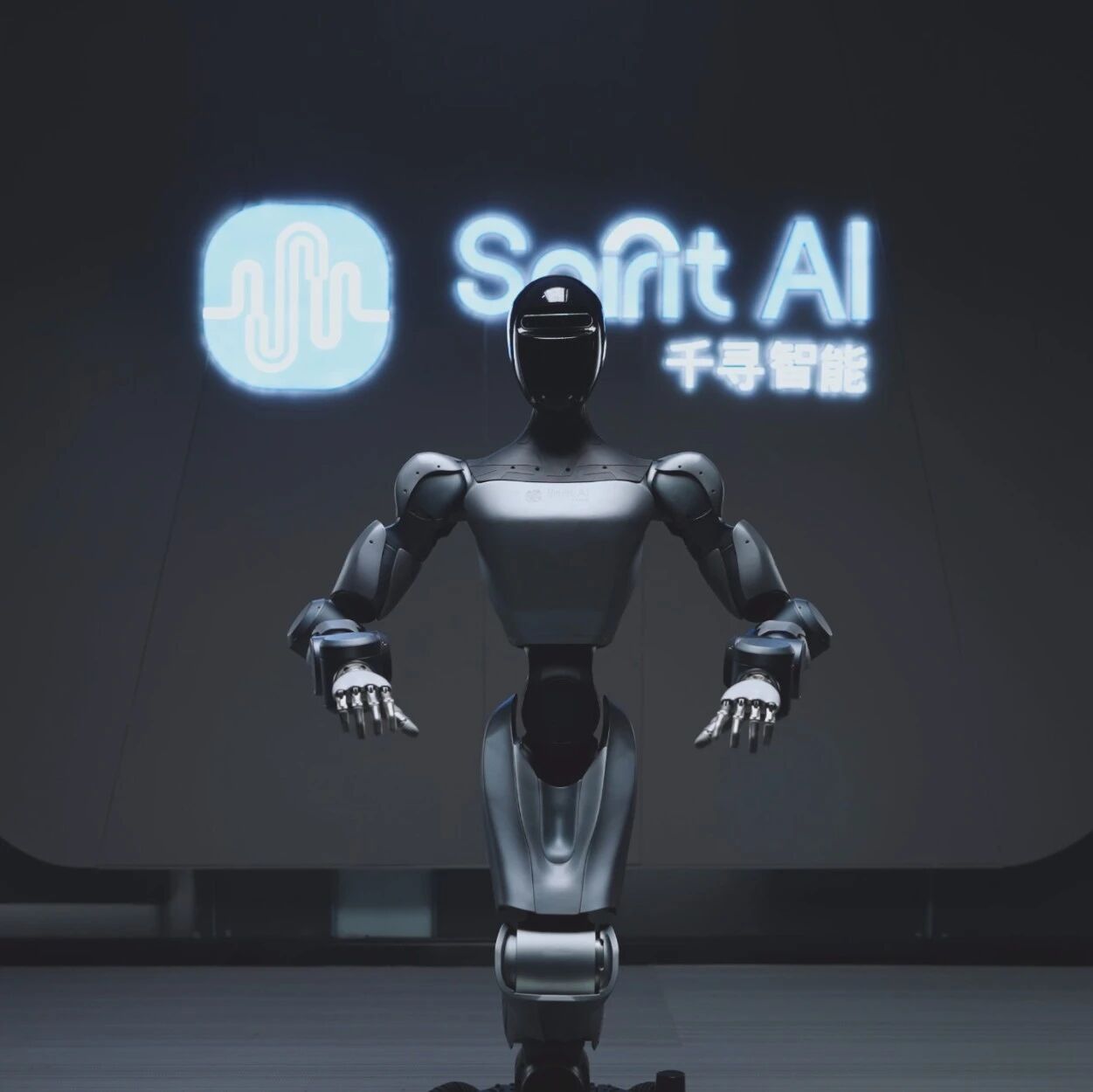
Core Viewpoint - The article highlights the significant financing activity in the field of embodied intelligence, particularly focusing on the company Spirit AI, which has raised nearly 2 billion yuan in two rounds of financing, marking a new high in the sector [5][7]. Financing and Investment Landscape - Spirit AI's recent financing attracted top-tier investors including Yunfeng Capital, a leading state-owned institution, and Sequoia China, among others, creating a comprehensive support structure from various capital sources [5][10]. - The financing round saw participation from both existing shareholders and new investors, indicating strong confidence in the company's technology and growth prospects [5][11]. - The total financing amount of 2 billion yuan has pushed Spirit AI's valuation beyond 10 billion yuan, positioning it as a unicorn in the embodied intelligence sector [7][10]. Company Overview and Technological Advancements - Founded in January 2024, Spirit AI focuses on developing a "general brain" for robots, led by experienced entrepreneurs and top scientists from prestigious institutions [6][13]. - The company has made significant advancements in model development, achieving a breakthrough with its open-source model Spirit v1.5, which surpasses previous benchmarks in the industry [13][14]. - Spirit AI has accumulated 200,000 hours of high-quality interaction data, with plans to exceed 1 million hours by 2026, significantly reducing data collection costs [14][18]. Commercialization and Industry Impact - The collaboration with CATL has become a benchmark case for Spirit AI, demonstrating the practical application of its technology in industrial production lines [19][22]. - The company is exploring various commercial applications across different sectors, including retail, hospitality, and household tasks, indicating a broad potential for market penetration [22][23]. - The article emphasizes that the embodied intelligence sector is rapidly evolving, with significant investment and technological advancements driving the industry towards a new phase of competition and commercialization [8][12].

深圳开年首个百亿独角兽,智平方又融资了
机器人圈· 2026-02-24 06:45
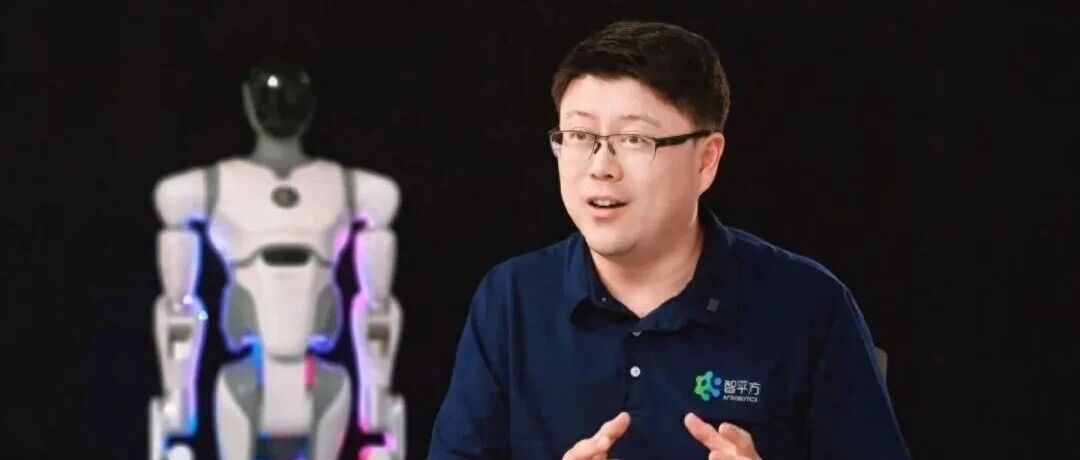
Core Viewpoint - The article highlights the emergence of AI² Robotics, a unicorn company in the field of embodied intelligence, which has recently completed a series B financing round exceeding 1 billion RMB, marking a significant milestone in China's robotics industry [2][10]. Company Overview - AI² Robotics was founded by Guo Yandong, an 80s PhD graduate with a strong academic and professional background, including positions at Microsoft and leading roles in companies like XPeng Motors and OPPO [3][6]. - The company focuses on developing general-purpose intelligent robots, positioning itself similarly to Tesla in the robotics sector, emphasizing productivity-oriented products [7]. Financing and Investment - AI² Robotics has completed multiple financing rounds, with significant investments from major players such as CRRC Capital, Baidu, and several Tesla ecosystem partners, reflecting strong investor confidence [2][10]. - The company has successfully raised funds through various rounds, including a recent series B round that attracted a diverse range of investors from the internet and AI sectors [9][10]. Technological Advancements - The company has developed the GOVLA architecture, a pioneering visual-language-action model, which has shown significant performance improvements compared to similar models [7][12]. - AI² Robotics has established a robust research and development framework, leading to numerous publications in top international conferences and recognition in the field of embodied intelligence [8]. Product Development and Market Application - The AlphaBot series of robots has undergone rapid iterations, achieving industrial-grade reliability and successfully entering high-end application scenarios such as automotive manufacturing and biotechnology [13][14]. - The company has secured a significant three-year procurement agreement with a major panel manufacturer, highlighting its capability to deliver on large-scale orders [14]. Industry Landscape - The Chinese embodied intelligence industry is experiencing rapid growth, with increasing competition and investment, as companies strive to differentiate themselves through technological innovation and practical applications [16][18]. - The article notes a shift in focus from mere performance demonstrations to real-world applications and collaborative capabilities, indicating a maturation of the industry [16][18].
2026年中国汽车产业十大趋势:L3级商业化启航,芯片短缺潮或再现
Ju Chao Zi Xun· 2026-02-24 06:36
Core Insights - In 2025, China's automotive industry continues to lead globally in production and sales for the 17th consecutive year, with a significant shift towards electrification and intelligence, as new energy vehicle penetration approaches 50% [2] - The industry is transitioning from "quantitative change" to "qualitative change," with L3 autonomous driving technology entering the market and competition in Robotaxi services beginning [2] Group 1: Sales and Market Trends - In 2025, new car sales in China are projected to reach 34.4 million units, a 9.4% increase year-on-year, with domestic sales at 27.3 million units, remaining stable compared to 2017 [3] - New energy vehicle sales are expected to hit 16.49 million units in 2025, marking a 28.2% increase and a penetration rate of 47.9%, with predictions for 2026 indicating a rise to 19 million units and a penetration rate of 54.68% [3][4] Group 2: Export Trends - In 2023, China exported 5.223 million vehicles, surpassing Japan to become the world's largest automotive exporter, but growth is expected to slow significantly in the following years, with 2026 export growth projected at 4.3% [5] - Notable exporters include Chery Group, with 1.344 million units, and BYD, achieving a 151.34% increase in exports [5] Group 3: Technological Developments - Major Chinese automakers are accelerating the development of solid-state battery technology, with several companies planning to achieve mass production by 2027, despite high costs currently limiting their use to high-end models [6][7] - The commercialization of L3 autonomous driving is set to progress, with the first vehicles receiving licenses by the end of 2025 and plans for regulatory frameworks to be established by 2026 [8] Group 4: Industry Competition - The Robotaxi sector is entering a phase of large-scale competition, with companies like XPeng and Pony.ai expanding their fleets and aiming for significant operational scale by 2026 [9] - The automotive industry is increasingly integrating into the robotics sector, with several companies launching humanoid robots and enhancing their technological capabilities [10][11] Group 5: Luxury Brand Challenges - Luxury brands in China are facing declining sales, with significant drops reported by major German automakers, indicating a structural shift in the market [12] - Domestic high-end models are gaining traction, challenging traditional luxury brands and leading to a reduction in dealership numbers [12] Group 6: Joint Ventures and Localization - Joint venture brands are focusing on deep localization strategies to counter the rise of domestic brands, with plans to enhance their product offerings and R&D capabilities in China [13][14] Group 7: Chip Supply Issues - The automotive industry is facing a new wave of chip shortages, driven by geopolitical factors and rising costs, with predictions of significant production disruptions in 2026 [15] - The domestic chip production rate is expected to rise from 25% in 2025 to 35% in 2026, as companies ramp up local manufacturing efforts [16][17]

春节机器人全场景出圈,产业化进程加速
Jin Rong Jie· 2026-02-24 06:20
Core Insights - The article highlights the significant advancements in the domestic robotics sector, particularly showcased during the 2026 Spring Festival Gala, where over 200 robots were featured, marking a pivotal moment for Chinese robotics [3] - The global robotics industry is evolving into a "dual-driven" model led by both China and the U.S., transitioning from technology validation to large-scale implementation [3] Group 1: Technological Advancements - Leading companies such as Yushutech, Songyan Power, Galaxy General, and Magic Atom showcased their robots during the Spring Festival Gala, exceeding market expectations [3] - Yushutech demonstrated a world-first fully autonomous martial arts performance with over 20 H1 robots, achieving high precision and zero errors in a complex environment [3] - Galaxy General executed the first fully autonomous perception and decision-making performance, showcasing its adaptive capabilities in various tasks [3] - Songyan Power's bionic robots replicated human facial expressions with high precision, achieving frame-level synchronization with voice [3] Group 2: Market Trends and Consumer Behavior - Data from the Qingtian rental platform indicates that over 54% of robot rental orders during the Spring Festival were for cultural and commercial events, with total orders surpassing 5,000 [4] - E-commerce data shows a significant increase in sales of window-cleaning robots (up 209% year-on-year) and vacuum robots (up 59%), indicating a growing penetration of robotics in household consumption [4] - The rental price for humanoid robots has decreased from 20,000 yuan to 6,000 yuan, while robotic dogs can be rented for as low as 78 yuan [4] Group 3: Industrialization and Cost Reduction - Predictions suggest that by 2025, global shipments of humanoid robots will reach 15,000 to 20,000 units, with Chinese companies holding over 85% market share [7] - Yushutech's G1 robot is priced at 99,000 yuan, significantly lowering the industry entry barrier, while Songyan Power's "Xiao Bu Mi" is the first humanoid robot priced under 10,000 yuan [7] - The localization rate of core components is approximately 70%, with the cost of harmonic reducers being one-third of similar products from Japan [7] Group 4: Future Outlook and Catalysts - The robotics sector is transitioning from "thematic expectations" to "fundamental verification," with the Spring Festival effect temporarily boosting market sentiment [7] - Key catalysts for the first quarter include the anticipated release of Tesla's Optimus V3 version and the production delivery progress of leading domestic companies [8] - The upcoming Two Sessions may introduce policies that support humanoid robots as part of emerging industries [7]

千寻智能完成近20亿融资,顶级资本天团联合押注,估值强势破百亿
Sou Hu Cai Jing· 2026-02-24 06:19
Core Insights - Qianxun Intelligent, a leading company in embodied intelligence, has successfully completed two rounds of financing totaling nearly 2 billion yuan, injecting strong momentum into the industry [2] - The latest financing round attracted top-tier investors, including Yunfeng Fund, Sequoia China, and various state-owned and private capital, indicating a comprehensive support structure for the company [4][5] - With this financing, Qianxun Intelligent's valuation has surpassed 10 billion yuan, marking its entry into the "billion club" of the embodied intelligence sector, a significant milestone in the industry's development [4] Investment Landscape - The financing reflects a broader trend in the embodied intelligence sector, where companies with strong technological moats and industry penetration are becoming scarce and highly sought after by investors [5][6] - Qianxun Intelligent is unique in attracting diverse industrial capital, creating a "full-scenario ecosystem" that spans various sectors, including manufacturing, logistics, and consumer electronics [5][6] Technological Advancements - Qianxun Intelligent's Spirit v1.5 model has become the first Chinese open-source model to surpass Pi0.5 in performance, showcasing its strong zero-shot generalization capabilities [7] - The company has adopted a "data pyramid" training philosophy, significantly reducing data collection costs by 90% and enabling the large-scale deployment of real-world data [8][11] Commercialization Efforts - The company has launched the world's first humanoid embodied intelligence production line, demonstrating its ability to adapt to production uncertainties and outperform human workers in flexibility [12][14] - Collaborations with major companies like JD.com are expanding the application of its technology in retail, enhancing both technical development and practical applications [12][14] Team and Expertise - Qianxun Intelligent boasts a highly skilled team, often referred to as an "AI dream team," with members from top universities and expertise in various core areas of embodied intelligence [14] - The team's innovative approach and commitment to a "difficult but correct" path have positioned Qianxun Intelligent as a leader in the next generation of embodied intelligence [16]

阿里巴巴达摩院发布具身智能大脑模型,机器人ETF(562500)持续获资金关注
Mei Ri Jing Ji Xin Wen· 2026-02-24 06:15
Group 1 - The core innovation of the RynnBrain model is the introduction of two essential capabilities for robots: spatiotemporal memory and physical world reasoning [2] - The RynnBrain model demonstrates strong scalability, allowing for rapid training of various embodied models such as navigation, planning, and action, potentially becoming an industry foundational model [2] - The RynnBrain model can achieve industry-leading performance with only a few hundred data points for fine-tuning, surpassing the Gemini 3 Pro in embodied planning models [2] Group 2 - The Robot ETF (562500) has seen a recent decline of 0.74%, with component stocks showing mixed performance, including a 7.96% increase in Jingye Intelligent and an 11.66% decrease in Yuntian Lifa [1] - The Robot ETF has accumulated a 1.21% increase over the past two weeks, with a trading volume of 14.69 billion yuan and a turnover rate of 5.48% [1] - The Robot ETF has achieved a new scale high of 267.20 billion yuan and a new share high of 24.706 billion shares, ranking first among comparable funds [2]

太猛了!16家汽车企业2026年销量目标马力全开
Zhong Guo Qi Che Bao Wang· 2026-02-24 06:11
Group 1 - In 2025, China's automobile production and sales both exceeded 34 million units, setting a new historical record [1] - The year 2026 marks the beginning of the "14th Five-Year Plan," with many automotive companies setting ambitious sales targets and clear strategies for growth [1] Group 2 - China FAW aims for a sales target of 3.546 million units in 2026, a year-on-year increase of 7.39% from 2025 [4] - Dongfeng Motor targets 3.25 million units for 2026, with over 30% year-on-year growth, focusing on new energy vehicles and exports [6] - Changan Automobile sets a goal of 3.3 million units for 2026, a 13.3% increase, with a strong emphasis on new energy vehicle sales [8] Group 3 - SAIC Motor's sales target for 2026 is projected between 4.5 million and 5 million units, reflecting a pragmatic approach [10] - BAIC Group aims for 2.2 million units in 2026, with a focus on new energy products and smart technology [12][13] - GAC Group's sales in Q4 2025 reached 537,800 units, showing a significant quarter-on-quarter increase of 25.56% [16] Group 4 - Chery aims for a sales target of 3.2 million units in 2026, a 14.03% increase from 2025, with plans to launch 17 key models [20] - BYD achieved a record of 4.602 million units in 2025 and plans to sell 1.3 million vehicles overseas in 2026, a 24.3% increase [22][23] - Geely targets 3.45 million units for 2026, a 14% increase, with a focus on new energy vehicle launches [25][26] Group 5 - Great Wall Motors sets a target of 1.8 million units for 2026, a 36% increase from 2025, supported by new technology [28][29] - Li Auto aims for 550,000 units in 2026, with a growth plan of approximately 40% [31] - NIO's sales target for 2026 is between 456,000 and 489,000 units, with plans to expand its battery swap station network [33] Group 6 - XPeng Motors targets 550,000 to 600,000 units for 2026, with a growth rate of approximately 28% to 39.7% [36] - Leap Motor aims for a sales target of 1.05 million units in 2026, a 67.5% increase, with plans to launch four new models [38] - Xiaomi Auto sets a target of 550,000 units for 2026, a 34% increase, focusing on technology development and user experience [40] Group 7 - Harmony Smart aims for over 1 million units in 2026, with plans to launch more than 10 new models [43]