
南南合作

Search documents
古巴缘何深陷停电危机?
Zhong Guo Dian Li Bao· 2025-09-12 02:27
Core Viewpoint - Cuba is facing a severe and ongoing energy crisis characterized by frequent nationwide blackouts, primarily due to aging infrastructure and the impact of long-term U.S. economic sanctions [1][2][3] Group 1: Energy Crisis Overview - The largest thermal power plant in Cuba, Antonio Guiteras, experienced a failure on September 10, 2025, leading to a nationwide blackout, marking the fifth such incident in a year [1] - Blackouts last from several hours to tens of hours, severely impacting healthcare, water supply, and daily life [1] - The average operational lifespan of power generation units in Cuba exceeds 30 years, with frequent failures and significant transmission losses due to outdated infrastructure [1][2] Group 2: Impact of U.S. Sanctions - U.S. sanctions, particularly the 1992 Cuban Democracy Act, have severely restricted Cuba's ability to upgrade its energy infrastructure, preventing access to necessary parts and technical support [2] - The sanctions have created a vicious cycle, making it difficult for the Cuban energy sector to modernize and maintain its facilities [2] - Cuba's energy structure is heavily reliant on traditional fuel thermal power, with a low share of renewable energy, making it vulnerable to fluctuations in international oil prices and supply disruptions [2] Group 3: International Cooperation and Assistance - In response to the energy crisis, Cuba is actively seeking international cooperation, receiving a second batch of generator equipment and parts from China on January 20, 2025 [3] - The assistance from China aims to support critical facilities such as hospitals and water supply systems, reflecting a South-South cooperation model without political conditions [3] - The situation highlights the ethical implications of unilateral sanctions and raises questions about the international community's response to countries whose development rights are restricted due to geopolitical stances [3][4] Group 4: Geopolitical Implications - The ongoing energy crisis in Cuba serves as a geopolitical barometer, measuring not only the stability of power supply but also the broader issues of global development justice [4] - The need for a more just and inclusive international order is emphasized, as temporary aid may not fundamentally resolve the underlying issues caused by sanctions [4]
中国是维护国际秩序的重要支柱
Ren Min Ri Bao· 2025-09-06 04:46
Core Viewpoint - The historical contributions of the Chinese people in defeating Japanese militarism and their significant role in the global anti-fascist war are often marginalized or forgotten in the Western narrative, which is considered dangerous by former Italian Prime Minister Massimo D'Alema [2] Group 1: Historical Significance - D'Alema emphasizes the importance of remembering history and educating younger generations to maintain global peace and stability in the face of increasingly complex international situations [2] - The spirit of resistance demonstrated by the Chinese during the anti-Japanese war is viewed as a vital source of strength for China's modernization efforts, enabling the country to transform into the world's second-largest economy and achieve remarkable advancements in various fields within a century [2] Group 2: China's Role in International Relations - Since the victory in the anti-fascist war, China has been a crucial pillar in maintaining international order as a permanent member of the UN Security Council, actively participating in global governance and earning widespread recognition for its role [2] - D'Alema notes that the current international landscape is undergoing profound adjustments, entering a "disordered multipolarity" phase, which poses severe challenges to the UN-centered international system [3] Group 3: Global Cooperation and Challenges - The concept of building a community with a shared future for mankind is highlighted as a strategy to address global challenges such as peace maintenance, climate change, and poverty reduction, emphasizing that no country can thrive in isolation [3] - D'Alema points out the importance of solidarity among Global South countries, reflecting the significant evolution of the international power structure and the importance of emerging forces in promoting a more just and equitable international order [3]


中国是维护国际秩序的重要支柱(高端访谈)
Ren Min Ri Bao· 2025-09-05 22:22
Group 1 - The historical contribution of the Chinese people in defeating Japanese militarism and its significance in the global anti-fascist war is often marginalized in Western narratives, which is considered dangerous [2] - The spirit of resistance during the Anti-Japanese War is viewed as a driving force behind China's modernization achievements, transforming it into the world's second-largest economy within a century [2] - Since the victory in World War II, China has played a crucial role in maintaining international order as a permanent member of the UN Security Council, actively participating in global governance [2] Group 2 - The current international landscape is undergoing profound adjustments, entering a "disordered multipolarity" period, posing severe challenges to the UN-centered international system [3] - The concept of building a community with a shared future for mankind is seen as a strategy to address global challenges, emphasizing the need for collective action among nations [3] - The trend of solidarity among global South countries reflects a significant shift in the international power structure, highlighting the importance of emerging powers in promoting a more just and equitable international order [3]
“为中华民族伟大复兴提供精神动力”(高端访谈)
Ren Min Ri Bao· 2025-09-03 23:32
Group 1 - The core viewpoint emphasizes the significant contribution of the Chinese people to the victory in the World Anti-Fascist War, highlighting the importance of remembering this history [1] - The Cambodian King Norodom Sihamoni acknowledges that the spirit of resistance during the war continues to drive China's development and modernization efforts [1] - The King recalls the impressive commemorative activities from 10 years ago, which showcased the unity and confidence of the Chinese people under the leadership of the Communist Party [1] Group 2 - The relationship between China and Cambodia has been elevated to a "new era all-weather China-Cambodia community of shared destiny," indicating a historic advancement in bilateral relations [2] - The King notes that this new positioning reflects deep mutual trust and close cooperation, opening broader prospects for comprehensive strategic collaboration, especially in sustainable development [2] - Recent achievements in infrastructure, trade, and water resources under multilateral frameworks like China-ASEAN cooperation demonstrate the effectiveness of dialogue and practical cooperation between the two nations [2]
专访世界气象组织主席:期待广东经验助力提升气象现代化水平
Nan Fang Du Shi Bao· 2025-09-02 04:02
Core Viewpoint - The articles highlight the importance of international cooperation in meteorology and climate resilience, particularly emphasizing China's role in supporting developing countries through technology transfer and capacity building in meteorological services [1][2][5]. Group 1: International Cooperation and Initiatives - The Shanghai Cooperation Organization (SCO) summit emphasized enhancing environmental cooperation among member states to mitigate the negative impacts of climate change [2]. - The World Meteorological Organization (WMO) president noted that China has been a leading entity in cross-border ecological protection and meteorological cooperation, particularly through its "South-South Cooperation" initiative [2][5]. - China is actively involved in providing financial support, technology transfer, and training to developing countries, especially in Africa, to improve their meteorological observation and early warning systems [2][3]. Group 2: Technological Advancements and Applications - The establishment of a meteorological satellite data application center in collaboration with the UAE aims to enhance remote sensing capabilities and data sharing [3]. - The "MAZU" early warning system developed in China has been recognized for its contributions to global climate resilience efforts [3]. - The Guangdong region is highlighted as a key platform for China's meteorological technology cooperation, showcasing advancements in extreme weather response and early warning systems [4][5]. Group 3: Future Expectations and Goals - The WMO president expressed the expectation for Guangdong to further develop a regional disaster prevention and reduction cooperation center, sharing its successful experiences with other countries [5]. - There is a call for continued innovation in meteorological science, technology, and policy to help developing countries bridge capacity gaps and build climate resilience [5]. - The articles suggest that China's leadership in international meteorological cooperation is becoming increasingly significant, particularly through multilateral platforms like the WMO and the China-Africa Cooperation Mechanism [5].
塞内加尔各界积极评价中非合作论坛北京峰会成果落实
Xin Hua She· 2025-08-30 10:19
Group 1 - The event held by the Chinese Embassy in Senegal marked the one-year anniversary of the implementation of the outcomes from the Beijing Summit of the Forum on China-Africa Cooperation, attended by nearly a hundred representatives from various sectors [1] - Senegal's Prime Minister's Special Representative emphasized the transformation of important consensus between the two countries into tangible results, which have received widespread acclaim from the Senegalese people [1] - The Senegalese government expressed a strong commitment to the One China principle and praised China's just stance on global major issues, indicating a desire to continue advancing the implementation of summit outcomes and enhance mutual understanding between the peoples of both countries [1] Group 2 - The Secretary-General of the ruling party in Senegal noted that the governance experience of the Communist Party of China provides significant reference for Senegal in exploring a modernization path suited to its national conditions [1] - The Director of the Asia-Pacific Department of the Senegalese Ministry of Foreign Affairs called for continued collaboration to promote priority projects under the framework of the Forum on China-Africa Cooperation [1] - The Chinese Ambassador to Senegal highlighted the close political trust and steady progress in economic cooperation between China and Senegal over the past year, aligning with the African Union's Agenda 2063 [2]
南共体聚力打造区域经济韧性
Jing Ji Ri Bao· 2025-08-26 21:57
Group 1 - The 45th Southern African Development Community (SADC) Summit focused on advancing industrialization, agricultural transformation, and energy transition to create a more resilient SADC [1] - The summit emphasized regional economic integration, development, and the implementation progress of the SADC 2020-2030 Regional Indicative Strategic Development Plan [1][2] Group 2 - Key priorities from the summit include establishing a regional development fund to enhance economic resilience and mobilize long-term investments [2] - The summit called for the acceleration of the SADC "North-South Economic Corridor" planning, including economic value assessments and investment plans [2] - Agriculture's critical role in ensuring food security and self-sufficiency was highlighted, urging member states to enhance agricultural productivity and climate adaptability [2] - Coordination of tariff policies among SADC member states was emphasized to facilitate trade and eliminate barriers to regional economic integration [2] Group 3 - The summit's agenda aligns closely with the African Union's development initiatives and South-South cooperation, showcasing the commitment of Southern African countries to these goals [3] - The African Union's Agenda 2063 emphasizes economic self-reliance and sustainable development, with the second ten-year implementation plan starting in 2024 [3] Group 4 - Despite challenges, the trade and investment environment in Africa is improving, with internal trade growth positively impacting GDP and foreign direct investment in SADC member states [4] - Structural reforms have been implemented across various African regional organizations to promote economic integration and cross-border trade facilitation [4] Group 5 - In response to external pressures, African nations are accelerating regional economic cooperation and trade diversification to enhance economic resilience [5] - South Africa was elected as the rotating chair of the SADC for the 2026 summit, with a commitment to support the SADC 2050 vision for regional integration [5]
非洲人士表示:中国对非洲大陆发展事业的支持非常重要
人民网-国际频道 原创稿· 2025-08-26 03:02
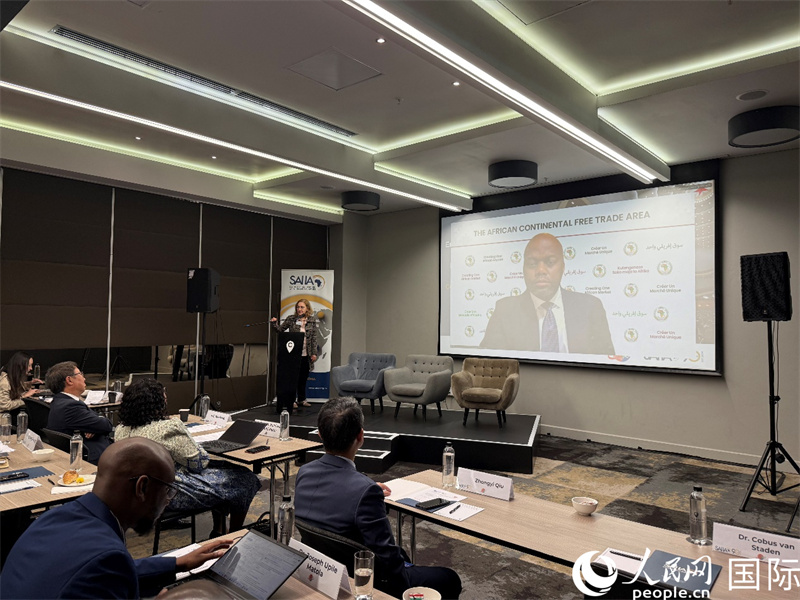
Group 1 - The seminar focused on strengthening global trade cooperation amid rising protectionism, discussing topics such as the global trade system, African continental integration, and China-Africa cooperation prospects [1][2][4] - Wamkele Mene, Secretary-General of the African Continental Free Trade Area, highlighted that unilateralism and protectionism present challenges but also opportunities for African integration, emphasizing the need for increased development financing and infrastructure improvements [2] - Xolelwa Mlumbi-Peter from South Africa's Department of Trade and Industry noted that high tariff policies increase global trade uncertainty, urging Southern countries to coordinate trade policies for mutual benefit [2][4] Group 2 - Elizabeth Sidiropoulos, CEO of the South African Institute of International Affairs, stated that rising unilateralism and protectionism threaten global economic stability and multilateralism, stressing the importance of solidarity among Southern countries [4] - The seminar underscored China's role in assisting African nations with infrastructure development, digital transformation, and green development, which are crucial for the revitalization of the African continent [4]
中国对非洲大陆发展事业的支持非常重要
Ren Min Ri Bao· 2025-08-25 22:27
Core Viewpoint - The seminar held in Pretoria focused on enhancing global trade cooperation amidst rising protectionism, discussing the potential of South-South cooperation as a solution [1] Group 1: Global Trade System - The seminar addressed the challenges and opportunities within the global trade system, emphasizing the importance of collaboration among developing countries [1] Group 2: African Continental Integration - The Secretary-General of the African Continental Free Trade Area highlighted China's role in improving infrastructure and connectivity in Africa through initiatives like the Belt and Road Initiative, which is crucial for the continent's integration process [1] Group 3: China-Africa Cooperation - South Africa's Department of Trade and Industry noted that China's zero-tariff policy benefits African products and aids in building local value chains, with expectations for enhanced cooperation in sectors such as agriculture and automotive manufacturing [1]
非洲人士表示—— 中国对非洲大陆发展事业的支持非常重要
Ren Min Ri Bao· 2025-08-25 21:50
Core Viewpoint - The seminar held in Pretoria focused on enhancing global trade cooperation amid rising protectionism, discussing the potential of South-South cooperation as a solution [1] Group 1: Global Trade System - The seminar addressed the challenges and opportunities within the global trade system, emphasizing the importance of collaboration among developing countries [1] Group 2: African Continental Integration - The Secretary-General of the African Continental Free Trade Area highlighted China's role in improving infrastructure and connectivity in Africa, which is crucial for the continent's integration process [1] Group 3: China-Africa Cooperation - South Africa's Department of Trade and Industry noted that China's zero-tariff policy benefits African products and aids in building local value chains, with expectations for enhanced cooperation in agriculture and automotive manufacturing [1]