
性别平等

Search documents
从北京再出发:共创全球妇女发展新未来
Ren Min Ri Bao· 2025-09-30 22:02
Core Points - The article emphasizes the importance of gender equality and women's development as a measure of social progress and a key pursuit of the Chinese Communist Party [1][2] - China is set to host a global women's summit in Beijing to inject new momentum into the global women's movement, marking the 30th anniversary of the Beijing World Conference on Women [1][2] Group 1: China's Commitment to Women's Development - China has actively implemented the spirit of the Beijing World Conference on Women and has been a significant participant and leader in global women's affairs over the past 30 years [1][3] - The country has established a comprehensive legal system to protect women's rights, including over 100 laws and regulations [3] - Since the 18th National Congress of the Communist Party, the status of women in China has improved significantly, with 690 million women entering a moderately prosperous society [3] Group 2: Global Cooperation and Initiatives - China has contributed to global women's development by assisting women in over 100 countries through various initiatives, such as the "Happy Grass" project [4] - The country has trained over 200,000 women from more than 180 countries and regions, implementing projects totaling over $40 million to empower women [4] - China maintains friendly relations with over 420 women's organizations and institutions globally, fostering international cooperation [4] Group 3: Multilateralism and Global Governance - China supports the United Nations' role in promoting women's development and has donated $20 million to the UN Women since 2015 [5] - The country has hosted nearly 30 women's meetings under various international frameworks, promoting collaboration and empowerment [5] - China aims to bridge the gender digital divide and ensure that all individuals benefit from advancements in artificial intelligence [5] Group 4: Ongoing Challenges and Future Directions - Despite progress, over 600 million women live in conflict zones, and nearly 2 billion women and girls lack social protection [6][7] - The upcoming global women's summit is seen as a timely opportunity to foster cooperation and address challenges in women's development [7] - China expresses its commitment to work with other countries to implement the Beijing Declaration and the UN 2030 Sustainable Development Agenda for a better world for all women [7]
翟欣欣案的反思:捞女叙事只会助长更多婚恋困境
Hu Xiu· 2025-09-28 11:10
Group 1 - The case of Zhai Xinxin highlights significant changes in criminal policy regarding extortion and the complexities of defining financial claims within marriage [3][4][6] - The lengthy litigation process, spanning over six years, indicates that the case is not merely a straightforward extortion case, but involves intricate legal interpretations of marital financial disputes [3][5] - The court's decision to classify the financial claims as not constituting extortion reflects a cautious approach to the intersection of criminal and civil law, particularly in the context of short marriages [6][11] Group 2 - The narrative surrounding "gold diggers" and its impact on gender equality reveals societal biases that oversimplify complex individual behaviors into broader stereotypes [7][10] - The emergence of games and media that perpetuate negative stereotypes about women in financial relationships exacerbates gender tensions and societal divisions [8][9] - The case reflects deeper issues within the marriage market, including economic disparities and the traditional gender roles that influence relationship dynamics [11][12][14]
中国驻冰岛使馆举办性别平等研讨会系列活动
人民网-国际频道 原创稿· 2025-09-28 03:11
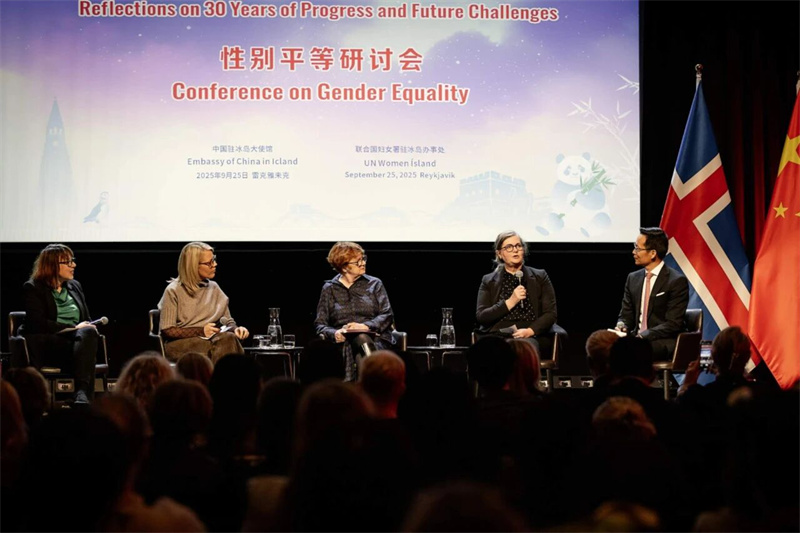
嘉宾参观中国妇女事业图片展。中国驻冰岛大使馆供图 会议还围绕性别平等相关议题举行了小组讨论。 人民网斯德哥尔摩9月26日电(记者殷淼)为迎接即将在中国举行的全球妇女峰会,中国驻冰岛大使馆与联合 国妇女署驻冰岛办事处于9月25日联合举办性别平等研讨会系列活动。冰司法部长京勒伊格斯多蒂尔和各界友好人 士近300人出席。 中国驻冰岛使馆举办性别平等研讨会。中国驻冰岛大使馆供图 中国驻冰岛大使何儒龙在致辞中表示,北京世妇会30年以来,中国积极落实《北京宣言》和《行动纲领》, 妇女事业取得长足发展。进入新时代以来,习近平主席指方向、定方位、明方针,推动中国妇女事业发展取得历 史性成就。 冰司法部长介绍了冰在性别平等方面的成绩与挑战,呼吁各国加强合作,切实行动,提升妇女权益,期待全 球妇女峰会为此发挥重要作用。 冰岛司法部长京勒伊格斯多蒂尔发言。中国驻冰岛大使馆供图 会后,嘉宾参观了中国妇女事业图片展,出席招待会并品鉴四川美食和非遗展。 非遗表演。中国驻冰岛大使馆供图 非遗展示。中国驻冰岛大使馆供图 ...

纪念联合国成立80周年高级别会议举行
Xin Hua She· 2025-09-22 22:35
Group 1 - The core message emphasizes the need to reaffirm commitment to multilateralism and the principles of the UN Charter, highlighting the importance of strengthening the role of the United Nations in addressing global challenges such as war, hunger, and climate change [1] - UN Secretary-General António Guterres stated that the principles of the UN Charter are facing unprecedented attacks and called for collective action among member states to implement key agendas like the "Future Pact" and the "UN 80th Anniversary Reform Initiative" [1] - The President of the 80th UN General Assembly, Annalena Baerbock, noted that the 80th anniversary of the UN marks a critical turning point, stressing the importance of choosing the right path to demonstrate the ability to work together [1] Group 2 - Former Liberian President Ellen Johnson-Sirleaf acknowledged the underperformance of the international multilateral framework established to protect future generations from war and urged nations to make concrete commitments to protect civilians and create opportunities for youth [2] - Former Norwegian Prime Minister Gro Harlem Brundtland pointed out that over 80% of sustainable development goals are off track, emphasizing the indispensable role of the UN in addressing climate change and gender equality [2]
2025外滩大会:老中青三代女性代表共议数字赋能女性发展
Yang Guang Wang· 2025-09-13 11:17
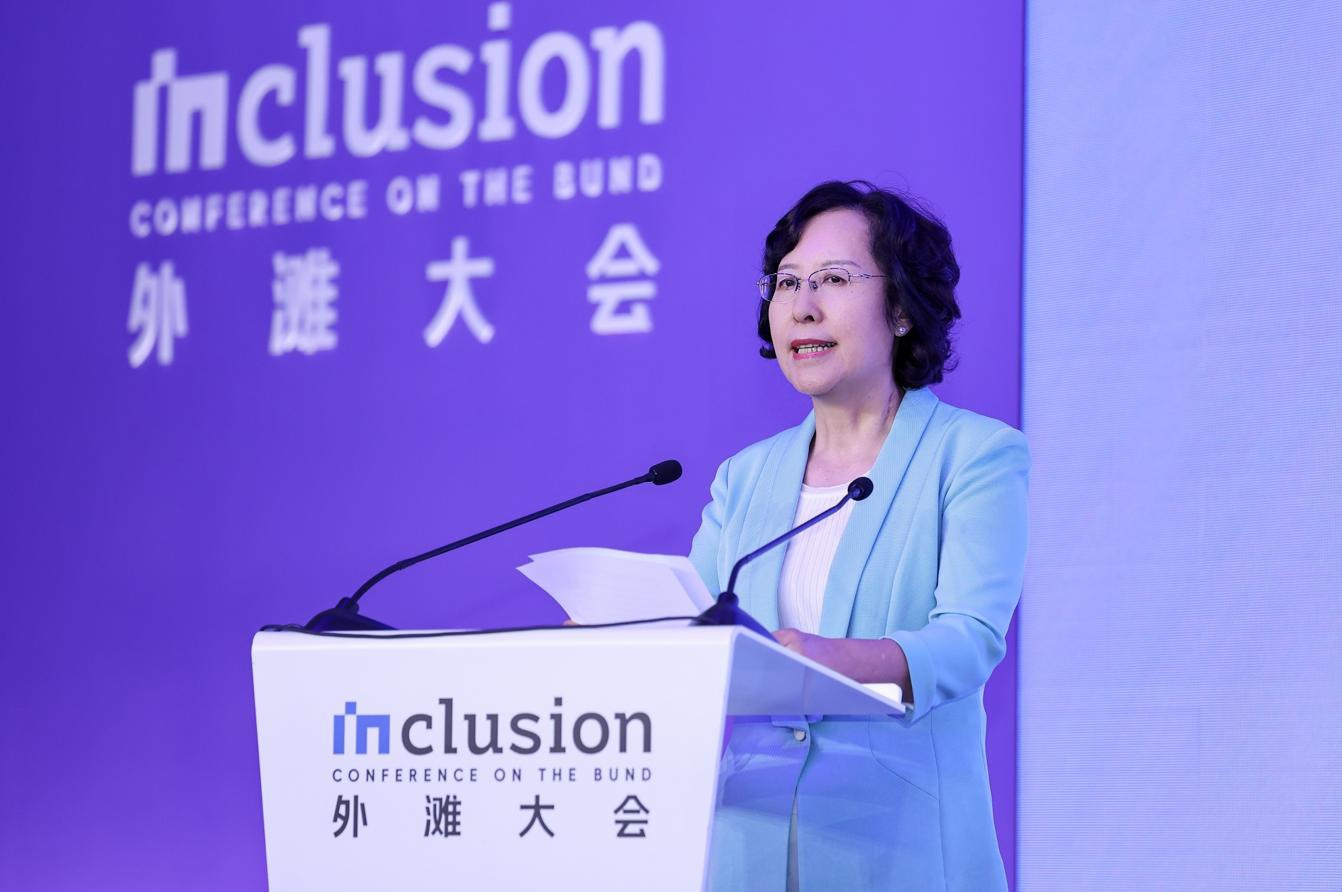
Core Insights - The event highlighted the importance of women's empowerment in the digital age, emphasizing their role in driving high-quality development in China [1][2] - The need for enhancing women's digital literacy and skills was stressed, with a call for societal collaboration to bridge the digital gender gap [2][3] - Ant Group's "Digital Mulan" initiative aims to support women's development through various programs, including providing insurance and job opportunities [4][5] Group 1 - The 2025 Inclusion Bund Conference focused on how to better harness women's power in the digital era, marking the 30th anniversary of the Beijing Declaration and Platform for Action [1] - Wu Haiying, former Vice Chair of the All-China Women's Federation, emphasized women's significant contributions to modernization, particularly in technology and digital transformation [1][2] - The conference featured discussions on the necessity of societal efforts to empower women and promote gender equality in the digital landscape [2][3] Group 2 - Ant Group's senior vice president, Peng Yijie, outlined the organization's commitment to women's empowerment, believing in the potential of women in the tech era [3][4] - The "Digital Mulan" initiative has provided 5.59 million insurance policies to disadvantaged women and created job opportunities for over 21,000 rural women [4] - The initiative also collaborates with over 100 partners to offer cloud-based part-time jobs to more than 50,000 women, contributing to both employment and corporate efficiency [4] Group 3 - The event showcased various successful women, including a former football player and a young golf champion, highlighting the achievements of women in diverse fields [7][8] - The World Bank estimates that closing gender gaps in employment and entrepreneurship could increase global GDP by 20%, underscoring the economic importance of gender equality [7] - The consensus among participants was that collective societal efforts are essential to create a more female-friendly future in the digital age [8]
7张图解:2025年迄今为止的全球转折点
Sou Hu Cai Jing· 2025-09-01 17:29
Group 1: Geopolitical and Economic Landscape - The world is experiencing significant geopolitical instability, with over 110 armed conflicts currently ongoing, including the prolonged Russia-Ukraine conflict and the recent Israel-Gaza conflict, leading to severe humanitarian crises [7] - Economic nationalism is on the rise, with the U.S. implementing the most comprehensive tariff regime since the 1930s, resulting in an average effective tariff rate of 18.2% by July 2025, the highest since 1934 [19] - The global economic growth rate is projected to slow to 2.3% in 2025 due to increased trade fragmentation and policy uncertainties [15][16] Group 2: Impact of Artificial Intelligence - AI is transforming various sectors, with the potential to reduce content production costs by 60% and increase conversion rates by up to 20% in the consumer industry [8] - By 2038, responsible and human-centered AI is expected to unlock $1.2 trillion in value for the consumer sector [8] - AI is projected to create 170 million new jobs by 2030 while automating 92 million jobs, leading to a net increase in employment opportunities [12] Group 3: Labor Market Dynamics - The labor market is undergoing significant changes, with nearly half of employers driven by climate change and the green economy in their hiring strategies, leading to increased demand for sustainable and tech-related positions [11] - There is a notable skills gap, with 86% of employers anticipating that AI and data analytics will reshape their industries [12] - The technology sector has seen thousands of job cuts attributed to AI, but many layoffs are also due to companies reallocating resources for AI investments [14] Group 4: Energy Transition - The global energy transition is accelerating, with clean energy investments reaching $2 trillion, primarily in developed economies and China [20] - Renewable energy sources are becoming more cost-effective, with solar power costs 41% lower than fossil fuels and wind power 53% lower [23] - The energy transition index has shown a 1.1% increase in overall scores, reflecting a recovery in energy transition progress [20] Group 5: Gender Equality Challenges - The global gender gap has narrowed to 68.8%, but achieving full equality is projected to take another 123 years [24] - Women are disproportionately affected by job losses in roles impacted by AI, comprising 57% of those in at-risk positions, while holding only 46% of jobs enhanced by AI [24][27] - There is a pressing need for policies to address long-standing barriers to women's participation in high-level positions and emerging fields [27] Group 6: Aging Population and Longevity Economy - By 2080, the population aged 65 and older is expected to surpass those under 18, necessitating modernization of retirement and pension systems [28][31] - Countries face challenges related to aging populations, with many experiencing stagnant or declining birth rates, impacting healthcare and labor markets [31] - The focus should be on transforming longer lifespans into productive and financially secure lives rather than merely increasing welfare burdens [28]

MAXIMUS(MMS) - 2025 Q4 - Earnings Call Transcript
2025-08-29 00:02
Financial Data and Key Metrics Changes - Group normalized revenue increased by 3% to AUD 541.6 million, with a notable 8% growth in the second half compared to the first half [4][13] - Normalized net profit after tax (NPATA) was AUD 103.2 million, down 4.1% year-on-year, while statutory net profit after tax rose by 6.4% to AUD 95.8 million [14][26] - The cost-to-income ratio improved by 230 basis points in the second half compared to the first half, with a full-year ratio of approximately 58.7% [5][42] Business Line Data and Key Metrics Changes - Group Remuneration Services (GRS) revenue was slightly up at AUD 293.4 million, with novated lease sales growing by 4.1% [16] - Asset Management Services (AMS) revenue increased by 4.3% to AUD 185.5 million, with written down value rising by 6.4% [21] - Participant numbers in the PSS segment grew by 10.5%, with revenue up 11.5% to AUD 56.5 million [22] Market Data and Key Metrics Changes - The EV percentage of new novated sales peaked at 56% in Q3 before stabilizing around 45% in Q4 [17] - The number of employees in the SME and corporate segments increased by 15.8%, contributing to 29% of total novated sales in FY 2025 [19] - NDIS participant growth was strong at 11.8%, with the government focusing on managing cost growth [24] Company Strategy and Development Direction - The company aims to be a trusted partner providing simple solutions across its segments, focusing on customer experience, technology enablement, and process simplification [7][10] - Key investment areas include digital and service excellence, data-driven insights, AI and automation, process simplification, and expanding the partner ecosystem [9][10] - The company is committed to sustainability, supporting the transition to a low carbon economy through initiatives like the On the Go EV charge card [14][15] Management's Comments on Operating Environment and Future Outlook - The company enters FY 2026 with strong business momentum and expects stable auto supply and used car values [33] - Cash rates are anticipated to decrease as inflation moderates, which should support customer confidence [34] - The company expects continued growth from new client wins and buoyant novated orders, alongside benefits from strategic investments [34] Other Important Information - The company invested AUD 20.8 million in growth and productivity, with AUD 6.1 million classified as nonrecurring costs [13][26] - The company maintained a strong balance sheet with no debt maturities due in the next twelve months, following a successful AUD 300 million private placement [31] Q&A Session Summary Question: Can you unpack the drivers for the improvement in novated yield? - The improvement was largely due to a higher proportion of plug-in hybrids at higher price points and a larger proportion of new vehicles being financed [37] Question: Is the 4.7% of novated leases in Olli incremental business? - Most of the new customers acquired through Olli are in employee brackets of 20 to 200, which was not previously targeted [40] Question: What should be expected for the cost-to-income ratio in FY 2026? - A fair assessment for FY 2026 would be around the 57% mark, with expectations for further benefits from productivity investments [42][44] Question: Will onboard finance be a positive contributor to NPATA for FY 2026? - It is expected to be neutral for FY 2026 but positive thereafter [45][46] Question: How will the removal of setup fees impact margins in PSS? - There will be a downward movement in margins in 2026 due to the removal of setup fees, but automation investments are expected to improve margins over time [52] Question: What is the outlook for GRS contract renewals? - Approximately 10% of the portfolio is up for renewal in the next eighteen months, with a strong pipeline for new opportunities [83]

一个摩梭家庭的育儿实践:妻子上班,丈夫带娃
Hu Xiu· 2025-08-20 00:56
Core Viewpoint - The article discusses the experience of a young Mosuo man in Shenzhen who shares his journey of being a stay-at-home dad, challenging traditional gender roles and advocating for more male involvement in parenting [1][5][59]. Group 1: Personal Experience and Challenges - The individual began his journey of full-time childcare when his wife returned to work after maternity leave [2]. - He faced financial challenges as he had no income during the childcare period, and felt isolated as the only male among mothers and grandmothers in parenting circles [3][4]. - Despite receiving praise for his parenting skills, he encountered gender stereotypes and criticism regarding his role as a stay-at-home dad [5][60]. Group 2: Cultural Context and Gender Roles - The individual reflects on the Mosuo culture, which promotes gender equality and has a tradition of matriarchy, where women hold significant authority [6][41][57]. - He emphasizes that in Mosuo culture, there is no strict distinction between masculinity and femininity, which contrasts with societal expectations in urban settings [5][51][56]. Group 3: Parenting Insights and Responsibilities - The individual shares insights on the joys and challenges of parenting, including the physical demands and emotional rewards of caring for a young child [17][29]. - He highlights the importance of both parents being involved in childcare to avoid one parent feeling overwhelmed [24][32]. - The experience of parenting has led to a shift in priorities, with a greater focus on family over personal interests [19][53]. Group 4: Social Perception and Community - The article discusses the low social recognition for men who take on childcare roles, often leading to feelings of loneliness and isolation [59][61]. - The individual notes the difficulty in finding a community of male caregivers, contrasting with the support networks available to mothers [61][62]. - Despite facing negative comments online, he remains committed to sharing his experiences and fostering dialogue about male involvement in parenting [60][63].

中国代表呼吁加强预防和解决冲突以消除冲突中性暴力
Xin Hua She· 2025-08-19 22:34
Group 1 - The core message emphasizes the need to strengthen prevention and resolution of conflicts to eliminate sexual violence in conflicts [1] - The ultimate goal of combating sexual violence in conflicts is not only to eliminate such violence but to achieve a world without war [1] - It is essential to adhere to the principles of the UN Charter and promote peaceful dispute resolution and political solutions to hot issues [1] Group 2 - The responsibility for preventing and combating sexual violence in conflicts primarily lies with the countries involved [1] - The international community should support countries in enhancing their security and judicial capacities while respecting their sovereignty [1] - Addressing sexual violence in conflicts reflects deeper issues such as gender inequality and underdevelopment, necessitating efforts to eliminate discrimination and improve women's livelihoods [1] Group 3 - China has been a proactive advocate for global women's issues and will host a global women's summit to discuss the development of women's affairs [2] - The Chinese government aims to contribute to the elimination of sexual violence in conflicts and the advancement of women's rights in collaboration with the international community [2]
21专访|杨澜:AI领导力模型,助力女性提升职场竞争力
Sou Hu Cai Jing· 2025-08-18 14:42
Core Viewpoint - The article emphasizes the importance of ESG (Environmental, Social, and Governance) as a key indicator of sustainable development, highlighting gender equality and inclusivity as essential components of social responsibility within the ESG framework [1][5]. Group 1: Women's Empowerment and Leadership - Yang Lan, a prominent media figure and advocate for women's empowerment, has developed the "Wutong Leadership Model" to help women enhance their leadership skills and self-awareness [1][4]. - The "Wutong Leadership Model" integrates behavioral and psychological education concepts, focusing on self-value recognition and personal growth [4]. - The article discusses the increasing self-awareness among women, transitioning from passive to active pursuit of their dreams, reflecting the deepening practice of gender equality [2]. Group 2: Gender Representation in Leadership - According to MSCI's 2024 report, the proportion of female directors in global large and mid-sized listed companies increased from 25.8% in 2023 to 27.3% in 2024, indicating a gradual rise in women's participation in decision-making roles [3]. - The article highlights the need for women to establish a clear understanding of their value to break free from self-imposed limitations, which is crucial for their development in leadership positions [3]. Group 3: Impact of AI on Women's Careers - The article notes that AI is reshaping the workplace, particularly affecting roles predominantly held by women, such as research, assistant, and service positions, necessitating skill transformation and career path redefinition [5][6]. - Despite the challenges posed by AI, it presents opportunities for women to leverage their unique strengths, such as emotional intelligence and adaptability, in emerging fields like mental health and creative industries [5]. - Yang Lan encourages women to utilize AI as a tool for efficiency while maintaining focus on high-value tasks that require human creativity and emotional connection [6].