
社会融资规模

Search documents
央行:2025全年人民币贷款增加16.27万亿元 12月末M2同比增长8.5%
Xin Lang Cai Jing· 2026-01-15 07:18
Group 1: Social Financing Scale - The total social financing scale at the end of 2025 reached 442.12 trillion yuan, marking an 8.3% year-on-year increase [1][10] - The balance of RMB loans to the real economy was 268.4 trillion yuan, up 6.3% year-on-year, while foreign currency loans decreased by 18% [1][10] - The balance of corporate bonds was 34.24 trillion yuan, reflecting a 6% increase, and government bonds increased by 17.1% to 94.92 trillion yuan [1][10] Group 2: Structure of Financing - RMB loans accounted for 60.7% of the total social financing scale, down 1.1 percentage points year-on-year [2][11] - The proportion of foreign currency loans was 0.2%, down 0.1 percentage points, while the share of government bonds increased by 1.6 percentage points to 21.5% [2][11] Group 3: Annual Financing Increment - The total increment in social financing for 2025 was 35.6 trillion yuan, an increase of 3.34 trillion yuan compared to the previous year [12] - RMB loans increased by 15.91 trillion yuan, while foreign currency loans decreased by 2.043 billion yuan [12] Group 4: Monetary Supply - The broad money supply (M2) at the end of December was 340.29 trillion yuan, with an 8.5% year-on-year growth [13] - The narrow money supply (M1) was 115.51 trillion yuan, increasing by 3.8% year-on-year [13] Group 5: Deposits - The total balance of RMB deposits reached 328.64 trillion yuan, reflecting an 8.7% year-on-year increase, with household deposits rising by 14.64 trillion yuan [14] - Foreign currency deposits increased by 25% year-on-year, totaling 1.07 trillion USD [15] Group 6: Loan Growth - The total balance of loans (RMB and foreign currency) was 275.74 trillion yuan, with RMB loans increasing by 16.27 trillion yuan [16] - Household loans increased by 4.417 trillion yuan, while corporate loans rose by 15.47 trillion yuan [16] Group 7: Interbank Market - The total transaction volume in the interbank RMB market reached 2180.31 trillion yuan, with a daily average transaction of 8.79 trillion yuan, up 2.1% year-on-year [17] - The weighted average interest rate for interbank lending was 1.36% in December, lower than the previous month and the same month last year [18] Group 8: Foreign Exchange Reserves - The foreign exchange reserves stood at 3.36 trillion USD at the end of December, with the RMB exchange rate at 7.0288 yuan per USD [18] Group 9: Cross-Border RMB Settlement - The total cross-border RMB settlement amount for the year was 17.86 trillion yuan, with direct investment settlements amounting to 8.46 trillion yuan [18]
2025年我国人民币贷款增加16.27万亿元
Xin Hua She· 2026-01-15 07:17
Core Insights - The People's Bank of China reported that in 2025, the total increase in RMB loans was 16.27 trillion yuan, with corporate loans accounting for 15.47 trillion yuan [1] Loan Statistics - In 2025, household loans increased by 441.7 billion yuan, while corporate loans rose by 15.47 trillion yuan, including a significant increase of 8.82 trillion yuan in medium to long-term loans [1] - By the end of December 2025, the total RMB loan balance reached 271.91 trillion yuan, reflecting a year-on-year growth of 6.4% [1] Deposit Statistics - In 2025, total RMB deposits increased by 26.41 trillion yuan, with household deposits contributing 14.64 trillion yuan [1] Money Supply - As of December 2025, the broad money supply (M2) stood at 340.29 trillion yuan, marking an 8.5% year-on-year increase, while the narrow money supply (M1) was 115.51 trillion yuan, up by 3.8% [1] Social Financing - The total increment in social financing for 2025 was 35.6 trillion yuan, which is 3.34 trillion yuan more than the previous year [1] - By the end of 2025, the total social financing stock reached 442.12 trillion yuan, showing a year-on-year growth of 8.3% [1]
【金融街发布】人民银行:2025年人民币贷款增加16.27万亿元 社会融资规模存量同比增长8.3%
Xin Hua Cai Jing· 2026-01-15 07:15
Core Insights - The People's Bank of China reported that by the end of 2025, the total social financing scale reached 442.12 trillion yuan, marking an 8.3% year-on-year increase [1][2] Group 1: Social Financing Scale - The total social financing scale increased by 35.6 trillion yuan in 2025, which is 3.34 trillion yuan more than the previous year [4] - The balance of RMB loans to the real economy was 268.4 trillion yuan, reflecting a 6.3% year-on-year growth [2] - The balance of foreign currency loans to the real economy, converted to RMB, was 1.05 trillion yuan, showing an 18% decline [2] Group 2: Loan and Deposit Statistics - By the end of December, the balance of RMB loans was 271.91 trillion yuan, with a year-on-year growth of 6.4% [7] - The total increase in RMB loans for the year was 16.27 trillion yuan, with household loans increasing by 4.42 trillion yuan [7] - The total balance of deposits in RMB and foreign currencies was 336.14 trillion yuan, with a year-on-year increase of 9% [6] Group 3: Monetary Supply - The balance of broad money (M2) was 340.29 trillion yuan, reflecting an 8.5% year-on-year increase [5] - The balance of narrow money (M1) was 115.51 trillion yuan, with a year-on-year growth of 3.8% [5] - The cash in circulation (M0) reached 14.13 trillion yuan, marking a 10.2% year-on-year increase [5] Group 4: Foreign Exchange and Cross-Border Transactions - The foreign exchange reserves stood at 3.36 trillion USD by the end of December [9] - The total amount of cross-border RMB settlements under the current account was 17.86 trillion yuan in 2025 [9]

中国央行:初步统计,2025年全年社会融资规模增量累计为35.6万亿元,比上年多3.34万亿元
Hua Er Jie Jian Wen· 2026-01-15 07:08
Key Points - The total social financing stock at the end of 2025 reached 442.12 trillion yuan, marking an 8.3% year-on-year increase [1] - The balance of RMB loans to the real economy was 268.4 trillion yuan, up 6.3% year-on-year, while foreign currency loans decreased by 18% [1] - The total increment of social financing for the year was 35.6 trillion yuan, which is 3.34 trillion yuan more than the previous year [3] - The broad money supply (M2) grew by 8.5% year-on-year, reaching 340.29 trillion yuan by the end of December [4] - RMB deposits increased by 26.41 trillion yuan over the year, with household deposits rising by 14.64 trillion yuan [5] - The total balance of RMB loans at the end of December was 271.91 trillion yuan, reflecting a 6.4% year-on-year growth [6] - The average weighted interest rate for interbank RMB market lending was 1.36% in December, lower than the previous month and the same month last year [7][8] - The national foreign exchange reserves stood at 3.36 trillion USD at the end of December [9] - The cross-border RMB settlement amount under the current account reached 17.86 trillion yuan in 2025 [10]
明年会有多少钱能流向楼市
Sou Hu Cai Jing· 2026-01-10 16:12
Core Viewpoint - The future of the real estate market is characterized by using today's money to repay past debts [1] Group 1: Economic Indicators - As of October 2025, the total social financing stock is 437.72 trillion yuan, with a year-on-year growth of 8.5% [2] - The ratio of total social financing stock to GDP reached 302.68% in 2024, indicating that 3 yuan of debt is needed to generate 1 yuan of GDP [5] - The profit of industrial enterprises above designated size only grew by 0.1% year-on-year from January to November 2025, with significant declines in coal mining and oil extraction profits [7] Group 2: Real Estate Market Dynamics - The previous monetary policies led to a significant portion of released funds being fixed in real estate, creating a cycle where rising prices must eventually correct [3] - Since 2021, the increment of social financing has stagnated, leading to a peak and subsequent decline in housing prices [9] - Predictions indicate that the real estate market will remain sluggish in 2026, with first-hand housing sales expected to drop by 8% year-on-year [10] Group 3: Policy and Market Response - Current policies focus on stabilizing the real estate market and encouraging the acquisition of existing homes for affordable housing, contrasting with past strategies aimed at price increases [10][11] - The need for residents and businesses to repair their balance sheets is critical for future economic recovery, but this process is expected to be lengthy and challenging [12] Group 4: Inventory and Market Outlook - The inventory pressure is significant, with over 50 million second-hand homes transacted since 2016, and a de-stocking cycle of 27.4 months for new residential properties in major cities [12] - The real estate market in 2026 is anticipated to face declines, with the focus shifting from whether prices will rise or fall to how much they will decline [13]
银河期货每日早盘观察-20251225
Yin He Qi Huo· 2025-12-25 11:00
Report Industry Investment Rating There is no information about the report industry investment rating in the document. Core Viewpoints of the Report - The overall market shows a complex and diverse trend, with different sectors having their own characteristics and influencing factors. For example, the stock index futures are expected to continue to oscillate upward, while the bond market may have a short - term repair trend but also faces potential risks [23][25]. - In the agricultural products sector, the supply of protein meal is generally loose, and the sugar price may rise slightly in the short - term. The oil and fat sector has a technical rebound, but the upward space is limited [29][33][37]. - In the black metal sector, the steel price maintains a range - bound oscillation, the coking coal and coke market has no obvious driving force and oscillates, and the iron ore price runs weakly [61][64][66]. - In the non - ferrous metal sector, precious metals such as gold and silver have a high - level retracement, and the copper price has short - term fluctuations but a long - term upward trend [72][79]. - In the energy and chemical sector, the short - term contradiction in the crude oil market is limited, and the asphalt price oscillates widely. The natural gas market has different trends in different regions [115][120][127]. Summary by Relevant Catalogs Financial Derivatives - **Stock Index Futures**: On Wednesday, the market oscillated upward. Most stock index futures contracts rose, and the discounts of each variety converged. The main indexes have broken through the suppression of the 60 - day moving average, and the moving average system forms a long - position arrangement. It is expected that the stock index will continue to oscillate upward [21][22][23]. - **Bond Futures**: On Wednesday, most bond futures contracts closed higher. The market capital is generally loose, and the end - of - year bond market repair may continue. It is recommended to take profit on long positions of the TL contract in batches [24][25]. Agricultural Products - **Protein Meal**: The supply of international soybeans is generally loose, and the domestic soybean meal crushing profit is still in a loss. It is recommended to adopt a short - selling strategy [28][29]. - **Sugar**: The international sugar price continues to rise, and the domestic sugar price follows. The short - term domestic sugar price may rise slightly, but the upward space is limited [30][33]. - **Oil and Fat Sector**: The inventory of domestic soybean oil has reached an inflection point and is gradually decreasing. The palm oil production in Malaysia may decrease. The oil and fat sector has a technical rebound, but the upward space is limited [35][37]. - **Corn/Corn Starch**: The U.S. corn rebounds, and the domestic corn spot price is stable in the short - term but still has pressure in the long - term. It is recommended to go long on the 03 and 07 contracts on dips [40][41]. - **Pigs**: The supply of pigs still has pressure, and the spot price oscillates. It is recommended to adopt a short - selling strategy [43][44]. - **Peanuts**: The peanut spot price is stable, and the 03 contract has room for decline. It is recommended to sell the pk603 - C - 8200 option [45][48]. - **Eggs**: The demand for eggs is average, and the price has declined. It is recommended to go long on the far - month contract on dips [49][52]. - **Apples**: The demand for apples is average, and the price is mainly stable. The apple fundamentals are strong, and it is recommended to adopt a long - short arbitrage strategy [53][54]. - **Cotton - Cotton Yarn**: The new cotton sales progress is fast, and there are positive factors such as the possible reduction of the planting area in Xinjiang. It is recommended to go long on the contract on dips [57]. Black Metals - **Steel**: The steel price maintains a range - bound oscillation. The demand for steel in December is acceptable, and the cost has support, but the increase space is limited [61]. - **Coking Coal and Coke**: The market has no obvious driving force and oscillates. The supply and demand of coking coal may improve slightly in the later period. It is recommended to wait and see or go long on dips [64]. - **Iron Ore**: The market expectation is changeable, and the iron ore price runs weakly. The global iron ore shipment increases steadily at the end of the year, and the domestic terminal steel demand is weak [66]. - **Ferroalloys**: Supported by cost and the expectation of anti - involution, the ferroalloys follow the rebound in the short - term, but the upward space is limited by demand [69]. Non - Ferrous Metals - **Gold and Silver**: The price of gold and silver rises and then falls. Affected by the initial jobless claims data and pre - holiday profit - taking, the price presents a high - level retracement. It is recommended to hold long positions with the support of the 5 - day moving average [72][73]. - **Platinum and Palladium**: The market may enter a wide - range oscillation period. The fundamentals of platinum are relatively strong, and it is recommended to go long on dips and pay attention to position management [76][77]. - **Copper**: The short - term fluctuation of the copper price intensifies, but the long - term upward trend remains unchanged. It is recommended to go long on dips and pay attention to the positive arbitrage opportunity between different periods [79][80]. - **Alumina**: The alumina price oscillates weakly. The cost expectation decreases, and the fundamental pressure still exists [81][82]. - **Electrolytic Aluminum**: The aluminum price falls with the sector due to market risk - aversion before the overseas holiday. The global shortage pattern remains, and it is recommended to be bullish on the medium - term trend after the correction [83][86]. - **Cast Aluminum Alloy**: The price of cast aluminum alloy falls with the aluminum price. The supply of scrap aluminum is tight, and the cost has support [86][87]. - **Zinc**: The zinc price oscillates widely with multiple long and short factors. It is recommended to pay attention to the influence of capital sentiment [89][90]. - **Lead**: The supply and demand of lead are both weak, and the price oscillates within a range. It is recommended to take profit on part of the long positions and pay attention to the production of secondary lead smelters [93][94]. - **Nickel**: Nickel is a weak variety in the strong sector for a supplementary rise. There are industrial hedging and inventory accumulation pressures, but the attention of funds increases. It is recommended to pay attention to the sustainability of the rise [96][97]. - **Stainless Steel**: The stainless steel price follows the nickel price and runs strongly. The cost is expected to rise, and the inventory decreases [98]. - **Industrial Silicon**: The industrial silicon has a short - term rebound, but it is recommended to go short on rallies in the medium - term. The supply is still in a state of inventory accumulation [100][102]. - **Polysilicon**: The polysilicon is strong in the long - term, but short - term risk management is needed. It is recommended to wait and see in the short - term and go long on dips in the medium - term [104]. - **Lithium Carbonate**: Due to the upgrading of supervision, the lithium price faces a callback risk [107]. - **Tin**: The tin price has an increased risk of callback. The supply of raw materials is expected to improve marginally, and the downstream consumption is weak [109][111]. Shipping Sector - **Container Shipping**: The short - term container shipping market is expected to maintain an oscillation. The spot freight rate has fluctuations, and the market has differences on the high point in January. It is recommended to take profit on most of the long positions of the EC2602 contract and hold the remaining light positions [113][114]. Energy and Chemical Sector - **Crude Oil**: The short - term contradiction in the crude oil market is limited, and the holiday price fluctuation decreases [115]. - **Asphalt**: The asphalt price oscillates widely. The raw material problem still has hidden concerns, and the short - term supply and demand are weak [118][120]. - **Fuel Oil**: The fundamentals of high - sulfur and low - sulfur fuel oil are both in a weak oscillation. It is recommended to be bearish on the low - sulfur fuel oil [122][125]. - **Natural Gas**: The LNG price oscillates at a low level, and the HH price rebounds significantly. It is recommended to hold the long positions of the HH2602 contract [126][127]. - **LPG**: The LPG price consolidates at a low level. The international market is stronger than the domestic market, and there is a pressure on the warehouse receipt [130][131]. - **PX&PTA**: The reduction of polyester yarn production is gradually implemented, and the PX and TA prices maintain a high level. It is recommended to be bullish on the oscillation and pay attention to the positive arbitrage of the 3 and 5 contracts [131][132][133]. - **BZ&EB**: The port inventory of pure benzene continues to rise, and the unexpected maintenance of styrene boosts the sentiment. It is recommended to oscillate within a range and carry out the arbitrage of shorting pure benzene and going long on styrene [133][135][136]. - **Ethylene Glycol**: The shutdown of Taiwanese devices due to efficiency boosts the market buying sentiment. The supply and demand are both weak, and the inventory has a de - stocking pressure [137][138]. - **Short - fiber**: The raw material price is strong, and the processing fee is under pressure. The short - fiber price oscillates strongly [140][141]. - **Bottle Chips**: The bottle chips follow the cost end to fluctuate, and the supply - demand side is relatively loose. The price oscillates strongly [143][144]. - **Propylene**: The supply and demand of propylene are weak, the downstream profit improvement is not good, and the start - up has no obvious increase. It is recommended to oscillate widely and sell options on both sides [145][146]. - **Plastic PP**: The monthly maintenance volume of polyolefins decreases. It is recommended to wait and see for the L contract and go long on a small amount for the PP contract [147][148]. - **Caustic Soda**: The caustic soda price oscillates strongly. The supply decreases slightly, the demand is weak, and the profit is repaired. It is recommended to oscillate and wait and see for arbitrage [150][151]. - **PVC**: The PVC price continues to rebound. The supply pressure is relieved, the demand is still weak, and the cost has support [154]. - **Soda Ash**: The soda ash futures price oscillates. The new production capacity at the end of the year forms a pressure, and the demand is flat [156][158]. - **Glass**: The glass futures price oscillates. The market has a cold - repair voice, but the fundamentals are still weak [159][160]. - **Methanol**: The methanol price oscillates within a range. The international device start - up rate declines, the port inventory increases, and the domestic supply is loose [161]. - **Urea**: The urea price oscillates at a high level. The domestic supply is still high, the international demand has an impact, and the downstream demand is weak [163][164]. - **Pulp**: The pulp price oscillates widely at a high level. The supply is greater than the demand, and the terminal demand is weak [166][169]. - **Log**: The log spot market stabilizes. The short - term valuation is at the bottom, and it is recommended to wait and see or go long on a small amount [170][171]. - **Offset Printing Paper**: The inventory of offset printing paper reaches a new high. The short - term price oscillates narrowly, and the long - term supply - demand pattern is expected to improve [173][174]. - **Natural Rubber and No. 20 Rubber**: The global economic uncertainty index rises. It is recommended to wait and see for the RU and NR contracts and hold the arbitrage position [175][177]. - **Butadiene Rubber**: The export profit and loss of butadiene rubber continue to improve. It is recommended to wait and see for the BR contract [181][182].
利率债周报:短债利率下行,超长债波动幅度较大-20251219
BOHAI SECURITIES· 2025-12-19 09:22
1. Report Industry Investment Rating No industry investment rating is provided in the report. 2. Core Viewpoints of the Report - Currently, it's hard to say that the bond market has returned to fundamental pricing. Policy expectations, asset price - to - ratio, and institutional behavior are still the main influencing factors. In 2026, the influence of fundamentals on bond market pricing is expected to increase [1][22]. - After the content of the Central Economic Work Conference is clear, the bond market within the year will revolve around institutional behavior and the equity market. The bond market is expected to be mainly volatile, with a high probability of a steeper yield curve. Ultra - long bonds will still have high volatility, and it's not advisable to overly expect an end - of - year rush - to - buy market [1][22][24]. - One can moderately grasp the spread between China Development Bank bonds and Treasury bonds with a maturity of 7 years or less, as well as the term spread of 5Y - 3Y Treasury bonds [1][24]. 3. Summary by Directory 3.1 Important Event Reviews 3.1.1 Financial Data - As of the end of November 2025, the year - on - year growth rate of the stock of social financing scale was 8.5%. In the first eleven months, RMB loans increased by 15.36 trillion yuan, and the balance of M2 at the end of November increased by 8% year - on - year. In November, social financing increased year - on - year, with an increase in corporate bond financing scale. However, government bond financing and on - balance - sheet credit financing were still drag factors. RMB loans decreased year - on - year in November. In terms of structure, short - term corporate loans improved, while medium - and long - term corporate loans still decreased year - on - year, and the bill financing impulse was obvious. The household sector continued to de - leverage. The year - on - year growth rates of M1 and M2 both declined in November [7]. - Looking ahead, policy - based financial instruments are expected to boost credit, but the high base of government bond financing remains a drag. The year - on - year growth rate of the social financing stock may decline slightly, and the progress of household deposit transfer is still worthy of attention [7]. 3.1.2 Economic Data - In November 2025, the year - on - year growth rate of the added value of industries above the designated size was 4.8%, the cumulative year - on - year growth rate of fixed - asset investment was - 2.6%, and the year - on - year growth rate of total retail sales of consumer goods was 1.3%. Domestic demand continued to be weak, and effective demand still needed to be boosted. In terms of production, the year - on - year growth rate of industrial added value slowed down slightly in November. In terms of investment, the decline in the cumulative year - on - year growth rate of fixed - asset investment further expanded in November. In terms of consumption, the year - on - year growth rate of total retail sales of consumer goods slowed down in November, while the cumulative year - on - year growth rate of service consumption increased slightly [8][9]. - Looking ahead, it is expected that the "anti - involution" and a slight weakening of exports will restrict production in December. The growth rate of industrial production in 2025 is expected to be about 5.8%, the growth rate of manufacturing investment is expected to be about 2.0%, the infrastructure investment is expected to show a recovery trend with a growth rate of about 1.0% in 2025, and the growth rate of total retail sales of consumer goods in 2025 is expected to be around 3.7% [9]. 3.1.3 Fiscal Data - From January to November 2025, the national general public budget revenue increased by 0.8% year - on - year, and the expenditure increased by 1.4% year - on - year; the national government - funded budget revenue decreased by 4.9% year - on - year, and the expenditure increased by 13.7% year - on - year. In terms of public finance revenue, the year - on - year increase in tax revenue was slightly expanded. In terms of public finance expenditure, the year - on - year growth rate of expenditure declined, mainly due to the earlier expenditure rhythm this year. In terms of the expenditure structure, the three focuses of public finance expenditure from January to November were people's livelihood, science and technology, and green, and efforts were further increased in the science and technology field in November. In terms of government - funded revenue and expenditure, the revenue side was still dragged down by the land market [10]. - Looking ahead to 2026, the Central Economic Work Conference continued to describe fiscal policy as "more proactive", emphasizing the guarantee of necessary expenditures. In terms of rhythm, it will "actively act ahead" and "reasonably speed up the allocation and disbursement of funds". In terms of structure, attention can be paid to strengthening the financial guarantee for major national strategies, accelerating debt resolution, and tax system reform [10]. 3.2 Funding Prices: Central Bank's Injection of Cross - Year Funds - During the period from December 12th to December 18th, the central bank's net injection of funds in the open market was 134 billion yuan. The central bank over - renewed 200 billion yuan of 6 - month repurchase agreements and conducted 100 billion yuan of 14 - day reverse repurchase operations to support the cross - year funding situation. On December 18th, DR014 and R014 increased by 10bp and 6bp respectively, while DR001 and DR007 remained stable. The yield of inter - bank certificates of deposit declined slightly, which is in line with the seasonal characteristic of the decline in CD yields at the end of the year [11][12]. 3.3 Primary Market: Decrease in Supply Scale - From December 12th to December 18th, a total of 46 interest - rate bonds were issued in the primary market. There was no end - of - year surge in the issuance of special bonds. Since December, the issuance frequency of the China Development Bank and the Export - Import Bank of China has also decreased, and the supply pressure of interest - rate bonds is limited [14]. 3.4 Secondary Market: Steeper Yield Curve - During the period from December 12th to December 18th, the yields of Treasury bonds with different maturities showed differentiation. The yields of medium - and short - term Treasury bonds mostly declined, while the yields of ultra - long - term Treasury bonds increased slightly, showing a steeper yield curve. The decline in medium - and short - term interest rates may be related to the loose funding situation. The winning bid rate of the 14 - day reverse repurchase operation may have decreased compared with that in September, driving up the short - term bullish sentiment. The long - term interest rate has a strong gaming sentiment, with a larger single - day fluctuation range. The 10 - year Treasury bond yield has a psychological support level of 1.85%, while the 30 - year Treasury bond yield has less upward resistance and greater fluctuation [16]. 3.5 Market Outlook 3.5.1 Fundamental Aspect It's difficult to say that the bond market has returned to fundamental pricing currently. Policy expectations, asset price - to - ratio, and institutional behavior are still the main influencing factors. In 2026, the influence of fundamentals on bond market pricing is expected to increase, and price signals are the key [1][22]. 3.5.2 Policy Aspect - In 2026, fiscal policy will "actively act ahead" and "reasonably speed up the allocation and disbursement of funds", with a similar rhythm to 2025. In terms of expenditure structure, it will "strengthen the financial guarantee for major national strategies and promote more funds and resources to be invested in people", and supporting people's livelihood remains an important direction [1][22]. - Monetary policy emphasizes "striving to achieve economic growth and price recovery" and supplements the original statement of "matching the growth of social financing scale and money supply with economic growth and price level expectations". Reserve requirement ratio cuts, interest rate cuts, and liquidity injection tools of various maturities will be used flexibly [1][22]. 3.5.3 Funding Aspect As the cross - year period approaches, funding prices may rise slightly, but with the central bank's open - market operations, the possibility of a significant tightening of funds is limited [1][22].
如何灵活高效运用多种货币政策工具?丨落实会议部署 问答中国经济
Zheng Quan Shi Bao· 2025-12-18 05:54
Core Viewpoint - The Central Economic Work Conference has outlined the overall requirements and policy direction for economic work in the coming year, emphasizing the importance of promoting stable economic growth and reasonable price recovery as key considerations for monetary policy [1] Group 1: Monetary Policy Tools - The conference highlighted the need for flexible and efficient use of various monetary policy tools to support economic growth and price stability [3] - The expected adjustments in reserve requirement ratios (RRR) and interest rates are projected to be around 0.5 and 0.1 percentage points, respectively, in the coming year [3] - The People's Bank of China (PBOC) aims to enhance the efficiency of monetary policy transmission by implementing structural monetary policy tools and addressing inefficiencies in financial resource allocation [2][4] Group 2: Financial Support for the Real Economy - The growth of social financing and broad money supply (M2) has consistently outpaced nominal economic growth, indicating a stable foundation for continued growth in the coming year [2] - Structural monetary policy tools will focus on expanding domestic demand, technological innovation, and support for small and micro enterprises, aligning with the "five major articles" of financial support [4] - The PBOC is expected to further narrow the interest rate corridor and stabilize the yield curve of government bonds to enhance the effectiveness of monetary policy transmission [4]
2025年11月国内金融数据概览
Sou Hu Cai Jing· 2025-12-18 03:31
Group 1 - As of the end of November, the broad money supply (M2) reached 336.99 trillion yuan, showing a year-on-year growth of 8% [1] - The narrow money supply (M1) was 112.89 trillion yuan, with a year-on-year increase of 4.9% [1] - The currency in circulation (M0) amounted to 13.74 trillion yuan, reflecting a year-on-year growth of 10.6% [1] Group 2 - The cumulative increase in social financing for the first eleven months was 33.39 trillion yuan, which is 3.99 trillion yuan more than the same period last year [2] - The increase in RMB loans to the real economy was 14.93 trillion yuan, which is a decrease of 1.28 trillion yuan compared to the previous year [2] - Net financing through corporate bonds reached 2.24 trillion yuan, an increase of 3.125 trillion yuan year-on-year [2] Group 3 - By the end of November, the total social financing stock was 440.07 trillion yuan, representing a year-on-year growth of 8.5% [3] - The balance of RMB loans to the real economy was 267.42 trillion yuan, with a year-on-year increase of 6.3% [3] - The balance of government bonds was 94.24 trillion yuan, showing a significant year-on-year growth of 18.8% [3] Group 4 - The total increase in RMB loans for the first eleven months was 15.36 trillion yuan [4] - By the end of November, the balance of RMB loans was 271 trillion yuan, reflecting a year-on-year growth of 6.4% [4] - Household loans increased by 533.3 billion yuan, while loans to enterprises increased by 14.4 trillion yuan [4] Group 5 - The total increase in RMB deposits for the first eleven months was 24.73 trillion yuan [5] - By the end of November, the balance of RMB deposits was 326.96 trillion yuan, with a year-on-year growth of 7.7% [5] - Household deposits increased by 12.06 trillion yuan during this period [5] Group 6 - In November, the weighted average interbank lending rate was 1.42%, down 0.13 percentage points from the same period last year [6] - The weighted average rate for pledged repos was 1.44%, which is 0.15 percentage points lower than the previous year [6] Group 7 - The one-year loan market quoted rate was 3.0%, and the rate for loans over five years was 3.5%, both down 0.1 percentage points from the end of last year [7] Group 8 - By the end of November, the CFETS RMB exchange rate index was 97.92, down 3.5% from the end of last year [8] - The RMB to USD exchange rate was 7.0789, appreciating 1.55% compared to the end of last year [8] - The RMB to Euro exchange rate was 8.2078, depreciating 8.31% from the end of last year [8]

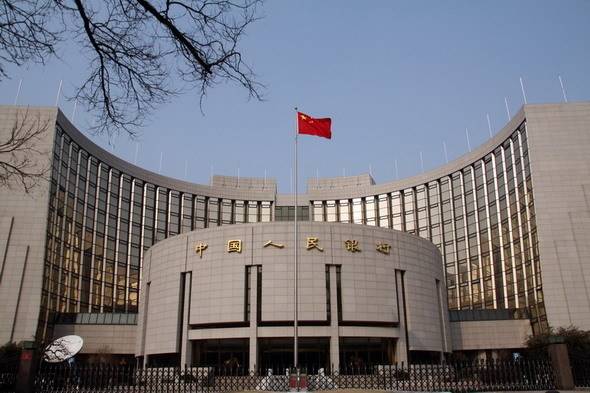
如何灵活高效运用多种货币政策工具?
Zheng Quan Shi Bao Wang· 2025-12-17 23:39
Core Viewpoint - The central economic work conference emphasizes the importance of promoting stable economic growth and reasonable price recovery as key considerations for monetary policy in the upcoming year [1] Group 1: Monetary Policy Tools - The monetary policy will focus on maintaining reasonable growth in financial totals to meet the financing needs of the real economy, with social financing scale and broad money supply (M2) as key indicators [1] - The People's Bank of China (PBOC) aims to enhance the efficiency of monetary policy transmission by implementing structural monetary policy tools and addressing inefficiencies in financial resources [2] - The central economic work conference calls for flexible and efficient use of various monetary policy tools, including potential reductions in reserve requirement ratios (RRR) and interest rates, to support economic growth [3] Group 2: Structural Monetary Policy - Structural monetary policy tools will target key areas such as expanding domestic demand, technological innovation, and support for small and micro enterprises, aligning with the central economic work conference's directives [4] - The PBOC is expected to further narrow the interest rate corridor and stabilize the yield curve of government bonds, enhancing the coordination and linkage among various interest rates [4] - Coordination between fiscal and monetary policies is crucial for expanding policy effectiveness, particularly in areas like loan interest subsidies and risk compensation [4]