技术创新

Search documents
富邦科技:介绍农化与现代农业板块质量管控及业务发展举措
Xin Lang Cai Jing· 2025-09-22 08:53
Group 1 - The company has implemented unique ore selection and slag utilization technologies to enhance the utilization rate of phosphate resources, which helps production enterprises reduce energy consumption and improve production efficiency [1] - The slow/controlled release technology increases fertilizer utilization rates, promotes structural adjustments in fertilizer products, and facilitates the upgrading of the chemical fertilizer industry [1] - The company is focusing on functional and nutritional fertilizer additives that effectively optimize the fertilizer production process, improve product quality, and reduce environmental impacts during production and usage [1] Group 2 - In the modern agriculture sector, the company leverages its platforms, Kangxin Bio and Fubon Xiangyu, to drive product quality improvement, application scenario optimization, and sales strategy enhancement through a dual approach of "technological innovation + market expansion" [1] - The company is systematically integrating and upgrading the industrial chain, innovation chain, and value chain to continuously enhance the quality and efficiency of its modern agriculture business development [1]

华为“沉默”6年辟出一条算力路 手机领先赋能造车探索技术变现
Xin Lang Cai Jing· 2025-09-22 04:39
Core Viewpoint - Huawei has successfully navigated challenges and emerged as a leader in computing power and smartphone markets, showcasing significant advancements in technology and product offerings [1][7][12]. Group 1: Computing Power Achievements - Huawei has announced the development of the world's strongest computing power clusters, including the Atlas 900 super node with a maximum computing power of 300 PFLOPS, making it the largest in the world [5]. - The latest super node products, Atlas 950 SuperPoD and Atlas 960 SuperPoD, support 8192 and 15488 Ascend computing units respectively, achieving comprehensive leadership in key metrics such as computing unit scale and total computing power [5]. - Huawei's Atlas 950 super node is 56.8 times larger in card scale and 6.7 times greater in total computing power compared to NVIDIA's upcoming NVL144, indicating a significant competitive edge [5]. Group 2: Smartphone Market Recovery - Huawei's smartphone shipments reached 12.5 million units in Q2 2025, reclaiming the top position in the Chinese market with an 18.1% market share [11]. - The launch of the Mate60 series and foldable phones has marked a significant recovery for Huawei's smartphone business, which had faced severe challenges since 2019 [11]. - In the first half of 2025, Huawei's total smartphone shipments were 25.4 million units, maintaining its leading position in the domestic market [11]. Group 3: Automotive Sector Developments - Huawei has partnered with various car manufacturers to create the "Hongmeng Intelligent Driving" series, achieving a cumulative delivery of 930,000 vehicles, maintaining the highest average transaction price among Chinese automotive brands for 14 consecutive months [11]. - The upcoming brand "Qijing," developed in collaboration with GAC, represents a new exploration of technology monetization paths for tech giants in the automotive sector [11]. Group 4: Research and Development Investment - Over the past decade, Huawei has invested approximately 1.25 trillion yuan in research and development, with more than half of its employees engaged in R&D activities [12]. - As of the end of 2024, Huawei holds over 150,000 valid authorized patents globally, reflecting its commitment to continuous innovation and technology advancement [12].
趋势研判!中国石墨热敏纸行业概述、产业链、发展现状、企业分析及未来前景展望:电子商务与物流业的爆发式增长,带动石墨热敏纸行业需求增长[图]
Chan Ye Xin Xi Wang· 2025-09-22 01:04
Core Viewpoint - The demand for graphite thermal paper in China has been continuously growing due to the explosive growth of e-commerce and logistics, the upgrade in demand for high-precision thermal paper in sectors like healthcare and finance, and the shift towards environmentally friendly products driven by regulatory policies [1][10]. Industry Overview - Graphite thermal paper is a specialized type of thermal paper made from graphite powder and thermal materials, which exhibits specific color changes when heated. It is widely used in labels, receipts, medical applications, logistics, and electronic communications [4][5]. - The production of graphite thermal paper involves a supply chain that includes raw materials such as graphite, thermal resins, color developers, and base paper, which are processed into high-quality products through advanced manufacturing techniques [5][6]. Market Demand and Growth - The production volume of graphite thermal paper in China is projected to reach 172,000 tons in 2024, representing a year-on-year increase of 10.6% [1][11]. - The rapid growth of the logistics sector, particularly in e-commerce, has significantly increased the demand for thermal paper labels, with the express delivery volume expected to reach 95.64 billion pieces in the first half of 2025, a year-on-year growth of 19.3% [9][10]. Competitive Landscape - The Chinese graphite thermal paper industry features numerous participants, including large international companies and many regional small and medium-sized enterprises. Major companies include Guangdong Crown High-tech Co., Ltd., Shandong Chenming Paper Group Co., Ltd., and Xianhe Co., Ltd. [12][13]. - Guangdong Crown High-tech Co., Ltd. reported a revenue of 1.905 billion yuan from thermal paper and sublimation paper in 2024, reflecting a year-on-year increase of 12.18% [13]. Development Trends - Technological innovation is expected to drive product upgrades, with the application of nanotechnology enhancing the heat resistance, stability, and durability of graphite thermal paper [14]. - Environmental regulations are prompting companies to adopt greener production methods, which may lead to the elimination of non-compliant firms and an overall improvement in the industry's environmental standards [15]. - The demand for graphite thermal paper is diversifying, with stable growth anticipated in the financial sector and increasing needs in logistics, healthcare, and retail, driven by advancements in smart manufacturing and Industry 4.0 [16].



推动调味品行业健康发展
Xin Lang Cai Jing· 2025-09-21 23:22
Core Viewpoint - Guangdong Jialong Food Co., Ltd. is actively adapting its strategies to enhance product quality and expand market channels in the competitive seasoning market, focusing on innovation and standardization as key drivers for industry upgrade [1][2]. Group 1: Industry Standards and Innovation - Jialong has been involved in drafting industry standards since 2008, addressing quality inconsistencies and helping the industry move towards standardization, which has provided the company with a competitive edge [2]. - The company has developed a closed-loop ecosystem of "R&D - Standards - Production" to strengthen its foundation and drive industry upgrades [1][2]. - Jialong's technical innovations, such as optimizing chicken juice production processes, have significantly improved product quality and generated substantial revenue, with chicken juice products contributing 15 million yuan in annual output and 3 million yuan in profit [2]. Group 2: Brand Matrix and Market Expansion - Jialong has established a multi-brand strategy to cater to diverse consumer needs, including brands like "Jialong," "Fuwei," and "Gangchu," which helps mitigate risks associated with relying on a single brand [4][5]. - The company is expanding into the soy sauce market, which has shown a compound annual growth rate of 9.2% from 2018 to 2022, indicating a growing demand for high-quality, differentiated products [6]. - New product lines, such as the high-end "Jialong Yipin Xian (Gold Label) Soy Sauce," target middle-to-high-income consumers, while the mid-range "Jialong Yipin Xian (Silver Label) Soy Sauce" aims at the mass market, enhancing the company's product matrix [6]. Group 3: Channel Strategy - Jialong is integrating online and offline sales channels to enhance brand penetration, having entered major platforms like Douyin and Tmall, and utilizing live streaming and content marketing to engage younger consumers [5][6]. - The company continues to strengthen traditional channels such as supermarkets and convenience stores, creating a comprehensive network that combines online attraction with offline experience [5].

佳隆股份总经理林长春:推动调味品行业健康发展
Zheng Quan Ri Bao· 2025-09-21 15:37
Core Viewpoint - Guangdong Jialong Food Co., Ltd. is actively adjusting its strategy to enhance product quality and expand market channels in response to the competitive seasoning market [2][3]. Group 1: Industry Standards and Innovation - The transition from extensive development to standardized, high-quality production in the seasoning industry relies on technological innovation and standardization [3]. - Jialong has been involved in drafting industry standards since 2008, addressing quality inconsistencies and helping the industry move towards standardized development [3][4]. - The company has accumulated 9 invention patents, 24 utility model patents, and 11 design patents, which have translated into market competitiveness [4]. Group 2: Brand Matrix Development - Jialong has established a multi-brand matrix to cater to diverse consumer needs, including brands like "Jialong," "Fuwei," and "Gangchu" [6]. - The core brand "Jialong" is recognized as a "China Famous Trademark," enhancing its market presence [6]. Group 3: Market Expansion and Channel Strategy - The company is expanding into the soy sauce market, which has shown significant growth, with production increasing from 575.6 million tons in 2018 to 818 million tons in 2022, reflecting a compound annual growth rate of 9.2% [7][8]. - Jialong is integrating online and offline channels, launching sales on major platforms like Douyin and Tmall to reach younger consumers while maintaining traditional retail channels [7][8].
大国重器背后的深市力量丨电力设备龙头企业以创新筑牢能源转型底座
Zheng Quan Shi Bao Wang· 2025-09-21 10:48
Core Viewpoint - The energy and power sector in China is accelerating towards high-end, intelligent, and green development, with leading companies like Guoxuan High-Tech, Siyuan Electric, and Xianlead Intelligent playing a crucial role in this transformation [1] Group 1: Technological Innovation - Leading companies in the power equipment sector view "technological innovation" as fundamental for survival and development, investing heavily in R&D to build a strong technological "moat" [2] - Guoxuan High-Tech has invested over 8 billion yuan in R&D over the past three years, with a projected R&D expense of 2.929 billion yuan in 2024, accounting for 8.28% of its revenue [2] - Siyuan Electric's R&D investment for 2024 is 1.11 billion yuan, a year-on-year increase of 21.07%, with a total of over 2.5 billion yuan invested in the last three years [2] - Xianlead Intelligent maintains an R&D investment ratio of over 10% of its revenue, focusing on core technological breakthroughs [2] - As of the end of 2024, Guoxuan High-Tech has applied for 10,556 patents, including 4,622 invention patents, significantly improving the performance of its self-developed lithium iron phosphate materials [2] - Siyuan Electric has obtained 948 authorized patents, with over 35% being invention patents as of June 30, 2025 [2] - Xianlead Intelligent and its subsidiaries have received 3,217 national authorized patents, becoming the only global provider with complete independent intellectual property rights for lithium battery production lines [2] Group 2: Capital Market Empowerment - As listed companies in the Shenzhen market, Guoxuan High-Tech, Siyuan Electric, and Xianlead Intelligent leverage capital markets for financing, incentives, and branding to rapidly convert technological advantages into developmental advantages [4] - Guoxuan High-Tech raised 7.303 billion yuan through a private placement in 2021 and 685 million USD through GDR listing in Switzerland in 2022, strengthening its R&D and production capacity for solid-state batteries [4] - Xianlead Intelligent enhances its advanced production capacity through public financing and mergers, transitioning from single equipment to comprehensive solutions [4] - Siyuan Electric effectively allocates funds through capital markets to support R&D and market expansion in cutting-edge fields like flexible direct current transmission and energy storage [4] - These companies implement stock options and employee stock ownership plans to deeply bind core talents with corporate development [4][5] - Siyuan Electric's stock incentive plans have driven revenue growth from 3.385 billion yuan in 2013 to 15.458 billion yuan in 2024, with net profit increasing nearly fivefold [4] Group 3: Strategic Technology Layout - With the acceleration of global energy transition, the demand for wind and solar power generation equipment is rapidly increasing, creating new growth opportunities in emerging fields like energy storage systems and virtual power plants [6] - Guoxuan High-Tech focuses on solid-state battery R&D, planning to start road testing its "Jinshi" all-solid-state battery in 2025 and achieve mass production by 2027 [7] - Siyuan Electric is expanding its "network-type" products and exploring integrated solutions for distributed photovoltaics [7] - The leading companies are extending beyond single products or regional limitations, building a sustainable growth ecosystem through industry chain extension, cross-field collaboration, and global layout [7] - The common development path of Guoxuan High-Tech, Siyuan Electric, and Xianlead Intelligent illustrates the growth logic of leading power equipment companies in the Shenzhen market, driven by "technological innovation + capital empowerment + trend grasping + global layout" [7]


美国重拳出击!德国制造业被绞杀大量人口失业,346亿欧元蒸发掉
Sou Hu Cai Jing· 2025-09-21 06:37
Group 1 - The transatlantic trade agreement, initially praised for bringing stability to Europe, has failed to deliver on its promises, leading to increased uncertainty for the German industrial sector [1][3] - Following the agreement, the U.S. unexpectedly imposed tariffs on certain European machinery products, exceeding the agreed-upon baseline of 15%, causing shock among European industrial leaders [3][5] - Germany's exports to the U.S. fell to their lowest level since 2021 in July, with a significant month-on-month decline of 7.9%, indicating a troubling trend for the German economy [6][8] Group 2 - The overall industrial output in Germany has been declining for eight consecutive quarters, with a year-on-year decrease of 2.1% in the second quarter, reflecting a broader economic downturn [10][12] - The automotive industry, a cornerstone of the German economy, is facing severe challenges due to increased tariffs, which could result in additional costs amounting to billions of euros annually for manufacturers [13][15] - Employment in the industrial sector has been adversely affected, with approximately 51,500 jobs lost in the automotive industry alone, representing nearly 7% of total jobs in that sector [19][20] Group 3 - The crisis has highlighted the vulnerabilities of an export-oriented economy like Germany's, particularly in the current geopolitical climate, where reliance on external demand poses significant risks [22] - Calls for renegotiation of the trade agreement with the U.S. reflect a sense of urgency and frustration within the German machinery sector, emphasizing the need for a more balanced approach to trade [20][22] - The situation necessitates a deeper introspection for Germany, focusing on overcoming internal challenges such as technological innovation and adapting to an increasingly uncertain global market [22]

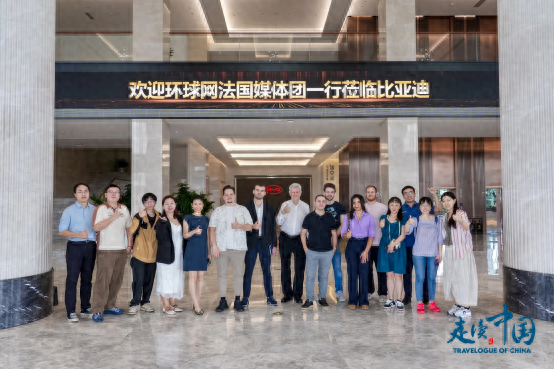
法国媒体团走进比亚迪深圳总部:技术为先、产业协同,中国新能源车“领跑者”如何炼成
Huan Qiu Wang· 2025-09-21 05:00
Core Insights - BYD has established a comprehensive closed loop of "technology-industry-scenario" in the electric vehicle sector, transitioning from battery production to vehicle manufacturing and integrated solutions [2] - BYD became the first global automaker to announce the cessation of fuel vehicle production in March 2022, maintaining a leading position in the new energy vehicle market [2] - As of July 2025, BYD's global cumulative sales reached 2.496 million units, with overseas sales exceeding 550,000 units, reflecting a year-on-year growth of over 130% [2] Group 1 - The French media group visiting BYD's headquarters was impressed by the company's technological advancements and product offerings, including models like the Yangwang and Tengshi [4] - BYD's commitment to innovation is highlighted by its extensive patent portfolio, with over 65,000 patent applications and more than 39,000 authorized patents, showcasing its leadership in the electric vehicle industry [4][5] - The positive reception from the French media indicates a growing recognition of BYD's capabilities in electric vehicle design, battery technology, and overall performance [5] Group 2 - The visibility of Chinese brands, including BYD, is increasing in France, particularly in the hybrid vehicle segment, which is experiencing significant growth [5] - The French media representatives expressed newfound confidence in the development of electric vehicles after experiencing BYD's offerings firsthand [5]


A股5439家公司半年报:十大高增长行业、十大盈利行业、十大高薪行业……
吴晓波频道· 2025-09-21 00:29
Core Viewpoint - The economic landscape of China in 2025 is becoming clearer through specific data, showcasing resilience in traditional industries, breakthroughs in emerging sectors, meticulous cultivation of domestic demand, and bold positioning in global markets [2]. Market Capitalization - As of September 15, 2025, the total market capitalization of A-shares exceeded 118 trillion yuan, a significant increase of 37% from the end of the previous year, adding 32 trillion yuan, equivalent to 17.4 times the market cap of Kweichow Moutai [3]. - The concentration of industries is increasing, with the top ten industries accounting for 66% of the total market capitalization, indicating a strengthening of the "head effect" [3]. - Among 5,439 companies that disclosed semi-annual reports, 2,909 achieved performance growth, representing 53.5%, while 46.5% have not yet recovered from downturns, illustrating a mixed economic recovery [3]. Revenue and Profit - Total revenue of A-shares reached 34.95 trillion yuan, nearly flat year-on-year, while total profit was 3.2 trillion yuan, a growth of 2.31% [13]. - The top ten industries contributed 45% of total revenue, with traditional sectors like refining and trade, infrastructure, and state-owned banks remaining economic cornerstones [13][14]. - The highest revenue growth industries include wind power equipment (45.6%) and various electronic sectors, while traditional sectors like coal and oil show declines [15][11]. Employment and Salaries - The total number of employees in A-share companies reached 30.87 million, an increase of 284,300 year-on-year, with the passenger vehicle industry leading in employee growth at 20.36% [21]. - Average employee salary across industries was approximately 108,400 yuan, a slight increase of 3.24% from the previous year, with the oil and gas extraction industry leading in salary levels at 478,600 yuan [27][29]. Overseas Revenue - 54.27% of A-share companies reported overseas business income, totaling over 4.5 trillion yuan, indicating a shift towards globalization among Chinese enterprises [33]. - The refining and trade industry topped the list for overseas revenue, with significant contributions from consumer electronics and white goods sectors [35]. Industry Trends - The "specialized, refined, and innovative" enterprises outperformed the overall market with an 8.58% revenue growth and a 13.32% profit growth, highlighting the importance of R&D investment [20]. - The education sector showed a recovery trend with an 11% revenue growth and a 28% profit increase, driven by scale effects and AI integration [56]. - The pet food industry demonstrated strong performance with a total revenue exceeding 6.7 billion yuan, although growth was uneven among companies [45].

47家粤企上榜中国制造业500强
21世纪经济报道· 2025-09-20 23:51
Core Insights - The "2025 China Manufacturing Enterprises Top 500" list was released, highlighting the strong performance of Guangdong enterprises, with 47 companies making the list, including Huawei, BYD, Midea, and GAC [1][4] - Guangdong enterprises excel in R&D intensity, with five companies ranking in the top ten for R&D intensity, indicating a strong focus on technological innovation [4][5] Group 1: Company Performance - Huawei Investment Holding Co., Ltd. leads with a revenue of 862.07 billion yuan, followed by BYD Co., Ltd. at 777.10 billion yuan, and Midea Group Co., Ltd. at 409.08 billion yuan [2] - The top ten companies in R&D intensity include Huawei (20.84%), ZTE Corporation (19.81%), and Xiaopeng Motors (13.31%), showcasing significant investment in innovation [5][6] Group 2: Industry Trends - The overall revenue growth rate for the top 500 manufacturing enterprises shows strong performance in sectors like material handling equipment manufacturing (51.29%) and motorcycle and parts manufacturing (19.67%) [8] - The average overseas revenue share for manufacturing enterprises increased to 19.10%, indicating enhanced export resilience and global competitiveness [9][10] Group 3: Innovation and R&D - The top 500 manufacturing enterprises collectively hold 1.6632 million effective patents, with 803,800 being invention patents, reflecting a 12.07% increase from the previous year [6] - Guangdong enterprises are recognized as innovation leaders, contributing significantly to high-value invention patents, which support industrial transformation and upgrading [6][9]