银发经济

Search documents
养老理财试点扩至全国,规模上限提升至净资本风险扣除后余额5倍
2 1 Shi Ji Jing Ji Bao Dao· 2025-10-30 12:59
Core Insights - The National Financial Regulatory Administration has announced the nationwide expansion of pension financial products, increasing the fundraising limit for individual financial companies to five times the net capital after deducting risk capital, which is a significant boost for the silver economy market [1] - The aging population in China is projected to exceed 300 million by the end of 2024, making pension finance a critical issue for social and economic development, driven by both policy support and market demand [1][2] - The silver economy is expected to grow significantly, with its scale currently around 7 trillion yuan, projected to reach 30 trillion yuan by 2035, accounting for 10% of GDP [2] Regulatory Developments - The recent notification supports financial companies in investing in long-term quality assets that match the characteristics of pension finance, enhancing support for the health and pension industries [1] - In 2024, further policy support is anticipated, with a focus on developing targeted financial products for different age groups and elderly populations [2] Market Trends - Financial institutions are rapidly entering the pension finance market, evolving from basic account services to comprehensive wealth management throughout the life cycle [3] - Banks like ICBC and CITIC Bank are launching innovative pension financial products that integrate health consultation, medical assistance, and home care services [3][4] Challenges in the Industry - Despite the market potential, there are challenges such as inadequate elderly-friendly services and the complexity of financial products, which may not meet the needs of older adults [5] - Financial institutions are addressing these issues by optimizing their apps for elderly users and incorporating risk management measures to prevent financial fraud [5]
养老理财业务试点扩至全国 鼓励机构发行10年期以上产品
Zheng Quan Shi Bao Wang· 2025-10-30 12:07
在试点扩围的基础上,本次《通知》还要求机构不断完善养老理财产品设计、探索提供多样化养老金融 服务。具体来看,《通知》要求丰富养老理财产品形态,鼓励试点理财公司发行10年期以上,或者最短 持有期5年以上等长期限养老理财产品。支持试点机构依法在养老理财产品购买、赎回、分红等方面进 行灵活设计,更好匹配投资者个性化养老需求。 同时,支持试点理财公司为每位投资者开立养老理财账户,记载投资者持有养老理财产品份额及其变动 情况,协助投资者做好养老资金储备和规划。支持试点理财公司按照法律法规和合同约定为投资者提供 养老理财顾问咨询服务,但应履行投资者适当性管理义务,并做好利益冲突防控工作。支持理财公司投 资与养老特征相匹配的长期优质资产,加大对健康产业、养老产业和银发经济的支持力度。 (原标题:养老理财业务试点扩至全国 鼓励机构发行10年期以上产品) 10月30日,金融监管总局发布了《关于促进养老理财业务持续健康发展的通知》,明确稳养老理财产品 试点地区扩至全国,试点期限为三年。试点机构扩大至符合开业满三年、经营管理审慎等条件的理财公 司。试点额度提高至各试点机构上年末净资本扣除风险资本后余额的五倍,金融监管总局可以根据审 ...
通州区九棵树重阳嘉年华打造“银发经济”实践新样本
Bei Jing Wan Bao· 2025-10-30 11:57
Core Insights - The event "Tree Under Consumption Season · Silver Economy Carnival" was held in Tongzhou District, focusing on the elderly demographic and showcasing nearly 50 specialty merchants, including well-known brands like Shoulu Group and Wangfujing Group, to promote the development of the silver economy [1][3] Group 1: Event Overview - The carnival featured diverse activities such as traditional brand exhibitions, cultural experiences, health services, and lifestyle services aimed at providing a festive experience for the elderly [1] - Notable participation from brands like Quanjude and Houlun Ge, which offered unique products and promotional deals to attract elderly consumers [3] Group 2: Cultural and Spiritual Enrichment - The event emphasized not only the material needs of the elderly but also aimed to enrich their spiritual and cultural lives through various cultural displays, including traditional Chinese opera and postal cultural products [5] - Activities like the teaching of Ba Duan Jin, a gentle exercise suitable for seniors, were highlighted as beneficial for enhancing the quality of retirement life [6] Group 3: Community Services and Support - Financial institutions provided tailored services for the elderly, focusing on enhancing their financial literacy and rights protection through interactive activities [7] - Health services included dental consultations, traditional Chinese medicine offerings, and free health checks, demonstrating a commitment to the well-being of the elderly community [7] - The carnival is part of a broader initiative to foster a friendly and harmonious community atmosphere, enhancing the overall quality of life for the elderly in the district [7]


重磅!金融监管总局:稳步扩大养老理财产品试点
Zheng Quan Ri Bao Wang· 2025-10-30 11:27
下一步,金融监管总局将加强督促指导,抓好《通知》贯彻落实工作,推动理财公司做好养老金融大文章,满足人民群众 多样化养老需求,助力银发经济高质量发展,确保党中央国务院相关决策部署落到实处。 详情点击如下链接:国家金融监督管理总局办公厅关于促进养老理财业务持续健康发展的通知 《通知》提出,稳步扩大养老理财产品试点。自《通知》印发之日起,养老理财产品试点地区扩大至全国,试点期限三 年。试点机构扩大至符合开业满三年、经营管理审慎等条件的理财公司。试点额度提高至各试点机构上年末净资本扣除风险资 本后余额的五倍,金融监管总局可以根据审慎监管原则进行调整。 《通知》明确,坚持投资于物和投资于人紧密结合。支持理财公司投资与养老特征相匹配的长期优质资产,加大对健康产 业、养老产业和银发经济的支持力度。支持理财公司完善养老理财产品设计,丰富产品形态,为投资者提供养老理财账户、养 老理财顾问咨询、信息查询等多样化养老金融服务。支持理财公司在风险可控前提下,综合考虑养老理财产品所投资资产的风 险收益特征与投资者的风险偏好,实现经济效益与社会效益相统一。 《通知》强调,压实理财公司风险防控主体责任。在产品端,加强产品信息披露和风险提示 ...
七成购衣首选舒适实用 银龄族以理性定义美
Xin Jing Bao· 2025-10-30 10:48
Core Insights - The article highlights the emergence of the "silver economy" driven by the aging population in China, with a significant shift in the lifestyle and consumption patterns of the elderly [3][4]. Demographic Trends - By the end of 2024, the population aged 60 and above in China is projected to reach 310 million, accounting for 22% of the total population, with those aged 65 and above reaching 220 million, or 15.6% [3]. - The elderly population is expected to grow by over 10 million annually for the next decade, potentially exceeding 400 million by 2035, which will represent over 30% of the population, marking a transition to a severely aging society [3]. Lifestyle Changes - The elderly are increasingly adopting a younger, more digital, and diverse lifestyle, moving away from traditional retirement models to engage in learning, fitness, travel, and entrepreneurship [3][4]. - The "new silver age" lifestyle emphasizes self-investment and quality of life, with a notable generational divide in consumption patterns among the elderly [5][8]. Consumption Patterns - The trend of "self-care consumption" is gaining traction among the elderly, particularly among those aged 50 to 60, who are more willing to spend on enhancing their quality of life [5][6]. - In skincare, 29.5% of respondents aged 50-55 frequently purchase skincare products, while the frequency drops to about 50% for those aged 56-60, and only around 30% for those aged 60-70 [5][6]. - The older generation tends to maintain a more frugal approach, focusing on functionality and cost-effectiveness, while younger seniors prefer a more refined and quality-driven consumption style [8][11]. Fashion and Quality Preferences - Among the elderly, 73.6% prioritize "comfort and practicality" in clothing, with only 5.6% considering "fashionable appearance" as the top priority [8]. - The concept of beauty for this demographic is defined by a sense of appropriateness in daily life rather than following trends, emphasizing quality materials and suitable designs [11][12].

利好!金融监管总局,最新发布
中国基金报· 2025-10-30 09:20
【导读】国家金融监督管理总局办公厅发布关于促进养老理财业务持续健康发展的通知 中国基金报记者 张舟 事关 理财公司 服务养老产业发展重要文件来了! 10月30日,国家金融监督管理总局办公厅 对外 发布关于促进养老理财业务持续健康发展的 通知。 该通知提出,支持理财公司在坚守职能定位、依法合规的前提下,以债券、股票、非标准化 债权类资产和衍生品等多种方式投资养老领域资产。养老理财产品试点地区扩大至全国,试 点期限三年。 对养老理财产品实施一定费率优 惠。鼓励试点理财公司发行10年期以上,或者 最短持有期5年以上等长期限养老理财产品。支持理财公司与信托公司、保险资产管理公司、 证券公司、公募基金等持牌资管机构在专户管理、运营托管、交易执行等方面依法开展合 作,实现优势互补,更好服务养老产业发展。 以下为重点内容: 1.养老理财产品试点地区扩大至全国,试点期限三年 稳步扩大养老理财产品试点,自本通知印发之日起,养老理财产品试点地区扩大至全国,试 点期限三年。 3. 对养老理财产品管理费、销售费和托管费等实施一定费率优惠 支持养老理财产品发行机构、销售机构和托管机构在商业可持续基础上,对养老理财产品管 理费、销售费和 ...

西点药业(301130) - 301130西点药业投资者关系管理信息20251030
2025-10-30 08:58
Company Overview and Development History - Xidian Pharmaceutical, founded in 1990, transitioned from a small drug trading company to the largest in Jilin Province by 1994 [2][3] - The company went public on the Shenzhen Stock Exchange's Growth Enterprise Market in 2022, with a reported revenue of CNY 256 million in 2024 [2][4] Key Milestones - Significant milestones include the establishment of Xidian Pharmaceutical in 2001, the launch of the "Ruixiangsu" project, and the company's listing in 2022 [3][4] - The company has focused on the research and development of "Ruixiangsu," a key product derived from the Longbai Ruixiang plant, leading to major breakthroughs in synthesis technology [3][4] Market Positioning and Strategy - Xidian Pharmaceutical positions itself in niche markets, focusing on chronic diseases prevalent among the elderly, with a strategy of "one core and two wings" [4][5] - The core product is "Ruixiangsu" capsules, complemented by unique products like "Fufang Tianshu Yao" and "Risperidone" [5][6] Performance and Growth Drivers - In 2024, the company reported a 13.71% increase in revenue, but a decline in net profit due to reduced government subsidies and rising raw material costs [6][7] - The increase in operating costs by CNY 15.69 million in 2024 was primarily due to the surge in traditional Chinese medicine prices [6][7] Future Profit Growth Drivers - Core product expansion and new indications for "Ruixiangsu" are expected to drive future profits [7][8] - The company plans to enhance its product pipeline through increased R&D investment, which rose by 17.52% in 2024 [8][11] Core Products and R&D Innovation - "Yiyuan Sheng" (Fufang Tianshu Yao) generated approximately CNY 112 million in revenue in 2024, accounting for 43.64% of total revenue [9][10] - "Risperidone" saw a significant revenue increase of 38.93%, contributing 40.62% to total revenue [10][11] R&D Focus and Strategy - The company emphasizes innovation through a dual strategy of "independent R&D and joint development," focusing on chronic diseases and blood-related conditions [11][12] - Ongoing research includes expanding the indications for "Ruixiangsu" to include conditions like diabetic complications and viral pneumonia [12][13] Future Strategic Planning - Xidian Pharmaceutical aims to deepen its existing market presence while selectively expanding into new therapeutic areas related to aging [14][15] - The company is transitioning to a dual-driven sales model, combining hospital and retail markets, and enhancing digital marketing efforts [16][17] Investor Relations and Market Concerns - The management views the current product structure as a competitive strength rather than a risk, with plans for diversification and product upgrades [17][18] - A cash dividend of CNY 2.6 per 10 shares is proposed, representing 49.39% of the net profit for 2024 [18][19] Market Valuation and Core Value - The company emphasizes its unique product advantages and strategic positioning in the aging population's healthcare needs [19][20] - Xidian Pharmaceutical holds 29 formulation varieties and 17 raw material drug registrations, establishing a solid foundation for future growth [20]
唯一入选国家级推广目录!华帝智能洗碗机以适老创新领跑厨电行业
Zhong Jin Zai Xian· 2025-10-30 08:33
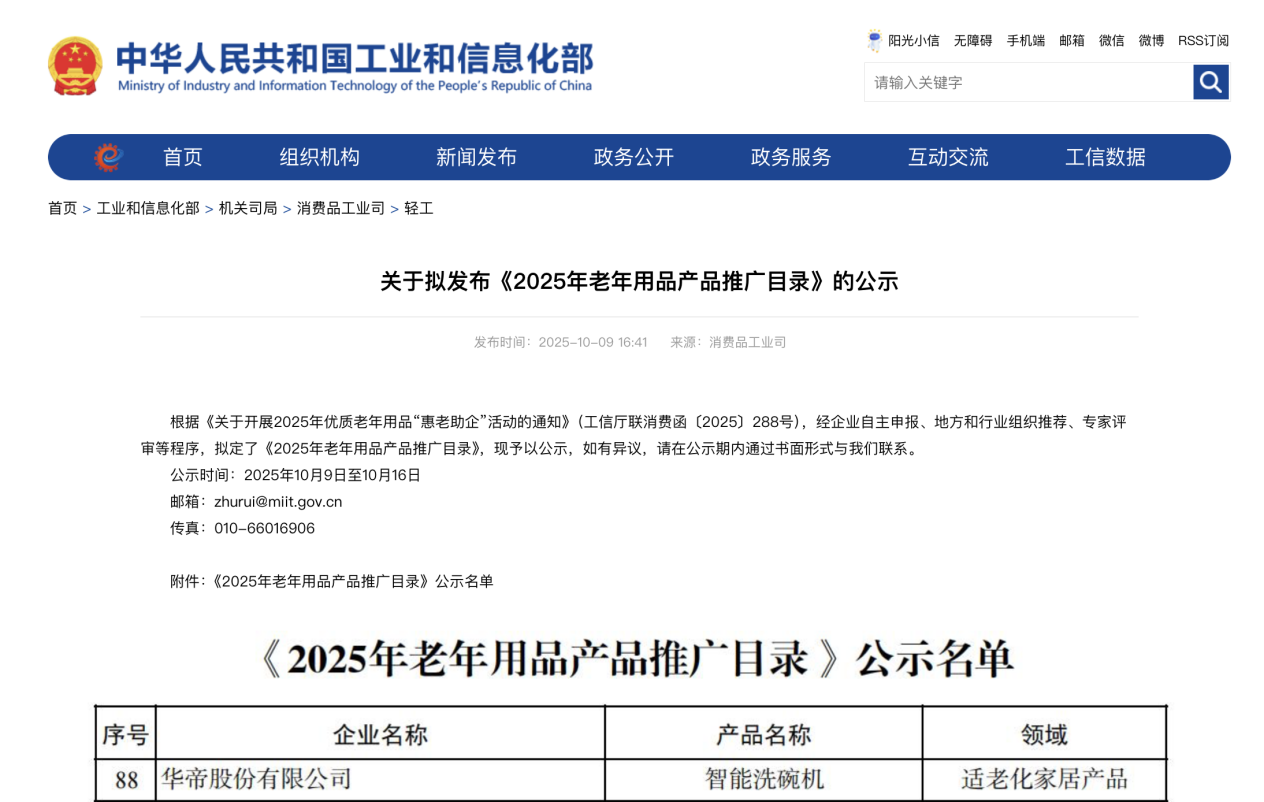
Core Insights - The "2025 Elderly-Friendly Shopping Season" was launched in Beijing, highlighting the promotion of quality elderly products, with Vatti's "smart dishwasher" being the only brand selected in the dishwasher category, indicating national recognition of its innovation and design for the elderly [1][3]. Industry Overview - The Chinese dishwasher market is projected to reach a scale of 13.5 billion yuan by 2025, with sales expected to exceed 2.35 million units. From January to July 2025, the retail total for dishwashers was 7.65 billion yuan, reflecting a year-on-year growth of 13.7% [4]. Company Highlights - Vatti has been recognized for its commitment to elderly-friendly product development, aligning with national strategies to enhance the quality of life for the elderly. The company's new generation of smart dishwashers addresses the operational difficulties faced by older users [3][4]. - The selected Vatti dishwashers feature comprehensive upgrades in design and functionality, including a flat embedded design for safety, a large color screen for ease of use, and innovative washing technology that caters to traditional Chinese dining ware [6][7][9]. Product Innovations - Vatti's dishwashers incorporate advanced features such as a turbidity sensor and intelligent detergent dispensing, which optimize washing processes based on the level of soiling, significantly reducing user intervention [9]. - The dishwashers also employ triple disinfection technology, achieving a sterilization rate of 99.9999% and ensuring long-term antibacterial storage, which is particularly beneficial for health-conscious elderly users [10]. Future Directions - Vatti aims to leverage its recognition to further enhance the elderly-friendly features of its kitchen appliances, promoting a more comfortable and high-quality user experience. The company also seeks to inspire other manufacturers to focus on the development of elderly-friendly products, contributing to the growth of the silver economy [10].

国家金融监督管理总局:加大对健康产业、养老产业和银发经济的支持力度
Zheng Quan Shi Bao Wang· 2025-10-30 08:23
Core Viewpoint - The National Financial Supervision Administration has issued a notice to promote the sustainable and healthy development of pension financial products, emphasizing increased funding support for long-term quality assets that match pension characteristics [1] Group 1: Funding Support - The notice calls for enhanced funding support for financial companies to invest in long-term quality assets that align with pension characteristics [1] - Financial companies are encouraged to participate in the investment of major national projects and infrastructure [1] Group 2: Industry Focus - There is a specific emphasis on increasing support for the health industry, pension industry, and silver economy [1] - Financial companies should consider the risk-return characteristics of the assets in pension financial products while aligning with investors' risk preferences [1] Group 3: Economic and Social Benefits - The goal is to achieve a balance between economic benefits and social benefits in the management of pension financial products [1]
东鹏控股(003012) - 东鹏控股投资者关系活动记录表(20251029)
2025-10-30 07:04
Performance Overview - In the first three quarters of 2025, the company achieved a revenue of CNY 4.501 billion, with a year-on-year growth of 8.03% in the ceramic tile retail channel [3] - Net profit attributable to shareholders reached CNY 349 million, reflecting a year-on-year increase of 13.09% [3] - Operating cash flow net amount was CNY 651 million, up 33.19% year-on-year [3] - The net profit for the third quarter saw a significant year-on-year growth of 32.91% [3] Market and Industry Context - The domestic ceramic tile industry is undergoing a deep adjustment, with market demand under pressure and intensified competition [2] - The industry is experiencing a structural shift towards high-quality products, driven by the implementation of the new national standard for ceramic tiles [5][6] - The market size for ceramic tiles is projected to evolve towards CNY 250 billion over the next five years, despite a current downward trend in production [14] Strategic Initiatives - The company has opened 196 new stores and upgraded 224 existing ones in the first three quarters, enhancing its retail channel capabilities [3] - The company has become the first in the industry to obtain certification for age-friendly products, targeting the silver economy market [4] - The company is focusing on cost reduction and efficiency improvements, with a decrease in sales and management expense ratios by 1.54 percentage points [3] New National Standard Impact - The new national standard for ceramic tiles, effective December 1, 2025, aims to elevate product quality and industry standards [5][6] - Only about 5% of products are expected to meet the highest 5A standard, which will challenge lower-tier companies and accelerate industry consolidation [6][7] - The company, as a key contributor to the standard's development, anticipates a competitive advantage due to its existing high manufacturing standards [10] Future Outlook - The company expects to continue gaining market share through strategic acquisitions and channel optimization [9] - The focus will remain on enhancing operational efficiency and risk management to expand market presence [12] - The company aims to improve its bathroom business, which currently accounts for approximately 13% of total revenue, through a multi-category product strategy [19] Financial Management - The company maintains a robust cash flow, with a dividend policy ensuring a payout of no less than 30% of net profit annually [20] - Cost control measures have led to a 12.42% reduction in sales and management expenses, with ongoing efforts to sustain this trend [20]