大模型

Search documents
MiniMax、智谱密集发布新模型 同步冲刺港股IPO
Zheng Quan Ri Bao Wang· 2025-12-25 06:12
Core Insights - Two domestic AI unicorns, MiniMax and Zhiyu, have launched their next-generation flagship models, MiniMax M2.1 and GLM 4.7, enhancing the capabilities of domestic text models [1] Group 1: MiniMax Developments - MiniMax has released the Coding & Agent model MiniMax M2.1, which utilizes a mixed expert architecture and achieved a score of 49.4% on the Multi-SWE-bench multilingual software engineering capability leaderboard, surpassing leading models like Claude Sonnet 4.5 [1] - The M2.1 model expands programming language support, enhances web and mobile development capabilities, and optimizes compliance with complex instruction constraints [1] Group 2: Zhiyu Developments - Zhiyu has launched the GLM 4.7 flagship model, which ranks first among open-source models in several mainstream public benchmark tests [1] - In the blind testing platform Code Arena, which involved one million users, GLM 4.7 also ranked highly, with upgrades focusing on code generation, long-range task planning, and tool collaboration [1] - The model has seen improvements in dialogue, writing, and role-playing performance [1] Group 3: IPO and Market Position - Both companies have passed the Hong Kong Stock Exchange hearing and are in a critical phase for their IPO, expected to take place in January 2026 [1]
海南自贸港各重点园区抢抓全岛封关新机遇
Hai Nan Ri Bao· 2025-12-25 02:27
Core Viewpoint - Hainan Free Trade Port's 13 key parks are crucial for the province's economic development, contributing over 20% of GDP, over 30% of investment, over 70% of total goods trade, and 50% of tax revenue, despite occupying less than 2% of the land area [2] Group 1: Development Opportunities - The official launch of the island-wide customs closure on December 18 presents a historic opportunity for the key parks to leverage open policy advantages and focus on building a modern industrial system [2][3] - Key parks are expected to enhance their operational management, improve service efficiency, and create a more attractive business environment to support high-quality development in Hainan [2][3] Group 2: Strategic Planning and Industry Strengthening - The Jiangdong New Area aims to integrate free trade policies with its industrial system, focusing on modern commerce and air economy as pillar industries, while also developing modern finance and professional services [3] - The Haikou National High-tech Industrial Development Zone plans to upgrade its biopharmaceutical industry and enhance food processing through favorable tariff policies [4] Group 3: Innovative Ecosystems and International Cooperation - The Wenchang International Aerospace City is set to develop a closed-loop system for satellite applications and promote aerospace tourism, aiming to become a global attraction [5] - The Boao Lecheng International Medical Tourism Pilot Zone will focus on high-end health services and international cooperation in medical research [5] Group 4: Policy Advantages and Development Drivers - New customs closure policies, including broader "zero tariff" coverage and reduced thresholds for tax-exempt processing, are expected to drive significant development in key parks [7][8] - The Haikou Fuxing City Internet Information Industry Park is focusing on artificial intelligence and data cross-border flow, signing agreements with 46 key enterprises to support their growth [7] Group 5: Management Mechanisms and Service Efficiency - Key parks are reforming their operational mechanisms to align with the customs closure, enhancing service efficiency and ensuring smooth flow of trade and investment [10][11] - The Sanya Yazhou Bay Science and Technology City is committed to improving its service model and integrating high-level open policies to attract top global innovation resources [11][12]
国新健康:未参与近期出现的商业健康决策辅助大模型mind42.ins项目
Xin Lang Cai Jing· 2025-12-25 01:09
Group 1 - The company GuoXin Health stated on December 25 that it did not participate in the recent commercial health decision support model project mind42.ins [1] - GuoXin Health confirmed that it has not provided any data support or related services for the mind42.ins project [1]

倒计时三天,吴晓波科技人文秀节目单出炉啦!(内附参会指引)
吴晓波频道· 2025-12-25 00:29
Core Viewpoint - The article emphasizes the upcoming AI showcase titled "AI Shining China," which aims to present the latest findings in artificial intelligence and robotics, highlighting the transformative impact of AI across various sectors [2][32]. Group 1: Event Overview - The AI showcase will take place on December 28, featuring a four-hour presentation that includes performances and insights into AI advancements [3][32]. - The event is described as a blend of stunning visuals, impressive performances, and deep reflections on the future of AI [2][3]. Group 2: AI Trends and Insights - The article identifies 2023 as the "Year of AI Enlightenment" and "Year of AI Applications," noting significant changes in areas such as text writing, e-commerce, and industrial applications due to AI [2]. - Key themes for the showcase include the competition between China and the U.S. in AI, the revolution in content production through multimodal capabilities, and the emergence of AI models that are reshaping industries [6][7]. Group 3: Future Market Potential - The article suggests that robotics represents a potential market worth 10 trillion, indicating significant growth opportunities in this sector [7]. - The event will also explore the concept of "Industrial 5.0" and the end of the "traffic era" in e-commerce, signaling a shift in how businesses operate and engage with consumers [7].


中文高质量数据集加速建设 大模型如何更懂“中国话”(“十五五”文化热词·推进文化和科技融合)
Ren Min Ri Bao· 2025-12-24 22:04
Core Insights - The article discusses the significance of increasing the proportion of Chinese data in training large AI models, emphasizing its impact on understanding cultural nuances and improving model performance [1][2][3]. Group 1: Importance of Chinese Data - The increase in Chinese data in AI model training enhances the model's understanding of unique Chinese cultural expressions and terminologies, which are often not represented in English data [3]. - A higher proportion of Chinese data helps mitigate risks associated with data dependency on English sources, ensuring better alignment with local language habits and cultural contexts [2][3]. Group 2: Quality of Chinese Data - There is a distinction between ordinary Chinese data and high-quality Chinese data, with the latter requiring verification and professional review to ensure accuracy and traceability [4]. - The development of high-quality Chinese data is crucial for specialized fields like medical diagnostics, where inaccuracies in publicly available data can negatively impact AI model outputs [4][5]. Group 3: Support for Data Development - Government policies are promoting the creation of high-quality AI training datasets, which accelerates the construction of Chinese data resources [5]. - Technological advancements are reducing the costs and complexities associated with annotating Chinese data, making it more feasible to develop high-quality datasets [5]. Group 4: Standards and Collaboration - Establishing standards for Chinese data is essential to improve data quality and facilitate further development, especially in specialized fields [7]. - Collaborative efforts among institutions are necessary to overcome data silos and compliance challenges, enabling efficient data annotation and resource sharing [7]. Group 5: Cultural and Technological Integration - The integration of culture and technology is highlighted as a means to enhance cultural expression and create new consumption scenarios through AI applications [9]. - The article suggests that leveraging digital technologies can revitalize traditional cultural practices and contribute to rural revitalization efforts [9].
智谱冲刺港交所,旗舰模型刷新国产大模型能力边界
Xuan Gu Bao· 2025-12-24 15:01
Core Insights - Beijing Zhiyuan Huazhang Technology Co., Ltd. has officially passed the hearing of the Hong Kong Stock Exchange, potentially becoming the "first global large model stock" [1] - The company simultaneously released its flagship model GLM-4.7, achieving significant improvements in programming capability, reasoning efficiency, and token utilization, with a SWE-bench Verified score of 73.8 [1] - The token consumption has decreased by 40%, greatly optimizing the cost for developers [1] Company Developments - Zhiyuan has been recognized as a major competitor globally, being the only Chinese model company mentioned in an industry analysis report by OpenAI [1] - The GLM architecture has achieved a fully domestic breakthrough, compatible with over 40 domestic chips, and its product matrix covers language, code, and visual scenarios, making it one of the most versatile model systems in the industry [1] - Lingyun Guang's wholly-owned subsidiary plans to act as a cornerstone investor in Zhiyuan's initial public offering on the Hong Kong Stock Exchange [1] - Daguan Media's subsidiary, Dacheng Investment, has participated in a symposium with the Premier, having led the A-round financing for Zhiyuan AI in early 2021 and continued to invest in multiple rounds [1]
To B的智谱和To C的MiniMax,大模型生意都很难做
经济观察报· 2025-12-24 13:48
Core Viewpoint - The two companies, Zhipu and MiniMax, represent distinct commercialization paths in the AI large model sector, with Zhipu focusing on the B-end market and achieving a gross margin of 50%, while MiniMax targets the C-end market with over 70% of its revenue coming from overseas [2][4]. Group 1: Financial Performance - From 2022 to mid-2025, Zhipu accumulated revenue of 685 million yuan, with cumulative losses exceeding 6.2 billion yuan [4]. - MiniMax reported cumulative revenue of 86 million USD (approximately 600 million yuan) and cumulative losses of about 1.32 billion USD (approximately 9.3 billion yuan) from 2022 to September 2025 [5]. - Both companies operate at a revenue scale in the billion range, with MiniMax's revenue for the first nine months of 2025 being 53.4 million USD (approximately 376 million yuan) and Zhipu's revenue for the same period being 190 million yuan [6]. Group 2: Market Position and Competition - Zhipu's B-end business primarily serves large domestic government and enterprise clients, while MiniMax's C-end business relies on overseas individual users [5][10]. - Zhipu's revenue from enterprise deployments has decreased from 95% to 85% over the past three years, indicating increased competition in the B-end market [8]. - MiniMax's average monthly active users reached 27.6 million, with 1.77 million paying users, but still lagging behind major internet companies [8][9]. Group 3: Investment and Costs - Both companies face significant capital requirements, with Zhipu and MiniMax's cumulative R&D investments being 4.4 billion yuan and 500 million USD (approximately 3.5 billion yuan), respectively [6]. - In the first half of 2025, Zhipu's computing power expenditure was 1.1 billion yuan, while MiniMax's was 140 million USD (approximately 987 million yuan) [7]. - The high costs associated with computing power present a challenge for both companies, as they need to balance low revenue with substantial operational expenses [7]. Group 4: Future Outlook and IPO Strategy - Both companies are vying for the title of the first AI large model stock, with the urgency to go public for financing and providing an exit for external shareholders [12]. - MiniMax has a more robust cash position, with cash reserves of 1.04 billion USD (approximately 733.4 million yuan) as of September 30, 2025, compared to Zhipu's 2.5 billion yuan [12]. - The cash burn rate for Zhipu increased to approximately 2.21 million yuan per month in the first half of 2025, indicating a growing financial strain [12].

用编程大模型登顶开源第一后,智谱GLM团队被拷问了3小时
量子位· 2025-12-24 12:46
Core Viewpoint - The article discusses the release of the new model GLM-4.7 by Z.ai, which has surpassed GPT-5.2 in the WebDev ranking, marking a significant achievement in the open-source large model space [1][2]. Model Performance and Optimization - The improvements in GLM-4.7 are primarily attributed to advancements made during the post-training phase, particularly in supervised fine-tuning (SFT) and reinforcement learning (RL) [8]. - The design of GLM-4.7 considers hardware limitations, aiming for high performance on consumer-grade graphics cards while maintaining logical capabilities close to 30 billion parameters [9]. - A complex pre-training data process was established, involving multi-source data collection and rigorous cleaning to enhance model quality [11]. Model Application Scenarios and Functions - GLM-4.7 has shown significant improvements in programming tasks, with optimizations made specifically for coding languages like Python and JavaScript, as well as lesser-known languages [16]. - The model has enhanced creative writing capabilities, producing more nuanced and engaging text, and has introduced a feature called "Interleaved Thinking" to improve decision-making in complex tasks [21]. Technical Methods and Tools - The introduction of the Slime framework aims to address the inefficiencies and stability issues in large model reinforcement learning, providing developers with tools to replicate high alignment effects [27]. - The team emphasizes transparency in their data collection and processing pipeline, which has garnered respect within the open-source community [28]. Future Commitments and Market Position - Z.ai has committed to maintaining its open-source ethos even after potential IPO plans, recognizing the importance of the open-source ecosystem for its growth [46]. - The competitive pricing of GLM-4.7 has attracted attention, with users noting its affordability compared to other models like Codex and Claude Code [47].

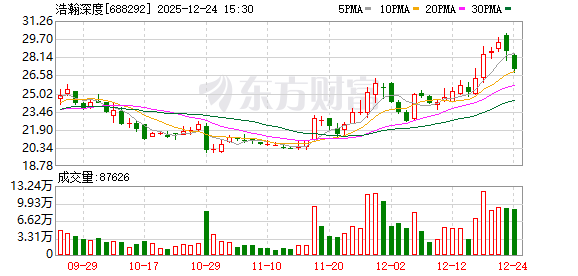
浩瀚深度:公司开发的晨星大模型,前期与中国科学院联合研发,现在以自主研发为主
Zheng Quan Ri Bao· 2025-12-24 12:11
Core Viewpoint - The company has transitioned from collaborative development with the Chinese Academy of Sciences to primarily independent research and development of its Morning Star large model, while also incorporating some open-source models based on user needs [2] Group 1 - The Morning Star large model was initially developed in collaboration with the Chinese Academy of Sciences [2] - The company is now focusing on independent development of the Morning Star large model [2] - The company is utilizing some open-source large models according to user requirements [2]


速递|半年2轮融资,面壁智能再获头部机构数亿元投资,端侧大模型进入规模化落地阶段
Sou Hu Cai Jing· 2025-12-24 11:56
Core Insights - The company, Mianbi Intelligent, has recently completed a financing round of several hundred million yuan, with participation from various investors including Jingguorui, Guoke Investment, and others. The funds will primarily be used to enhance research and development of efficient large models at the edge and accelerate the commercialization of edge AI [1][2] Group 1: Company Developments - Mianbi has established partnerships with major companies such as Geely, Changan, Volkswagen, and Huawei, achieving scale in certain areas. The effectiveness of edge models is measured not only by single-instance performance but also by long-term stability, inference efficiency, power consumption, and cost structure [2] - The company has made significant progress in the automotive sector, including the launch of the MAZDA EZ-60, a strategic new energy vehicle developed in collaboration with Changan Mazda and Wutong Technology, and the global release of the Geely AI Galaxy M9 SUV, which features the MiniCPM multimodal model for enhanced human-vehicle interaction [2] Group 2: Industry Trends - The year 2025 is widely regarded as the "year of edge intelligence," driven by breakthroughs in model technology and improvements in edge computing power. This will highlight the unique advantages of edge AI and accelerate market growth, leading to widespread application penetration [2] - Mianbi is positioned as a leader in the edge intelligence sector, continuously focusing on model research and application deployment, and has successfully completed multiple rounds of financing with a diverse array of investors [2]