
能源转型

Search documents
《联合国气候变化框架公约》秘书处:中国更新国家自主贡献目标是全球气候行动重要时刻
Xin Hua She· 2025-11-04 13:28
新华财经柏林11月4日电(记者褚怡杜哲宇)《联合国气候变化框架公约》秘书处执行秘书西蒙·斯蒂尔 3日说,中国更新国家自主贡献目标是全球气候行动中的重要时刻。 斯蒂尔说,未来全球经济将以清洁能源为核心。与众多国家一样,中国认识到构建更清洁、更繁荣的未 来符合自身明确的国家利益。 今年也正值《巴黎协定》达成10周年,也是提交新一轮国家自主贡献目标的重要节点。除中国外,全球 越来越多经济体也在陆续更新各自的国家自主贡献目标。 斯蒂尔表示,期待各国以自主贡献目标为起点,进一步提高雄心、加快步伐,以保护民众免受日益严峻 的气候灾害,通过更强有力的气候行动收获巨大的经济与社会福祉。 (文章来源:新华社) 斯蒂尔在当天发给媒体的邮件说:"新一轮国家自主贡献目标将引领中国以空前规模发展清洁、可靠、 可负担的能源体系,并通过降低清洁技术成本、激发创新潜能,加速能源转型。" 今年,中国宣布2035年国家自主贡献目标。斯蒂尔说,全球气候行动虽已取得积极进展,但仍面临巨大 挑战。中国提交的新目标充分体现了其在减排方面的坚定承诺和"力争做得更好"的决心。 ...
霍尼韦尔孙建能:可持续航空燃料需多路径破解成本困局
2 1 Shi Ji Jing Ji Bao Dao· 2025-11-04 12:52
Core Insights - The article discusses the intersection of the century's changes and the energy revolution, emphasizing the critical role of sustainable aviation fuel (SAF) in the aviation industry's sustainable development [1] Industry Overview - China's SAF demand is projected to reach 3 million tons by 2030 and 86 million tons by 2050, indicating a persistent supply-demand gap [1][3] - The current average cost of SAF is approximately three times that of traditional aviation fuel, creating significant short-term investment return pressures for companies [1][10] Policy and Market Dynamics - The introduction of new national contribution targets provides a stable policy guarantee for the industry, encouraging companies to develop actionable energy transition strategies [2][3] - The policy framework is evolving to create a closed loop driven by goals, technology support, and market forces, particularly benefiting key areas like SAF, green hydrogen, and carbon capture [3][4] Technological Developments - Companies are focusing on various technological pathways to address raw material cost challenges in SAF production, including Ecofining and eFining processes [8][10] - The introduction of green hydrogen catalyst coating membrane (CCM) technology significantly enhances hydrogen production efficiency and reduces costs, addressing key challenges in green hydrogen production [8][10] Challenges and Opportunities - The lack of mandatory SAF blending policies in China presents challenges, but strong market demand, corporate ESG strategies, and supportive policy signals are driving SAF adoption [3][4] - The industry faces structural challenges, including the need for integrated players to coordinate across the entire supply chain and establish standardized practices [9][10]

21专访|霍尼韦尔孙建能:可持续航空燃料需多路径破解成本困局
2 1 Shi Ji Jing Ji Bao Dao· 2025-11-04 12:51
Core Insights - The intersection of the century's changes and the energy revolution is leading to a historic restructuring across various industries, with sustainable aviation fuel (SAF) being crucial for the sustainable development of the aviation industry [1][2] Industry Overview - China's SAF demand is projected to reach 3 million tons by 2030 and 86 million tons by 2050, indicating a persistent supply-demand gap [2][3] - The current average cost of SAF is approximately three times that of traditional aviation fuel, creating significant short-term investment return pressures for companies [1][11] Policy and Market Dynamics - The introduction of new national contribution targets provides a stable policy guarantee for the industry, encouraging companies to develop actionable energy transition strategies [1][3] - The policy framework is being constructed to create a closed loop driven by goals, technology, and market forces, particularly benefiting key areas like SAF, green hydrogen, and carbon capture [2][10] Challenges and Opportunities - The lack of mandatory SAF blending policies in China presents challenges, but strong market demand, corporate ESG strategies, and supportive policy signals are driving SAF adoption [3][11] - The potential of using waste cooking oil for SAF production is limited by raw material availability, with only about 5 million tons of recoverable kitchen oil in China, which is insufficient to meet the projected SAF demand [4][5] Technological Innovations - Honeywell is focusing on breakthrough innovations and local adaptations in technology development to address the challenges of industrialization in the SAF sector [8][9] - The company is developing various technological routes, including Ecofining and eFining processes, to optimize raw material utilization and reduce costs [9][11] Future Outlook - The energy transition in China is characterized by multi-technology parallelism and cross-industry collaboration, necessitating a balance between breaking traditional energy dependencies and establishing feasible pathways [10][11] - The integration of carbon capture, green hydrogen production, and SAF synthesis is seen as a promising closed-loop solution for sustainable fuel production [11]
储能,下一个春天! 破“内卷”后增量红利到来
Mei Ri Jing Ji Xin Wen· 2025-11-04 12:46
Core Insights - The global lithium battery energy storage installation capacity increased by 68% year-on-year in the first three quarters of this year, indicating a significant growth in the energy storage industry [1][2] - Chinese energy storage companies added 163GWh of overseas orders in the first half of 2025, a 246% increase year-on-year, with Europe, the Middle East, and Australia becoming key markets for Chinese energy storage exports [1][2] - The cancellation of mandatory energy storage requirements in China has led to an increase in project internal rate of return (IRR), boosting companies' willingness to invest in energy storage [1][2] Industry Growth Factors - The acceleration of global energy transition is driving demand in traditional markets like the US, China, and Europe, as well as emerging markets in the Middle East [3] - The maturation of energy storage business models in developed markets is contributing to explosive growth, with China shifting focus from policy-driven mandates to value exploration [3] - Technological advancements have reduced energy storage system costs by approximately 80% compared to three years ago, enhancing economic viability and stimulating market demand [3] Company Performance - Sungrow Power Supply's energy storage system revenue reached 28.8 billion yuan, a 105% increase year-on-year, making it the company's largest revenue source [4] - Guoxuan High-Tech's total output of power and energy storage batteries was approximately 63GWh, with around 30% directed towards energy storage [4] - Envision's energy storage cell production is operating at full capacity, with significant demand from both domestic projects and international orders [7] Market Dynamics - Many photovoltaic lithium battery companies are entering the energy storage sector, with several securing large contracts [5][6] - The integration of energy storage into photovoltaic companies is seen as a way to enhance revenue and facilitate market consolidation [6] - The surplus capacity in photovoltaic and lithium battery production is being redirected towards energy storage, which is viewed as a critical factor in alleviating industry pressure [8] Recommendations for Healthy Development - Emphasizing product safety and reliability to counteract low-price competition is crucial for maintaining industry integrity [9] - Accelerating technological iterations to reduce costs and enhance efficiency is essential for the industry's sustainable growth [9] - Establishing a capacity warning system and improving electricity market rules can help guide orderly development and prevent chaotic expansion [9]



中国石化联手LG开发钠电核心材料
高工锂电· 2025-11-04 11:54
Group 1 - The 2025 (15th) High-tech Lithium Battery Annual Conference will be held from November 18-20, 2025, at JW Marriott Hotel in Shenzhen [4] - China Petrochemical Corporation (Sinopec) has signed an agreement with LG Chem to jointly develop key materials for sodium-ion batteries, targeting the energy storage and low-speed electric vehicle markets [4][5] - LG Chem's first-generation sodium-ion battery is expected to be mass-produced by 2027, with a second-generation battery achieving a performance of 450Wh/L suitable for new energy vehicles [4] Group 2 - Sinopec plans to build approximately 10,000 photovoltaic stations in oil and gas mining areas, petrochemical industrial parks, and gas stations by 2027, while also advancing its new energy storage industry [5] - The economic viability of sodium-ion energy storage has been improving, particularly with the rapid progress of the NFPP technology route, making it an ideal choice for large-scale energy storage systems [6] - The collaboration between Sinopec and LG Chem represents a strategic partnership with a focus on different battery types, enhancing Sinopec's resource integration capabilities in the energy sector [7]


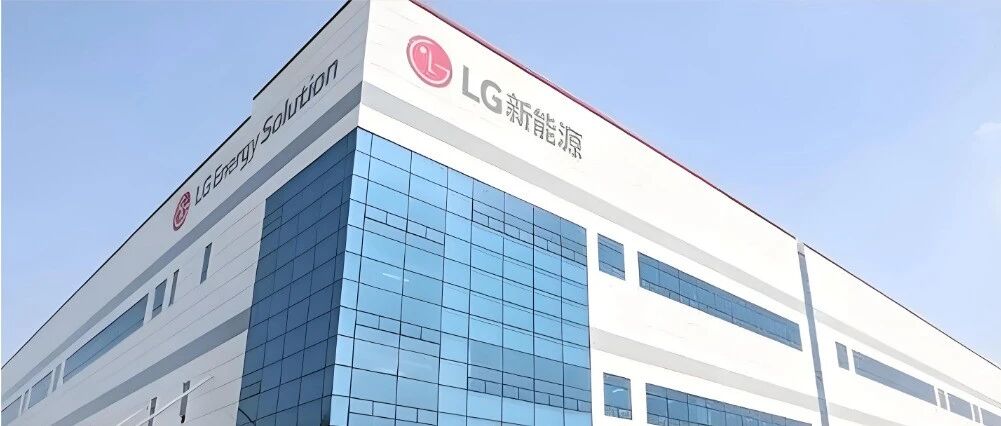
LG新能源利润连续三季度增长!
起点锂电· 2025-11-04 10:26
Core Viewpoint - The article discusses the recent performance and strategic shifts of LG Energy Solution, highlighting its reliance on government subsidies and the growth of its energy storage business, particularly in lithium iron phosphate batteries, as key factors for its financial recovery and future prospects [5][8][10]. Group 1: LG Energy Solution's Financial Performance - In Q3, LG Energy Solution reported revenue of approximately 5.7 trillion KRW, a 2.4% increase quarter-on-quarter, with an operating profit of 601.3 billion KRW, reflecting a 22.2% increase [5]. - The company's performance in the first three quarters of the year shows a trend of increasing operating profit, with Q1 at 375 billion KRW, Q2 at 492.2 billion KRW, and Q3 at 601.3 billion KRW, indicating a recovery trajectory [5][6]. - The operating profit in Q3 included 365.5 billion KRW from U.S. policy subsidies, suggesting that the company's profitability is significantly supported by external financial assistance [8][9]. Group 2: Energy Storage Business Growth - LG Energy Solution has secured approximately 120 GWh of battery orders for energy storage systems, indicating a strong demand and potential for growth in this sector [6][10]. - The company has made strategic decisions to focus on lithium iron phosphate batteries, which are more stable and cost-effective for large-scale energy storage applications, positioning itself advantageously in the North American market [10][12]. - A notable achievement includes a significant order for lithium iron phosphate batteries worth approximately 30.6 billion KRW from Tesla, highlighting the company's growing influence in the energy storage market [10][12]. Group 3: Strategic Adjustments and Market Position - LG Energy Solution's shift towards lithium iron phosphate batteries is a strategic response to market demands, as these batteries present lower risks and costs compared to traditional lithium-ion batteries [12]. - The company's partnerships and orders in the energy storage sector reflect a deepening integration with the North American market, which is experiencing rapid energy transition [12]. - The competitive landscape is evolving, with LG Energy Solution emerging as a strong contender against other Korean battery manufacturers like Samsung SDI and SK On, which are currently facing challenges [6][12].
中国石化与LG签约,两大巨头押注钠电池!
鑫椤锂电· 2025-11-04 08:12
Core Viewpoint - China Petroleum & Chemical Corporation (Sinopec) has signed an agreement with LG Chem to jointly develop key materials for sodium-ion batteries, targeting the energy storage and low-speed electric vehicle markets [1][6]. Group 1: Company Collaboration - The partnership focuses on the development of sodium-ion battery cathode and anode materials, aiming to accelerate commercialization [1][6]. - Sinopec, as the largest refining and chemical enterprise in China, has been transitioning towards new energy materials, with battery materials being a key focus area [3][6]. - LG Chem is recognized as a leader in the commercialization of cathode and anode materials in the new energy battery sector [3][6]. Group 2: Technical Advancements - Sinopec has developed a wide-temperature sodium battery electrolyte that maintains over 95% capacity at -10°C, showcasing its technical capabilities [3][6]. - Research institutes under Sinopec have established solid technical foundations in sodium battery electrolytes and separator materials [3][6]. Group 3: Market Potential - Sodium-ion batteries exhibit advantages over lithium-ion batteries, such as lower cost (30%-40% cheaper) and better performance in low-temperature environments [6][7]. - The high safety profile of sodium-ion batteries, including no risk of over-discharge and good thermal stability, makes them ideal for large-scale energy storage [7]. - Currently, lithium batteries dominate the new energy storage market in China, accounting for 97%, but sodium batteries have the potential for differentiated competition, especially in the two-wheeler and A0-class electric vehicle markets [7].
【环球财经】阿布扎比国际石油展聚焦可持续发展
Xin Hua She· 2025-11-04 07:07
Core Insights - The 41st Abu Dhabi International Petroleum Exhibition opened on November 3, attracting over 2,250 companies globally to discuss the future of energy and sustainable development [1] Group 1: Event Overview - The exhibition is hosted at the Abu Dhabi National Exhibition Centre and spans four days [1] - UAE's Vice President and Prime Minister Mansour bin Zayed Al Nahyan emphasized the UAE's role in leading global energy dialogue and promoting energy security and sustainable development [1] Group 2: Participation and Focus Areas - Approximately 330 Chinese enterprises and institutions, including China National Petroleum Corporation and China National Offshore Oil Corporation, participated in the exhibition [1] - China National Petroleum Corporation showcased its latest achievements in deep energy development, AI empowerment, and green low-carbon transition [1] Group 3: Exhibition Features - The exhibition features 17 halls, including four key thematic areas: artificial intelligence and digital transformation, decarbonization, shipping and logistics, and a newly established section for chemicals and low-carbon solutions [1]
《能源变革指数蓝皮书2025》:中国成世界能源转型速度最快国家
Zhong Guo Hua Gong Bao· 2025-11-04 06:54
Core Insights - The "Energy Transition Index Blue Book 2025" indicates that China is a leading force in global energy transition and is currently the fastest country in terms of energy transition speed [1][2] Group 1: Energy Transition Index - The Blue Book evaluates energy transition based on 17 criteria and 74 underlying indicators across five dimensions: energy consumption, energy supply, energy technology, energy system, and international cooperation [1] - China ranks third in the global energy transition index, being the only developing country in the top ten, which includes Sweden, Norway, Denmark, Finland, Switzerland, Germany, the UK, the US, and Canada [1][2] Group 2: Energy Transition Speed - In the newly added assessment of energy transition speed, China ranks first globally, indicating it is the fastest country in energy transition [1] - The report highlights that countries with high GDP per capita and smaller populations tend to perform better in energy transition, but resource endowment and determination are crucial for driving change [2] Group 3: Clean Energy Contributions - As of the end of September, China's new energy storage capacity exceeded 100 million kilowatts, accounting for over 40% of the global total [2] - China has provided clean energy products and services to over 200 countries and regions, with its wind and solar products contributing to a reduction of approximately 2.65 billion tons of CO2 emissions globally in the past year [2]
阿布扎比国际石油展聚焦可持续发展
Xin Hua Wang· 2025-11-04 06:50
Core Insights - The 41st Abu Dhabi International Petroleum Exhibition and Conference opened on November 3, attracting over 2,250 companies globally to discuss the future of energy and sustainable development [1] Group 1: Event Overview - The event is hosted at the Abu Dhabi National Exhibition Centre and spans four days [1] - The exhibition highlights the UAE's significant role in leading global energy dialogue and promoting energy security and sustainable development cooperation [1] Group 2: UAE's Commitment - UAE Vice President and Prime Minister Mansour bin Zayed Al Nahyan emphasized the country's ongoing investment in advanced technology, clean energy, and innovation to balance economic growth with environmental protection [1] - The UAE aims to continue driving energy transition through international cooperation [1] Group 3: Participation and Focus Areas - Approximately 330 Chinese enterprises and institutions, including China National Petroleum Corporation and China National Offshore Oil Corporation, are participating as core strategic partners [1] - The exhibition features 17 halls, with four key thematic areas: artificial intelligence and digital transformation, decarbonization, shipping and logistics, and a new section on chemicals and low-carbon solutions [1]

