
交通强国

Search documents
中交设计上半年实现营业收入43.58亿元 海外业务收入持续增加
Zheng Quan Ri Bao Wang· 2025-08-29 02:44
Group 1 - The company reported a revenue of 4.358 billion yuan and a net profit of 559 million yuan for the first half of 2025, demonstrating strong growth momentum and resilience [1] - The company achieved a new contract amount of 9.39 billion yuan, exceeding its operational targets for the first half of the year, with a gross margin of 28.22% [1] - The company has made significant progress in cost control, with a 14.76% decrease in period expenses and a research and development investment intensity of 4.99% [1] Group 2 - The company is actively advancing major engineering projects in line with the "Transportation Power" strategy, securing contracts worth nearly 4 billion yuan in the transportation sector, a year-on-year increase of 4.4% [2] - The company is expanding its urban and municipal business, participating in key projects such as the renovation of old residential areas in Lanzhou and the construction of the Haikou Guanlanhu infrastructure [2] - The company has launched low-altitude economy business initiatives, winning multiple consulting projects related to low-altitude economic development and digitalization [2] Group 3 - The company's overseas business has shown steady growth, with a year-on-year revenue increase of 15.42%, now accounting for 7.89% of total revenue [3] - The company has successfully undertaken projects in traditional sectors, such as road projects in Iraq and Malaysia, while also venturing into new areas like fertilizer plants and renewable energy [3] - The company has signed contracts exceeding 3.2 billion yuan in countries involved in the Belt and Road Initiative during the 14th Five-Year Plan period [3]

浙江交科2025年上半年营收利润稳步增长 业务多元拓展筑牢发展根基
Zheng Quan Shi Bao Wang· 2025-08-28 07:05
Core Viewpoint - Zhejiang Jiaokao (stock code: 002061) reported steady revenue and profit growth in the first half of 2025, driven by diversified business collaboration and refined management, while enhancing core competitiveness through mergers, technology development, and market optimization [1][2]. Financial Performance - In the first half of 2025, the company achieved operating revenue of 18.647 billion yuan, a year-on-year increase of 1.12% [1] - Net profit reached 545 million yuan, up 6.43% year-on-year [1] - The net profit attributable to shareholders, excluding non-recurring gains and losses, was 530 million yuan, reflecting a 6.19% increase year-on-year, indicating continuous improvement in profit quality [1] Business Operations - The company focuses on infrastructure engineering, extending its value chain around construction services, forming a diversified development pattern with transportation infrastructure as the mainstay [2] - In the transportation infrastructure sector, the company has integrated capabilities in investment, design, procurement, construction, and maintenance, covering various fields such as roads, bridges, ports, and rail transit [2] - New project contracts primarily consist of construction general contracting (over 50%) and engineering general contracting (approximately 30%), with ongoing expansion into franchise operations and integrated construction and maintenance models [2] Mergers and Subsidiary Operations - The company completed the acquisition of Zhejiang Yitong Special Foundation Engineering Co., Ltd. for 359 million yuan, obtaining a 51% stake and enhancing its competitive edge in the infrastructure sector [3] - Core subsidiary Zhejiang Jiaokong Group achieved operating revenue of 18.647 billion yuan and net profit of 555 million yuan during the reporting period, contributing significantly to overall performance [3] - The company invested 459 million yuan in R&D, a 13.58% increase year-on-year, focusing on high-strength rebound detection technology and self-developed anti-corrosion coatings [3] Market Expansion - The company has established 33 marketing agencies in Zhejiang and 20 in other provinces, covering over 30 provinces and municipalities nationwide [4] - Internationally, the company has expanded its business to 20 countries, generating 332 million yuan in overseas revenue despite geopolitical challenges [4] - The company actively participates in major projects aligned with national strategies, such as the "Transportation Power" initiative and the "Yangtze River Delta Integration Development" strategy [4] Future Outlook - The company plans to continue focusing on its core infrastructure business, deepen diversified business collaboration, and increase investments in technology development and digital transformation [4] - The strategy includes enhancing competitiveness through mergers and market optimization, aiming for significant breakthroughs in transportation infrastructure and related industries [4]

康尼机电(603111):公司事件点评报告:海轨交维保+出海双线提速,新能源零部件产业化构筑新增长极
Huaxin Securities· 2025-08-27 13:48
Investment Rating - The report assigns a "Buy" rating for the company, marking the first coverage of the stock [8]. Core Views - The company is positioned to benefit from dual growth drivers in maintenance and overseas business, with a significant increase in orders solidifying growth momentum in its core rail transit business [4]. - The electrification upgrade opens up new growth opportunities in the components business, accelerating the formation of a second growth pillar [5][6]. - Original technology and smart manufacturing enhance the efficiency across the entire value chain, with potential for profit elasticity to be realized [7]. Summary by Sections Financial Performance - In the first half of 2025, the company achieved operating revenue of 2.017 billion yuan, a year-on-year increase of 25.27%, and a net profit attributable to shareholders of 155 million yuan, up 41.74% [3]. - The company forecasts revenues of 4.865 billion yuan, 5.891 billion yuan, and 7.010 billion yuan for 2025, 2026, and 2027 respectively, with corresponding EPS of 0.58, 0.73, and 0.90 yuan [8][10]. Business Drivers - The "Transportation Power" strategy is driving the rail transit industry into a new phase of stock updates and overseas expansion, with the company winning significant maintenance contracts and expanding into new business models [4]. - The company has secured overseas contracts worth 1.011 billion yuan in 2024, a 50.9% increase year-on-year, contributing to a total order backlog of 7.302 billion yuan [4]. Technological Advancements - The company leverages its national-level technology center and smart factory to build competitive barriers through original technology and smart manufacturing [7]. - It holds 1,344 valid patents and has developed key technologies that enhance its product offerings in the rail transit sector [7]. Market Outlook - The report anticipates continued growth in the company's core rail transit maintenance and overseas business, alongside the expansion of its new energy component business, leading to a diversified business structure and improved growth expectations [5][6][8].

中央宣传部、中国国家铁路集团有限公司 联合发布“最美铁路人”
Ren Min Ri Bao· 2025-08-22 22:18
Core Viewpoint - The initiative to honor the "Most Beautiful Railway People" aims to inspire railway staff to contribute to the construction of a strong transportation nation and promote the spirit of labor and craftsmanship [1][2]. Group 1: Recognition of Individuals - Ten individuals were recognized for their dedication and contributions to the railway sector, showcasing their commitment to safety, innovation, and service improvement [1]. - The recognized individuals include Ding Qiaoren, Wang Tingting, Kong Xiangpei, Che Feifei, Li Yuan, Wang Chao, Chen Yonghong, Ma Wanli, Wang Zhongmei, and Gao Mingwei, who have excelled in various roles across the railway system [1]. Group 2: Inspirational Impact - The recognition serves as a motivational example for other railway staff to integrate personal aspirations with national development efforts, emphasizing the importance of diligence in everyday tasks [2]. - A video presentation at the award ceremony highlighted the achievements and life experiences of the "Most Beautiful Railway People," illustrating their contributions to the railway industry [2].
联合发布“最美铁路人”
Ren Min Ri Bao· 2025-08-22 22:14
Core Viewpoint - The initiative to honor the "Most Beautiful Railway People" aims to promote the spirit of labor and craftsmanship among railway workers, encouraging them to contribute to the construction of a strong transportation nation and modernize China's railway system [1][2]. Group 1: Recognition of Individuals - Ten individuals were recognized as the "Most Beautiful Railway People," showcasing their dedication and contributions in various roles, including ensuring railway safety in harsh environments and promoting logistics reform [1]. - The honorees include Ding Qiaoren, Wang Tingting, Kong Xiangpei, Che Feifei, Li Yuan, Wang Chao, Chen Yonghong, Ma Wanli, Wang Zhongmei, and Gao Mingwei, who have all made significant impacts in their respective areas [1]. Group 2: Inspirational Impact - The recognition serves as an inspiration for railway staff to integrate their personal aspirations with national development, emphasizing that excellence can be achieved through dedication to everyday tasks [2]. - A video presentation at the award ceremony highlighted the stories and insights of the "Most Beautiful Railway People," illustrating their commitment and experiences [2].
中央宣传部、中国国家铁路集团有限公司联合发布“最美铁路人”
Xin Hua She· 2025-08-22 08:30
Core Viewpoint - The initiative to honor the "Most Beautiful Railway People" aims to promote the spirit of labor and craftsmanship among railway workers, encouraging them to contribute to the construction of a strong transportation nation and modernize China's railway system [1][2]. Group 1: Recognition of Railway Workers - Ten individuals were recognized for their dedication and contributions to the railway sector, showcasing their commitment to safety, innovation, and service improvement [1]. - The recognized individuals include those who work in challenging environments, contribute to logistics reforms, and enhance passenger services, reflecting the core value of "People's Railway for the People" [1]. Group 2: Inspirational Impact - The recognition serves as an inspiration for other railway staff to integrate personal aspirations with national development goals, emphasizing the importance of diligence and long-term effort [2]. - A video presentation highlighted the stories and insights of the "Most Beautiful Railway People," illustrating their daily lives and work experiences [2].
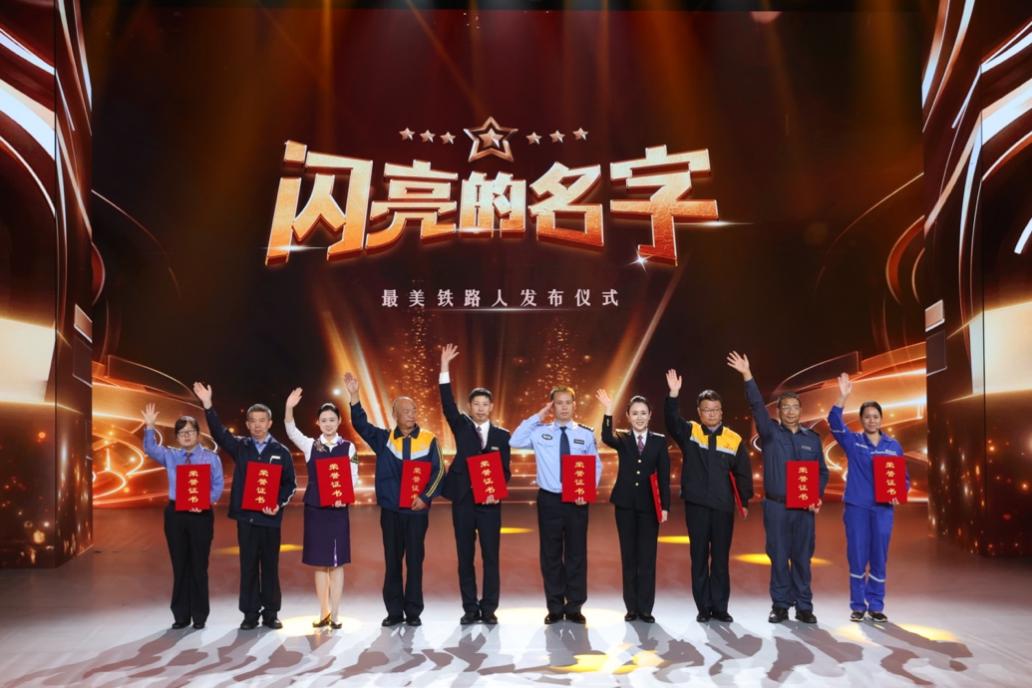
时代画卷 钢铁脊梁|《闪亮的名字-最美铁路人发布仪式》22日晚播出
Yang Shi Wang· 2025-08-22 03:48
什么样的画卷,让千里江山近在咫尺? 什么样的画卷,托举14亿人出行的梦想? 什么样的画卷穿越风雨, 驮着一个民族的憧憬奔向复兴? 那必然,是一幅钢铁脊梁擎起的时代长卷, 一路平安,一路辉煌! 为深入学习贯彻习近平总书记关于交通强国的重要论述和对铁路工作的重要指示精神,大力弘扬劳模精神、劳动精神、工匠精神,激励和引导 广大铁路干部职工积极投身交通强国建设,当好中国式现代化开路先锋,2025年8月22日,中央宣传部、中国国家铁路集团有限公司面向全社会公 开发布"最美铁路人"。 《闪亮的名字-最美铁路人发布仪式》将在中央广播电视总台央视科教频道(CCTV-10)8月22日21:20播出。首播期间央视频、学习强国、央 视网等新媒体平台同步直播。 10位"最美铁路人" 丁巧仁、王婷婷、孔祥配、车菲菲、李元、王超、陈永红、马万里、王中美和高明伟等10名同志光荣入选。他们奉献在一线、成长在基层、建 功在岗位,有的倾情坚守高寒山区保障铁路安全运行,有的积极投身铁路现代物流改革助力企业发展,有的矢志装备科技创新为中国铁路建设添砖 加瓦,有的立足实际优化服务提高旅客出行品质,有的勇担国家重大任务、为铁路"中国标准"走出国门贡献智 ...

决胜“十四五” 打好收官战丨贵州:万桥飞架构筑“高速平原”
Xin Hua Wang· 2025-08-20 15:44
Core Viewpoint - The construction of the Huajiang Gorge Bridge in Guizhou, which will be the world's highest bridge upon completion, is a significant project under the "14th Five-Year Plan" aimed at enhancing regional economic development and tourism [2][3]. Group 1: Project Overview - The Huajiang Gorge Bridge, with a length of 2,890 meters and a height of 625 meters above the water surface, is expected to be completed by September, significantly reducing travel time between Guizhou's Guanshan County and Zhenfeng County [1][2]. - The bridge has attracted considerable tourist interest, contributing to local businesses and tourism growth, as evidenced by increased customer traffic for local vendors [1][2]. Group 2: Economic Impact - The bridge is part of a broader initiative in Guizhou, which has seen the construction of over 30,000 bridges, connecting more than 5,400 kilometers of roadways, thereby transforming the region into a "high-speed plain" [2][3]. - Guizhou holds a prominent position in global bridge rankings, with the top three highest bridges in the world and nearly half of the top 100 high bridges [2]. Group 3: Technological Innovation - The challenging geological conditions in Guizhou have driven technological advancements in bridge construction, including the development of key techniques for large-span suspension bridges and continuous rigid frame bridges [3]. - The integration of bridge construction with tourism has led to the development of projects that enhance local tourism offerings, such as extreme sports and leisure activities, significantly boosting local economies [3].
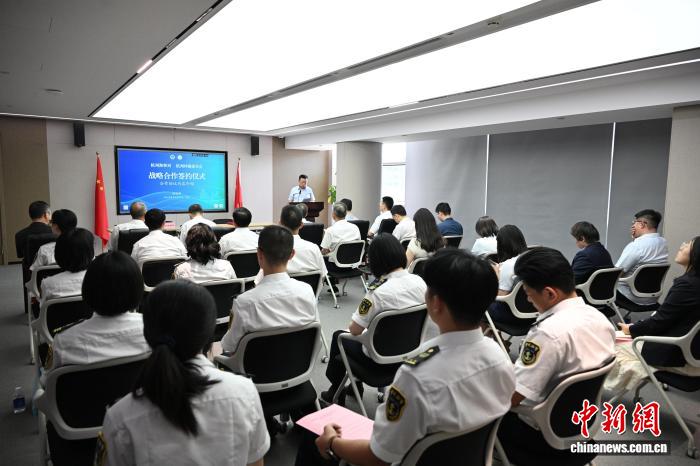
浙江首个海事与仲裁合作协议在杭州签署
Zhong Guo Xin Wen Wang· 2025-08-19 10:26
Core Viewpoint - The establishment of a maritime mediation and arbitration cooperation mechanism in Zhejiang Province marks a significant advancement in resolving maritime disputes and enhancing governance in the region [1][2]. Group 1: Cooperation Agreement - The cooperation focuses on high-quality development of the shipping economy and aims to create a diversified dispute resolution system, injecting new legal momentum into the business environment [2]. - The agreement includes the establishment of a "Joint Maritime Assistance" cultural brand and the implementation of a "one-stop" maritime dispute resolution platform [2]. - The collaboration will enhance efficiency in dispute resolution through prioritized mediation, legal arbitration, rapid case filing, and quick hearings [2]. Group 2: Strategic Initiatives - The parties will conduct legal risk prevention training and explore rules or procedural guidelines that meet the needs of Zhejiang's shipping industry [2]. - The initiative aims to fill gaps in the application of international rules and improve the professionalism of maritime arbitration [2]. - The cooperation is expected to lower the cost of rights protection for enterprises and enhance the credibility of maritime dispute resolution in Zhejiang [2].
济商高速 以央地共建之笔擘画“交通强国”标杆
Qi Lu Wan Bao Wang· 2025-08-18 14:11
Core Viewpoint - The Jining to Shangqiu Expressway (Jishang Expressway) project is a key infrastructure initiative aimed at enhancing regional connectivity and supporting the "Transportation Power" strategy through central-local cooperation and innovative construction practices [1][12]. Group 1: Project Overview - The Jishang Expressway is a significant project under Shandong Province's 14th Five-Year Plan, serving as a vital transport corridor connecting the Jiaodong Peninsula, the Lunan Economic Circle, and the Central Plains Economic Zone [1]. - Upon completion, the expressway will improve traffic capacity between Jining and the Central Plains region, facilitating better access to the Yangtze River Economic Belt and enhancing the highway network in Shandong Province [1]. Group 2: Party Building and Team Development - The project emphasizes party leadership, integrating political and organizational advantages into construction efforts, and fostering a collaborative environment through a "Party Building + Integration Development" approach [2][3]. - Initiatives include establishing demonstration posts for party members and creating a learning organization to enhance employee capabilities and promote a culture of integrity [4]. Group 3: Management Innovation - The project adopts a "central enterprise + local state-owned enterprise" model with equal shareholding, addressing challenges in management responsibility, cultural integration, and governance [5]. - A modern governance framework has been established, incorporating a decision-making system that enhances scientific decision-making and operational standardization [5][6]. Group 4: Technological Empowerment - The project utilizes advanced technologies such as IoT, AI, and 3D intelligent paving systems to enhance construction precision and efficiency, achieving significant milestones in project timelines [7][8]. - Innovations include the use of drone technology for site inspections and data collection, contributing to real-time decision-making and safety management [7]. Group 5: Quality Control - The project implements stringent quality control measures, including a closed-loop quality management system and rigorous material approval processes, ensuring high construction standards [9]. - The focus on quality during construction is seen as a foundation for long-term operational success, aligning with the company's integrated investment and construction philosophy [9]. Group 6: Societal Impact - The Jishang Expressway is expected to enhance local economies by providing job opportunities and supporting local industries, with a focus on community engagement and environmental protection [10][11]. - The expressway will significantly reduce travel time between Jining and Shangqiu, facilitating economic growth and tourism development in the region [11].
