
产业集群

Search documents
新加坡裕廊岛:打造全球低碳创新试验区
Zhong Guo Hua Gong Bao· 2025-12-08 05:18
Core Insights - Jurong Island, as the core of Singapore's energy and chemical industry, has achieved an annual output value exceeding 80 billion SGD on a land area of 30 square kilometers [1] Group 1: Strategic Collaborations and Developments - On November 24, Singapore's Deputy Prime Minister announced strategic collaborations between Jurong Island and six international enterprises and academic institutions to advance its transformation into a sustainable energy and chemical hub [1] - The Economic Development Board of Singapore proposed a creative concept of an integrated petrochemical cluster, consolidating seven small islands into Jurong Island to support a resource-circular, low-carbon industrial system [2] Group 2: Industrial Ecosystem and Employment - Jurong Island's industrial layout follows ecological principles, creating a diverse and symbiotic development structure, extending its business scope from traditional chemicals to innovative low-carbon fields such as biomanufacturing and carbon capture [2] - The island currently supports over 25,000 jobs and is transitioning its industrial structure towards low-carbon solutions, focusing on high-value, low-emission segments [2] Group 3: Infrastructure and Cost Efficiency - Jurong Island's unique advantage lies in its comprehensive, low-carbon-oriented infrastructure, which includes a shared facility system that reduces material circulation costs by at least 30% [3] - The island is enhancing its infrastructure through digital monitoring and flexible energy grids to optimize carbon efficiency [3] Group 4: Future Focus and Innovation - The development priorities for Jurong Island include specialty chemicals and sustainable materials, with investments in low-carbon technology testing facilities to support the commercialization of clean energy solutions [4] - By 2030, Jurong Island aims to increase its sustainable product output by 1.5 times compared to 2019 and plans to capture 2 million tons of CO2 annually [4]
构建“一主三辅”产业生态,深圳深汕产业园区形成“产业朋友圈”
2 1 Shi Ji Jing Ji Bao Dao· 2025-12-08 03:52
Core Insights - The Shenshan Industrial Park has transformed from a barren tidal flat into a significant hub for the new energy vehicle industry, driven by strategic planning and investment from Shenzhen since 2018 [1] Group 1: Development Stages - Initial development involved administrative exploration and a lack of clear industrial direction, with the area previously characterized by scattered agricultural activities and weak infrastructure [1] - The turning point came in 2018 when Shenzhen took over the development, establishing a clear mission to facilitate industrial overflow and regional coordination, paving the way for infrastructure and industrial layout planning [1] Group 2: Key Players and Investments - BYD's initial contract in August 2021 marked the beginning of industrial cluster formation, with total investments exceeding 31.5 billion yuan over four years, establishing a complete industrial chain from components to vehicles [2] - The presence of BYD attracted nearly 30 core component manufacturers, creating a "industrial community" with minimal travel time between upstream and downstream enterprises [2] Group 3: Industrial Ecosystem - The park has developed a "one main, three auxiliary" industrial layout, focusing on new energy vehicles while also incorporating new energy storage, high-performance materials, and intelligent manufacturing [3] - Specialized parks have been established to address critical challenges in the supply chain, such as the high-end electronic chemical products park, which is the first of its kind in Shenzhen and South China [3] Group 4: Logistics and Efficiency - The "front port, back factory" model has been implemented to enhance logistics efficiency, with the Xiaomo International Logistics Port located just 4 kilometers from BYD's base, allowing for rapid vehicle shipping [4] - By 2025, the port will have opened 10 roll-on/roll-off foreign trade routes, significantly improving the logistics framework for the new energy vehicle sector [4] Group 5: Urban Integration - The park is not only focused on industrial development but also aims to create a livable and workable environment, with plans for a comprehensive transportation network and educational facilities [5] - Initiatives such as "village-enterprise cooperation" have transformed local villages into demonstration areas for shared economic benefits, enhancing community welfare [5] Group 6: Policy Support - The Shenshan Special Cooperation Zone has introduced significant incentives, including zero-rent industrial space and land guarantees for major projects aligned with the "one main, three auxiliary" strategy [6][7] - Additional support includes fixed asset investment rewards, operational cost reductions, and tailored financial services for enterprises [7][8]


探索城乡共同繁荣发展新路径——宁夏统筹推进“两化一振兴”走深走实
Jing Ji Ri Bao· 2025-12-06 21:54
Group 1: Economic Development Strategy - Ningxia's strategy focuses on promoting urban-rural integration and high-quality economic development through new industrialization, new urbanization, and comprehensive rural revitalization [1] - The region has seen a faster growth rate in residents' income compared to economic growth, with farmers' income increasing more rapidly than urban residents' income [1] Group 2: Industrial Growth - In the first three quarters of this year, Ningxia's industrial added value above designated size grew by 7.8% year-on-year, and industrial investment increased by 27.0% [4] - Ningxia's industrial value added has averaged a growth rate of 7.9% since the 14th Five-Year Plan, surpassing the national average by 2.5 percentage points [3] Group 3: Urbanization and Infrastructure - Ningxia's urbanization rate is projected to reach 68.22% by 2024, which is 1.22 percentage points higher than the national average [7] - The region is actively improving urban infrastructure, including upgrading old residential areas and enhancing municipal services [5][6] Group 4: Agricultural Development - Ningxia has built a modern agricultural industry with eight national modern agricultural industrial parks and 15 agricultural science and technology parks [9] - The total output value of agriculture, forestry, animal husbandry, and fishery in Ningxia reached 625.65 billion yuan, with a year-on-year growth of 5.3% [9] Group 5: Brand Development and Market Expansion - Ningxia has cultivated 647 agricultural brands and established a comprehensive logistics network for rural areas, achieving full coverage of township commercial centers [9] - The region's specialty agricultural products, such as goji berries and wines, have seen significant brand value improvements, ranking among the top in national regional brand lists [9]
四中全会精神在基层丨以“共享智造”推动产业集群焕新发展
Yang Guang Wang· 2025-12-06 06:08
Core Insights - The article discusses the implementation of the "Shared Intelligent Manufacturing" initiative in Hebei Province, aimed at enhancing the local industrial cluster's quality and efficiency, transitioning from quantity accumulation to qualitative leap [1][2] Group 1: Industry Development - Hebei Province has introduced action plans and guidelines to promote local industrial clusters, focusing on modernizing the industrial system and strengthening the foundation of the real economy [1] - The Ningjin County high-end intelligent manufacturing industrial park is home to over 2,300 production and supporting enterprises, making it the largest cable production base in North China [1] - Many small and medium-sized enterprises (SMEs) in the cable industry face challenges such as high investment thresholds for advanced equipment and imbalanced capacity allocation [1] Group 2: Shared Manufacturing Model - The industrial park is fostering a shared manufacturing model by aggregating leading enterprises to create shared workshops, allowing SMEs to share orders and enhance production capacity [1] - A local SME has reported significant cost savings through collective procurement, estimating a daily savings of approximately 15,000 yuan by negotiating better prices for raw materials [2] - Over 400 enterprises in Ningjin County are participating in various shared platforms, promoting a mutually beneficial development model that leverages industry-leading technologies [2] Group 3: Future Goals and Achievements - Hebei Province aims to achieve full coverage of shared intelligent manufacturing across 107 characteristic industrial clusters, having established 194 shared factories and over 15,000 shared equipment units, involving 18,000 enterprises [2] - The provincial government plans to cultivate around 10 benchmark shared factories annually and develop industrial internet platforms tailored to cluster characteristics, further optimizing traditional industries and reinforcing the real economy [2]
全球枪瞄七成“南通造” 行业商会换届启新程
Yang Zi Wan Bao Wang· 2025-12-05 16:10
Core Viewpoint - The article highlights the development and significance of the optical sighting scope industry in Nantong, China, emphasizing its role as a major production base and the efforts of the Nantong Optical Sighting Scope Equipment Chamber of Commerce to enhance industry standards and innovation [1][2]. Group 1: Industry Overview - Nantong is the largest production base for gun sighting scopes globally, with approximately 90% of the world's gun sighting scopes produced in China, and over 70% of those from Nantong [1]. - The industry generates an annual output value of nearly 30 billion yuan and supports around 30,000 jobs, primarily due to the export of products as domestic gun policies restrict local sales [1]. Group 2: Chamber of Commerce Initiatives - The Nantong Optical Sighting Scope Equipment Chamber of Commerce was established in December 2014 to promote orderly development within the industry, transitioning from natural growth to structured progress [1][2]. - The chamber has been recognized as a "Four Good Chamber of Commerce" in Jiangsu Province for its efforts in stabilizing member enterprises and employment amid economic pressures [1]. Group 3: Standardization and Innovation - The chamber led the development of the "Civilian Sighting Scope" group standard, published in July 2019, which filled a gap in the industry and facilitated a shift from OEM to standard-setting for local companies [2]. - Technological innovation is driving product upgrades, with member companies developing new technologies such as laser ranging and GPS positioning, enhancing product value [2]. Group 4: Future Goals - The newly elected president, Wang Yongjun, aims to establish an internationally recognized industrial cluster, focusing on shared R&D, production collaboration, and market linkage [2]. - The chamber plans to implement three key projects over the next five years: brand enhancement, talent cultivation, and youth entrepreneur training, to inject vitality into the industry's sustainable development [2].
连续5次入选“中国最佳引才城市”
Qi Lu Wan Bao· 2025-12-04 23:30
Group 1 - During the "14th Five-Year Plan" period, Qingdao focuses on technological innovation, launching over 100 technology research projects annually [1][2] - Qingdao has established the first national marine technology market, connecting over 540 institutions and 3,100 talents, resulting in the release of 4,800 achievements and the promotion of over 250 technology transfers [1][3] - The city has improved its ranking in the Global Innovation Index from 69th in 2020 to 34th in 2025, with a total talent pool of 3 million, an increase of 700,000 since 2020 [1] Group 2 - Qingdao's ranking among the top 100 advanced manufacturing cities in China has improved from 11th in 2020 to 6th in 2024 [2] - The city has accelerated the aggregation of various innovation resources, optimizing and reorganizing 16 national key laboratories and 86 provincial key laboratories, which account for 44% and 26% of the province, respectively [2] - Qingdao has cultivated 8,683 high-tech enterprises and 9,776 technology-based SMEs, which are 1.98 times and 1.85 times the numbers in 2020, respectively [2] Group 3 - A service mechanism for industry-research collaboration has been established, focusing on 60 key universities and research institutions [3] - In 2024, Qingdao is expected to have 15 scientific and technological achievements awarded national science and technology awards, accounting for 43% of the province's total [3] - The total value of technology contracts reached 709 billion yuan, representing a 147% increase compared to 2020 [3]
沙漠中的互联网城:中国公司不满足只在这建总部|出海·专访
Sou Hu Cai Jing· 2025-12-03 08:55
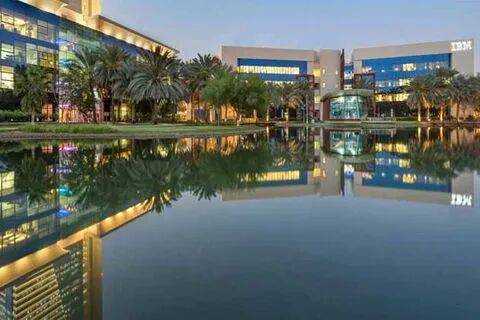
迪拜互联网城。 "这里最初只是一片荒漠,除了烈日炎炎别无他物,但我们彻底改变了它的面貌。"TECOM集团商业执 行副总裁兼迪拜互联网城董事总经理阿玛尔·马利克(Ammar Al Malik)告诉财新。契合中东地区凡事 追求"第一"的话语风格,他称,迪拜互联网城已在中东地区"率先成为成熟产业集群",这里创造的科技 相关产值占据迪拜科技领域整体GDP的65%。 国资企业TECOM集团是迪拜互联网城的开发和运营公司,马利克和很多中东国家的政府机构高层一样 英语流利,曾在日本关西学院大学攻读MBA,在TECOM集团任职近20年,参与过迪拜自贸区九个商业 地块的开发和管理。马利克告诉财新,他曾在2024年9月随迪拜商会和迪拜政府代表团访问北京,接洽 了多家中国企业。 …… 迪拜互联网城创造的科技相关产值,已占迪拜科技领域整体GDP的65% 作者|关聪 发自阿联酋迪拜 微软、甲骨文、IBM、Meta……汽车驶过迪拜的Falak大街,几家全球知名互联网巨头的名字出现在一 侧路边的大楼上,位于迪拜市区南部的迪拜互联网城(Dubai Internet City)是中东地区首个面向科技领 域的自贸区,2000年10月启动运营,大 ...
“三湘”起新业 “四水”链成群——湖南打造产业集群推动经济高质量发展调查
Zheng Quan Ri Bao· 2025-12-02 16:17
Core Viewpoint - The development of advanced manufacturing clusters is a strategic directive from the state aimed at enhancing the self-controllable capabilities of the industrial chain, with Hunan province emerging as a key player in this initiative [1][12]. Group 1: Advanced Manufacturing Clusters - Hunan has cultivated five national-level advanced manufacturing clusters, particularly excelling in rail transit, positioning itself as a global leader in this sector [1][3]. - The region has established a complete industrial chain in magnetic levitation technology, with over 200 supporting enterprises gathered around the leading company, CRRC Zhuzhou Electric Locomotive Co., Ltd [3][10]. - Zhuzhou has developed three national advanced manufacturing clusters in rail transit equipment, small and medium-sized aviation engines, and ultra-high voltage transmission equipment over the past five years [3]. Group 2: Technological Innovation and Collaboration - CRRC Zhuzhou has made significant advancements in magnetic levitation technology, successfully mastering key system technologies since 2008 [2][3]. - The integration of local policies and market mechanisms has activated endogenous development dynamics, creating a virtuous cycle of government support, market effectiveness, and corporate benefits [5][9]. - The collaborative model among enterprises in strategic emerging industries reduces innovation costs and builds resilience against external risks [9][12]. Group 3: Diversified Development Paths - Hunan's industrial clusters are diversifying, with vertical integration creating complete ecological chains and horizontal expansion transforming production sites into industrial tourism resources [8][10]. - The medical device industry in Hunan is developing a specialized and market-oriented service system, enhancing high-quality growth through collaboration among leading enterprises [10][11]. - The Changsha Yuhua Economic Development Zone has attracted over 7,000 enterprises, focusing on new energy vehicles, artificial intelligence, and aerospace industries [11]. Group 4: International Influence and Market Expansion - The 2025 China International Rail Transit and Equipment Manufacturing Industry Expo held in Zhuzhou showcased cutting-edge magnetic levitation technology, attracting domestic and international buyers [4]. - The strategic positioning of Hunan's industries is supported by national policies that encourage innovation and resource concentration in key sectors [12].
河南义马:集群成势 打造精细化工产业新高地
Zhong Guo Jing Ji Wang· 2025-12-02 12:50
Group 1 - The core focus of the news is on the rapid development and production capabilities of Henan Xingwang Fine Chemical Co., Ltd., which is set to produce 3,600 tons of vinyl monomer products annually, addressing the high demand in the market for key raw materials in various sectors [1][2] - The company has achieved international advanced levels in producing high-purity vinyl imidazole, with only a few domestic competitors capable of stable production [1] - The collaboration with Lanzhou University and Zhengzhou University has led to significant technological advancements, including a 20% reduction in production costs through low-temperature catalytic processes [1][2] Group 2 - The implementation of an intelligent control system allows for efficient management of over 800 production processes, resulting in a 15% reduction in energy consumption and an increase in product quality to over 98% [2] - The company has established a rapid project development timeline, achieving project initiation in July 2024 and trial production by November of the same year, setting a new record for industrial project construction in Yima [2] - The fine chemical industry in Yima is experiencing significant growth, with 43 key projects underway and an increase in the number of chemical enterprises from 12 to 17 since the beginning of the 14th Five-Year Plan [3]
同翔高新城12个项目集中签约 总投资约180亿元
Zhong Guo Jing Ji Wang· 2025-12-02 05:43
Core Insights - The Xiamen Tongxiang High-tech Zone promotion conference successfully showcased 12 projects with a total planned investment of approximately 18 billion yuan, focusing on key industries such as new energy, new materials, and high-end equipment manufacturing [1] Group 1: Project Highlights - The signing event attracted several industry leaders and national high-tech enterprises, demonstrating the growing industrial cluster advantages and business environment appeal of the Tongxiang High-tech Zone [2] - Major projects include the New Energy An Phase II project with a total investment of 5.7 billion yuan and an additional capacity of approximately 9 GWh, and the Datang Power Xiamen Smart Comprehensive Energy Project with an investment of about 5 billion yuan aimed at creating a modern industrial park with zero net carbon emissions [2] - The Dazhu MicroLED new display laser equipment project has a total investment of approximately 540 million yuan, with its parent company being a leading player in the domestic laser equipment industry [2] Group 2: Supply Chain and Ecosystem Development - Leading companies are driving the establishment of upstream and downstream enterprises, such as Vino, which specializes in mold design and manufacturing, planning to set up operations in Xiamen to enhance supply chain efficiency [3] - The Haifan Machinery project aims to build a high-end handling equipment R&D and production base, with plans for an annual production line of 10,000 high-end new energy forklifts [3] - The signing also includes various quality projects across key sectors, contributing to a resilient and collaborative industrial ecosystem in the Tongxiang High-tech Zone [3] Group 3: Business Environment and Corporate Feedback - Companies expressed that a solid industrial foundation, precise government services, and a favorable business environment were key reasons for their decision to establish operations in the area [4] - The general manager of Kexing Electric highlighted that the port advantages and open nature of Xiamen significantly facilitate product exports, aligning with their strategic goals [4] - The vice president of Puwei Optoelectronics noted that the project timeline from negotiation to construction was halved, saving substantial costs and allowing for a 200% increase in production capacity [4] Group 4: Development Momentum - During the 14th Five-Year Plan period, the Tongxiang High-tech Zone expanded from 10.5 square kilometers to 23.5 square kilometers, attracting over 100,000 residents and initiating more than 70 industrial projects and over 200 supporting projects, with fixed asset investments exceeding 180 billion yuan [5] - The area is gradually forming a trillion-yuan industrial cluster centered on new energy and electronic information, with significant contributions from global leaders like Tianma and CATL [5] - The industrial output value is projected to rise from 16.6 billion yuan in 2021 to nearly 100 billion yuan by 2025, with an average annual growth rate exceeding 50%, making it a crucial engine for Xiamen's economic growth [5]