固定资产投资

Search documents
国家统计局:1—11月份,全国固定资产投资444035亿元,同比下降2.6%
Sou Hu Cai Jing· 2025-12-15 02:20
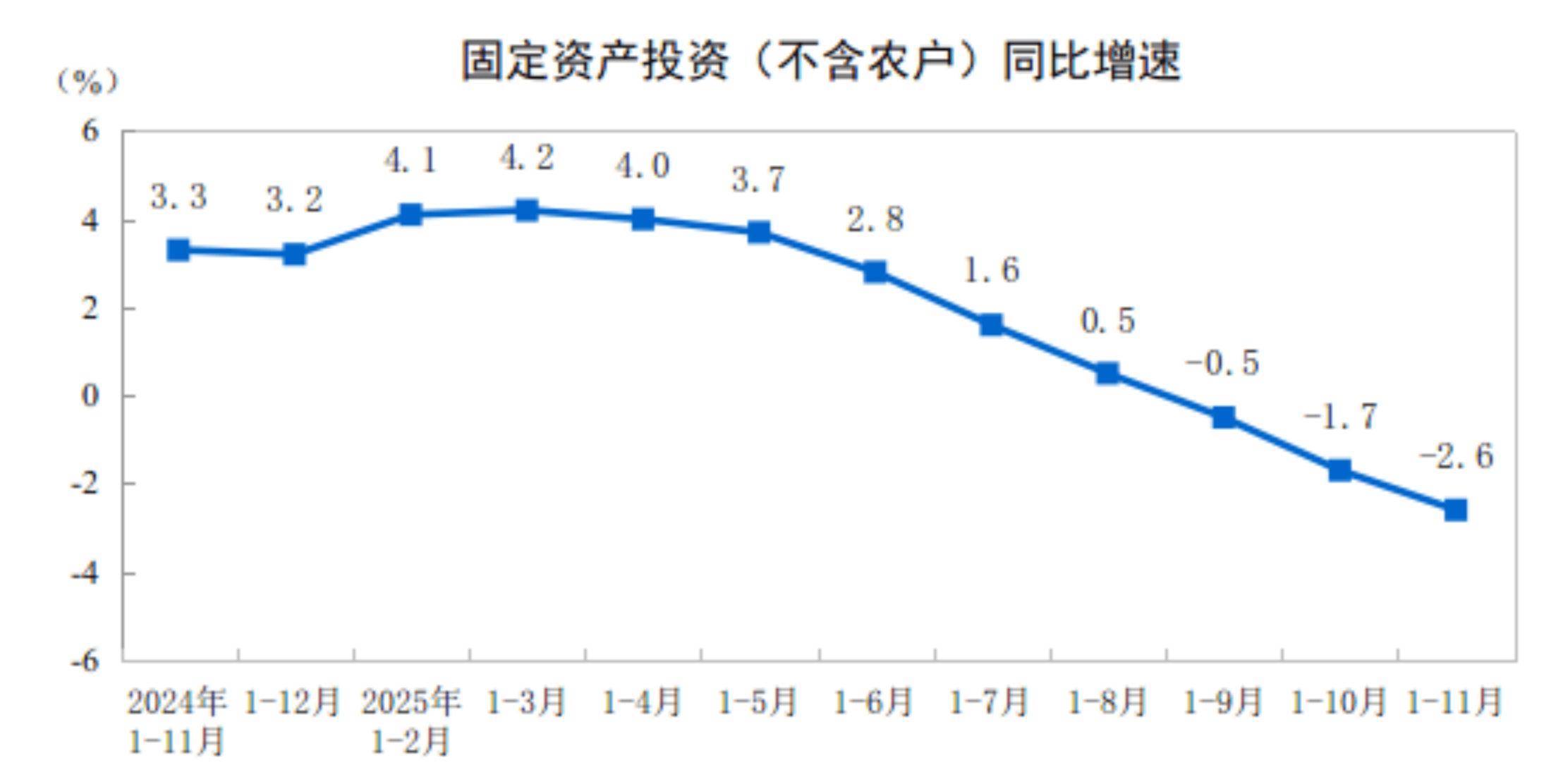
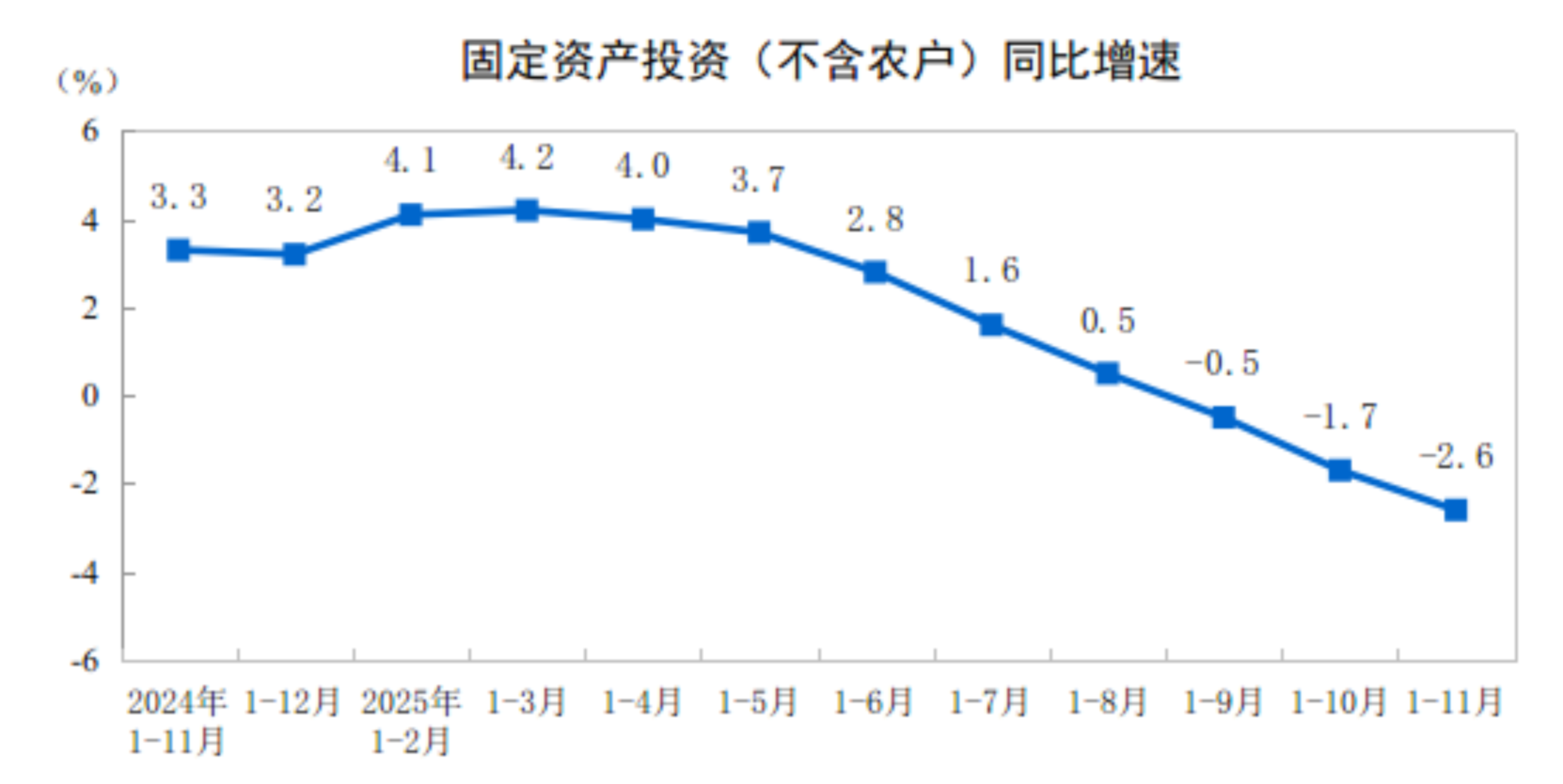
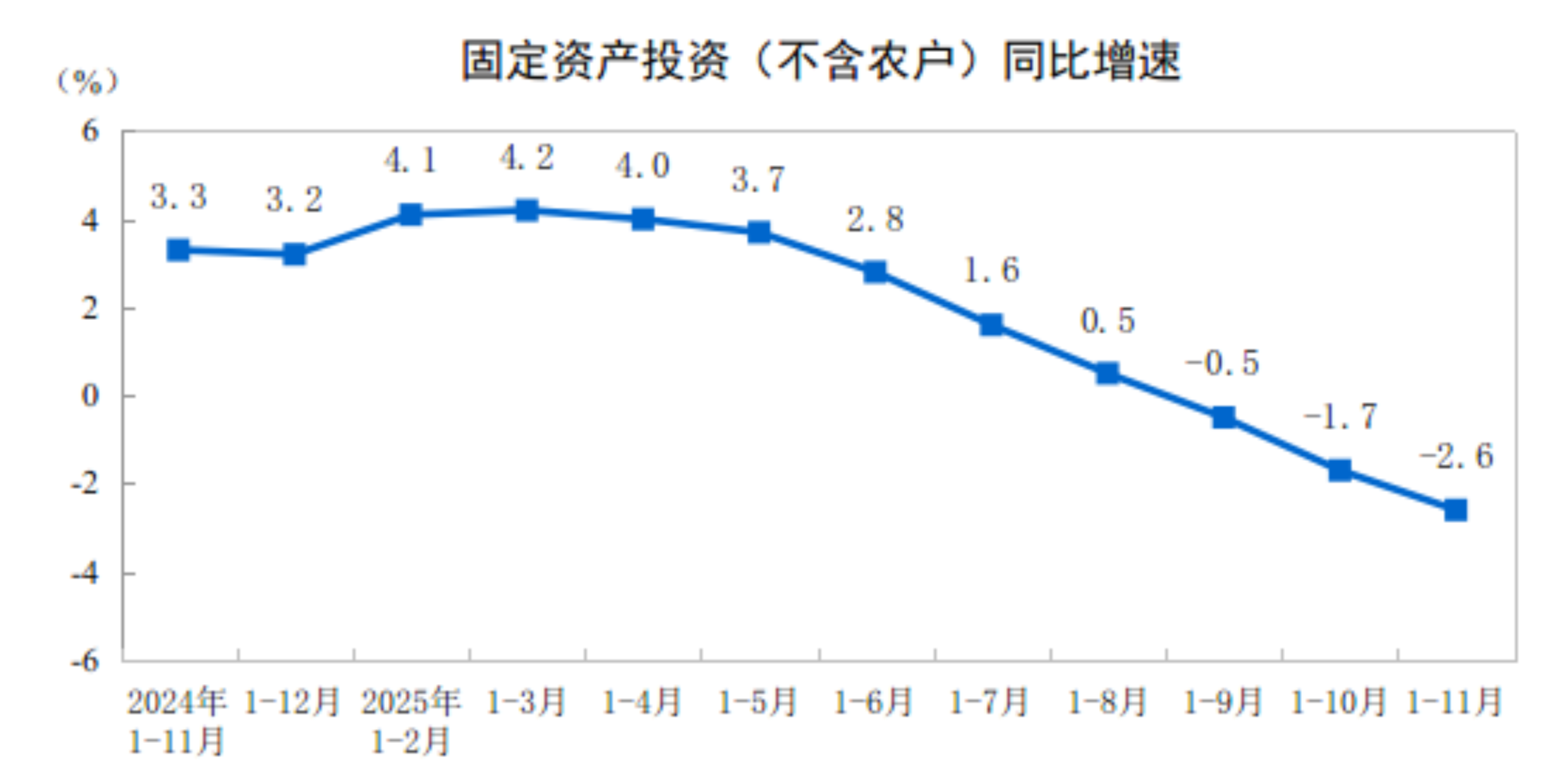
据国家统计局,2025年1—11月份,全国固定资产投资(不含农户)444035亿元,同比下降2.6%(按可比口径计算,详见附注7)。其中,民间固定资产投 资同比下降5.3%。从环比看,11月份固定资产投资(不含农户)下降1.03%。 第三产业中,基础设施投资(不含电力、热力、燃气及水生产和供应业)同比下降1.1%。其中,管道运输业投资增长16.8%,水上运输业投资增长8.9%,铁 路运输业投资增长2.7%。 分地区看,东部地区投资同比下降6.6%,中部地区投资下降1.7%,西部地区投资下降0.2%,东北地区投资下降14.0%。 分登记注册类型看,内资企业固定资产投资同比下降2.6%,港澳台企业固定资产投资下降2.2%,外商企业固定资产投资下降14.1%。 2025年1—11月份固定资产投资(不含农户)主要数据 指标 分产业看,第一产业投资8770亿元,同比增长2.7%;第二产业投资162243亿元,增长3.9%;第三产业投资273022亿元,下降6.3%。 第二产业中,工业投资同比增长4.0%。其中,采矿业投资增长4.0%,制造业投资增长1.9%,电力、热力、燃气及水生产和供应业投资增长10.7%。 同比增长 ...

国家统计局:1-11月电力、热力、燃气及水生产和供应业投资增长10.7%
Guo Jia Tong Ji Ju· 2025-12-15 02:16
Core Insights - National fixed asset investment (excluding rural households) reached 444,035 billion yuan from January to November 2025, showing a year-on-year decline of 2.6% [1][4] - Private fixed asset investment decreased by 5.3% year-on-year [1][5] - In November, fixed asset investment (excluding rural households) fell by 1.03% month-on-month [1] Investment by Industry - Primary industry investment totaled 8,770 billion yuan, with a year-on-year growth of 2.7% [3] - Secondary industry investment was 162,243 billion yuan, increasing by 3.9% [3] - Tertiary industry investment reached 273,022 billion yuan, declining by 6.3% [3] - Within the secondary industry, industrial investment grew by 4.0%, with mining and manufacturing investments increasing by 4.0% and 1.9% respectively [3][5] - The electricity, heat, gas, and water production and supply industry saw a significant investment growth of 10.7% [5] Investment by Region - Eastern region investment decreased by 6.6% year-on-year [3] - Central region investment fell by 1.7% [3] - Western region investment declined by 0.2% [3] - Northeastern region investment experienced a sharp drop of 14.0% [3] Investment by Registration Type - Domestic enterprises' fixed asset investment decreased by 2.6% year-on-year [3][5] - Investment from Hong Kong, Macau, and Taiwan enterprises fell by 2.2% [5] - Foreign enterprises' fixed asset investment saw a significant decline of 14.1% [3][5]
国家统计局:1—11月份全国固定资产投资444035亿元 同比下降2.6%
智通财经网· 2025-12-15 02:13
Core Insights - National fixed asset investment (excluding rural households) for January to November 2025 reached 444,035 billion yuan, representing a year-on-year decline of 2.6% [1][4] - Private fixed asset investment saw a year-on-year decrease of 5.3% [1][5] Investment by Sector - Primary industry investment totaled 8,770 billion yuan, with a year-on-year growth of 2.7% [3][5] - Secondary industry investment was 162,243 billion yuan, showing a growth of 3.9% [3][5] - Tertiary industry investment amounted to 273,022 billion yuan, reflecting a decline of 6.3% [3][5] - Within the secondary industry, industrial investment grew by 4.0%, with mining and manufacturing sectors increasing by 4.0% and 1.9% respectively [3][5] - The electricity, heat, gas, and water production and supply sector saw a significant investment increase of 10.7% [3][5] Infrastructure and Regional Investment - Infrastructure investment (excluding electricity, heat, gas, and water production and supply) in the tertiary sector decreased by 1.1% [3][5] - Investment in pipeline transportation grew by 16.8%, while water transportation and railway transportation investments increased by 8.9% and 2.7% respectively [3][5] - Investment in the eastern region declined by 6.6%, the central region by 1.7%, the western region by 0.2%, and the northeastern region by 14.0% [3][5] Investment by Registration Type - Domestic enterprises' fixed asset investment fell by 2.6%, while investment from Hong Kong, Macau, and Taiwan enterprises decreased by 2.2% [3][5] - Foreign enterprises experienced a significant decline in fixed asset investment, down by 14.1% [3][5]
国家统计局:1—11月全国固定资产投资444035亿元 同比下降2.6%
Guo Jia Tong Ji Ju· 2025-12-15 02:13
Core Insights - National fixed asset investment (excluding rural households) reached 444,035 billion yuan from January to November 2025, showing a year-on-year decline of 2.6% [1] - Private fixed asset investment decreased by 5.3% year-on-year [1] - In November, fixed asset investment (excluding rural households) fell by 1.03% month-on-month [1] Investment by Industry - Investment in the primary industry was 8,770 billion yuan, with a year-on-year growth of 2.7% [3] - Investment in the secondary industry totaled 162,243 billion yuan, increasing by 3.9% [3] - Investment in the tertiary industry was 273,022 billion yuan, experiencing a decline of 6.3% [3] Secondary Industry Breakdown - Industrial investment in the secondary industry grew by 4.0% year-on-year [4] - Mining investment increased by 4.0%, while manufacturing investment rose by 1.9% [4] - Investment in the electricity, heat, gas, and water production and supply industry surged by 10.7% [4] Tertiary Industry Insights - Infrastructure investment (excluding electricity, heat, gas, and water production and supply) in the tertiary industry decreased by 1.1% year-on-year [4] - Pipeline transportation investment grew by 16.8%, water transportation investment increased by 8.9%, and railway transportation investment rose by 2.7% [4] Regional Investment Trends - Eastern region investment declined by 6.6% year-on-year [4] - Central region investment fell by 1.7% [4] - Western region investment decreased by 0.2% [4] - Northeastern region investment saw a significant decline of 14.0% [4] Investment by Registration Type - Domestic enterprise fixed asset investment decreased by 2.6% year-on-year [4] - Investment from Hong Kong, Macau, and Taiwan enterprises fell by 2.2% [4] - Foreign enterprise fixed asset investment experienced a substantial decline of 14.1% [4]
国家统计局:1—11月份全国固定资产投资(不含农户)444035亿元,同比下降2.6%
Zheng Quan Shi Bao Wang· 2025-12-15 02:07
人民财讯12月15日电,据国家统计局,2025年1—11月份,全国固定资产投资(不含农户)444035亿元, 同比下降2.6%(按可比口径计算)。其中,民间固定资产投资同比下降5.3%。从环比看,11月份固定资产 投资(不含农户)下降1.03%。分产业看,第一产业投资8770亿元,同比增长2.7%;第二产业投资162243 亿元,增长3.9%;第三产业投资273022亿元,下降6.3%。 ...
国家统计局:中国1-11月固定资产投资同比下降2.6%
Guo Jia Tong Ji Ju· 2025-12-15 02:04
Core Insights - In the first eleven months of 2025, China's fixed asset investment (excluding rural households) reached 444,035 billion yuan, showing a year-on-year decline of 2.6% [1] - Private fixed asset investment decreased by 5.3% year-on-year [1] Investment by Industry - Investment in the primary industry was 8,770 billion yuan, with a year-on-year growth of 2.7% [3] - Investment in the secondary industry totaled 162,243 billion yuan, increasing by 3.9% [3] - Investment in the tertiary industry was 273,022 billion yuan, reflecting a decline of 6.3% [3] - Within the secondary industry, industrial investment grew by 4.0%, with mining and manufacturing both showing increases of 4.0% and 1.9% respectively [3] - The electricity, heat, gas, and water production and supply industry saw a significant investment growth of 10.7% [3] - In the tertiary industry, infrastructure investment (excluding electricity, heat, gas, and water production and supply) decreased by 1.1% [3] - Notable growth in specific sectors included pipeline transportation (16.8%), water transportation (8.9%), and railway transportation (2.7%) [3] Regional Investment Trends - Eastern region investment fell by 6.6% year-on-year [3] - Central region investment decreased by 1.7% [3] - Western region investment saw a minor decline of 0.2% [3] - Northeast region investment experienced a significant drop of 14.0% [3] Investment by Registration Type - Domestic enterprises' fixed asset investment declined by 2.6% year-on-year [3] - Investment from Hong Kong, Macau, and Taiwan enterprises decreased by 2.2% [3] - Foreign enterprises' fixed asset investment saw a substantial decline of 14.1% [3]
2025年1—11月份全国固定资产投资基本情况
Guo Jia Tong Ji Ju· 2025-12-15 02:00
Core Insights - The total fixed asset investment (excluding rural households) in China for January to November 2025 reached 444,035 billion yuan, representing a year-on-year decline of 2.6% [1][5]. Investment by Industry - Investment in the primary industry was 8,770 billion yuan, with a year-on-year growth of 2.7% [3][6]. - The secondary industry saw an investment of 162,243 billion yuan, growing by 3.9% year-on-year, with industrial investment specifically increasing by 4.0% [3][6]. - The tertiary industry experienced a decline in investment to 273,022 billion yuan, down 6.3% year-on-year [3][6]. Secondary Industry Breakdown - Within the secondary industry, mining investment grew by 4.0%, manufacturing investment increased by 1.9%, and investment in the electricity, heat, gas, and water production and supply sector surged by 10.7% [3][6]. Tertiary Industry Breakdown - Infrastructure investment (excluding electricity, heat, gas, and water production and supply) in the tertiary sector decreased by 1.1% year-on-year [3][6]. - Notable growth was observed in pipeline transportation (16.8%), water transportation (8.9%), and railway transportation (2.7%) [3][6]. Investment by Region - Eastern region investments fell by 6.6%, central region by 1.7%, western region by 0.2%, and northeastern region by 14.0% [3][6]. Investment by Registration Type - Domestic enterprises' fixed asset investment decreased by 2.6%, while investments from Hong Kong, Macau, and Taiwan enterprises fell by 2.2%, and foreign enterprises saw a significant decline of 14.1% [4][6]. Summary of Key Data - The overall fixed asset investment (excluding rural households) showed a decline of 2.6% year-on-year, with state-owned holding investments down by 1.1% and private investments down by 5.3% [5][6]. - Specific components such as construction and installation projects decreased by 6.4%, while equipment purchases increased by 12.2% [5][6].
中泰证券戴志锋:未来城市更新将更加注重功能完善和品质提升
Zheng Quan Shi Bao Wang· 2025-12-14 14:18
(原标题:中泰证券戴志锋:未来城市更新将更加注重功能完善和品质提升) 人民财讯12月14日电,12月14日,中泰证券研究所所长、金融研究大组组长戴志锋表示,今年的中央经 济工作会议将"坚持内需主导,建设强大国内市场"列为明年首要任务,充分体现了扩大内需在经济工作 全局中的重要地位。投资端"推动投资止跌回稳"的表述直指当前痛点。今年以来固定资产投资增速持续 放缓,特别是房地产投资和民间投资压力较大。"高质量推进城市更新"被单独提出,其深意在于:城市 更新不同于传统的大拆大建,更加注重功能完善和品质提升,投资周期长、带动效应强,能够成为对冲 房地产投资下行的重要抓手。 ...

韩文秀最新发声:严防“虚假化债”“数字化债”
Zhong Guo Jing Ji Wang· 2025-12-14 04:22
Core Viewpoint - The Chinese government aims to maintain stable economic growth, employment, and price stability in 2024, while promoting synchronized growth in residents' income and the economy [1] Group 1: Economic Policy - The government will implement a more proactive fiscal policy and maintain a moderately loose monetary policy to enhance macroeconomic governance effectiveness [2] - There will be a focus on the consistency and effectiveness of macro policies, integrating both existing and new policies to drive economic stability [2] - Incremental policies will be introduced based on changing circumstances, leveraging the combined effects of existing and new policies to promote economic improvement [2] Group 2: Consumer and Income Growth - The government plans to implement a consumption boost initiative and a rural resident income increase plan, while continuing to raise basic pensions for urban and rural residents [3] - There is an emphasis on adapting to changes in consumption structure by expanding the supply of quality goods and services, and optimizing the implementation of new policies [3] - The potential for inbound consumption growth will be explored, with efforts to enhance the inbound consumption environment and promote the "Buy in China" brand [3] Group 3: Investment and Infrastructure - The government will increase central budget investment and optimize the management of local government special bonds to support major projects under the 14th Five-Year Plan [4] - A sustainable investment and financing model will be established to promote high-quality urban renewal and stimulate private investment [4] Group 4: Risk Management - The government will focus on stabilizing the real estate market through targeted measures, encouraging the acquisition of existing housing for reasonable uses, and reforming the housing provident fund system [5] - Efforts will be made to address local government debt risks, ensuring proactive debt management and preventing the creation of hidden debts [5] - There will be a strong emphasis on resolving corporate accounts receivable issues to prevent the recurrence of payment delays [6] Group 5: Market Regulation - Progress has been made in building a unified national market, with plans to further advance this initiative and establish regulations for market access and fair competition [7] - The government will continue to regulate local government economic promotion behaviors and address issues related to overdue payments to businesses [7]
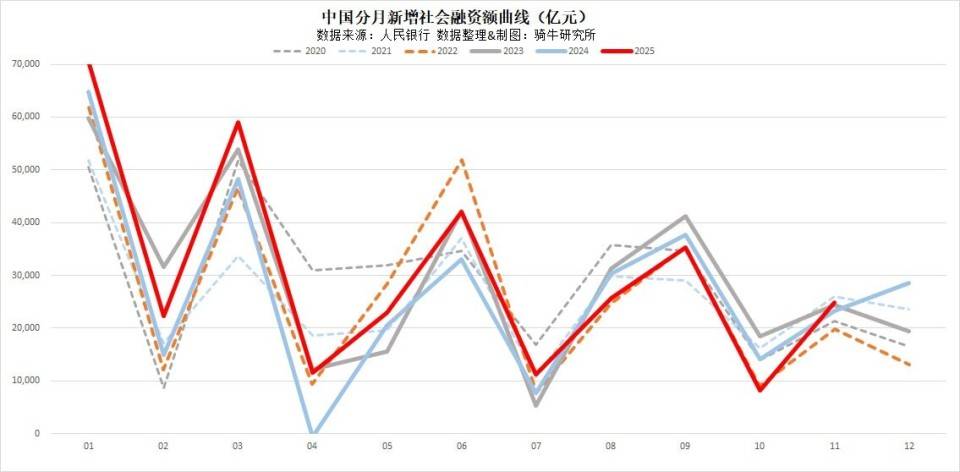
非标融资和政府债托底社融,实体信贷收缩,对消费与投资拖累大!
Sou Hu Cai Jing· 2025-12-13 20:11
Group 1 - In November 2025, new social financing increased by 6.9% year-on-year, primarily supported by non-standard financing and government bonds, while core credit demand from the real economy remained weak [2][4][8] - Non-standard financing became the main contributor, with trust loans and other non-standard assets increasing significantly, indicating a reliance on flexible funding channels to support infrastructure and local projects [4][6] - Government bonds played a leading role, with net issuance of 1.2 trillion yuan in November, but the growth rate declined due to a high base effect, highlighting the increasing share of government-related financing in total social financing [6][7] Group 2 - Resident loans continued to contract, reflecting weak real estate cycles and insufficient consumer spending, with a significant year-on-year decrease in new resident loans [9][11] - The real estate market showed signs of weakness, with high household savings rates and declining property prices, leading to a lack of purchasing intent among residents [12][13] - Consumer confidence dropped, exacerbated by external pressures such as high global inflation and domestic supply excess, indicating a need for policy shifts to stimulate consumption [13][14] Group 3 - Corporate funding needs increased year-on-year, but the debt structure revealed a lack of confidence in future investments, with a notable preference for short-term financing over long-term expansion [14][17] - New short-term loans surged, while medium- to long-term loans saw a decline, reflecting a cautious approach among businesses amid low demand and economic uncertainty [17][19] - Fixed asset investment showed a rare decline, indicating insufficient capital formation and the need for improved business environments and tax incentives to stimulate long-term demand [19][20] Group 4 - Fiscal policy is expected to shift focus from replacing local hidden debts to promoting fixed asset investment in 2026, aiming to support economic growth [20][22] - The central economic work conference emphasized maintaining active fiscal policies, with potential measures to boost investment in real estate and infrastructure [22][23] - However, challenges remain regarding investment efficiency amid existing overcapacity, and the potential for government debt to exceed credit could further dampen household and corporate demand [22][23]