多模态大模型

Search documents
高盛大幅上调阿里资本开支预期至4600亿元:推理需求爆炸性增长,AI效率提高驱动更强收入
Hua Er Jie Jian Wen· 2025-10-24 09:25
Core Insights - Goldman Sachs believes that explosive demand growth will continue to drive capital expenditures (Capex) for cloud service providers, with Chinese internet giants increasingly differentiating their AI strategies [1][2] - Alibaba is betting on the enterprise AI cloud market with its full-stack capabilities, while ByteDance is focusing on consumer applications [1] - Goldman Sachs raised its capital expenditure forecast for leading Chinese cloud providers, predicting Alibaba's total Capex for FY2026-2028 to reach 460 billion RMB, up from a previous target of 380 billion RMB [1] Group 1: Capital Expenditure and AI Demand - Goldman Sachs predicts that capital expenditures for Chinese cloud service providers will grow by 50% year-on-year by Q3 2025, driven by strong AI inference demand [2] - The report highlights that AI inference demand and token consumption are growing exponentially, with ByteDance's daily token consumption surpassing 30 trillion in September, doubling since April-May [2] Group 2: Strategic Differentiation of Giants - Alibaba is focusing on the enterprise AI market, leveraging its unique full-stack AI capabilities, and has launched the Quark AI chatbot to compete with ByteDance's Doubao and Tencent's Yuanbao [3] - ByteDance is emphasizing consumer-facing AI applications, with Doubao leading the To-C market and integrating e-commerce services within its chat platform [3] Group 3: Global Market and Commercialization - Chinese multimodal models are gaining traction in the global market, with Tencent's model ranking high in competitive benchmarks [4] - Alibaba's Qwen model is being utilized by global companies like Airbnb for customer service, indicating the recognition of Chinese open-source AI models [5] - The commercialization of To-C applications in China is evolving, with both Doubao and Alibaba's Quark integrating e-commerce functionalities [5] Group 4: Valuation and Market Outlook - Goldman Sachs asserts that there is currently no AI bubble, with expectations that the AI capital expenditure boom in the U.S. will continue until 2026 [5] - The projected P/E ratios for Tencent and Alibaba in 2026 are 21x and 23x, respectively, which are considered not excessive compared to global peers like Google and Amazon [5]

HumanSense:探索多模态推理边界,打造「察言观色会共情」的全模态交互伙伴
机器之心· 2025-10-22 06:32
Core Insights - The article discusses the development of HumanSense, a multimodal model aimed at enhancing AI's ability to understand and interact with humans empathetically, moving beyond mere task completion to emotional companionship [2][3][22]. Multimodal Model Development - HumanSense is designed to evaluate and improve AI's understanding of human interactions through a comprehensive benchmark that includes 15 progressively challenging tasks based on real-world data [4][12]. - The model incorporates visual, auditory, and textual inputs, demonstrating that audio significantly enhances performance in high-level tasks compared to visual-only models [10][14]. Evaluation and Performance - HumanSense Benchmark reveals that even top models like GPT-4o show a performance gap of nearly 30% compared to human-level understanding, indicating the need for further development in AI's empathetic responses [4][10]. - The average accuracy of human participants in the benchmark was 87.5%, while the best-performing model, Qwen2.5-Omni-7B, achieved 57.8% [9][10]. Cognitive Ladder Framework - The framework consists of four cognitive levels: perception (L1), understanding (L2), reasoning (L3), and feedback (L4), each assessing different aspects of interaction capabilities [12][18]. - The model's ability to process and respond appropriately in complex interactions is evaluated through these layers, emphasizing the importance of integrating multimodal inputs for deeper understanding [12][20]. Training Methodology - A multi-stage reinforcement learning approach is proposed, where the model learns to integrate visual and auditory cues progressively, enhancing its reasoning capabilities [21][20]. - The training phases focus on visual perception first, followed by auditory cues, culminating in a comprehensive understanding of multimodal contexts [21][20]. Future Applications - The advancements in HumanSense aim to transform AI from a mere tool into a companion capable of emotional support and nuanced interactions, potentially revolutionizing user experiences in various applications [23][25]. - Ongoing projects like Ditto-talkinghead and VersaAnimator are being developed to enable real-time, emotionally expressive interactions, further bridging the gap between AI and human-like companionship [25][27][29].


我们正在寻找自动驾驶领域的合伙人...
自动驾驶之心· 2025-10-22 00:03
Group 1 - The article announces the recruitment of 10 outstanding partners for the autonomous driving sector, focusing on course development, paper guidance, and hardware research [2] - The main areas of expertise sought include large models, multimodal models, diffusion models, end-to-end systems, embodied interaction, joint prediction, SLAM, 3D object detection, world models, closed-loop simulation, and model deployment and quantization [3] - Candidates are preferred from QS200 universities with a master's degree or higher, especially those with significant contributions to top conferences [4] Group 2 - The compensation package includes resource sharing for job seeking, doctoral recommendations, and study abroad opportunities, along with substantial cash incentives and collaboration on entrepreneurial projects [5] - Interested parties are encouraged to add WeChat for consultation, specifying "organization/company + autonomous driving cooperation inquiry" [6]
合合信息推出多模态文本智能技术落地方案,助力AI实现智能推理
2 1 Shi Ji Jing Ji Bao Dao· 2025-10-21 08:29
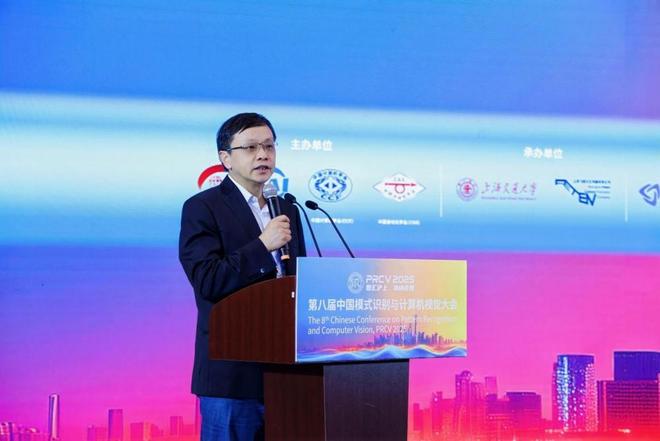
Core Insights - The development of multimodal large models is becoming a significant direction in AI, with a recent forum focusing on "Multimodal Text Intelligence Models" attracting considerable attention from experts and scholars [1][4]. Group 1: Multimodal AI Development - Multimodal AI integrates various forms of information, including text, images, audio, and video, to enhance understanding and communication [4]. - The 2025 Gartner AI maturity curve indicates that multimodal AI will become a core technology for enhancing applications and software products across industries in the next five years [4]. Group 2: Technical Innovations - The "Multimodal Thinking Chain" technology presented by Harbin Institute of Technology breaks down reasoning logic into interpretable cross-modal steps, leading to more accurate conclusions [4]. - A systematic OCR illusion mitigation solution was introduced to improve the visual text perception capabilities of multimodal large models [4]. Group 3: Practical Applications - The "Multimodal Text Intelligence Technology" solution by Hehe Information aims to provide a comprehensive understanding of multimodal information, addressing the challenges of semantic disconnection and layout relationships in complex scenarios [15]. - This technology extends the processing of text from traditional documents to various media, including reports, financial statements, and videos, enhancing AI's ability to understand and interpret complex information [14][15]. Group 4: Industry Impact - The demand for AI systems is shifting from mere functionality to business empowerment, with the "Multimodal Text Intelligence Technology" solution designed to evolve AI from a supportive tool to a decision-making business partner [15]. - Applications of this technology have been initiated in sectors such as finance, healthcare, and education, focusing on intelligent reconstruction of business processes through precise perception and reliable decision-making [15].
RewardMap: 通过多阶段强化学习解决细粒度视觉推理的Sparse Reward
机器之心· 2025-10-21 03:43
Core Insights - The article discusses the development of RewardMap, a multi-stage reinforcement learning framework designed to enhance the fine-grained visual reasoning capabilities of multi-modal large language models (MLLMs) in complex scenarios like high-resolution subway maps [3][9][17]. Group 1: Problem Identification - Recent advancements in large language models (LLMs) and multi-modal large models (MLLMs) have raised questions about their ability to interpret complex visual information, particularly in high-resolution and densely structured environments [3]. - The initial work, ReasonMap, revealed that even state-of-the-art MLLMs frequently make errors in path planning, such as misreading lines, missing stations, and repeating routes [3][12]. Group 2: Proposed Solution - The team introduced RewardMap, which employs a multi-stage reinforcement learning framework that incorporates fine-grained rewards and a curriculum-based training approach to improve MLLMs' visual understanding and spatial reasoning [3][10]. - RewardMap breaks down complex route planning tasks into smaller, assessable sub-goals, allowing for a more nuanced feedback mechanism rather than a binary correct/incorrect signal [10][11]. Group 3: Implementation Details - RewardMap is built on the foundation of ReasonMap and includes a dataset covering 30 cities with 4,018 problem samples, categorized into five types to provide detailed supervision during the reinforcement learning phase [6][12]. - The framework's reward function consists of three components: format compliance, final correctness, and detail, with difficulty weights applied to reflect the true complexity of the tasks [11][12]. Group 4: Performance Results - RewardMap demonstrated consistent performance improvements across various benchmarks, achieving a maximum increase of 13.51% in the SpatialEval metric compared to traditional methods [13][14]. - Qualitative comparisons showed that models trained with RewardMap exhibited fewer visual confusions and hallucinations, providing more accurate route information [14][15]. Group 5: Future Outlook - The value of RewardMap extends beyond performance metrics, offering a reusable reinforcement learning paradigm for high-resolution visual tasks by systematically breaking down complex problems into measurable sub-goals [17]. - The framework's effectiveness in enhancing the general capabilities of multi-modal large models has been validated, indicating that real-world data like maps will play a significant role in future developments [18].

“百度不做”,仅仅一年,李彦宏反悔了
Sou Hu Cai Jing· 2025-10-20 08:59
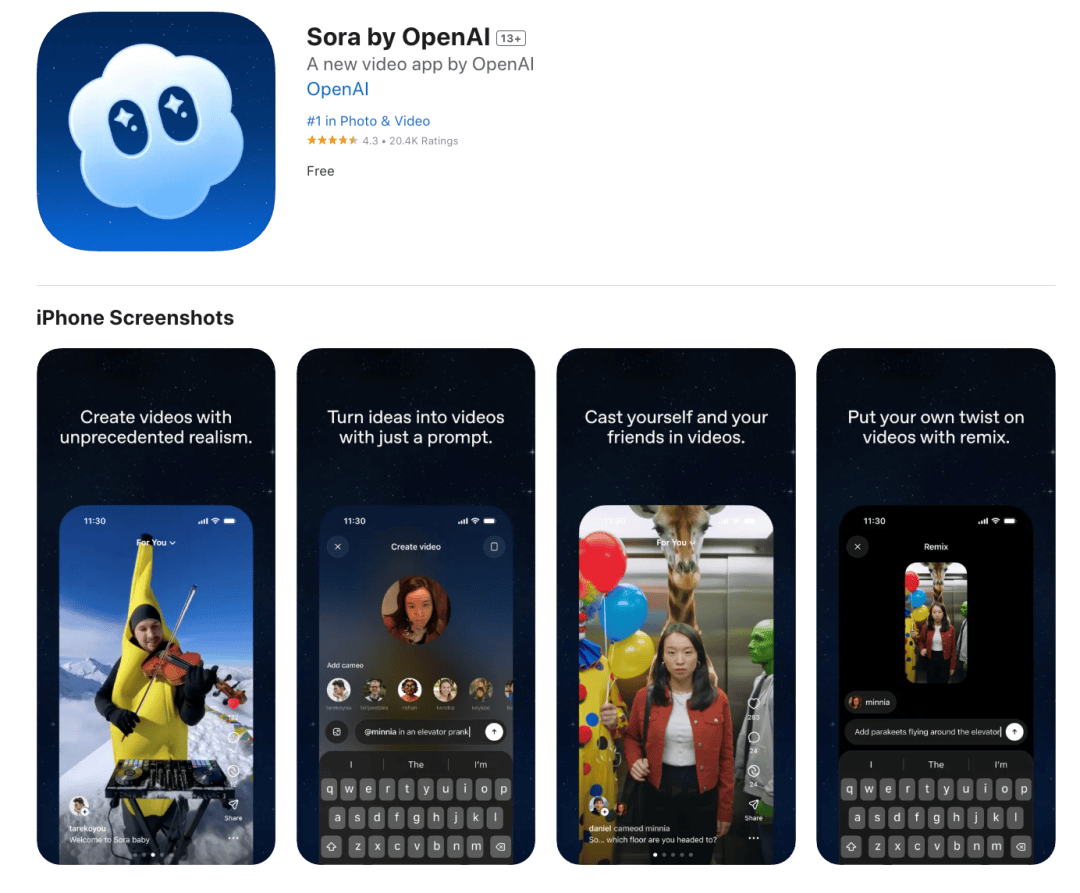
Core Viewpoint - The rapid evolution of AI video applications, particularly following the release of OpenAI's Sora 2, has prompted major Chinese tech companies, including Baidu, to pivot towards developing their own AI video models despite initial hesitations [1][4][24] Group 1: Industry Dynamics - The launch of Sora 2 has ignited competition among major players in the AI video space, with companies like Baidu and Google quickly promoting their own models [2][3] - Prior to Sora's release, Chinese tech giants were focused on catching up with GPT-4 rather than developing their own video generation models, reflecting a broader industry anxiety about capabilities [10][12] - The competitive landscape has shifted significantly, with over 20 video AI models now available in the Chinese market, indicating a rapid increase in development and deployment [12] Group 2: Technological Advancements - Sora distinguishes itself by achieving a level of realism in video generation that adheres to physical rules, setting a new standard for detail and authenticity in AI-generated content [5][9] - The evolution of video AI models is characterized by improvements in video quality and user editing capabilities, enhancing the overall user experience [15][16] - The integration of real-time audio generation in AI video tools addresses previous limitations, allowing for more dynamic and engaging content creation [16] Group 3: Market Opportunities - The potential for monetization in AI video applications is becoming clearer, with Sora 2 showcasing capabilities that could attract a large user base and create new revenue streams [18][22] - The user-friendly design of Sora 2 encourages widespread adoption, with features that allow for easy video creation and personalization, positioning it as a competitive platform in the market [22][24] - The success of platforms like TikTok suggests that the AI video market may consolidate around a few dominant players, intensifying competition as companies strive to establish themselves as leaders [24]


让模型“看视频写网页”,GPT-5仅得36.35分!上海AI Lab联合发布首个video2code基准
量子位· 2025-10-19 04:10
Core Insights - The article discusses the introduction of IWR-Bench, a new benchmark for evaluating the interactive webpage reconstruction capabilities of large vision-language models (LVLMs) by assessing their ability to generate code from user interaction videos rather than static screenshots [1][2]. Group 1: IWR-Bench Overview - IWR-Bench shifts the focus from static image-to-code tasks to dynamic video-to-code tasks, requiring models to interpret user interaction videos along with all necessary static resources [2][5]. - The benchmark includes 113 real-world website tasks and 1001 interaction actions, providing a comprehensive evaluation of models' capabilities in generating interactive web code [5][12]. - The evaluation framework employs an automated agent to simulate user interactions, assessing both functional correctness (Interactive Functionality Score, IFS) and visual fidelity (Visual Fidelity Score, VFS) [10][11]. Group 2: Model Performance - In testing 28 mainstream models, the best-performing model, GPT-5, achieved a total score of 36.35%, with an IFS of 24.39% and a VFS of 64.25%, indicating significant shortcomings in generating interactive logic [5][14][16]. - The results reveal that all models exhibit higher visual fidelity compared to functional correctness, highlighting a critical gap in their ability to generate event-driven logic [16]. - Specialized video understanding models performed poorly compared to general multimodal models, suggesting that the task's nature differs significantly from traditional video understanding tasks [20]. Group 3: Key Findings - The primary bottleneck identified is the functionality implementation, where models struggle to generate operational logic despite achieving high visual fidelity [16]. - The "thinking" versions of models showed some improvement, but the overall enhancement was limited, indicating that the foundational model capabilities remain crucial [17][19]. - IWR-Bench represents a significant step in advancing AI from understanding static webpages to comprehending dynamic interactions, emphasizing the ongoing challenges in this domain [20].
对话智元机器人合伙人王闯:我们的出货量比马斯克还多!人形机器人会比汽车产业还大!
新浪财经· 2025-10-18 13:31
Core Viewpoint - The future of robotics will feature a coexistence of wheeled and bipedal robots, with significant advancements in technology leading to rapid commercialization and diverse applications in various sectors [6][18]. Group 1: Industry Development - The robotics industry is evolving faster than expected, with humanoid robots transitioning from static displays to dynamic performances within a year, overcoming technical challenges previously thought to take 3-5 years [5]. - The company has identified eight practical scenarios for robot deployment, focusing on areas with urgent market demand and achievable technology, such as box transportation and entertainment [5][20]. - AI, particularly embodied intelligence, is revolutionizing robot development, significantly reducing the time and resources needed for training robots to perform tasks like walking and dancing [8]. Group 2: Market Dynamics - The humanoid robot industry is expected to be larger than the automotive industry, with no single company likely to dominate due to diverse regional demands and applications [17]. - The company claims to have the largest humanoid robot shipment volume globally, surpassing competitors like Tesla, with projections for substantial growth in revenue and production in the coming years [18][20]. Group 3: Technological Challenges - The mass production of humanoid robots is more complex than consumer electronics due to the immature supply chain and the high number of variables involved in robot design and functionality [11]. - Ensuring consistency and reliability in robot performance is a significant challenge, requiring extensive calibration and quality control [11]. Group 4: Future Applications - The company is focusing on developing affordable robots for various demographics, including the elderly, to ensure broad access to technological benefits [9]. - The timeline for achieving advanced functionalities in elder care robots is projected to evolve over the next few years, with initial applications focusing on companionship and entertainment [27].
我们正在寻找自动驾驶领域的合伙人...
自动驾驶之心· 2025-10-17 16:04
Group 1 - The article announces the recruitment of 10 outstanding partners for the autonomous driving sector, focusing on course development, paper guidance, and hardware research [2] - The main areas of expertise sought include large models, multimodal models, diffusion models, end-to-end systems, embodied interaction, joint prediction, SLAM, 3D object detection, world models, closed-loop simulation, and model deployment and quantization [3] - Candidates are preferred to have a master's degree or higher from universities ranked within the QS200, with priority given to those who have published in top conferences [4] Group 2 - The compensation package includes shared resources in autonomous driving (job placement, PhD recommendations, study abroad opportunities), substantial cash incentives, and collaboration on entrepreneurial projects [5] - Interested parties are encouraged to contact via WeChat for consultation regarding institutional or company collaboration in autonomous driving [6]
视觉中国:拟战略投资凌川科技,投资额度不超1亿元
Xin Lang Cai Jing· 2025-10-17 04:09
Core Viewpoint - Visual China has signed an investment framework agreement with Lingchuan Technology, focusing on deep cooperation in AI visual chips, multimodal large model training and inference, and intelligent computing solutions [1] Group 1: Investment Details - Visual China plans to invest up to 100 million RMB in newly issued shares of Lingchuan Technology [1] - Lingchuan Technology commits to allowing Visual China the right to preferentially subscribe to any future increase in registered capital based on its shareholding ratio after the investment [1]