空间计算

Search documents
罗曼股份跌6.80%,成交额3.94亿元,近3日主力净流入-1.36亿
Xin Lang Cai Jing· 2025-09-04 08:00
Core Viewpoint - Roman Technology Co., Ltd. is experiencing a decline in stock price and trading volume, indicating potential investor concerns and market volatility [1][4]. Company Overview - Roman Technology Co., Ltd. was established on March 4, 1999, and went public on April 26, 2021. The company is located in Yangpu District, Shanghai, and specializes in landscape lighting planning, design, construction, and remote management services [7]. - The company's revenue composition includes 39.31% from digital entertainment, 38.10% from urban lighting, and 22.33% from intelligent energy [7]. Recent Developments - On June 8, 2023, the company announced it obtained exclusive domestic licensing rights for 22 proprietary technologies from UK-based Holovis, including spatial computing technology [2]. - The company has established a wholly-owned subsidiary, Shanghai Quanze New Energy Technology Co., Ltd., focusing on new energy technology and electric vehicle charging infrastructure since July 2020 [2]. Financial Performance - For the first half of 2025, Roman Technology reported revenue of 432 million yuan, a year-on-year increase of 72.92%, and a net profit attributable to shareholders of 13.23 million yuan, up 158.02% [8]. - The company has distributed a total of 79.45 million yuan in dividends since its A-share listing, with 27.44 million yuan in the last three years [9]. Market Activity - On September 4, 2023, the stock price of Roman Technology fell by 6.80%, with a trading volume of 394 million yuan and a turnover rate of 7.49%, leading to a total market capitalization of 5.232 billion yuan [1]. - The stock has seen a net outflow of 38.50 million yuan from major investors today, with a continuous reduction in holdings over the past three days [4][5]. Technical Analysis - The average trading cost of the stock is 44.09 yuan, with recent accumulation activity noted, although the strength of this accumulation is weak. The stock is approaching a support level of 46.50 yuan, which, if breached, could lead to further declines [6].

云鼎科技跌2.07%,成交额1.13亿元,主力资金净流出1620.80万元
Xin Lang Cai Jing· 2025-09-03 06:00
Group 1 - The core viewpoint of the news is that Yunding Technology's stock has experienced fluctuations, with a year-to-date increase of 32.88% but a recent decline in the last five trading days by 7.21% [1] - As of September 3, Yunding Technology's stock price is 11.84 yuan per share, with a total market capitalization of 8.027 billion yuan [1] - The company has seen a net outflow of main funds amounting to 16.208 million yuan, with significant selling pressure from large orders [1] Group 2 - Yunding Technology operates in the IT services sector, specifically under the subcategory of IT services III, and is involved in various concept sectors including small-cap, military-civil integration, and space computing [2] - For the first half of 2025, Yunding Technology reported a revenue of 639 million yuan, reflecting a year-on-year growth of 0.30%, while the net profit attributable to shareholders decreased by 42.36% to 41.889 million yuan [2] - The number of shareholders decreased by 15.31% to 95,400, while the average circulating shares per person increased by 18.07% to 4,438 shares [2] Group 3 - Since its A-share listing, Yunding Technology has distributed a total of 32.807 million yuan in dividends, with no dividends paid in the last three years [3] - As of June 30, 2025, Hong Kong Central Clearing Limited has exited the list of the top ten circulating shareholders [3]

【机构调研记录】泰康基金调研蒙娜丽莎、山外山等3只个股(附名单)
Zheng Quan Zhi Xing· 2025-09-03 00:06
Group 1: Mona Lisa (002918) - The company's revenue from distribution channels decreased by 10% year-on-year in the first half of 2025, while the engineering channel saw a decline of 42.68% [1] - The distribution channel accounted for 82.98% of revenue in Q2, with ongoing declines in engineering [1] - The company is facing intense industry competition with no positive price changes, and is focusing on cost reduction and efficiency improvements [1] - The strategic customer business proportion has dropped to 17%, with 83% of demand coming from non-real estate sectors [1] - The company maintains a "large tiles, large building materials, large home" strategy, with low financial investment proportion [1] Group 2: Mountain Outside Mountain - The domestic market for blood purification equipment generated revenue of 152 million yuan, a year-on-year increase of 14.60% [2] - Blood purification consumables revenue reached 85.34 million yuan, up 46.17%, with self-produced consumables growing by 91.90% [2] - R&D investment increased by 37.12% to 36.51 million yuan, while sales expenses rose by 26.64% to 62.80 million yuan [2] - The overseas market revenue was 86.82 million yuan, reflecting a growth of 41.30%, with significant increases in North America and Africa [2] - The company is a drafting unit for national standards and is enhancing its international competitiveness through core technology [2] Group 3: Leyard (300296) - The smart display segment experienced a 20% quarter-on-quarter growth, driven by high demand in overseas markets, particularly North America [3] - Business growth is supported by demand from cinemas, virtual shooting, and large events [3] - The company is optimizing production capacity across its factories in Slovakia, Shenzhen, and Wuxi to mitigate tariff impacts [3] - The AR glasses are expected to launch in October, targeting B-end customers [3] - The AI and spatial computing segments saw a year-on-year decline due to price reductions and increased R&D investment [3]



华勤技术(603296):多元业务协同发力 业绩高速增长
Xin Lang Cai Jing· 2025-08-28 10:26
Core Viewpoint - The company reported significant revenue and profit growth in the first half of 2025, driven by diversified product lines and strong market demand [1][2][4]. Group 1: Financial Performance - In the first half of 2025, the company achieved operating revenue of 839.39 billion, a year-on-year increase of 113.06% [1] - The net profit attributable to shareholders reached 18.89 billion, up 46.30% year-on-year, while the net profit excluding non-recurring items was 15.09 billion, reflecting a 47.95% increase [1] - For Q2 2025, the company reported operating revenue of 489.42 billion, a year-on-year growth of 111.24% and a quarter-on-quarter increase of 39.84% [1] Group 2: Business Segments - The smart terminal business generated revenue of 268.02 billion, growing 116.44% year-on-year, with a strong performance in smart wearable products [2] - The high-performance computing segment achieved revenue of 506.29 billion, marking a 128.22% increase year-on-year, supported by a comprehensive product lineup in personal computers [4] - The AIoT business reported revenue of 33.15 billion, up 79.89% year-on-year, with successful product launches in smart home and XR categories [5] - The automotive electronics segment generated revenue of 10.40 billion, reflecting a 62.49% increase year-on-year, with breakthroughs in smart cockpit and display technologies [5] Group 3: Market Position and Strategy - The company benefits from a strong customer base and technological advantages, positioning it to capture more market share [3] - The integration of hardware and software capabilities enhances the company's competitive edge in the AI PC ecosystem [4]

空间计算概念上涨1.78%,11股主力资金净流入超千万元
Zheng Quan Shi Bao Wang· 2025-08-26 09:34
Core Viewpoint - The space computing concept sector experienced a 1.78% increase, ranking 8th among concept sectors, with 45 stocks rising and notable gains from Junyi Digital, Aerospace Hongtu, Tianrun Technology, and Zhili Fang [1][5]. Group 1: Sector Performance - The space computing concept sector saw a net outflow of 9.81 billion yuan in capital, with 20 stocks receiving net inflows, and 11 stocks attracting over 10 million yuan in net inflows [1]. - Junyi Digital led the net inflow with 1.37 billion yuan, followed by Zhili Fang, Meiri Interactive, and Tianyi Ma with net inflows of 389.86 million yuan, 279.92 million yuan, and 273.40 million yuan respectively [1][2]. Group 2: Top Gainers and Losers - The top gainers in the space computing sector included Junyi Digital with a 20% increase, Aerospace Hongtu at 14.45%, Tianrun Technology at 13.75%, and Zhili Fang at 12.42% [1][5]. - The stocks with the largest declines were Shikong Technology, Guoyuan Technology, and Aobi Zhongguang, which fell by 4.89%, 4.13%, and 3.38% respectively [1][5]. Group 3: Capital Inflow Ratios - The leading stocks in terms of capital inflow ratios were Junyi Digital at 23.25%, Zhongheng Design at 9.21%, and Tianyi Ma at 8.25% [2].

MR:下一个屏幕交互超级单品
雷峰网· 2025-08-25 07:20
Core Viewpoint - The article emphasizes that Mixed Reality (MR) is poised to become the next major interactive screen product, bridging the physical and digital worlds, and addressing user demands for larger, more immersive experiences [2][6][28]. Group 1: MR as the Next Interactive Product - Over the past 30 years, there have been three significant iterations in screen media, each enhancing "interaction efficiency" and "scene coverage," leading to over 10 times the information density [2]. - Current mobile devices are limited by their physical size, making them inadequate for three-dimensional interactions, thus creating a demand for MR technology [3][4]. - MR is seen as a revolutionary advancement that integrates the digital and physical worlds, moving from "isolation" to "fusion" in user interaction [6][7]. Group 2: Market Potential and Growth - The global MR market is projected to reach $72.4 billion in 2024 and exceed $290.8 billion by 2028, with a compound annual growth rate (CAGR) of over 40% [7]. - In 2024, the expected global shipment of VR/MR devices is 9.6 million units, with projections of 55 million units by 2030, surpassing one-third of current smartphone shipments [8]. - The active user base for MR in China is anticipated to grow from 32 million in 2024 to a 21.9% increase in 2025, with consumer users rising from 35% to 58% [8]. Group 3: Strategic Vision for Future Robotics - Vivo's strategy focuses on addressing high-frequency user needs, particularly in the context of an aging population and the demand for household service robots [12][28]. - MR technology is viewed as a critical stepping stone for developing household robots, enabling them to understand environments, interact naturally, and handle complex tasks [16][20]. - Vivo aims to gradually transition from MR technology to household robots, ensuring that each technological challenge addressed in MR contributes to the capabilities required for future robots [25][28]. Group 4: Building MR Capabilities - Vivo's core competencies in imaging technology, AI models, and engineering capabilities provide a strong foundation for developing MR technology [30][33]. - The company plans to leverage its existing strengths to create a lightweight MR device, addressing user comfort and usability challenges [44][46]. - Vivo's approach includes a focus on user needs, ensuring that MR applications are practical and engaging, thus moving beyond the perception of MR as merely a "geek toy" [35][42]. Group 5: Ecosystem Development - Vivo recognizes the importance of an ecosystem for the success of MR, supporting a wide range of Android applications and fostering a developer community [47][50]. - The company aims to create a feedback loop between devices, content, and users, enhancing the overall MR experience [50]. - Vivo's strategy includes collaborating with industry partners to reduce costs and enhance the capabilities of MR and robotics [50]. Group 6: Long-term Vision - Vivo is committed to a long-term strategy that integrates MR into a broader ecosystem of smart devices, including smartphones and robots, to redefine user interaction with technology [54][56]. - The company aims to evolve from tools to autonomous service entities, laying the groundwork for a future where digital and physical interactions are seamless [53][58].

前金立核心创始成员创立,智能眼镜品牌获数千万元融资,已拿下软银、传音等头部厂商订单|早起看早期
36氪· 2025-08-23 01:20
Core Viewpoint - The article highlights the rapid growth and potential of the AI and AR glasses market, emphasizing the strategic positioning of Shenzhen Montong Intelligent Technology Co., Ltd. in this evolving landscape, with a projected revenue increase of 300% in the first half of 2025 compared to the entire year of 2024 [4][14]. Company Overview - Shenzhen Montong Intelligent was established in 2022, focusing on the independent research and development of AI+AR glasses and the construction of a spatial AI operating system [5]. - The founder, Zhang Maolei, has a strong background in consumer electronics, having been a core member of the Gionee mobile team, which aids in the rapid transformation of cutting-edge technology into marketable products [5]. - The team comprises members from leading companies such as Gionee, OPPO, VIVO, Alibaba, and others, providing a robust foundation in hardware, software, and AI algorithms [5]. Market Dynamics - The global technology industry is undergoing a transformation driven by AI large models, with the AR/AI glasses market expected to experience explosive growth, potentially exceeding 100 million units shipped by 2028 [6]. - The integration of AI and AR technologies is creating new human-computer interaction methods, shifting from traditional 2D screens to 3D spatial interactions [6]. - Despite the presence of major players like Meta and Xiaomi, the current market is still in its infancy, primarily attracting early adopters rather than mainstream consumers [6][7]. Product Development and Strategy - Montong Intelligent is adopting a "produce one generation, research one generation, and pre-research one generation" strategy to accelerate product development and market entry [10]. - The company has launched the world's first third-generation AR glasses with the largest field of view, integrating high-performance display systems into a lightweight form factor [12]. - Upcoming products include a cost-effective AI glasses solution and a new AIR glasses model featuring anti-glare technology, aimed at enhancing usability in various environments [12][14]. Future Outlook - The period from 2025 to 2028 is seen as critical for defining the next generation of AI interfaces, paralleling the smartphone industry's evolution from 2007 to 2010 [10]. - Montong Intelligent is in discussions with major global companies for partnerships and aims to achieve large-scale production and delivery by 2026 [14]. - The future competition in the market will focus on ecosystem development, with Montong planning to build a comprehensive spatial AI interaction platform [14].

国脉文化上半年营收8.76亿元同比降9.80%,归母净利润1392.27万元同比增18.89%,销售费用同比增长35.50%
Xin Lang Cai Jing· 2025-08-22 11:22
Core Insights - In the first half of 2025, the company reported a revenue of 876 million yuan, a year-on-year decrease of 9.80% [1] - The net profit attributable to shareholders was 13.92 million yuan, an increase of 18.89% year-on-year [1] - The company’s basic earnings per share were 0.02 yuan, with a weighted average return on equity of 0.35% [1] Financial Performance - The gross profit margin for the first half of 2025 was 16.27%, up 0.82 percentage points year-on-year [1] - The net profit margin was 1.57%, an increase of 0.22 percentage points compared to the same period last year [1] - In Q2 2025, the gross profit margin was 16.98%, up 1.97 percentage points year-on-year and 1.36 percentage points quarter-on-quarter [1] Expense Analysis - Total operating expenses for the first half of 2025 were 109 million yuan, a decrease of 13.41 million yuan year-on-year [2] - The expense ratio was 12.50%, down 0.16 percentage points from the previous year [2] - Sales expenses increased by 35.50%, while management and R&D expenses decreased by 15.21% and 13.44%, respectively [2] Shareholder Information - As of the end of the first half of 2025, the total number of shareholders was 28,300, a decrease of 646 from the previous quarter [2] - The average market value per shareholder increased by 3.83%, from 328,600 yuan to 341,200 yuan [2] Business Overview - The company is primarily engaged in business travel booking, hotel operation and management, and points operation services [2] - The revenue composition includes digital content (27.33%), hotel operations (24.41%), rights operation and new consumption (22.64%), smart applications (18.55%), and other services (0.45%) [2] - The company is classified under the media industry, specifically in advertising and marketing [2]

不抢风口,vivo为何押注MR?
Hu Xiu· 2025-08-22 10:33
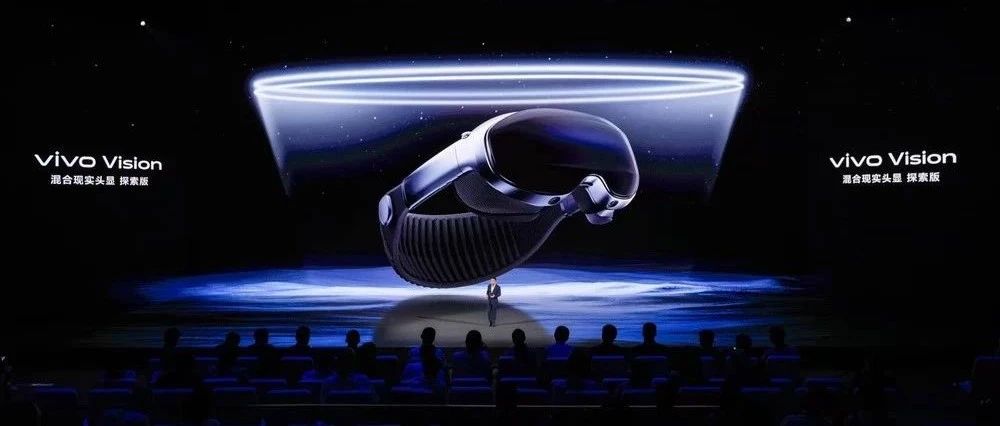
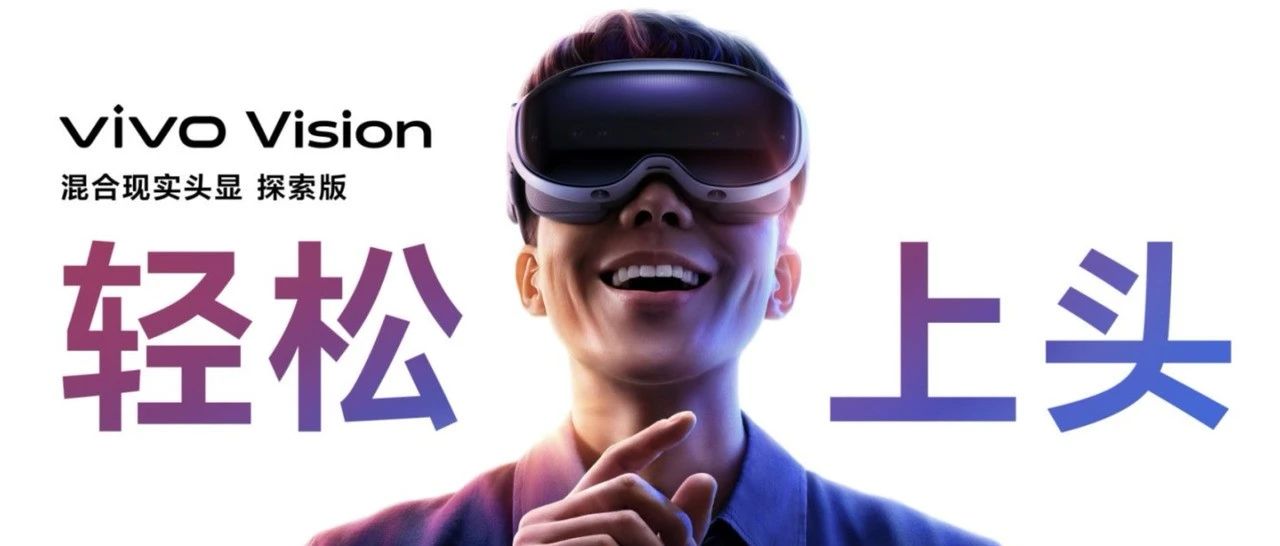
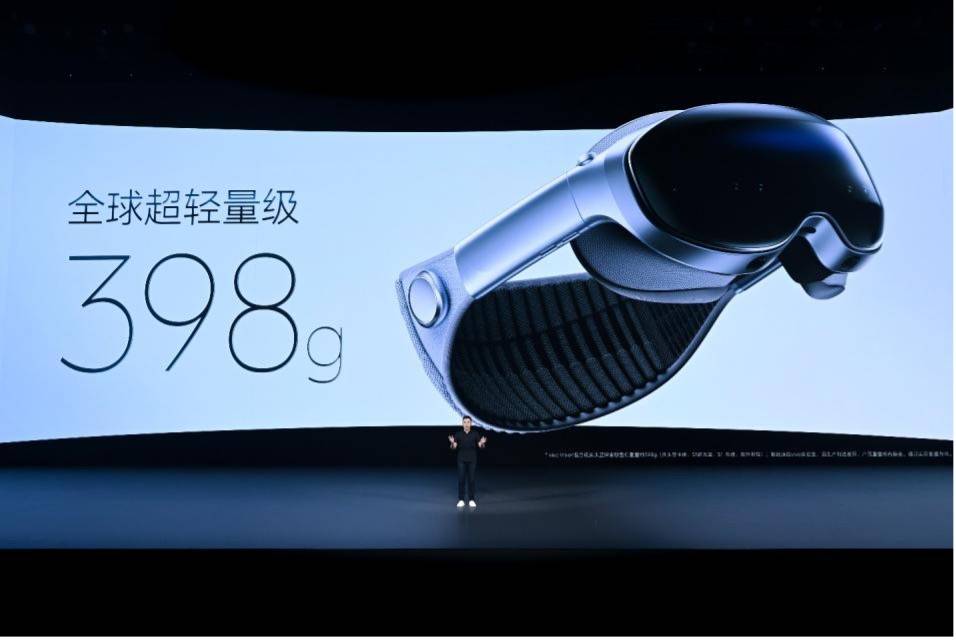
Core Insights - The technology industry is shifting focus towards large models and humanoid robots, with AI glasses and toys becoming new hotspots for investors and media [1] - Mixed Reality (MR) is still evolving and has not yet reached its true potential, with companies like Apple exploring new paradigms through products like Vision Pro [2][5] - Vivo has taken a different approach by launching the Vivo Vision mixed reality headset, showcasing its long-term commitment to spatial computing despite the current market's low enthusiasm for MR [3][11] Industry Trends - The MR industry has experienced fluctuations that align with Gartner's hype cycle, moving from high expectations to a trough of disillusionment, and is now on the path to recovery [5][6] - The rise of AI models has shifted industry attention towards lighter and cheaper devices, leading some to believe that MR is no longer relevant [6][7] - Key technologies supporting MR, such as chips and display components, are maturing rapidly, which could lead to a resurgence in MR adoption [7][8] Vivo's Strategy - Vivo's commitment to MR is part of a broader technological strategy aimed at addressing user needs and leveraging its capabilities [4][8] - The Vivo Vision headset is not just a concept but a culmination of years of systematic investment in MR technology [11][19] - Vivo aims to build a comprehensive smart home ecosystem, with MR serving as a critical component for future household robots and AI integration [20][24] Product Features - The Vivo Vision headset weighs 398g and offers a more comfortable user experience compared to competitors like Apple's Vision Pro, which weighs over 600g [13][14] - It features advanced Micro-OLED screens with dual 8K resolution and a high pixel density (PPD) of 38, surpassing both Vision Pro and Quest 2 [15] - The headset supports multimodal interactions, including eye tracking and gesture recognition, with a low system latency of 13ms [16] Future Outlook - Vivo's Vision headset represents a significant milestone in the company's transition to the spatial computing era and is part of a long-term strategy for the next decade [22][25] - The development of MR technology is seen as a pathway to enhance personal devices' interaction capabilities, moving towards a new ecosystem that connects users, spaces, and AI [23][26]
不抢风口,vivo为何押注MR?
虎嗅APP· 2025-08-22 10:29
Core Viewpoint - The article discusses the evolving landscape of the Mixed Reality (MR) industry, highlighting that despite the current focus on AI and lightweight devices, MR technology is still progressing and has not reached its peak potential. Companies like vivo are making significant investments in MR technology, indicating a long-term strategic vision for the future of spatial computing [2][9][20]. Group 1: Industry Trends - The MR industry has experienced fluctuations that align with Gartner's hype cycle, moving from high expectations to a trough of disillusionment, and is now on the path to recovery as key technologies mature [7][8]. - The introduction of Apple's Vision Pro has reignited interest in MR, but its high cost and cumbersome design have limited its market penetration [8][9]. - The rise of AI and lightweight devices has shifted industry focus, with IDC predicting a 26% year-on-year growth in global smart headset shipments by 2025, driven by smart glasses and AI [8][9]. Group 2: vivo's Strategic Position - vivo has chosen to invest in MR technology rather than following the trend towards AI glasses, anticipating a rapid growth phase for MR in the consumer market [9][11]. - The launch of vivo Vision, a high-quality MR headset, represents a culmination of years of research and development, showcasing vivo's commitment to spatial computing [11][13]. - vivo's Vision headset weighs 398g and features advanced Micro-OLED screens with dual 8K resolution, outperforming competitors in terms of display clarity and user comfort [13][14]. Group 3: Technological Advancements - vivo Vision incorporates multi-modal interaction capabilities, including eye tracking and gesture recognition, creating a seamless user experience without external devices [14][21]. - The headset's low latency of 13ms enhances user comfort and reduces motion sickness, addressing common issues faced by MR users [14][21]. - The technology developed for vivo Vision is not only applicable to MR but also lays the groundwork for future home robotics, enabling better interaction with the physical environment [21][22]. Group 4: Long-term Vision - vivo's investment in MR is part of a broader strategy to integrate spatial computing with AI and robotics, aiming to create a comprehensive smart home ecosystem [20][22]. - The company views MR as a critical step towards developing future technologies that connect users, spaces, and devices, with a focus on enhancing user interaction and experience [20][23]. - The launch of vivo Vision marks the beginning of a new era for the company, as it seeks to redefine personal technology beyond traditional smartphones [20][23].