
降本增效

Search documents
健之佳(605266)2025年半年报点评:营收企稳 降本增效
Xin Lang Cai Jing· 2025-09-27 00:30
Core Viewpoint - The company reported stable revenue with a significant improvement in profit, driven by effective cost control and a low base from the previous year [1][3]. Financial Performance - In 1H25, the company achieved revenue of 4.46 billion yuan, a slight decrease of 0.6% year-on-year, while net profit attributable to shareholders was 70 million yuan, an increase of 15.1% year-on-year [1]. - In Q2 25, revenue was 2.16 billion yuan, down 0.4% year-on-year and down 5.7% quarter-on-quarter, with net profit attributable to shareholders reaching 40 million yuan, up 265.9% year-on-year and up 15.9% quarter-on-quarter [1]. - The company’s gross profit margin for 1H25 was 35.7%, a decrease of 0.2 percentage points year-on-year, while the net profit margin was 1.6%, an increase of 0.2 percentage points year-on-year [3]. Operational Adjustments - The company adjusted its store expansion strategy, focusing on improving existing stores amid industry consolidation, resulting in a net decrease of 22 stores to a total of 5,464 stores by the end of 1H25 [2]. - The revenue from the pharmaceutical retail business in 1H25 was 4.02 billion yuan, down 0.4% year-on-year, with a gross margin of 35.0%, an increase of 0.1 percentage points year-on-year [2]. Product Performance - Prescription drug revenue was 1.47 billion yuan, down 6.7% year-on-year, while non-prescription drug revenue increased by 3.9% to 1.76 billion yuan [2]. - The revenue from traditional Chinese medicine was 150 million yuan, down 11.7% year-on-year, and medical device revenue was 330 million yuan, up 5.1% year-on-year [2]. Cash Flow and Cost Management - The net cash flow from operating activities in 1H25 was 551 million yuan, a significant improvement from 290 million yuan in 1H24 [3]. - The company implemented comprehensive cost control measures, including managing rental, labor, and distribution costs, which contributed to the improved profit margins [1][3]. Investment Outlook - The company is positioned to benefit from ongoing industry consolidation, with adjusted net profit forecasts for 2025-2027 being 170 million, 210 million, and 260 million yuan, reflecting year-on-year growth of 36%, 22%, and 22% respectively [3]. - A target price of 22.5 yuan is set based on a 20x target PE for 2025, maintaining a "recommended" rating [3].

国务院国资委:国资央企要更好助力稳市场
Zheng Quan Ri Bao· 2025-09-26 16:14
Group 1 - The State-owned Assets Supervision and Administration Commission (SASAC) is focusing on stabilizing electricity and coal prices, preventing "involution-style" vicious competition, and enhancing the foundation for high-quality development of state-owned enterprises [1] - Central enterprises have shown resilience in facing various risks and challenges this year, with steady improvement in value creation and operational efficiency [1] - SASAC will optimize the regular communication mechanism for economic operations of state-owned enterprises and actively coordinate to address practical issues raised by enterprises [1] Group 2 - Zhang Yuzhuo emphasized the need for state-owned enterprises to align their thoughts and actions with the central government's economic judgments and decisions, maintaining strategic focus [2] - Enterprises are encouraged to enhance operational efficiency by optimizing investment structures and focusing on key areas such as industrial chain strengthening, infrastructure construction, and energy resource security [2] - There is a strong emphasis on resisting "involution-style" competition and promoting differentiated development and brand competition to foster a healthy and sustainable industry ecosystem [2]





国务院国资委召开国有企业经济运行座谈会
证券时报· 2025-09-26 15:17
Core Viewpoint - The meeting held by the State-owned Assets Supervision and Administration Commission (SASAC) focused on understanding the economic operation of state-owned enterprises and addressing challenges, emphasizing the importance of stabilizing electricity and coal prices, and preventing "involution" competition [1][2]. Group 1: Economic Operation and Challenges - Central enterprises reported on their economic performance and industry trends, highlighting the need for effective communication and problem-solving mechanisms to support enterprise development [2]. - The SASAC noted that central enterprises have effectively managed risks and challenges this year, leading to steady value creation and improved operational quality [2]. Group 2: Strategic Focus and Goals - Emphasis was placed on aligning thoughts and actions with the central government's economic assessments and strategies, maintaining strategic focus, and enhancing five key values to support employment, enterprises, markets, and expectations [3]. - The goal of "one increase, one stability, and four enhancements" was reiterated, focusing on optimizing operational strategies and reducing costs to improve efficiency [3]. Group 3: Investment and Development - The need to optimize investment structures was highlighted, with a focus on strengthening supply chains, infrastructure, and energy resources, while promoting digital and green upgrades [3]. - A commitment to resisting "involution" competition and fostering a sustainable industry ecosystem through differentiation and brand competition was emphasized [3]. Group 4: Risk Management - The importance of enhancing risk monitoring and early warning systems was stressed, along with the need for effective risk management in key business areas to maintain a strong risk prevention baseline [3].


卤味生意,真的不好做了
虎嗅APP· 2025-09-26 14:56
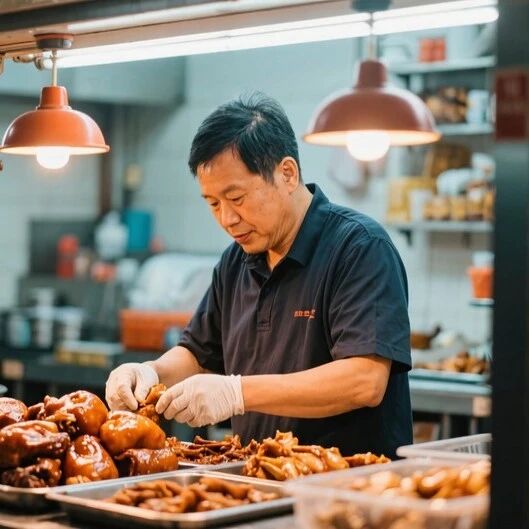
Core Viewpoint - The article discusses the challenges faced by the braised food industry, highlighting a significant decline in sales and store numbers, leading to a competitive and cost-pressured environment for both small shop owners and major brands [5][11]. Group 1: Challenges Faced by Small Shop Owners - Small shop owners like Wang Lei are experiencing increased operational costs, with rent rising from 5,500 yuan to 8,000 yuan and monthly profits dropping to around 3,000 yuan [6][9]. - Consumer sensitivity to prices has heightened, leading to reduced foot traffic and sales, with daily revenues dropping to 800 yuan [7][9]. - The market is saturated with over 20 competing braised food shops within a 500-meter radius, intensifying competition and forcing some shops to offer discounts that franchise owners cannot match [9][10]. Group 2: Performance of Major Brands - Major brands like Juewei, Zhou Hei Ya, and Huang Shang Huang reported significant revenue declines in 2024, with Juewei's revenue down 13.84% to 6.257 billion yuan and net profit down 34.04% to 227 million yuan [7][8][13]. - Despite revenue drops, some brands managed to maintain or even increase profit margins through cost-cutting measures, with Huang Shang Huang's net profit increasing by 26.9% despite a revenue decline [14][15]. - The number of stores for these major brands has decreased significantly, with Juewei closing 5,112 stores (32% reduction) and Huang Shang Huang reducing its store count by nearly 30% [15][16]. Group 3: Pricing and Consumer Sentiment - The pricing strategy of major brands has led to consumer backlash, with products priced significantly higher than traditional food items, causing many to perceive them as overpriced [17][19]. - A survey indicated that 47.2% of consumers would reduce purchases if prices increased by over 10%, reflecting a shift in consumer behavior towards seeking better value [18][24]. - The perception of braised food as a luxury item rather than an affordable snack has emerged, with social media discussions highlighting the disconnect between price and consumer expectations [17][20]. Group 4: Industry Trends and Future Outlook - The braised food industry is undergoing structural adjustments, with rising costs, intense competition, and changing consumer preferences posing significant challenges [26][25]. - The article suggests that brands need to focus on improving cost-effectiveness and product diversity to meet evolving consumer demands, particularly in the context of online shopping trends [27][28]. - The future of the industry may depend on the ability of brands to redefine their relationship with consumers and adapt to a market that increasingly values affordability and quality [29].


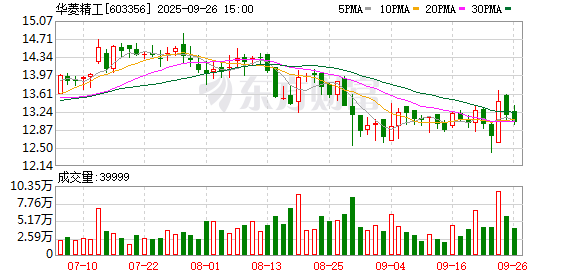
603356 控制权变更事项终止!
Zheng Quan Shi Bao Wang· 2025-09-26 14:16
Core Viewpoint - Hualing Precision Engineering has announced the termination of its control change plan, which was aimed at issuing A-shares to Shangrao Juzhun, following a comprehensive assessment of the current capital market environment and the company's development strategy [2][5]. Group 1: Control Change Plan - The company decided to terminate the issuance of A-shares to Shangrao Juzhun, which also means the end of the acquisition of control rights by Shangrao Juzhun [2]. - The company's current controlling shareholder remains Huang Yehua, with the actual controllers being Huang Yehua, Ma Xiping, and Huang Chao [2]. - This is not the first failed attempt at a control change; a previous attempt in 2023 to transfer control to Baoxin Technology's actual controller Ma Wei also failed [8]. Group 2: Financial Performance - Hualing Precision Engineering has faced declining revenues and increasing losses over the past three years, with a reported revenue of 445 million yuan in the first half of this year, a year-on-year decrease of 20.48%, and a net loss of 46.11 million yuan [9]. - The company has been actively working on cost reduction and efficiency improvement while exploring new business opportunities to foster growth [9]. Group 3: Business Operations - Despite the termination of the control change plan, the company stated that it would not adversely affect its normal operations and ongoing development [5]. - The company has established a joint venture with Zhejiang Juzhun Holding Group to develop and sell elevator energy storage products, aiming to expand its business in this area [9].

国务院国资委召开国有企业经济运行座谈会
券商中国· 2025-09-26 14:06
Core Viewpoint - The meeting held by the State-owned Assets Supervision and Administration Commission (SASAC) focused on understanding the economic operation of state-owned enterprises, addressing challenges, and discussing policies to support high-quality development [1][2]. Group 1: Economic Operation and Challenges - The SASAC meeting aimed to gather insights on the economic performance of state-owned enterprises and the challenges they face, including stabilizing electricity and coal prices and preventing "involution" competition [1]. - Central enterprises reported improvements in economic performance, with value creation steadily increasing and operational quality continuing to improve [1]. Group 2: Strategic Focus and Goals - Emphasis was placed on aligning thoughts and actions with the central government's economic assessments and strategies, maintaining strategic focus, and enhancing five key values to support employment, enterprises, markets, and expectations [2]. - The goal of "one increase, one stability, and four enhancements" was highlighted, focusing on optimizing operational strategies, reducing costs, and improving efficiency [2]. Group 3: Investment and Risk Management - The meeting stressed the importance of optimizing investment structures, focusing on key areas such as supply chain strengthening, infrastructure construction, and energy resource security [2]. - There was a call to resist "involution" competition and promote differentiated development and brand competition, fostering a healthy and sustainable industry ecosystem [2]. - Strengthening risk prevention measures and establishing a regular risk monitoring and early warning mechanism were also emphasized to safeguard against potential risks [2].

倒贴钱买原料,行业协会疾呼“反内卷”
第一财经· 2025-09-26 12:54
Core Viewpoint - The copper smelting industry in China is facing significant challenges due to "involutionary" competition, leading to persistently low copper concentrate processing fees and pressure on profit margins for major companies [4][5]. Industry Overview - The third council meeting of the Copper Industry Association highlighted the severe impact of "involutionary" competition on the copper smelting sector, prompting the association to propose measures to control capacity expansion [4]. - Copper concentrate processing fees, which include smelting and refining costs, have been at historically low levels, with significant declines observed in both long-term and spot prices [5][6]. Financial Performance - Major companies like Tongling Nonferrous Metals and Northern Copper reported declines in net profits due to low processing fees, with Tongling's net profit down 33.94% year-on-year to 1.441 billion yuan, marking the first decline in five years [5]. - The gross profit margins for copper products across leading firms have decreased, with margins ranging from 1.9% to 8.2%, significantly impacting overall revenue as this segment accounts for over 70% of total income [5][6]. Supply and Demand Dynamics - The decline in processing fees is primarily attributed to tightening copper concentrate supply, as global mining companies have reduced future production guidance, shifting the market from surplus to shortage [6][7]. - China's reliance on imported copper ore, which constitutes over 80% of the supply structure, exacerbates the supply-demand imbalance, especially as domestic smelting capacity has expanded rapidly [6][7]. Strategic Responses - In response to the challenging environment, leading companies are focusing on cost reduction and enhancing the profitability of by-products to mitigate the impact of low processing fees [7]. - For instance, Yunnan Copper reported a 24% increase in net profit to 1.317 billion yuan by implementing cost-cutting measures and increasing the contribution of by-products like sulfuric acid, which saw a gross margin increase of 35.41 percentage points [7].

冶炼厂倒贴钱买原料,协会疾呼铜冶炼行业“反内卷”
Di Yi Cai Jing· 2025-09-26 12:05
Core Viewpoint - The copper smelting industry in China is facing significant challenges due to "involution" competition, leading to persistently low copper concentrate processing fees, which has prompted industry associations to call for stricter control over smelting capacity expansion [1][2]. Industry Overview - The copper concentrate processing fee has been at historically low levels, with both long-term and spot prices remaining depressed, severely impacting profits in the smelting sector [1]. - The processing fee, which includes smelting and refining costs, has dropped significantly, with reports indicating that the spot processing fee fell to -$40 per ton by the end of June 2023 [2]. - Major companies like Tongling Nonferrous Metals and Northern Copper have reported declines in net profits due to the low processing fees, with Tongling's net profit down 33.94% year-on-year [2]. Supply and Demand Dynamics - The decline in processing fees is primarily attributed to tightening copper concentrate supply, as the global supply-demand balance shifts from surplus to shortage [3]. - China's copper smelting capacity has been growing at a rate much faster than the supply of raw materials, leading to increased dependency on imports, which constitute over 80% of the copper ore supply [3]. - The production guidance for major copper mines has been revised downward, further tightening supply and leading to expectations of continued low processing fees [4]. Company Strategies - In response to the challenging environment, leading companies are focusing on cost reduction and enhancing the profitability of by-products to offset the impact of low processing fees [4]. - Yunnan Copper has reported a year-on-year net profit increase of over 24% by implementing cost-cutting measures and increasing the contribution of by-products like sulfuric acid, which saw a significant rise in gross margin [4].


风华高科:公司持续深化低成本战略及精益文化建设
Zheng Quan Ri Bao Wang· 2025-09-26 10:12
Core Viewpoint - The company is committed to a low-cost strategy and lean culture, focusing on comprehensive cost reduction across all operations [1] Group 1: Cost Reduction Strategies - The company employs extreme cost-cutting thinking and methodologies throughout its entire workforce and processes [1] - Key areas of cost reduction include procurement, technology, efficiency improvement, yield enhancement, process optimization, energy conservation, automation, and information technology [1]

国务院国资委召开国有企业经济运行座谈会 聚焦稳电价、稳煤价、防止“内卷式”恶性竞争等听取意见建议
Mei Ri Jing Ji Xin Wen· 2025-09-26 09:44
Core Viewpoint - The State-owned Assets Supervision and Administration Commission (SASAC) is focusing on stabilizing electricity and coal prices, preventing "involution" competition, and enhancing the foundation for high-quality development of state-owned enterprises [1] Group 1: Economic Operation and Challenges - A meeting was held to understand the economic operation status and challenges faced by state-owned enterprises [1] - SASAC will optimize the regular communication mechanism regarding the economic operation of state-owned enterprises [1] Group 2: Policy Measures and Strategic Focus - SASAC emphasizes maintaining strategic determination and improving "five values" to support stable employment, enterprises, markets, and expectations [1] - The focus is on steady operations, targeting "one increase, one stability, and four enhancements" [1] Group 3: Investment Structure and Risk Management - There is a push to optimize investment structure, focusing on key areas such as industrial chain strengthening, infrastructure construction, and energy resource security [1] - SASAC aims to enhance risk prevention by establishing a regular risk monitoring and early warning mechanism [1]