金融科技

Search documents
香港建设国际创新科技中心,内地VC/PE争当“赶潮人”
证券时报· 2025-09-29 00:07
Core Insights - The article highlights the growing enthusiasm of mainland VC/PE institutions to establish operations in Hong Kong, driven by the local government's support for innovation and technology development [1][2][3]. Group 1: Investment Trends - Mainland VC/PE institutions are actively planning to apply for licenses and set up funds in Hong Kong, indicating a strategic shift towards the region [1][3]. - Notable VC firms, such as Foton Capital and Chenyi Fund, have already established or are in the process of establishing a presence in Hong Kong, reflecting a trend among top-tier VC institutions [3][6]. - The Hong Kong government has introduced various initiatives, including a government-guided fund, to attract investment and support the local innovation ecosystem [6]. Group 2: Market Opportunities - Hong Kong's market presents both opportunities and challenges for companies looking to expand internationally, with a complex global economic environment affecting pricing and financing [4][6]. - The local innovation landscape is bolstered by a growing number of tech projects, particularly in sectors like artificial intelligence, biotechnology, and fintech, which are attracting international entrepreneurial talent [6]. Group 3: Challenges and Considerations - Despite the enthusiasm, there are significant uncertainties regarding the qualifications for licensing, the duration and costs of the application process, and the flexibility of local funding [8]. - VC institutions face challenges in fundraising and project sourcing, as the Hong Kong market tends to favor mature equity investments, making early-stage tech investments more difficult [8]. - Recommendations for VC/PE institutions include conducting thorough market research, understanding local investment practices, and preparing necessary materials for fundraising [9].


湘财股份拟吸并大智慧将新增174亿商誉 新湖系质押率超98%“金融科技梦”承压
Chang Jiang Shang Bao· 2025-09-28 22:59
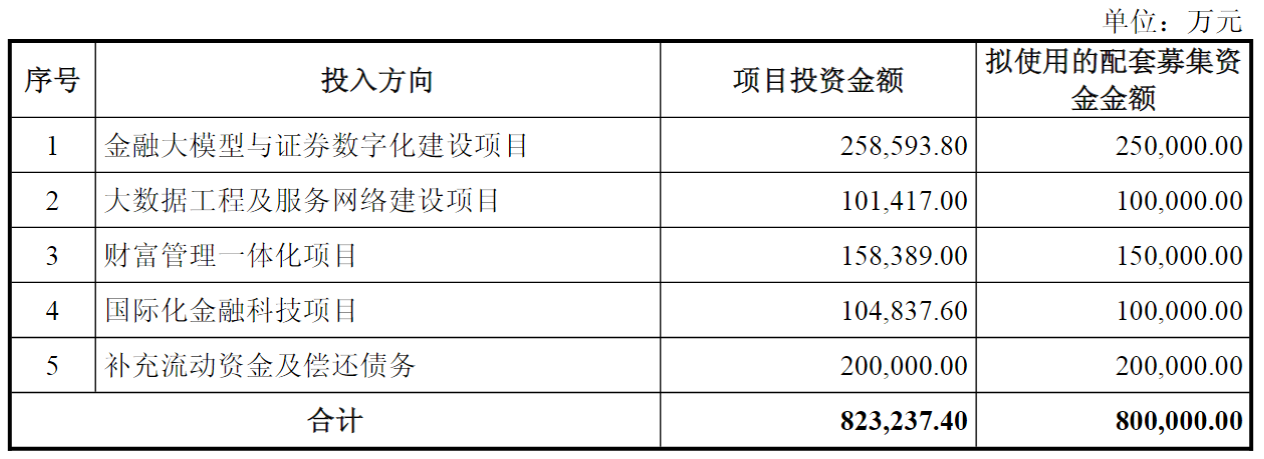
Core Viewpoint - The merger between Xiangcai Co. and Dazhihui is seen as an attempt to replicate the successful model of Dongfang Caifu, but uncertainties remain regarding the effectiveness of the integration [1][5]. Group 1: Merger Details - Xiangcai Co. plans to absorb Dazhihui through a share exchange ratio of 1:1.27 and raise up to 8 billion yuan in supporting funds [1][3]. - Following the merger, Dazhihui will cease to be listed and Xiangcai Co. will inherit all of Dazhihui's assets, liabilities, and operations [3][6]. - The share exchange prices are set at 7.51 yuan per share for Xiangcai Co. and 9.53 yuan per share for Dazhihui, resulting in an increase of Xiangcai Co.'s total shares to 5.141 billion [3][4]. Group 2: Financial Performance - Dazhihui has reported a cumulative loss of 561 million yuan in net profit from 2022 to the first half of 2025, indicating weak profitability [1][7]. - In contrast, Xiangcai Co. achieved a revenue of 1.144 billion yuan in the first half of 2025, a year-on-year increase of 4.63%, with net profit rising by 93.12% [8]. - Post-merger, the combined company's revenue is projected to increase by 32.1% to 1.511 billion yuan, but net profit is expected to decrease by 8.6% to 1.29 billion yuan [8]. Group 3: Shareholding Structure - After the merger, the New Lake Group's shareholding in Xiangcai Co. will be diluted to 22.45%, while Dazhihui's controlling shareholder Zhang Changhong and his associates will hold 17.32% of Xiangcai Co. [2][4]. - Zhang Changhong has committed not to seek control over Xiangcai Co., ensuring that the current control remains with Huang Wei [5][6]. Group 4: Strategic Implications - The merger is positioned as a strong collaboration between brokerage and financial technology, aiming to enhance Xiangcai Co.'s competitive edge in the market [5][6]. - Xiangcai Co. plans to expand its business scope to include domestic and international securities information services, big data services, and integrated wealth management projects [6].


香港建设国际创新科技中心 内地VC/PE争当“赶潮人”
Zheng Quan Shi Bao· 2025-09-28 22:33
Core Insights - The Hong Kong government is actively supporting the development of the technology and innovation sector, leading to a growing ecosystem that attracts capital, talent, and projects [1][4] - Mainland VC/PE institutions are increasingly interested in establishing a presence in Hong Kong, with many planning to apply for licenses and set up funds [2][4] Group 1: Investment Trends - Many mainland VC/PE firms are incorporating Hong Kong into their strategic plans, with some already applying for licenses and others conducting project assessments [2][4] - Notable VC firms, such as Foton Capital and Chenyi Fund, have established or are planning to establish operations in Hong Kong to leverage the local market [2][4] Group 2: Market Opportunities - The Hong Kong government has introduced various policies to support innovation, including the establishment of a government-guided fund with a maximum investment of 1.5 billion [4] - The local market is seeing an increase in technology projects, particularly in sectors like artificial intelligence, biotechnology, and fintech, driven by a resurgence in the capital market [4] Group 3: Challenges and Considerations - Despite the enthusiasm, mainland VC institutions face uncertainties regarding qualification requirements, licensing processes, and the flexibility of local fund usage [5] - There are challenges in fundraising and project sourcing, as the Hong Kong market tends to favor mature equity investments, making early-stage tech investments more difficult [6]
360亿券商股吸并细节公布,股价半年涨超84%
2 1 Shi Ji Jing Ji Bao Dao· 2025-09-28 14:57
Core Viewpoint - The merger between Xiangcai Co. and Dazhihui is progressing rapidly, with key transaction details finalized, marking a significant step towards shareholder and regulatory approval [2][4][20]. Group 1: Merger Details - Xiangcai Co. plans to absorb Dazhihui through a share swap, with Xiangcai's A-share swap price set at 7.51 CNY per share and Dazhihui's at 9.53 CNY per share [3][9]. - Post-merger, Xiangcai's total share capital is expected to increase to 5.141 billion shares, while Dazhihui will cease to be listed [3][9]. - The merger includes a financing plan to raise up to 8 billion CNY, targeting specific investors for funding towards financial technology and other strategic areas [11][12]. Group 2: Financial Projections - The merger is projected to enhance Xiangcai's financial metrics, with total assets expected to rise from approximately 4.13 billion CNY to 5.91 billion CNY post-merger [18]. - The total revenue is anticipated to increase from 11.44 billion CNY to 15.11 billion CNY in the first half of 2025 [18]. - However, profit metrics may experience short-term fluctuations, with potential losses projected for the fiscal year 2024 [17][18]. Group 3: Market Reaction and Historical Context - The announcement has sparked significant market interest, with Xiangcai's stock rising over 84% since the merger announcement in March 2025 [4][20]. - The merger represents a culmination of a decade-long relationship between the two companies, with previous attempts at acquisition and collaboration [21][22]. - This merger positions Xiangcai to become the third internet brokerage in A-shares, following similar paths taken by companies like Dongfang Caifu [6][24][26]. Group 4: Strategic Implications - The merger aims to create a synergistic effect by combining traditional brokerage services with advanced financial technology, enhancing overall service capabilities [16][29]. - Xiangcai's collaboration with Dazhihui is expected to leverage Dazhihui's extensive user base and technological expertise to improve customer acquisition and service delivery [29][30]. - The combined entity is anticipated to face challenges in replicating the success of established players like Dongfang Caifu due to differences in market conditions and operational backgrounds [30].

360亿券商股吸并细节公布,股价半年涨超84%
21世纪经济报道· 2025-09-28 14:49
Core Viewpoint - The merger between Xiangcai Co. and Dazhihui is progressing rapidly, with key transaction details recently finalized, marking a significant step towards shareholder approval and regulatory review [1][8]. Group 1: Merger Details - Xiangcai Co. plans to absorb Dazhihui through a share swap, with Xiangcai's A-share swap price set at 7.51 CNY per share and Dazhihui's at 9.53 CNY per share, resulting in a total share capital increase to 5.141 billion shares [3][9]. - The merger will involve a financing plan of up to 8 billion CNY, targeting specific investors for funding directed towards financial technology, big data projects, and debt repayment [3][11]. Group 2: Market Reaction - Following the announcement, Xiangcai's stock surged over 7% on September 26, while Dazhihui rose over 4%, reflecting strong market enthusiasm [5]. - Since the merger announcement on March 16, Xiangcai's stock price has increased by over 84%, with a current market capitalization of 36.3 billion CNY [5]. Group 3: Strategic Implications - This merger positions Xiangcai to become the third internet brokerage in A-shares, following the paths of Dongfang Caifu and Zhinancun, enhancing its competitive edge in the financial services sector [6][22]. - The collaboration aims to create a "brokerage + financial technology" model, leveraging Dazhihui's extensive user base and technological capabilities to enhance Xiangcai's service offerings [22][25]. Group 4: Financial Projections - Post-merger, the total assets, equity, and revenue of the surviving company are expected to increase, although short-term profit fluctuations are anticipated [17]. - The combined entity's revenue ranking is projected to be outside the top 30 in the industry, indicating significant room for growth compared to leading competitors like Dongfang Caifu [24].

逐浪香港!今年,内地VC/PE机构很忙
Zheng Quan Shi Bao Wang· 2025-09-28 13:17
Core Insights - The article highlights the growing enthusiasm of mainland VC/PE institutions to establish operations in Hong Kong, driven by the local government's support for innovation and technology development [1][4][6] - The Hong Kong market is becoming a focal point for investment opportunities, with various initiatives and funds being launched to attract capital and projects [4][5][8] Group 1: Investment Trends - Mainland VC/PE institutions are actively applying for licenses and setting up funds in Hong Kong, indicating a strategic shift towards the region [2][3] - Notable VC firms, such as Foton Capital and Chen Yi Fund, have already established or are planning to establish a presence in Hong Kong to leverage local resources and opportunities [2][3] - The Hong Kong government has introduced a "Guided Fund" to stimulate investment in strategic emerging industries, which has garnered significant interest from mainland investors [5][6] Group 2: Policy and Ecosystem Development - The Hong Kong government is enhancing its innovation and technology policies, aiming to build an international innovation and technology center [4][5] - Initiatives include the establishment of research institutes and funding programs focused on key sectors like AI, biotechnology, and advanced manufacturing [4][5] - The local ecosystem is benefiting from a combination of government support, academic resources, and international capital, creating a conducive environment for tech startups [6][7] Group 3: Challenges and Considerations - Despite the enthusiasm, mainland VC institutions face challenges such as understanding local regulations, funding availability, and project selection in Hong Kong [6][7][8] - The limited number of local tech projects poses a challenge for investors looking to identify suitable investment opportunities [7] - There is a need for thorough market research and understanding of local investment dynamics to successfully navigate the Hong Kong market [8]
湘财吸收合并大智慧,80亿募资能否复制东方财富“神话”?
2 1 Shi Ji Jing Ji Bao Dao· 2025-09-28 13:13
Core Viewpoint - The merger of Xiangcai Co. and Dazhihui marks a significant step towards creating a new internet brokerage in the A-share market, following the completion of audits and due diligence, with the core transaction details now finalized [1][3][15]. Group 1: Merger Details - Xiangcai Co. plans to absorb Dazhihui through a share swap, with Xiangcai's A-share swap price set at 7.51 CNY per share and Dazhihui's at 9.53 CNY per share, resulting in a swap ratio of 1:1.27 [1][3]. - Post-merger, Xiangcai's total share capital is expected to increase to 5.141 billion shares, while Dazhihui will cease to be listed [1][4]. - The merger includes a financing plan to raise up to 8 billion CNY from no more than 35 specific investors, aimed at various projects including financial modeling and data engineering [1][4][5]. Group 2: Financial Projections and Market Response - Following the announcement, Xiangcai's stock hit the daily limit up, closing at 12.68 CNY with a market cap of 36.255 billion CNY, while Dazhihui's stock rose over 5% [2]. - The merger is expected to enhance the financial capabilities and international presence of Xiangcai, aligning with regulatory encouragement for digital transformation in the securities industry [6][18]. Group 3: Strategic Implications - The merger is anticipated to create significant synergies, combining Xiangcai's brokerage services with Dazhihui's financial information services, thus forming a "brokerage + fintech" business model [8][13]. - The integration aims to leverage both companies' strengths to enhance user experience and operational efficiency, potentially achieving a "1+1>2" effect [8][15][18]. - The combined entity will focus on expanding its digital finance capabilities, responding to regulatory trends favoring digital transformation in the financial sector [6][18]. Group 4: Historical Context - The relationship between Xiangcai and Dazhihui has evolved over a decade, with previous attempts at acquisition and collaboration, culminating in this merger [11][12]. - The merger follows a trend in the industry where traditional brokerages are increasingly partnering with fintech firms to enhance their service offerings and market competitiveness [13][14].
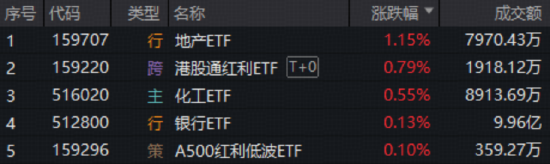
“老登”起舞,“小登”回调!节前资金调仓忙,金融科技、人工智能、创新药等ETF被逢跌抢筹
Xin Lang Ji Jin· 2025-09-28 11:57
Market Overview - A-shares experienced fluctuations with the Shanghai Composite Index down 0.65%, Shenzhen Component Index down 1.76%, and ChiNext Index down 2.60, with a total market turnover of 2.15 trillion yuan [1][2] - Over 3,400 stocks in the market declined, while traditional sectors like real estate, liquor, and banking showed resilience [1][2] Real Estate Sector - The real estate sector outperformed, with the real estate ETF (159707) rising over 1%, reaching a new high for the year, and seeing a net purchase of 23.5 million shares [1][3][5] - The implementation of new housing policies in Shanghai led to a significant increase in new home transactions, with a 30% month-on-month increase in the first week and a 19% increase overall for the month [5][6] - Analysts suggest that the easing of policies in major cities may lead to a short-term recovery in the housing market, with a focus on high-quality developers and those benefiting from debt relief and improved sales [5][6] Food and Beverage Sector - The food and beverage sector, represented by the food ETF (515710), showed a slight decline of 0.16%, with the overall performance of liquor stocks being weak [8][9] - Moutai's sales volume reportedly doubled, with significant growth observed in September, indicating a potential recovery in the liquor market [11][12] - The food ETF's underlying index is at a low valuation, suggesting a good opportunity for long-term investment [12][13] Hong Kong Market - The Hong Kong stock market faced declines, particularly in the internet and innovative drug sectors, with the Hong Kong Internet ETF (513770) down 2.6% and the Hong Kong Innovative Drug ETF (520880) down 1.44% [2][15] - Despite the downturn, there were signs of active buying in the innovative drug sector, indicating potential opportunities for investors [15][19] - Analysts maintain a positive long-term outlook for the Hong Kong market, suggesting that the technology sector may recover as it shifts focus from competition to AI-driven growth [18][19]
《企业降低融资成本白皮书(2025)》
Sou Hu Cai Jing· 2025-09-27 22:52
Core Insights - The report "White Paper on Reducing Corporate Financing Costs (2025)" focuses on the financing challenges faced by Chinese enterprises, particularly small and medium-sized enterprises (SMEs), analyzing the causes of high financing costs and proposing solutions [1][21] - SMEs contribute over 60% of GDP, 60% of tax revenue, 80% of employment, and 70% of technological innovation in China, yet they face a persistent "financing gap" due to issues like information asymmetry and inadequate credit systems [1][22] - The report emphasizes the need for a collaborative approach among enterprises, financial institutions, and the government to create a more equitable and efficient financing environment [12][24] Financing Challenges and Solutions - SMEs are crucial to China's economic growth and innovation but are hindered by high financing costs, which are exacerbated by structural issues such as information asymmetry and inadequate collateral [1][31] - The report identifies the transition from traditional bank-centered financing to a more diversified ecosystem driven by financial technology (FinTech), which addresses information asymmetry and enhances credit assessment [21][22] - Innovative financing models, such as supply chain finance and intellectual property pledge financing, are highlighted as effective ways to unlock the value of intangible assets and improve access to capital [21][23] Financial Technology and Innovation - FinTech is reshaping the financing landscape for SMEs, with technologies like big data, artificial intelligence, and blockchain providing new ways to assess creditworthiness and streamline loan approval processes [21][22] - For instance, the "AI Approval Officer" from Qifu Technology can reduce loan approval times from T+3 to T+0, significantly enhancing efficiency [22][48] - The report also discusses the role of ESG (Environmental, Social, and Governance) criteria in reducing financing costs, with evidence showing that a one standard deviation improvement in ESG ratings can lower debt financing costs by approximately 5.17% [21][22] International Comparisons and Best Practices - The report draws on international experiences, such as the U.S. SBA loan guarantee system, Germany's KFW refinancing model, and South Korea's KODIT technology credit guarantee, to provide insights for improving China's financing ecosystem [21][23] - These models emphasize the importance of government support and innovative financing mechanisms to bridge the financing gap for SMEs [21][23] Policy Recommendations - The report suggests a systematic optimization of the financing ecosystem, including structural reforms in the financial system, innovation in institutional frameworks, and the establishment of a unified credit information platform [23][24] - It advocates for enhancing cross-border financing facilitation and leveraging the internationalization of the RMB to reduce exchange rate risks for enterprises [23][24] - The need for a forward-looking policy design that supports "new productive forces" and explores innovative financing models, such as data asset financing, is also emphasized [23][24]

【锋行链盟】港交所分拆子公司上市核心要点
Sou Hu Cai Jing· 2025-09-27 16:19
Regulatory Framework - Hong Kong Exchanges and Clearing Limited (HKEX) must comply with the Hong Kong Stock Exchange (HKSE) regulations for the spin-off of subsidiaries, primarily guided by the Listing Rules, specifically GL15 [2] - Key regulatory points include the requirement for the parent company to retain sufficient business operations and assets post-spin-off to maintain its listing status, typically requiring a market value of at least 10% of the pre-spin-off total market value [2] Strategic Intent - The core strategic intent behind the spin-off of subsidiaries includes value release and a focus on core business operations [2] - Spin-offs allow the parent company to concentrate on its primary functions, enhancing operational efficiency [2] Structural Design - The structural design of the spin-off must address three main issues: business independence, asset and liability separation, and shareholder rights protection [2] - Business independence requires clear delineation between the parent and subsidiary's operations, ensuring no direct competition and independent management [2] - Shareholder rights are protected through fair treatment, typically via the distribution of subsidiary shares or cash alternatives, ensuring minority shareholders can participate in the subsidiary's listing benefits [2] Financial and Market Impact - The spin-off directly influences the financial and market expectations for both HKEX and its subsidiaries [3] - The parent company's financials may be impacted by the removal of the subsidiary's assets and liabilities from consolidated statements, potentially reducing reported income and profits [5] - Post-spin-off, the subsidiary can be valued independently based on its industry-specific metrics, which may enhance its market perception and financing capabilities [5] - Market reactions may vary, with initial stock price increases for the parent company due to value reassessment, but potential concerns about reduced operational synergies may arise [5] Challenges and Risks - The spin-off process must manage several risks, including regulatory approval challenges, potential loss of operational synergies, and market acceptance of the subsidiary's business model [4][5] - Shareholder disputes may occur if some investors believe that the synergy between the parent and subsidiary is more valuable than independent operations [5]