
脑机接口

Search documents
36氪精选:脑机接口虚火?但再不下手就晚了
日经中文网· 2026-01-10 00:34
Core Viewpoint - The brain-computer interface (BCI) sector is expected to experience a significant wave of financing in 2026, driven by advancements in technology and supportive government policies [5][6][9]. Group 1: Market Dynamics - Non-invasive BCI company "Qiangnao Technology" recently completed a financing round of 2 billion yuan, igniting interest in BCI concept stocks [6]. - The BCI sector has seen a strong market response, with companies like Innovation Medical, Nanjing Panda, and Yanshan Technology experiencing stock price surges [7]. - Elon Musk's announcement regarding Neuralink's plans for large-scale production of BCI devices by 2026 has been a major catalyst for the current market enthusiasm [7]. Group 2: Investment Landscape - Major venture capital firms such as Sequoia China, IDG, and Baidu Ventures have invested in various BCI companies, indicating a broadening interest beyond just medical applications to technology and consumer sectors [9]. - The BCI market is transitioning from primarily medical investments to include technology and consumer-focused investments, particularly in consumer healthcare applications [9]. Group 3: Non-Invasive BCI Insights - Non-invasive BCI technology has a wide range of applications, including sleep monitoring, attention tracking, and treatment for mental health disorders, but has faced challenges due to high user education costs and product homogeneity [10][12]. - The technology has limitations in signal quality, as non-invasive methods like EEG struggle with signal clarity and resolution [10]. - Companies are shifting focus from pure brain control to developing smart prosthetics and other applications that utilize muscle signals and AI algorithms for better intent recognition [11]. Group 4: Invasive BCI Developments - Invasive BCI companies are navigating significant challenges, including safety, signal stability, and regulatory compliance, but have still managed to secure funding during market downturns [13]. - The evaluation of BCI companies has shifted from focusing solely on technical capabilities to assessing their overall operational capabilities and clinical trial progress [13]. - Notable invasive BCI companies include Borui Kang, which is pursuing a listing on the Science and Technology Innovation Board, and has reported successful clinical trials with significant patient improvements [14]. Group 5: Key Players and Innovations - Borui Kang has developed a semi-invasive BCI system that has shown promising results in clinical trials, achieving significant improvements in patient functionality [14]. - Ladder Medical focuses on ultra-flexible neural electrode technology and has successfully conducted clinical trials for spinal cord injury patients [15][16]. - Brain Tiger Technology, which aims to compete with Neuralink, utilizes silk protein for its electrodes, enhancing biocompatibility and reducing long-term damage [17]. Group 6: Future Outlook - The year 2026 is anticipated to be a pivotal moment for the BCI industry, with advancements in technology and regulatory support paving the way for broader adoption [22]. - The introduction of independent billing for BCI services by the National Healthcare Security Administration in 2025 reflects a commitment to supporting the industry's growth [22]. - Companies that establish a strong foothold in the BCI sector are likely to gain significant influence over future technologies, products, and standards [23].


脑机接口,加快接入现实生活(瞰前沿)
Ren Min Wang· 2026-01-09 23:00
Core Insights - The first medical device standard for brain-computer interface (BCI) technology in China was implemented on January 1, marking a significant step in the integration of BCI technology into clinical practice and patient care [3][4][5]. Group 1: Standardization and Definition - The newly established standard defines "medical devices using brain-computer interface technology" as devices that decode neural signals from the central nervous system in real-time, facilitating bidirectional information exchange between patients and external devices [3][4]. - The standard aims to unify terminology across various disciplines involved in BCI technology, addressing inconsistencies that hinder industry development and providing a clear technical basis for regulatory oversight [5]. Group 2: Clinical Applications and Innovations - BCI medical devices are seen as a revolutionary advancement in healthcare, with potential applications including aiding patients with paralysis to regain motor functions and improving communication capabilities [6]. - Clinical trials at Beijing Tiantan Hospital have demonstrated the effectiveness of BCI technology in rehabilitation, with patients showing significant improvements in motor skills after receiving BCI implants [7][8]. Group 3: Future Prospects and Technological Development - The BCI sector is expected to grow significantly, with the potential to treat various neurological conditions such as epilepsy and Alzheimer's disease [6]. - Ongoing research and development efforts are focused on enhancing the performance of BCI systems, including reducing latency in signal processing to improve user experience and control accuracy [11].
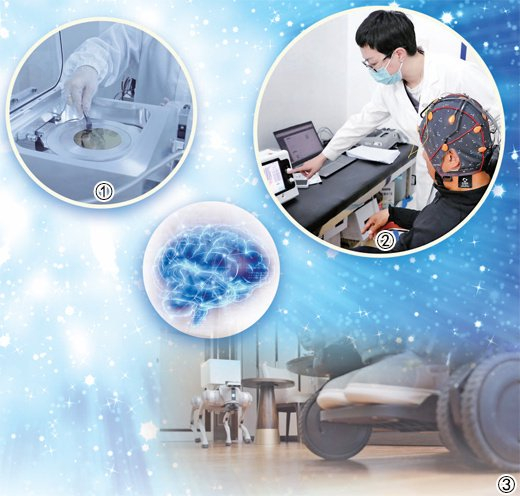
我国首个脑机接口医疗器械标准实施 脑机接口,加快接入现实生活(瞰前沿)
Ren Min Ri Bao· 2026-01-09 22:09
Core Viewpoint - The implementation of China's first medical device standard for brain-computer interface (BCI) technology marks a significant step towards integrating advanced technologies into healthcare, aiming to enhance patient rehabilitation and treatment options [1][2]. Group 1: Standard Definition and Significance - The newly established standard defines "medical devices using brain-computer interface technology" as devices that decode neural signals from the central nervous system to facilitate real-time interaction between patients and external devices, improving or replacing certain physiological functions [3]. - The standard aims to unify terminology across various disciplines involved in BCI technology, addressing inconsistencies that hinder industry development and providing a clear technical basis for regulatory oversight [4]. - Establishing this standard is expected to create a unified language system for the emerging BCI field, enhancing collaboration across disciplines, improving product development efficiency, and setting benchmarks for market competition [4]. Group 2: Potential and Future Directions - BCI medical devices represent a revolutionary advancement in healthcare, with the potential to restore bodily functions for patients with conditions like spinal cord injuries, enabling them to control robotic arms or communicate through thought [5]. - The National Medical Products Administration plans to promote innovation in BCI medical devices through regulatory measures and scientific research, facilitating the transition from concept to clinical application [5]. - Clinical trials at institutions like Beijing Tiantan Hospital demonstrate the practical applications of BCI technology, with patients undergoing rehabilitation training showing significant improvements in motor functions [7][8]. Group 3: Technological Advancements and Applications - Recent clinical trials have showcased the ability of high-level paraplegic patients to control electric wheelchairs and robotic dogs using implanted BCI devices, expanding the scope of traditional medical applications [9]. - The development of advanced neural data compression techniques and low-latency control systems is crucial for ensuring effective interaction between patients and external devices, enhancing the user experience [10][11]. - The integration of BCI technology with smart devices like robotic arms and electric wheelchairs is essential for improving the quality of life for patients, highlighting the importance of external device development in realizing the full potential of BCI systems [11].
九成调研股本周上涨 三大热门领域被“踏破门槛”
Zheng Quan Shi Bao· 2026-01-09 17:41
Group 1: Institutional Research and Market Trends - A total of 116 listed companies conducted institutional research from January 5 to 9, with nearly 90% achieving positive returns as the market rose [1] - Notable stock performances included Pulite with a 42.59% increase, and Chengdu XianDao and Borui Chuanbo both exceeding 30% [1] - Key areas of interest for institutions included brain-computer interfaces, commercial aerospace, and AI applications, spurred by the central bank's new action plan on digital currency [1] Group 2: Brain-Computer Interface Developments - The brain-computer interface (BCI) concept is currently a major market hotspot, with the Wind BCI index rising approximately 20% [2] - Companies like Dineike are advancing BCI technology, with prototypes expected by 2026, focusing on brainwave interaction technology for human-device communication [2] - Entropy Technology held three institutional research sessions, attracting 132 institutions, and plans to launch a BCI prototype by March 2026, although initial revenue impact is uncertain [3] Group 3: Commercial Aerospace Opportunities - The commercial aerospace sector remains hot, with the Wind commercial aerospace index also increasing about 20% [4] - Chaojie Co. reported new customer collaborations expected to begin in Q1, focusing on manufacturing components for commercial rockets [4] - Guanglian Aviation is involved in developing core components for launch vehicles and has made progress in securing orders from leading aerospace companies [4] Group 4: Digital Currency Policy Changes - The central bank's new action plan for digital currency management will officially start on January 1, 2026, expanding the scope of digital currency from cash-like to deposit-like [6] - Tianyang Technology highlighted that banks will need to upgrade IT systems to accommodate the new digital currency features, which could lead to significant investment opportunities [6] - Future policy signals to watch include the need for supporting regulations in the settlement area and pilot programs for practical applications of digital currency [7]
金融工程定期:脑机接口板块的资金行为监测
KAIYUAN SECURITIES· 2026-01-09 14:43
- The Brain-Computer Interface (BCI) index has significantly increased by 84.11% since April 7, 2025, and by 18.28% since the beginning of 2026, attracting substantial market attention[3][14][15] - Public fund holdings in the BCI sector have been continuously declining since 2025, based on real-time estimates derived from public market information such as fund net value, holdings disclosure, and research activities[4][19][20] - ETF fund holdings in the BCI sector have shown a significant upward trend since December 2025, reflecting the growing popularity of index investment products in the A-share market[4][23][25] - The financing balance in the BCI sector has recently surged and then slightly declined, indicating a fluctuating investor sentiment towards the sector[4][24][26] - Companies like Beilu Pharmaceutical, Xiangyu Medical, and Guangdian Co., Ltd. have been the most frequently researched by institutions over the past three months[5][27][28] - Stocks such as Chuangxin Medical, Meihua Medical, and Xiangyu Medical have garnered the highest attention from influential users on the Xueqiu platform since December 20, 2025[5][29][31] - Major funds have flowed most into Chuangxin Medical, Meihua Medical, and Aipeng Medical since December 20, 2025, based on large and super-large order transactions[5][30][32] - Stocks like Saiwei Microelectronics, Hainan Haiyao, and Sainuo Medical have appeared on the Dragon and Tiger List since December 1, 2025, indicating active trading by major market players[5][33][34][35] - Companies such as Sainuo Medical, Chuangxin Medical, and Xiangyu Medical have seen the highest increases in shareholder numbers, suggesting potential future stock price risks[5][36][37]
金田股份:公司将密切关注和跟进脑机接口领域市场需求
Zheng Quan Ri Bao· 2026-01-09 14:17
Group 1 - The company, Jintian Co., expressed its intention to closely monitor and follow the market demand in the brain-computer interface sector [2] - The company aims to further improve its product lineup to enhance its competitive advantage [2] - Investors are encouraged to pay attention to the company's regular reports for more specific information [2]

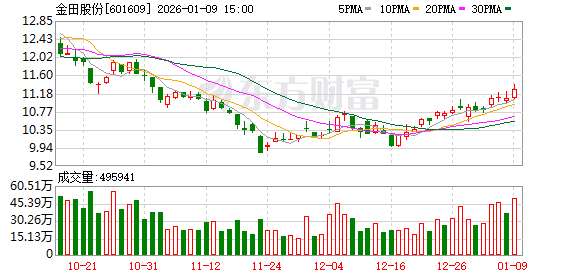
欣龙控股:目前公司下游B端客户没有直接从事脑机接口行业
Zheng Quan Ri Bao· 2026-01-09 13:44
证券日报网讯 1月9日,欣龙控股在互动平台回答投资者提问时表示,公司产品的下游应用广泛,详见 公司年度报告。经了解,目前公司下游B端客户没有直接从事脑机接口行业的。请广大投资者注意投资 风险。 (文章来源:证券日报) ...

智微智能:公司暂不涉及脑机接口相关业务
Zheng Quan Ri Bao Wang· 2026-01-09 13:40
Group 1 - The company, Zhimi Intelligent (001339), stated that it is currently not involved in brain-computer interface related business [1]
雷迪克:灵巧手是人形机器人实现精细操作的核心部件
Zheng Quan Ri Bao Zhi Sheng· 2026-01-09 13:11
Group 1 - The core viewpoint of the article highlights the significance of dexterous hands as high-performance end effectors that mimic human hand structure and function, enabling precise control and complex movements for various applications in commercial, industrial, and daily life settings [1] - The company strategically invested 20.41% equity in Shanghai Aoyi Information Technology Co., Ltd. in November 2025, indicating a commitment to advancing technology in the robotics sector [1] - Aoyi Technology, established in 2015, is one of the few companies in China that integrates both "brain-computer interface" and "robotics" technologies, with a product range that includes intelligent bionic hands, EEG systems, wearable exoskeletons, and robotic dexterous hands [1] Group 2 - In the field of robotic dexterous hands, Aoyi Technology has established strong partnerships with several robotic main engine customers, showcasing its collaborative approach and market presence [1]


医药生物行业周报:重庆脑机接口获突破性进展,建立癫痫治疗新范式-20260109
Shanghai Securities· 2026-01-09 12:29
Investment Rating - The report suggests a positive outlook for the invasive brain-computer interface (BCI) clinical field, indicating a broad application of the technology [5]. Core Insights - The invasive BCI technology has made significant clinical advancements, transitioning from laboratory research to practical applications, particularly in the treatment of drug-resistant epilepsy [4]. - A study conducted by a collaborative team has successfully decoded and personalized interventions for brain network activities in patients with drug-resistant epilepsy, marking a new paradigm in treatment [4]. - The research identified a specific high-frequency oscillation (fast ripple, FR) as a neural biomarker for the severity of epilepsy, allowing for targeted interventions that significantly reduce seizure frequency [4]. - Key nodes in the brain's FR network were found to be stable and safer for stimulation, with 87.5% of patients experiencing a reduction in seizure frequency by over 50% after targeted stimulation [4]. - The new approach shifts the treatment paradigm from localized resection to personalized modulation of abnormal brain networks, enhancing clinical application potential [4]. Summary by Sections Clinical Advancements - The report highlights the establishment of a specialized alliance for neuro-regulation and BCI technology in Chongqing, aimed at improving precision diagnosis and treatment for epilepsy and other neurological disorders [4]. Market Opportunities - The report recommends focusing on companies such as Innovation Medical, Aipeng Medical, and Sanbo Brain Science, which are positioned to benefit from advancements in the invasive BCI sector [5].