
核聚变

Search documents
重塑创新增长 AI角色几何?
2 1 Shi Ji Jing Ji Bao Dao· 2025-09-11 14:20
Group 1: Core Themes of the Conference - The conference emphasizes the theme of "reshaping innovative growth" in the context of AI technology transforming business models and infrastructure [1][2] - Key signals from the conference include the emergence of young tech entrepreneurs, the need for open resources in AI applications, and the higher demands for AI governance [1][2][5] Group 2: Young Entrepreneurs and Innovation - The conference highlighted the participation of nearly 20,000 young tech talents, with many speakers being from the post-90s and post-00s generations [2][3] - Young entrepreneurs believe that the AI-native era offers new opportunities for knowledge and capability dissemination, allowing them to leverage advanced AI models without starting from basic coding [3][4] Group 3: Infrastructure and Resource Challenges - The AI industry is experiencing a massive expansion, with significant capital expenditures expected, such as over $300 billion from major tech companies in the U.S. by 2025 [5][6] - The rise of AI is leading to increased energy consumption, with predictions that AI could account for over 20% of global energy usage in the future [6][7] Group 4: Human Role and Governance in AI - The rapid development of AI technologies is leading to a redefinition of human roles, with a consensus that the future will involve human-machine coexistence [7][8] - Concerns were raised about the pace of technological change and the need for reliable mechanisms to ensure safe deployment of AI, particularly for vulnerable populations [9]
外滩大会今日开幕,图灵奖得主称人工智能进入“经验时代”
Yang Zi Wan Bao Wang· 2025-09-11 12:27
Core Insights - Artificial intelligence is entering an "experience era," where continuous learning will be central to its development, surpassing previous capabilities [2] - The expansion of infrastructure is facilitating the industrial scaling of AI, leading to a new "agent economy" characterized by interactions among numerous intelligent agents [3] - The rise of AI is significantly increasing global energy consumption, necessitating advancements in nuclear fusion as a sustainable energy source for future AI technologies [4] Group 1: AI Development and Learning - Richard Sutton, the Turing Award winner, emphasizes that the current machine learning methods are reaching their limits in transferring human knowledge, necessitating a new data source generated through direct interaction with the environment [2] - Sutton argues that fears surrounding AI, such as bias and job loss, are exaggerated, and that decentralized collaboration will drive human prosperity alongside AI [2] Group 2: Infrastructure and Economic Transformation - Zhang Hongjiang highlights the ongoing relevance of the "scaling law" for large models, indicating that the interaction among intelligent agents will profoundly reshape economic structures [3] - The concept of an "agent economy" is introduced, where organizations will need to enhance computational power and data richness to leverage the capabilities of intelligent agents [3] Group 3: Energy Consumption and Nuclear Fusion - Sun Xuan points out that AI currently consumes 1.5% of the Earth's electricity, with projections suggesting it could rise to over 20%, creating a significant energy gap [4] - Nuclear fusion is presented as a solution to meet the future energy demands of AI, with its high energy density being a key advantage [4] - Despite the challenges in achieving nuclear fusion, advancements in AI technology are seen as pivotal in moving towards commercial viability in this field [4]
人间一年AI一天,替代不可避免,萨顿、王兴兴等回答AI四大终极问题
3 6 Ke· 2025-09-11 12:21
Group 1 - The core theme of the articles revolves around the evolving relationship between AI and humanity, emphasizing the need for collaboration and the ethical implications of AI's integration into society [1][2][20] - Richard Sutton, a prominent figure in AI, argues that fears surrounding AI, such as job loss and existential threats, are often exaggerated and driven by vested interests [2][20] - The development of AI is seen as a pathway to human prosperity through decentralized collaboration, with a focus on the importance of cooperation in achieving meaningful advancements [2][18] Group 2 - Current AI capabilities are still in their infancy, with significant challenges remaining in making AI truly functional in practical applications [4][6] - The integration of AI with robotics is creating a new industry focused on embodied intelligence, which aims to enable robots to perform tasks autonomously [4][6] - The potential for AI to revolutionize industries is acknowledged, but experts caution that the technology is not yet ready for widespread deployment [4][6] Group 3 - The future of AI is closely tied to advancements in energy solutions, particularly nuclear fusion, which is viewed as a critical technology for sustainable development [13][15] - Investment in nuclear fusion has surged, with significant funding from major tech companies, indicating a growing consensus on its importance for future energy needs [13][15] - The challenges of achieving controlled nuclear fusion are acknowledged, with ongoing research focused on overcoming technical hurdles [13][15] Group 4 - The AI industry is transitioning from a focus on human data to an "experience era," where AI learns from direct interactions with the environment [17][20] - Sutton emphasizes the need for new data sources and learning methods to unlock AI's full potential, highlighting the importance of continual and meta-learning [17][20] - The concept of "intelligent agents" is emerging as a dominant application of AI, suggesting a shift towards an "agent economy" that could transform organizational structures [20] Group 5 - China's AI development strategy outlines clear goals for the integration of AI across various sectors by 2027, with a focus on widespread adoption and economic growth [21][20] - Shanghai is positioning itself as a hub for AI innovation, with significant financial support for companies in the AI space, including funding for computational resources and model development [21][20] - The articles suggest that the AI landscape is becoming increasingly defined, with a roadmap for future advancements and applications [20][21]

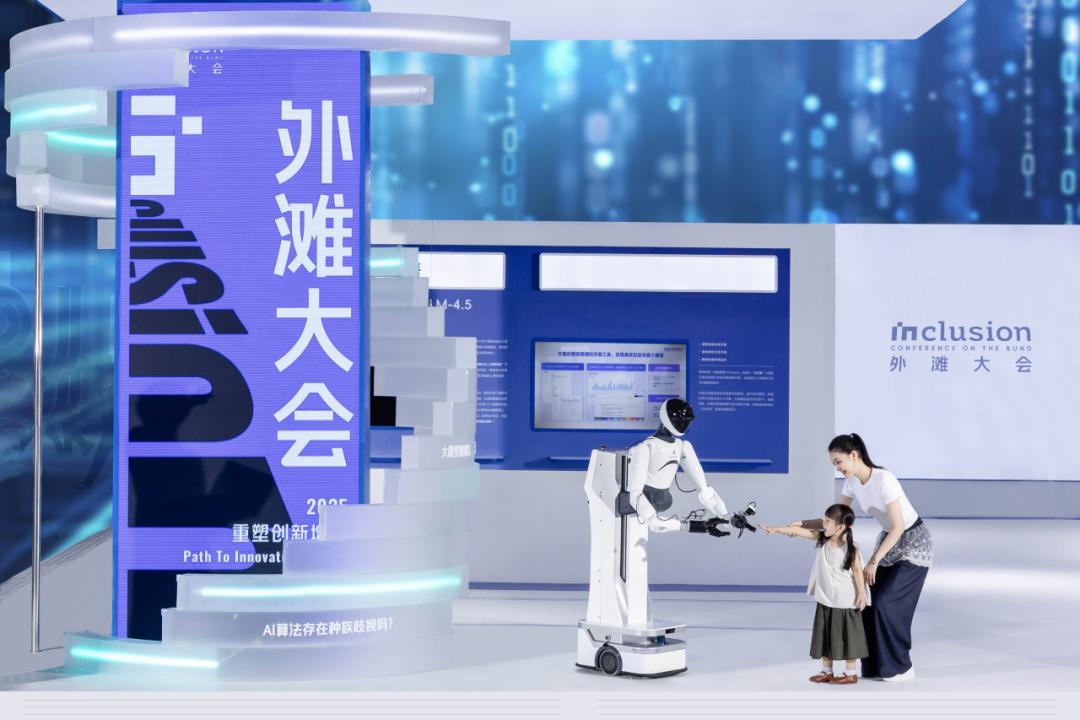
中科大孙玄:文明跃迁需要AI“大脑”与核聚变“心脏”
Guo Ji Jin Rong Bao· 2025-09-11 11:24
"相信不少人听过这么一句话:AI(人工智能)的终点是能源,能源的终点是聚变。"9月11日,在上海世博园区举行的2025 Inclusion·外滩大会开幕式暨 主论坛上,中国科学技术大学核科学与技术学院教授、星能玄光创始人兼董事长孙玄在演讲中重申了这一业界重要共识——核聚变是开启下一代文明的关键 科技。 孙玄指出,我们正处在一个百年难遇的大时代,人工智能的崛起正指数级推高全球能源消耗,而解决这一终极需求的答案便是核聚变。核聚变一旦实 现,不仅将带来一场能源革命并引发工业革命,更是迈向利用宇宙中最普遍能源、跨越到更高阶文明的关键一步。 "人工智能的进步代表人类的智力从碳基到硅基的演化,聚变代表的是人类从利用地球上已有的能源形式到宇宙能源形式的一个转变。这两者分别实 现,都可以说是代表一个新的时代到来,如果两者能够携手起来,或许可以加速这个大时代的来临。"孙玄表示,"当未来到来时,也许我们并没有意识 到"。 实际上,对前沿科技嗅觉敏锐的资本已有动作,纷纷积极布局这条终极能源赛道。孙玄指出,从2020年起,资本对于核聚变的投入增长显著,英伟达、 谷歌、OpenAI等头部国际科技企业均已入局核聚变领域,押注这一终极能源 ...
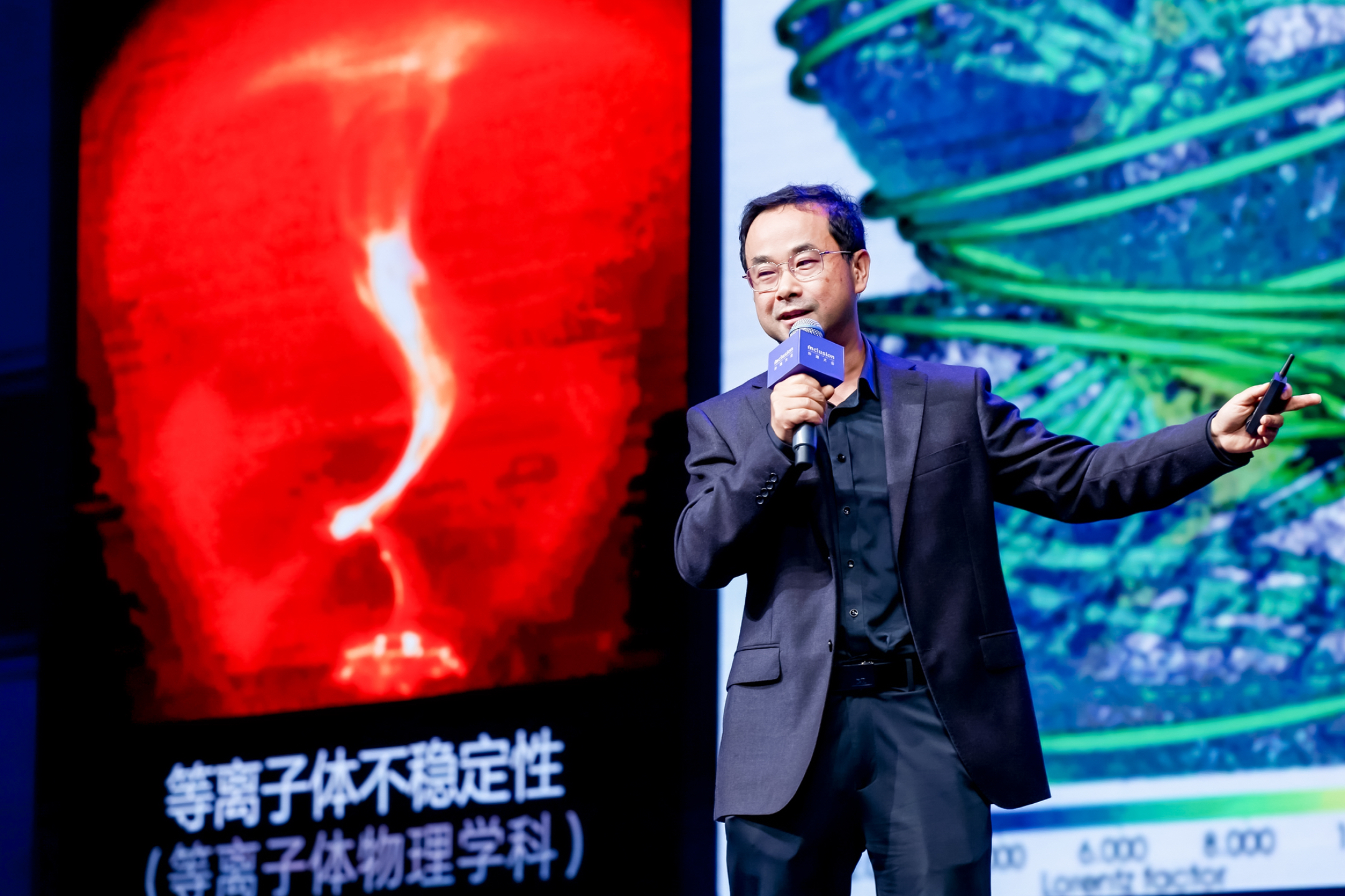
2025外滩大会:从数据驱动走向“经验时代” AI竞争进入新阶段
Huan Qiu Wang Zi Xun· 2025-09-11 08:39
Core Insights - The 2025 Inclusion Bund Conference in Shanghai focused on the development path of artificial intelligence (AI), discussing its current status, challenges, and future vision [1] AI Development - AI is transitioning from a data-driven paradigm to an experience-driven one, as proposed by Turing Award winner Richard Sutton, indicating a new phase in AI development [2] - The "scale law" continues to dominate AI development, with the emergence of reasoning models shaping a new curve called the "reasoning scale law" [4] - Major U.S. tech companies are expected to spend over $300 billion on AI-related capital expenditures by 2025, indicating a large-scale construction boom in the AI data center industry [4] - The concept of an "intelligent agent economy" is emerging, where numerous intelligent agents interact, execute tasks, and exchange data [4] - Open resources are becoming a key variable in AI competition, with a shift from code openness to resource openness [4][7] AI Challenges - Energy demand is a hard constraint for AI development, with AI currently consuming 1.5% of global electricity, potentially rising to 20% [5] - There is a significant gap in the practical application of AI, with challenges in high-quality data availability and model alignment with robotic control modalities [6] - Ethical and social governance challenges are increasingly prominent, with concerns about decision-making being transferred from humans to algorithms [6] - Organizational management needs to be restructured to adapt to the rapid development of AI technology [6] AI Future - The ultimate goal of AI is linked to energy, with nuclear fusion being highlighted as a breakthrough opportunity [8] - Continuous learning and meta-learning technologies are essential for unlocking the full potential of AI [8] - Collaboration and empathy are crucial for measuring progress in a rapidly evolving technological society [8] - The launch of 12 satellites with an 8B AI model marks a significant opportunity for AI in space [8][9] - The future of AI will require a collaborative approach involving technological breakthroughs, energy support, ethical norms, and social governance [10]

中科大孙玄:AI或将“吃掉”全球五分之一电力
Hua Er Jie Jian Wen· 2025-09-11 06:13
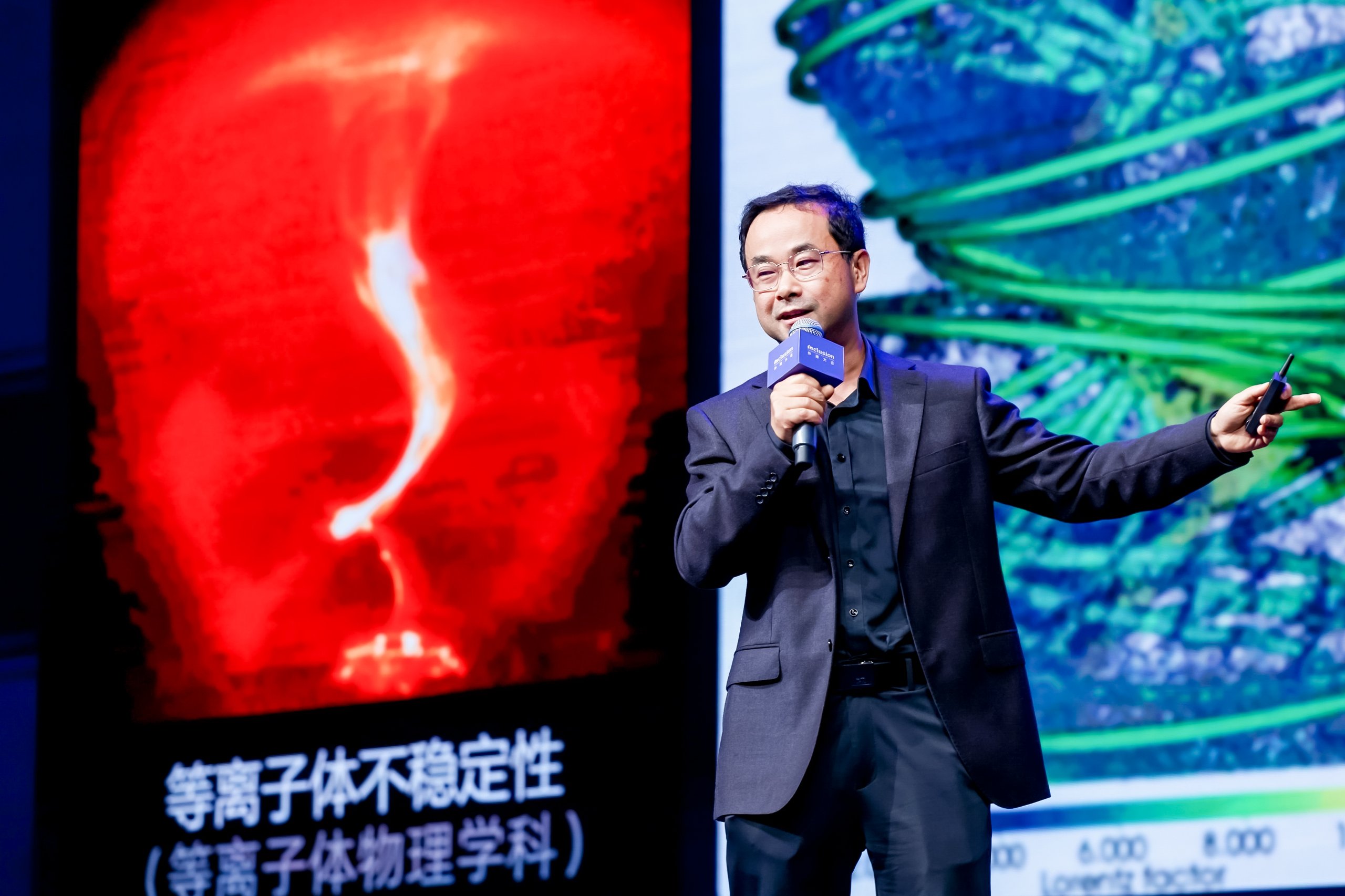
"相信不少人听过这么一句话:AI的终点是能源,能源的终点是聚变。" 9月11日,在2025 Inclusion·外滩大会上,中国科学技术大学核科学与技术学院教授、星能玄光创始人兼董事长孙玄在演讲中重申了这一业界重要共识——核 聚变是开启下一代文明的关键科技。 孙玄指出,AI的崛起正指数级推高全球能源消耗,而解决这一终极需求的答案便是核聚变。核聚变一旦实现,不仅将带来一场能源革命并引发工业革命, 更是迈向利用宇宙中最普遍能源、跨越到更高阶文明的关键一步。 当下,驱动聚变能从实验室走向产业关注的核心力量,正来自于其最大的需求方——AI。孙玄在指出:"AI目前用电量占地球的1.5%,如果我们把AI比喻 成'地球大脑'的话,人的大脑能耗占人体的20%,因此有人预测,AI的耗电量也将占地球总数的20%以上。" 这意味着,仅AI一个领域,就将产生巨大的能源缺口。 核聚变正是满足未来AI技术发展所需的能源供给的解决之道。聚变指的是两个轻核聚合成一个重核,在这一过程中存在质量亏损,可以释放出巨大的能 量。孙玄指出,核聚变拥有极高的能量密度:1克核聚变燃料,释放的能量相当于8吨石油。 等离子体不稳定性 孙玄解释道,实现核聚变的 ...
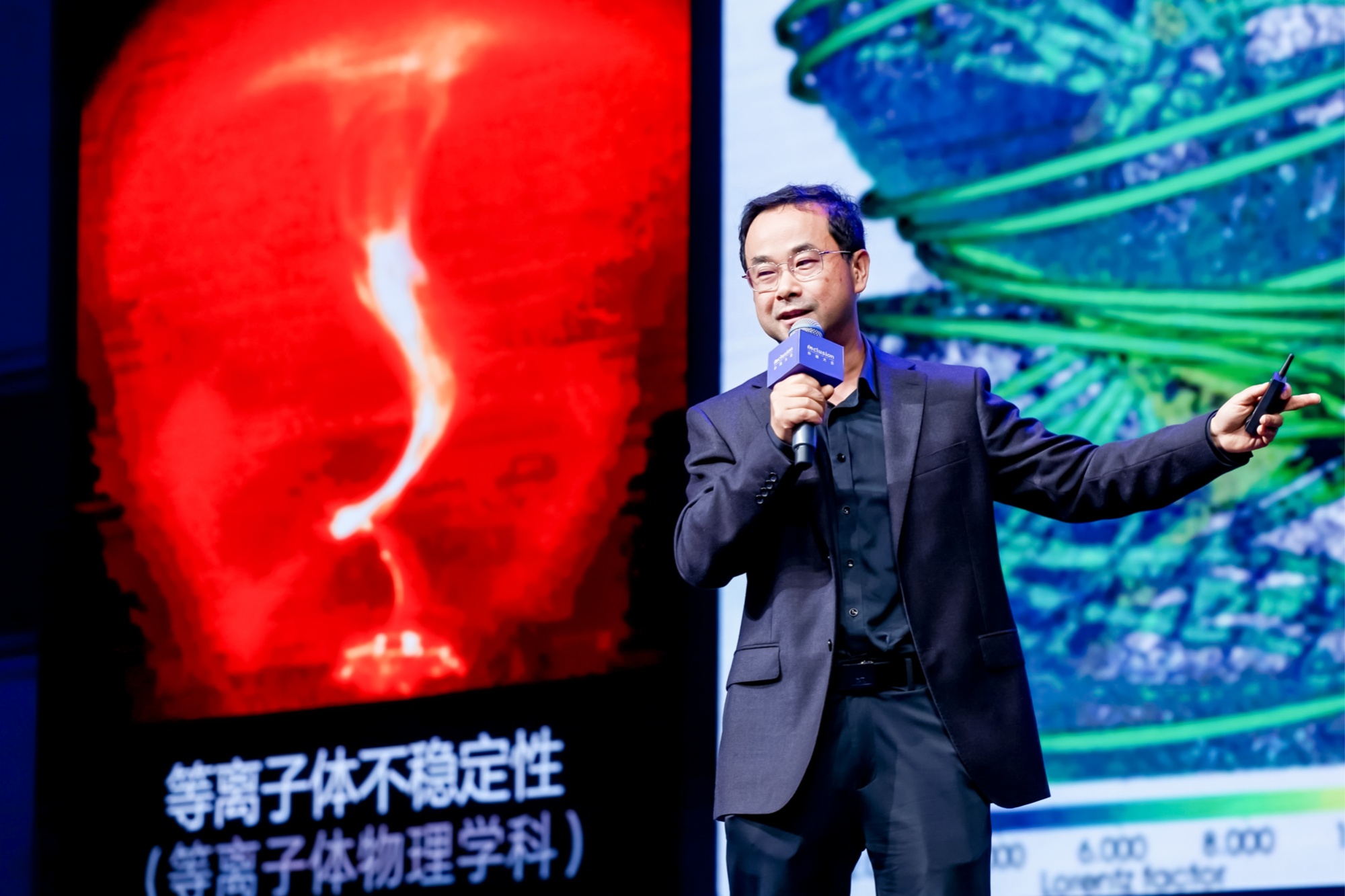
2025外滩大会开幕 中科大孙玄:AI的尽头是能源
Yang Guang Wang· 2025-09-11 06:07
Core Insights - The core viewpoint emphasizes that nuclear fusion is a key technology for the next generation of civilization, particularly in the context of rising energy demands driven by artificial intelligence [1][3]. Industry Developments - The rise of artificial intelligence is significantly increasing global energy consumption, and nuclear fusion is seen as a solution to meet the energy needs of future AI technologies [3]. - Nuclear fusion has a high energy density, with 1 gram of fusion fuel releasing energy equivalent to 8 tons of oil [3]. - Since 2020, there has been a notable increase in capital investment in nuclear fusion, with major tech companies like Google and OpenAI entering the field [3][4]. Technological Pathways - The mainstream technologies pursuing controllable nuclear fusion are laser inertial confinement and magnetic confinement, both of which have high engineering requirements and associated costs [4]. - A proposed hybrid approach called "magnetic inertial confinement" aims to reduce costs and construction time while enhancing iteration efficiency, but it presents intellectual challenges that require a deep understanding of the underlying physics [4]. - The potential for AI to create self-learning systems that can explore and design new fusion reactors is highlighted as a breakthrough opportunity [4]. Market Trends - According to a report from the Fusion Industry Association, global investments in commercial nuclear fusion companies reached $7.1 billion, an increase of $900 million year-on-year, with 89% of surveyed companies optimistic about achieving grid-connected power by the late 2030s [4]. - China's nuclear fusion sector is rapidly advancing, with various forms of fusion research emerging and significant breakthroughs being made by research institutes, universities, and enterprises [5]. Future Outlook - The combination of advancements in artificial intelligence and nuclear fusion is seen as a potential catalyst for ushering in a new era of energy production, transitioning from terrestrial energy sources to cosmic energy forms [5].
精达股份涨2.11%,成交额2.81亿元,主力资金净流出2262.53万元
Xin Lang Cai Jing· 2025-09-11 04:28
Core Viewpoint - Jingda Co., Ltd. has shown a mixed performance in stock price and financial metrics, with a notable increase in revenue and net profit year-on-year, while experiencing fluctuations in stock trading activity and shareholder composition [1][2][3]. Group 1: Stock Performance - On September 11, Jingda's stock price increased by 2.11%, reaching 8.23 CNY per share, with a trading volume of 281 million CNY and a turnover rate of 1.62%, resulting in a total market capitalization of 17.688 billion CNY [1]. - Year-to-date, Jingda's stock price has risen by 13.67%, with a slight decline of 0.84% over the last five trading days, a 2.62% increase over the last 20 days, and a 10.77% increase over the last 60 days [1]. Group 2: Financial Performance - For the first half of 2025, Jingda reported a revenue of 11.856 billion CNY, reflecting a year-on-year growth of 14.28%, and a net profit attributable to shareholders of 306 million CNY, which is a 6.03% increase compared to the previous year [2]. - Since its A-share listing, Jingda has distributed a total of 1.907 billion CNY in dividends, with 712 million CNY distributed over the last three years [3]. Group 3: Shareholder Composition - As of June 30, 2025, Jingda had 109,600 shareholders, a decrease of 2.86% from the previous period, with an average of 19,613 circulating shares per shareholder, an increase of 2.95% [2]. - Among the top ten circulating shareholders, XINGQUAN Trend Investment Mixed Fund is the eighth largest with 20 million shares, while Hong Kong Central Clearing Limited is the ninth largest with 19.8724 million shares, having increased its holdings by 2.4356 million shares [3].

买方质疑业绩预测又遭分析师怒怼,今日开盘高位算力硬件股大幅下挫
Di Yi Cai Jing· 2025-09-08 03:00
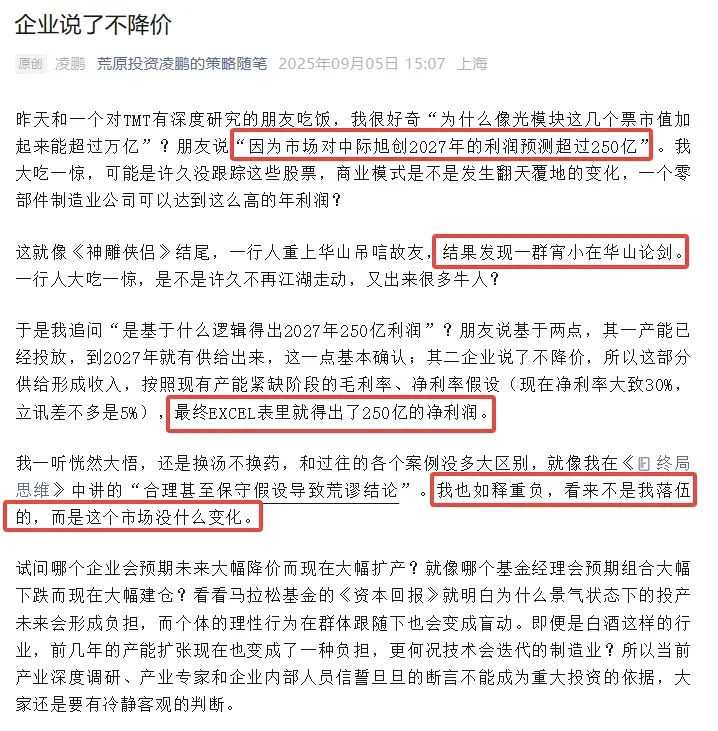
Group 1 - High-performance computing hardware stocks have seen significant declines, with companies like Zhongji Xuchuang, Xinyi Sheng, and Shenghong Technology dropping over 10% [1][5] - Analyst Ling Peng questioned the feasibility of Zhongji Xuchuang's projected profit of over 25 billion by 2027, highlighting concerns about linear extrapolation in profit forecasts [1][3] - The market's reaction to Ling Peng's comments mirrors past events, such as the "You are nobody" incident in 2021, which led to a sudden shift in market sentiment away from the semiconductor sector [5] Group 2 - A public fund manager noted that while some sectors are experiencing volatility and corrections, the overall market remains in a bullish atmosphere, indicating potential for high-risk trading strategies [6] - The manager emphasized the need for fundamental performance improvements for continued stock price increases, particularly in sectors like optical modules, which are currently valued at nearly 20 times earnings [5][6] - There are concerns about the rapid pace of earnings revisions, which could lead to increased market volatility in the future [5]


长盛基金郭堃:穿越市场周期的均衡成长之道
Zhong Guo Ji Jin Bao· 2025-09-08 00:00
Core Viewpoint - The article highlights the investment philosophy and strategies of Guo Kun, a balanced growth-style fund manager, who focuses on long-term sustainable excess returns through industry diversification and selective growth stock picking [1][3][8]. Investment Strategy - Guo Kun employs a "balanced investment style" that does not require precise market timing or sector rotation, making it suitable for ordinary investors [1][10]. - His investment framework consists of three layers: position management, asset and industry allocation, and internal comparisons within growth sectors [8][9]. - The core of his strategy is to maintain a stable position around 85%, adjusting only slightly in extreme market conditions [8]. Performance Metrics - Historical data shows that Guo Kun's managed portfolios consistently rank in the top 30%-40% of the market, with some periods in the top 10% [1][10]. - Over the past five years, funds like Changsheng Manufacturing Select have achieved net value growth rates between 10%-20%, outperforming most short-term champions [1][10]. Market Outlook - Guo Kun holds an optimistic view of the market towards 2025, identifying AI and innovative pharmaceuticals as key investment areas [2][11]. - He believes the current bull market is driven by a solid economic foundation, ongoing liquidity, and strong industrial momentum, particularly in AI [11][12]. Sector Focus - The focus on AI encompasses various sectors, including communications, electronics, media, and computing, with an emphasis on applications rather than just upstream capabilities [12]. - The innovative pharmaceutical sector is highlighted as a strong performer, with significant growth potential despite recent price increases [13]. Team Collaboration - Guo Kun emphasizes the importance of team collaboration in enhancing research capabilities, implementing a multi-tiered research discussion system to keep information current [7][4]. - The team’s synergy has led to the identification of high-quality stocks across various sectors, contributing to the overall success of the investment strategy [6][4].