
双碳目标

Search documents
推动可再生能源高质量发展 夯实能源强国建设根基
Xin Lang Cai Jing· 2026-02-24 22:23
Group 1 - The construction of an energy powerhouse is a strategic choice to balance supply security and low-carbon transition, addressing high foreign dependence and risks in energy supply [2] - Energy technology self-reliance is a core driving force for building an energy powerhouse, necessitating a revolution in energy technology to lead industrial transformation and upgrade [2][4] - The development of renewable energy is crucial for achieving the "dual carbon" goals and constructing a clean, low-carbon, safe, and efficient new energy system [3][4] Group 2 - Renewable energy serves as an important safety pillar for energy security, with its share in electricity consumption nearing 40%, gradually replacing traditional fossil fuels [3] - The rapid development of renewable energy has significantly reduced global wind and solar power costs by over 60% and 80% respectively over the past decade [5] - The construction of a new energy system must address challenges such as insufficient resource guarantees and market mechanism imperfections, emphasizing high-quality development of renewable energy [6][8] Group 3 - The focus on renewable energy will enhance green development, promoting zero-carbon factories and expanding green electricity consumption in key sectors [7] - Strengthening technological self-reliance is essential, particularly in critical areas like chips and industrial software, to boost domestic capabilities in the energy sector [7][8] - Open cooperation and sharing of renewable energy development experiences are vital for establishing a fair and cooperative global energy governance system [8]
金融“国家队”布局新材料赛道助力保时来绿氢产业升级
Xin Lang Cai Jing· 2026-02-24 22:23
(来源:中国改革报) 转自:中国改革报 □ 陈学谦 中国产业发展促进会氢能分会会员单位——保时来新材料科技(苏州)有限公司(以下简称"保时来") 近日完成新一轮融资,本轮融资由中国建设银行旗下建信金融资产投资有限公司发起的建源卓璞基金、 江苏省常熟市国资平台国发基金联合投资。此次资本注入,将为保时来在绿氢核心零部件研发、产能扩 张及产业链整合注入强劲动力,也彰显了国有大型金融机构及地方国资对氢能新材料赛道及企业技术力 的高度认可。 业内人士表示,本轮融资的意义主要体现在三个方面:国有金融资本加持,提升企业公信力。建信金融 资产投资有限公司的加入,标志着保时来的技术实力与发展前景获得国有大型金融机构认可,将显著增 强企业在产业链中的信用资质与合作话语权。 产融深度结合,加速技术产业化。依托建行集团的综合金融服务能力与常熟国资的本地产业资源,保时 来将获得"资金+订单+政策"的全方位支持,缩短从实验室到产业化的周期。 国资引领示范,强化区域产业集聚。此次投资是常熟通过资本纽带培育新兴产业、完善本地氢能产业链 的重要布局,彰显了地方国资以投资促产业、以资本引技术的战略导向,为区域绿氢产业集群发展注入 强心剂。 对于 ...
产品碳足迹管理体系持续完善
Jing Ji Ri Bao· 2026-02-24 22:09
Core Viewpoint - The establishment of a carbon footprint management system for industrial products is crucial for promoting green and low-carbon transformation in the industry, as highlighted by the recent release of a recommended list of carbon footprint accounting rules for 73 industrial products by four government departments [1][3]. Group 1: Carbon Footprint Definition and Importance - Carbon footprint refers to the total greenhouse gas emissions caused directly and indirectly by individuals, organizations, events, or products, typically expressed in carbon dioxide equivalents [2]. - Product carbon footprint is the most widely applied concept, encompassing emissions throughout the product lifecycle, making it a key indicator for assessing the green and low-carbon levels of production enterprises [2]. - Understanding product carbon footprints helps enterprises recognize their impact on climate change and take actionable measures to reduce emissions in their supply chains, enhancing international competitiveness for export manufacturers [2]. Group 2: Standardization and Development of Carbon Footprint Rules - The standardization of product carbon footprint accounting rules is essential for the green and high-quality development of the manufacturing industry, with over 111 key product carbon footprint accounting rules recommended across 13 major industries [3][4]. - The lack of unified technical requirements for carbon footprint accounting rules at the national level has led to significant discrepancies in results across industries, necessitating the establishment of a comprehensive management system [3][4]. Group 3: Industry Applications and Case Studies - Companies like Xinwangda Electronics are integrating carbon footprint accounting into their entire product lifecycle management, achieving ISO 14067 certification for over 20 products, which enhances their environmental performance credibility [4]. - Baosteel has implemented a systematic carbon data collection mechanism that tracks emissions throughout the production process, aligning with unified carbon footprint accounting standards to facilitate compliance with international market requirements [6]. Group 4: Future Directions and Recommendations - The ongoing development of carbon footprint standards is expected to support the transition to low-carbon industries, with recommendations for further applications in carbon emission control, zero-carbon factory construction, and low-carbon technology promotion [7][8]. - There is a call for dynamic updates to the carbon footprint accounting rules based on industry needs and for promoting international recognition of China's carbon footprint standards to enhance its influence in the global green and low-carbon sector [8].
高质量发展的生态底色更加鲜明
Jing Ji Ri Bao· 2026-02-24 22:08
Group 1: Green Transformation and Achievements - By 2025, China aims to complete land greening tasks covering 12.7 million hectares, including afforestation of 5.345 million hectares and restoration of 7.39 million hectares of degraded grasslands, with a current forest coverage rate of 25.09% and a forest stock volume of 20.988 billion cubic meters [2][3] - China has become the fastest-growing country in terms of greening, supported by planning, technology, engineering, and social participation, as highlighted by the National Forestry and Grassland Administration [2][3] - The ecological benefits are increasingly translating into economic and social benefits, with the forestry industry expected to generate nearly 11 trillion yuan in total output value by 2025, and direct employment for over 60 million people [3] Group 2: Clean Energy Development - By the end of 2025, the world's first commercial supercritical carbon dioxide power generation unit will be operational in Guizhou, achieving over 85% efficiency improvement compared to existing technologies [4] - China has established the world's largest clean power supply system, with renewable energy generation capacity exceeding 600 million kilowatts, accounting for over 60% of total power generation [4][5] - Energy investments are projected to exceed 3.5 trillion yuan in 2025, with a year-on-year growth of nearly 11%, driven by green transition investments and private sector participation [5] Group 3: Traditional Industry Transformation - The textile industry has made significant strides in green transformation, with companies like Shandong Jifa Group achieving waterless dyeing processes that reduce carbon emissions by approximately 50% [5] - Major energy-consuming industries, including construction materials and steel, have seen a notable decrease in energy consumption per unit of added value compared to 2024 [5][6] - The manufacturing sector is experiencing a surge in demand for energy-efficient and environmentally friendly equipment, driven by policy support and market needs [6] Group 4: Circular Economy and Resource Recovery - The circular economy is being promoted as a key strategy for reducing emissions, with projects like the electronic waste recycling facility in Guangdong processing approximately 39 tons of e-waste in 2025 [6] - The focus on transforming waste into valuable resources is a significant aspect of China's industrial system's shift towards sustainability [6]
2025年中国模块机组市场深度回调,存量竞争下品牌格局加速分化
Xin Lang Cai Jing· 2026-02-24 11:11
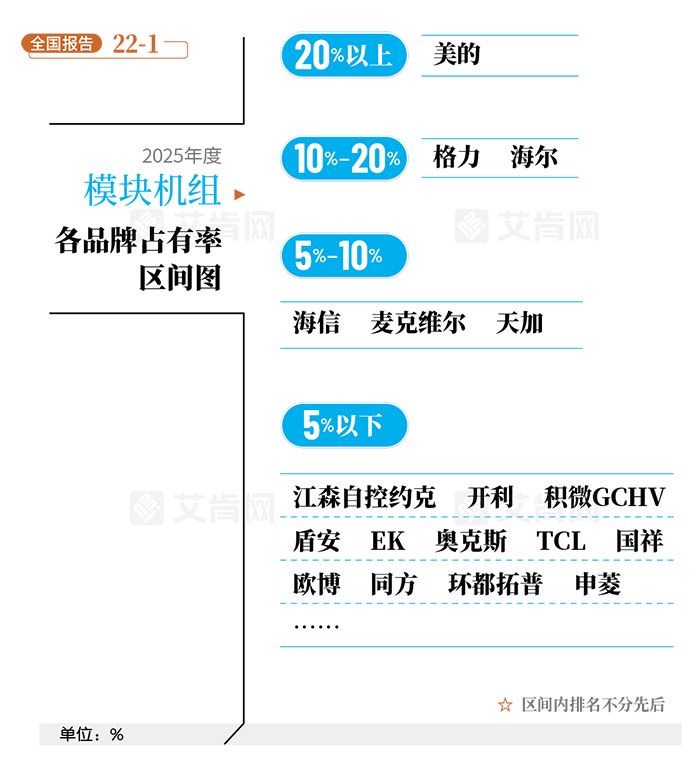
Core Insights - The report by Aiken Network indicates a significant downturn in the Chinese central air conditioning modular unit market, with a year-on-year sales decline of 15.6%, which is less severe than the overall central air conditioning industry [1][5] - The market share of modular units within the central air conditioning products remains stable at approximately 6.6%, marking a transition from growth expansion to a phase of stock competition [1][5] - Intense price competition is observed, particularly in small to medium-sized projects and standardized products, leading to reduced profit margins across the industry [1][5] Market Dynamics - The slowdown in new project investments and increased delays are impacting traditional advantages in large modular units, yet the demand for upgrades and renovations driven by carbon neutrality goals provides market support [1][5] - Specific segments such as data center backup cooling, regional energy stations, and modern agricultural temperature control still present competitive advantages for modular units due to their cost and flexibility requirements [1][5] Product Trends - Products using R410A and R32 refrigerants have become mainstream, while leading brands are beginning to promote models using R290, which has a lower Global Warming Potential (GWP), as part of their technological differentiation strategy [6][10] Brand Performance - The market share distribution for modular units in 2025 shows Midea leading with over 20% share, followed by Gree and Haier with 10%-20%, and brands like Hisense, Macwell, and Tianka holding 5%-10% [2][7] - Brands with less than 5% market share include York, Carrier, and others, indicating a highly competitive landscape where companies leverage localized strategies and niche technologies for breakthroughs [2][7] Regional Distribution - The modular unit market is highly concentrated in economically developed regions, with East China holding 28.4% and North China 26.3%, together accounting for over half of the market share [3][8] - Southwest, Central, and South China regions represent the third tier of the market with shares of 14.4%, 12.6%, and 12.5% respectively, while Northwest and Northeast regions combined account for less than 6% [3][8] Future Outlook - As the market enters a phase of stock competition, brand differentiation will intensify, with a focus on environmental technology, tailored solutions for specific scenarios, and deep regional operational capabilities becoming critical for companies to stand out [5][10]





光伏运维工作内容有哪些 产业新趋势下实操解析
Sou Hu Cai Jing· 2026-02-24 10:41
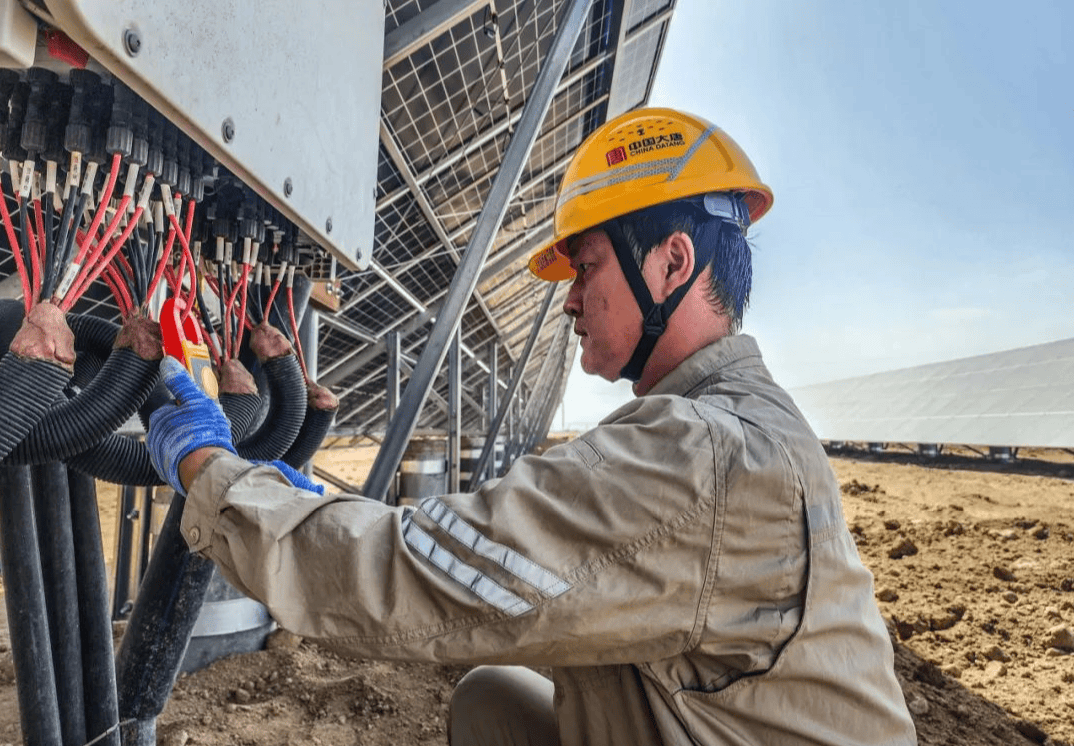
Core Insights - The China Photovoltaic Industry Association released the "China Photovoltaic Industry Development Roadmap (2025-2026)", outlining the current state of the photovoltaic industry and technology trends up to 2035 [1] - By 2025, the new installed capacity of solar photovoltaic in China is projected to reach 315.07 GW, with a cumulative installed capacity exceeding 1200 GW and crystalline silicon module production surpassing 620 GW, reflecting a year-on-year growth of 5.4% [1] Installation and Maintenance - The rapid expansion of photovoltaic installations and the shift towards n-type technology will see n-type monocrystalline silicon wafers accounting for 97% of the market by 2025 [1] - Photovoltaic operation and maintenance (O&M) is crucial for ensuring efficient and stable operation of power plants, covering the entire lifecycle of solar power plants, including daily inspections, equipment maintenance, and fault handling [1] Daily Inspections - Daily inspections are fundamental to identify potential issues in equipment and power plants, preventing minor problems from escalating into major failures [3] - Key inspection targets include photovoltaic modules, inverters, junction boxes, and tracking systems, with specific attention to n-type components for issues like micro-cracks and hot spots [3] Equipment Cleaning - The efficiency of photovoltaic modules is significantly affected by surface cleanliness, with dirt and debris reducing power conversion efficiency [4] - Cleaning methods should be adapted to the local environment, with frequency varying based on regional conditions, such as monthly cleaning in rainy areas and weekly in dust-prone regions [4] Fault Repair - Timely fault repair is essential to minimize downtime and reduce power generation losses, with different equipment requiring specific handling approaches [5] - After repairs, testing is necessary to confirm normal operation and to document the fault and repair process for future reference [5] Data Monitoring and Analysis - The shift towards intelligent O&M emphasizes the importance of real-time data monitoring and analysis to optimize power generation efficiency [6] - Key performance indicators include equivalent utilization hours and LCOE (Levelized Cost of Energy), with data analysis helping to refine operational strategies [6] Record Keeping - Comprehensive record-keeping is vital for maintenance, asset evaluation, and fault tracing, covering all aspects of O&M [7] - Records should include inspection logs, cleaning records, fault repair documentation, and equipment information, ensuring compliance with evolving industry standards [7] Specialized Maintenance for Energy Storage - The integration of photovoltaic and energy storage systems necessitates specialized maintenance for lithium battery systems, focusing on battery status, PCS operation, and temperature control [8] - Regular monitoring of charging and discharging efficiency is essential to enhance the utilization and energy conversion efficiency of storage systems [8] Technology Adaptation - Rapid technological advancements in the photovoltaic industry require O&M personnel to stay updated on new equipment and techniques [9] - Monitoring systems must also be upgraded to accommodate new data analysis needs, ensuring alignment with industry technological developments [9] Compliance Management - O&M must adhere to national policies and industry standards to ensure legal and stable operation of power plants, aligning with the roadmap's goals for high-quality development [10] - Compliance includes maintaining power generation quality, managing waste, and reporting operational statistics as part of the broader energy transition goals [10] Conclusion - Photovoltaic O&M is evolving from basic tasks to a comprehensive role that includes equipment maintenance, data monitoring, energy storage management, technology adaptation, and compliance [11] - Future trends indicate a move towards intelligent, specialized, and refined O&M practices, requiring personnel to possess both traditional maintenance skills and data analysis capabilities to maximize power generation efficiency and support energy transition goals [11]
“易能电易查”小程序发布 为新能源投资运营装上“收益导航”
Sou Hu Cai Jing· 2026-02-24 08:07
Core Insights - The article discusses the launch of the "Yineng Dianyi Cha" mini-program by Zhongwang United (Beijing) Energy Service Co., Ltd., designed to support investment decision-making and operational management in the renewable energy sector [1][2]. Group 1: Product Overview - "Yineng Dianyi Cha" is a data tool that integrates "information data + AI model algorithms" to provide real-time, precise revenue calculations and market decision support for renewable energy investors, financial institutions, and asset management units [1]. - The mini-program features three main modules: an overview homepage, data inquiry, and policy insights, aiming to serve as a nationwide "electricity price revenue navigation system" for the renewable energy investment field [2]. Group 2: Functionality and Features - The homepage displays real-time electricity spot price dynamics across provinces, using heat maps to help investors quickly identify regions with high electricity price potential, which is crucial for the development, site selection, construction, and trading of renewable energy power stations [2]. - The data inquiry module serves as a professional database for renewable energy investments, covering six key dimensions: spot prices, medium- to long-term prices, inter-provincial spot prices, mechanism electricity prices, weather, and power structure [2]. - The policy insights module tracks the latest national and local policies in the energy storage and renewable energy sectors, analyzing their impacts and market trends to help investors navigate subsidy, access, and assessment policy windows [2]. Group 3: Company Background and Future Plans - Zhongwang United has been operational since 2017, covering 30 provinces in China and accumulating over a thousand historical electricity price data points, which are used to analyze market trends and develop various proprietary electricity market tools [3]. - The launch of "Yineng Dianyi Cha" aligns with the transition of the renewable energy sector from "resource development" to "asset operation," aiming to enhance the professionalism and precision of asset management in the industry [3]. - The company plans to continue enhancing the mini-program's features, focusing on revenue simulation and risk warning functionalities, and aims to build a transparent and efficient energy asset data ecosystem in collaboration with industry partners [3].
转债个券研究系列:华辰转债,江苏华辰:变压器出海赛道的成长力量
Guolian Minsheng Securities· 2026-02-24 08:03
1. Report Industry Investment Rating - The report does not mention the industry investment rating. 2. Core Viewpoints of the Report - Huachen Convertible Bond's underlying stock has a small market value, and the strong overseas demand for transformers is expected to drive the continuous expansion of the company's medium - and long - term transformer export orders, thereby supporting the gradual increase of the company's performance. The underlying stock and the convertible bond are relatively scarce high - growth assets in the market [1][10]. - The Chinese transformer industry has experienced a strong development process from steady growth to accelerated take - off in the past decade, and the growth is highly resonant with the global energy transition and grid investment wave. The export value has entered a stage of rapid growth since 2021, and the growth momentum is increasing year by year [2][34]. - The business focus of Jiangsu Huachen has shifted from traditional transformer products to box - type substations, which has become the most important growth driver [21]. - The global grid investment is in an upward period, and the demand for transformers is surging. The export structure of Chinese transformers is becoming more high - end, and value growth has become the core engine [34]. 3. Summary According to the Directory 3.1 Convertible Bond Basic Information - As of January 27, 2026, the remaining balance of Huachen Convertible Bond is 460 million yuan, with a credit rating of A+ by United Credit Rating Co., Ltd. The face value is 100 yuan, and the coupon rates from the first to the sixth year are 0.20%, 0.40%, 0.80%, 1.50%, 2.00%, and 2.50% respectively. The redemption price at maturity is 114% of the face value (including the last - period interest). The conversion period is from December 26, 2025, to June 20, 2031 [1][10]. - In 2025, after October, the underlying stock of Huachen Convertible Bond fluctuated upwards, driving up the convertible bond price. In 2026, the convertible bond valuation may increase compared with 2025. When the conversion value is in the range of 120 - 140 yuan, the premium rate of Huachen Convertible Bond in 2026 has increased compared with 2025. After January 2026, as the conversion value of the convertible bond further increased, the convertible bond premium rate decreased [10]. 3.2 Growth Power of the Domestic Transformer Export Track 3.2.1 Historical Evolution - Jiangsu Huachen was established on September 4, 2007, and was successfully listed on the main board of the Shanghai Stock Exchange in May 2022. It focuses on the R & D, manufacturing, and system integration of high - end power transmission and distribution facilities, and its products are widely used in various fields [17]. - The company has won many honors and launched several projects over the years, such as being recognized as a national high - tech enterprise in 2014 and starting the new - energy intelligent box - type substation and electrical complete equipment project in 2021 [17]. 3.2.2 The Company's Scale is Continuously Expanding, and the Main Business is Shifting to Box - Type Substations - The company's operating income has shown a stable growth trend. From 2018 - 2020, it was in a slow - growth period. Since 2021, it has entered a high - speed growth channel. In 2023, the year - on - year growth was as high as 47.40%. In 2024, the growth rate suddenly slowed down to 4.69%. In the first three quarters of 2025, the operating income reached 1.443 billion yuan, a year - on - year increase of 37.46%, indicating a new round of strong growth [18]. - The company's net profit attributable to the parent also showed fluctuations. In 2024, the profit shrank due to factors such as the increase in the proportion of box - type substation business and increased R & D expenses. In the first three quarters of 2025, the net profit attributable to the parent was 72 million yuan, a year - on - year increase of 15.41%, showing a steady recovery of profitability [19]. - The company's business focus has shifted from traditional transformers to box - type substations. The revenue of dry - type transformers has increased steadily, but its proportion has decreased. The box - type substation business has achieved rapid growth and has become the largest business [21]. - The company has good cost control, but the profit margin has declined due to the change in product structure. The sales gross profit margin has decreased from about 29% in 2019 - 2020 to 16.99% in Q1 - Q3 of 2025, and the sales net profit margin has decreased from 12.14% in 2020 to 4.99% in 2025 [26]. 3.3 The Global Grid Investment is in an Upward Period, and the Transformer Demand is Surging 3.3.1 Export Structure Upgrading, and Value Growth Becoming the Core Engine - The Chinese transformer industry's export value increased from 2.844 billion US dollars in 2016 - 2020 to 3.264 billion US dollars, with a 9.5% growth in 2018 and a 2.1% decline in 2020. Since 2021, it has entered a stage of rapid growth, reaching 9.036 billion US dollars in 2025, nearly 2.5 times the scale in 2021, with an increasing growth momentum [2][34]. - The core driving force for the rapid growth of China's transformer exports after 2021 is value upgrading rather than quantity expansion. The export quantity decreased in 2021 - 2023, but the export value increased significantly, indicating a shift in the growth driver from quantity to unit - product value [35]. 3.3.2 Asia's Basic Market is Stable, and Europe and the Middle East Lead High - Growth - In 2025, the export value of Chinese transformers to all regional markets increased. Asia's export value reached 4.496 billion US dollars, a year - on - year increase of 37.9%, and its proportion in the global total increased from 47.5% in 2023 to 49.8%. Europe's export value increased from 1.292 billion US dollars in 2024 to 1.837 billion US dollars, a year - on - year increase of 42.2%, and its proportion rebounded to 20.3%. North America's export value increased to 1.324 billion US dollars, with a relatively moderate growth rate of 23.4%, and its proportion decreased from 16.0% in 2024 to 14.6%. Africa's export value was 790 million US dollars, a year - on - year increase of 39.6%, showing strong growth potential [3][39]. - The Middle East market, represented by Saudi Arabia, has a strong demand for transformers. The export value to Saudi Arabia increased from almost negligible 5 million US dollars in 2021 to 998 million US dollars in 2025, a year - on - year increase of 134.2%. The demand comes from national - level transformation strategies and emerging fields [44]. - The European market's demand for transformers is mainly due to the rigid replacement demand of aging grid facilities and the energy transition strategy. The export value in 2025 reached 1.837 billion US dollars, a year - on - year increase of 42.2%, and the scale has expanded more than three times in four years [45]. - The US market's growth is limited. In 2025, the export value was 782 million US dollars, a year - on - year increase of 20.4%. Non - market factors such as trade policies have restricted the growth of imports from China [46]. 3.3.3 Strong Domestic Policy Support and Continuous Release of Transformer Market Demand - Driven by the "dual - carbon" goal and high - quality development, the domestic transformer industry is in a strategic opportunity period. The national grid will increase grid investment during the "15th Five - Year Plan" period, with an expected fixed - asset investment of 4 trillion yuan, a 40% increase compared with the "14th Five - Year Plan" period [50]. - The approval and construction of UHV projects have accelerated, providing long - term and certain project reserves for high - end UHV transformers. Industrial policies and standards have optimized the market structure and created new growth space [50]. - The implementation of energy - efficiency improvement and energy - saving replacement policies, such as the new "Energy Efficiency Limits and Energy Efficiency Grades for Power Transformers" and tax incentives for first - level energy - efficiency transformers, promotes the transformation of the industry to high - added - value [51]. - The demand for transformers in the domestic market is driven by multiple factors, including the construction of large - scale data centers for AI, the development of new - energy power stations, the intelligent upgrading of the power grid, and the popularization of electric vehicles and charging infrastructure [54][55]. 3.3.4 The Oil - Immersed Transformer Market has a Large Scale and Strong Overseas Demand - In 2025, the market scale of oil - immersed transformers was about 11.82 billion US dollars, much higher than that of dry - type transformers (6.75 billion US dollars). Although the compound annual growth rate of the oil - immersed transformer market in the next ten years is predicted to be only 3.02%, lower than that of the dry - type market (6.51%), it will still have a larger market scale than dry - type transformers by 2035 [56]. - Oil - immersed transformers have advantages in high - voltage and large - capacity power conversion scenarios, such as high dielectric strength, good heat - dissipation ability, high environmental adaptability, and low full - life - cycle cost. They are widely used in power grids, new - energy power stations, and heavy - industry factories [60]. - The overseas market has a high demand for oil - immersed transformers because their technical advantages match the core overseas needs. Jiangsu Huachen's oil - immersed transformer business has shown a high - volatility growth trend, and its sales proportion has been maintained between 20% - 40%. The business revenue has increased significantly in some years, indicating the company's technical and delivery capabilities [61][62].

易能电易查”小程序发布 为新能源投资运营装上“收益导航
Zhong Zheng Wang· 2026-02-24 08:02
Core Viewpoint - The launch of the "Yineng Electric Easy Check" mini-program by Zhongwang United aims to provide a comprehensive data tool for investment decision-making and operational management in the renewable energy sector, leveraging AI models and extensive data to support real-time market analysis and yield estimation [1][2]. Group 1: Product Features - The "Yineng Electric Easy Check" mini-program is designed around three core principles: comprehensiveness, speed, and accuracy, featuring modules for overview, data checking, and policy viewing [2]. - The homepage of the mini-program displays real-time electricity spot price dynamics across provinces, helping investors identify regions with high electricity price potential [2]. - The data checking module serves as a professional database for renewable energy investments, covering six key dimensions including spot prices, medium to long-term prices, inter-provincial spot prices, mechanism prices, weather, and power structure [2]. Group 2: Market Context and Development - The program addresses challenges in the renewable energy sector, where project yield is highly influenced by fluctuating electricity prices, policy changes, and environmental conditions, which traditional analysis tools struggle to manage [1][3]. - Zhongwang United has been active in the electricity market since its establishment in 2017, covering 30 provinces and accumulating extensive historical price data, which informs the development of various proprietary electricity market tools [3]. - The introduction of the mini-program aligns with the transition of the renewable energy sector from resource development to asset operation, aiming to enhance the professionalism and precision of asset management in the industry [3].
基于风光富集地区新能源电力就地消纳与资产管理的破局构想
Zhong Guo Neng Yuan Wang· 2026-02-24 06:46
氢氨肥闭环消纳流程是一种将绿氢、绿氨和绿色肥料生产相结合的绿色循环经济模式,旨在实现资源高 效利用和碳排放最小化。它的原理是通过新能源电力驱动电解槽工作,产生大量的绿氢,再与空气分离 装置将氢气与氮气合成绿氨,液氨经过一定比例的稀释后,与有机肥形成液态含氮有机肥,供当地农业 施用。氢氨肥闭环产业链的建立,将充分利用风光富集地区的绿电资源,实现能源的高效消纳。 2024年7月,国家发展改革委、国家能源局发布关于印发《煤电低碳化改造建设行动方案(2024—2027 年)》提出利用合成绿氨,实施燃煤机组掺烧绿氨发电,替代部分燃煤。为火电厂提供掺氨降碳构建协 同消纳新型电力系统的市场需求,实现液氨的本地化消纳应用。同时,可将过剩的绿氢与绿氨可利用液 氨储罐或者地下岩穴等储能设备储存,作为储能调峰的备用能源,调节新能源发电的不稳定性,最终形 成"氢-氨-肥"这一绿色闭环的电力消纳体系。 重视新能源市场资产管理,开拓能源资产新模式 "十五五"时期,我国发展环境面临深刻复杂的变化,能源的战略定位,既是保障发展的重要要素,更是 牵引发展、实现强国目标的创新方向。一方面,新能源全面入市颠覆了固定电价时代的收益测算模型, 电价波 ...