数字经济

Search documents
服务促升级 沃土催新绿
Xin Lang Cai Jing· 2025-12-26 22:04
数字,为这一派生机景象提供了最有力的注脚:"十四五"期间,红桥区民营经济增加值4年间增长超过 44%,年均增速高达9.6%。今年上半年,民营经济占全区地区生产总值的比重已达49.7%。这个沉甸甸 的数字,是民营经济活力最强劲的脉搏,是区域发展画卷上最亮眼的笔触,未来更加可期。 (来源:天津日报) 转自:天津日报 在红桥区,民营经济的活力,是能"听"到、"看"到的。 走进光荣道科技产业园,打桩机铿锵的节奏,仿佛是这片土地最强劲的心跳。艺点意创总部建设项目加 速推进,它将被打造为京津冀同城商务区蓝图上的又一科创地标。园区外,圣威科技获我市首例涉及生 态环境保护监测和调度的数据知识产权;异乡好居2025年交易规模超100亿元,3年间实现翻倍……这些 从红桥区的土壤里孕育、壮大的民营企业,正以肉眼可见的速度"拔节生长"。 红桥区民营经济快速崛起的秘诀何在?答案就写在政府从"管理者"到"服务者"的深刻角色转变之中。近 年来,一场以企业需求为中心、不断升级的"服务革命",正为这片区域的经济生态注入源源不断的暖 流。 服务的温度 从"企业找政策"到"政策找企业" 政策的生命力在于精准落地。"再好的政策,若躺在文件柜里,也只 ...
首届女性领导力大会在我市举办
Xin Lang Cai Jing· 2025-12-26 22:03
(来源:天津日报) 转自:天津日报 会上,天津大学校长柴立元、全国妇联原副主席孟晓驷、商务部研究院学术委员会秘书长过聚荣作主旨 演讲。中国民间商会副会长、全联女企业家商会会长张荣华致辞,全国工商联副主席、全联女企业家商 会荣誉会长何超琼视频致辞。全联女企业家商会与天津滨海高新技术产业开发区协作打造的综合性服务 平台"津帼会客厅"项目揭幕。与会代表聚焦数字经济、科技创新、产业升级等领域开展圆桌对话。会 前,全联女企业家商会召开七届三次理事会。 会议希望,全联女企业家商会深入学习贯彻党的二十届四中全会精神,发挥桥梁纽带作用,引领更多女 企业家关注天津、投资天津、扎根天津,共享天津发展机遇。天津市委、市政府将为企业家提供更优质 的服务、更有力的支持,让大家安心创业、舒心发展、开心生活。 市有关部门负责同志,政界、商界、学术界、金融界等领域代表以及优秀女企业家代表约500人参加。 本报讯(记者 刘平)12月25日,由全国工商联女企业家商会主办的"融合蝶变 同向同行——奔赴'十五 五'"首届女性领导力大会在我市举办。市委副书记刘桂平会见与会企业家代表。全国工商联副主席汪鸿 雁,中国妇女发展基金会理事长杜芮,市委常委、市 ...
2026年锚定三大配置主线
Zhong Guo Zheng Quan Bao· 2025-12-26 21:06
Core Insights - New quality productivity, driven by technological breakthroughs and aimed at enhancing total factor productivity, is fundamentally reshaping the underlying logic of A-share market segmentation [1][2] - Analysts believe that under the resonance of policy dividends, technological breakthroughs, and market demand, sectors related to new quality productivity are performing well, with core technology areas becoming the focus of capital allocation [1][3] Restructuring A-share Market Segmentation - New quality productivity is characterized by revolutionary technological breakthroughs, innovative allocation of production factors, and deep industrial transformation, optimizing labor, materials, and their combinations to enhance total factor productivity [1][2] - The core features of new quality productivity include alignment with strategic emerging industries, a minimum of 5% R&D investment relative to revenue, a minimum of 10% R&D personnel ratio, and a compound annual revenue growth rate of 20% over the past three years [1][2] Investment Paradigm Shift - The segmentation of new quality productivity is based on "technological barriers + growth potential + policy alignment," contrasting with traditional productivity, which focuses on "resource endowment + production capacity + cyclical attributes" [2][3] - This shift allows A-shares to transition from a stock-picking era to a track-selection era, emphasizing dynamic capture of technological innovations driving industrial changes [2][3] Performance of New Quality Productivity Sectors - By the end of 2025, the new quality productivity sector significantly outperformed the market, with the comprehensive index rising by 43.60%, surpassing the CSI 300 index [3][4] - Key sectors such as electric equipment and defense industries showed strong momentum, driven by policy, technology, and market factors [3][4] Policy and Technological Support - The "14th Five-Year Plan" emphasizes accelerating high-level technological self-reliance, providing a stable policy outlook for the sector [4][5] - Significant technological advancements in areas like solid-state batteries and commercial aerospace are creating a positive feedback loop of market enthusiasm and capital allocation [5][6] Focus Areas for 2026 - Analysts identify three main investment directions for 2026: technology implementation, energy infrastructure, and manufacturing upgrades [6][7] - The AI sector is expected to transition from model competition to application implementation, with hardware showing strong potential due to solid fundamentals [6][7] - Energy infrastructure upgrades, particularly in smart grids and energy storage, are anticipated to provide significant opportunities as market-driven transformations take place [7][8] - The manufacturing sector is poised for growth through the localization of industrial software and the digital transformation of traditional industries, driven by technological empowerment [7][8]
苦干实干 勇于争先 打造高质量发展高品质生活高效能治理示范区
Xin Lang Cai Jing· 2025-12-26 21:02
Group 1 - The core message emphasizes the commitment of the Ping'an District to implement the economic work meeting's spirit, focusing on high-quality development and efficient governance to ensure a strong start for the 14th Five-Year Plan [1] - The district aims to strengthen domestic demand by attracting renowned automotive brands and enhancing consumer activities, with plans for 160 promotional events and the establishment of 20 new brand flagship stores [1] - The district has set ambitious targets for project implementation, with 160 new contracts signed for projects over 100 million and over 200 projects expected to resume or commence construction [1] Group 2 - Innovation-driven growth is prioritized, with support for the establishment of key laboratories and innovation platforms, and a focus on emerging industries such as artificial intelligence and digital economy [2] - The district is enhancing its business environment through reforms, aiming for over 90% of services to be "one-time no-run" and promoting the growth of state-owned enterprises with a target of over 5% revenue increase [2] - The district is committed to improving living standards by upgrading urban infrastructure, creating over 600 new parking spaces, and increasing employment opportunities by over 16,000 [3]
怎样理解引导产业链供应链合理有序跨境布局
Xin Lang Cai Jing· 2025-12-26 21:02
Core Viewpoint - The article emphasizes the importance of guiding the cross-border layout of industrial and supply chains, highlighting that "going global" is a natural economic progression for major countries, and it is essential to focus on Gross National Income (GNI) alongside Gross Domestic Product (GDP) to foster international cooperation in supply chains and promote China's modernization [1][2]. Group 1: Current Status of China's Global Investment - Since the 18th National Congress, China has accelerated its integration into global industrial and supply chains, solidifying its position as a major investment country, with foreign direct investment projected to reach $192.2 billion in 2024, maintaining a top-three global ranking for 13 consecutive years [2]. - By the end of 2024, China's cumulative foreign investment is expected to exceed $3 trillion, with over 52,000 enterprises established abroad across 190 countries and regions, and total overseas assets exceeding $9 trillion [2]. - China's foreign investment has supported domestic development, facilitated the internationalization of products and services, and contributed positively to the host countries' livelihoods, while also enhancing global supply chain stability [2]. Group 2: Strategic Recommendations for Overseas Investment - Effective management of foreign investment is crucial, which includes improving the legal framework, enhancing regulatory systems, and integrating trade and investment to expand overseas marketing networks [3]. - Optimizing the overseas comprehensive service system is necessary, which involves upgrading public services and enhancing capabilities in legal, financial, and consulting services to support enterprises going global [3]. - Expanding the functionality of overseas economic and trade cooperation zones is recommended, focusing on infrastructure development and collaboration with domestic parks to better serve domestic industrial upgrades and international cooperation [4]. Group 3: Strengthening Partnerships and Risk Management - Establishing a robust network of partners in the industrial and supply chain is essential, promoting cooperation in green development, digital economy, and other emerging sectors to optimize global resource allocation [4]. - A comprehensive overseas risk prevention and interest protection system should be developed, including risk assessments and timely warnings to guide enterprises in avoiding high-risk areas and ensuring compliance in overseas operations [4].
模组出货领跑全球 中国蜂窝物联网产业全面爆发
Zhong Guo Jing Ying Bao· 2025-12-26 20:13
Core Insights - The Chinese IoT industry is experiencing strong growth, with the number of connections expected to exceed 3.5 billion this year [2] - The global cellular IoT module shipments are projected to grow by 10% year-on-year by Q3 2025, with China showing a 7% increase driven by smart meters and POS terminals [2][3] - The development of IoT communication technology in China is rapidly advancing from 5G to 6G, satellite networks, and quantum communication [3] Industry Overview - Cellular IoT, also known as mobile IoT, allows devices to connect to the internet using mobile communication networks, facilitating ubiquitous connectivity [4] - As of June 2025, China's three major telecom operators are expected to have developed 2.831 billion mobile IoT terminal users [4] - The development of mobile IoT in China can be divided into three stages: technological foundation, commercial breakthrough, and scale explosion, with the commercial launch of 5G in 2019 marking a significant turning point [4][5] Market Dynamics - The growth of China's cellular IoT is driven by a combination of policy support, technological advancements, and market demand [5][6] - The Cat-1 bis technology has emerged as a mainstream choice for mid-speed IoT applications, with its global shipment share expected to approach 50% by Q3 2025 [5] - The demand for digital transformation in traditional industries, along with the need for upgrading devices like smart meters and POS terminals, is fueling market growth [6] Competitive Landscape - China has established a complete industrial chain for cellular IoT, with competitive companies emerging in chip design, module manufacturing, and application deployment [7] - Key players in the chip design sector include Aojie, Unisoc, and Shanghai Yixin, which are recognized for their advancements in the Cat-1 bis field [7] - The module industry is led by companies like Quectel, China Mobile, and Rida, with Rida achieving a remarkable 73% year-on-year growth [7][8] Future Outlook - The industrial internet market in China is expected to exceed 1 trillion yuan by 2025, becoming a significant driver for overall IoT growth [8] - The transition from a "selling connectivity" model to a "selling computing power" model is seen as a crucial challenge for the industry [9][10] - The commercialization of RedCap technology is anticipated to further enhance the capabilities of IoT applications, with significant growth expected in sectors like industrial inspection and smart factories [10] Challenges - Despite the positive growth indicators, the industry faces challenges such as reliance on imported core technologies and price sensitivity in the market [9] - The competition in the Cat-1 bis module market is intensifying, leading to a decline in average selling prices (ASP) and creating a "revenue without profit" scenario for many small and medium-sized manufacturers [9] - The need for collaboration across the industry to enhance technological routes, service capabilities, and global compliance is essential for sustaining growth [11]



健全数据制度 释放乘数效应
Xin Lang Cai Jing· 2025-12-26 20:00
Core Viewpoint - The article emphasizes the importance of advancing the construction of a digital China as outlined in the 20th Central Committee's Fourth Plenary Session, highlighting its role in enhancing new productive forces and driving economic and social development [1][2]. Group 1: Digital Economy and New Productive Forces - The construction of a digital China is crucial for fostering new productive forces across various sectors, enabling breakthroughs in technology, application scenarios, and industrial upgrades [2][3]. - By 2024, national data production is expected to reach 41.06 zettabytes, with over 400,000 data enterprises and a data industry scale of 5.86 trillion yuan, indicating a growing recognition of the value of data elements [3]. - The strategic deployment around digital economy aims to leverage China's advantages in data resources, infrastructure, and application scenarios to promote deep integration of the real economy and digital economy [4]. Group 2: Empowerment through Digitalization - The rapid penetration of intelligent technologies, particularly artificial intelligence, into various fields is unprecedented, necessitating a focus on digitalization in modern industrial systems and public services [5][6]. - Digitalization is expected to enhance public service systems, breaking geographical and resource distribution barriers, thus improving access to quality services for all citizens [6]. - The article outlines the need for digital trade innovation and the promotion of secure cross-border data flow to expand cooperation in digital economy and artificial intelligence [7]. Group 3: Data Infrastructure and Market Reform - The National Data Bureau plans to enhance the data infrastructure and market reform to better utilize data elements, focusing on establishing a robust data property rights system and promoting market-oriented data allocation [8][9]. - Key initiatives include improving data infrastructure, enhancing data application, and fostering a vibrant data industry ecosystem through supportive policies [9][10]. - International cooperation in data governance and cross-border data flow is emphasized to build trust and facilitate orderly data movement [10].
《深圳数字经济发展创新报告》发布 共探数字经济与未来产业融合路径
Zheng Quan Shi Bao Wang· 2025-12-26 14:52
吴绪亮从宏观视角解读"智能经济的宏观框架与产业逻辑",指出在全球经济下行背景下,大模型等人工 智能技术成为重塑增长方式的关键变量。他表示,智能经济需通过云计算赋能传统产业升级,同时要应 对生产率提升、就业冲击等关键问题,需依托制度创新与资本市场支持实现健康发展。 2025年12月20日下午,"中国式现代化新征程中的数字经济与未来产业发展"研讨会暨《深圳数字经济发 展创新报告(2025)》发布会在中国人民大学深圳研究院前海院区成功举行。作为中国人民大学深圳论坛 2025的重要活动,本次会议由中国人民大学社会科学高等研究院(深圳)数字经济研究中心、中国人民大 学深圳研究院科技金融与数字经济研究中心联合主办,产学研界专家齐聚一堂,为"十五五"时期数字经 济高质量发展建言献策。 中国人民大学社会科学高等研究院(深圳)数字经济研究中心首席专家刘守英、腾讯研究院资深专家吴绪 亮、中国信息通信研究院政策与经济研究所所长辛勇飞等知名学者,以及深圳智慧城市科技发展集团、 杰创智能(301248)等企业代表出席,共同探讨数字经济与未来产业的深度融合之道。 主旨演讲环节由中国人民大学经济学院副院长李三希主持。刘守英以"现代化产业体 ...
安徽数字经济核心产业企业营收突破万亿元
Xin Lang Cai Jing· 2025-12-26 11:53
Core Insights - Anhui Province is accelerating its digital transformation as a pilot for the national data element comprehensive experimental zone, with the digital economy core industry revenue expected to exceed 1 trillion yuan for the first time during the 14th Five-Year Plan period, reaching an estimated 1.3 trillion yuan by 2025, with an average annual growth rate of 12% [1] Group 1 - The first domestic fifth-generation ultra-low power double-speed dynamic random-access memory has achieved mass production, and the "Zuchongzhi No. 3" quantum computing prototype leads globally [1] - Key core technology breakthroughs are being implemented, with the establishment of high-level research institutions such as data space and artificial intelligence research institutes to accelerate the output of digital technology innovation [1] - The digital core industry is focusing on extending, supplementing, and strengthening industrial chains, with over 2,200 enterprises gathered in strategic emerging industry clusters, including integrated circuits, new display devices, and artificial intelligence, expected to generate over 350 billion yuan in revenue by 2025, doubling from the end of the 13th Five-Year Plan [1] Group 2 - All industrial enterprises above designated size in Anhui have initiated digital transformation, while the province actively cultivates new models and formats such as live e-commerce and short video e-commerce, exploring new digital consumption scenarios [2] - The province's online retail sales are projected to grow from 300 billion yuan in 2021 to nearly 500 billion yuan by 2024, with an average annual growth rate of 16.9% [2] - The agricultural production informationization rate in Anhui has reached over 52%, ranking among the top in the country [2]
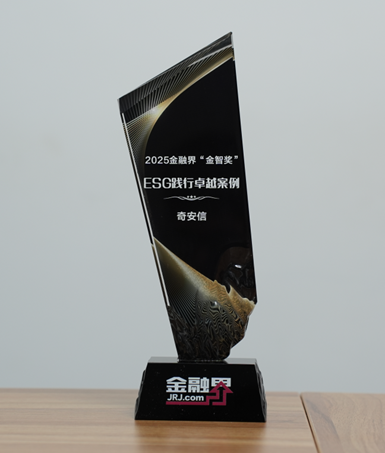
奇安信荣获第十四届金融界“金智奖”ESG践行卓越案例, 以安全创新赋能高质量发展
Jin Rong Jie· 2025-12-26 11:06
Group 1 - The "2025 Financial Summit" held in Beijing focused on the theme of "New Starting Point, New Momentum, New Journey," gathering hundreds of leaders and guests from various sectors including regulatory bodies, industry associations, financial institutions, and media [1] - The 14th "Golden Intelligence Award" results were announced, with Qi Anxin receiving the "ESG Practice Excellence Case" award, highlighting its commitment to high-quality development and ESG principles [1][3] Group 2 - The "14th Golden Intelligence Award" evaluation was aligned with national strategies, emphasizing the importance of high-quality development across six dimensions: social responsibility, industrial contribution, investment returns, growth prospects, innovation efficiency, and outstanding branding [3] - Qi Anxin integrates ESG principles into its corporate development, establishing a sustainable governance structure that aligns with national strategies and the digital economy [4] - The company aims to enhance network security as a core element of the digital economy, ensuring safe data circulation and value release through its ESG initiatives [4][5] Group 3 - Qi Anxin is committed to maintaining a "zero-accident" standard in network security, contributing to social stability and the construction of a strong digital nation [4] - The company emphasizes high-quality development, focusing on quality, safety, and user experience in its products and services, reflecting its responsibility as a leading enterprise [4] - Looking ahead, Qi Anxin plans to deepen its ESG practices and explore new paradigms for high-quality development, contributing to the sustainable development of the digital economy [5]